Mississippi Motion for Leave to File Third-Party Complaint
About this form
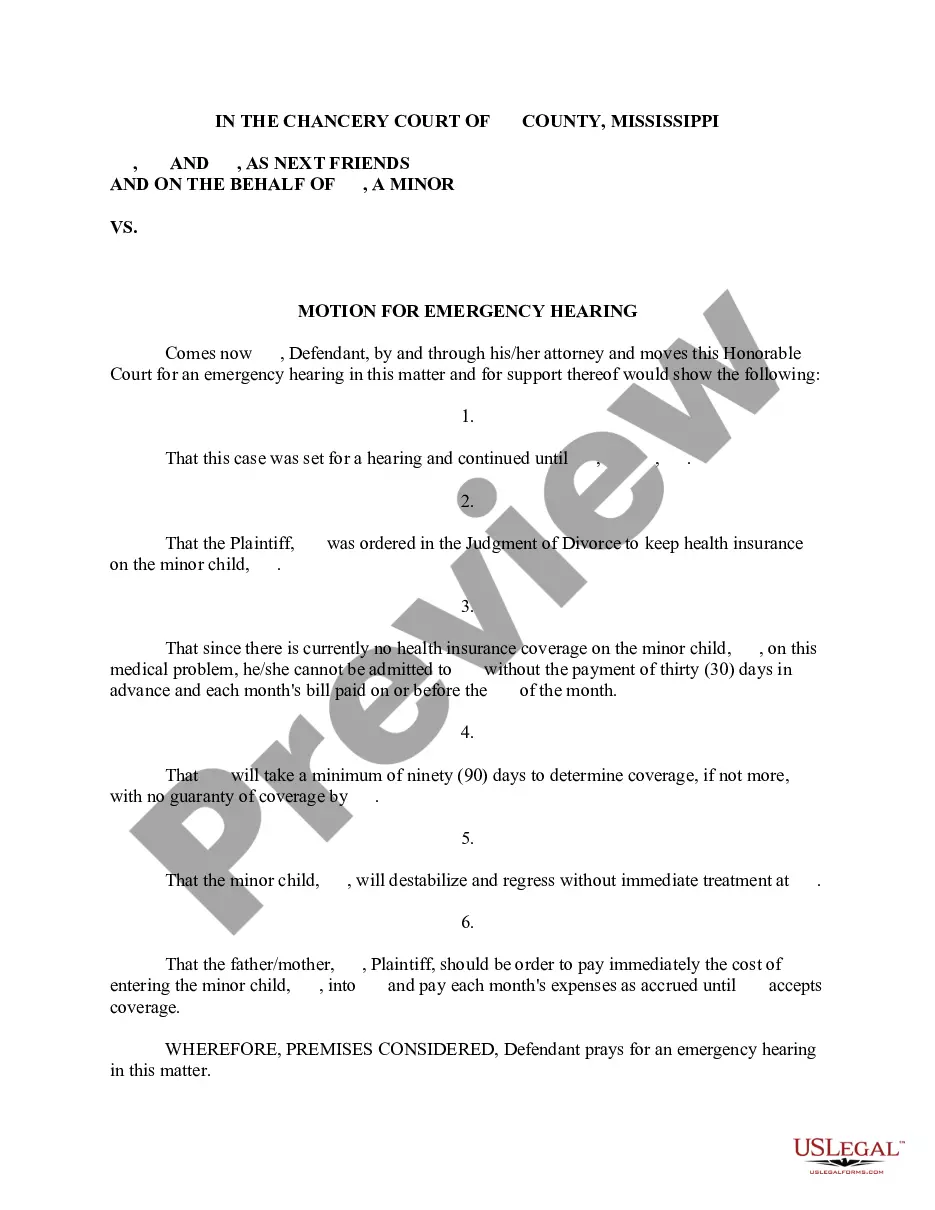
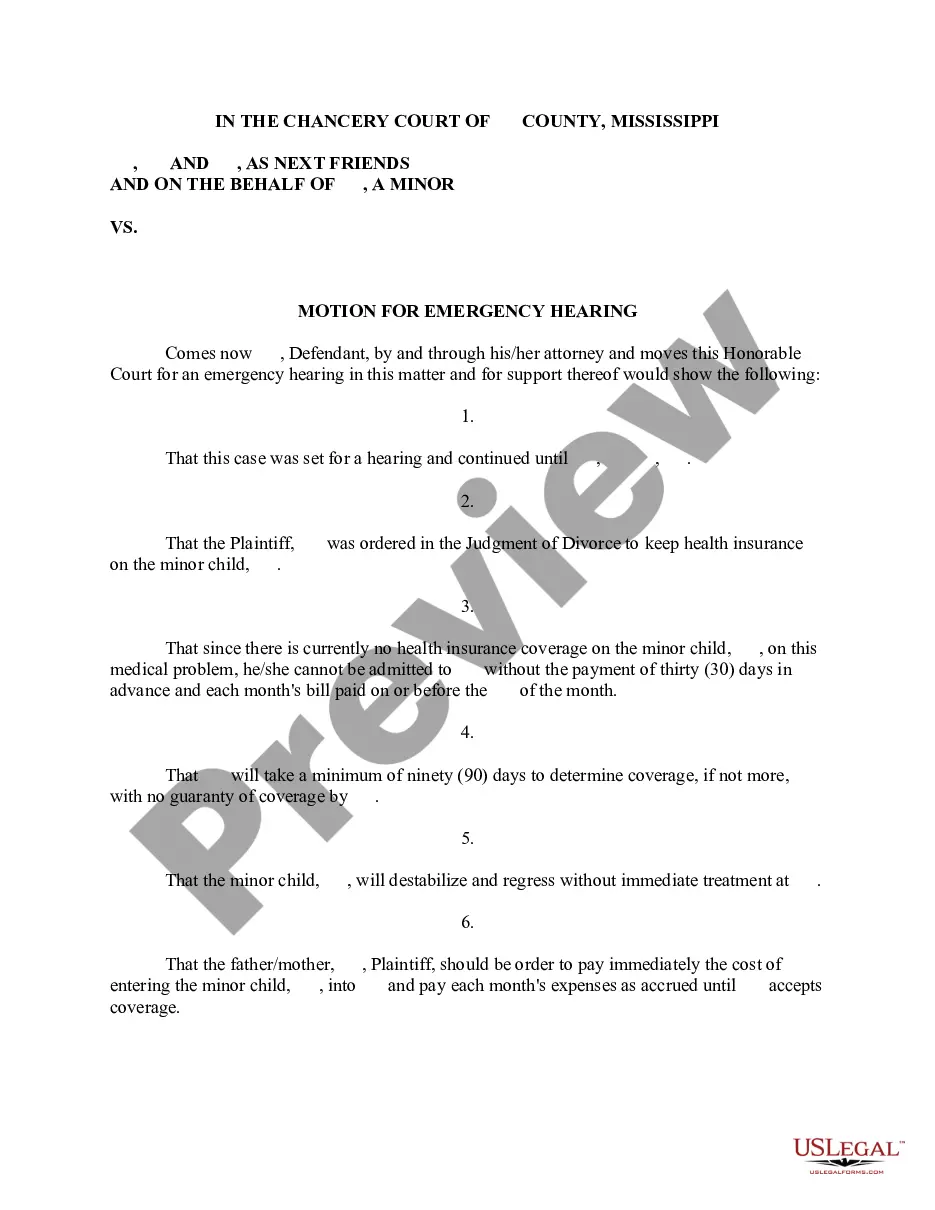
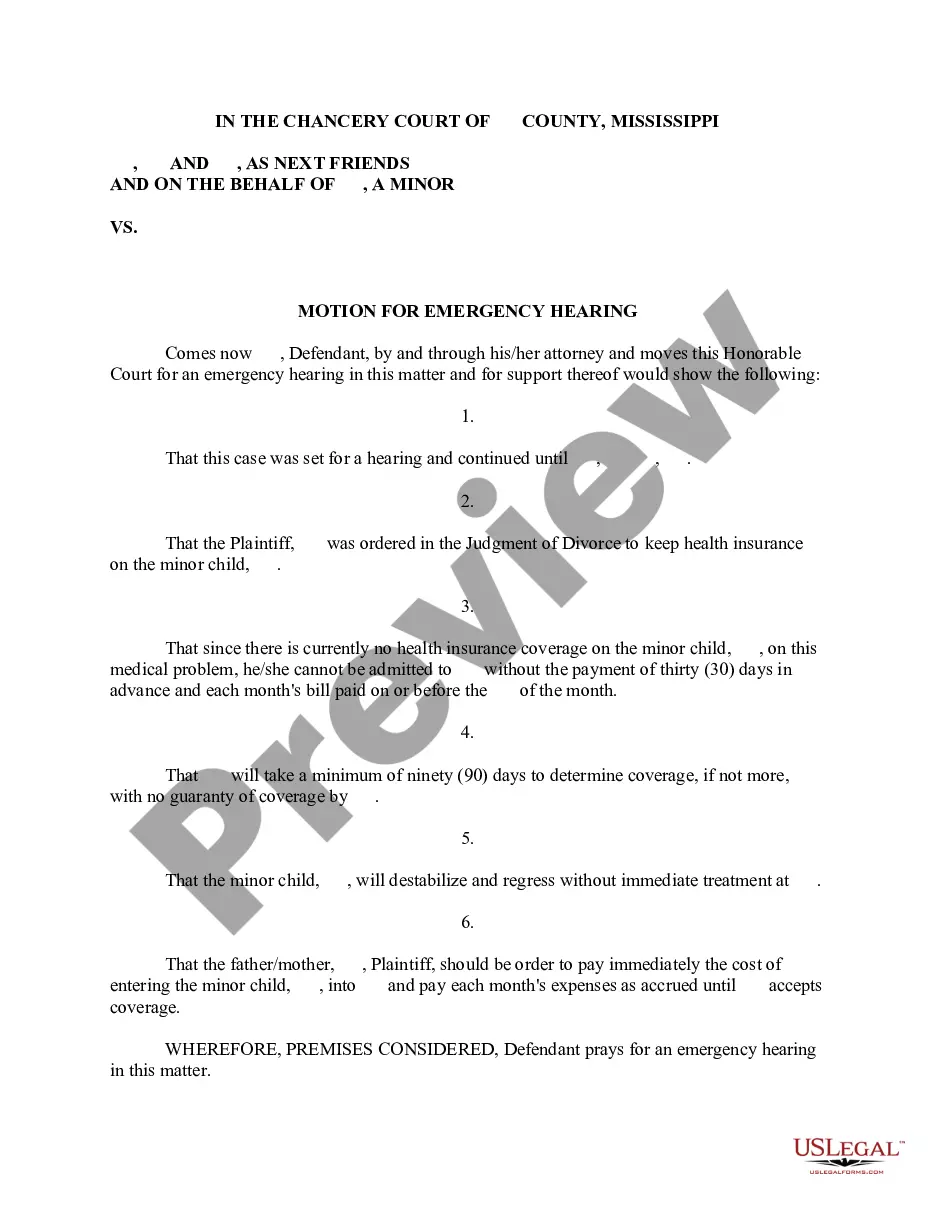
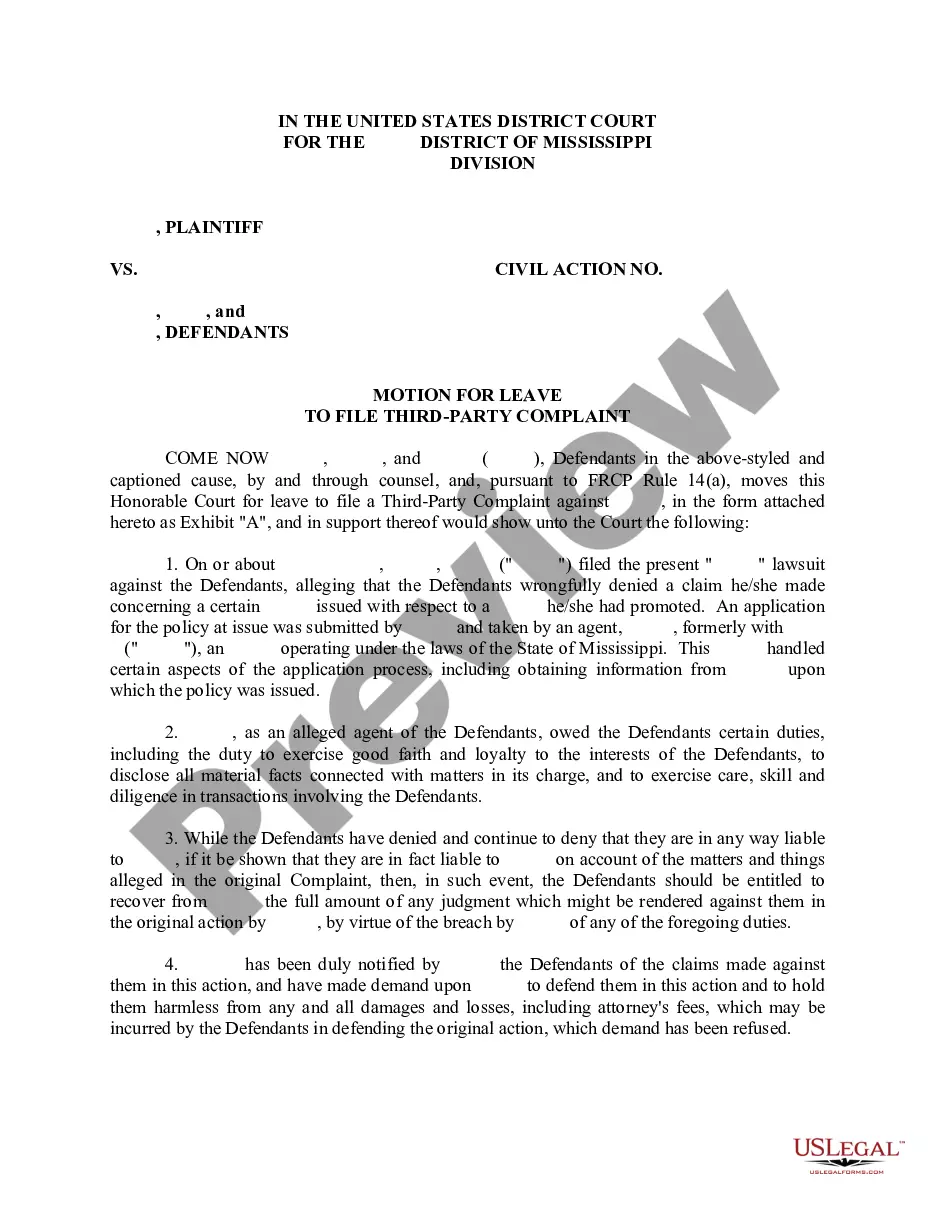
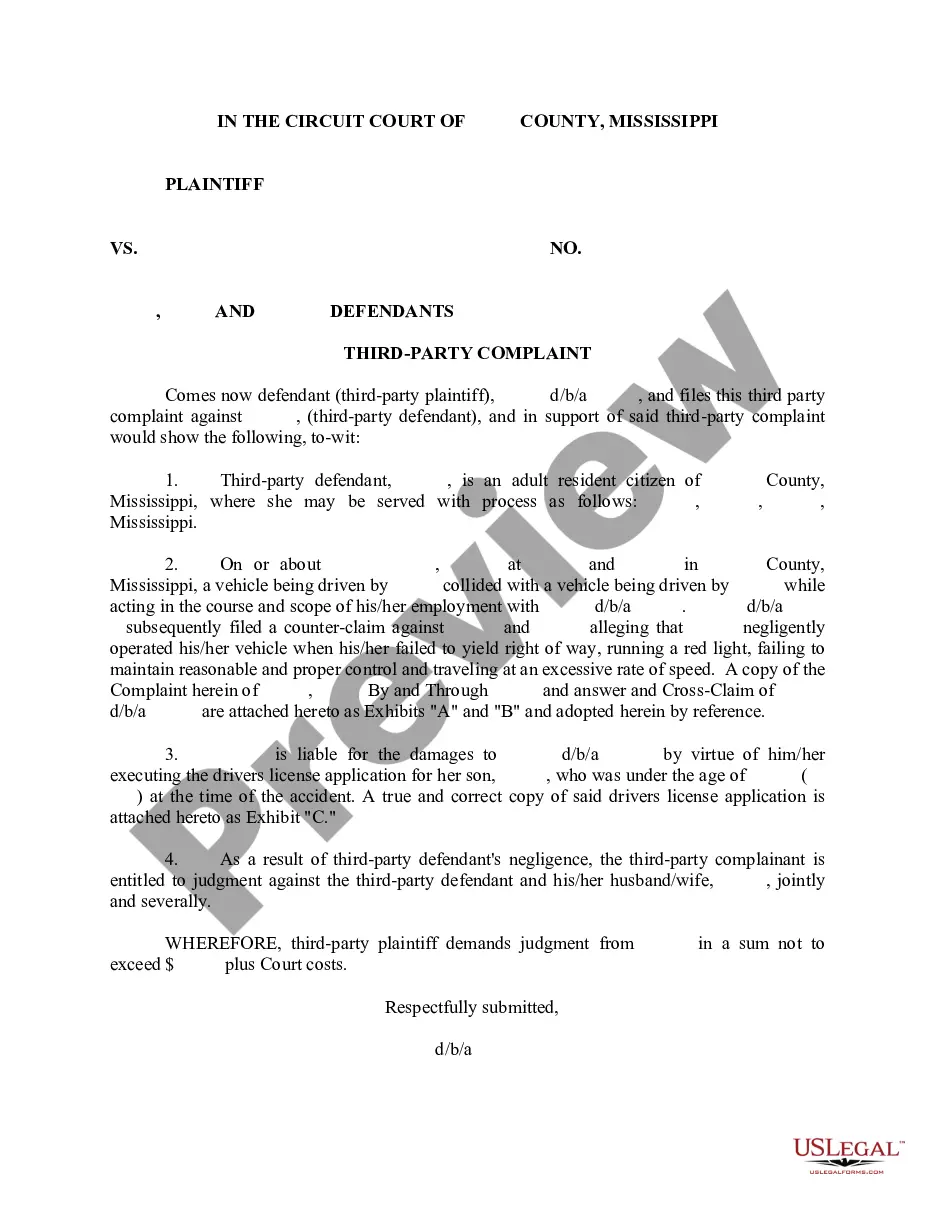
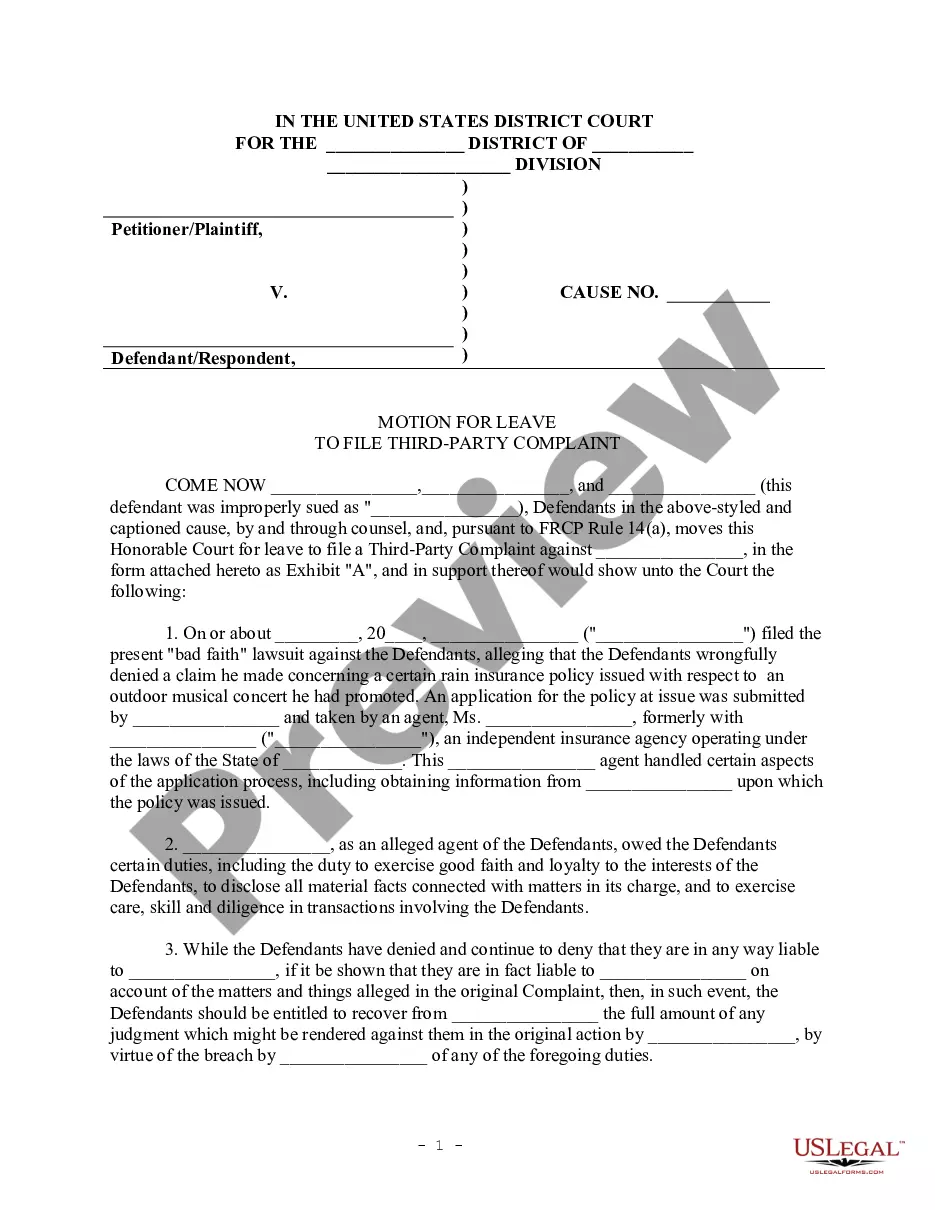
The Motion for Leave to File Third-Party Complaint is a legal document that requests the court's permission to add a third party to an ongoing legal case. This form differs from standard complaint forms as it specifically addresses the need for the court's approval to introduce additional defendants or parties, usually because their involvement is necessary for a proper resolution of the case.
Form components explained
- Caption: Identifies the court, case number, and parties involved.
- Introduction: States the purpose of the motion and the request for an emergency hearing.
- Factual background: Provides essential facts pertinent to the need for the third-party complaint.
- Legal arguments: Outlines the legal basis for allowing the third-party complaint.
- Prayer for relief: Requests the court grant the motion and any other relief deemed appropriate.

When to use this form
This form should be used when there is a need to include an additional party in a legal case to ensure that all relevant issues are addressed. Situations that may arise include disputes over liability in personal injury cases, contract breaches, or family law matters where the involvement of another party is crucial for a fair trial.
Who needs this form
- Defendants in a lawsuit who believe that a third party is responsible for the claims against them.
- Attorneys representing clients who need to initiate third-party claims.
- Individuals involved in legal disputes that require clarification of liability or responsibility.
Completing this form step by step
- Identify the parties involved: Clearly state the current plaintiff, defendant, and proposed third party.
- Draft the factual background: Summarize the reasons why the third party should be included in the case.
- Outline the legal basis: Specify any relevant laws or rules that support your request.
- Include a prayer for relief: Indicate what you are asking the court to order.
- Sign and date the form: Ensure the document includes your signature and the date of filing.
Notarization requirements for this form
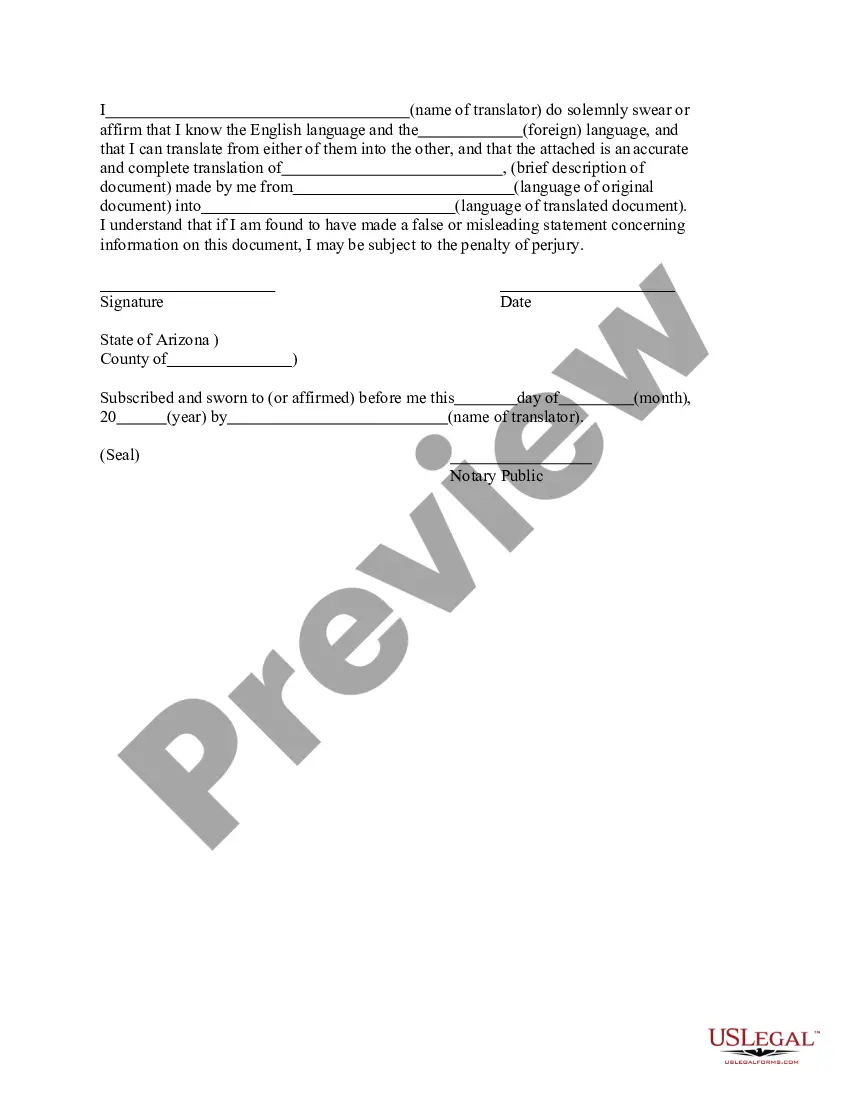
In most cases, this form does not require notarization. However, some jurisdictions or signing circumstances might. US Legal Forms offers online notarization powered by Notarize, accessible 24/7 for a quick, remote process.
Get your form ready online
Our built-in tools help you complete, sign, share, and store your documents in one place.
Make edits, fill in missing information, and update formatting in US Legal Forms—just like you would in MS Word.
Download a copy, print it, send it by email, or mail it via USPS—whatever works best for your next step.
Sign and collect signatures with our SignNow integration. Send to multiple recipients, set reminders, and more. Go Premium to unlock E-Sign.
If this form requires notarization, complete it online through a secure video call—no need to meet a notary in person or wait for an appointment.
We protect your documents and personal data by following strict security and privacy standards.

Make edits, fill in missing information, and update formatting in US Legal Forms—just like you would in MS Word.

Download a copy, print it, send it by email, or mail it via USPS—whatever works best for your next step.

Sign and collect signatures with our SignNow integration. Send to multiple recipients, set reminders, and more. Go Premium to unlock E-Sign.

If this form requires notarization, complete it online through a secure video call—no need to meet a notary in person or wait for an appointment.

We protect your documents and personal data by following strict security and privacy standards.
Mistakes to watch out for
- Failing to provide a clear legal basis for the motion.
- Not including all necessary parties or information.
- Submitting the motion after deadlines have passed.
Advantages of online completion
- Convenient access: Download the form anytime, anywhere.
- Editability: Customize the form based on your specific facts and circumstances.
- Reliability: Templates are prepared by licensed attorneys to ensure accuracy and compliance with legal standards.
Looking for another form?
Form popularity
FAQ
Joinder. Joinder is a process by which parties and claims are added to an ongoing lawsuit. The typical litigation scenario begins with a plaintiff who enters into a lawsuit by suing a defendant. The plaintiff has a claim against the defendant for which he or she seeks some type of relief.
A cross-claim is a claim by one party against a co-party (e.g., a defendant claiming against another defendant, or a plaintiff claiming against another plaintiff, arising out of the original complaint.)
2 attorney answersThird party claim requires you to add a party. Cross claim is against another defendant already in the case.
Third-party defendant. SUMMONS ON A THIRD-PARTY COMPLAINT. To: (Third-party defendant's name and address) A lawsuit has been filed against defendant , who as third-party plaintiff is making this claim against you to pay part or all of what the defendant may owe to the plaintiff .
Impleader is a procedural device before trial in which one party joins a third party into a lawsuit because that third party is liable to an original defendant.This complaint alleges that the third party is liable for all or part of the damages that the original plaintiff may win from the original defendant.
Motions before a trial are usually made by a party to obtain the security of a court order that will govern some aspect of the parties' relations until the time of trial, as described below. Motions after trial are made to modify or enforce the orders already in place.
The motion for leave to file an answer to a complaint means that the defendant did not answer within the requisite time period, and is essentially asking for more time to answer the complaint.
A hearing for the purpose of asking a judge to issue a ruling or order. The motion is typically filed by one side and a notice is sent to the opposing attorney who responds in writing.
After you complete your motion, you must file it with the court.You must then serve (mail) a copy of your filed motion (including all exhibits and the date, time, and place of hearing) to all other parties in the case. If a party is represented by an attorney, mail the motion directly to the attorney's office.