Mississippi Order Granting Leave to File Third-Party Complaint
Overview of this form
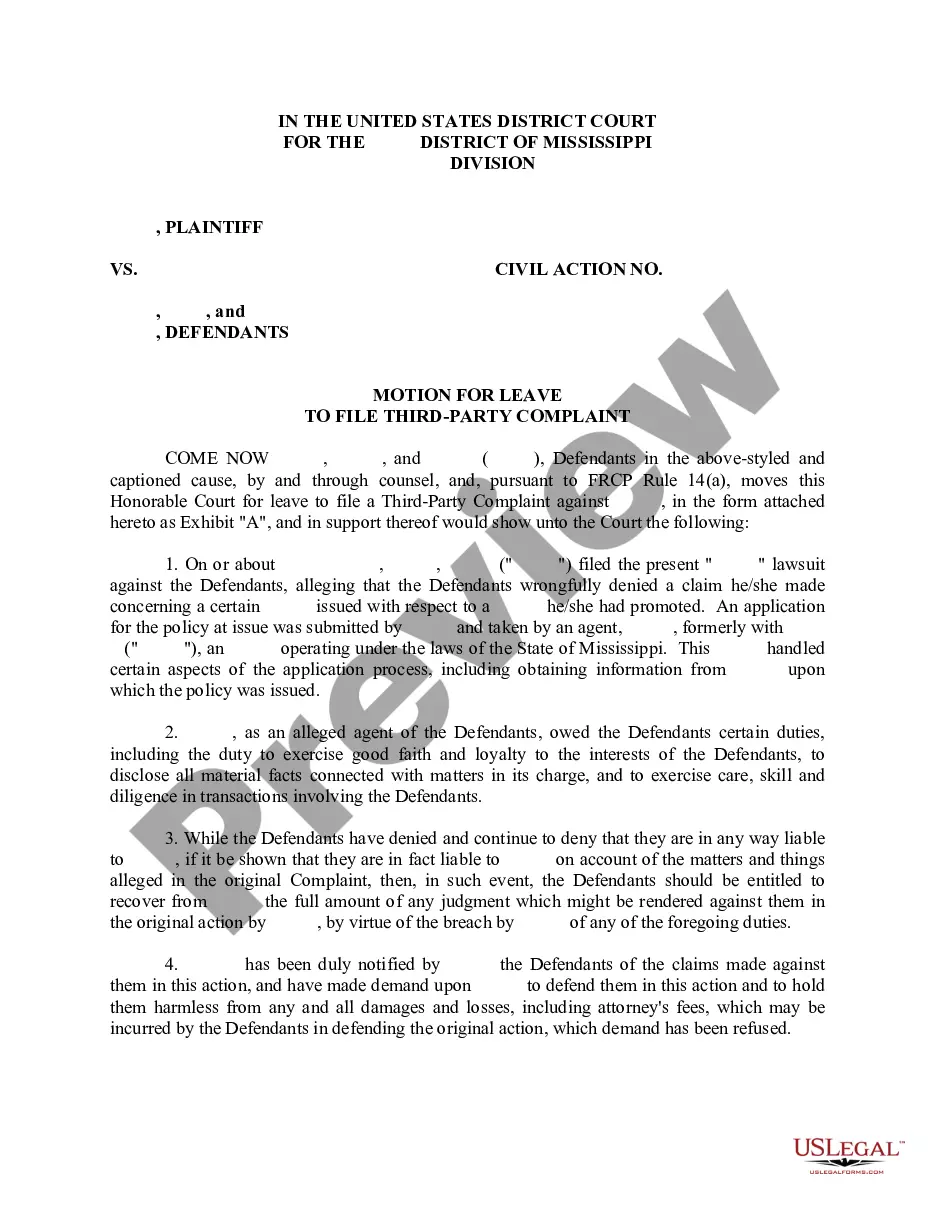
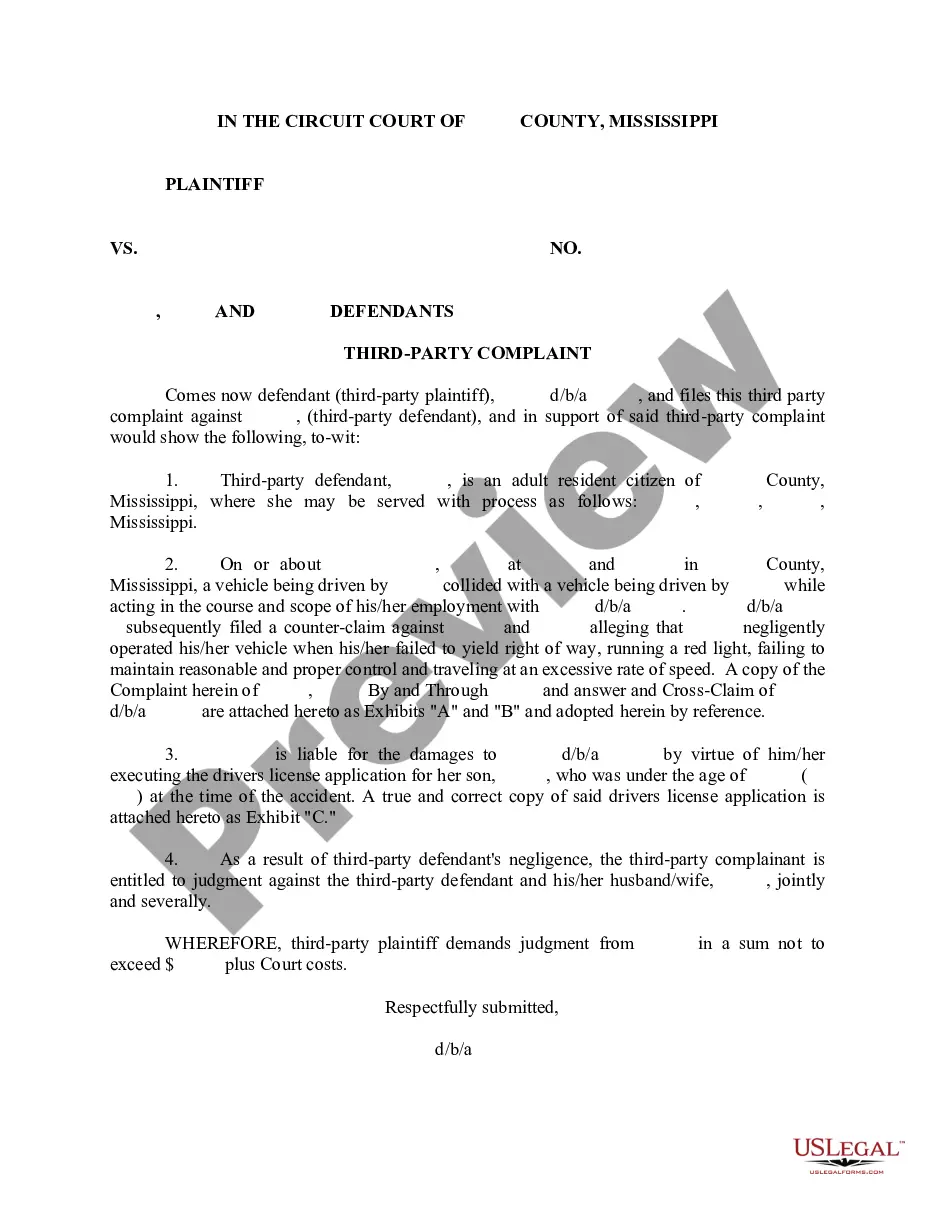
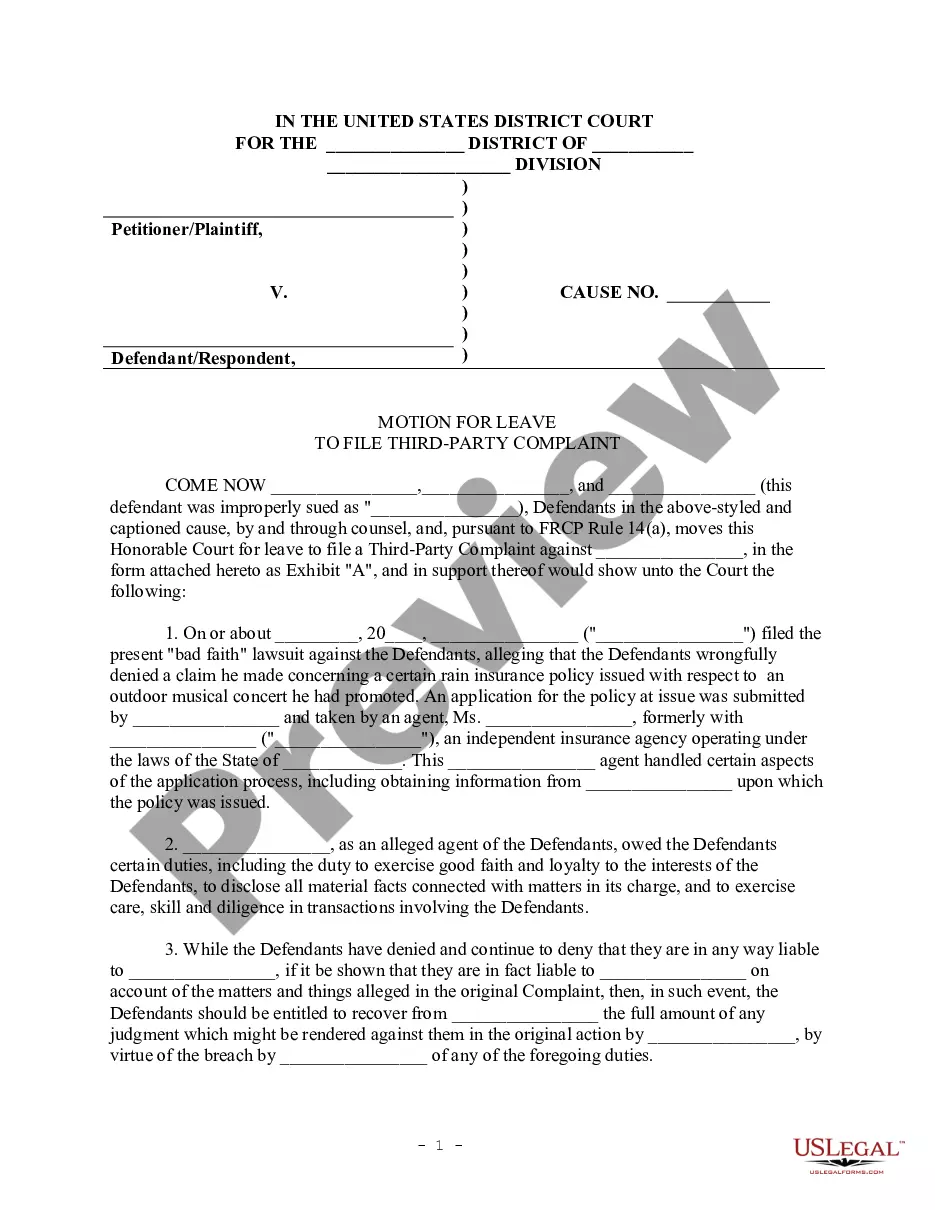
The Order Granting Leave to File Third-Party Complaint is a court document that officially allows a party involved in a lawsuit to bring in additional parties to the case. This form serves as a crucial tool for ensuring that all relevant parties are included in the legal proceedings, which can help in resolving disputes efficiently. Unlike other motions, this specific order is focused on expanding the scope of litigation by allowing claims against third parties.
Key parts of this document
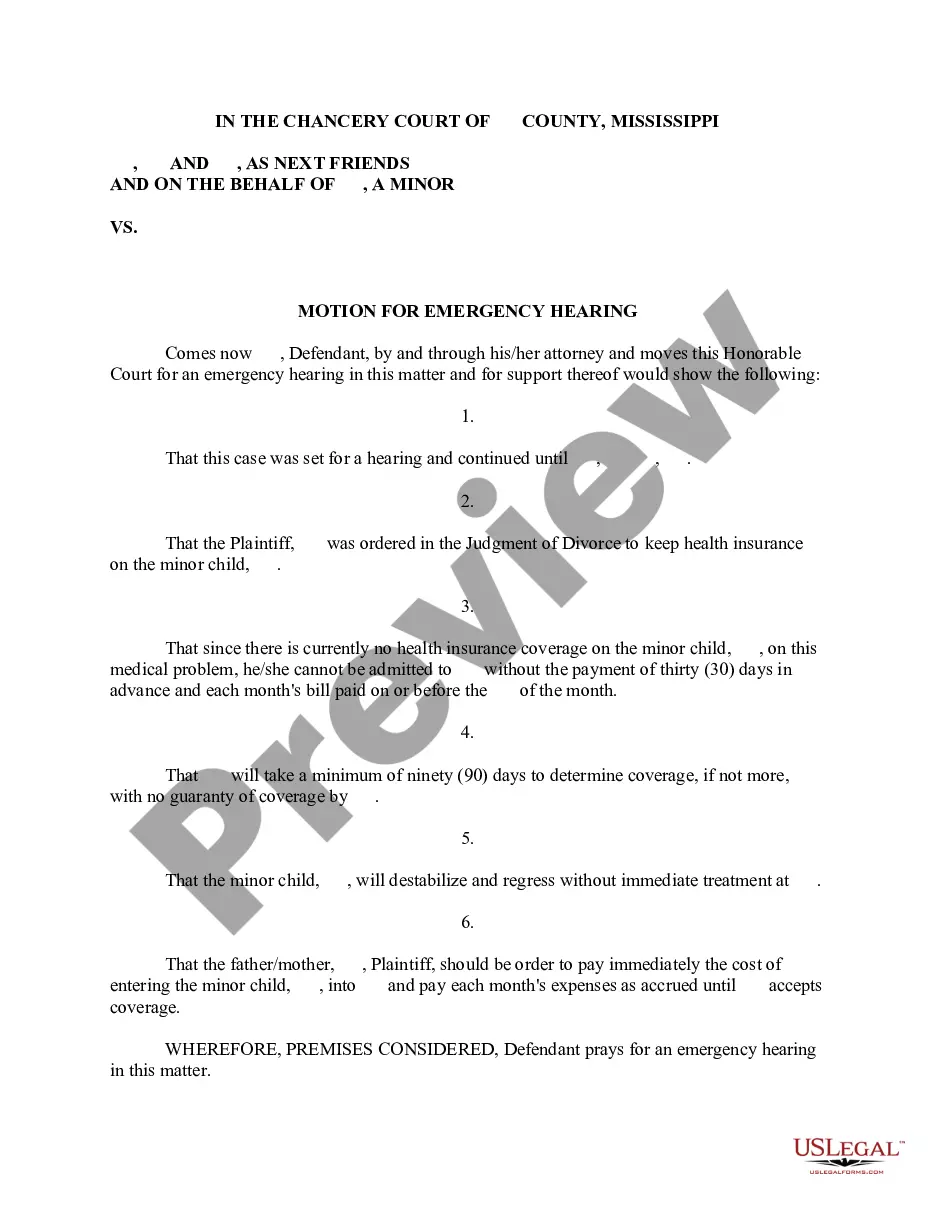
- Case caption: Identifies the parties involved and the case number.
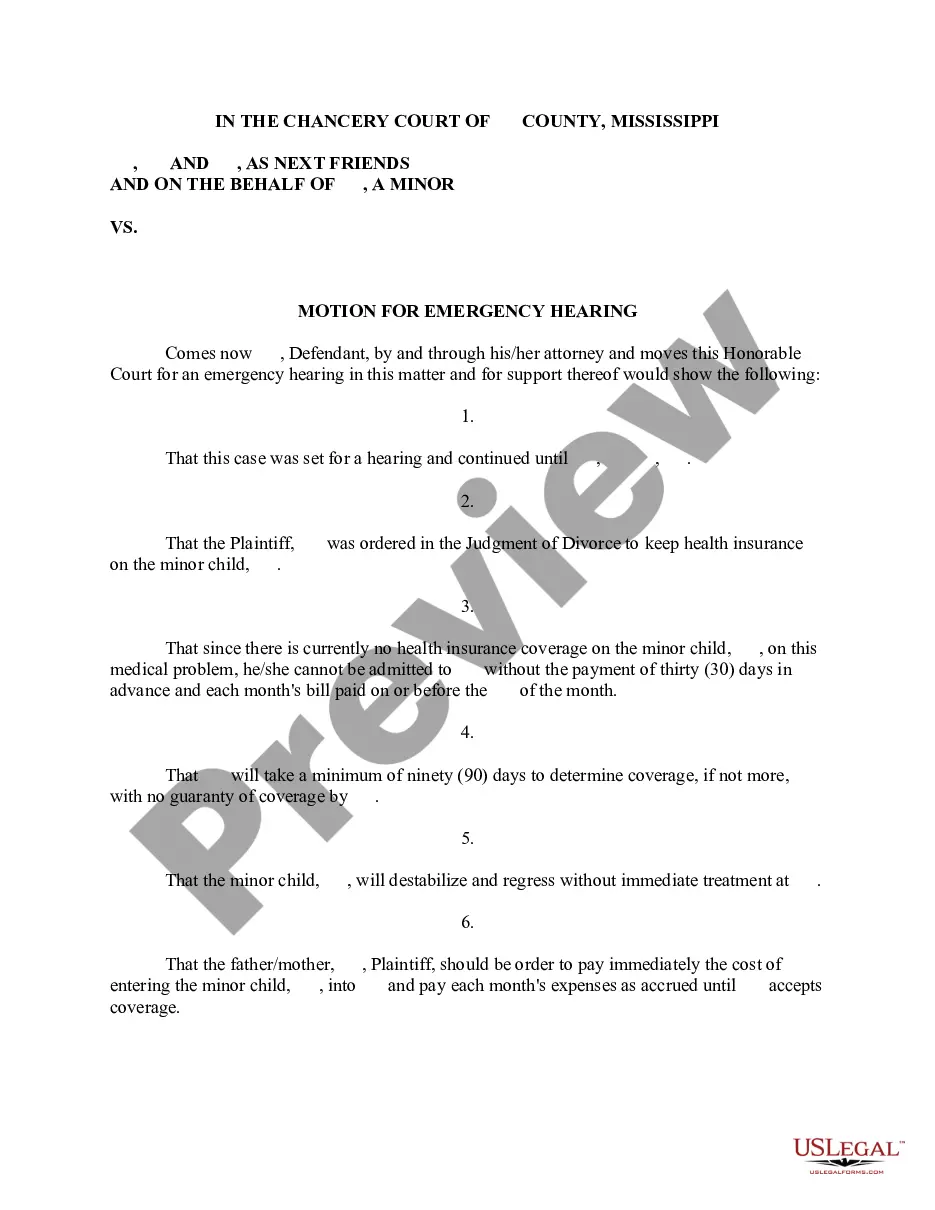
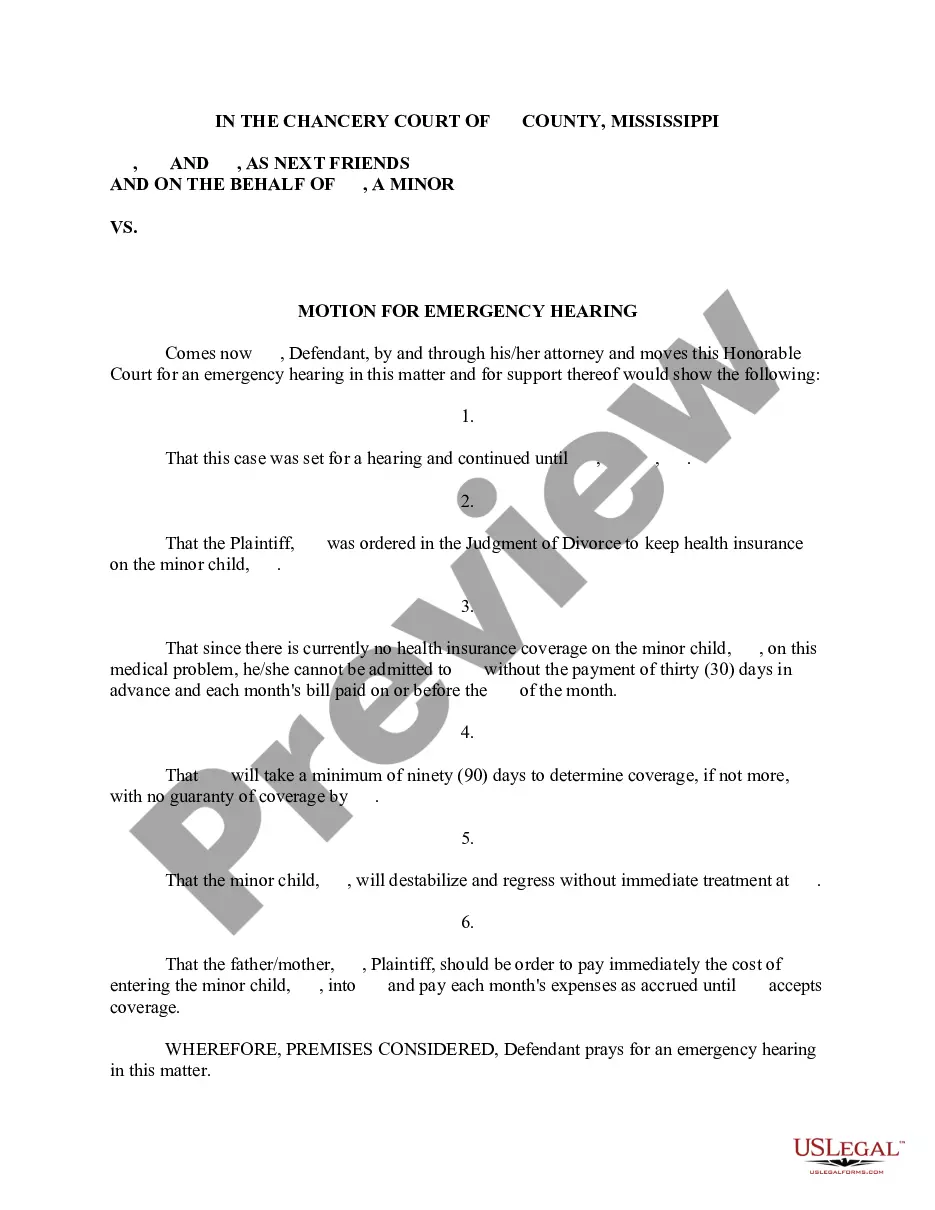
- Motion for emergency hearing: A request highlighting the urgency of the matter.
- Justification for third-party complaint: Outlines the reasons for including additional parties.
- Court order: The actual ruling by the judge permitting the filing process.
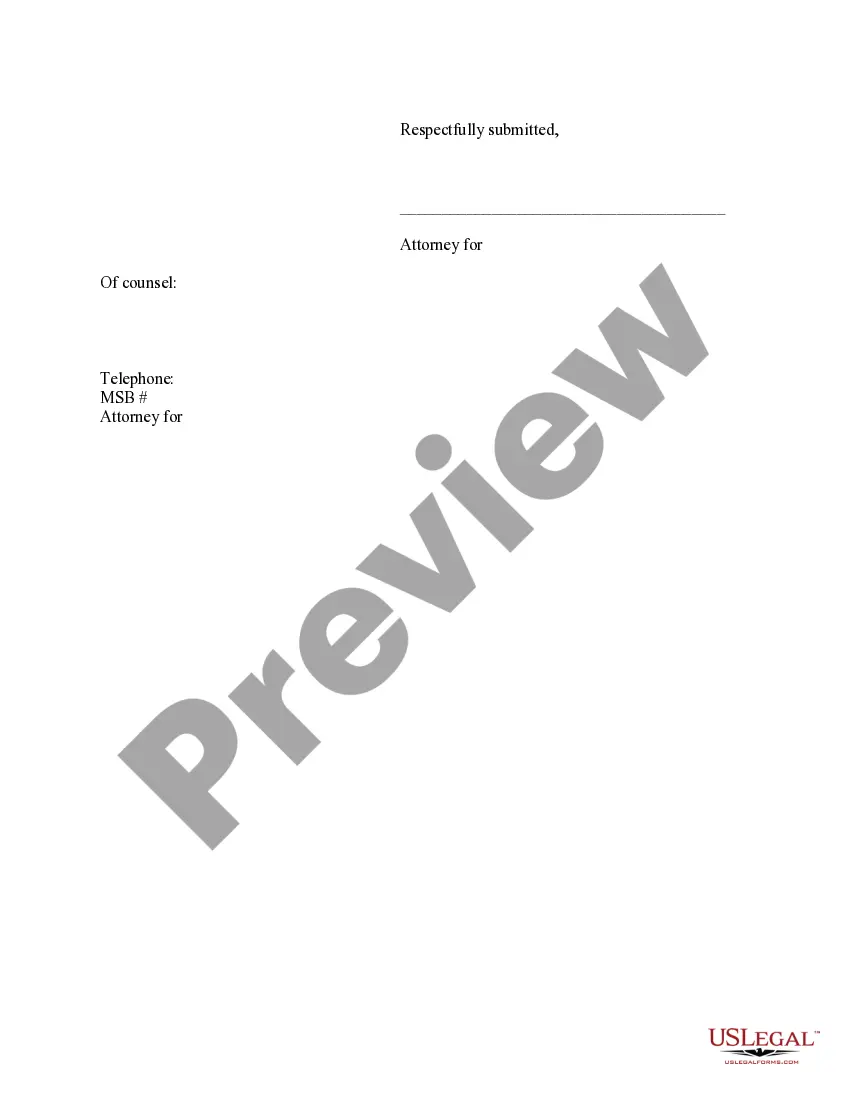
- Signatures: Required signatures from the attorney and, if necessary, the parties involved.
Situations where this form applies
This form is needed when a party in an ongoing lawsuit wants to add a third party to the complaint. Circumstances that may necessitate the use of this form include situations where an existing party believes that the inclusion of another party is essential for a fair resolution of the lawsuit. This may occur in instances concerning multiple defendants or when a claim involves significant rights or obligations that may involve additional parties.
Who should use this form
- Parties in a civil lawsuit who need to add a third party to their case.
- Attorneys representing clients in litigation who require the court's permission to include additional claims.
- Individuals seeking to protect their legal rights by ensuring all responsible parties are named in the complaint.
Steps to complete this form
- Identify the parties involved: Clearly state the names and roles of all involved parties in the case caption.
- State the urgency: Describe the need for an emergency hearing in the motion section, providing facts to support your claim.
- Outline reasons for including a third party: Justify how the third party ties into the existing case, including relevant facts.
- Obtain necessary signatures: Ensure the form is signed by the attorney and any required individuals to validate the document.
- File with the court: Submit the completed form to the appropriate court according to local rules and procedures.
Notarization guidance
This form does not typically require notarization to be legally valid. However, some jurisdictions or document types may still require it. US Legal Forms provides secure online notarization powered by Notarize, available 24/7 for added convenience.
Get your form ready online
Our built-in tools help you complete, sign, share, and store your documents in one place.
Make edits, fill in missing information, and update formatting in US Legal Forms—just like you would in MS Word.
Download a copy, print it, send it by email, or mail it via USPS—whatever works best for your next step.
Sign and collect signatures with our SignNow integration. Send to multiple recipients, set reminders, and more. Go Premium to unlock E-Sign.
If this form requires notarization, complete it online through a secure video call—no need to meet a notary in person or wait for an appointment.
We protect your documents and personal data by following strict security and privacy standards.

Make edits, fill in missing information, and update formatting in US Legal Forms—just like you would in MS Word.

Download a copy, print it, send it by email, or mail it via USPS—whatever works best for your next step.

Sign and collect signatures with our SignNow integration. Send to multiple recipients, set reminders, and more. Go Premium to unlock E-Sign.

If this form requires notarization, complete it online through a secure video call—no need to meet a notary in person or wait for an appointment.

We protect your documents and personal data by following strict security and privacy standards.
Mistakes to watch out for
- Failing to provide adequate reasons for including a third party, leading to potential rejection of the motion.
- Missing signatures or improperly formatted signatures that can invalidate the document.
- Not adhering to local court rules regarding the filing process or deadlines.
- Neglecting to clearly indicate the urgency of the request, which may diminish the chances of an expedited hearing.
Advantages of online completion
- Convenience: Download and complete the form from anywhere, saving time compared to in-person visits.
- Editability: Use customizable templates that allow you to tailor the form to your specific case needs.
- Reliability: Access forms prepared by licensed attorneys to ensure compliance with legal standards.
Legal use & context
- Ensures that all relevant parties are involved in legal proceedings, promoting fairness in litigation.
- Helps avoid lengthy disputes by addressing all claims and counterclaims at once.
- May be necessary for securing rights to seek damages or specific performance from third parties.
What to keep in mind
- The Order Granting Leave to File Third-Party Complaint allows for the inclusion of additional parties in a lawsuit.
- This form is essential when existing parties believe third parties are crucial to the resolution of the case.
- Proper and complete filing increases the chance of the court granting the requested leave.
Looking for another form?


Form popularity
FAQ
The motion for leave to file an answer to a complaint means that the defendant did not answer within the requisite time period, and is essentially asking for more time to answer the complaint.
It just means that the Court has granted someone's request.
Sustained without leave to amend basically means your complaint was dismissed with prejudice. You cannot refile a complaint on those actions.
Generally amendments of any process, proceeding, pleading, or record are allowed at any time in furtherance of justice, upon such terms as may be just. Leave of court shall be given freely when justice so requires.
Amended complaint. n. what results when the party suing (plaintiff or petitioner) changes the complaint he/she has filed. It must be in writing, and can be done before the complaint is served on any defendant, by agreement between the parties (usually their lawyers), or upon order of the court.
A Motion for Leave to Amend is used to request permission from the court to change something in the original petition. Often times this type of motion is used to fix errors or omissions within the paperwork.
A motion or application for leave is a motion filed with the court seeking permission to deviate from an established rule or procedure of the court.
LEAVE OF COURT. The grant by the court of something, which, without such grant it would have been unlawful to do.
The motion for leave to file an answer to a complaint means that the defendant did not answer within the requisite time period, and is essentially asking for more time to answer the complaint.