Missouri Letter from Tenant to Landlord containing Notice to Cease Unjustified Nonacceptance of Rent
What is this form?
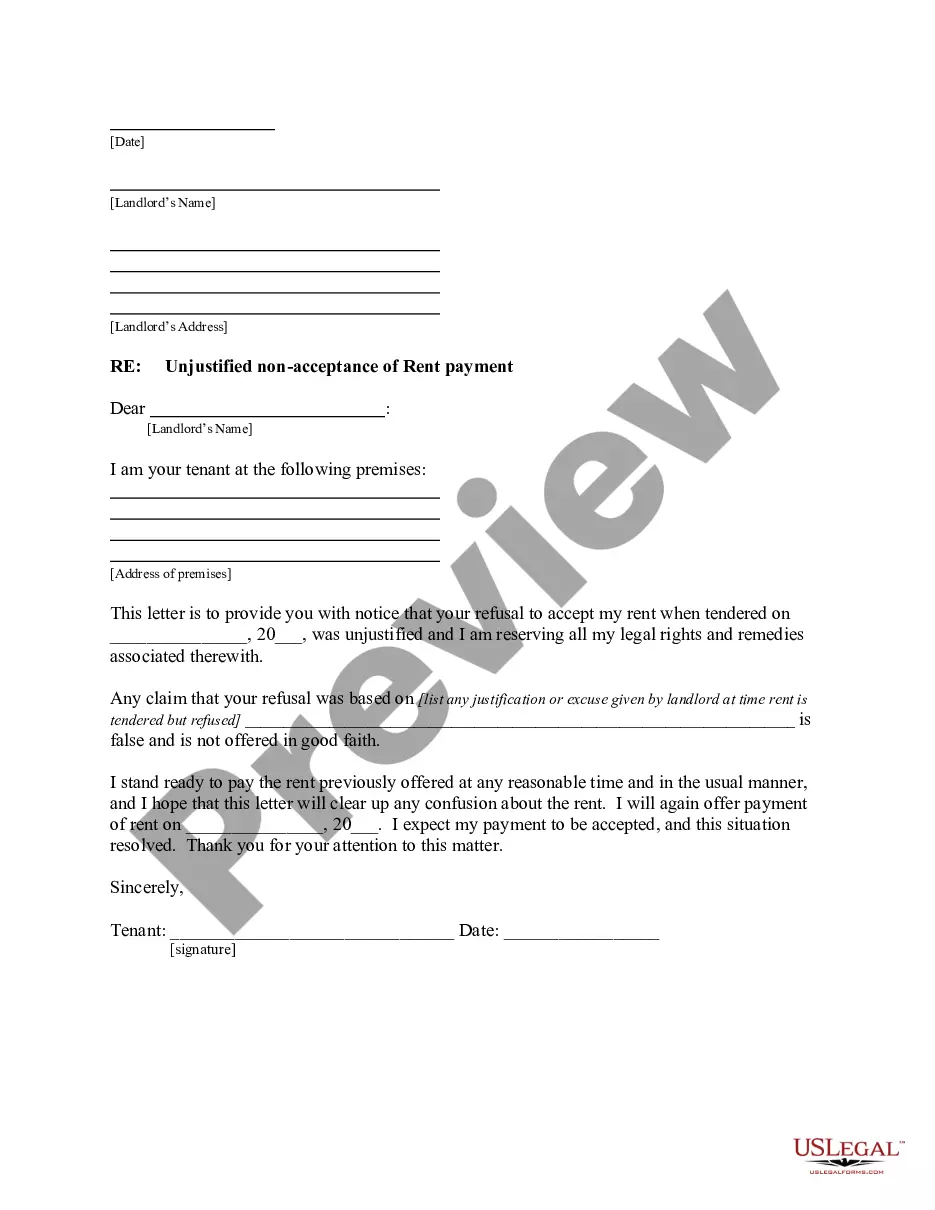
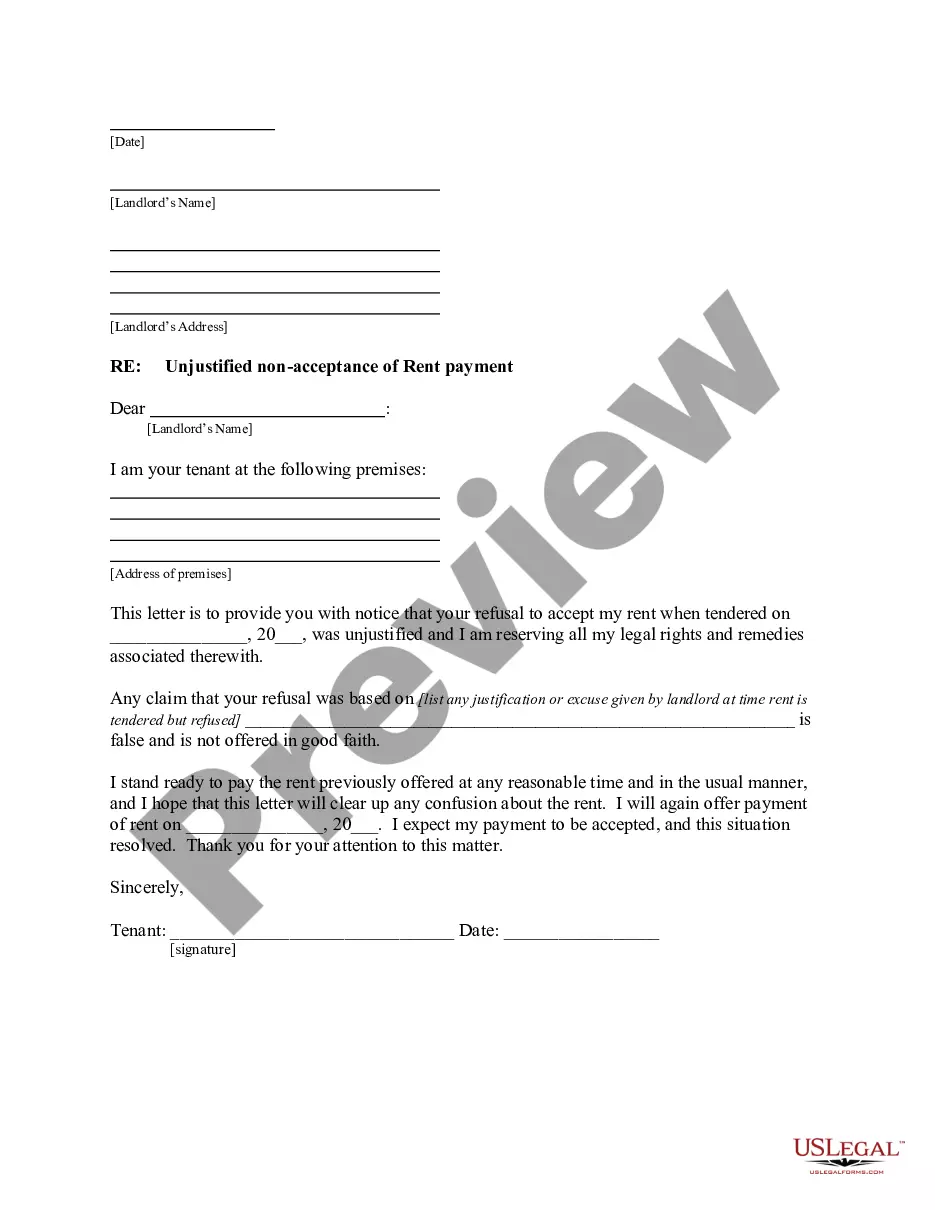
This form is a Letter from Tenant to Landlord containing a Notice to Cease Unjustified Nonacceptance of Rent. Its primary purpose is to formally notify the landlord that the tenant believes their refusal to accept rent payments is unjustified. This letter serves to reserve the tenant's rights and remedies associated with the landlord's actions, ensuring that the tenantâs position is clearly communicated and documented.
What’s included in this form
- Tenantâs claim: Clearly states the tenant's belief that the landlord's refusal to accept rent is unjustified.
- Offer of payment: Indicates the tenant's willingness to pay the rent previously tendered.
- Request for acceptance: Specifies that the tenant expects payment to be accepted to resolve the situation.
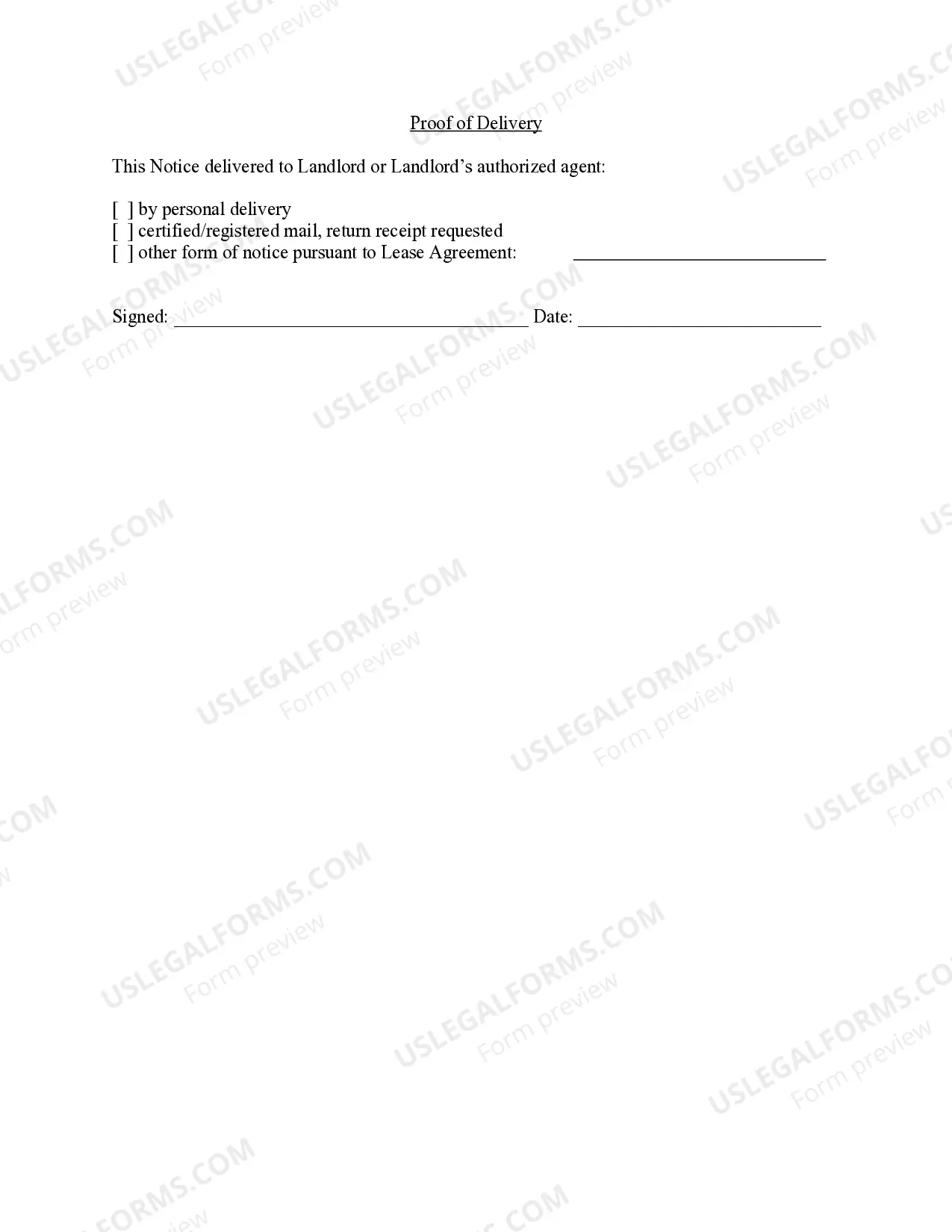
- Delivery method: Specifies how the notice was delivered to the landlord or their authorized agent.


When to use this form
This form should be used when a tenant wishes to formally contest their landlordâs refusal to accept rent. It is particularly useful in situations where the landlord has provided unjustified reasons for not accepting payment, thus putting the tenantâs rights at risk. By using this letter, tenants can clarify misunderstandings regarding rent payments and protect their legal rights.
Who needs this form
This form is intended for:
- Tenants who have experienced nonacceptance of rent by their landlord without valid justification.
- Individuals looking to resolve disputes regarding payment of rent.
- Anyone wishing to document their communication with their landlord regarding rent issues.
Steps to complete this form
To complete this form, follow these steps:
- Identify the parties involved, including the tenant and landlord's names and addresses.
- Clearly state the reasons for the landlord's refusal to accept rent, if known.
- Specify the date when the tenant plans to offer the rent payment again.
- Include the tenant's signature, along with the date of signing.
- Document the method of delivery to the landlord or their authorized agent.
Does this document require notarization?
This form does not typically require notarization unless specified by local law.
Get your form ready online
Our built-in tools help you complete, sign, share, and store your documents in one place.
Make edits, fill in missing information, and update formatting in US Legal Forms—just like you would in MS Word.
Download a copy, print it, send it by email, or mail it via USPS—whatever works best for your next step.
Sign and collect signatures with our SignNow integration. Send to multiple recipients, set reminders, and more. Go Premium to unlock E-Sign.
If this form requires notarization, complete it online through a secure video call—no need to meet a notary in person or wait for an appointment.
We protect your documents and personal data by following strict security and privacy standards.

Make edits, fill in missing information, and update formatting in US Legal Forms—just like you would in MS Word.

Download a copy, print it, send it by email, or mail it via USPS—whatever works best for your next step.

Sign and collect signatures with our SignNow integration. Send to multiple recipients, set reminders, and more. Go Premium to unlock E-Sign.

If this form requires notarization, complete it online through a secure video call—no need to meet a notary in person or wait for an appointment.

We protect your documents and personal data by following strict security and privacy standards.
Typical mistakes to avoid
- Failing to provide specific details about the landlord's reasons for refusing rent.
- Not including a clear offer of payment with a specified date.
- Neglecting to sign the letter or provide the date.
Benefits of using this form online
- Convenience of downloadable templates for quick access and completion.
- Editability allows tenants to customize the form for their specific situation.
- Reliability, as forms are drafted with legal input to ensure compliance with regulations.
Legal use & context
- This form is important for documenting issues that may affect future legal proceedings.
- Helps preserve the tenantâs rights under local landlord-tenant laws.
- This letter strengthens the tenant's position in case of a legal dispute.
Key takeaways
- This form is essential for tenants facing unjustified rent refusal.
- It allows tenants to formally notify landlords while reserving their legal rights.
- Ensuring proper delivery and documentation is crucial for legal protection.
Looking for another form?

Form popularity
FAQ
To fill out a notice to terminate a tenancy, begin by including the date, the tenant's name, and the landlord's name. Clearly state the intention to terminate the lease and specify the reason, if applicable. Ensure that you provide the required notice period as outlined in your lease agreement or by state law. For assistance, you can utilize the resources provided by uslegalforms, including the Missouri Letter from Tenant to Landlord containing Notice to Cease Unjustified Nonacceptance of Rent.
renewal notice is a formal communication from a landlord to a tenant indicating that their lease will not be renewed at the end of its term. For instance, the notice may state that the landlord has decided not to extend the rental agreement and provide the tenant with the final date of their tenancy. This document is important as it allows the tenant to prepare for relocation. You may also consider using a Missouri Letter from Tenant to Landlord containing Notice to Cease Unjustified Nonacceptance of Rent for related issues.
A 14/30 notice in Missouri refers to the timeframe given to tenants who are being evicted for specific reasons, such as nonpayment of rent. This notice gives tenants 14 days to remedy the issue, like paying rent, before the landlord can proceed with eviction. If the tenant fails to comply, the landlord can then provide a 30-day notice to vacate. Understanding the implications of this notice is vital for tenants, and resources like the Missouri Letter from Tenant to Landlord containing Notice to Cease Unjustified Nonacceptance of Rent can assist in addressing these situations.
The three stages of eviction in Missouri are the notice stage, the court stage, and the enforcement stage. Initially, the landlord must provide a written notice to the tenant, followed by filing an eviction suit if the tenant does not comply. If the court rules in favor of the landlord, a judgment is entered, leading to the enforcement of the eviction. Tenants can use a Missouri Letter from Tenant to Landlord containing Notice to Cease Unjustified Nonacceptance of Rent to protect their rights during this process.
A notice to vacate can be considered invalid if it does not meet the legal requirements outlined in Missouri law. For instance, if the notice lacks necessary details, such as the reason for eviction or the correct notice period, it may not hold up in court. Additionally, if the landlord has accepted rent after issuing the notice, it could invalidate the eviction process. Tenants may find it beneficial to use a Missouri Letter from Tenant to Landlord containing Notice to Cease Unjustified Nonacceptance of Rent to clarify their position.
Renters have the right to a habitable dwelling and the right to report health and safety violations. Missouri landlords also have certain rights, such as the right to collect rent, the right to pursue eviction for lease violations, and the right to reimbursement for costs from property damage.
Ten-Day Notice to Vacate: In some cases, the landlord can give the tenant a ten-day notice to vacate. This notice will inform the tenant that the tenant has ten days to move out of the rental unit or the landlord will file an eviction lawsuit with the court.
If the landlord is evicting the tenant for violating the lease, the landlord must submit a complaint and summons to the circuit court. The complaint must contain all the details of the lease violation and the notice given. The tenant will receive a copy of the complaint and summons and a date for a hearing (see Mo.
Ask the Clerk for an Order to Show Cause. This is the only way to stop the eviction and allow you a chance to go before a judge. The clerk will give you a form (an affidavit) to fill out. This is a complicated form which has a series of statements which may apply to your case.
Talk to Your Landlord You may be able to come to an agreement without going to court. An eviction will cost both of you money (as well as time), and your landlord may be willing to stop the eviction if you agree to certain terms, such as paying rent you owe or stopping behavior that violates the lease.