Minnesota Last Will and Testament for Divorced person not Remarried with Minor Children
What is this form?
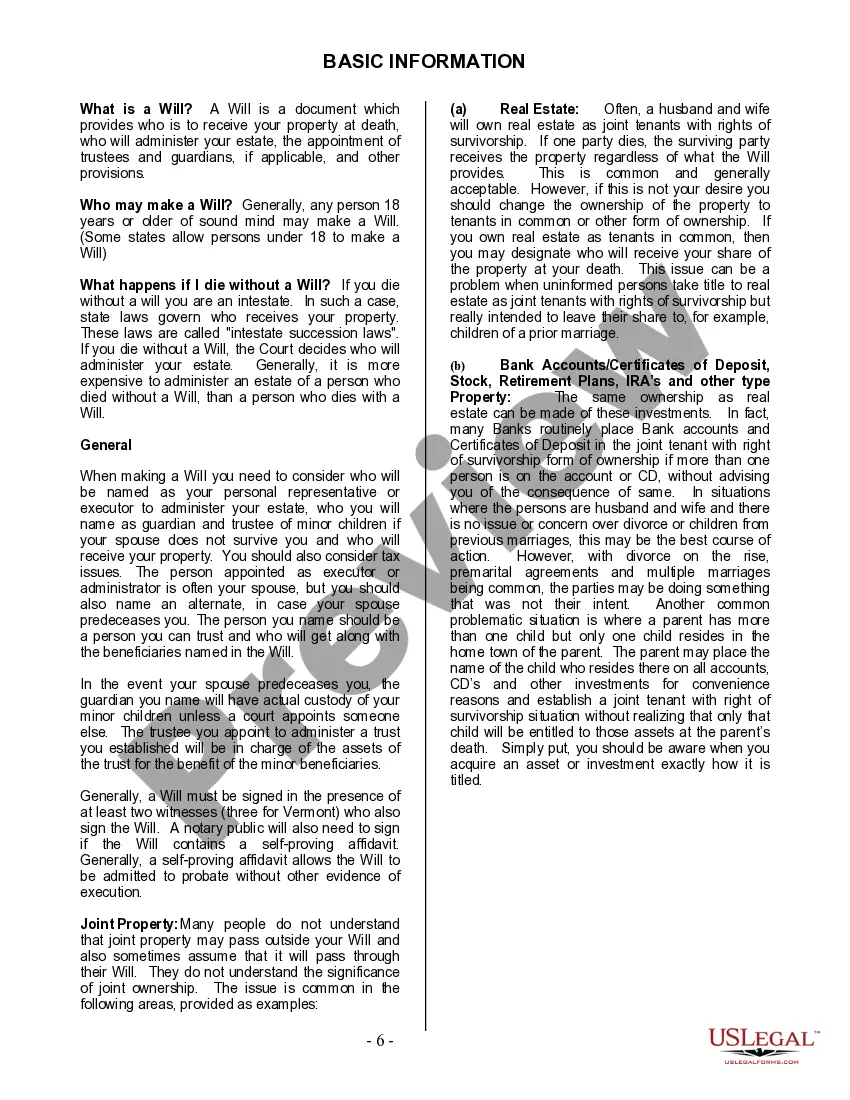
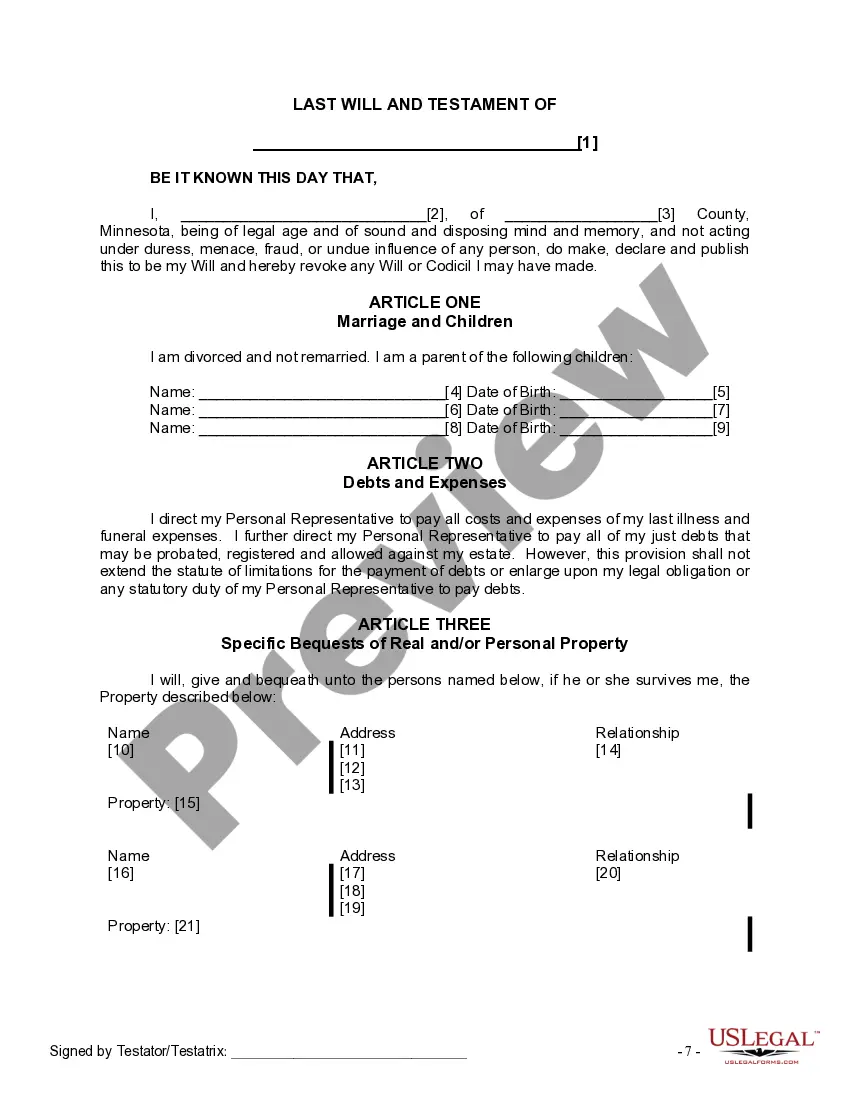
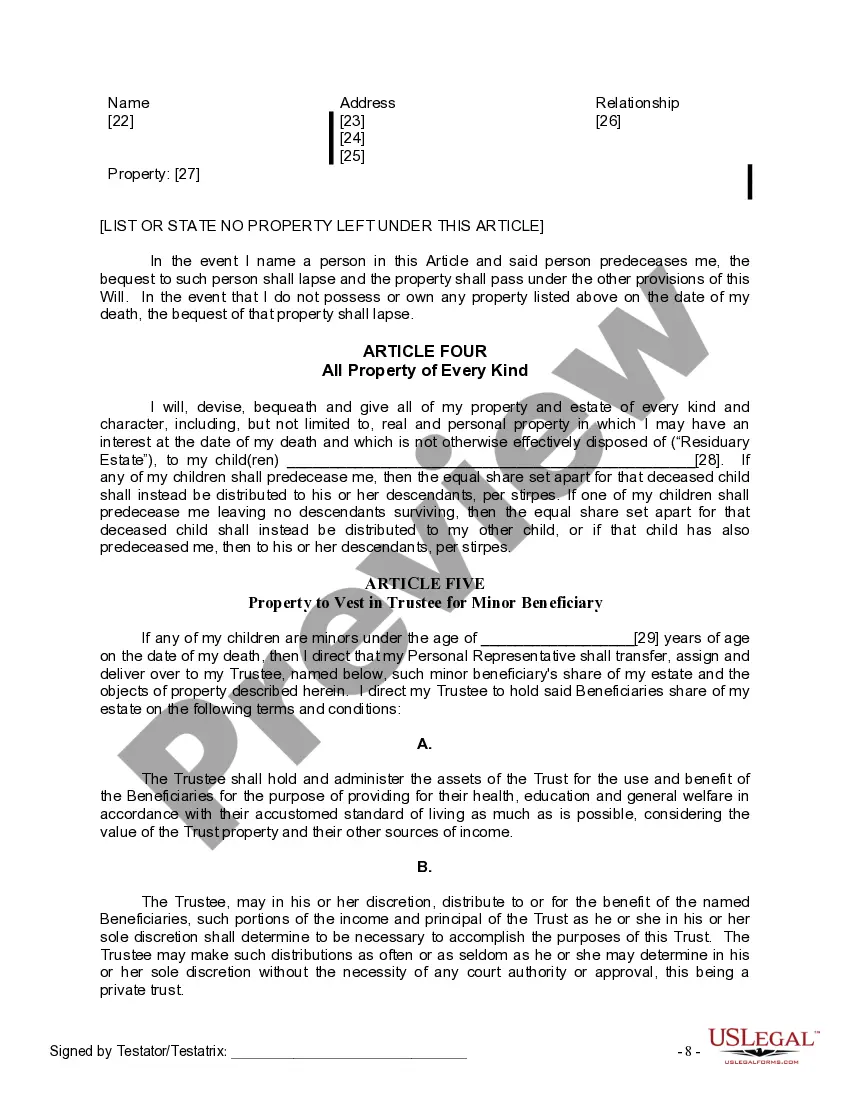
The Last Will and Testament for a divorced person not remarried with minor children is a legal document that outlines how your assets will be distributed upon your death. It recognizes your unique family situation, allowing you to appoint a personal representative, designate beneficiaries, and set provisions for your minor children. This form is tailored specifically for individuals who have been divorced and wish to ensure that their minor children are taken care of after their passing.
Key components of this form
- Identification of the testator (you).
- Appointment of a personal representative (executor).
- Specification of minor children and their guardianship.
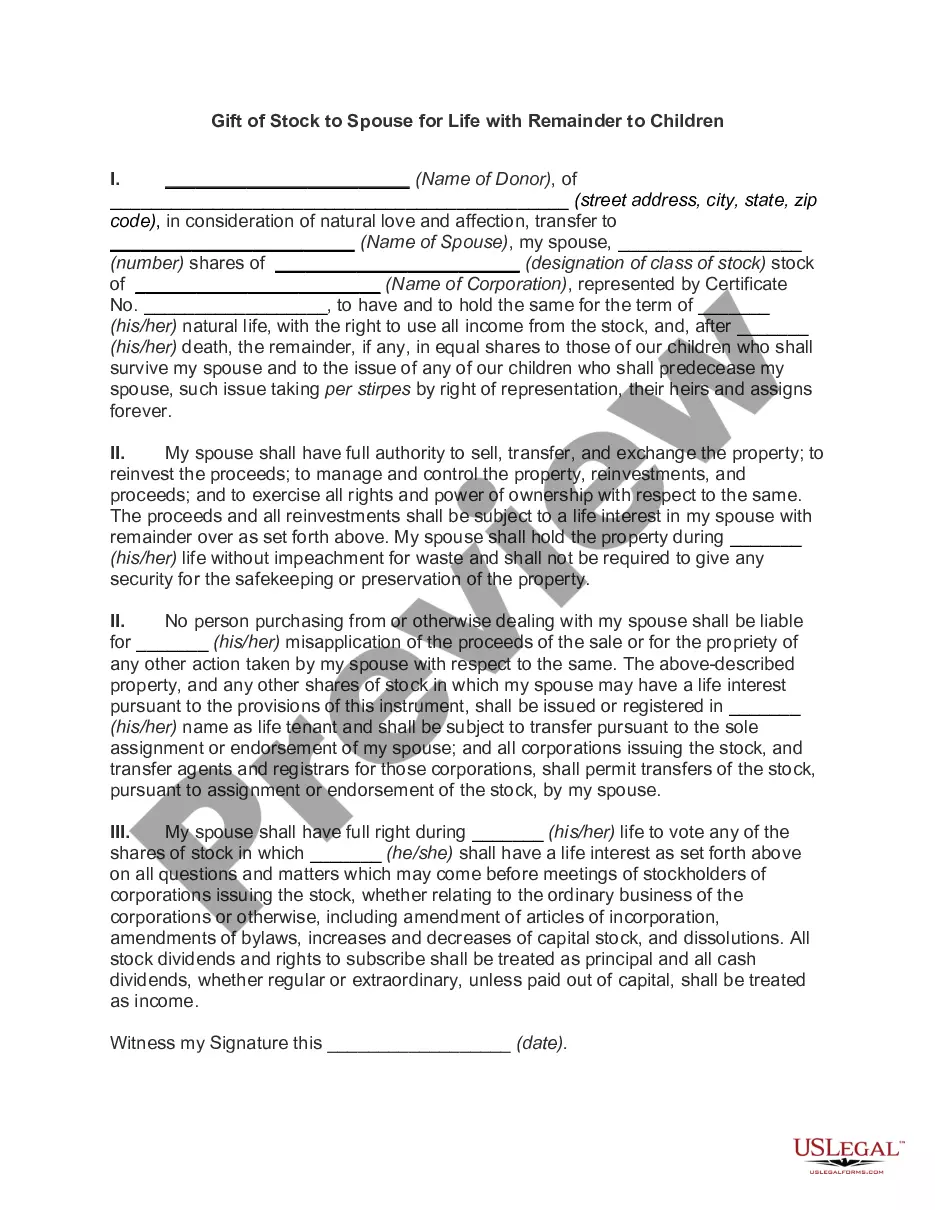
- Distribution of specific gifts to beneficiaries.
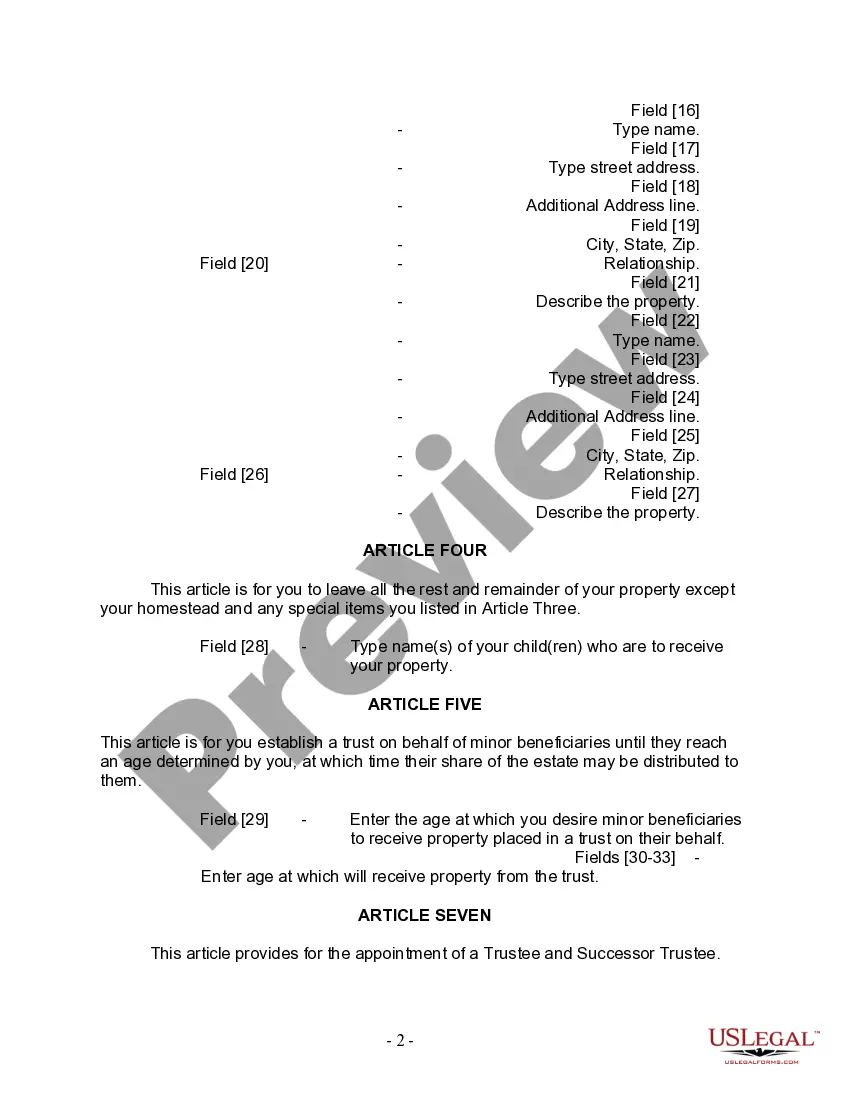
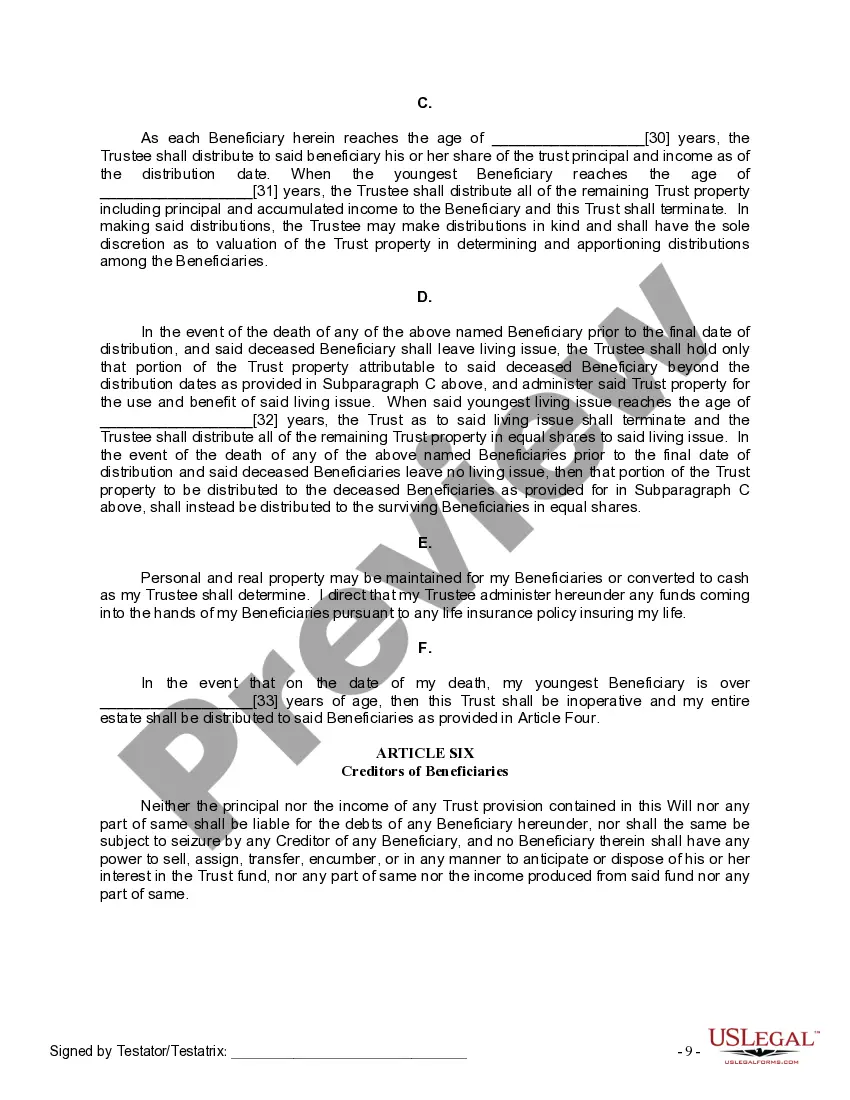
- Establishment of a trust for minor children until they reach a specified age.
- Provisions concerning debts and expenses of the estate.




Common use cases
This form is ideal for individuals who are divorced, have not remarried, and have minor children. Use this document to ensure that your children are cared for financially and that your assets are distributed according to your wishes. It is particularly necessary if you want to appoint a guardian for your children or if you have specific items of value you wish to allocate to particular beneficiaries.
Who can use this document
This form is intended for:
- Individuals over the age of eighteen.
- Divorced persons who have minor children.
- Those who have specific wishes regarding the distribution of their estate.
- People who wish to appoint a guardian for their minor children in the event of their passing.
How to prepare this document
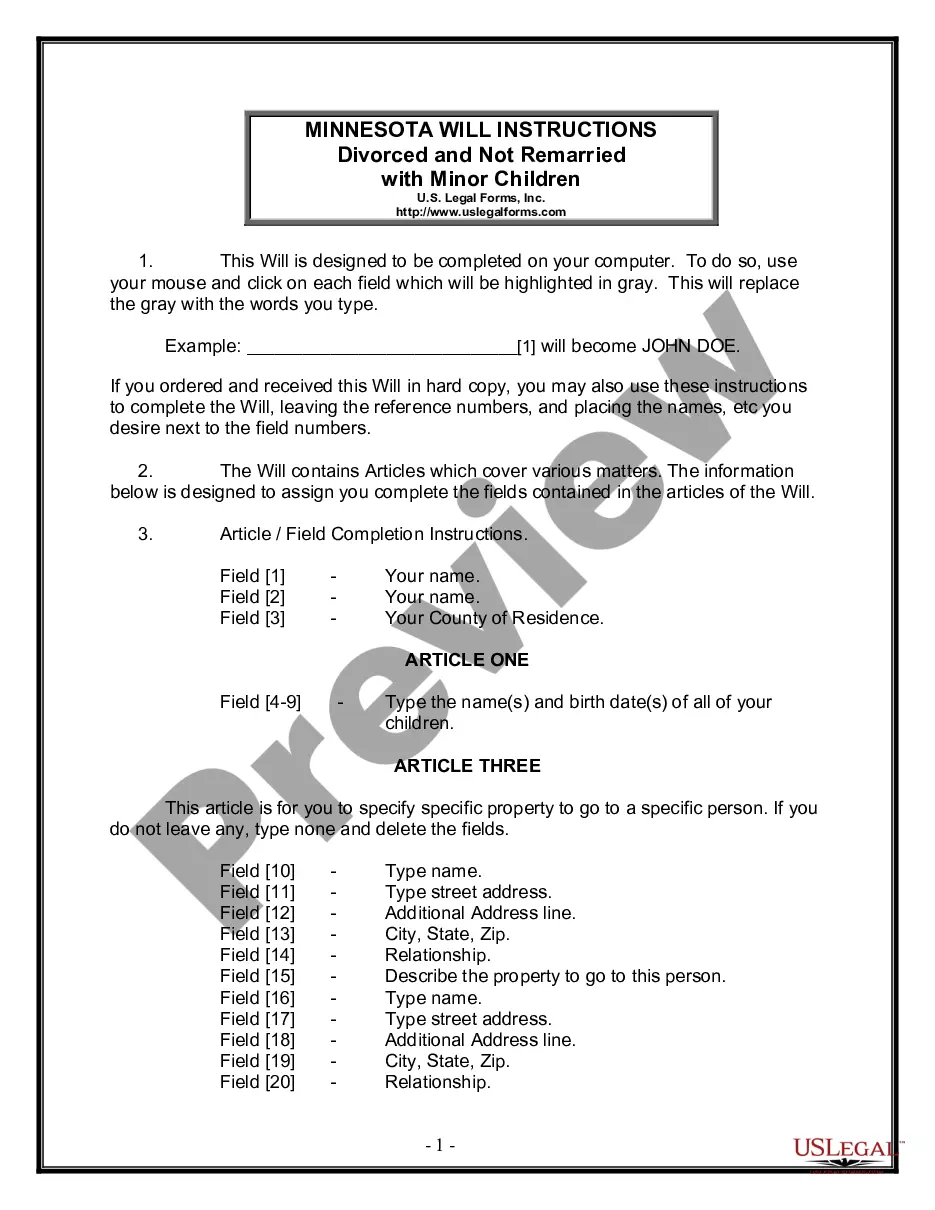
- Enter your full name and county of residence.
- List the names and birth dates of all minor children.
- Specify any specific property bequests to chosen beneficiaries.
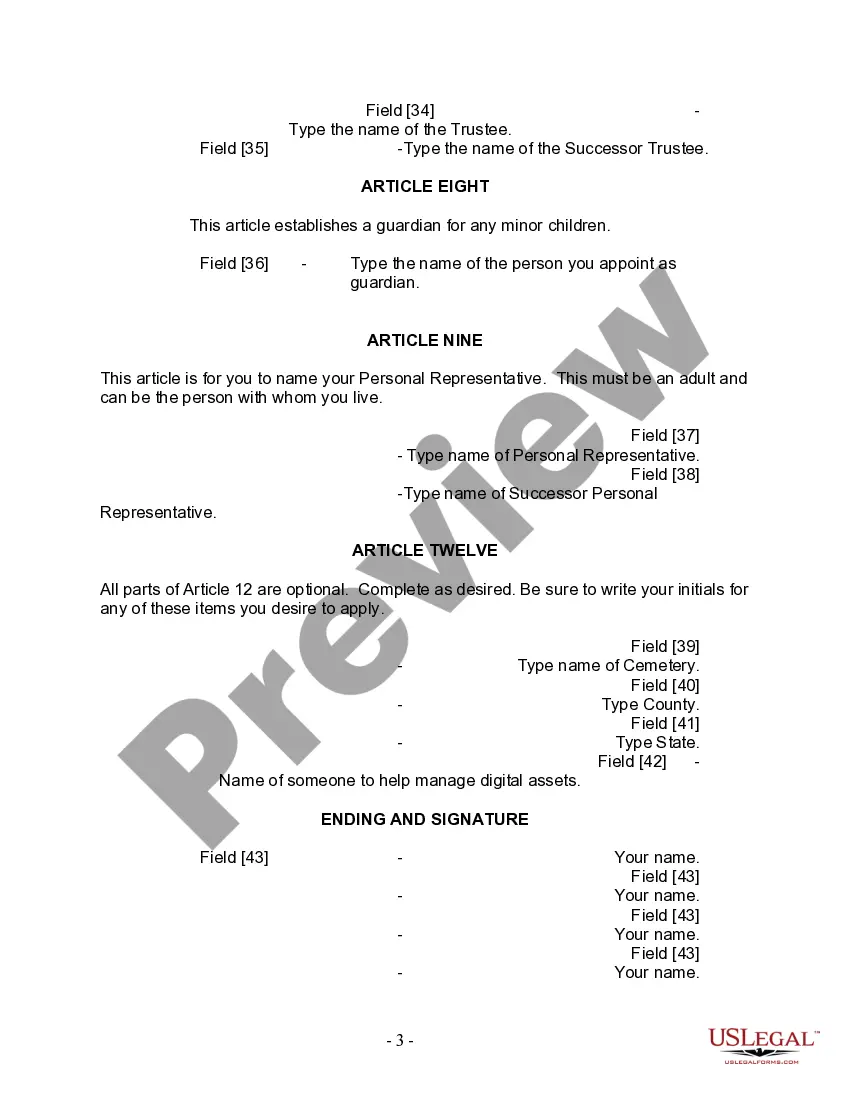
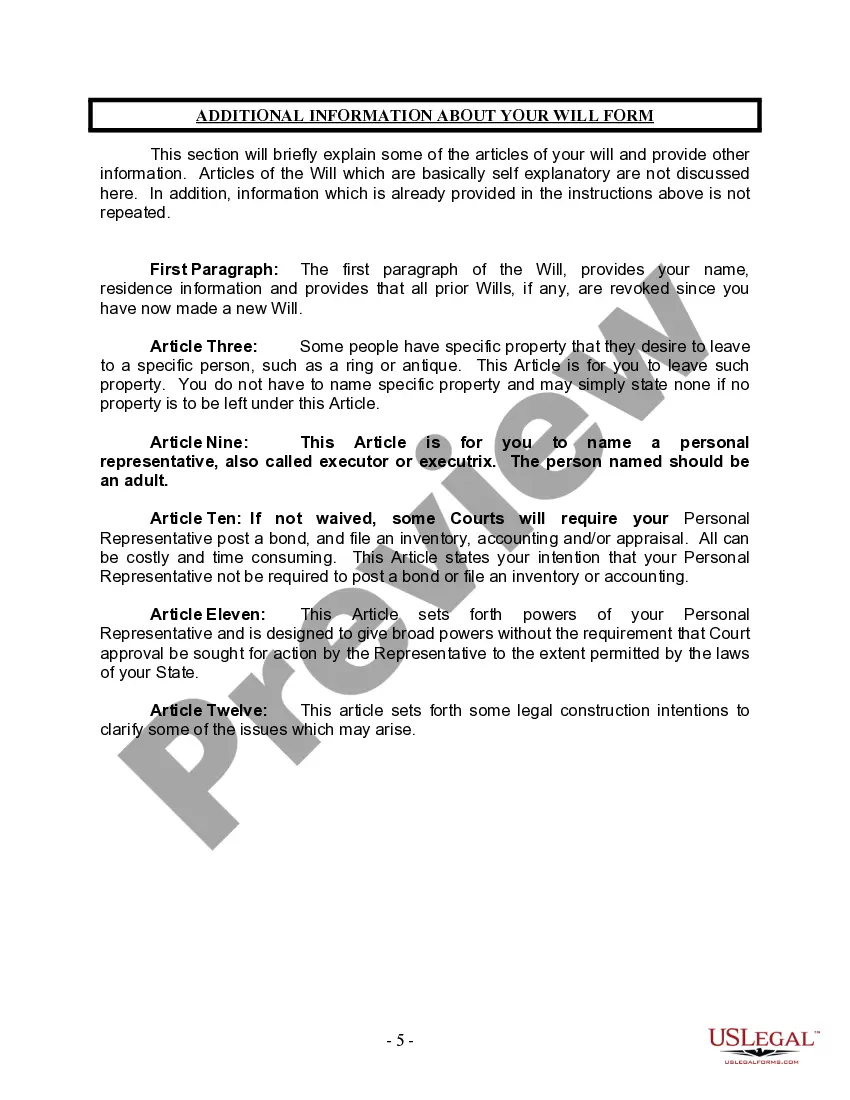
- Select a personal representative and any alternate representatives.
- Appoint a guardian for your minor children, if necessary.
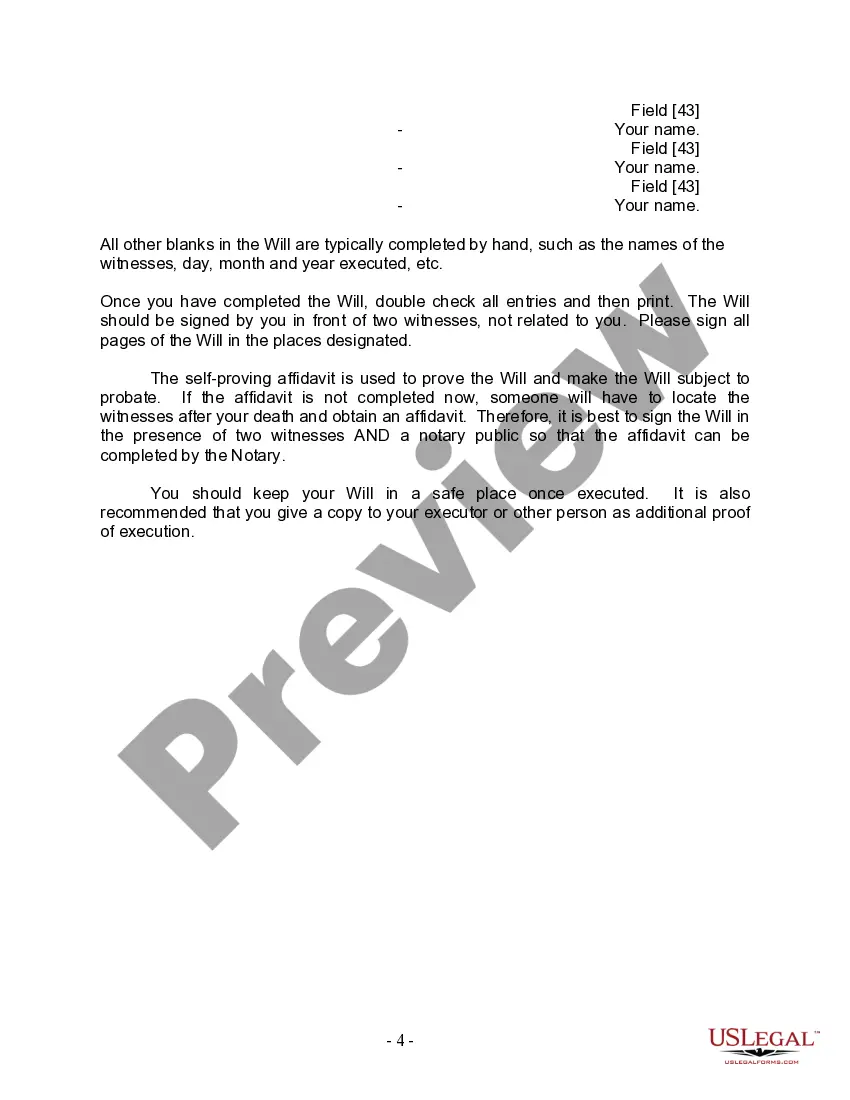
- Sign the document in the presence of two witnesses.
Does this document require notarization?
Yes, this form must be notarized to be legally valid if it includes a self-proving affidavit. US Legal Forms offers integrated online notarization services for your convenience, allowing you to complete this process securely and easily at any time.
Get your form ready online
Our built-in tools help you complete, sign, share, and store your documents in one place.
Make edits, fill in missing information, and update formatting in US Legal Forms—just like you would in MS Word.
Download a copy, print it, send it by email, or mail it via USPS—whatever works best for your next step.
Sign and collect signatures with our SignNow integration. Send to multiple recipients, set reminders, and more. Go Premium to unlock E-Sign.
If this form requires notarization, complete it online through a secure video call—no need to meet a notary in person or wait for an appointment.
We protect your documents and personal data by following strict security and privacy standards.

Make edits, fill in missing information, and update formatting in US Legal Forms—just like you would in MS Word.

Download a copy, print it, send it by email, or mail it via USPS—whatever works best for your next step.

Sign and collect signatures with our SignNow integration. Send to multiple recipients, set reminders, and more. Go Premium to unlock E-Sign.

If this form requires notarization, complete it online through a secure video call—no need to meet a notary in person or wait for an appointment.

We protect your documents and personal data by following strict security and privacy standards.
Mistakes to watch out for
- Not having the Will signed in front of the required witnesses.
- Failing to update the Will after significant life changes.
- Omitting crucial information about your children or assets.
- Not naming alternate beneficiaries can lead to disputes.
Benefits of completing this form online
- Convenience of completing the form at your own pace and location.
- Editable format allows for easy adjustments as needed.
- Access to professionally drafted templates ensures legal compliance.
Legal use & context
- This Will is legally binding once properly signed and witnessed.
- It ensures that your wishes regarding asset distribution are upheld.
- Failure to execute a Will can lead to intestacy, where state laws dictate asset distribution, potentially disregarding your wishes.
Main things to remember
- The Will is essential for controlling the distribution of your assets.
- It allows for the appointment of guardians for minor children.
- Proper execution with witnesses and notarization enhances its legal validity.
- Regular updates are necessary after personal life changes.
Looking for another form?

Form popularity
FAQ
Even if you are married and have no children, having a will is still beneficial. A Minnesota Last Will and Testament for Divorced person not Remarried with Minor Children can clarify your wishes regarding asset distribution and prevent potential disputes. Using resources like US Legal Forms can help you create a will that reflects your intentions, ensuring your spouse receives what you want them to have.
In Minnesota, there is no mandatory waiting period after divorce before you can remarry. You may proceed with your new marriage as soon as your divorce is finalized. However, for those creating a Minnesota Last Will and Testament for Divorced person not Remarried with Minor Children, it is wise to consider how a new marriage could impact your estate planning and the wellbeing of your children.
In Minnesota, the order of inheritance follows a clear hierarchy. If a person dies without a will, their estate typically goes to their spouse and children, reflecting the importance of familial relationships. For those with a Minnesota Last Will and Testament for Divorced person not Remarried with Minor Children, it's crucial to specify how you wish your assets to be distributed, particularly if you have minor children involved.
Yes, you can write your own will in Minnesota and have it notarized. However, to ensure that your Minnesota Last Will and Testament for Divorced person not Remarried with Minor Children meets legal requirements, it's advisable to follow specific guidelines. Using a reputable service like US Legal Forms can help you create a will that is valid and tailored to your unique situation, especially when you have minor children.
Be in writing; signed by the testator (the person describing how they want their property distributed); and. signed by at least two witnesses over the age of 18.
A will can also be declared invalid if someone proves in court that it was procured by undue influence. This usually involves some evil-doer who occupies a position of trust -- for example, a caregiver or adult child -- manipulating a vulnerable person to leave all, or most, of his property to the manipulator instead
In Minnesota, this generally amounts to about $500-$1000. Naturally, these fees vary by attorney. Be sure to ask the Minnesota probate lawyer about these fees before signing anything.
The will must be in writing; The will must be signed by you, by another person at your direction and in your presence, or by your conservator pursuant to a court order; The will must be witnessed by at least two people, both of whom must also sign the will; and. You must intend for the document to operate as a will.
You can make your own will in Minnesota, using Nolo's do-it-yourself will software or online will programs. However, you may want to consult a lawyer in some situations. For example, if you think that your will might be contested or if you want to disinherit your spouse, you should talk with an attorney.
Property in a living trust. One of the ways to avoid probate is to set up a living trust. Retirement plan proceeds, including money from a pension, IRA, or 401(k) Stocks and bonds held in beneficiary. Proceeds from a payable-on-death bank account.