Minnesota Quitclaim Deed from Individual to Two Individuals in Joint Tenancy
What this document covers
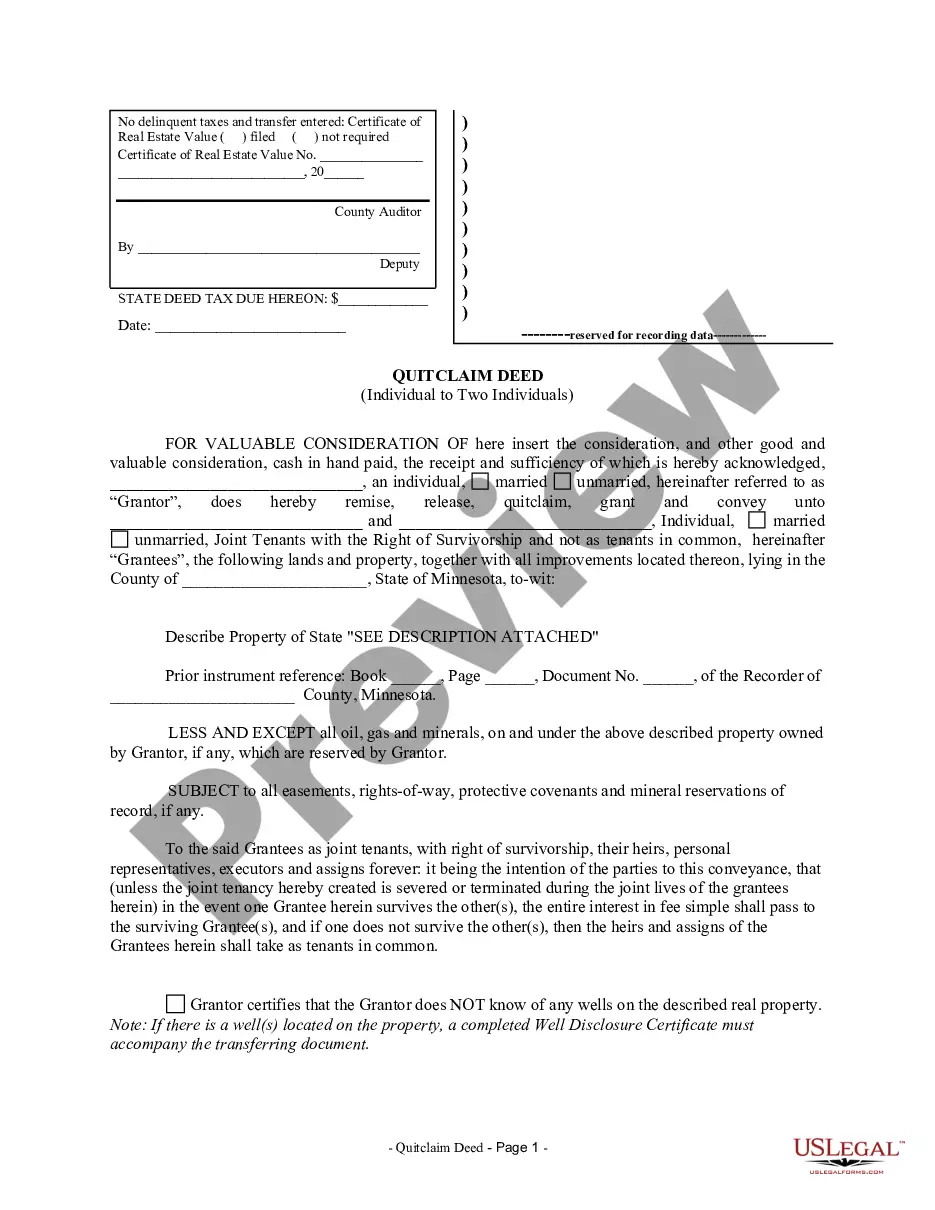
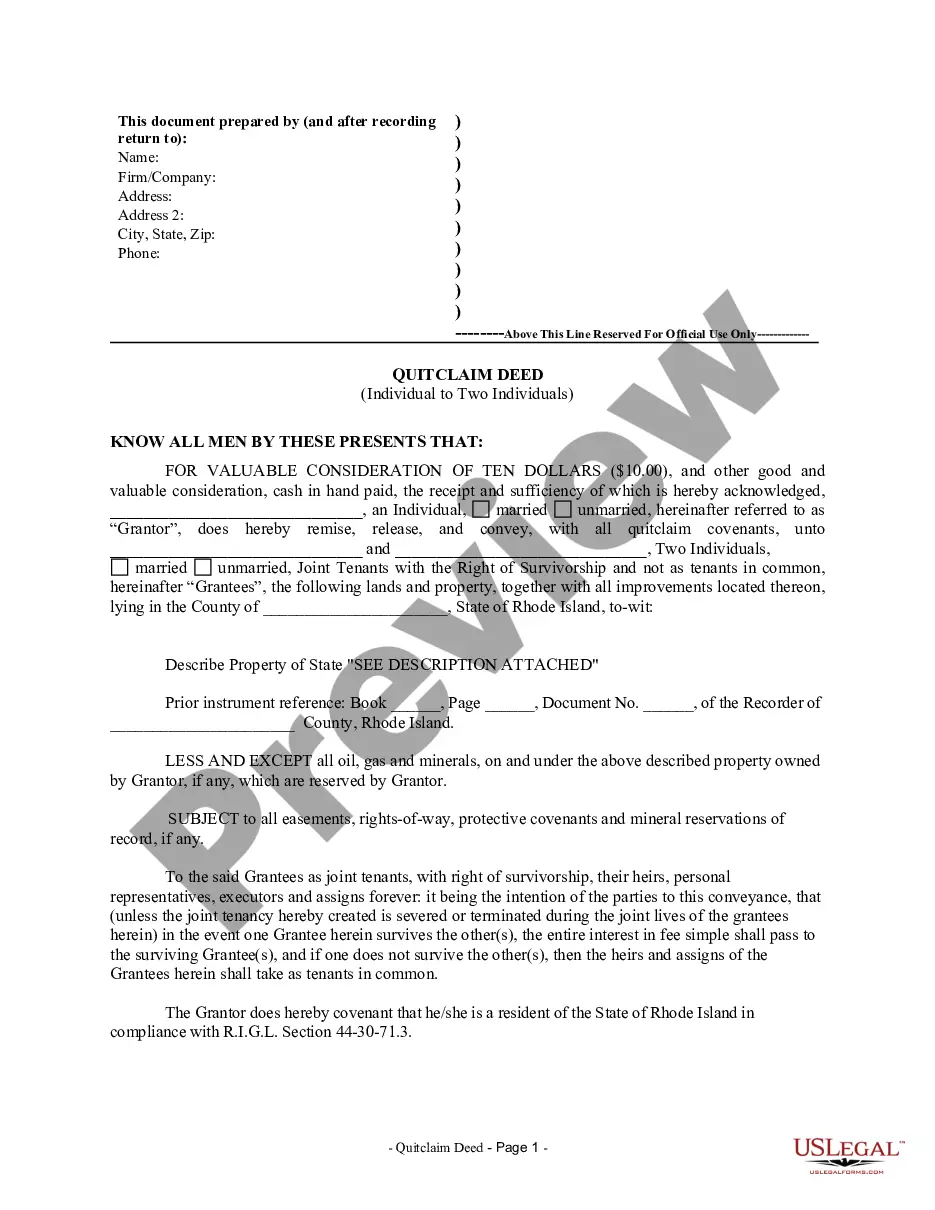
The Quitclaim Deed from Individual to Two Individuals in Joint Tenancy is a legal document that allows an individual (the Grantor) to transfer their interest in a property to two individuals (Grantees) as joint tenants. This type of deed effectively conveys property ownership while ensuring that the right of survivorship is retained, meaning that if one Grantee passes away, their share automatically goes to the surviving Grantee. Unlike warranty deeds, quitclaim deeds do not guarantee that the Grantor has clear title to the property, making them simpler and often used for transferring property among family or close associates.
Key components of this form
- Identification of the Grantor and Grantees, including their marital status.
- A clear description of the property being transferred, including any legal references.
- Statement regarding the consideration paid for the property.
- Language establishing the joint tenancy and the right of survivorship.
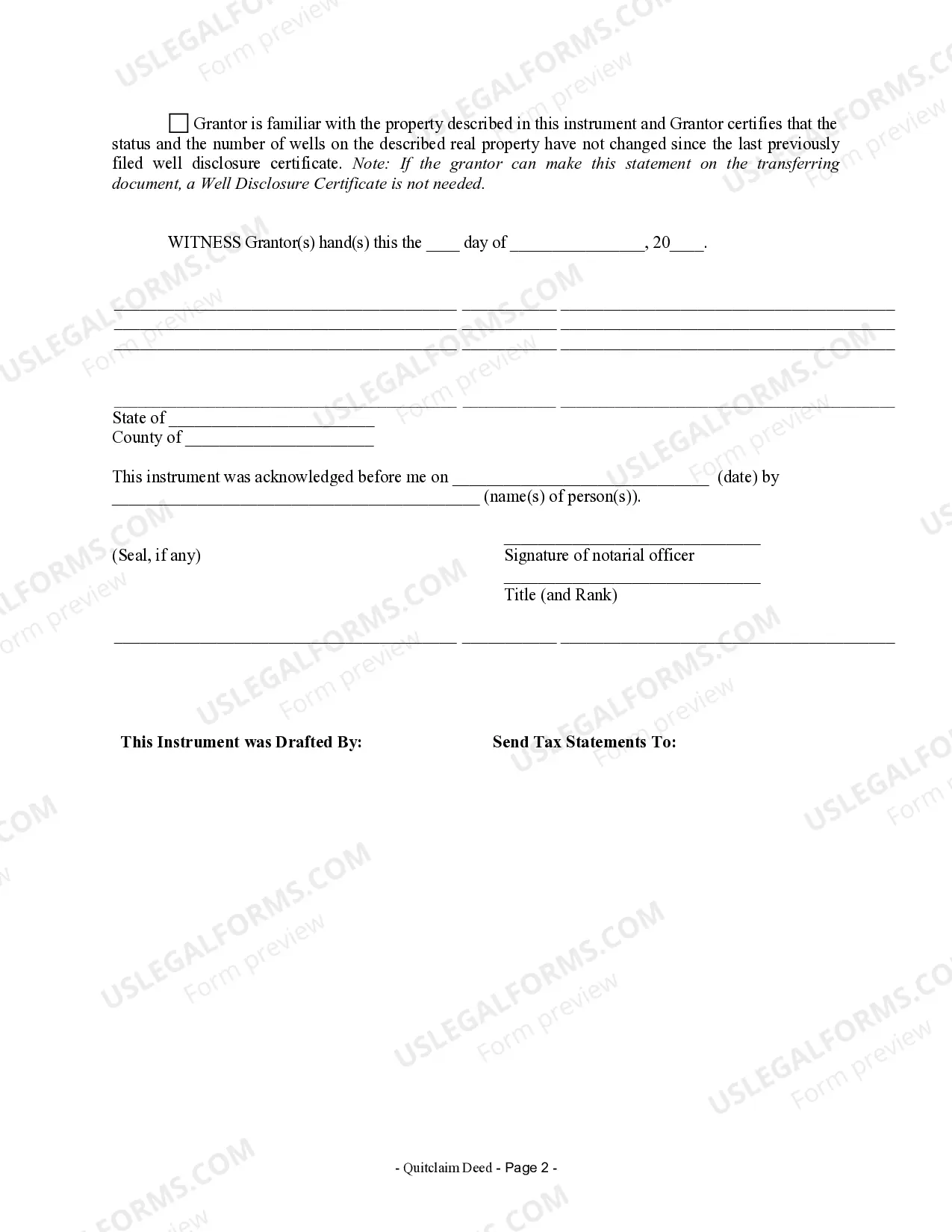
- Certifications regarding any wells on the property.
- Space for notarization to validate the document.




Common use cases
This form is appropriate to use when an individual wishes to transfer their property interest to two other individuals, particularly when the intent is to hold the property in joint tenancy. Common scenarios include transferring property between family members, such as siblings or parents to children, or in situations where property ownership needs to be managed collectively.
Intended users of this form
- Property owners looking to transfer their interests to two individuals.
- Individuals who want to establish joint ownership of property with someone else.
- Family members or friends facilitating a property transfer without the need for complex title guarantees.
Steps to complete this form
- Identify the Grantor and Grantees, including their marital status.
- Insert the amount of consideration being paid for the property.
- Provide a detailed description of the property, referencing legal descriptions or prior documents.
- Include the date of the transfer and signatures of the Grantor.
- Obtain notarization to ensure the deed is legally valid.
Is notarization required?
Notarization is required for this form to take effect. Our online notarization service, powered by Notarize, lets you verify and sign documents remotely through an encrypted video session, available 24/7.
Get your form ready online
Our built-in tools help you complete, sign, share, and store your documents in one place.
Make edits, fill in missing information, and update formatting in US Legal Forms—just like you would in MS Word.
Download a copy, print it, send it by email, or mail it via USPS—whatever works best for your next step.
Sign and collect signatures with our SignNow integration. Send to multiple recipients, set reminders, and more. Go Premium to unlock E-Sign.
If this form requires notarization, complete it online through a secure video call—no need to meet a notary in person or wait for an appointment.
We protect your documents and personal data by following strict security and privacy standards.

Make edits, fill in missing information, and update formatting in US Legal Forms—just like you would in MS Word.

Download a copy, print it, send it by email, or mail it via USPS—whatever works best for your next step.

Sign and collect signatures with our SignNow integration. Send to multiple recipients, set reminders, and more. Go Premium to unlock E-Sign.

If this form requires notarization, complete it online through a secure video call—no need to meet a notary in person or wait for an appointment.

We protect your documents and personal data by following strict security and privacy standards.
Mistakes to watch out for
- Failing to accurately describe the property, leading to confusion in ownership.
- Not including the required signatures or notarization, making the deed invalid.
- Omitting details about the consideration that could lead to disputes over fairness.
Benefits of using this form online
- Convenient access to legal forms from anywhere at any time.
- Editable templates that can be customized to fit specific needs without the need for legal assistance.
- Reliability and compliance with state laws, ensuring legal validity of your documents.
Quick recap
- The Quitclaim Deed is a simple way to transfer property to two individuals as joint tenants.
- It is essential to include all required information to avoid legal issues later.
- Notarization is a critical step in executing this form.
Looking for another form?

Form popularity
FAQ
To complete a quitclaim deed in Minnesota, start by obtaining the correct form, which you can find on legal websites or through platforms like US Legal Forms. Fill out the form with the necessary details, such as the names of the individuals involved and a clear description of the property. After signing the quitclaim deed in front of a notary, you must file it with your county's recorder's office to make it official. This process ensures the transfer of ownership is recorded properly, especially when using a Minnesota Quitclaim Deed from Individual to Two Individuals in Joint Tenancy.
One disadvantage of joint tenancy ownership is that both owners must agree on any decisions regarding the property, which can lead to disputes. Additionally, if one owner incurs debt or faces legal issues, creditors may be able to claim their share of the property. This can complicate the ownership dynamics and may not be ideal for everyone. Understanding the implications of the Minnesota Quitclaim Deed from Individual to Two Individuals in Joint Tenancy can help you make informed decisions.
The Minnesota Quitclaim Deed from Individual to Two Individuals in Joint Tenancy involves transferring property ownership, while joint tenancy refers to a form of ownership where two or more people own property together. With joint tenancy, both individuals have equal rights to the property, including the right of survivorship, meaning if one owner passes away, the other automatically inherits their share. In contrast, a quitclaim deed does not guarantee ownership rights; it simply conveys whatever interest the grantor has in the property.
A joint tenancy quit claim deed is a type of legal document that allows two individuals to hold property together as joint tenants. This deed facilitates the transfer of ownership while ensuring that both parties have equal rights to the property. When you utilize a Minnesota Quitclaim Deed from Individual to Two Individuals in Joint Tenancy, you establish a clear framework for joint ownership and its associated benefits.
Joint tenancy refers to a form of co-ownership where two or more individuals share equal rights to a property, with a right of survivorship. In contrast, a quit claim deed is a legal document used to transfer ownership rights from one party to another without warranties. Understanding these distinctions is crucial, especially when considering a Minnesota Quitclaim Deed from Individual to Two Individuals in Joint Tenancy, as it affects how ownership is shared and managed.
Individuals who want to transfer property ownership quickly and simply often benefit the most from a quitclaim deed. It is particularly useful for parents transferring property to children or for partners dividing shared assets. By using a Minnesota Quitclaim Deed from Individual to Two Individuals in Joint Tenancy, you can simplify the transfer process and clarify ownership.
While hiring a lawyer for a quit claim deed is not legally required, it can be beneficial for ensuring the process is handled correctly. A legal professional can help you understand the specifics of a Minnesota Quitclaim Deed from Individual to Two Individuals in Joint Tenancy and ensure that all necessary documents are properly prepared and filed. This guidance can save time and prevent mistakes.
A key disadvantage of joint tenancy ownership is that one owner can unilaterally sell or transfer their share, potentially causing disputes or complications. This situation may lead to unintended heirs gaining interest in the property. To avoid such issues, a Minnesota Quitclaim Deed from Individual to Two Individuals in Joint Tenancy can provide a clear and mutual agreement among all parties involved.
When one person leaves a joint tenancy, the ownership typically shifts to the remaining tenant. This change means that the departing individual's share does not go to their heirs but instead is absorbed by the other tenant. In many cases, it is advisable to execute a Minnesota Quitclaim Deed from Individual to Two Individuals in Joint Tenancy to update the ownership records and clarify the new arrangement.
A quitclaim deed joint tenancy allows two individuals to own property together with equal rights. This means that if one owner passes away, their share automatically transfers to the surviving owner, avoiding probate. This arrangement can be beneficial for couples or partners looking to hold property together. Understanding the Minnesota Quitclaim Deed from Individual to Two Individuals in Joint Tenancy can help you make informed decisions about your property ownership.