Minnesota Subcontractor's Notice to Owner - Individual
Understanding this form
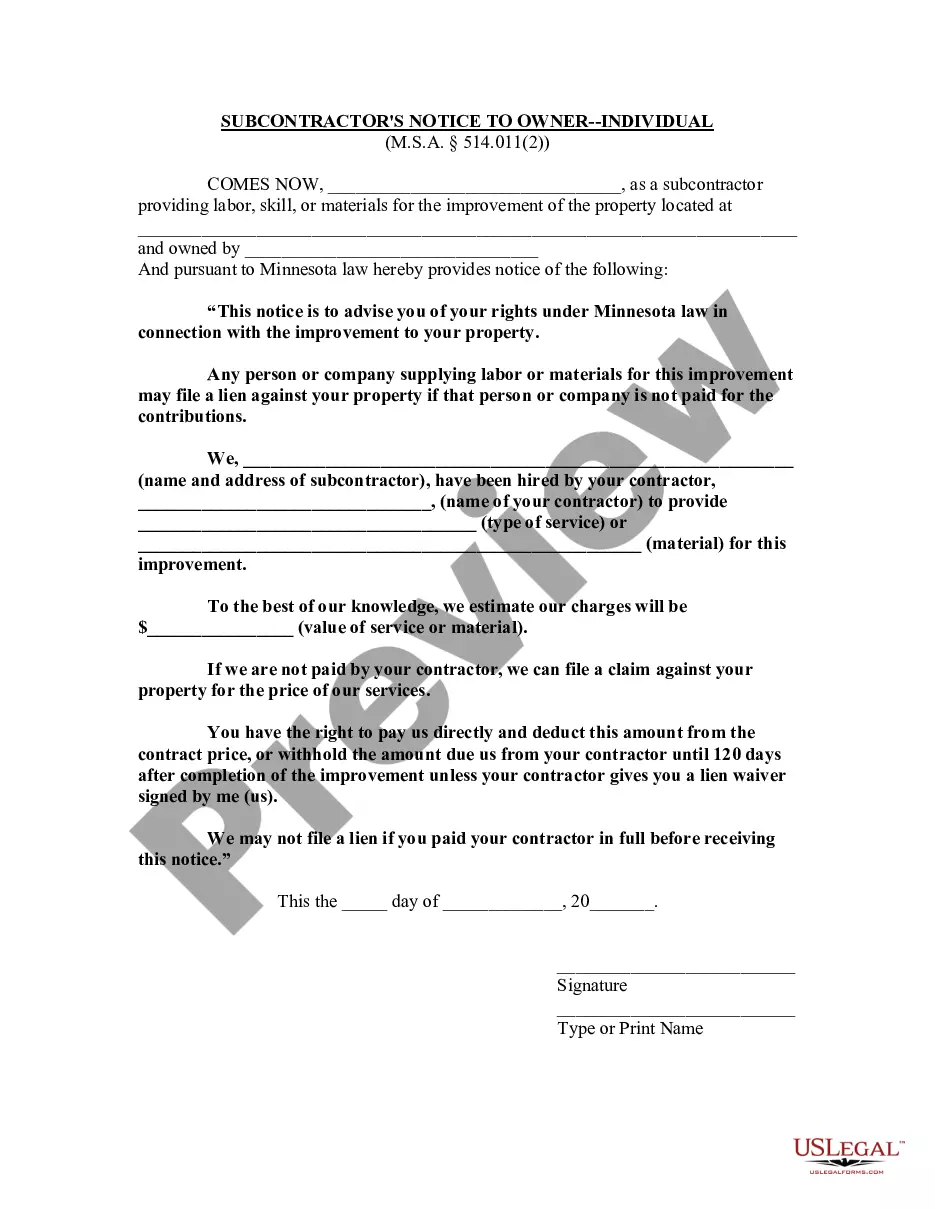
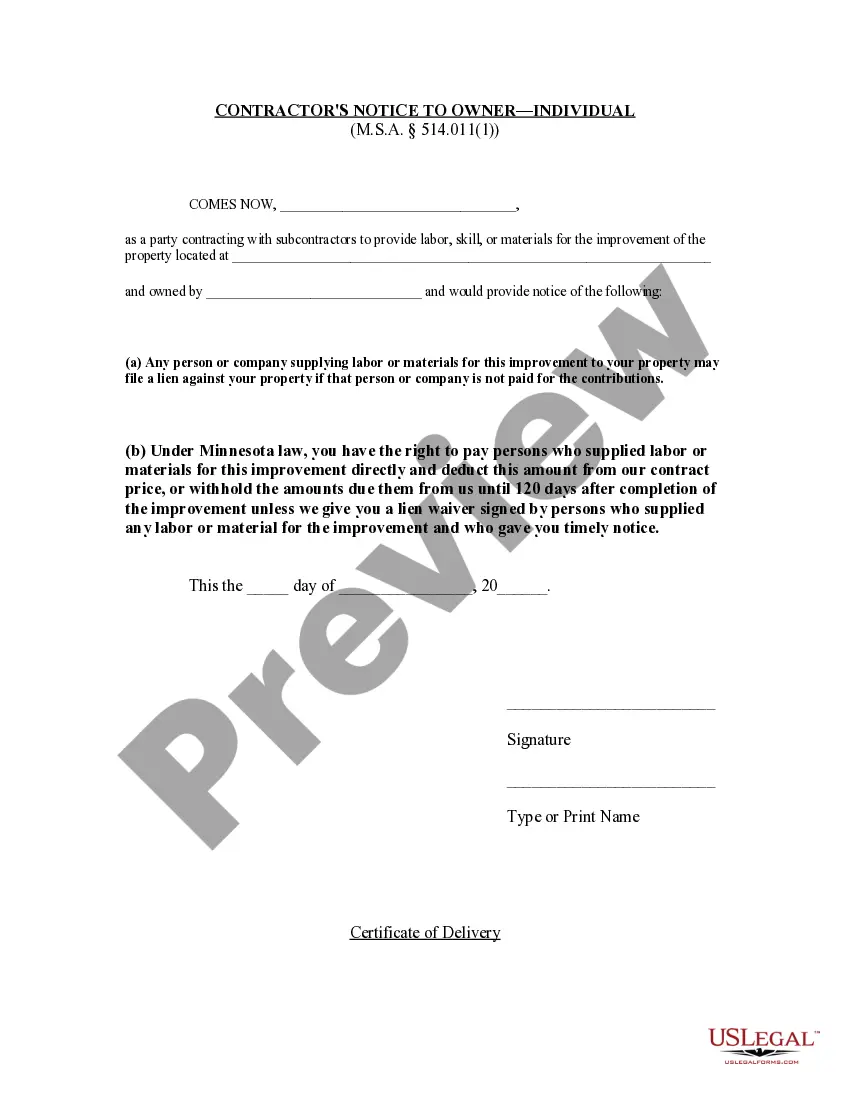
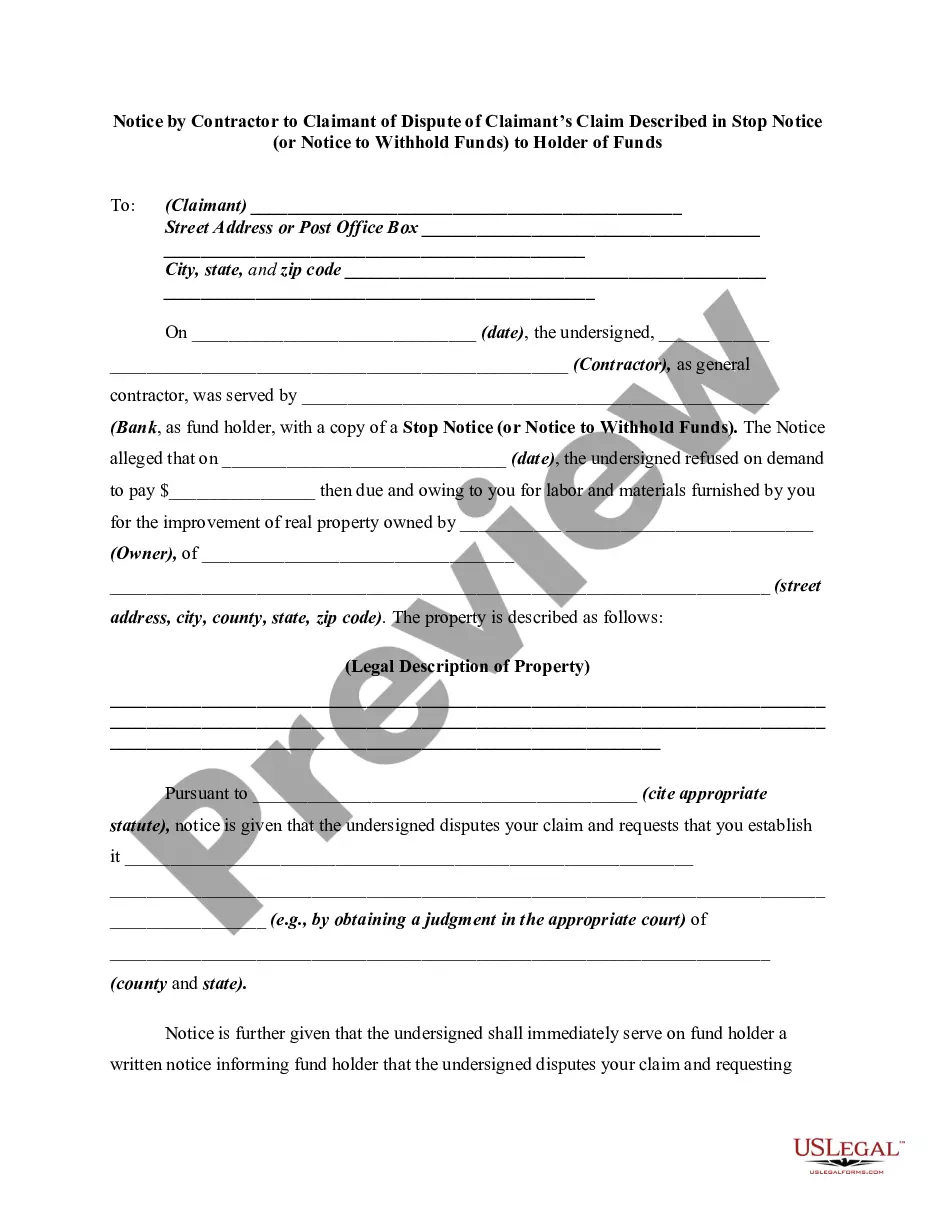
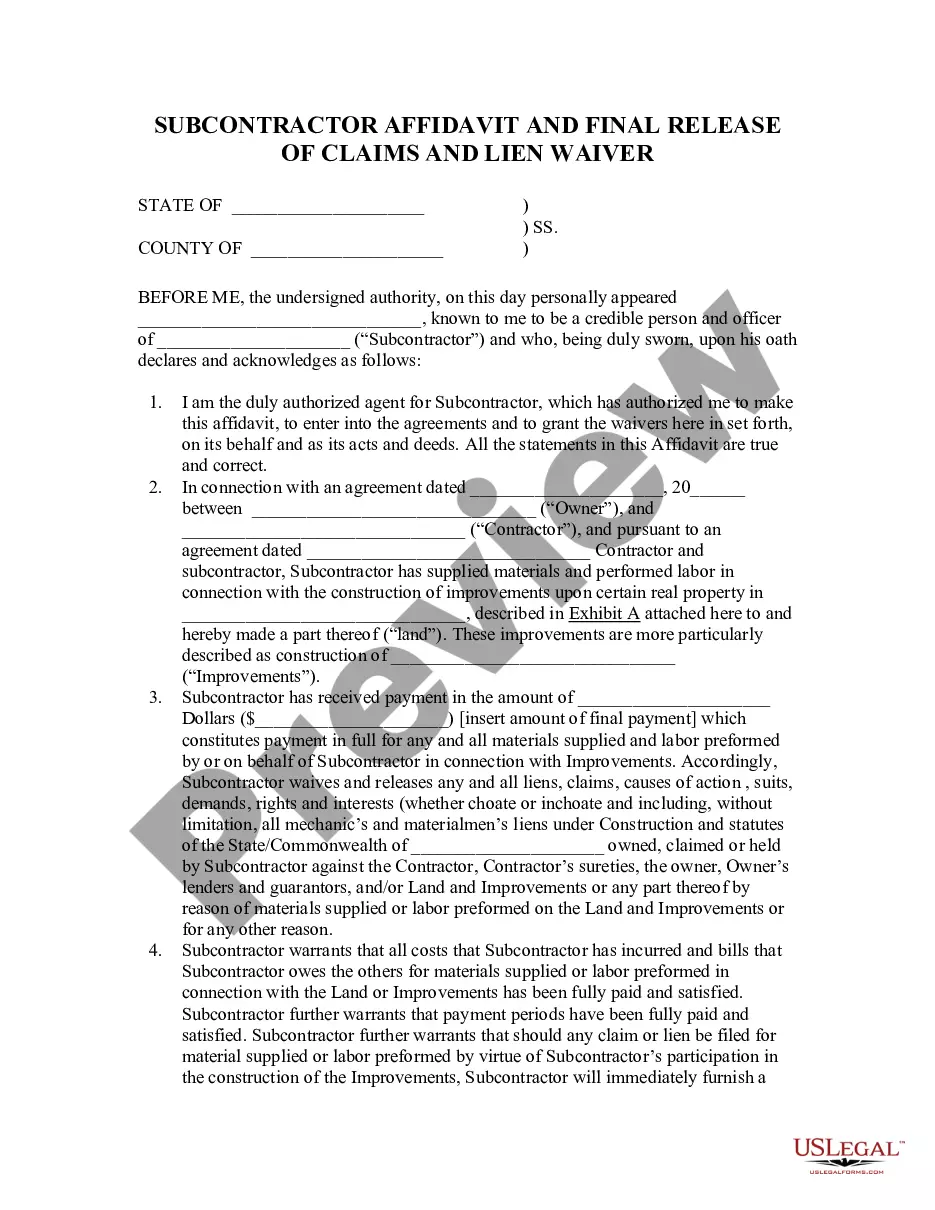
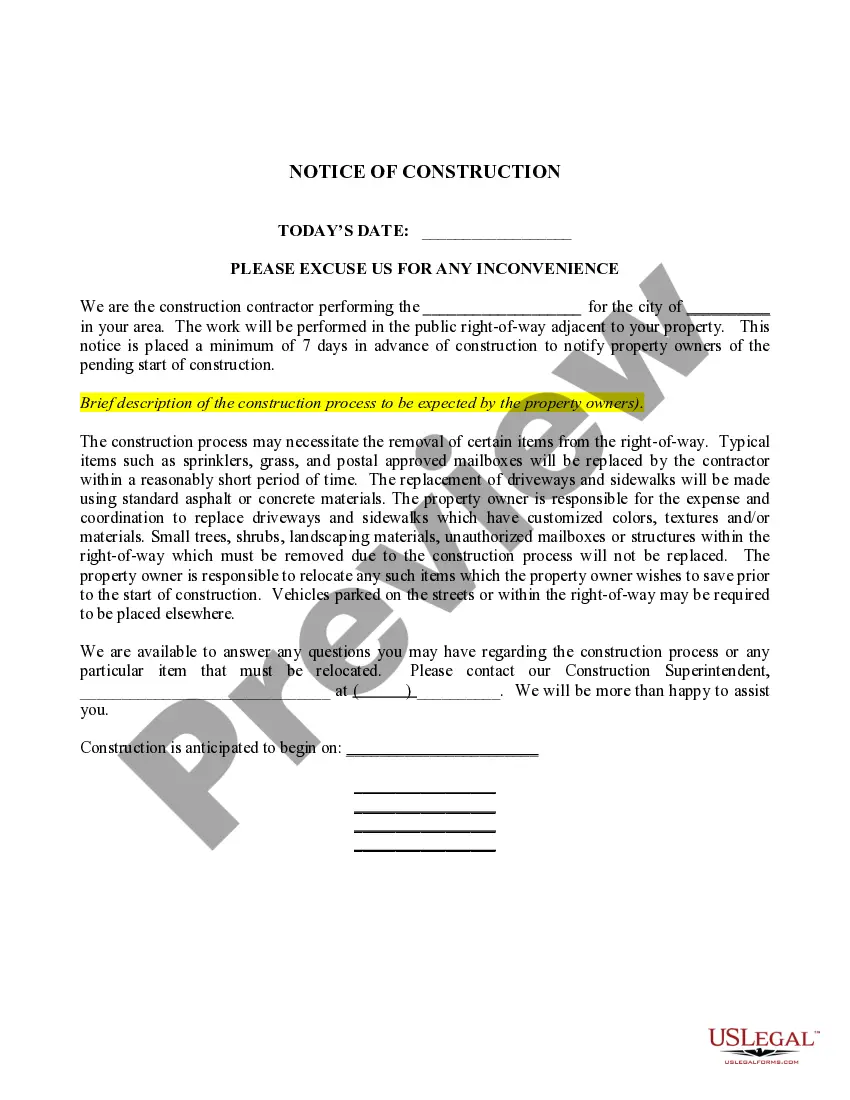
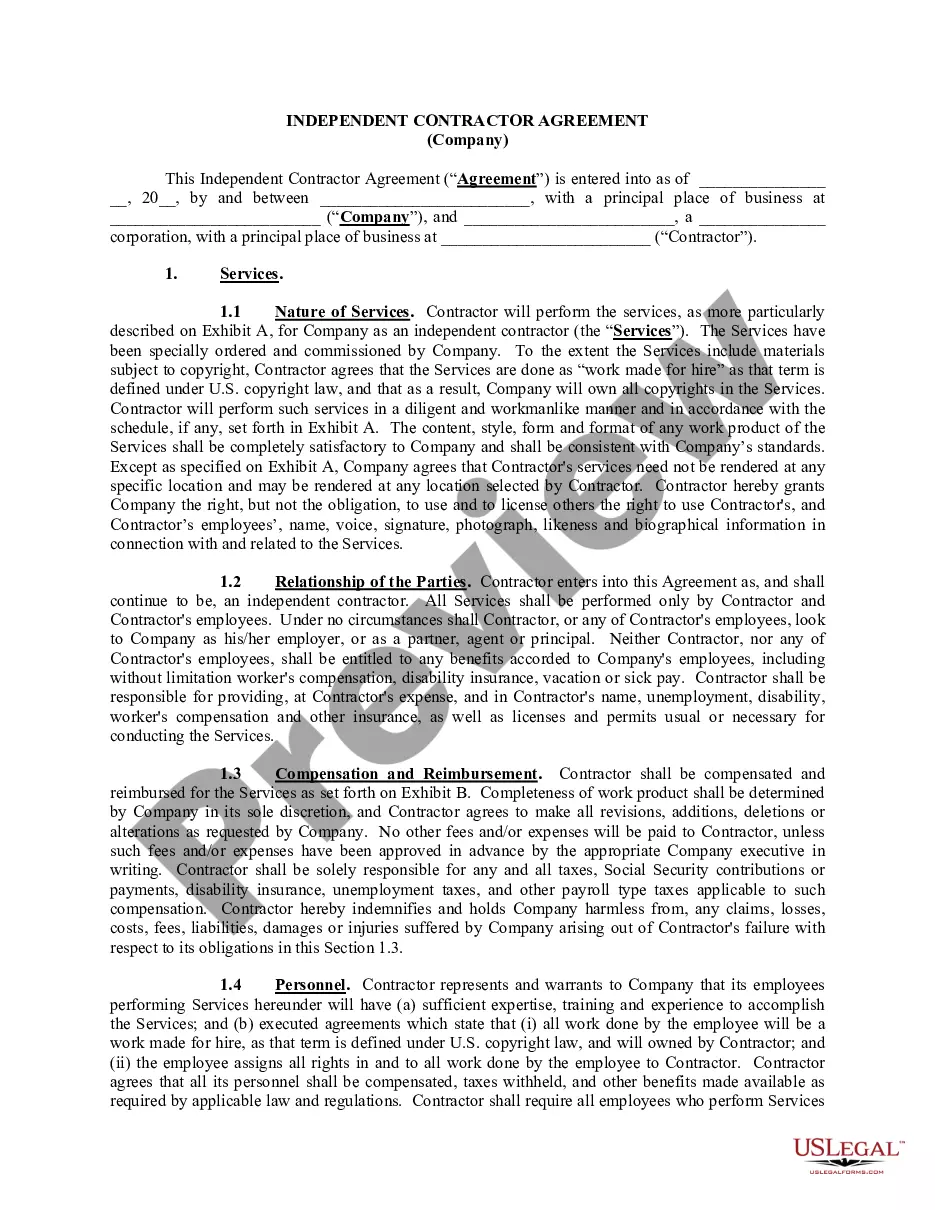
The Subcontractor's Notice to Owner - Individual is a legal form required by Minnesota law for subcontractors who provide labor, skills, or materials to improve real property without a direct contract with the owner. This form helps inform property owners about the work being done, the estimated cost, and their rights regarding payment and potential liens. Unlike other notices, this form is specifically designed for subcontractors to protect their rights under Minnesota law.
Main sections of this form
- Name and address of the subcontractor providing services or materials.
- Description of the type of service or materials supplied for the improvement.
- Estimated charges for the work performed or materials provided.
- A statement of the rights of the owner, including lien information.
- Signature and date of the subcontractor.

When to use this form
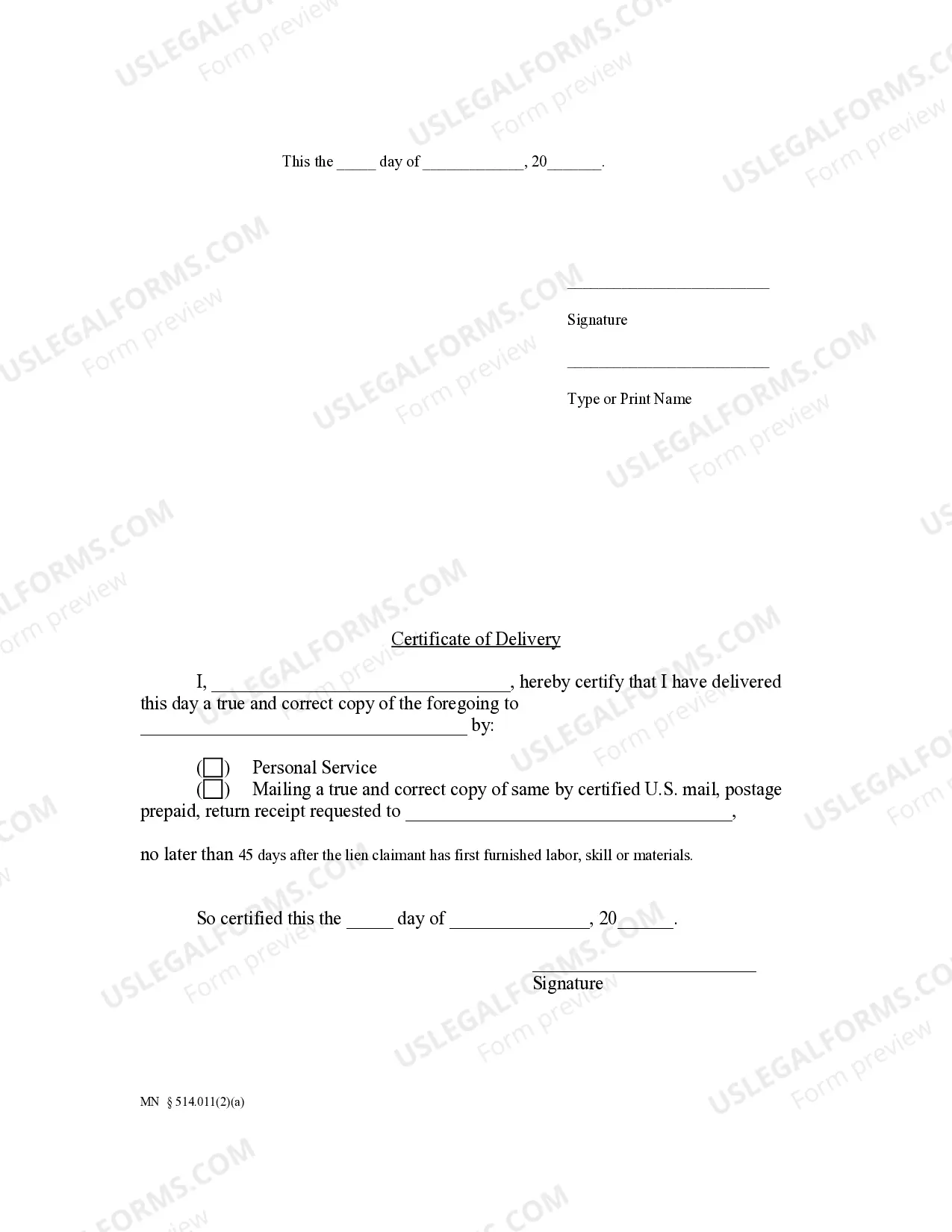
You should use the Subcontractor's Notice to Owner when you are a subcontractor working on a property improvement project and lack a direct contract with the owner. This form must be submitted within forty-five days after you first provide labor, skill, or materials to protect your right to file a lien against the property if payment is not received.
Who can use this document
- Subcontractors who have provided services or materials for a property improvement project.
- Individuals or businesses working without a direct contract with the property owner.
- Anyone needing to notify a property owner about potential liens for unpaid work.
How to prepare this document
- Identify the subcontractor by providing the name and address.
- Specify the property where the work is being performed, including the owner's name.
- Describe the type of service or materials provided.
- Enter the estimated total charges for the services or materials.
- Sign and date the form, ensuring it is delivered to the owner within the required timeframe.
Does this document require notarization?
Notarization is generally not required for this form. However, certain states or situations might demand it. You can complete notarization online through US Legal Forms, powered by Notarize, using a verified video call available anytime.
Get your form ready online
Our built-in tools help you complete, sign, share, and store your documents in one place.
Make edits, fill in missing information, and update formatting in US Legal Forms—just like you would in MS Word.
Download a copy, print it, send it by email, or mail it via USPS—whatever works best for your next step.
Sign and collect signatures with our SignNow integration. Send to multiple recipients, set reminders, and more. Go Premium to unlock E-Sign.
If this form requires notarization, complete it online through a secure video call—no need to meet a notary in person or wait for an appointment.
We protect your documents and personal data by following strict security and privacy standards.

Make edits, fill in missing information, and update formatting in US Legal Forms—just like you would in MS Word.

Download a copy, print it, send it by email, or mail it via USPS—whatever works best for your next step.

Sign and collect signatures with our SignNow integration. Send to multiple recipients, set reminders, and more. Go Premium to unlock E-Sign.

If this form requires notarization, complete it online through a secure video call—no need to meet a notary in person or wait for an appointment.

We protect your documents and personal data by following strict security and privacy standards.
Common mistakes
- Failing to deliver the notice within the forty-five day timeline.
- Not including a complete description of the work or materials.
- Inaccurate estimation of charges, which can affect lien rights.
- Omitting the owner's name or the property address.
Why complete this form online
- Convenient access to a legally compliant form that can be downloaded and printed.
- Editable fields allowing personalized information input.
- Reliability in following Minnesota legal requirements for notice.
Looking for another form?






Form popularity
FAQ
While it's unlikely that just anyone can put a lien on your home or land, it's not unheard of for a court decision or a settlement to result in a lien being placed against a property.
A Pre lien Notice is a notice provided prior to, at the start of, during or near the end of work on a construction project. The point of a pre lien varies, but many states require a prelien notice prior to the filing of a mechanics lien claim or a construction lien claim.
A mortgage creates a lien on your property that gives the lender the right to foreclose and sell the home to satisfy the debt. A deed of trust (sometimes called a trust deed) is also a document that gives the lender the right to sell the property to satisfy the debt should you fail to pay back the loan.
If a lien is filed against your property (in the form of a lien statement), it must be filed with the county recorder and a copy delivered to you, the property owner, either personally or by certified mail, within 120 days after the last material or labor is furnished for the job.
In Minnesota, all mechanics liens must be filed within 120 days from the claimant's last day providing materials or labor. In Minnesota, mechanics liens expire 1 year from the date of the lien claimant's last furnishing of labor or materials to the project.
If a lien is filed against your property (in the form of a lien statement), it must be filed with the county recorder and a copy delivered to you, the property owner, either personally or by certified mail, within 120 days after the last material or labor is furnished for the job.
The notice must inform the homeowner of the contractor's right to lien the property, and the right to pay off any subcontractors that haven't been paid by the general contractor.