Minnesota Warranty Deed from Husband to Himself and Wife
About this form
The Warranty Deed from Husband to Himself and Wife is a legal document used to transfer ownership of real property from the husband to himself and his wife as joint tenants with rights of survivorship. This form ensures that both spouses hold the title to the property together, providing legal clarity and protection for their rights in case of either party's passing. Unlike other deeds, this particular warranty deed includes specific reservations regarding oil, gas, and minerals, as well as compliance with state statutory laws, making it essential for married couples who want to solidify their joint ownership securely.
What’s included in this form
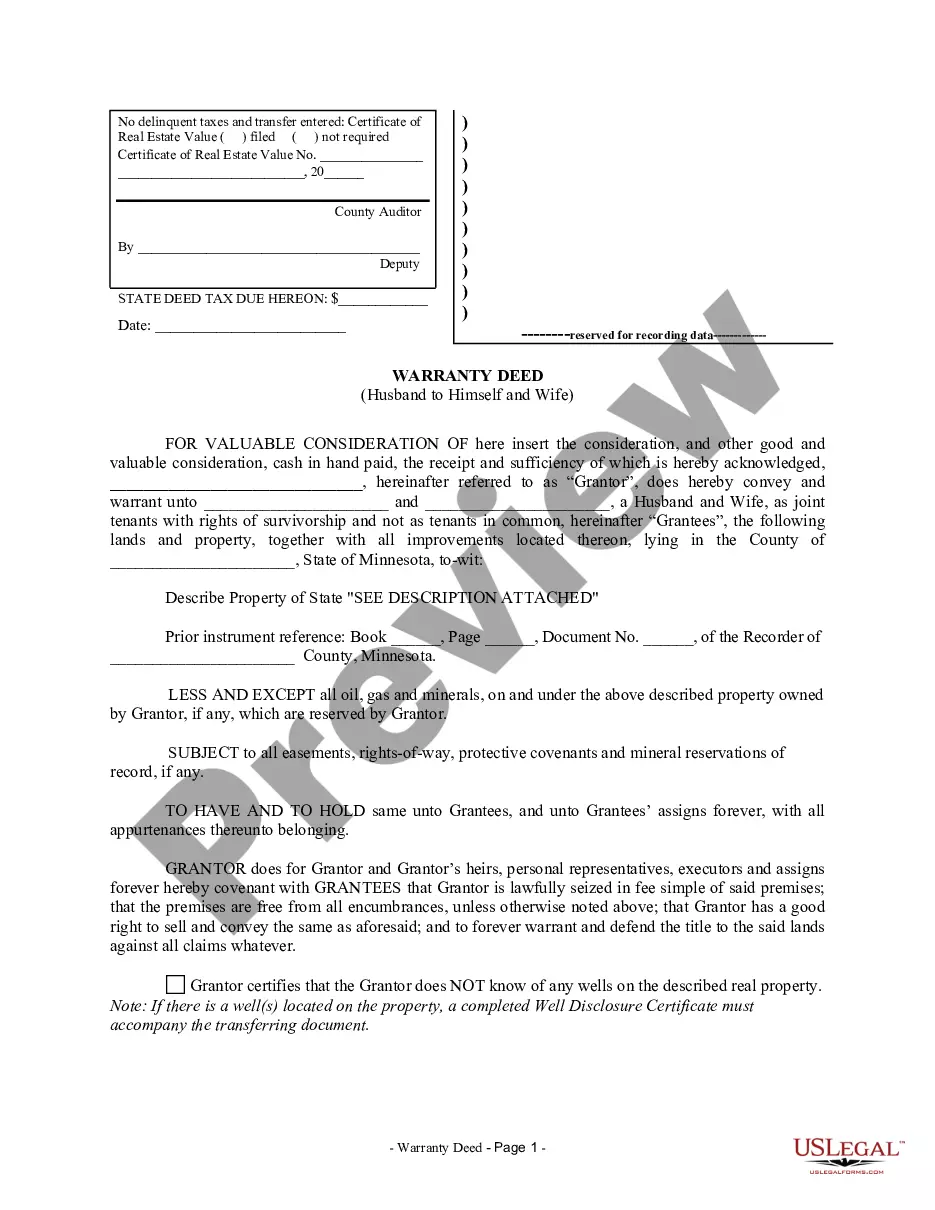
- Grantor and Grantees: Identifies the husband as the grantor and both spouses as grantees.
- Property Description: Includes a detailed description of the property being transferred.
- Consideration: States the value exchanged for the property transfer, if applicable.
- Legal Covenants: Provides assurances about the title being free from encumbrances.
- Easements and Rights-of-Way: Mentions any existing third-party rights that may affect the property.
- Reservations: Explicitly reserves any rights to oil, gas, and minerals beneath the property.



Situations where this form applies
This form is ideal when a husband wants to transfer property ownership to himself and his wife. This situation often arises in marriages where couples wish to ensure both parties have equal ownership rights or are planning for future succession. It can also be used in estate planning to facilitate the transfer of property with rights of survivorship, ensuring that if one spouse passes, the other automatically retains full ownership.
Who this form is for
- Married couples wishing to establish joint ownership of real property.
- Individuals looking to clarify property rights in estate planning.
- Homeowners seeking to transfer property within their family without involving third parties.
Instructions for completing this form
- Identify the parties: Write the names of the husband (grantor) and both spouses (grantees).
- Specify the property: Describe the real property being conveyed, ensuring to include all relevant details.
- Enter consideration: Indicate any monetary value or terms for the property transfer.
- Include reservations: Clearly state any reserves regarding oil, gas, and minerals.
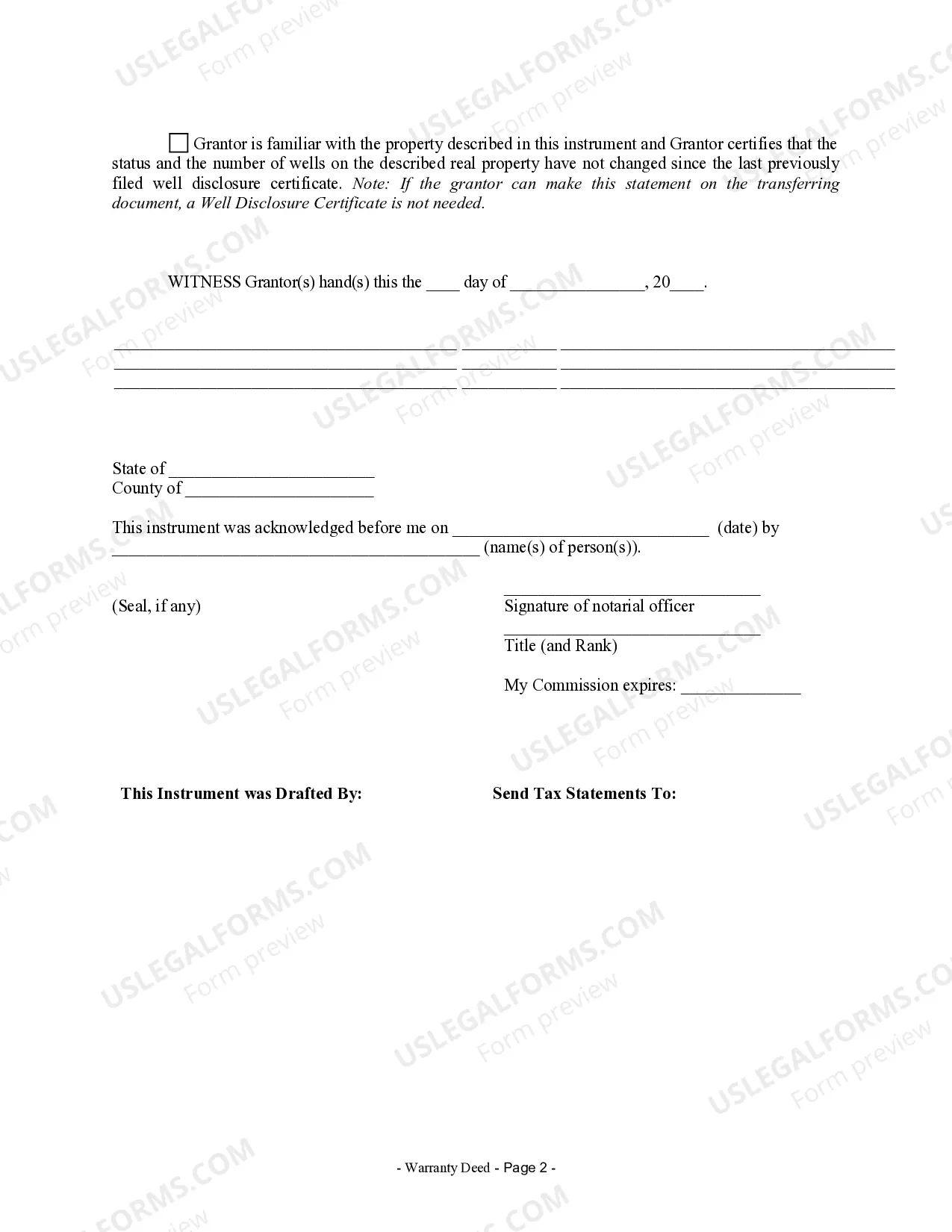
- Sign and date: Ensure the grantor signs the form and includes the date of signing.
- Notarization: Prepare for notarization if local laws require it to validate the deed.
Does this form need to be notarized?
This document requires notarization to meet legal standards. US Legal Forms provides secure online notarization powered by Notarize, allowing you to complete the process through a verified video call, available 24/7.
Get your form ready online
Our built-in tools help you complete, sign, share, and store your documents in one place.
Make edits, fill in missing information, and update formatting in US Legal Forms—just like you would in MS Word.
Download a copy, print it, send it by email, or mail it via USPS—whatever works best for your next step.
Sign and collect signatures with our SignNow integration. Send to multiple recipients, set reminders, and more. Go Premium to unlock E-Sign.
If this form requires notarization, complete it online through a secure video call—no need to meet a notary in person or wait for an appointment.
We protect your documents and personal data by following strict security and privacy standards.

Make edits, fill in missing information, and update formatting in US Legal Forms—just like you would in MS Word.

Download a copy, print it, send it by email, or mail it via USPS—whatever works best for your next step.

Sign and collect signatures with our SignNow integration. Send to multiple recipients, set reminders, and more. Go Premium to unlock E-Sign.

If this form requires notarization, complete it online through a secure video call—no need to meet a notary in person or wait for an appointment.

We protect your documents and personal data by following strict security and privacy standards.
Typical mistakes to avoid
- Failing to include a complete and accurate property description.
- Not specifying the consideration amount where applicable.
- Omitting valid signatures or dates from the deed.
- Neglecting to review for existing easements or restrictions affecting the property.
Benefits of using this form online
- Convenience: Easily download and print the form at your convenience without the need for legal consultations.
- Editability: Customize the form to fit your specific property details and marital circumstances.
- Reliability: Access professionally drafted templates that comply with state laws for secure property transfers.
Looking for another form?
Form popularity
FAQ
Yes, a warranty deed must be signed by both parties to be valid, especially in a situation where a Minnesota Warranty Deed from Husband to Himself and Wife is involved. This signature indicates agreement and intention to transfer ownership. Additionally, having the signatures notarized adds an extra layer of verification. Proper execution of the deed is crucial for its acceptance by the county.
If your name is not on the deed and you are married, you may not have full ownership rights to the property. In this case, filing a Minnesota Warranty Deed from Husband to Himself and Wife can help establish joint ownership. It’s advisable to discuss your situation with a legal professional to explore your options and ensure you are protected. Taking action can help reinforce your claim to the property.
A warranty deed can be deemed invalid for several reasons, including lack of proper signatures, absence of a notary, or if it fails to meet state requirements. Specifically, a Minnesota Warranty Deed from Husband to Himself and Wife must adhere to Minnesota laws to be valid. If there are errors in the property description or if the grantor is not of sound mind, the deed may also be invalidated. Always ensure your deed is prepared correctly to avoid complications.
In Minnesota, if your name is not on the deed, you still have certain rights as a spouse, including the right to occupy the home. However, your ownership interest may not be legally recognized without a Minnesota Warranty Deed from Husband to Himself and Wife. It’s essential to consult with a legal expert to understand your specific rights and options regarding property ownership. Taking the right steps can help secure your interests.
To add your spouse to your warranty deed, you need to prepare a new Minnesota Warranty Deed from Husband to Himself and Wife. This document will transfer ownership interest from yourself to both you and your spouse. You must sign the deed in front of a notary, and then file it with the county recorder’s office. This process ensures both partners are recognized as co-owners.
To add your wife to the deed of your house, you will need to complete a Minnesota Warranty Deed from Husband to Himself and Wife. Start by obtaining the appropriate form, then fill in both your names as co-owners. Afterward, sign the deed in front of a notary public and file it with your county recorder's office. US Legal Forms offers resources and easy-to-follow instructions to help you navigate this process smoothly.
To fill out a warranty deed form, begin by entering your name as the grantor and the name of the grantee, which in this case would be your wife. Next, specify the property description clearly, including the address and any relevant details. Ensure that you include the date of transfer and sign the document in the presence of a notary. Using a reliable platform like US Legal Forms can simplify the process of creating a Minnesota Warranty Deed from Husband to Himself and Wife, providing you with templates and guidance.
The primary purpose of a quitclaim deed is to transfer ownership interest in real estate without warranty. This deed helps clarify property rights between parties, often in situations like marriage, divorce, or inheritance. It provides a simple way to change property titles, reducing the need for lengthy legal processes. Using a Minnesota Warranty Deed from Husband to Himself and Wife can help couples manage their assets effectively and ensure all parties are on the same page regarding ownership.
A quitclaim deed between husband and wife is a straightforward legal instrument that transfers property rights from one spouse to the other. This type of deed does not guarantee that the title is clear, but it establishes the ownership interest of each spouse. Couples often utilize this deed to simplify ownership arrangements, especially during divorce or estate planning. By filing a Minnesota Warranty Deed from Husband to Himself and Wife, they formalize their ownership rights in a clear and efficient manner.
A married couple might choose to execute a quit claim deed to clarify ownership of their property. This legal document allows them to transfer interests in real estate easily and without complications. Often, couples use a quit claim deed as part of estate planning or to remove one spouse from the title. By completing a Minnesota Warranty Deed from Husband to Himself and Wife, they ensure their intentions are clear and legally recognized.