Michigan Guaranty or Guarantee of Payment of Rent
Understanding this form
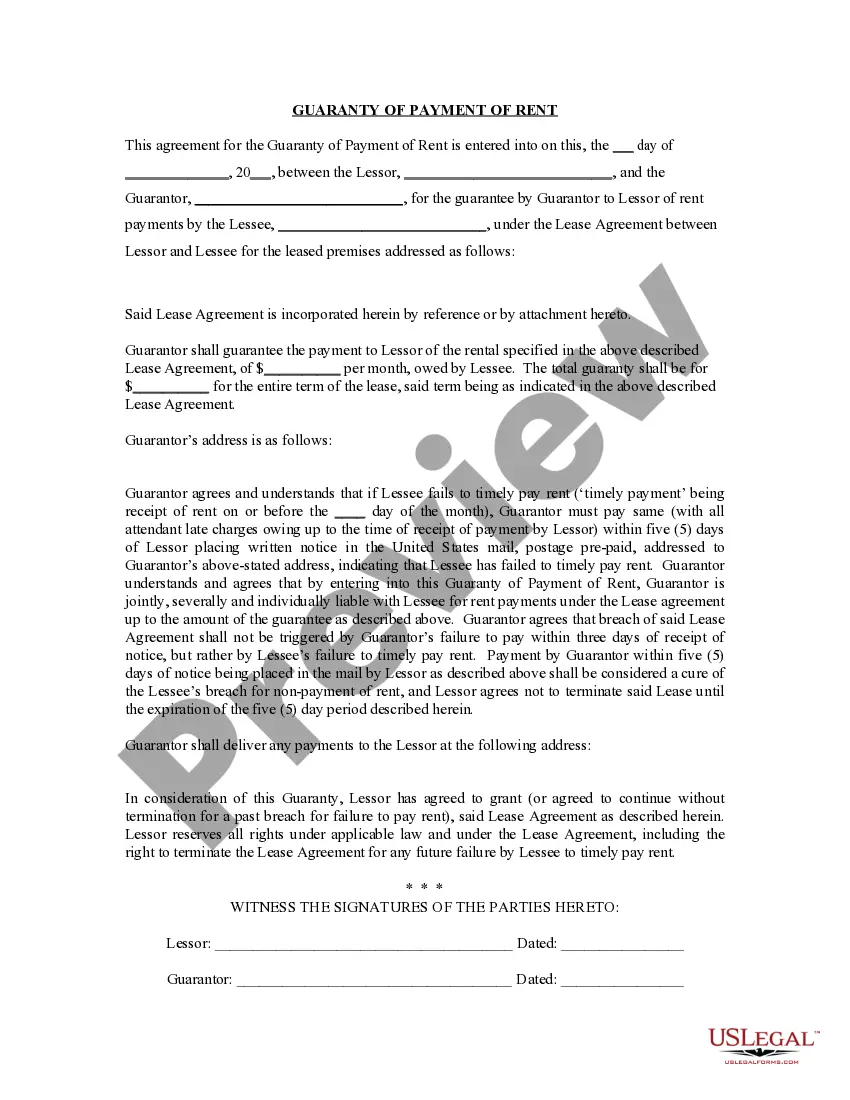
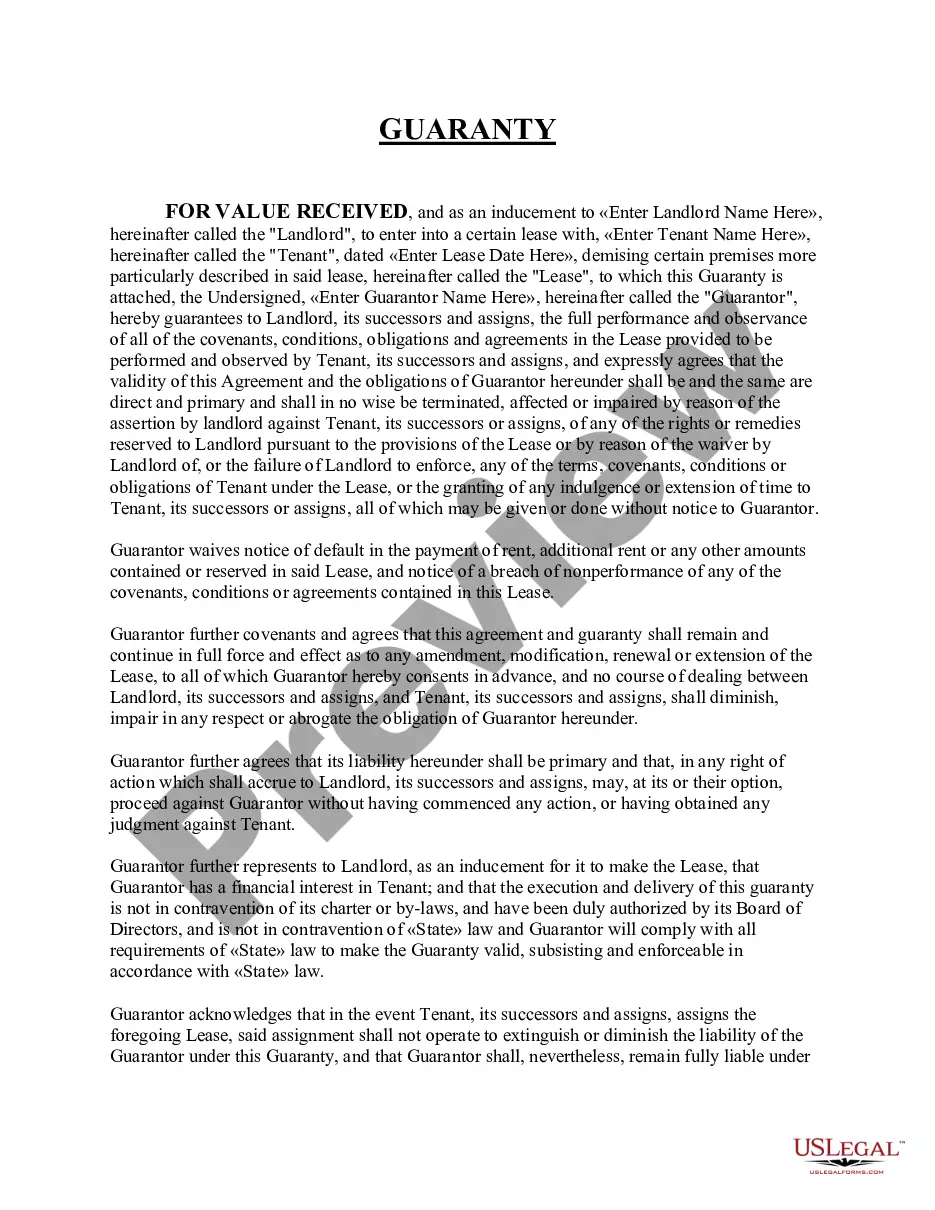
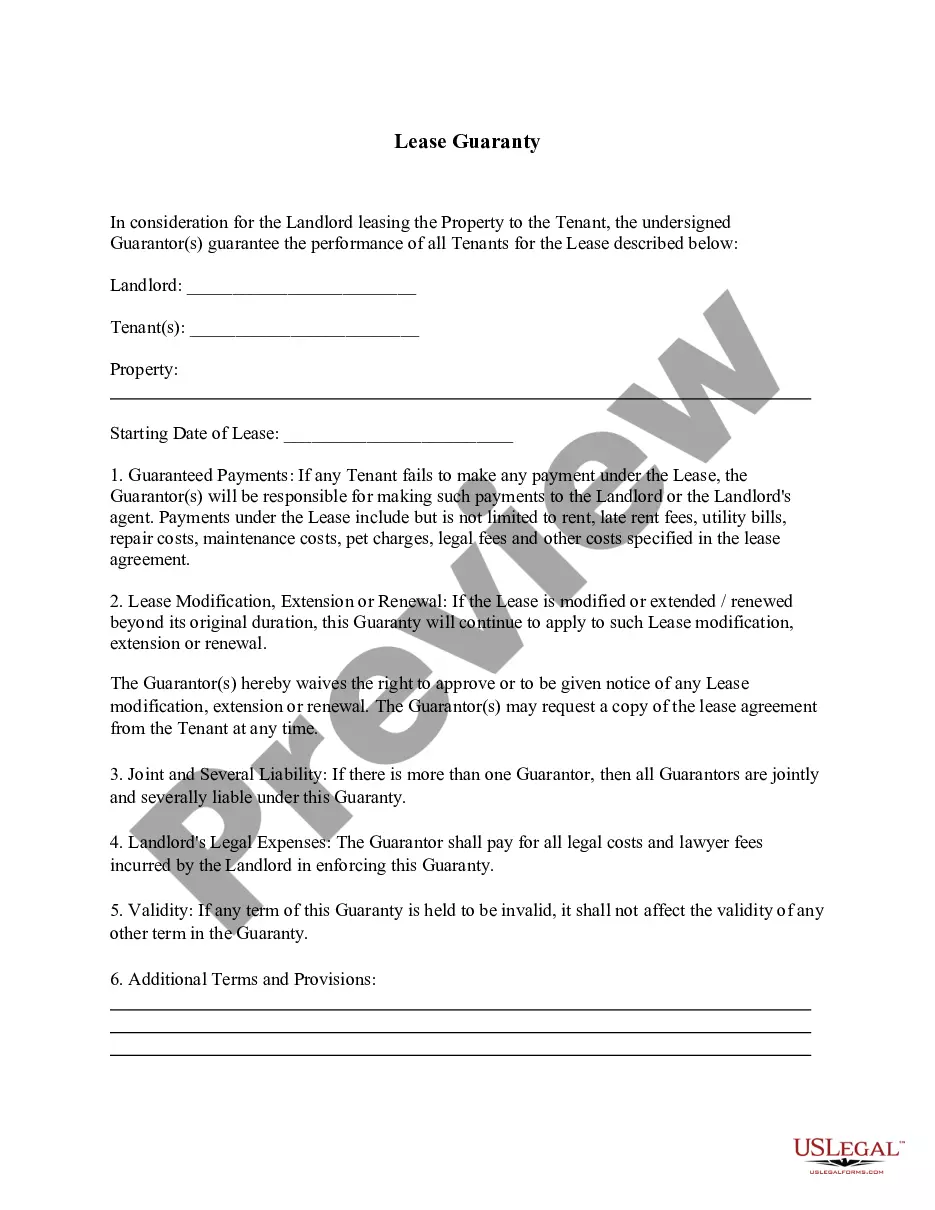
The Guaranty or Guarantee of Payment of Rent is a legal agreement between a guarantor and a landlord, ensuring that rent will be paid even if the tenant is unable to fulfill their payment obligations. This form differs from other rental agreements by specifically designating a guarantor responsible for rent payment, adding a layer of security for landlords.
Key components of this form
- Names and addresses of the guarantor and landlord.
- Date of the agreement.
- Details of payment obligations in case the tenant defaults.
- Witness signatures from the guarantor and landlord.
Situations where this form applies
This form is needed when a tenant has a limited credit history or insufficient income to assure landlords that rent payments will be made. By having a guarantor sign this guarantee, the landlord has confirmed assurance of payment, making it easier for tenants to secure rental properties.
Who can use this document
- Tenants seeking rental agreements but lacking strong credit.
- Guarantors willing to back the financial responsibilities of a tenant.
- Landlords requiring additional security for rent payments.
How to prepare this document
- Identify and provide the names and addresses of both the guarantor and the landlord.
- State the date on which the agreement is made.
- Include the terms of rent payment obligations for the tenant.
- Leave space for the signatures of both the guarantor and the landlord.
- Ensure that the form is executed in accordance with local laws if applicable.
Is notarization required?
In most cases, this form does not require notarization. However, some jurisdictions or signing circumstances might. US Legal Forms offers online notarization powered by Notarize, accessible 24/7 for a quick, remote process.
Get your form ready online
Our built-in tools help you complete, sign, share, and store your documents in one place.
Make edits, fill in missing information, and update formatting in US Legal Forms—just like you would in MS Word.
Download a copy, print it, send it by email, or mail it via USPS—whatever works best for your next step.
Sign and collect signatures with our SignNow integration. Send to multiple recipients, set reminders, and more. Go Premium to unlock E-Sign.
If this form requires notarization, complete it online through a secure video call—no need to meet a notary in person or wait for an appointment.
We protect your documents and personal data by following strict security and privacy standards.

Make edits, fill in missing information, and update formatting in US Legal Forms—just like you would in MS Word.

Download a copy, print it, send it by email, or mail it via USPS—whatever works best for your next step.

Sign and collect signatures with our SignNow integration. Send to multiple recipients, set reminders, and more. Go Premium to unlock E-Sign.

If this form requires notarization, complete it online through a secure video call—no need to meet a notary in person or wait for an appointment.

We protect your documents and personal data by following strict security and privacy standards.
Avoid these common issues
- Failing to include the full names and accurate addresses of the parties involved.
- Not specifying the terms of default or payment obligations clearly.
- Omitting the date of agreement.
- Neglecting to have both parties sign the document.
Benefits of using this form online
- Convenience of downloading the form anytime you need it.
- Editability that allows you to customize the form to your specific situation.
- Reliability of having a document prepared by licensed attorneys.
Legal use & context
- The guaranty creates a legally binding obligation for the guarantor.
- Enforcement may depend on state-specific laws and may necessitate proper documentation.
- Landlords may use this form as leverage to ensure timely rent payments.
What to keep in mind
- The Guaranty or Guarantee of Payment of Rent serves as a financial safety net for landlords.
- It outlines clear obligations for both tenants and guarantors.
- Proper completion of the form is essential to avoid disputes later on.
Looking for another form?


Form popularity
FAQ
The Michigan Truth in Renting Act ensures transparency in landlord-tenant relationships by requiring landlords to provide clear rental agreements. This law mandates certain disclosures, which help tenants understand their rights under the Michigan Guaranty or Guarantee of Payment of Rent. Familiarity with this act aids both parties in avoiding potential disputes.
Ask for an amendment to the lease after 12-24 months. Ask for the guarantee to expire after 12-24 months as long as you have paid rent payments on time. Try to renegotiate the guarantee terms.
Business owners are often required to give a personal guarantee to get a business loan or to lease commercial space for their business. Most business advisors say you should keep business and personal financial matters separate, and the loan is for the business, not for the individual.
A personal guaranty is not enforceable without consideration In fact, no contract is enforceable without consideration. A personal guaranty is a type of contract. A contract is an enforceable promise. The enforceability of a contract comes from one party's giving of consideration to the other party.
It's very common for a guarantee to last as long as the tenancy lasts. So, if the tenant remains in the property for four years, you will continue to be responsible for any arrears or damages during that entire period. Most tenancies will run for a fixed term and will then continue on a month-by-month basis.
If you are a guarantor and no longer wish to be, you must obtain the consent or agreement from the landlord before you will be released from your liabilities, which, if the rent is in arrears, the landlord is unlikely to agree to.
The personal guarantee overrides any other condition that is needed with. a lease or other agreement. It is the personal promise that the lease will be paid for no matter what incident or even to occurs or arises. This means the owner is responsible in paying any loan or other financial obligation.
A guaranty is the written promise of an individual to pay the debt of another. In a commercial setting, a guaranty is typically the promise of an owner or officer of a corporate entity to pay the debt of that corporate entity should it default on its obligation.
It's very common for a guarantee to last as long as the tenancy lasts. So, if the tenant remains in the property for four years, you will continue to be responsible for any arrears or damages during that entire period. Most tenancies will run for a fixed term and will then continue on a month-by-month basis.
In a personal guarantee, the guarantor (usually the business owner) agrees to be responsible for the lease payments owed by the business under the terms of a commercial lease if the business fails to pay rent or fails to pay rent after vacating the leased space before the end of the lease term.