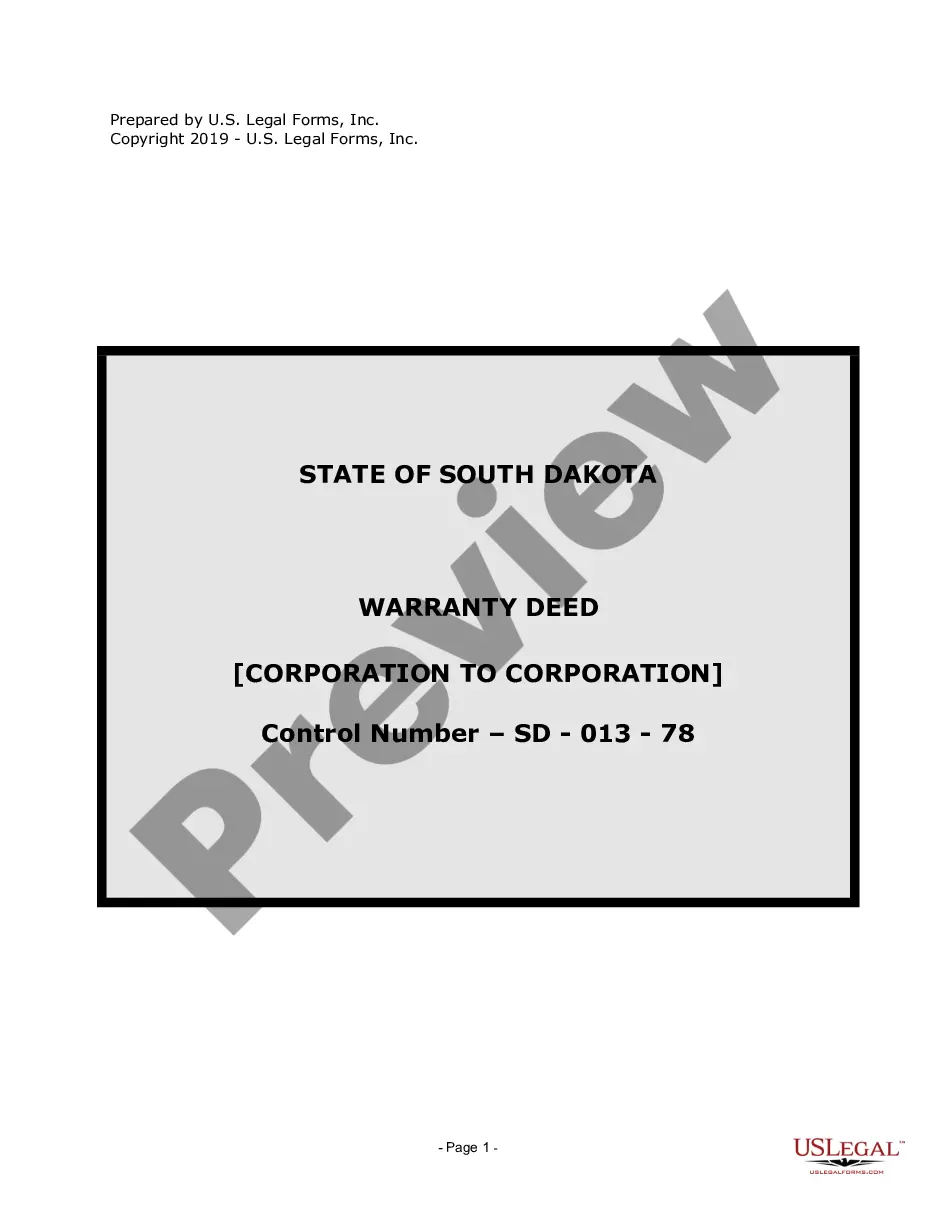
Michigan Quitclaim Deed from Corporation to Two Individuals
Understanding this form
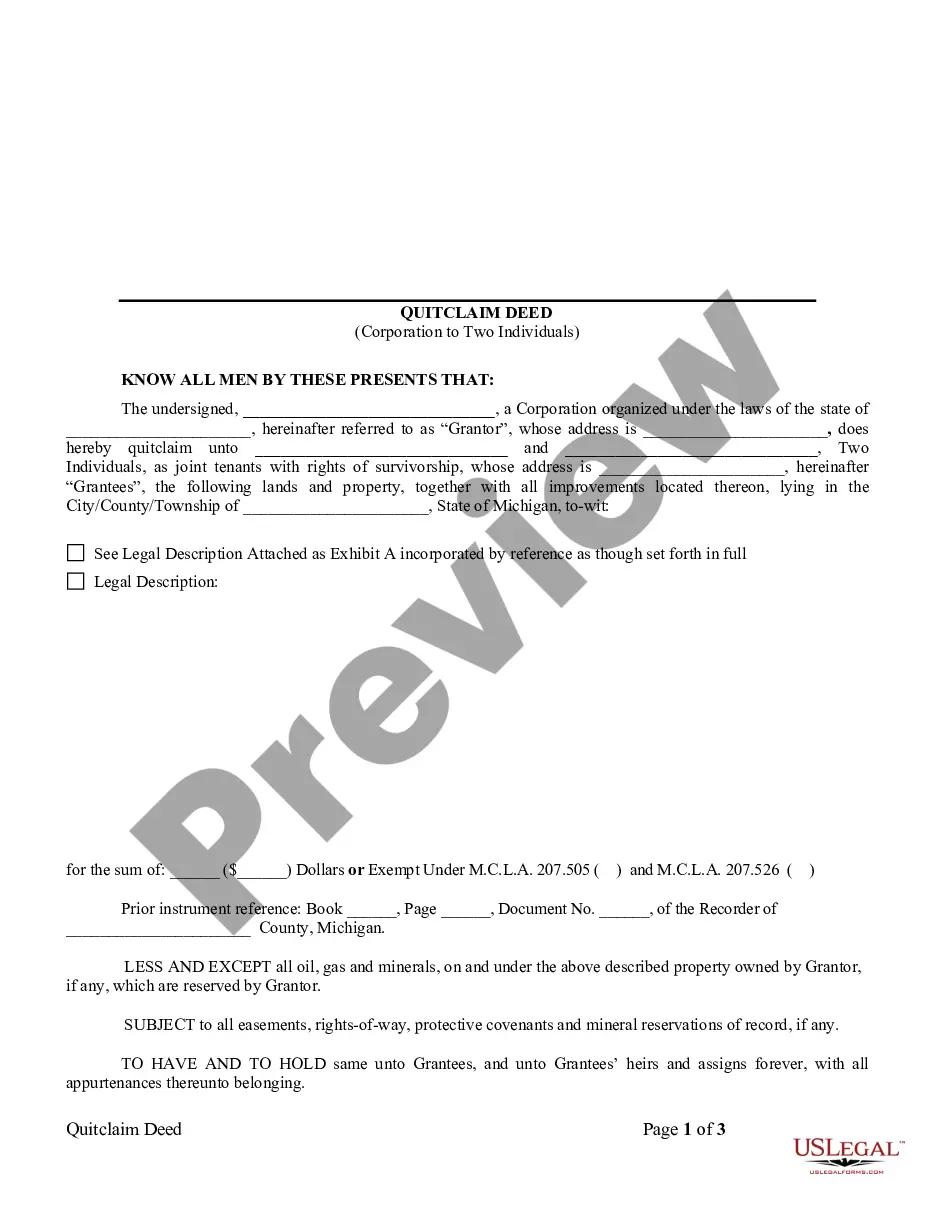
The Quitclaim Deed from Corporation to Two Individuals is a legal document that facilitates the transfer of property ownership from a corporation (the Grantor) to two individuals (the Grantees). Unlike a warranty deed, a quitclaim deed does not guarantee that the Grantor holds clear title to the property. This form is specifically designed to convey property with exceptions for any oil, gas, and minerals, allowing the Grantor to retain those rights.
Key parts of this document
- Identification of the Grantor: The corporation transferring the property.
- Identification of the Grantees: The two individuals receiving the property.
- Description of the property: A detailed legal description of the land being transferred.
- Reservation of rights: Exclusions for any oil, gas, and mineral rights that remain with the Grantor.
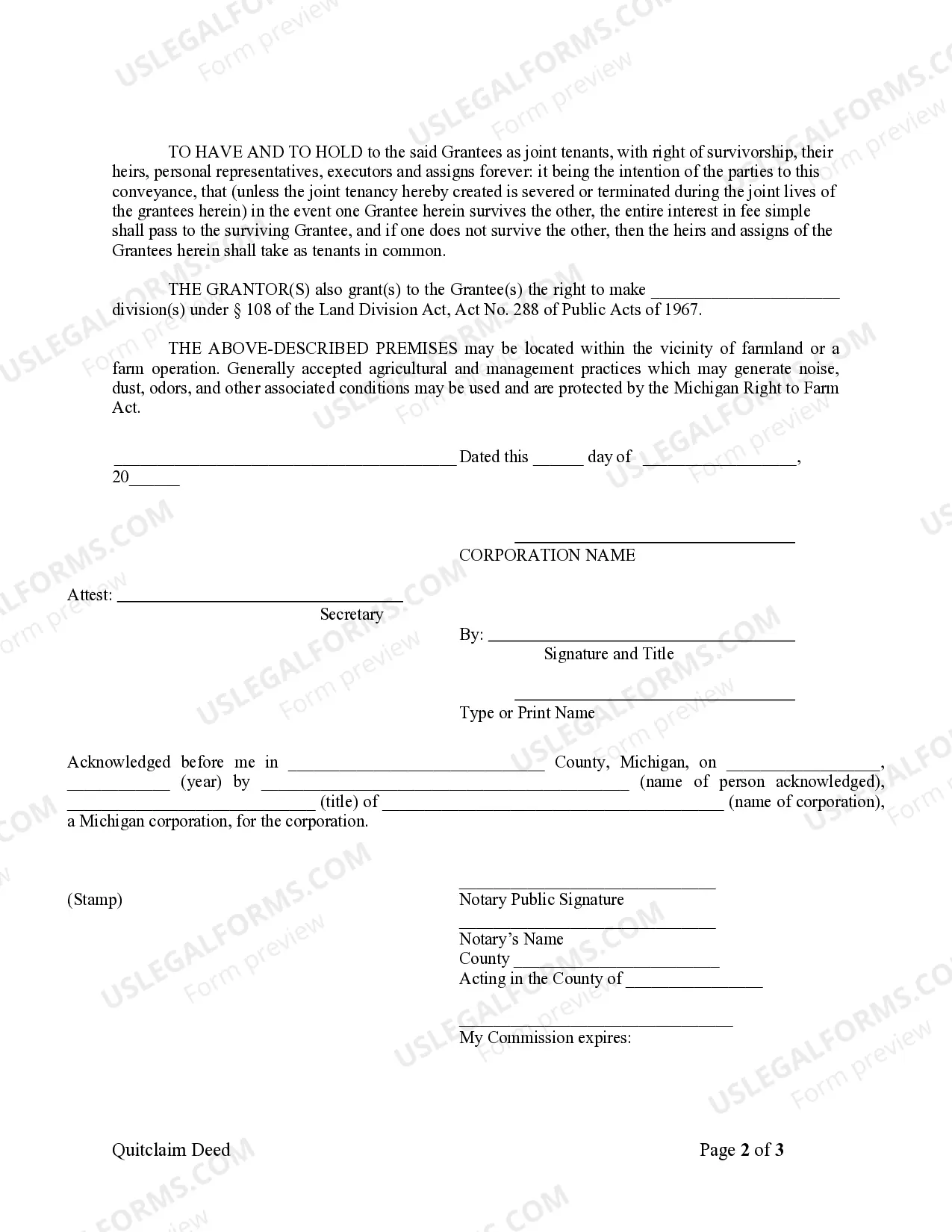
- Joint tenancy clause: Establishes the rights of survivorship for the Grantees.




Situations where this form applies
This form is typically used when a corporation wishes to transfer real estate to two individuals, often in the context of estate planning or property consolidation. For example, it may be utilized when a corporation, perhaps an estate holding company, needs to eliminate assets by transferring property directly to family members. It is also useful for transactions where the corporation does not wish to retain any ownership or responsibility for the property.
Who this form is for
- Corporations that own real estate and want to transfer it to individuals.
- Individuals receiving property from a corporation, particularly in joint ownership situations.
- Estate planners looking to simplify ownership structures among beneficiaries.
Instructions for completing this form
- Identify the parties: Fill in the name of the corporation as the Grantor and the two individuals as Grantees.
- Specify the property: Enter the complete legal description of the property being transferred.
- Reserve rights: Clearly indicate any oil, gas, and mineral rights that are to be retained by the Grantor.
- Include signatures: Ensure that the Grantor signs the deed and dates the document appropriately.
- File the deed: Submit the completed quitclaim deed to the local county recorderâs office for it to be officially recorded.
Does this document require notarization?
This form does not typically require notarization unless specified by local law. However, having the quitclaim deed notarized can add an additional layer of authenticity and may be preferred for recording in some jurisdictions.
Get your form ready online
Our built-in tools help you complete, sign, share, and store your documents in one place.
Make edits, fill in missing information, and update formatting in US Legal Forms—just like you would in MS Word.
Download a copy, print it, send it by email, or mail it via USPS—whatever works best for your next step.
Sign and collect signatures with our SignNow integration. Send to multiple recipients, set reminders, and more. Go Premium to unlock E-Sign.
If this form requires notarization, complete it online through a secure video call—no need to meet a notary in person or wait for an appointment.
We protect your documents and personal data by following strict security and privacy standards.

Make edits, fill in missing information, and update formatting in US Legal Forms—just like you would in MS Word.

Download a copy, print it, send it by email, or mail it via USPS—whatever works best for your next step.

Sign and collect signatures with our SignNow integration. Send to multiple recipients, set reminders, and more. Go Premium to unlock E-Sign.

If this form requires notarization, complete it online through a secure video call—no need to meet a notary in person or wait for an appointment.

We protect your documents and personal data by following strict security and privacy standards.
Mistakes to watch out for
- Failing to provide a complete legal description of the property.
- Not including the reservation of rights for minerals, gas, or oil.
- Inadequate signatures or dates, leading to the deed being invalid.
- Not recording the quitclaim deed with the appropriate local authority.
Why use this form online
- Convenient access: Download forms at any time from home or office.
- Editable templates: Personalize the form to fit specific needs without hassle.
- Legally compliant: Forms are crafted by licensed attorneys knowledgeable about state laws.
Main things to remember
- A quitclaim deed is a simple way to transfer property without assurances about title integrity.
- This form is specifically designed for corporate to individual property transfers.
- Understanding how to complete the form accurately is crucial for a smooth transfer.
Looking for another form?


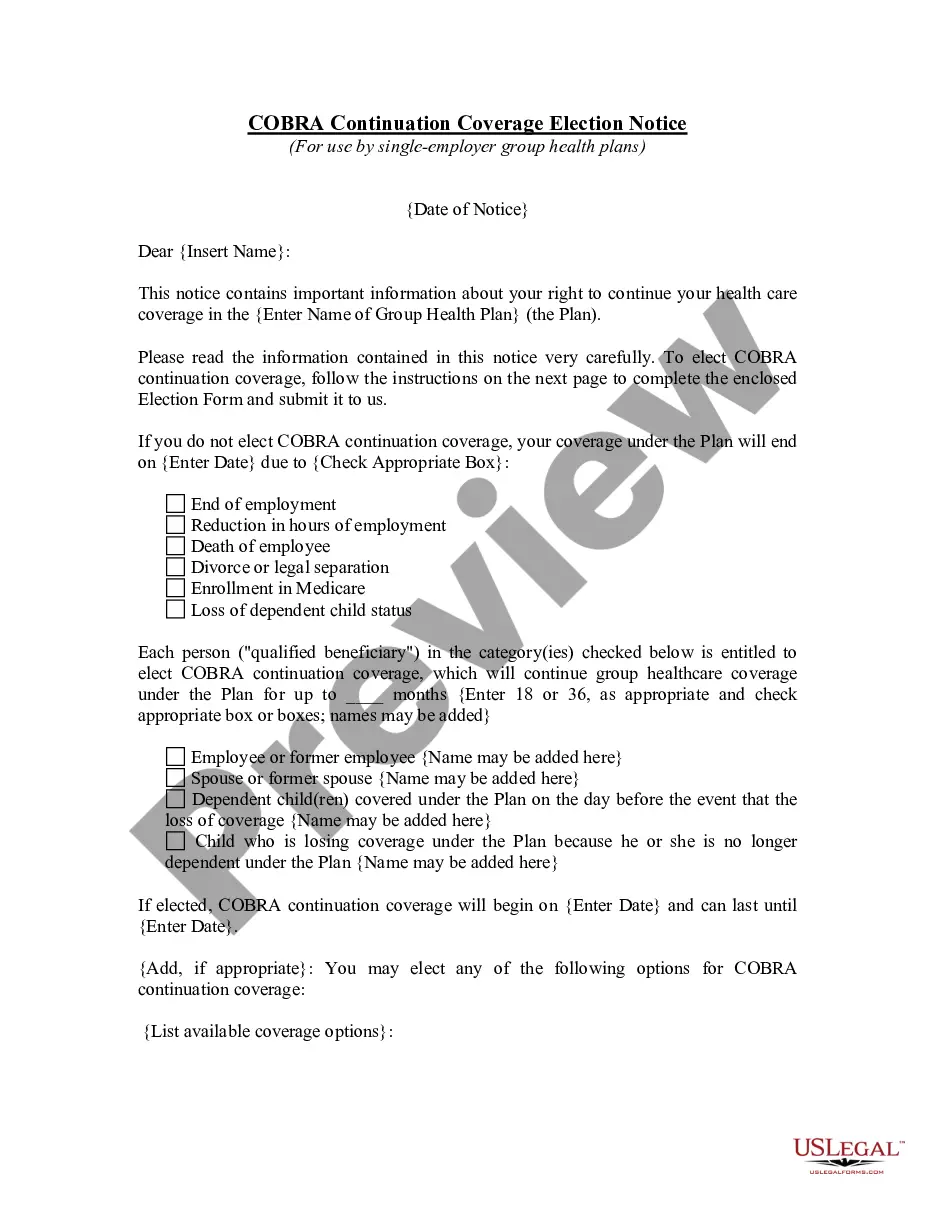


Form popularity
FAQ
There will be a $30 recording fee. If you prepare a quitclaim deed using the Do-It-Yourself Quitclaim Deed (after Divorce) tool, detailed instructions on what to do next will print out along with the deed.
In Michigan, a quit claim deed must be signed by a witness, in addition to the notary, to make it legal.After all required signatures are collected and notarized, file the document with your local register of deeds to complete the transaction.
A Michigan quitclaim deed form provides no warranty of title. That means that the new owner has no legal right to sue the prior owner if there is a problem with the title to the property. The new owner simply takes whatever title that the prior owner has.
A quitclaim deed doesn't always need to be signed before the divorce is final. Your divorce judgment will detail the terms of your property settlement agreement, and the requirement for transferring title will likely be incorporated into this agreement.
The grantor must sign the deed according to the law in every state and county. The grantor's signature finalizes the transfer of ownership, and quitclaim deeds aren't considered valid unless the grantor signs them. A certified notary public must typically be present as the grantor signs.
A quitclaim deed transfers title but makes no promises at all about the owner's title.A person who signs a quitclaim deed to transfer property they do not own results in no title at all being transferred since there is no actual ownership interest. The quitclaim deed only transfers the type of title you own.
Signing: § 565.201 requires that the grantor sign the document in front of a notary public. Recording: All quitclaim deeds in Michigan must be filed with the Michigan Register of Deeds in the county where the property is located.