Michigan Amendment to Prenuptial or Premarital Agreement
Understanding this form
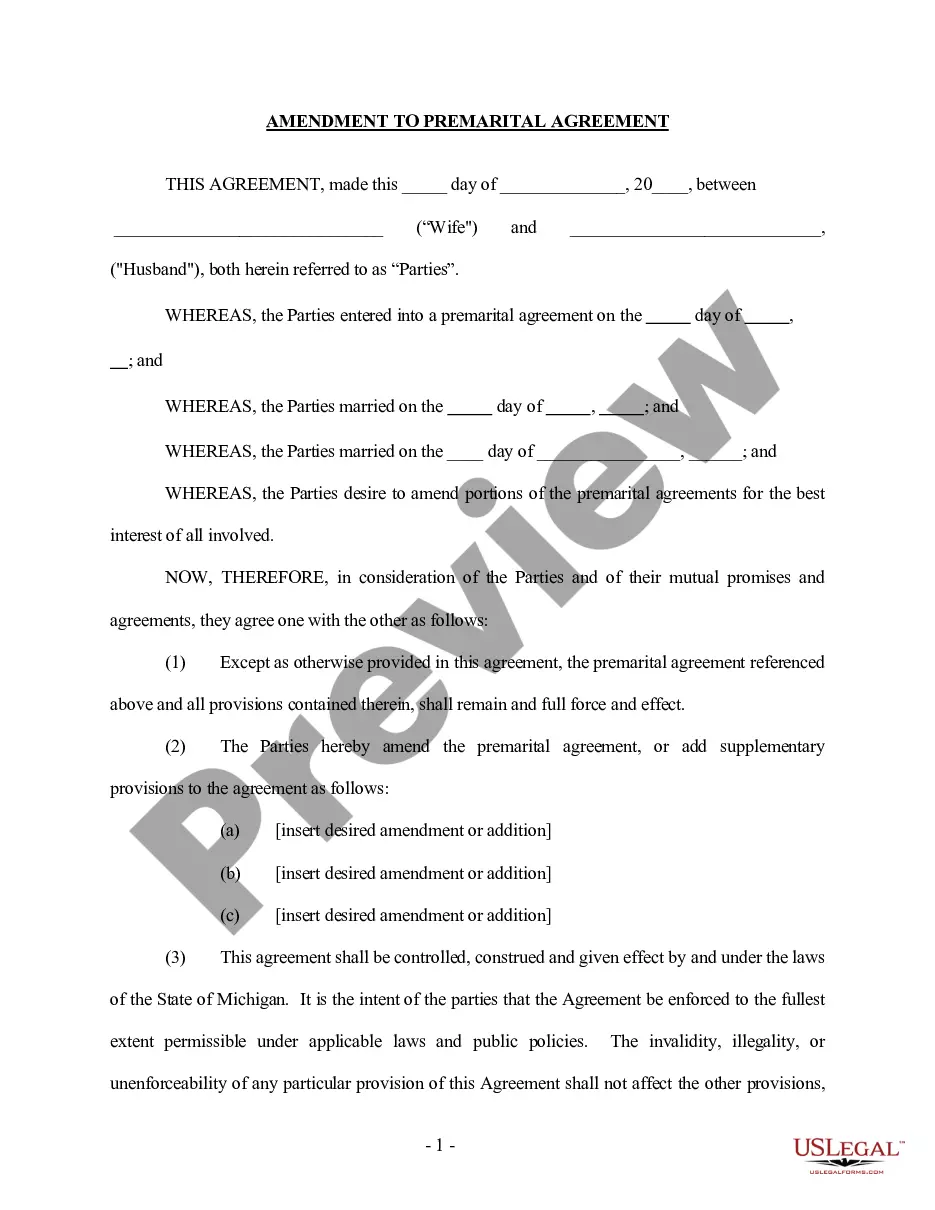
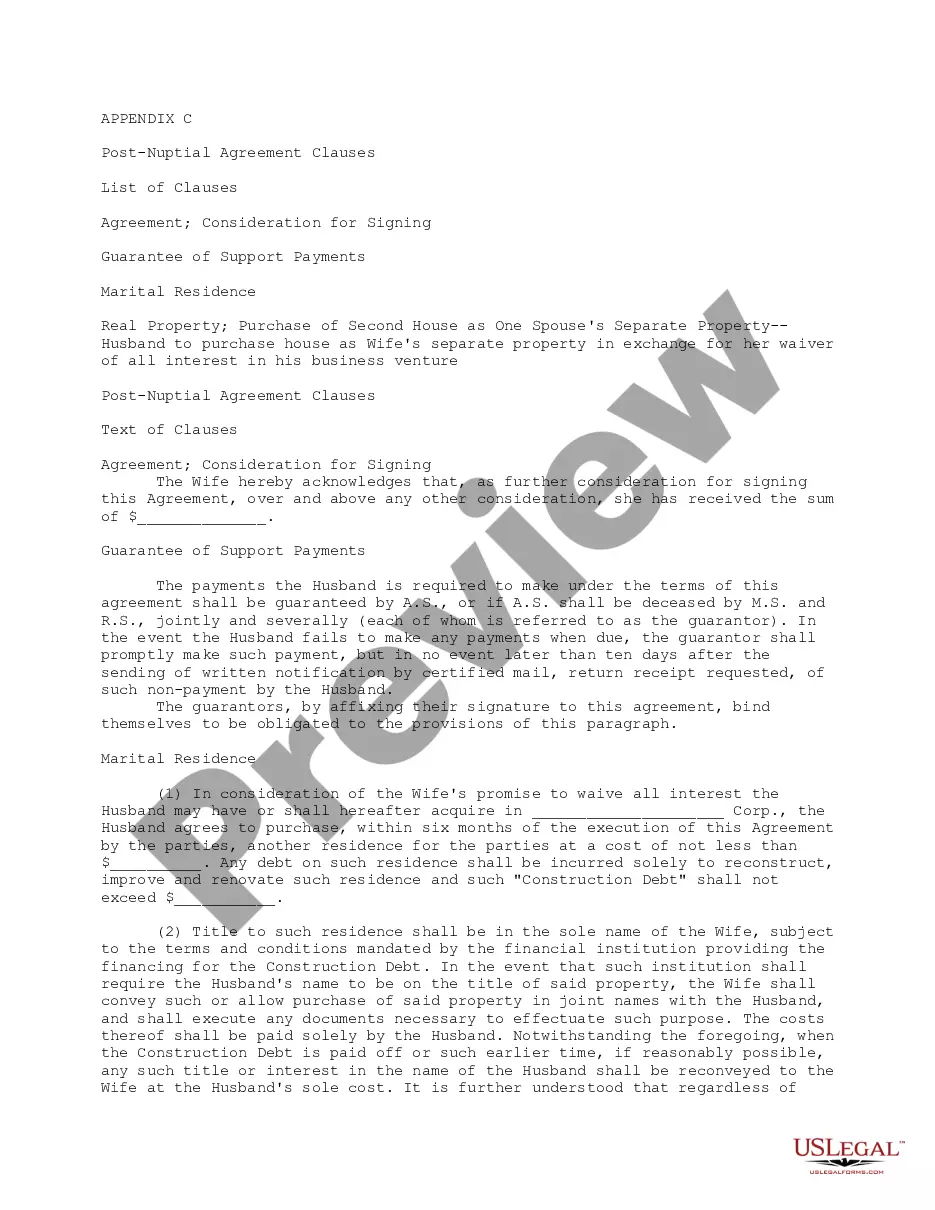
The Amendment to Prenuptial or Premarital Agreement is a legal document that allows parties to modify or add to an existing premarital agreement in the State of Michigan. This form differs from a standard premarital agreement as it specifically outlines amendments rather than a complete agreement, ensuring that previous terms remain intact unless changed by mutual consent.
Main sections of this form
- Parties: Identifies the individuals involved in the agreement, typically referred to as Wife and Husband.
- Effective Date: Specifies when the amendment will take effect, requiring date entry by the parties.
- Amendments: Areas for detailing the specific changes or additions to the premarital agreement.
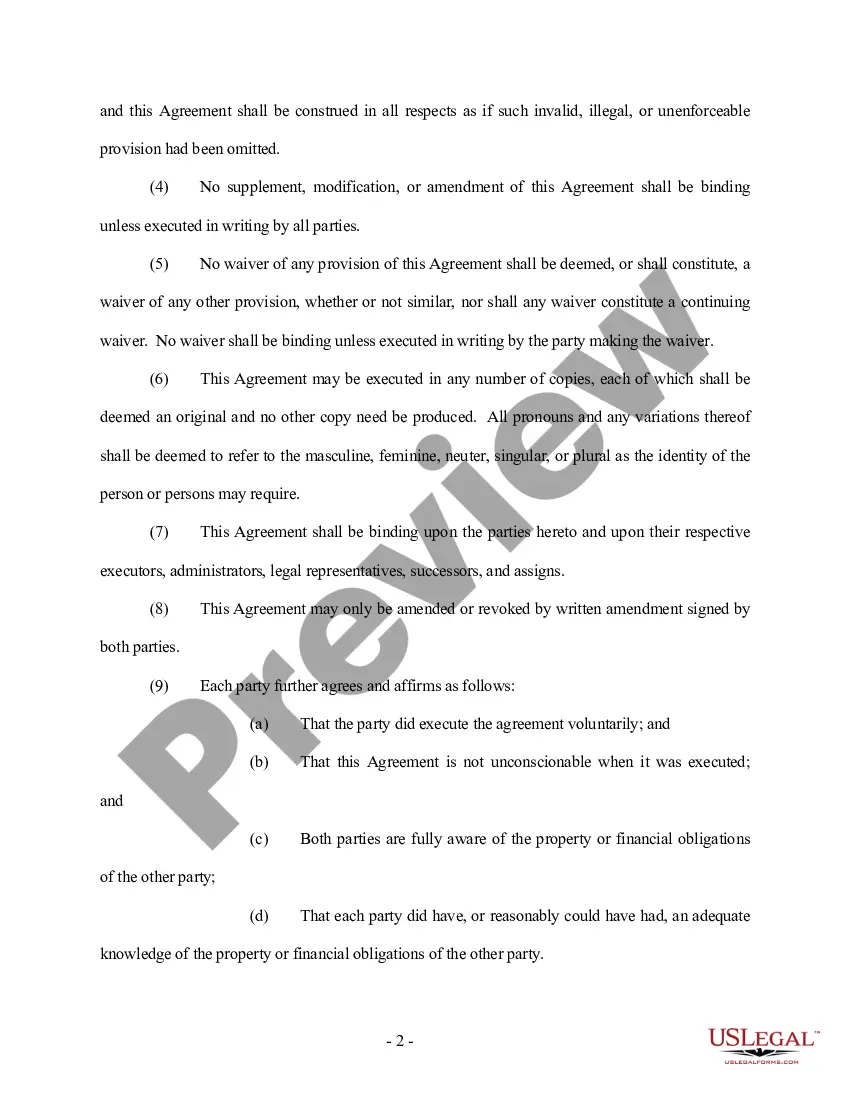
- Governing Law: Clarifies that the agreement is governed by the laws of Michigan.
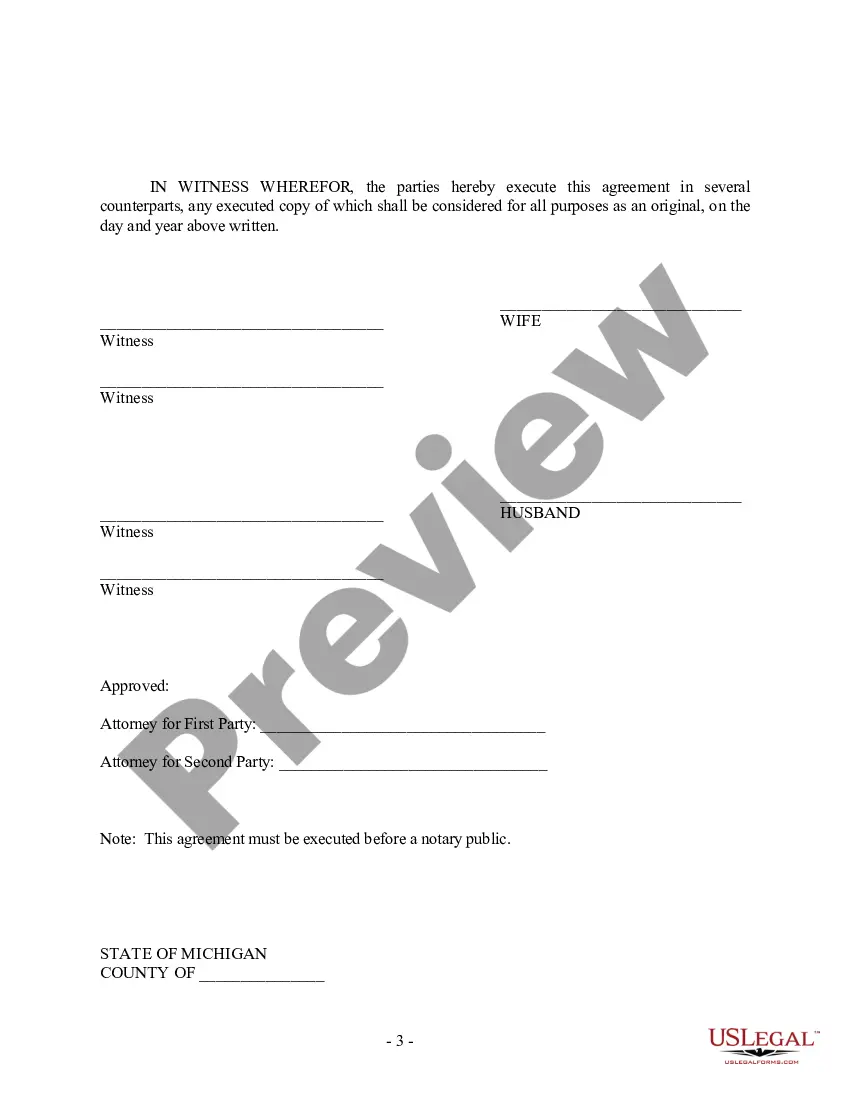
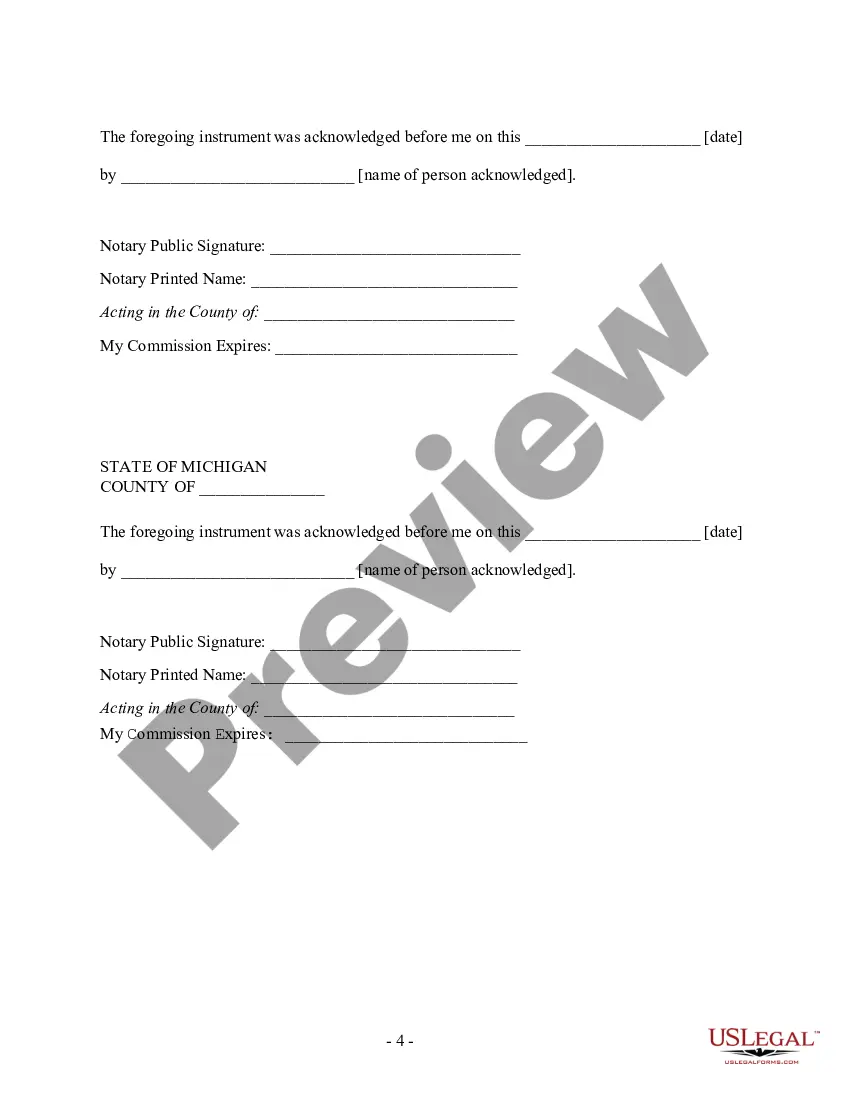
- Signature Section: Mandates signatures from both parties and witnesses, along with notary acknowledgment.
When to use this document
This form should be used whenever a couple wishes to change terms in their existing prenuptial or premarital agreement. Common scenarios include updating financial provisions, changing asset ownership, or adjusting spousal support terms due to life changes such as marriage, the birth of children, or changes in income.
Who this form is for
- Couples already bound by an existing premarital agreement who need to make changes.
- Individuals who want to update their legal commitments regarding financial matters.
- Parties seeking to clarify ambiguous terms in their original agreement.
How to prepare this document
- Identify the parties by entering the full names of both individuals involved.
- Specify the effective date of the amendment in the designated field.
- Detail any amendments or additions to the original agreement in the provided sections.
- Gather signatures from both parties and any necessary witnesses.
- Ensure the document is notarized to validate the agreement legally.
Is notarization required?
Yes, this form must be notarized to be legally valid. This ensures that both parties have voluntarily agreed to the changes in the amendment under the supervision of a notary public, protecting the integrity of the agreement.
Get your form ready online
Our built-in tools help you complete, sign, share, and store your documents in one place.
Make edits, fill in missing information, and update formatting in US Legal Forms—just like you would in MS Word.
Download a copy, print it, send it by email, or mail it via USPS—whatever works best for your next step.
Sign and collect signatures with our SignNow integration. Send to multiple recipients, set reminders, and more. Go Premium to unlock E-Sign.
If this form requires notarization, complete it online through a secure video call—no need to meet a notary in person or wait for an appointment.
We protect your documents and personal data by following strict security and privacy standards.

Make edits, fill in missing information, and update formatting in US Legal Forms—just like you would in MS Word.

Download a copy, print it, send it by email, or mail it via USPS—whatever works best for your next step.

Sign and collect signatures with our SignNow integration. Send to multiple recipients, set reminders, and more. Go Premium to unlock E-Sign.

If this form requires notarization, complete it online through a secure video call—no need to meet a notary in person or wait for an appointment.

We protect your documents and personal data by following strict security and privacy standards.
Common mistakes
- Failing to fill in all required fields, leading to an incomplete amendment.
- Not having the form notarized, which may invalidate the agreement.
- Not clearly specifying the amendments, creating confusion about the intended changes.
Benefits of completing this form online
- Instant access: Download the form quickly and complete it at your convenience.
- Editability: Make changes to the form as needed before finalizing the amendment.
- Reliability: Forms are drafted by licensed attorneys to ensure legal compliance.
Main things to remember
- The Amendment to Prenuptial or Premarital Agreement allows for modifications to an existing agreement.
- It is crucial for both parties to agree and sign the changes in the presence of a notary public.
- This form ensures that new amendments are legally enforceable under Michigan law.
Looking for another form?




Form popularity
FAQ
Prenuptial agreements are not set in stone: Parties may be able to renegotiate the terms, so long as the renegotiation is legal and valid.
No, you cannot get a prenup if you are already married.You can still sign a postnuptial agreement (or postnup), which achieves the same goals as a prenup in most cases. Prenups are a common step before marriage. Texas community property rules are the reason why prenups are common in Texas.
The premarital agreement is not a notarized document, therefore there is no per se obligation to notarize it.For instance, whenever the prenuptial agreement, in dividing assets between the spouses, also refers to a real estate property transfer, having the document notarized is highly recommended.
You cannot amend your prenuptial agreement after marriage. What you can do is prepare a post-nuptial agreement to make the necessary amendments. A post-nuptial agreement requires similar disclosure so you again will need to exchange full financial disclosures with your husband.
Postnuptial agreements are generally enforceable if the parties of the document adhere to all state laws regarding inheritance, child custody, visitation and monetary support if a divorce does occur.If any state laws are in violation within the postnuptial, the judge may throw out the entire document.
In Michigan, prenuptial agreements - also called "antenuptial" or "premarital" agreements - are generally permitted under state laws. A prenuptial agreement will usually be upheld in court as long as: It's fair; It was executed voluntarily (without mistake, fraud, or duress); and.
As long as you and your spouse agree, your prenuptial agreement can be changed. To create an amendment to a prenup, you can either add to the original contract or sign a separate contract that modifies the terms of the initial agreement.
Prenuptial agreements, if drawn up and executed correctly, are legally binding and are usually upheld in court.
Any indication of coercion or lack of willingness can give way for a divorce judge to overturn the agreement. A written agreement should be reviewed by an experienced family law attorney prior to completion of the agreement. Premarital agreements must be signed in front of witnesses and must be notarized.