Maine Letter from Tenant to Landlord containing Notice to landlord to withdraw improper rent increase due to violation of rent control ordinance
What this document covers
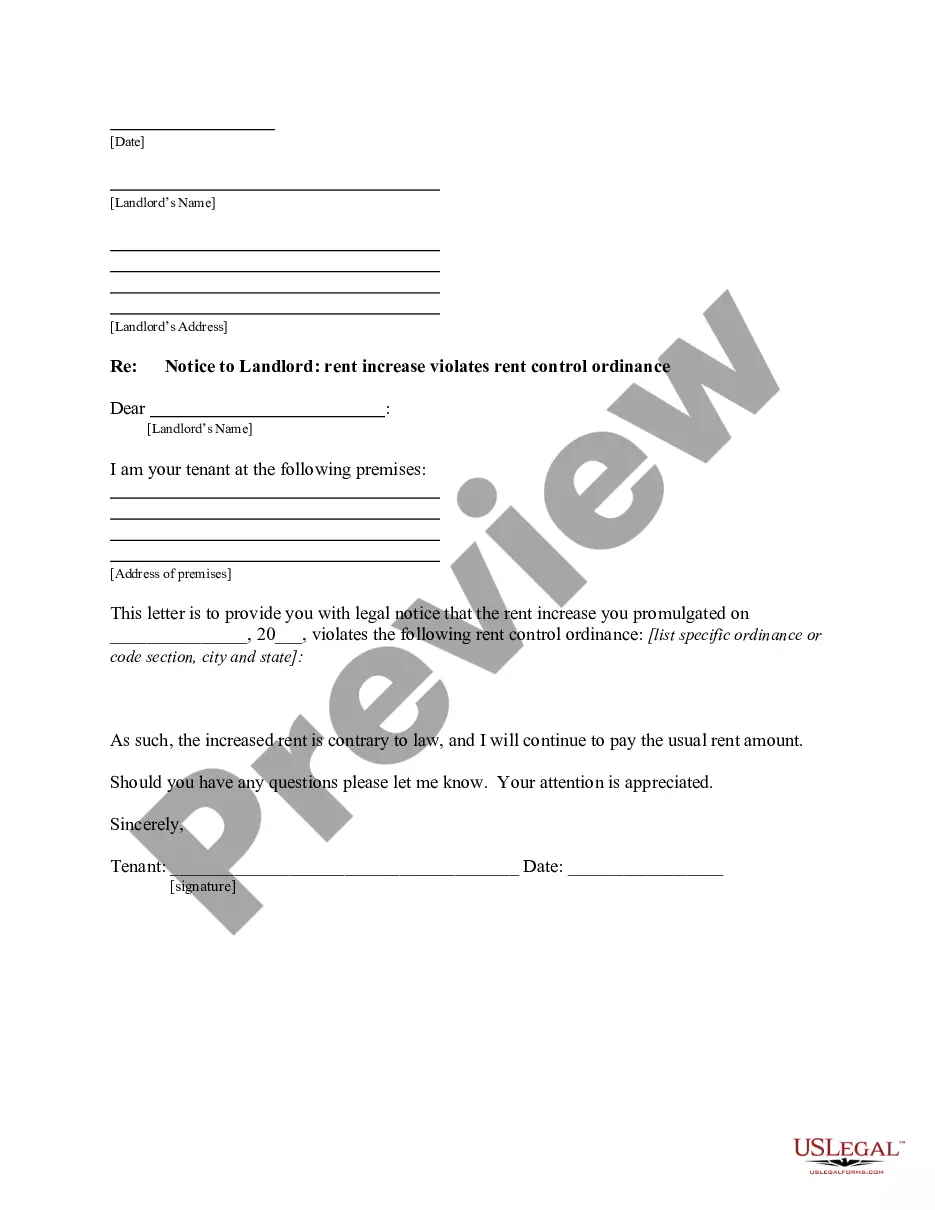
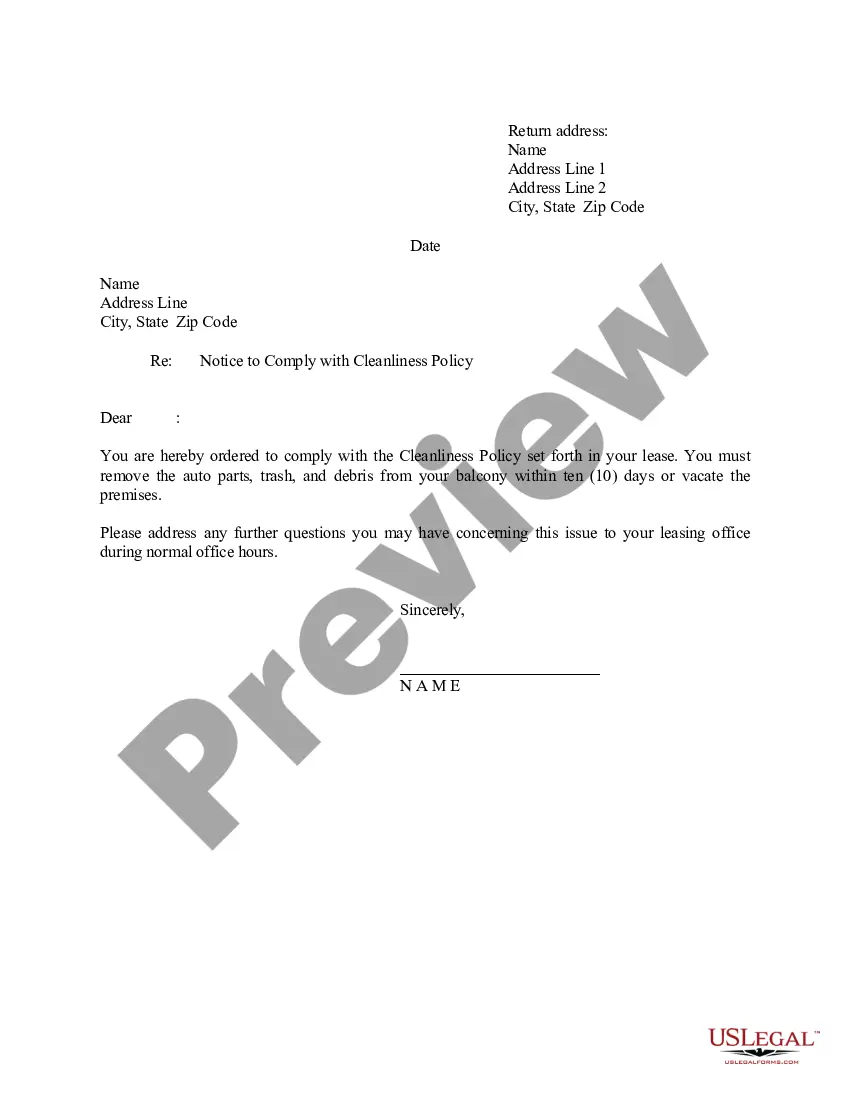
This form is a notice from the tenant to the landlord regarding an improper rent increase that violates rent control ordinances. It serves the purpose of informing the landlord that such an increase may be unlawful, ensuring tenant rights are upheld. This letter is specifically designed to formally request the withdrawal of the rent increase, distinguishing it from other tenant-landlord communication forms.
Form components explained
- Tenant's contact information: Includes details for the tenant sending the notice.
- Landlord's contact information: Identifies the landlord or the authorized agent receiving the notice.
- Specific violation reference: Clearly states the reason for the notice, citing the rent control ordinance violation.
- Request to withdraw increase: Requests that the landlord rescinds the improper rent increase.
- Tenant's signature and date: Validates the document with the tenant's signature and date of issuance.
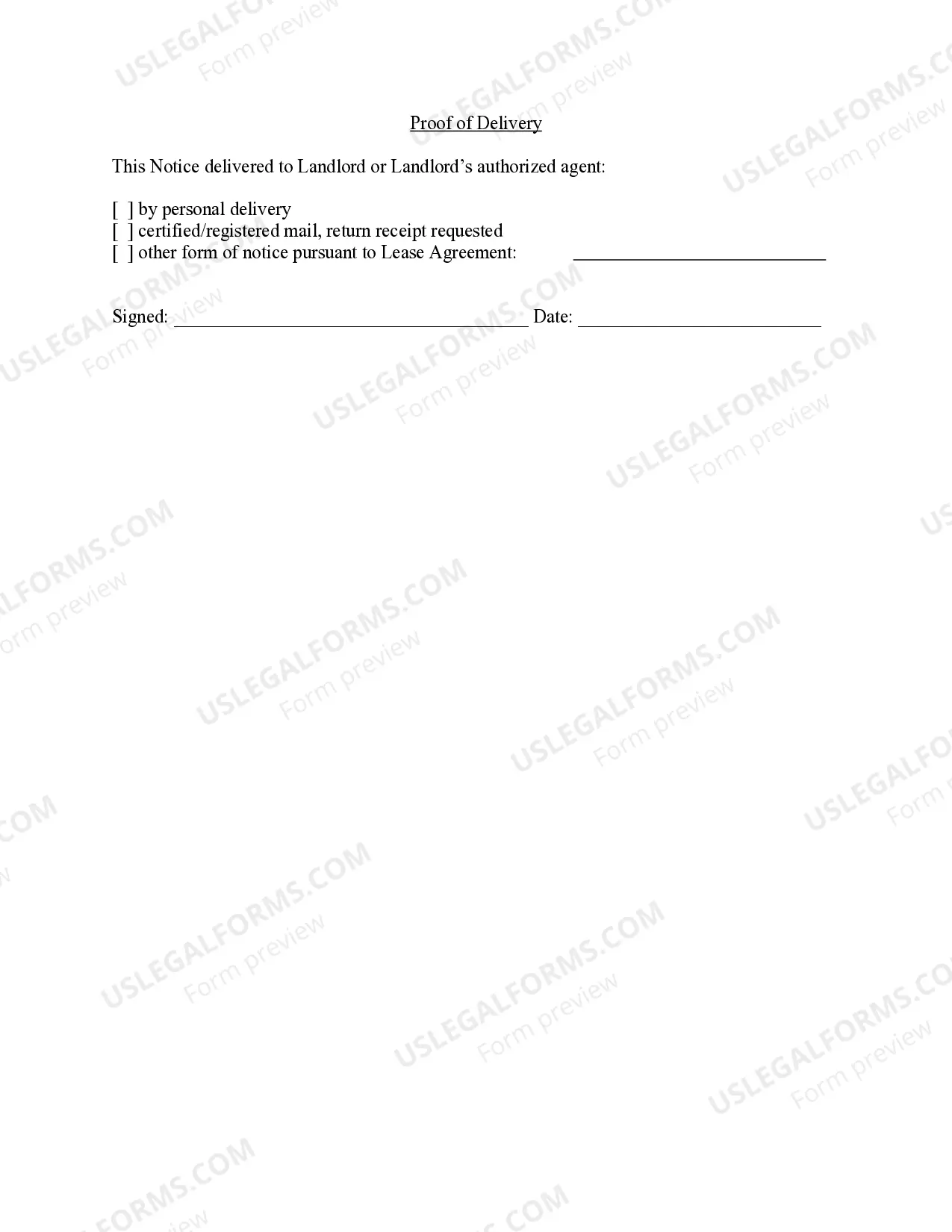
- Proof of delivery method: States how the notice is delivered, such as personal delivery or certified mail.

Common use cases
This form should be used when a tenant believes that their landlord has unlawfully increased their rent, violating local rent control laws. It is essential for tenants who wish to formally communicate their intent to dispute the increase while protecting their rights. Using this notice can help initiate a resolution before further legal action is considered.
Intended users of this form
The following individuals should consider using this form:
- Tenants who have received a notice of rent increase.
- Tenants living in areas with rent control ordinances.
- Individuals seeking to formally dispute an unauthorized rent increase.
- Renters looking to ensure compliance with local rental laws.
How to prepare this document
- Identify the parties: Fill in your name and contact details as the tenant along with the landlord's contact information.
- State the violation: Clearly mention the rent control ordinance that has been violated by the rent increase.
- Request withdrawal: Explicitly ask the landlord to withdraw the improper rent increase.
- Sign the document: Add your signature along with the date to validate the form.
- Choose delivery method: Indicate how you will deliver the notice to the landlord, either through personal delivery or certified mail.
Is notarization required?
This form does not typically require notarization unless specified by local law. It is advisable to verify your local regulations to ensure compliance.
Get your form ready online
Our built-in tools help you complete, sign, share, and store your documents in one place.
Make edits, fill in missing information, and update formatting in US Legal Forms—just like you would in MS Word.
Download a copy, print it, send it by email, or mail it via USPS—whatever works best for your next step.
Sign and collect signatures with our SignNow integration. Send to multiple recipients, set reminders, and more. Go Premium to unlock E-Sign.
If this form requires notarization, complete it online through a secure video call—no need to meet a notary in person or wait for an appointment.
We protect your documents and personal data by following strict security and privacy standards.

Make edits, fill in missing information, and update formatting in US Legal Forms—just like you would in MS Word.

Download a copy, print it, send it by email, or mail it via USPS—whatever works best for your next step.

Sign and collect signatures with our SignNow integration. Send to multiple recipients, set reminders, and more. Go Premium to unlock E-Sign.

If this form requires notarization, complete it online through a secure video call—no need to meet a notary in person or wait for an appointment.

We protect your documents and personal data by following strict security and privacy standards.
Mistakes to watch out for
- Not including the correct details of the landlord and tenant.
- Failing to specify the exact rent control ordinance being violated.
- Omitting the date and signature, rendering the notice invalid.
- Not keeping a record of how the notice was delivered.
Advantages of online completion
- Convenience: Download and complete the form from your home, saving time and effort.
- Editability: Easily modify the template to suit your specific situation.
- Reassurance: The forms are created and reviewed by licensed attorneys for reliability.
What to keep in mind
- This letter serves as a formal notification to contest an improper rent increase.
- It's essential to understand the specific rent control laws applicable in your area.
- Correctly filling out and delivering this notice can help protect tenants against unlawful rent increases.
Looking for another form?

Form popularity
FAQ
Today's Date. Landlord's Name. Property Address and Unit Number. State Your Desire to Move Out of the Apartment. Include Desired Move-Out Date. That You Expect the Return of Your Security Deposit Under State Law. A Forwarding Address Where Your Security Deposit Can Be Sent.
Your name, and the landlord's name and address. The date you're writing the letter. Informing the landlord you're breaking your lease early. The reason why you're breaking your lease. The building and apartment you're vacating. The date by which you're vacating.
If the tenant refuses, you are permitted to send them a notice to agree or quit the property. The tenant refusing you access constitutes a breach in the lease agreement, so they could be evicted if they continue to deny access.
In some circumstances, a tenant can break a fixed-term agreement early without penalty. A tenant can give 14 days' written notice to end an agreement early without penalty if: they have accepted an offer of social housing (e.g. from DCJ Housing)
Make sure that you give your landlord at least 30 days written notice that you will be leaving (unless your lease states you must give more notice). For example, if your lease is up on August 1st, your letter should be dated and delivered to your landlord no later than July 1st.
While tenants cannot unreasonably deny access to a landlord, landlords must also follow all of the state and local rules regarding access to tenants' apartments. Roughly half of states have rules governing landlord entry into tenants' apartments.
Components of the Letter Include your name and the rental address, and date the letter. Don't date it and hold onto it; date it for the day you are giving it to the landlord to start the 60 days. Address the letter to the landlord with a subject line of "60-Day Notice to Vacate."
Showing the premises to prospective tenants 'reasonable' notice / number of times. The law does not say what 'reasonable' means.If you refuse access, the landlord/agent can apply to the Tribunal for an order that authorises them or any other person to enter the premises.
Every tenant has a right to enjoy peaceful possession of the property without any disturbance or encumbrance from anyone including the owner. At no point of time under your tenancy can your landlord ask you to evict or leave the premises without assigning a valid reason.