Massachusetts Affidavit in Support of Motion to Quash Service and to Dismiss Action for Lack of Jurisdiction
Overview of this form
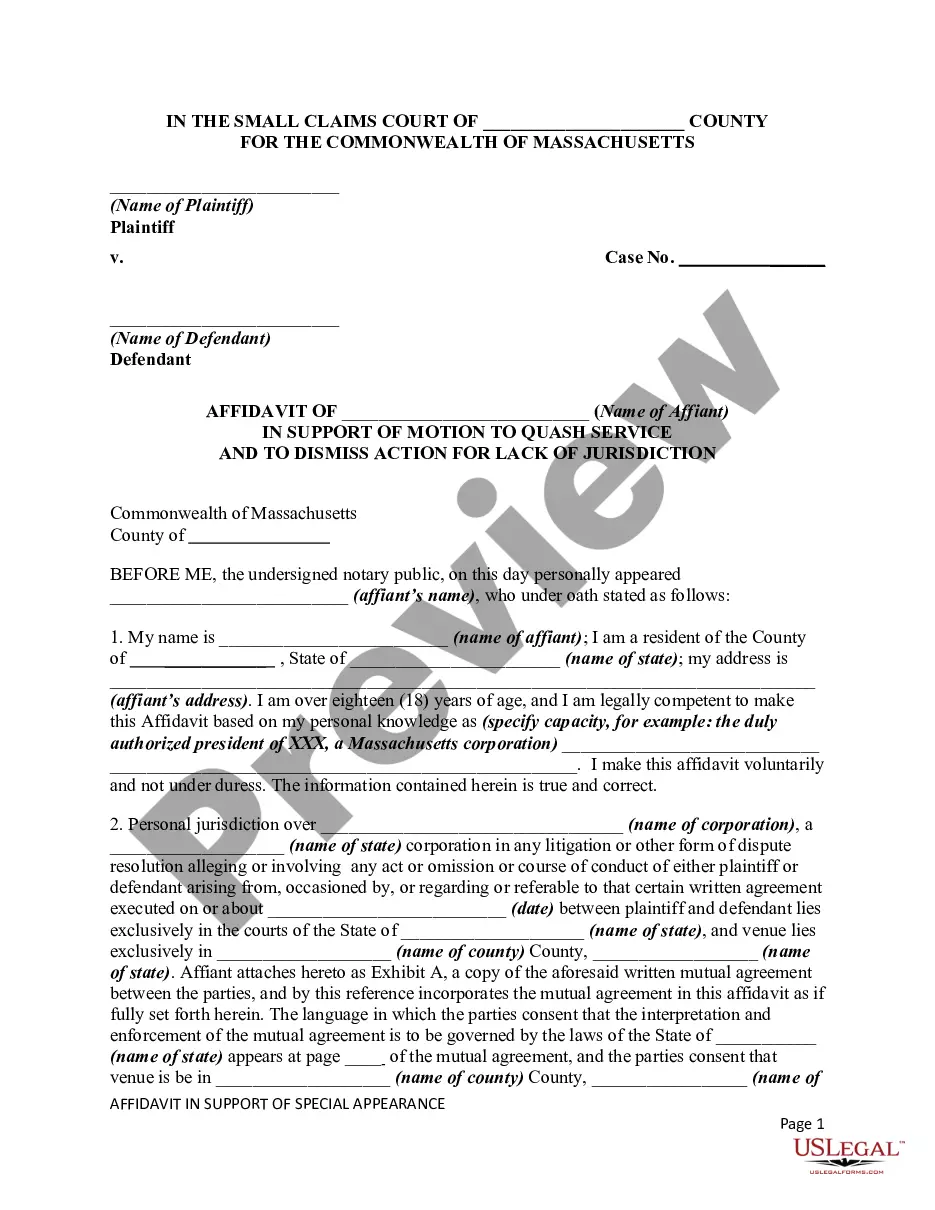
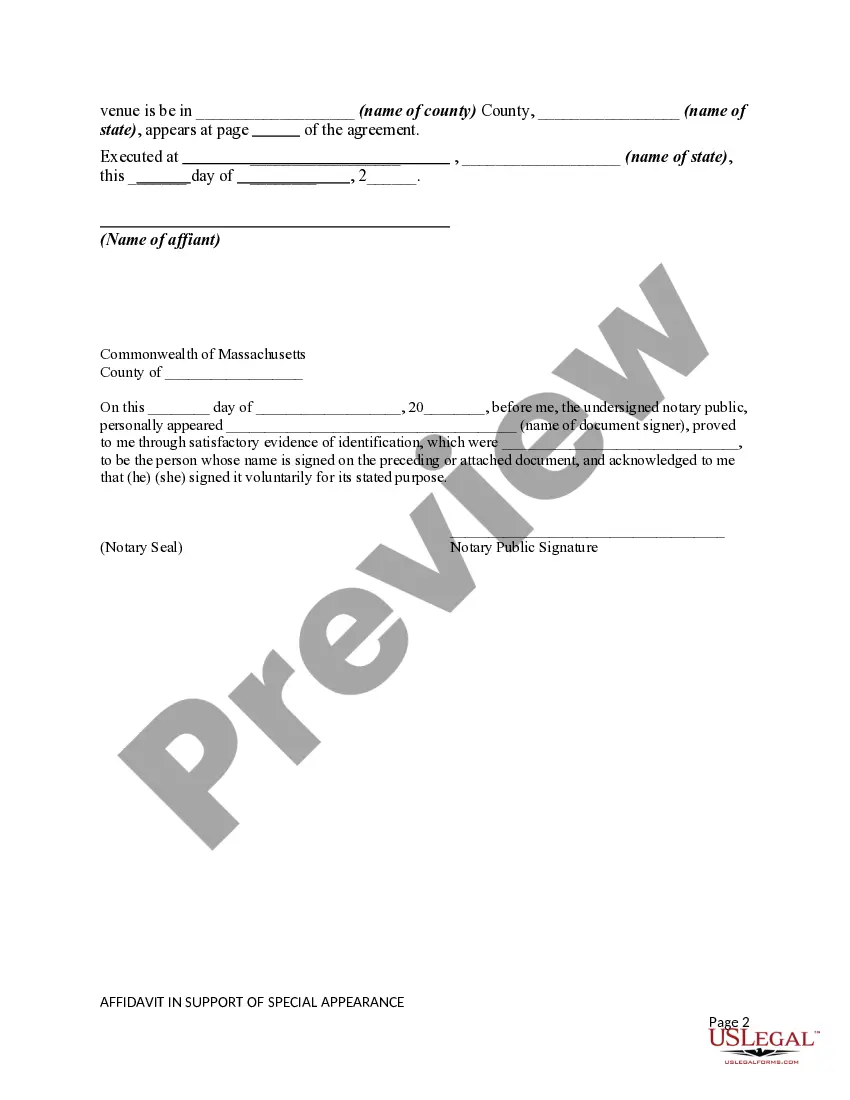
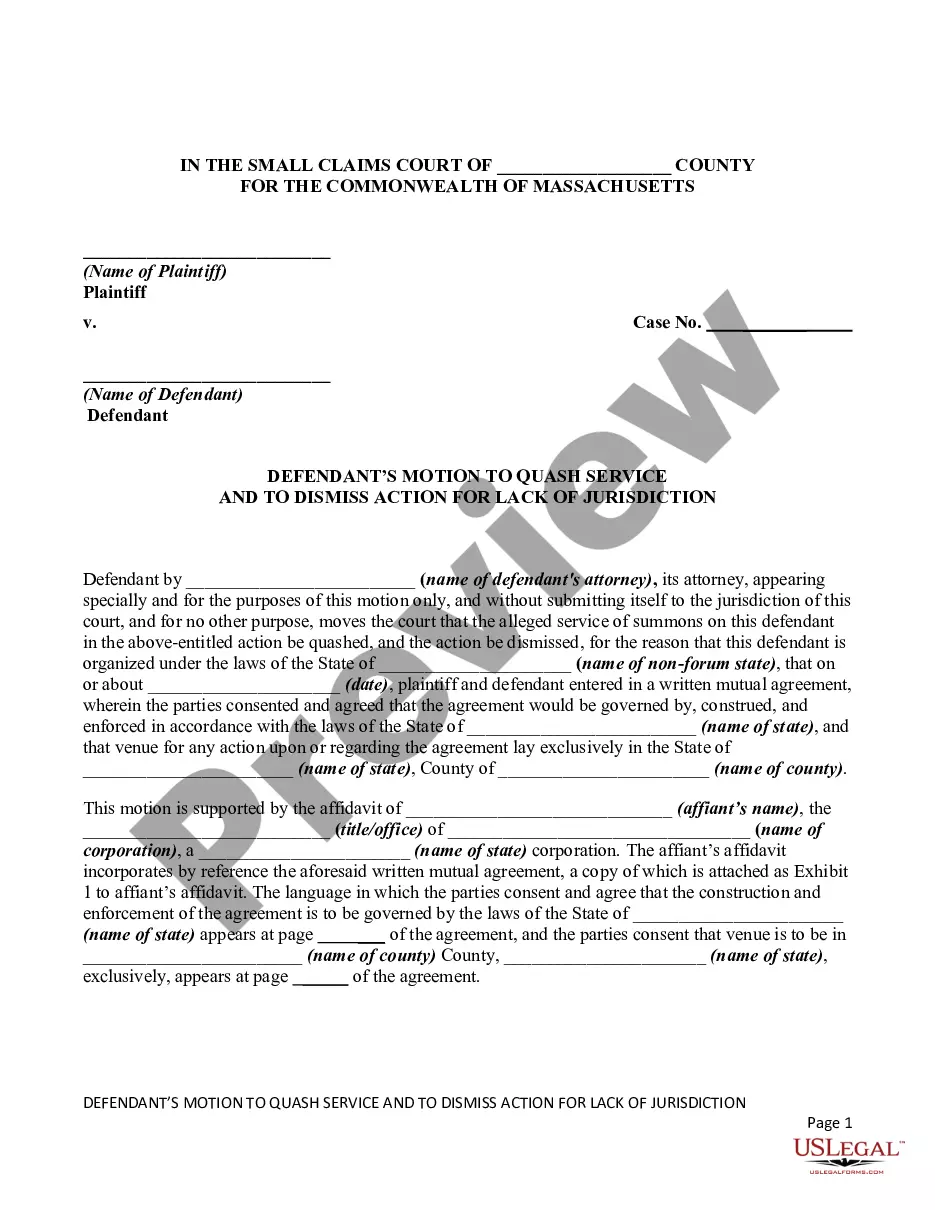
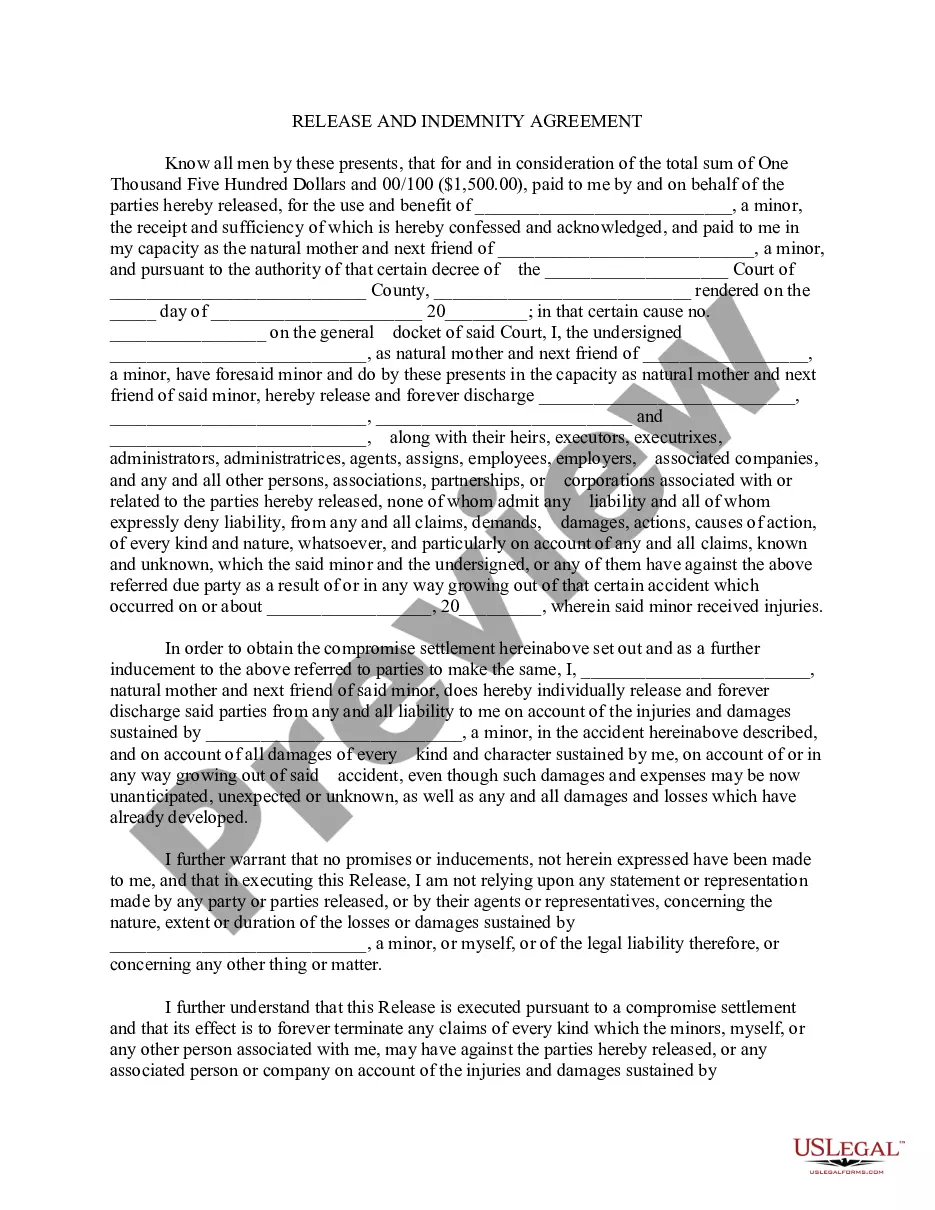
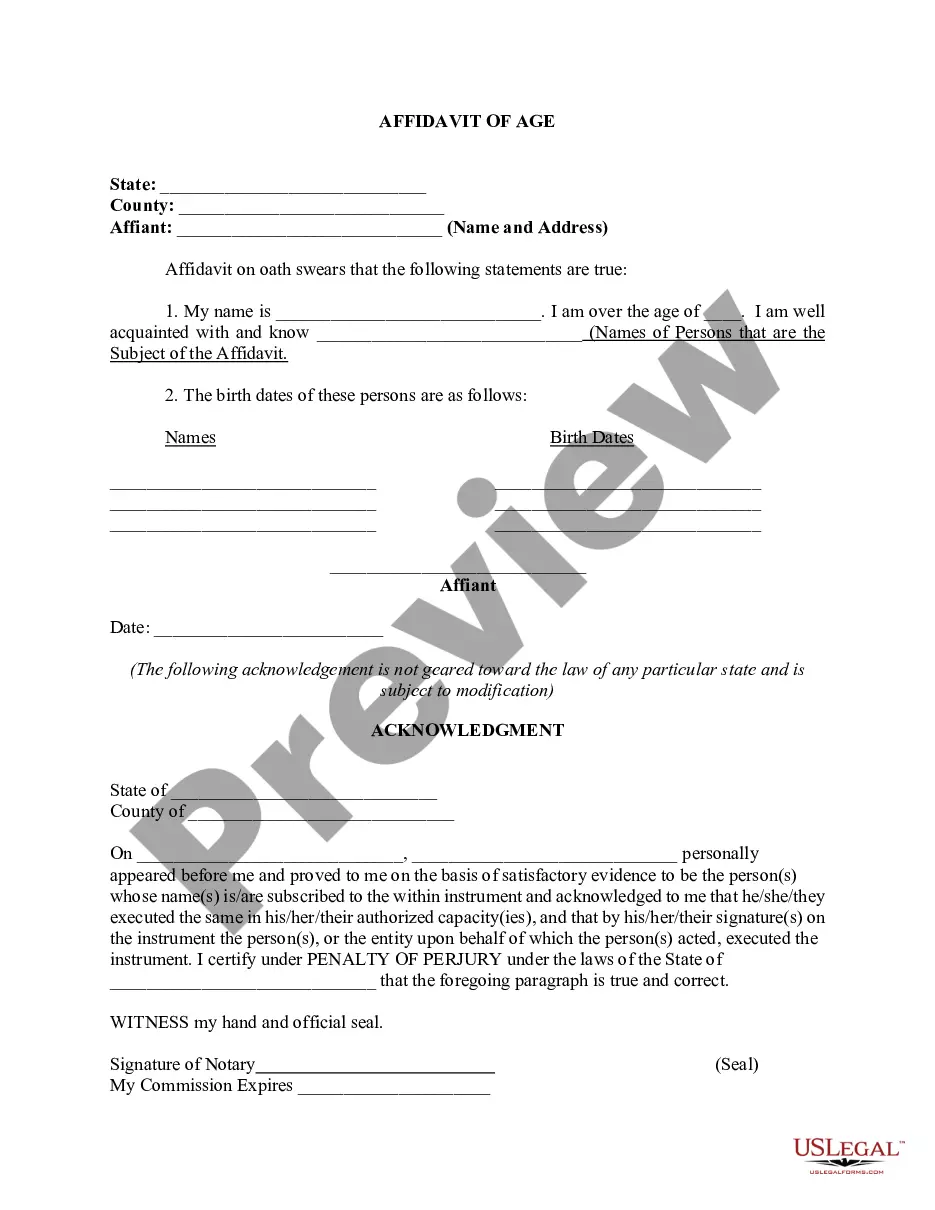
The Affidavit in Support of Motion to Quash Service and to Dismiss Action for Lack of Jurisdiction is a legal document used in Massachusetts. This form supports a motion to quash service and dismiss a lawsuit when jurisdiction is in question. Unlike general affidavits, this specific form addresses situations where parties have agreed to litigate disputes exclusively in a predetermined state, ensuring that legal proceedings take place in the appropriate jurisdiction.
Key components of this form
- Identification of the plaintiff and defendant along with their case number.
- Personal details of the affiant, including name and address.
- Statements regarding jurisdiction and venue based on a written agreement.
- Inclusion of an exhibit, which is a copy of the mutual agreement between parties.
- A section for notarization to validate the affidavit.
Situations where this form applies
This form is used when a defendant wishes to contest the court's jurisdiction over them based on a prior agreement specifying that disputes should only be resolved in a particular state. It is particularly relevant when a lawsuit has been filed in a jurisdiction that parties have contractually excluded.
Who needs this form
- Defendants in a civil lawsuit seeking to challenge the court's jurisdiction.
- Parties who have a written agreement that limits venue for any legal disputes.
- Individuals or representatives of corporations involved in interstate disputes.
Instructions for completing this form
- Identify and fill in the names of the plaintiff and defendant along with the case number.
- Provide your personal information as the affiant, including name, address, and capacity.
- State the reasons why jurisdiction lies in a specific state and include the relevant details from the mutual agreement.
- Attach a copy of the mutual agreement as an exhibit, citing specific page references within the affidavit.
- Sign the affidavit in the presence of a notary public to ensure legal validity.
Does this document require notarization?
Yes, this form must be notarized to be legally valid. US Legal Forms provides integrated online notarization services, allowing you to complete this step via secure video call at any time, ensuring no travel is needed.
Get your form ready online
Our built-in tools help you complete, sign, share, and store your documents in one place.
Make edits, fill in missing information, and update formatting in US Legal Forms—just like you would in MS Word.
Download a copy, print it, send it by email, or mail it via USPS—whatever works best for your next step.
Sign and collect signatures with our SignNow integration. Send to multiple recipients, set reminders, and more. Go Premium to unlock E-Sign.
If this form requires notarization, complete it online through a secure video call—no need to meet a notary in person or wait for an appointment.
We protect your documents and personal data by following strict security and privacy standards.

Make edits, fill in missing information, and update formatting in US Legal Forms—just like you would in MS Word.

Download a copy, print it, send it by email, or mail it via USPS—whatever works best for your next step.

Sign and collect signatures with our SignNow integration. Send to multiple recipients, set reminders, and more. Go Premium to unlock E-Sign.

If this form requires notarization, complete it online through a secure video call—no need to meet a notary in person or wait for an appointment.

We protect your documents and personal data by following strict security and privacy standards.
Avoid these common issues
- Failing to include all required identifying information for the parties involved.
- Omitting the exhibit or not referencing it correctly in the affidavit.
- Not properly signing or notarizing the affidavit, which could invalidate it.
Benefits of completing this form online
- Convenient access to templates that can be downloaded and filled out at your own pace.
- Editable forms that allow for quick customization to fit your specific circumstances.
- Reliable documents drafted by licensed attorneys, ensuring compliance with legal standards.
Looking for another form?

Form popularity
FAQ
A motion to quash must be based on valid grounds.If the court grants the motion, it may quash the subpoena entirely, modify it, or order that you comply with it on specified conditions. If the court denies the motion, you will usually have to comply with it as written.
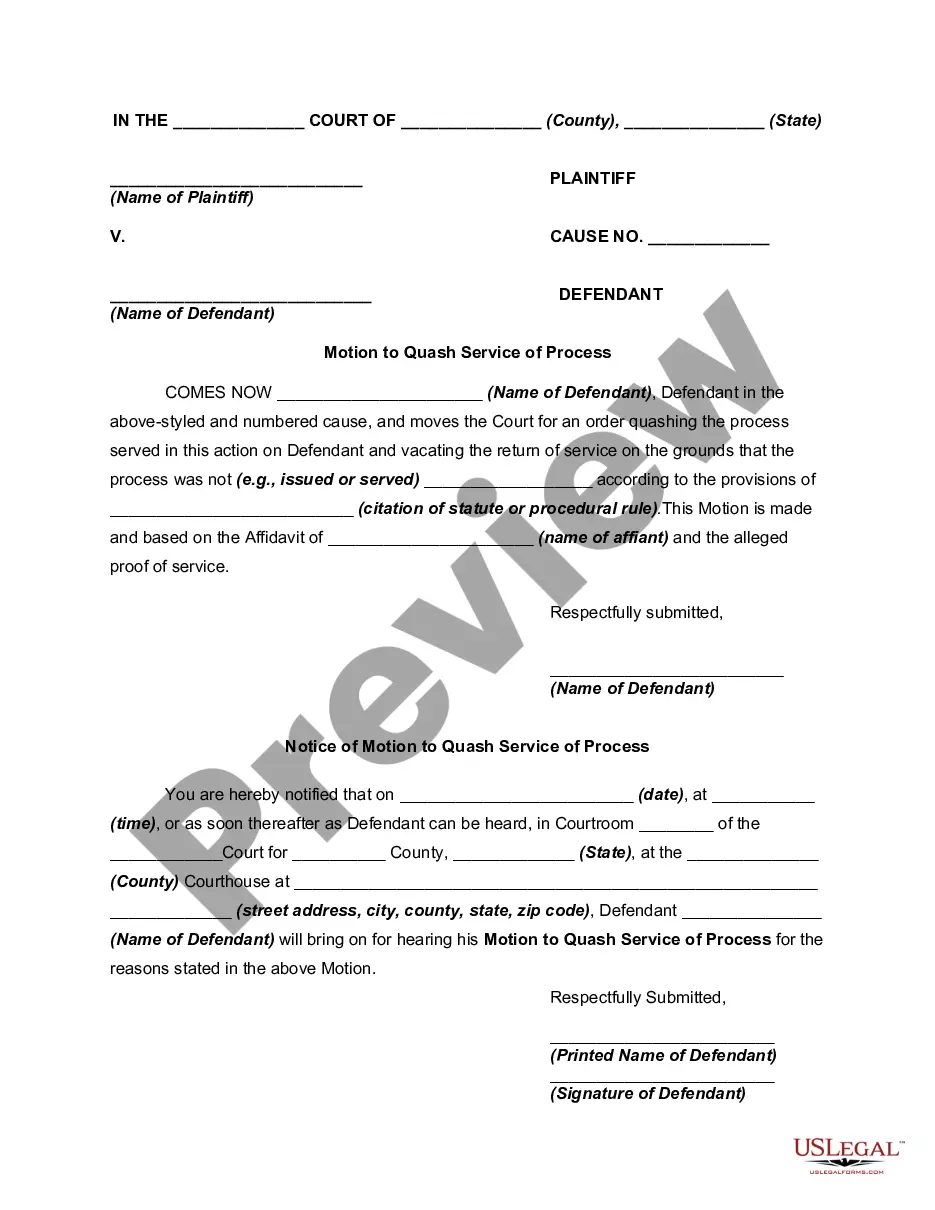
A motion to quash is the proper pleading to test the validity of a service of summons and complaint upon an entity that is not by its true or fictitious name made a party to an action.
X FILED A MOTION TO QUASH ON THE FOLLOWING GROUNDS: THAT THE COURT LACKED JURISDICTION OVER THE PERSON OF THE ACCUSED AND THAT THE COMPLAINT CHARGED MORE THAN ONE OFFENSE. CAN THE COURT GRANT THE MOTION ON THE GROUND OF LACK OF JURISDICTION? on this ground.
Definition. To set aside; to void. As in "to quash a motion" or "quash evidence."
A motion to quash is a request to a court or other tribunal to render a previous decision or proceeding null or invalid.In some cases, motions to quash are requests to nullify a decision made by the same or a lower court. It can arise out of mistakes made by any lawyer or court officer.
After the motion to quash is filed, the court will review the case and make its determination. For example, if the judge grants a motion to quash service, then the service on the defendant would be considered void. A motion to quash that is approved would also invalidate any applicable decisions from a lower court.
A motion to quash is a request to a court or other tribunal to render a previous decision or proceeding null or invalid. The exact usage of motions to quash depend on the rules of the particular court or tribunal. In some cases, motions to quash are requests to nullify a decision made by the same or a lower court.