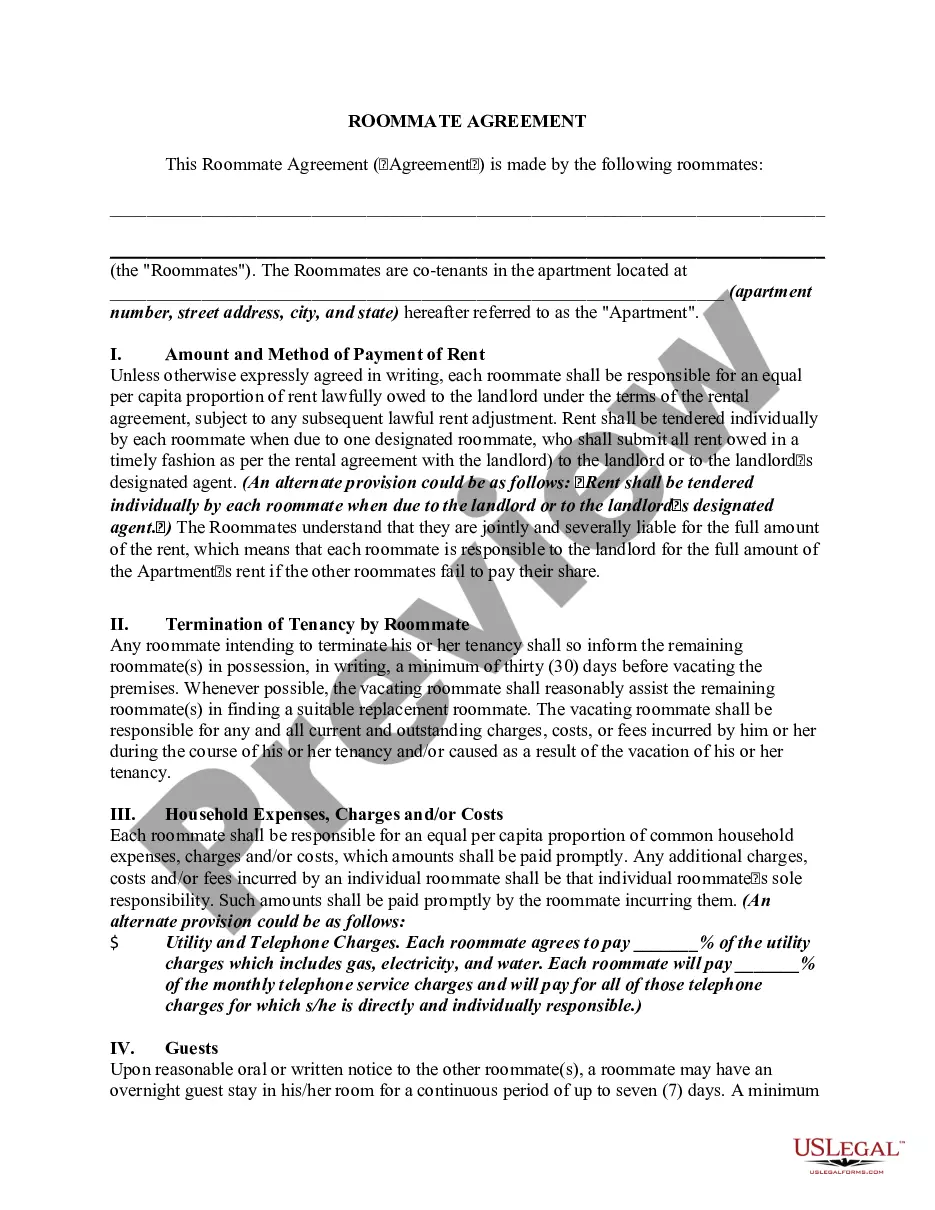
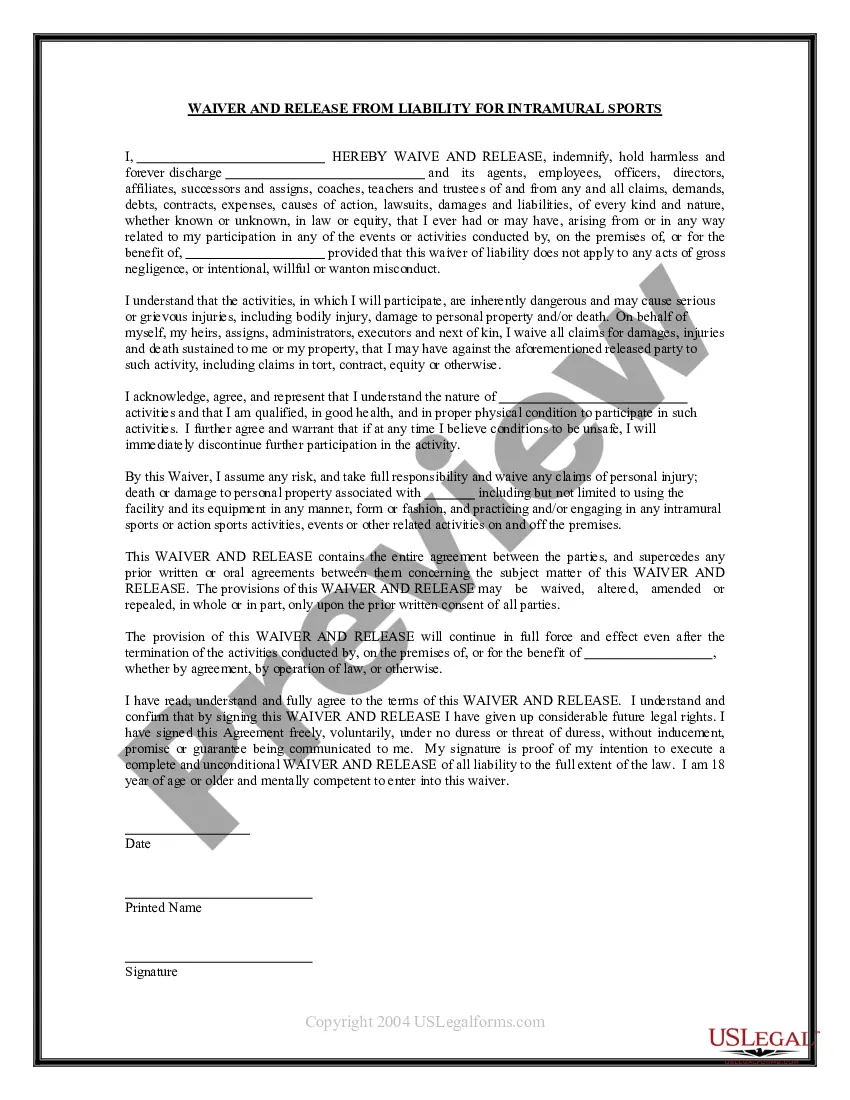
This form releases a property owner from liability for permitting an individual to participate in intramural sports.
Franklin Ohio Waiver and Release From Liability For Adult for Intramural Sports
Category:
State:
Multi-State
County:
Franklin
Control #:
US-WAV-90A
Format:
Word;
Rich Text
Instant download
Description
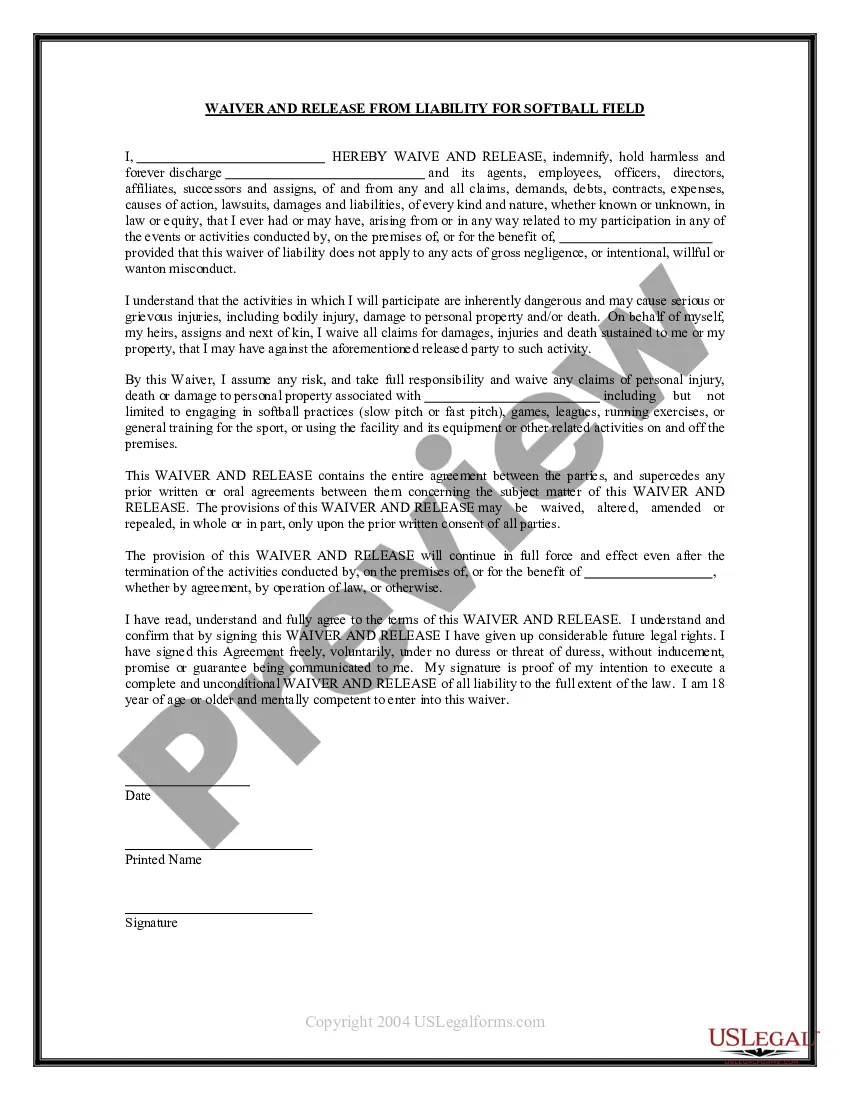
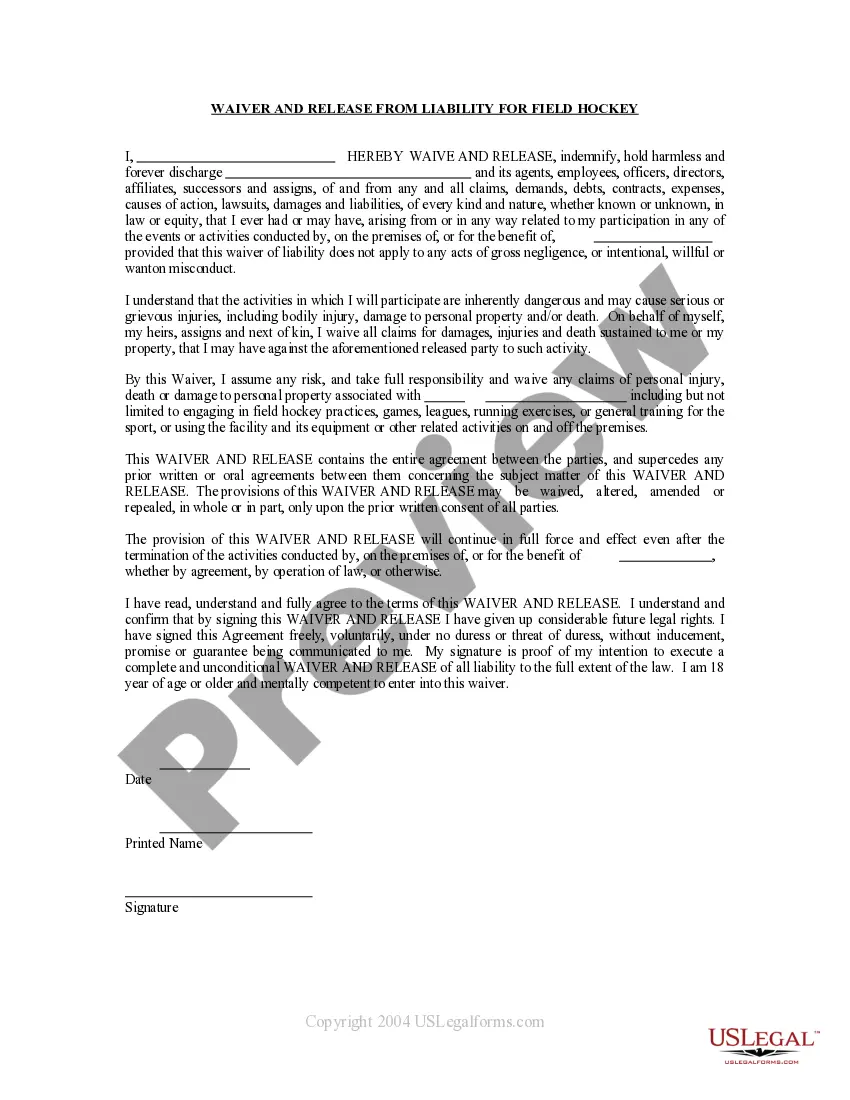
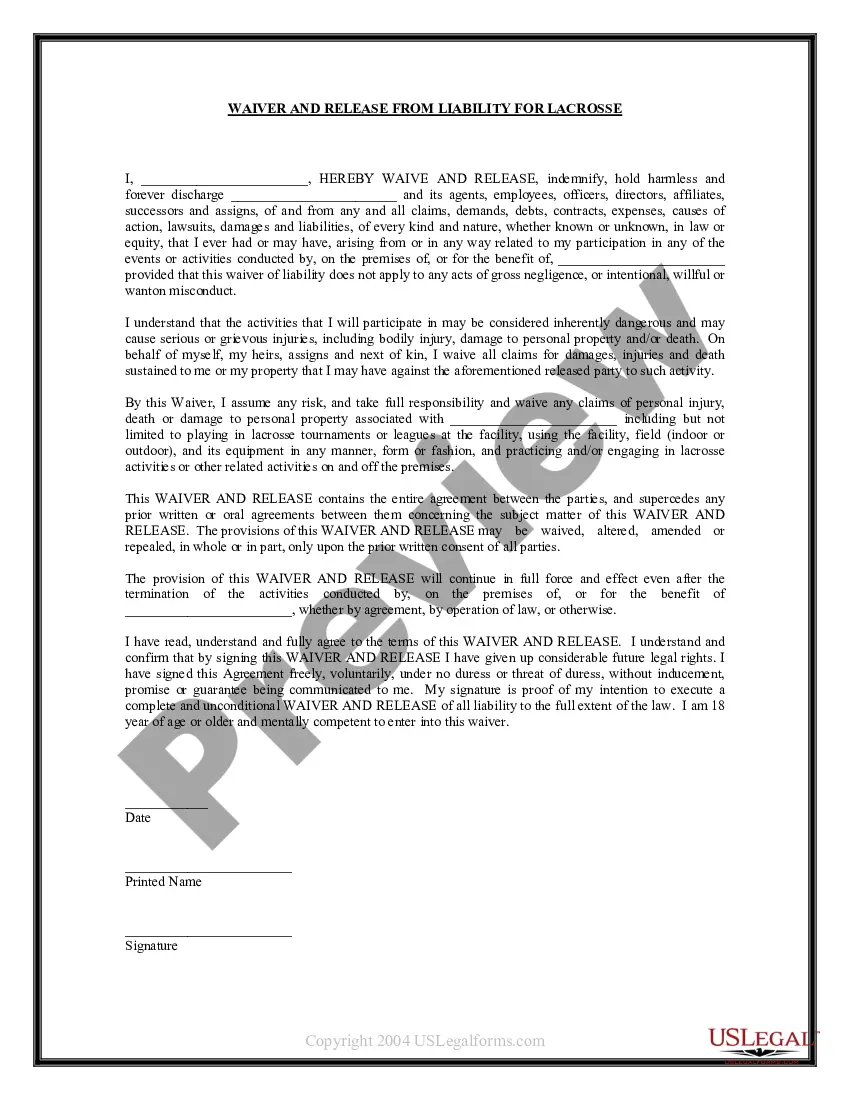




How to fill out Waiver And Release From Liability For Adult For Intramural Sports?
Drafting documents for business or personal needs is always a significant obligation.
When formulating a contract, a public service application, or a power of attorney, it's crucial to take into account all federal and state laws and regulations of the particular area.
Nevertheless, smaller counties and even municipalities also have legislative protocols that you must consider.
To find the one that suits your needs, leverage the search tab in the page header.
- All these elements make it onerous and time-consuming to create a Franklin Waiver and Release From Liability For Adult for Intramural Sports without professional assistance.
- It is simple to avoid incurring costs on attorneys crafting your documents and produce a legally acceptable Franklin Waiver and Release From Liability For Adult for Intramural Sports independently, utilizing the US Legal Forms online repository.
- It is the largest online compilation of state-specific legal documents that are expertly verified, allowing you to trust their legality when selecting a template for your county.
- Previously registered users only need to Log In to their accounts to retrieve the necessary form.
- If you do not yet have a subscription, follow the step-by-step guide below to acquire the Franklin Waiver and Release From Liability For Adult for Intramural Sports.
- Browse the page you've accessed and ascertain whether it contains the sample you require.
- To do this, utilize the form description and preview if these options are available.
Form popularity
FAQ
A waiver is a demonstration, usually in written form, of a party's intent to relinquish a legal right or claim. The key point to note is that the relinquishment is voluntary, and can apply to a variety of legal situations. Essentially, a waiver removes a real or potential liability for the other party in the agreement.
The main difference between releases and waivers is the transferring of ownership. When rights are released, they are transferred to another party. When rights are waived, they are gone altogether. If intellectual property rights are waived, the IP can be used by any other party that has access to it.
Waiver. n. the intentional and voluntary giving up of something, such as a right, either by an express statement or by conduct (such as not enforcing a right). The problem which may arise is that a waiver may be interpreted as giving up the right to enforce the same right in the future.
A Release of Liability is an agreement between two parties in which one gives up the right to hold the other legally responsible for current or future injuries, losses, and damages. The party waiving their right receives monetary or non-monetary compensation, also known as consideration.
Components of a waiver Get help. Writing a waiver should not be complicated.Use the correct structure. Waivers should be written in a certain structure.Proper formatting.Include a subject line.Include a caution!Talk about the activity risks.Do not forget an assumption of risk.Hold harmless.
Examples of waivers include the waiving of parental rights, waiving liability, tangible goods waivers, and waivers for grounds of inadmissibility. Waivers are common when finalizing lawsuits, as one party does not want the other pursuing them after a settlement is transferred.
A waiver and release agreement is a legal document that releases a party from liability and creates an enforceable promise for one party to not take legal action against another.
Waiver forms are a type of legal protection used by businesses to reduce their liability and risk. This type of agreement between a business and its customers is used to document that all parties are aware of potential risks in certain situations.
A participation waiver, or consent form, is a legally-binding document put in place to protect you and your organization. When the participant or their parent sign the document, they are stating that they fully acknowledge the risks involved, and therefore can not file frivolous lawsuits in case of damages or injury.
A waiver and release agreement is a legal document that releases a party from liability and creates an enforceable promise for one party to not take legal action against another.