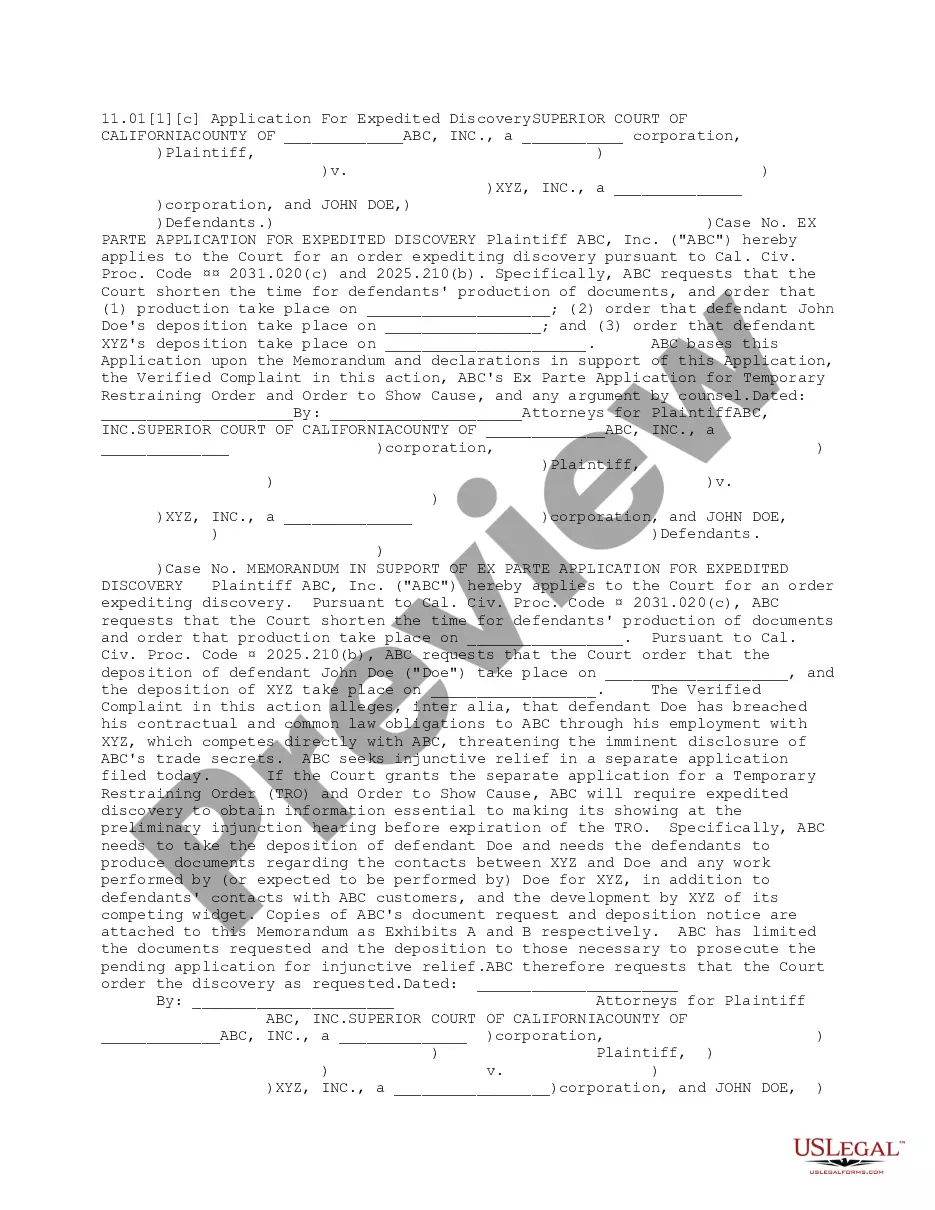
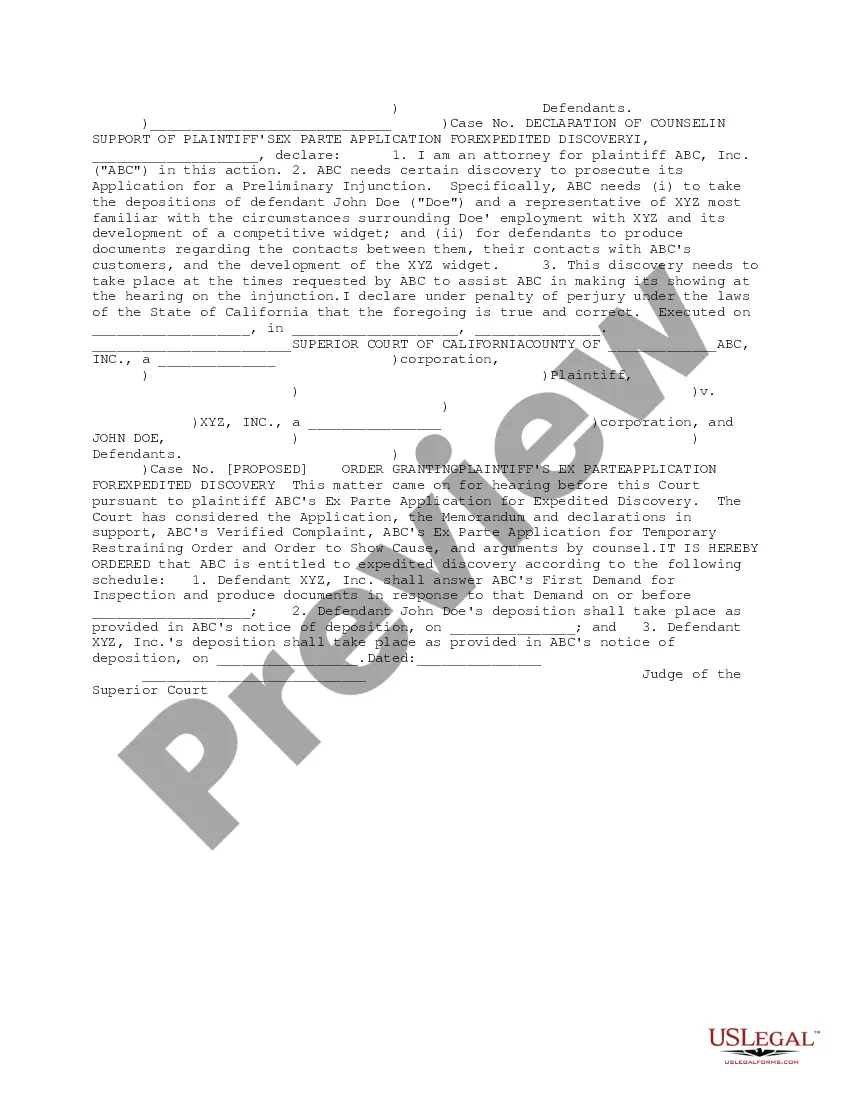
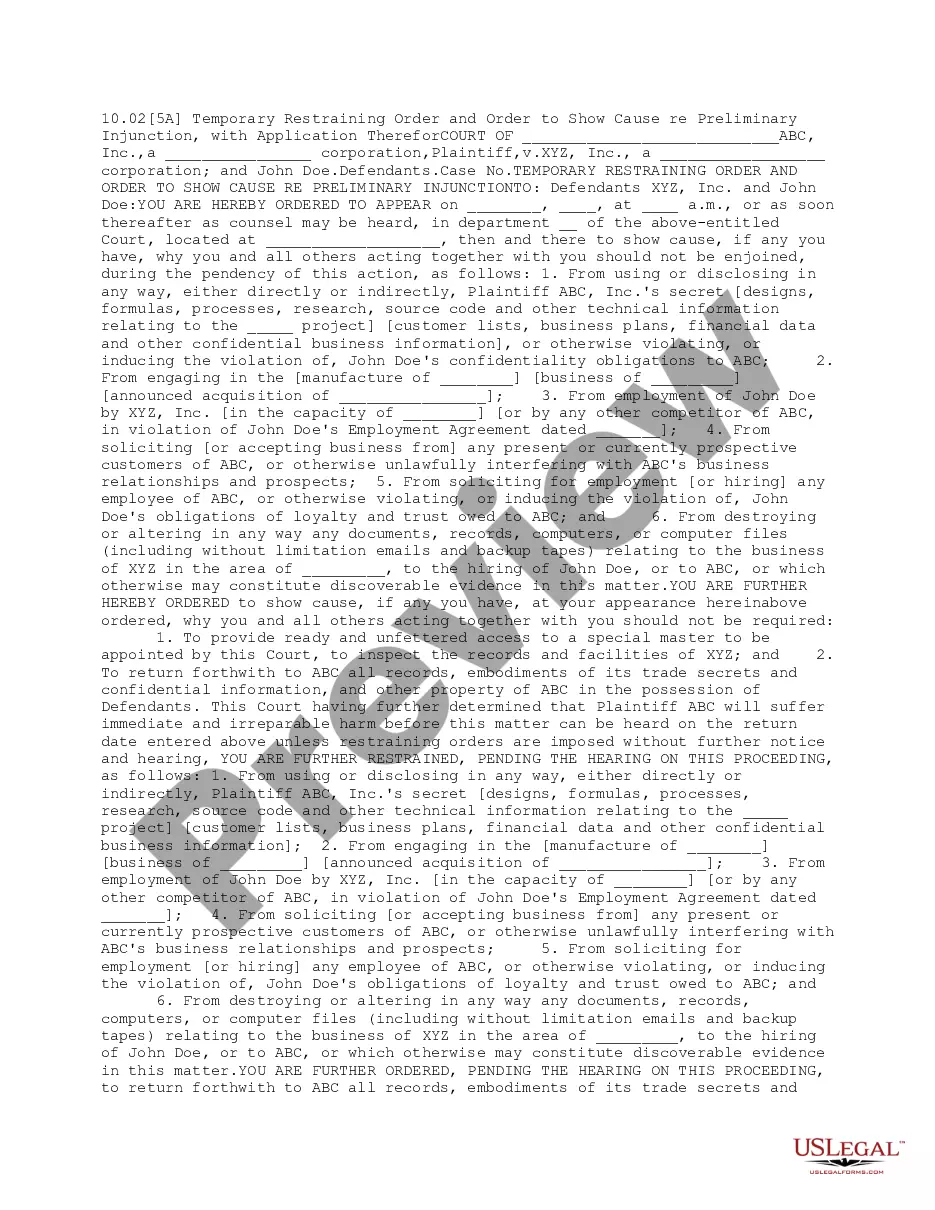
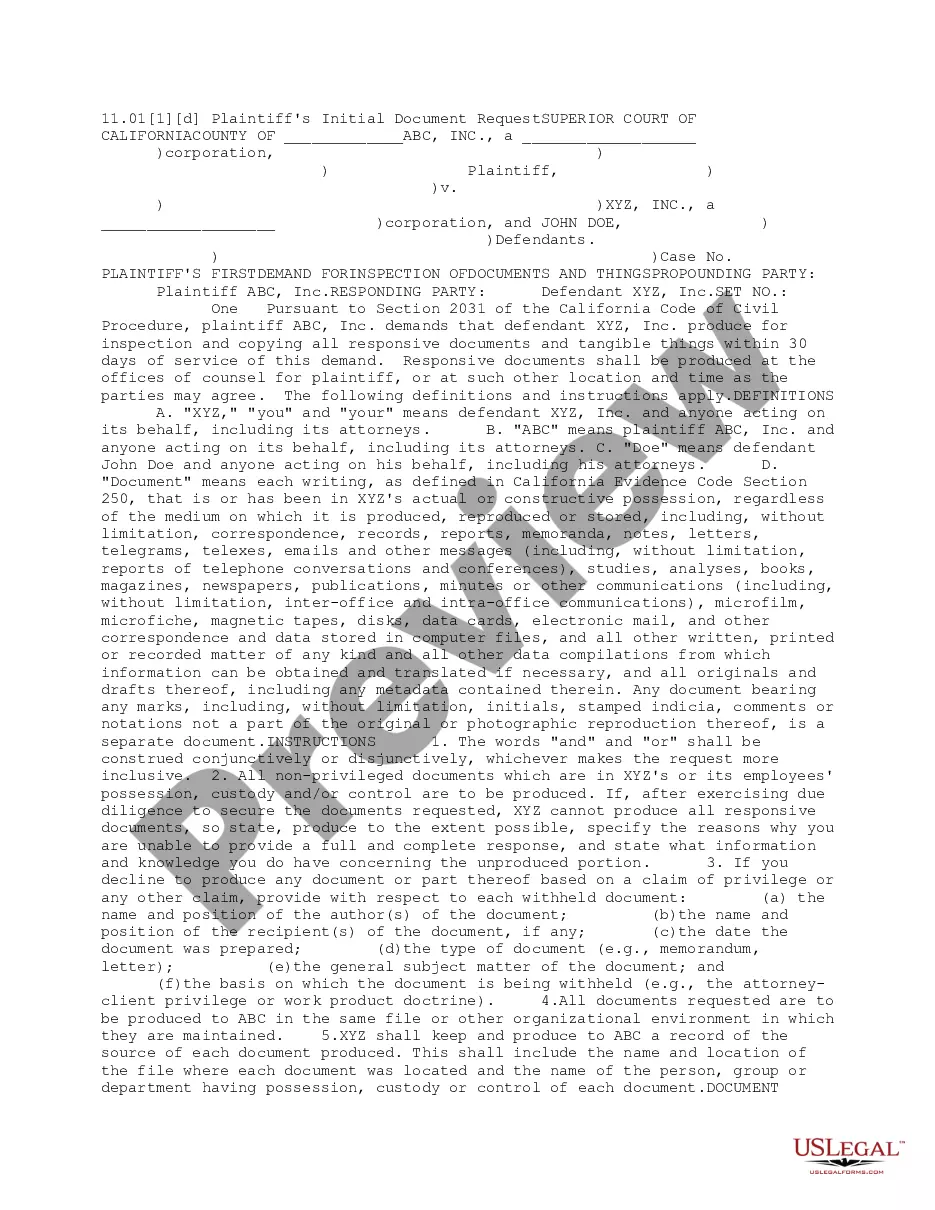
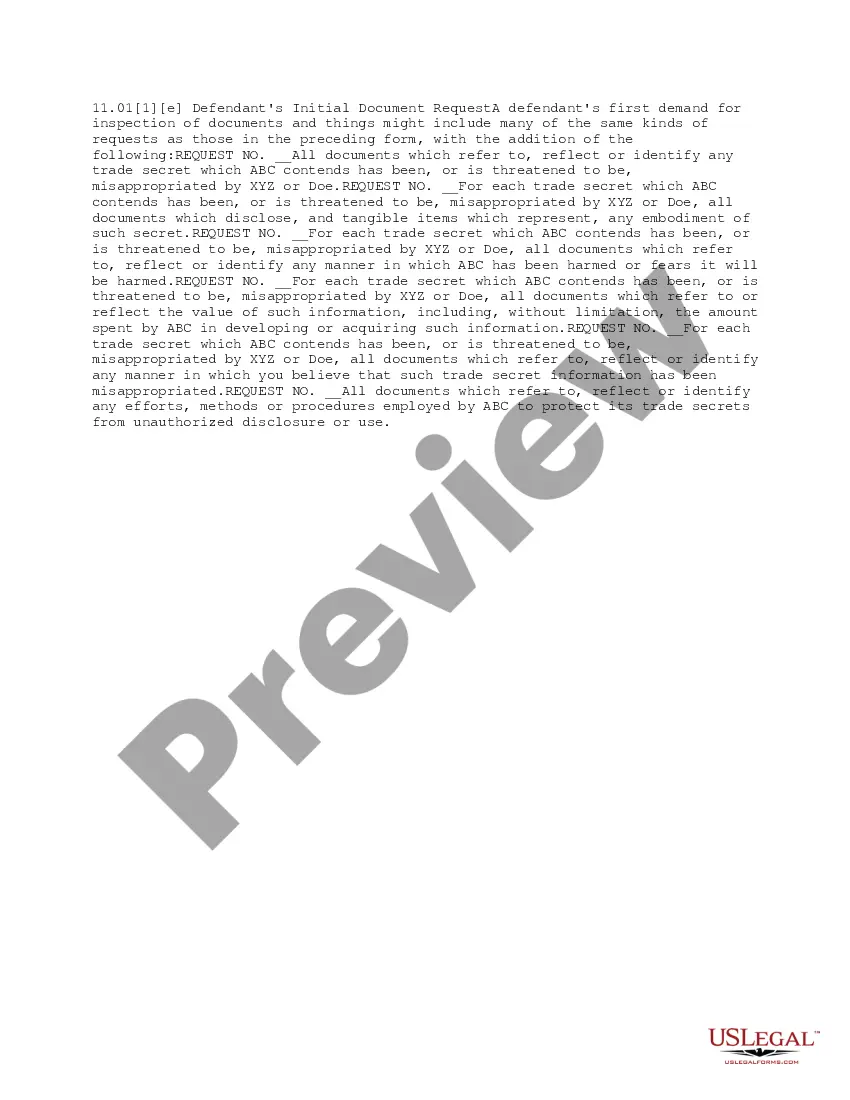
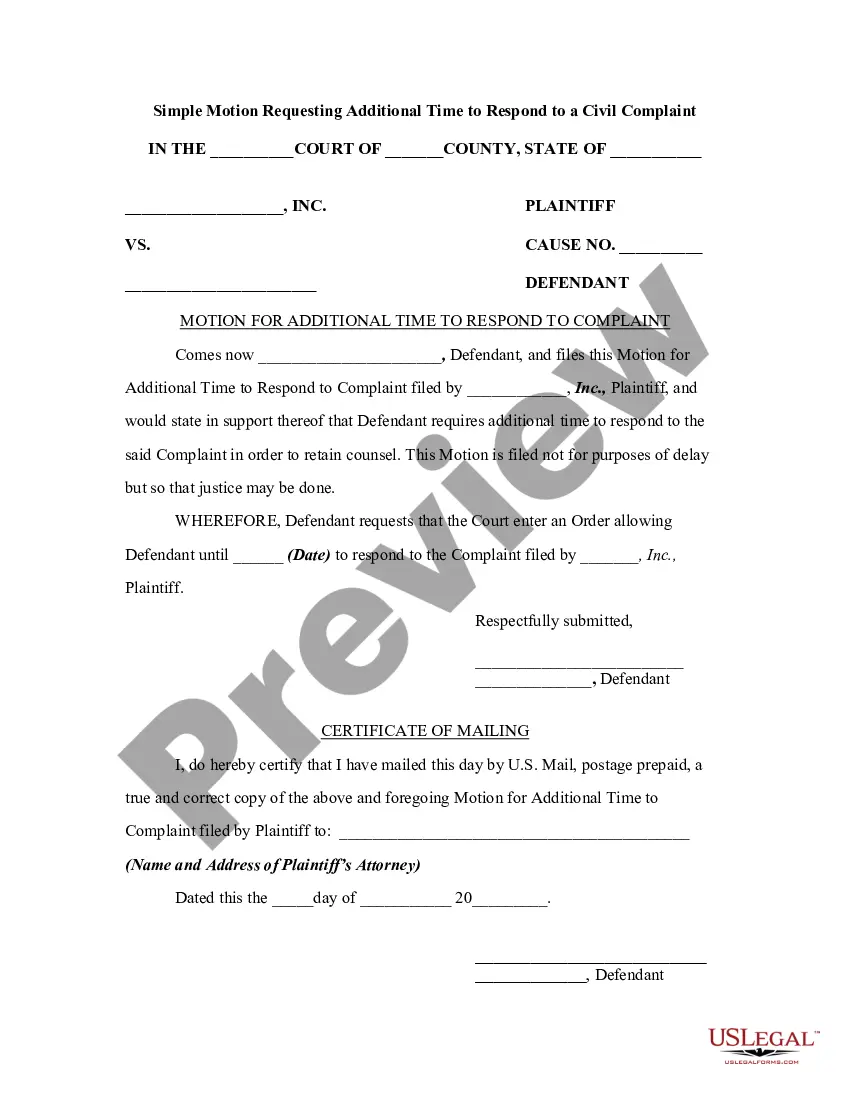
This form is an Ex Parte Application and Memorandum for Expedited Discovery usable in cases with claims regarding licensing, patents, or commercial trade secrets.
Salt Lake Utah Application For Expedited Discovery
State:
Multi-State
County:
Salt Lake
Control #:
US-TS11011C
Format:
Word;
PDF;
Rich Text
Instant download
Description
Free preview
How to fill out Application For Expedited Discovery?
Drafting documents for business or personal requirements is always a significant obligation.
When formulating a contract, a public service application, or a power of attorney, it is crucial to take into account all federal and state regulations of the particular area.
Nonetheless, smaller counties and even municipalities also have legislative rules that you must acknowledge.
To find the one that meets your needs, employ the search tab in the page header.
- All these facets contribute to the anxiety and laboriousness in preparing Salt Lake Application For Expedited Discovery without professional help.
- It’s simple to circumvent unnecessary expenses on attorneys creating your paperwork and produce a legally acceptable Salt Lake Application For Expedited Discovery independently, utilizing the US Legal Forms online database.
- It stands as the largest online repository of state-specific legal templates that are professionally validated, ensuring their legitimacy when selecting a sample for your county.
- Previous subscribers simply need to Log In to their accounts in order to retrieve the required form.
- If you still lack a subscription, follow the step-by-step process below to secure the Salt Lake Application For Expedited Discovery.
- Browse the page you've accessed and confirm if it contains the template you require.
- To achieve this, utilize the form description and preview if such choices are available.
Form popularity
FAQ
A summary judgment in Utah occurs when a court decides a case without a full trial, usually because there are no significant facts in dispute. This legal motion can expedite the process, saving both time and resources for all parties involved. In the context of a Salt Lake Utah Application For Expedited Discovery, a summary judgment can streamline cases, allowing you to resolve disputes efficiently. Utilizing platforms like uslegalforms can help you navigate these processes seamlessly.
Rule 74 of the Utah Rules of Civil Procedure deals with the procedures for seeking emergency or expedited relief in civil litigation. When pursuing a Salt Lake Utah Application For Expedited Discovery, understanding this rule can significantly impact your case. It outlines how parties can request urgent actions from the court, ensuring timely resolution of critical legal issues.
The purpose of a show cause order is to compel individuals or entities to explain their non-compliance with a prior court directive. In the framework of the Salt Lake Utah Application For Expedited Discovery, this order accelerates judicial review and decision-making. It essentially allows the court to address issues swiftly, ensuring that important matters are resolved in a timely manner.
Rule 7 of the Utah Rules of Civil Procedure outlines the requirements for motions and supporting documents. It emphasizes that every motion should be accompanied by a memorandum that explains the grounds and authority for the request. This rule is crucial when pursuing a Salt Lake Utah Application For Expedited Discovery, as it helps ensure clarity in the legal process.
There are basically six types of discovery in family court: 1) interrogatories; 2) requests for production of documents and inspection 3) requests for admissions; 4) depositions; 5) subpoenas duces tecum; 6) physical and mental examinations.
Motions for expedited discovery are appropriate where the movant demonstrates a need to obtain inspection of documents in a shortened time period.
That disclosure is accomplished through a methodical process called "discovery." Discovery takes three basic forms: written discovery, document production and depositions.
After your attorney files a Complaint against a negligent healthcare provider, your case will soon enter a phase of litigation called Discovery. Discovery has two separate phases: fact discovery and expert discovery. Fact discovery is a period of time during which the parties are entitled to an exchange of
Discovery is shocking, unplanned, overwhelming, and usually only a portion of the betrayal is revealed and acknowledged. Disclosure is the exact opposite. In disclosure, the cheating partner voluntarily tells the betrayed partner the full scope and details about his behavior.
As a rule, four types of discovery are identified. These include deposition, interrogatories, production of documents, and physical or mental examinations (Crain et al. 138).