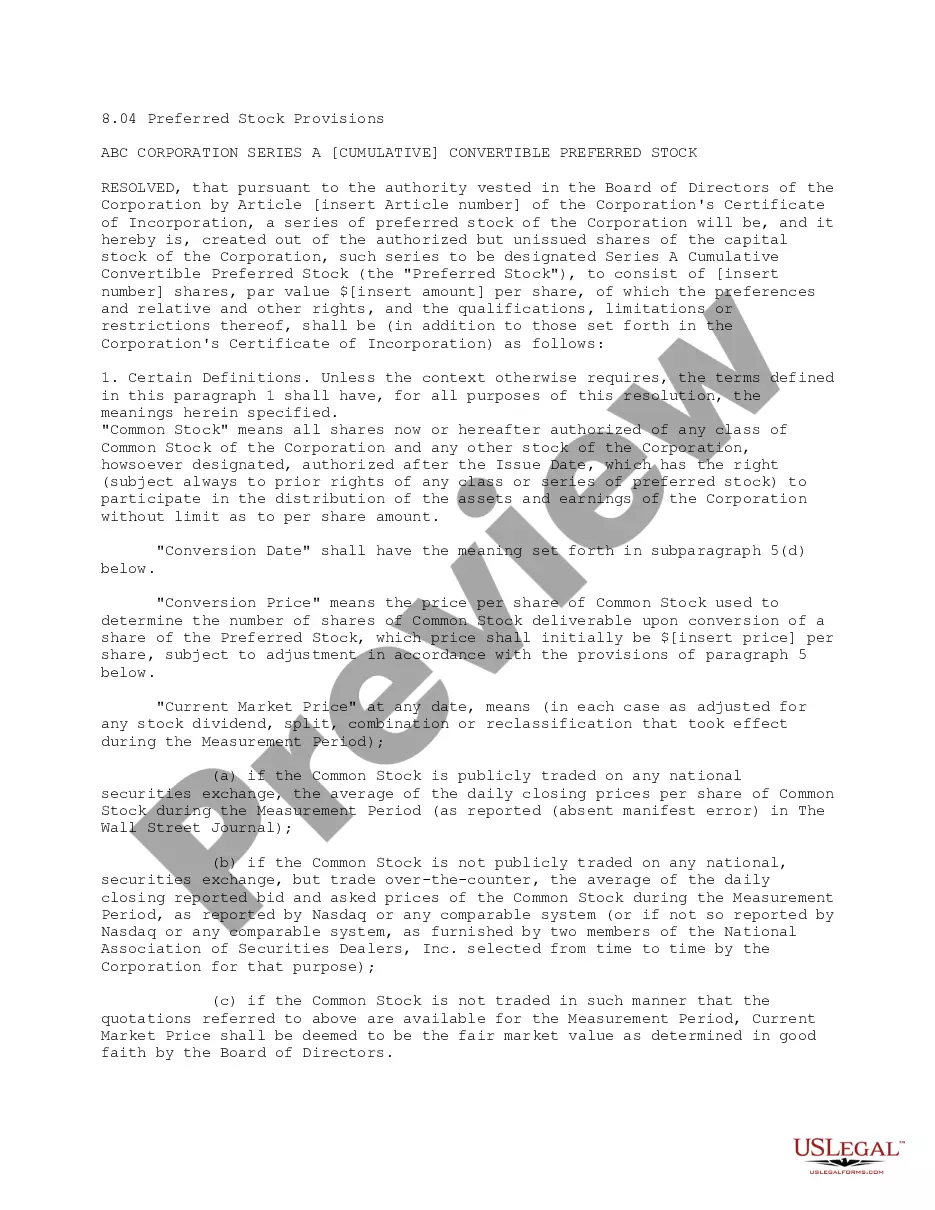
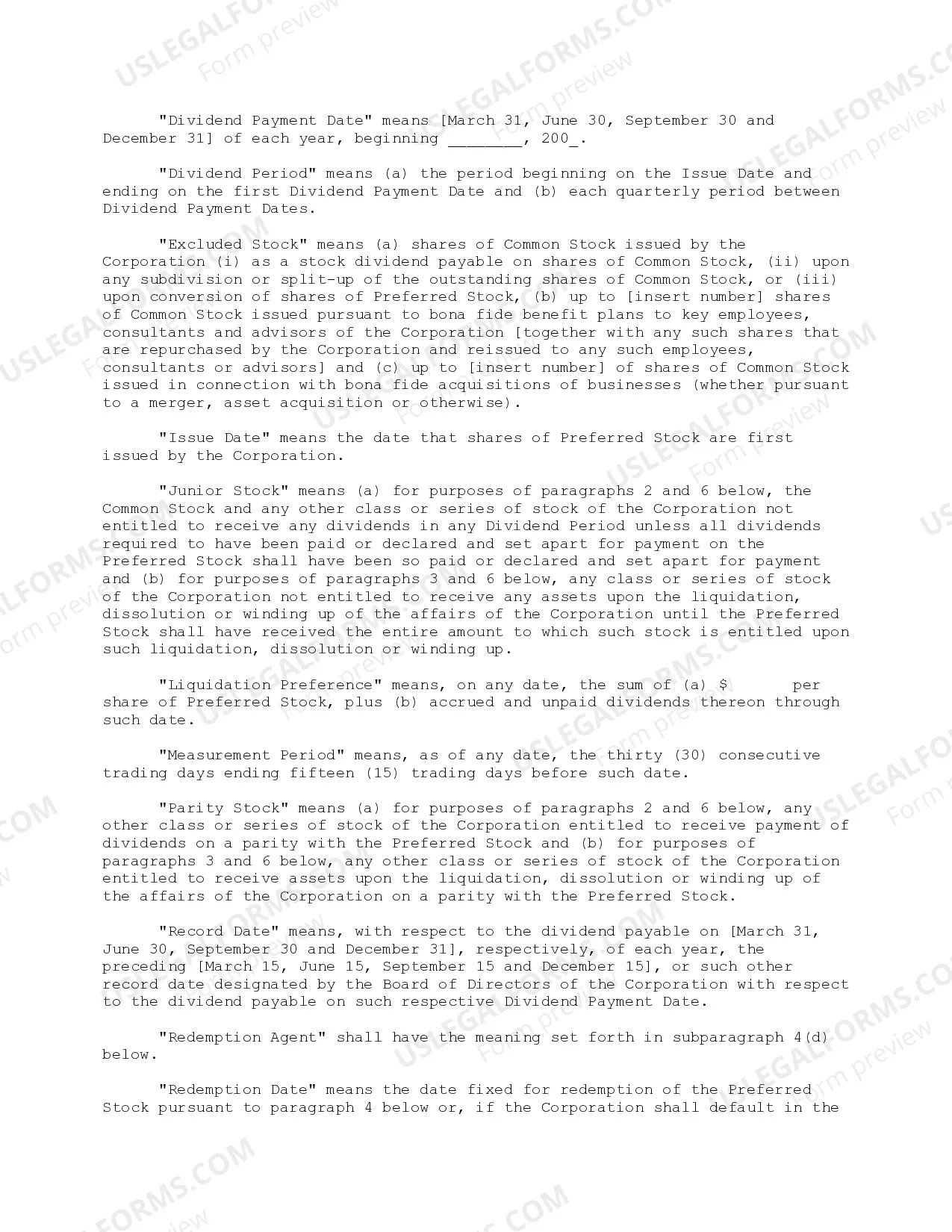
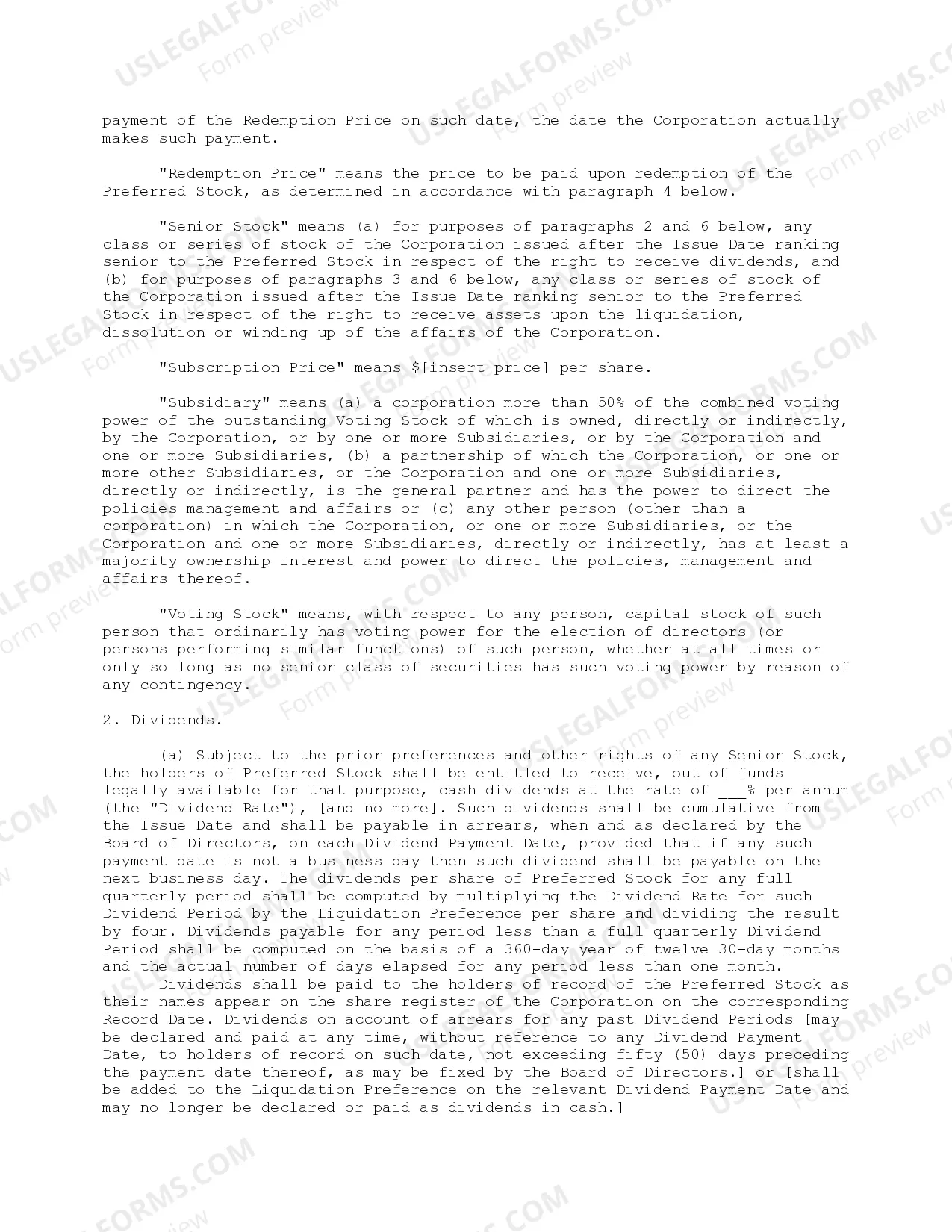
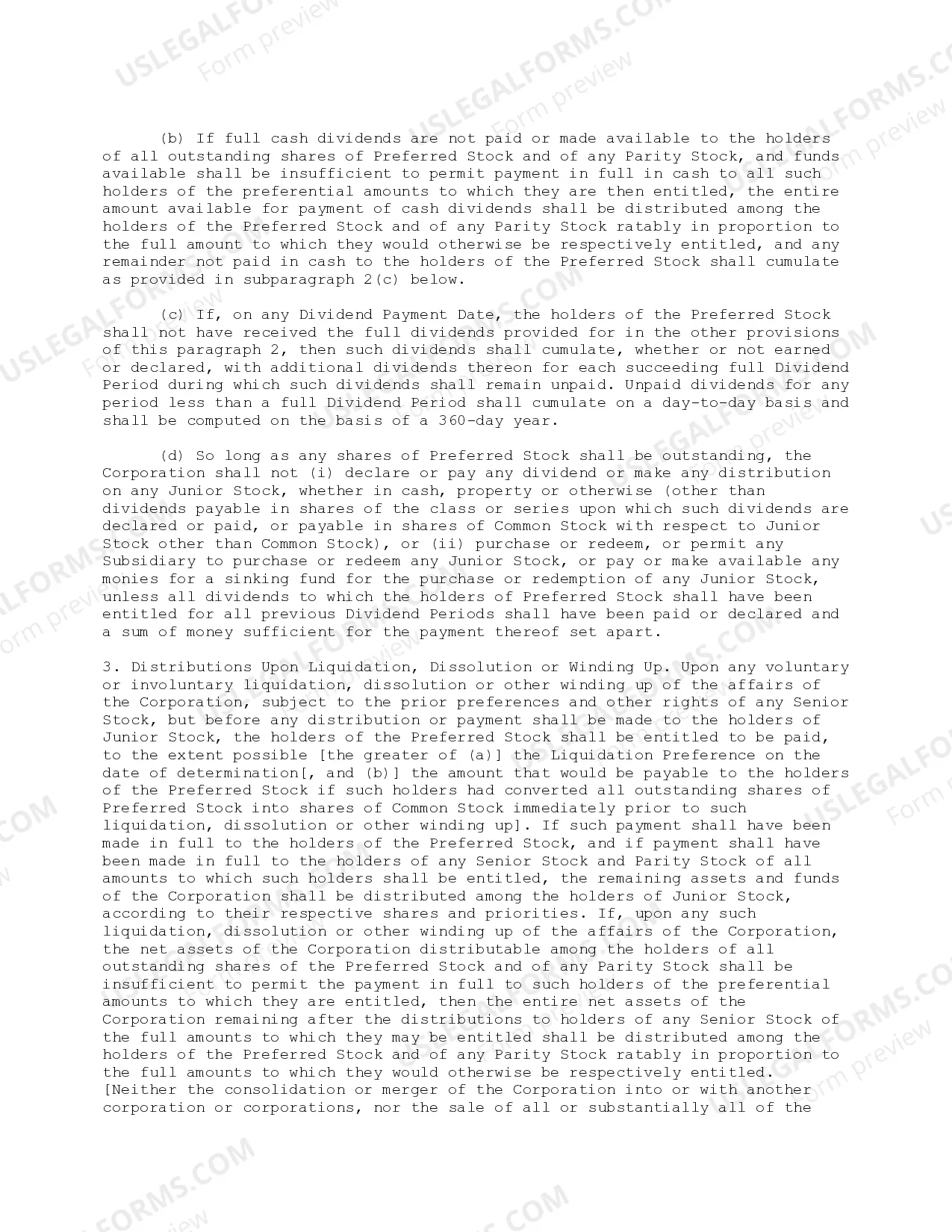
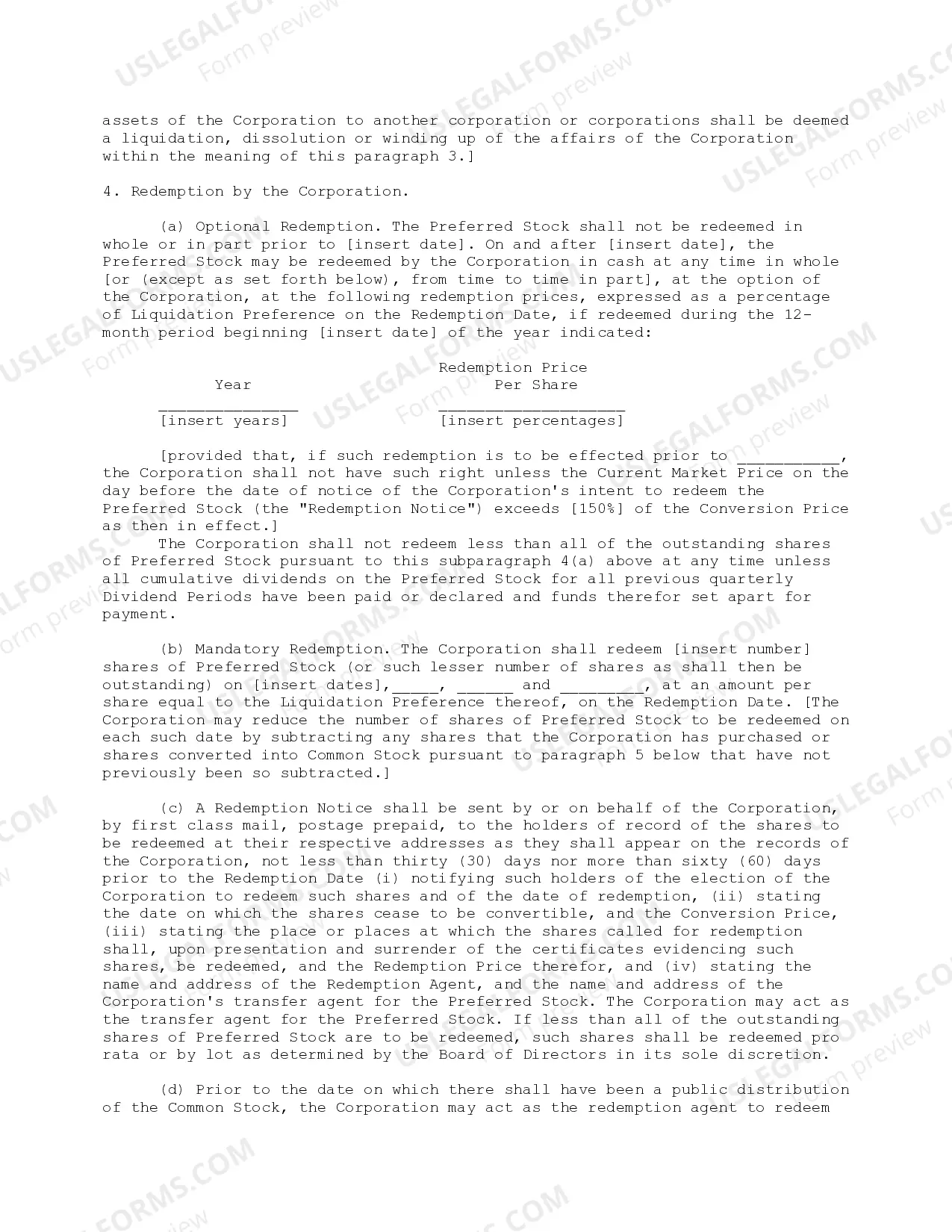
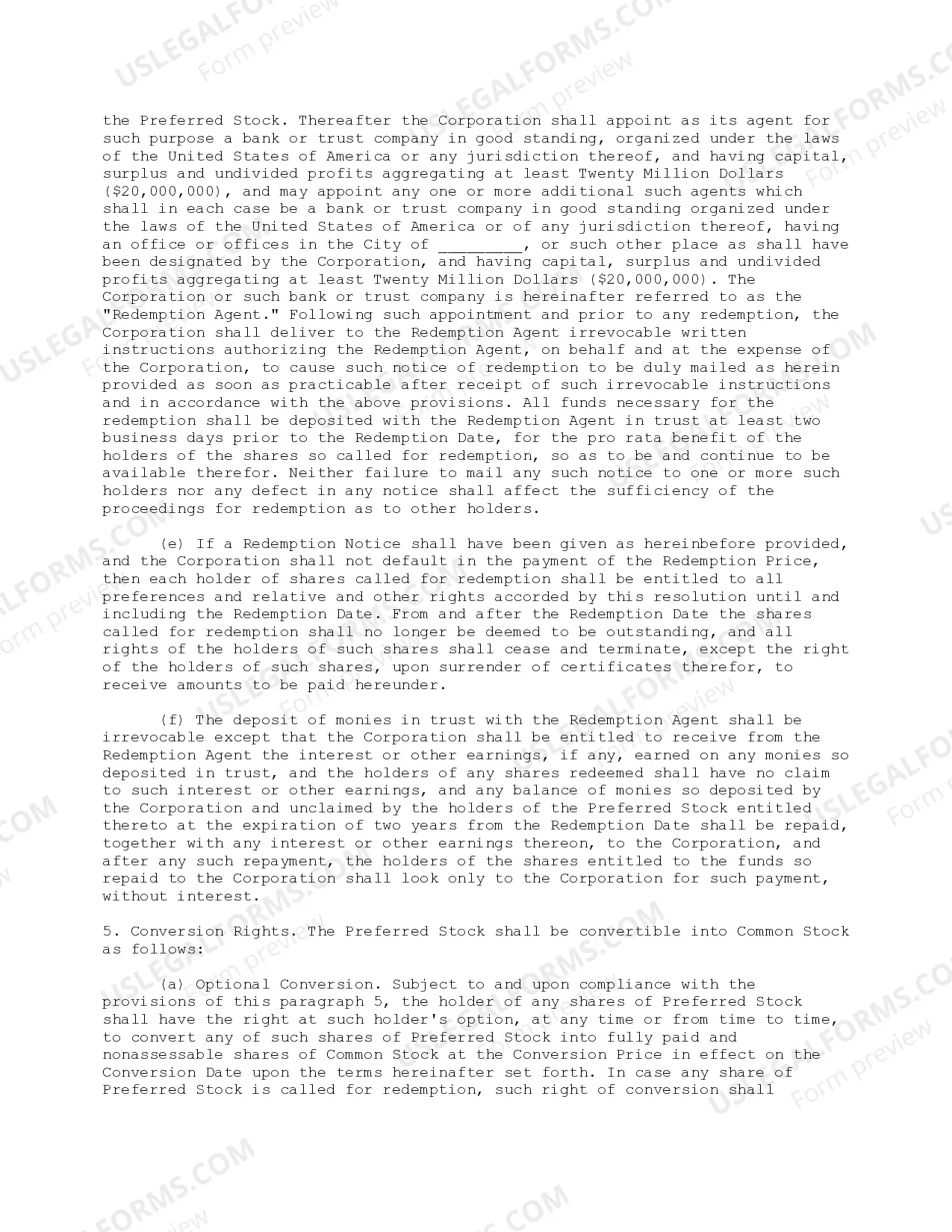
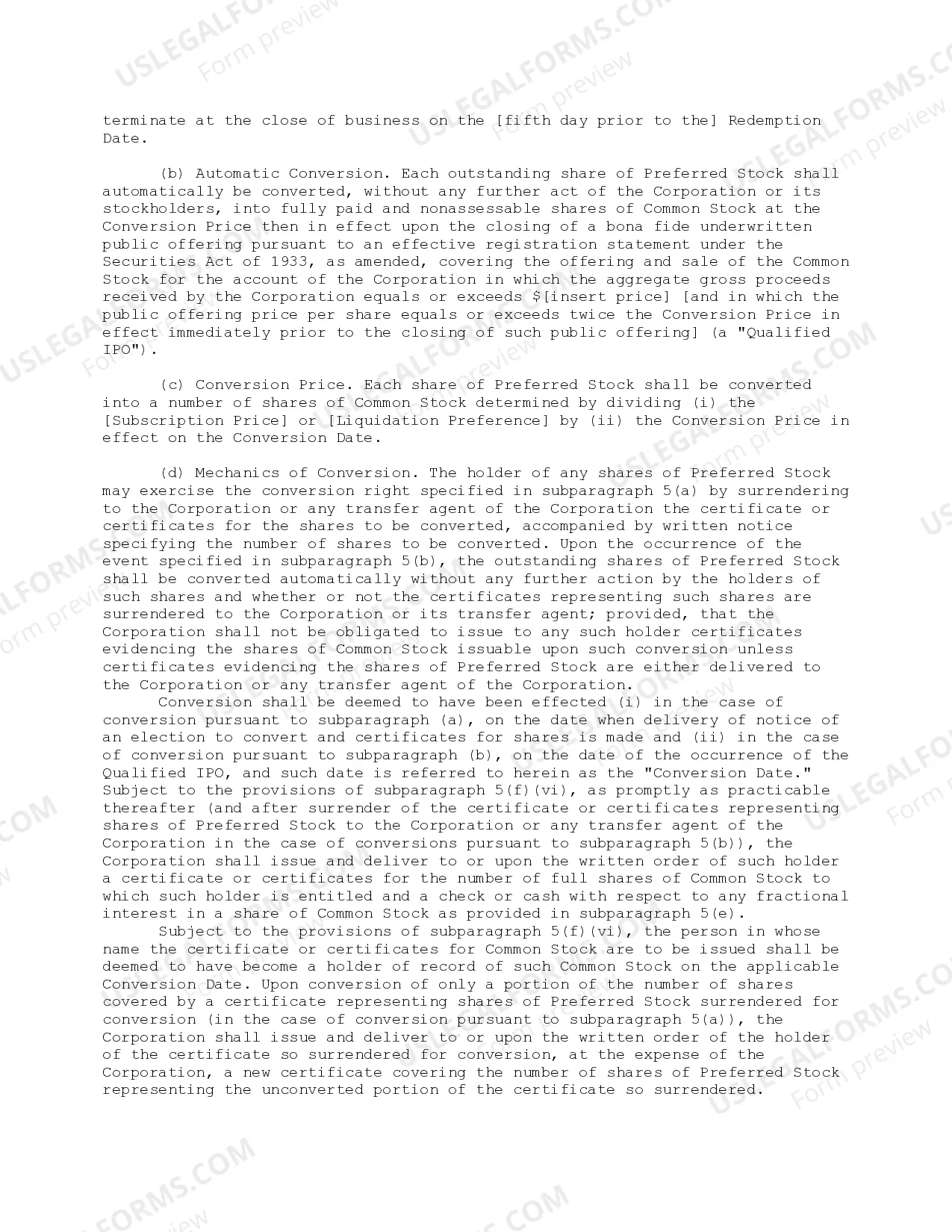
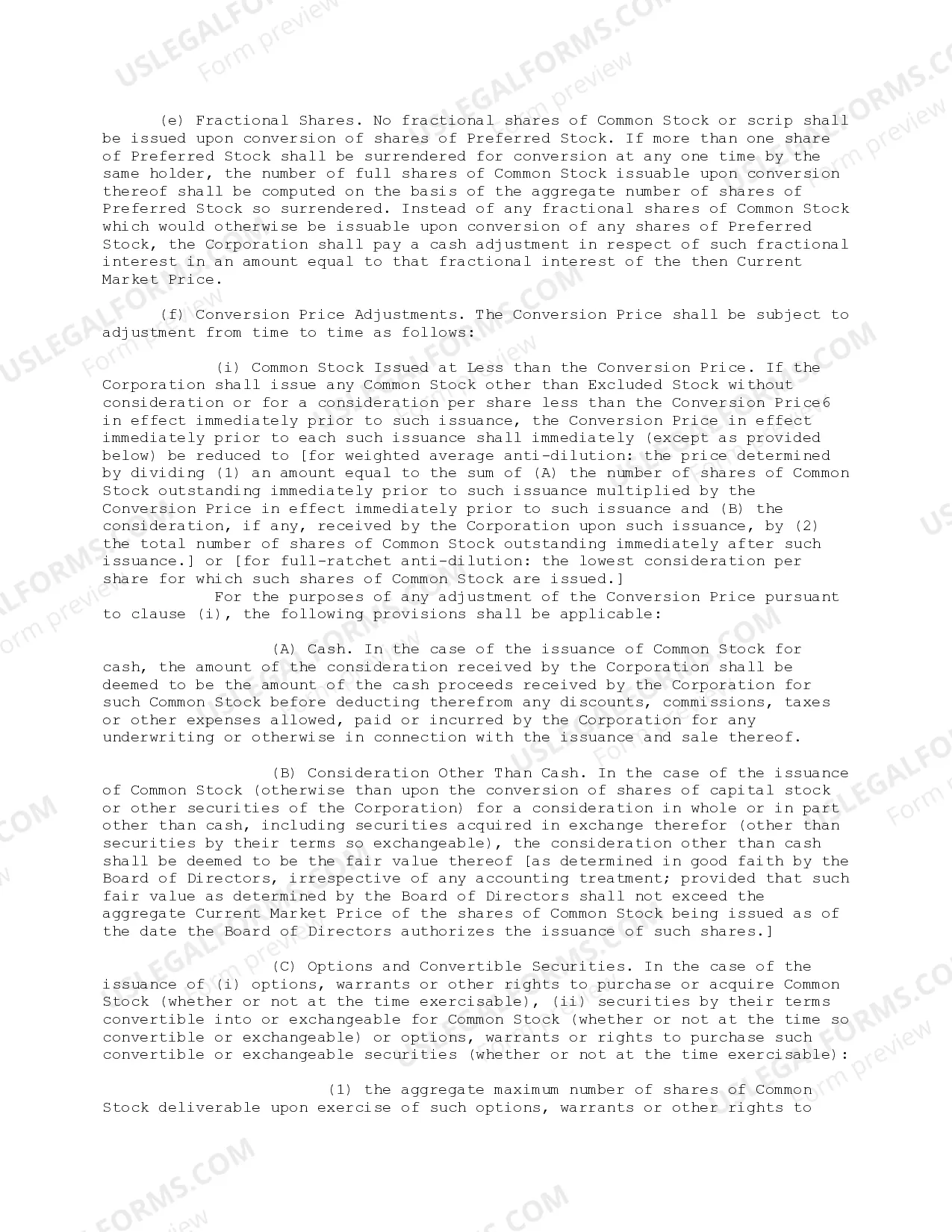
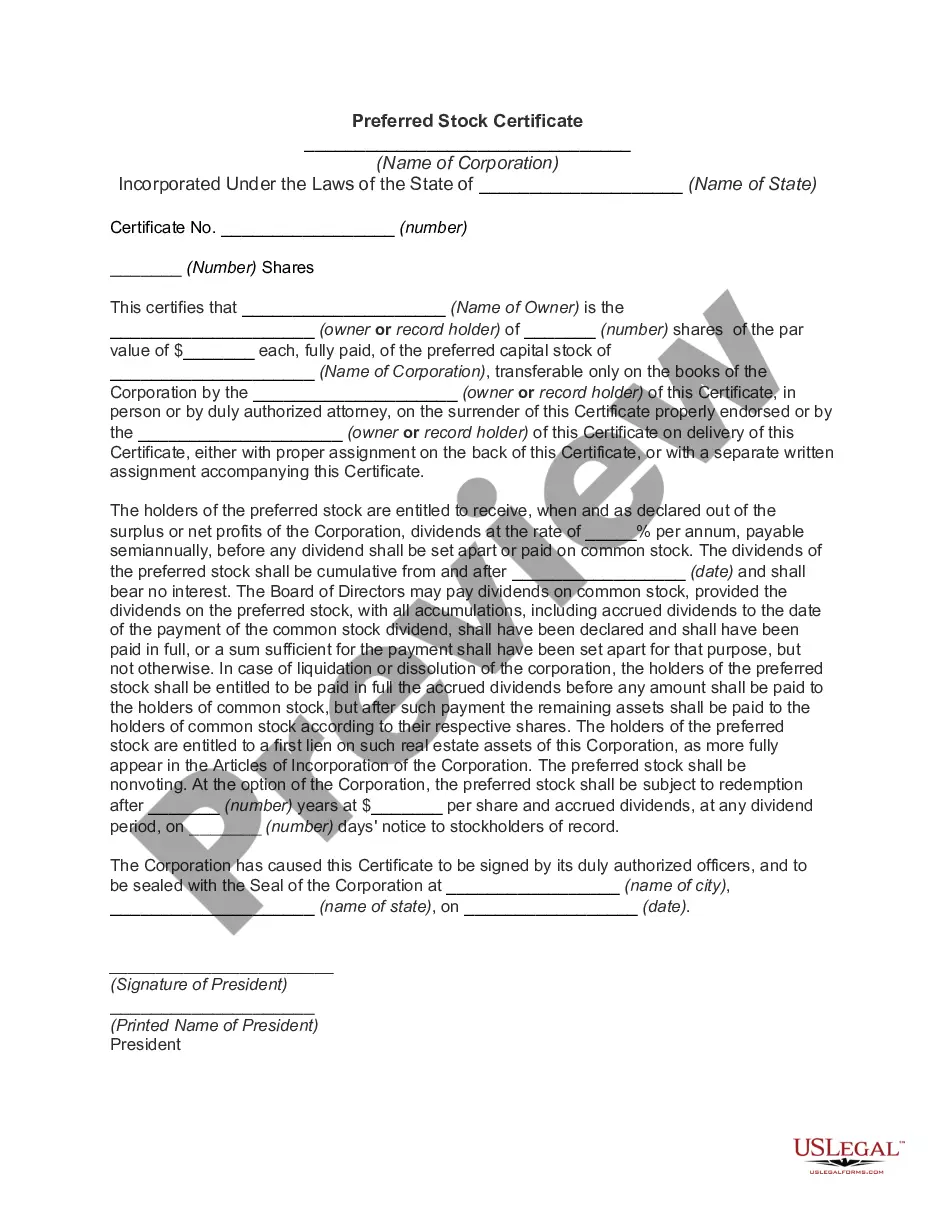
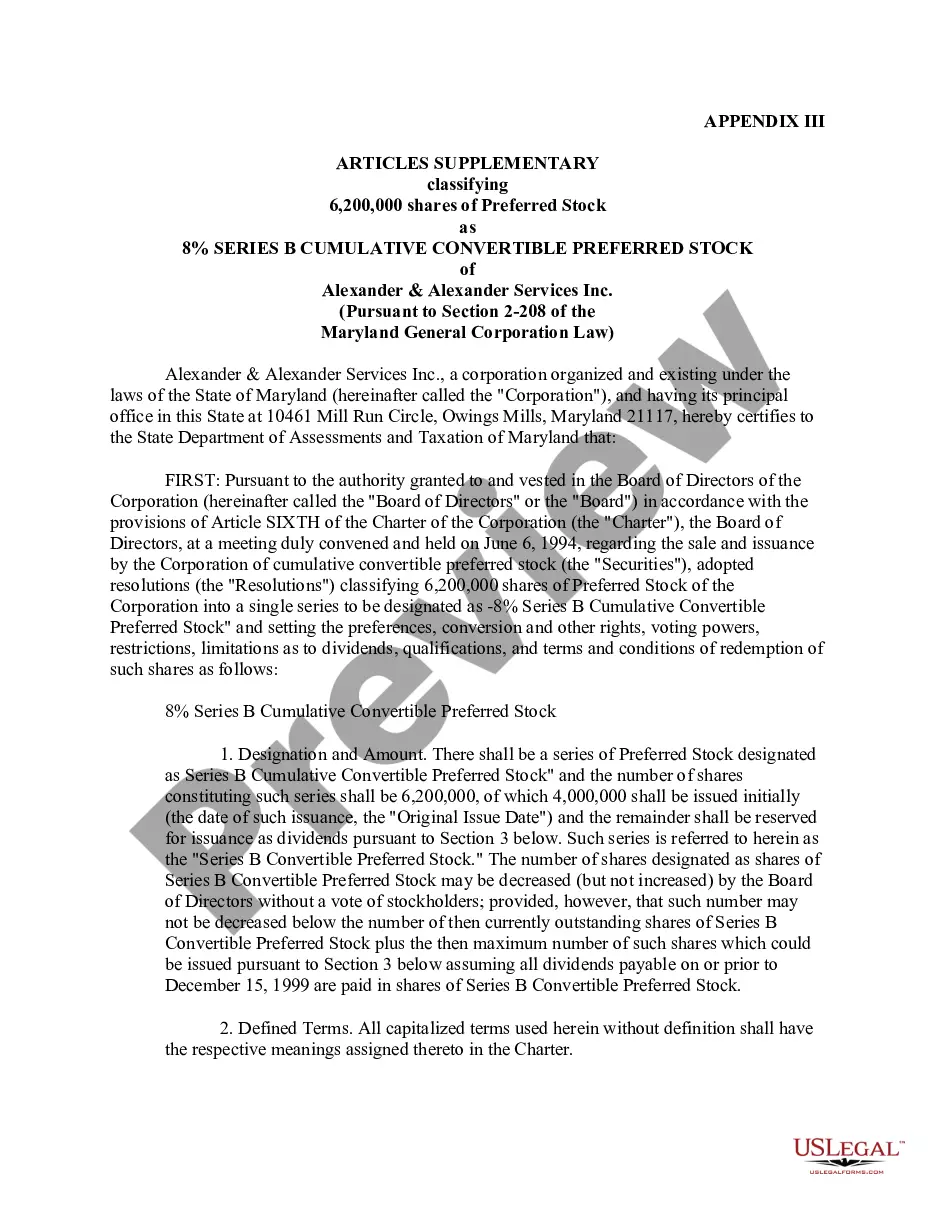
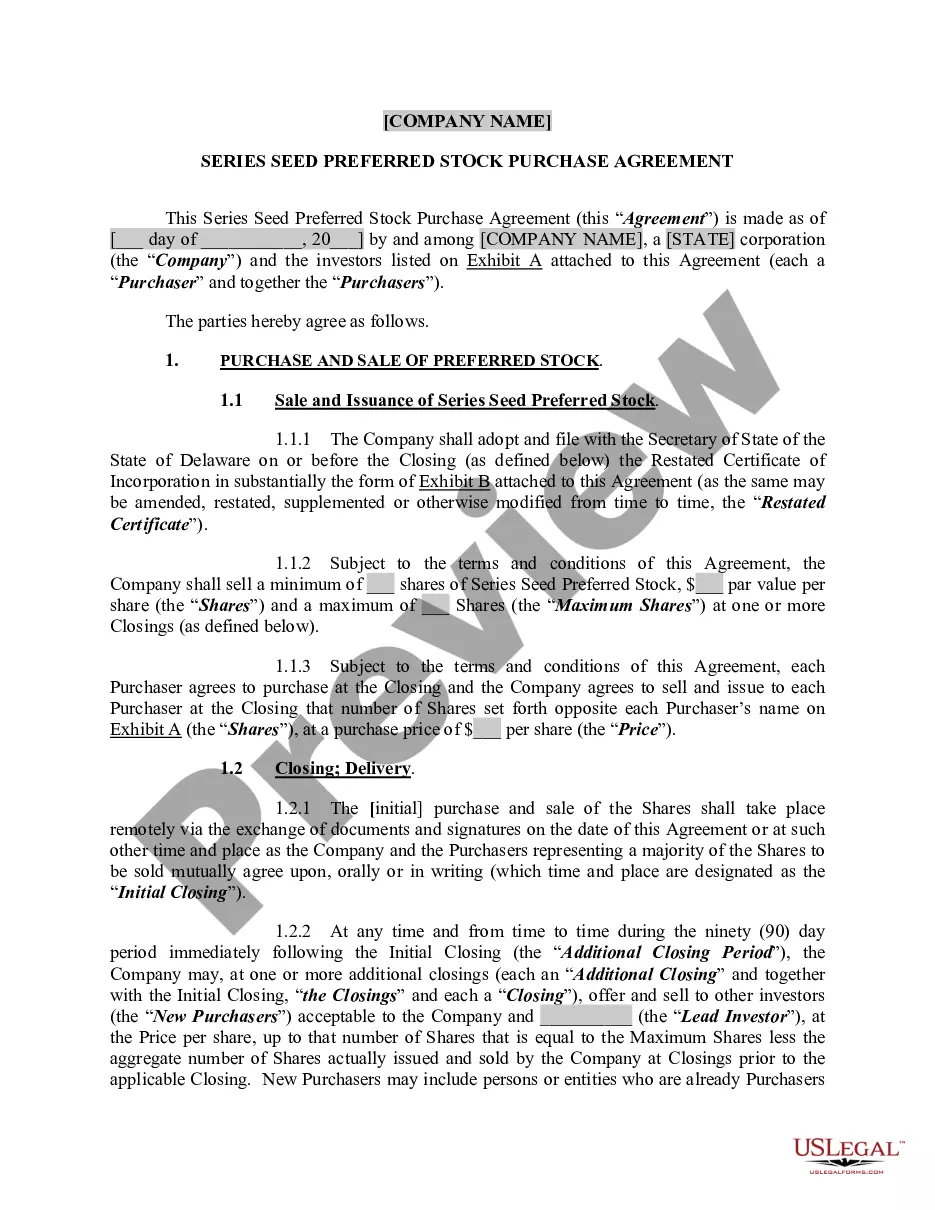
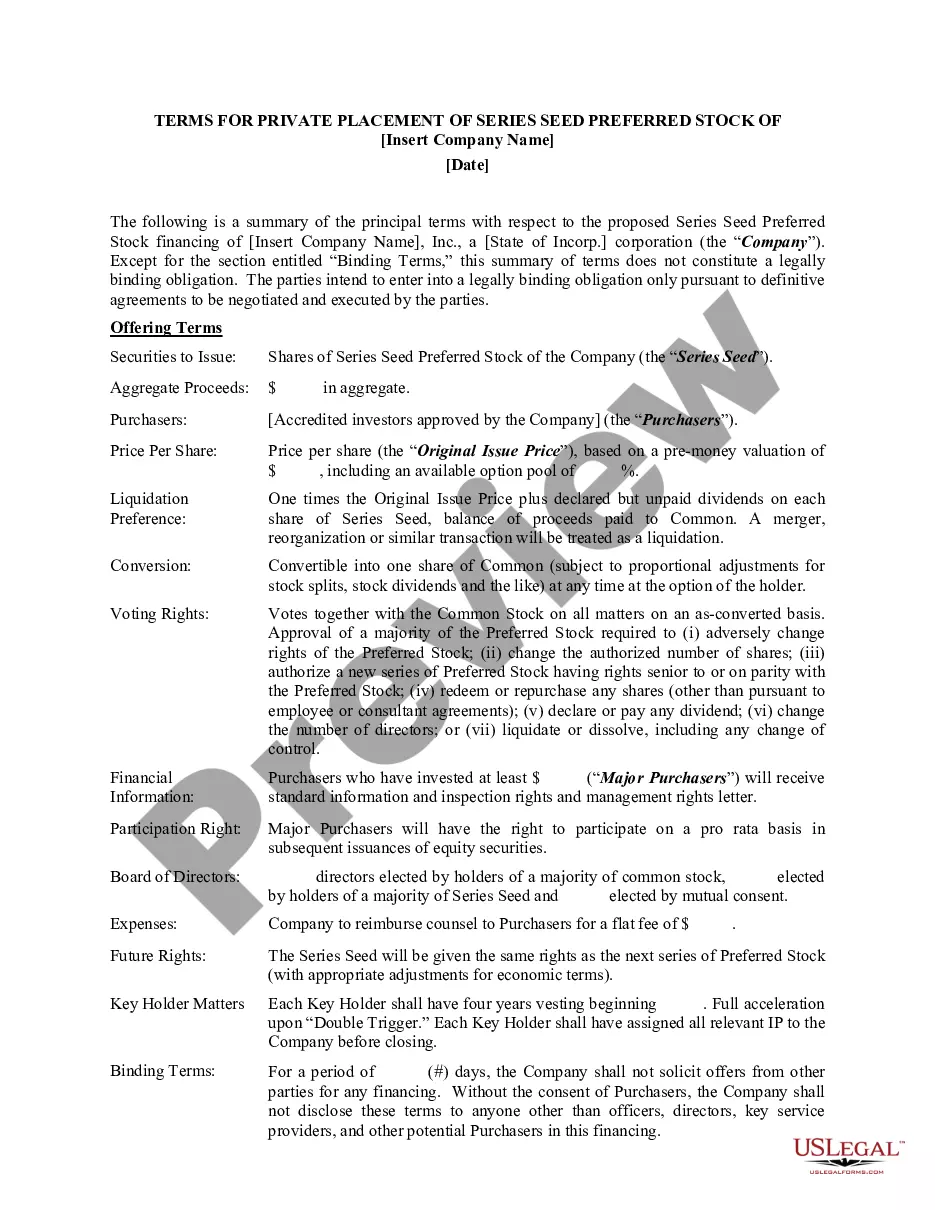
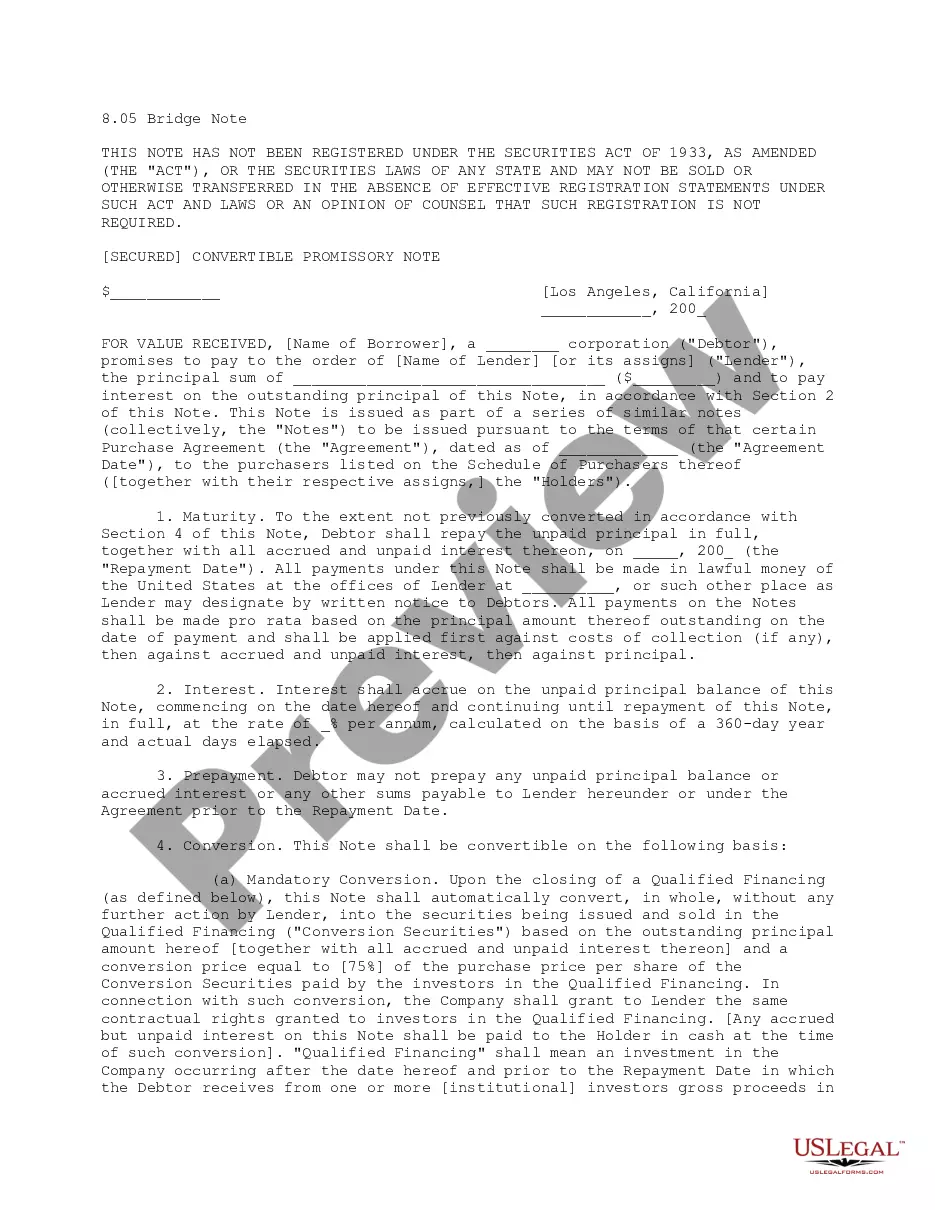
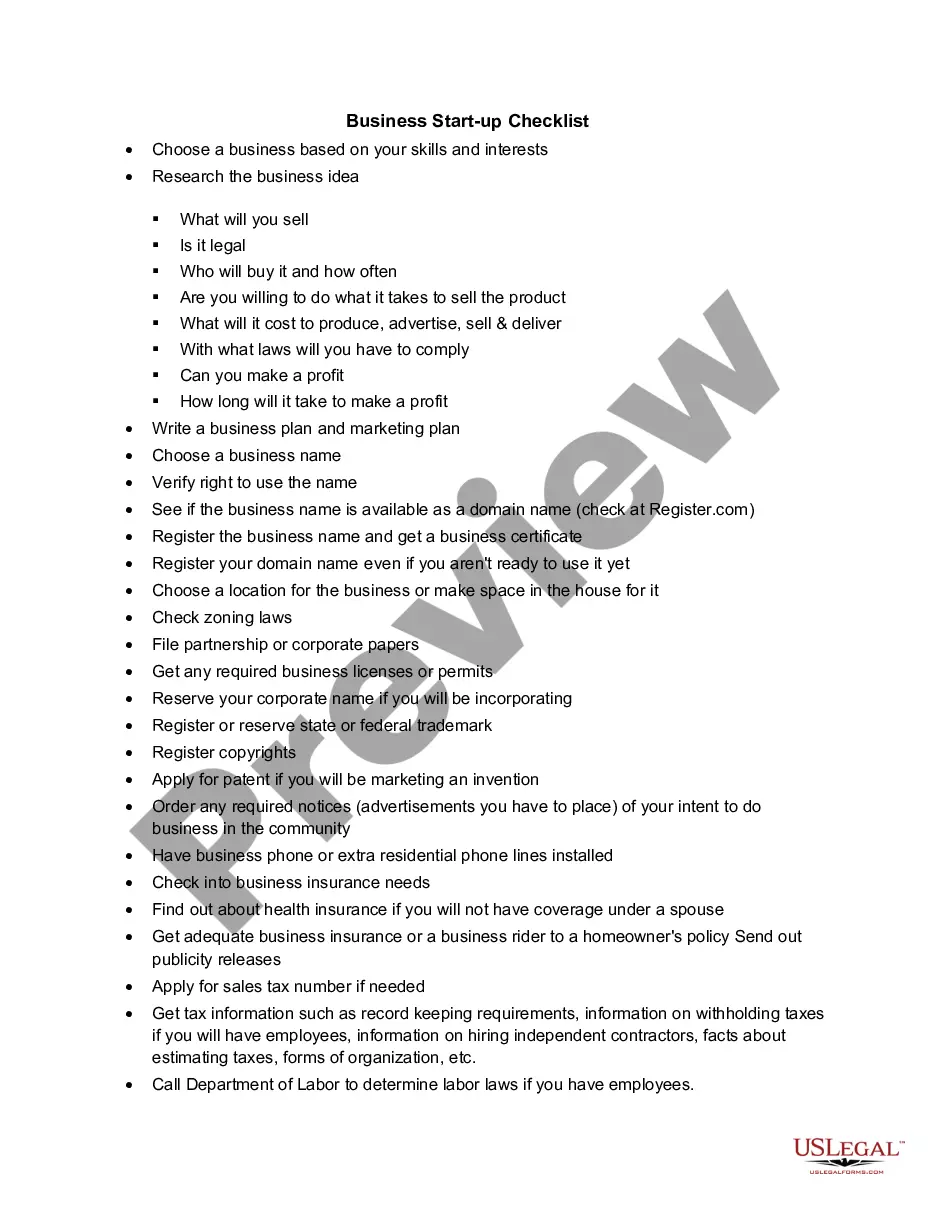
This form is a model miscellaneous corporate startup form. Use for a special purpose as indicated in the form. Don't reinvent the wheel, save time and money.
You’ll want to weigh the pros and cons like balancing a scale. Consider the company’s financial health, its dividend history, and whether you’re comfortable with the trade-offs of fewer rights compared to common stock.
Sometimes, yes! Some preferred stocks come with a conversion feature, allowing you to swap them for common stocks. But it’s kind of like a trade-off; you’ll want to check the specific terms.
Absolutely! It's not all sunshine and rainbows. If a company hits hard times, preferred dividends might get skipped, and while preferred shareholders are prioritized over common ones, they still don't have the same rights or voting power.
Investing in preferred stock can be like having your cake and eating it too. You get fixed dividends, potentially less volatility than common stocks, and still hold a stake in the company.
Preferred stock is like a mix between stocks and bonds. It gives you ownership in a company but often comes with fixed dividends, giving you a steadier income compared to common stocks.