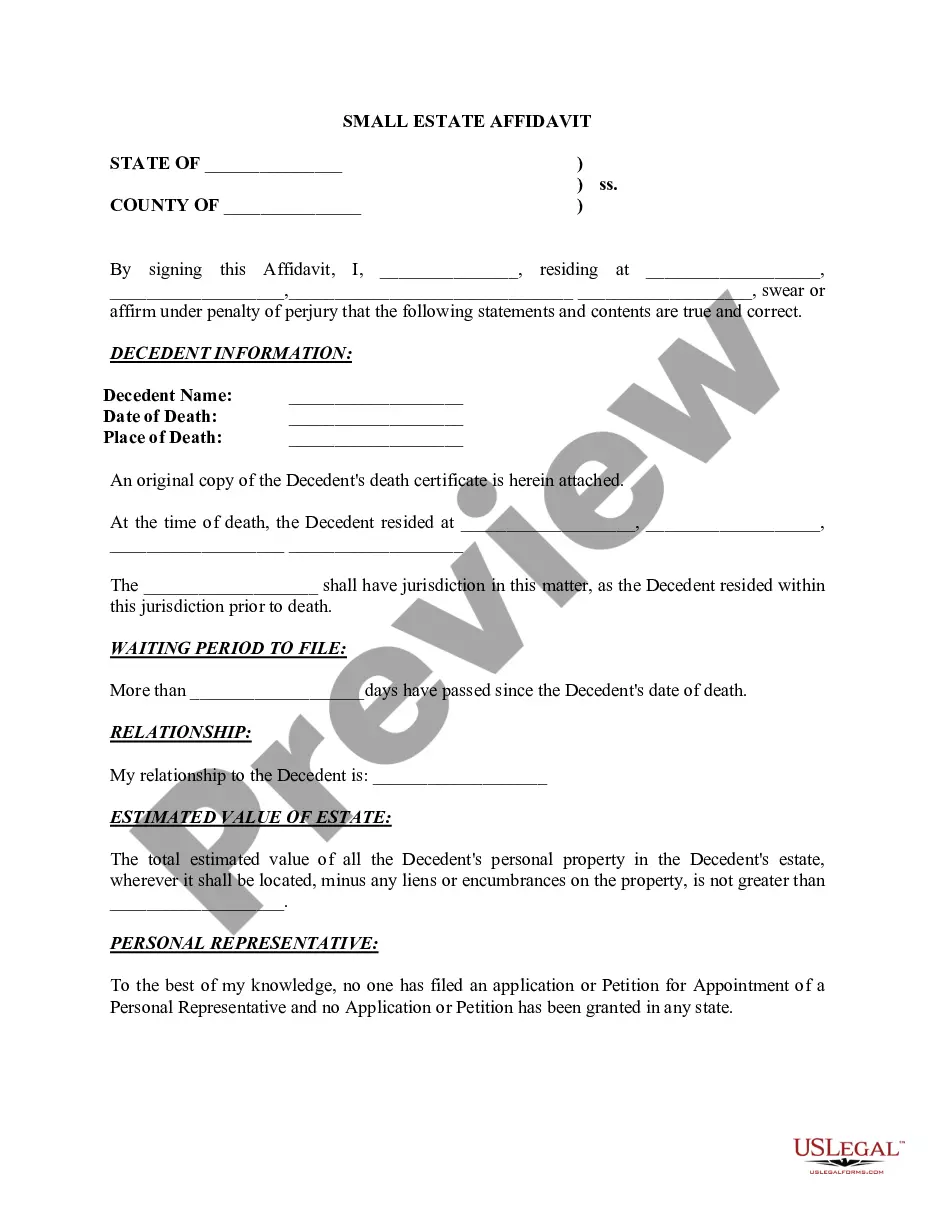
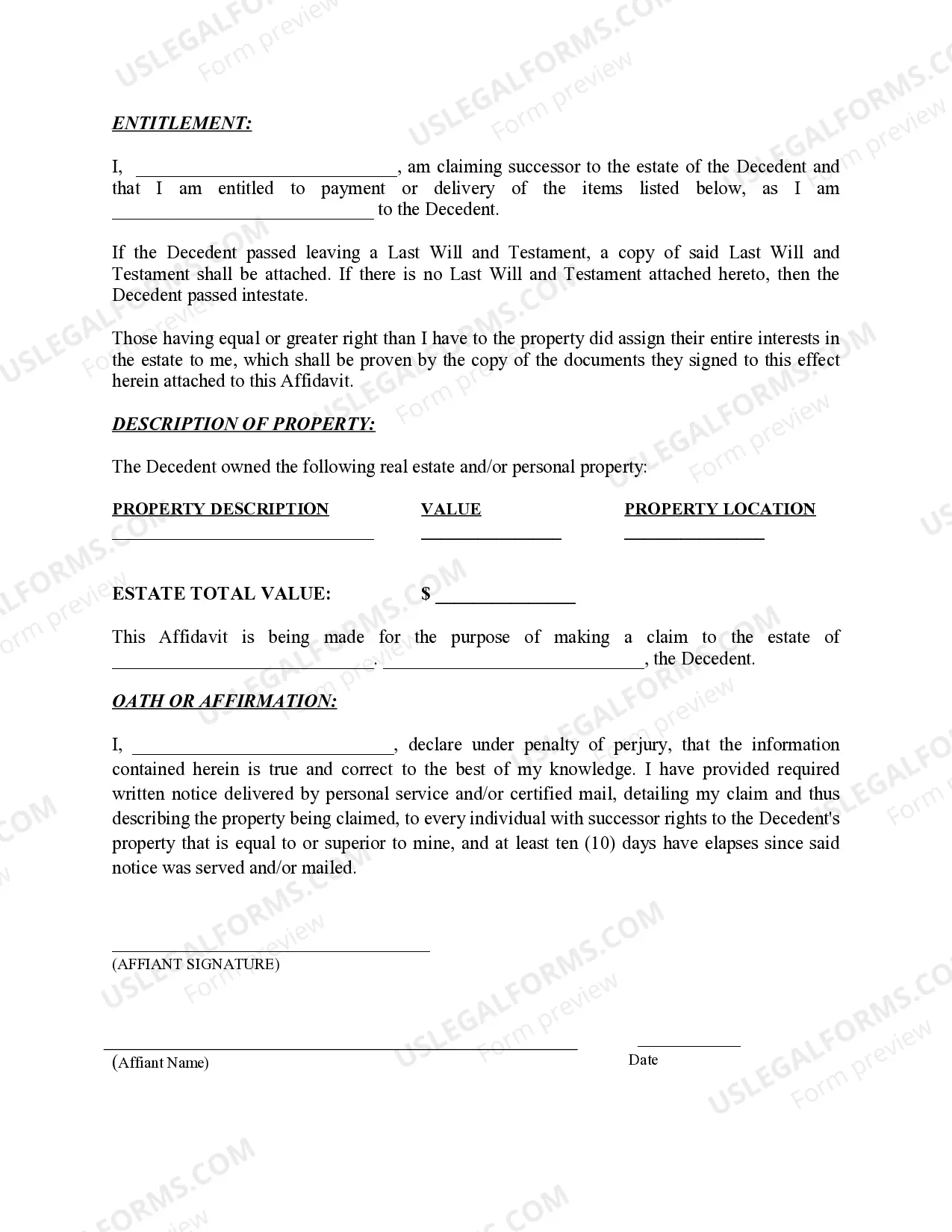
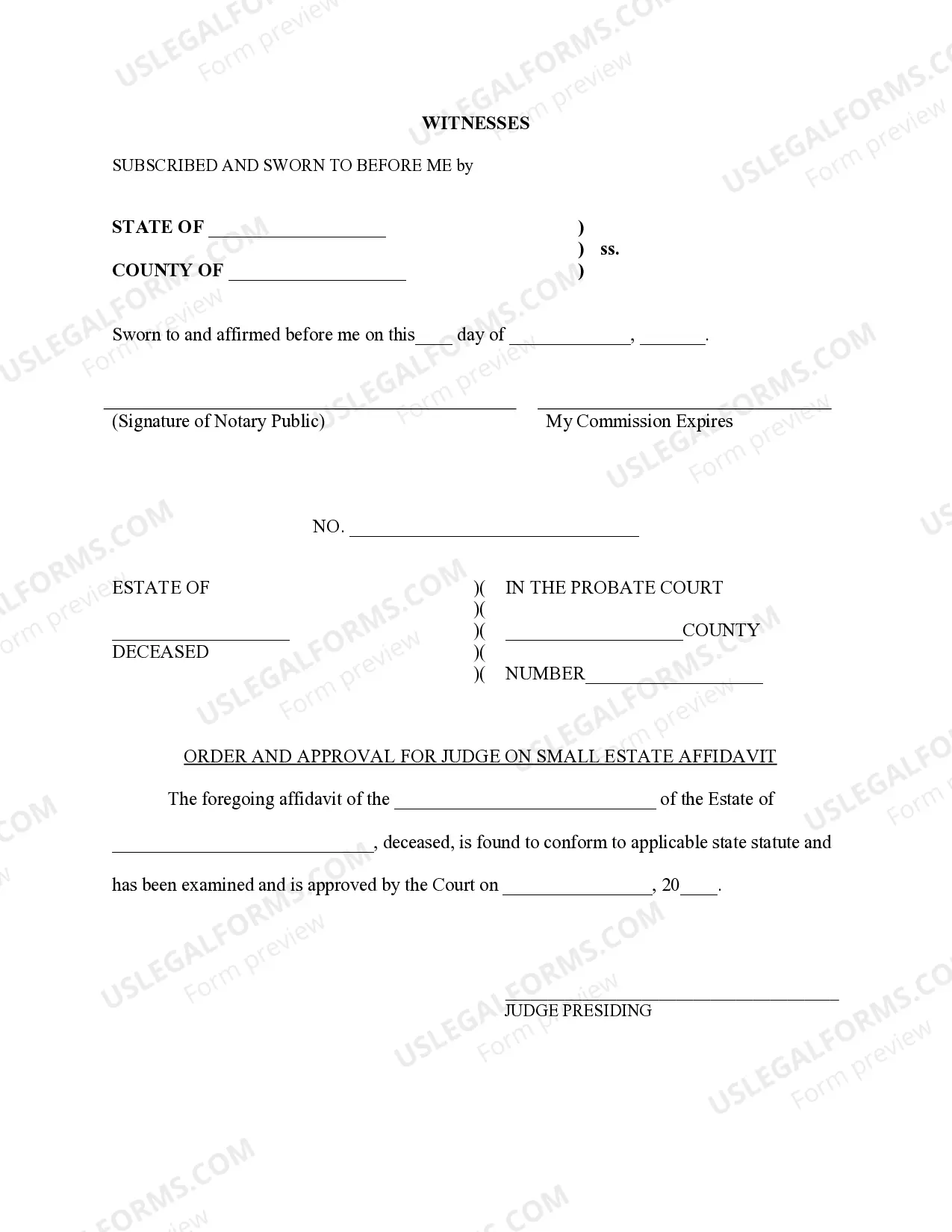
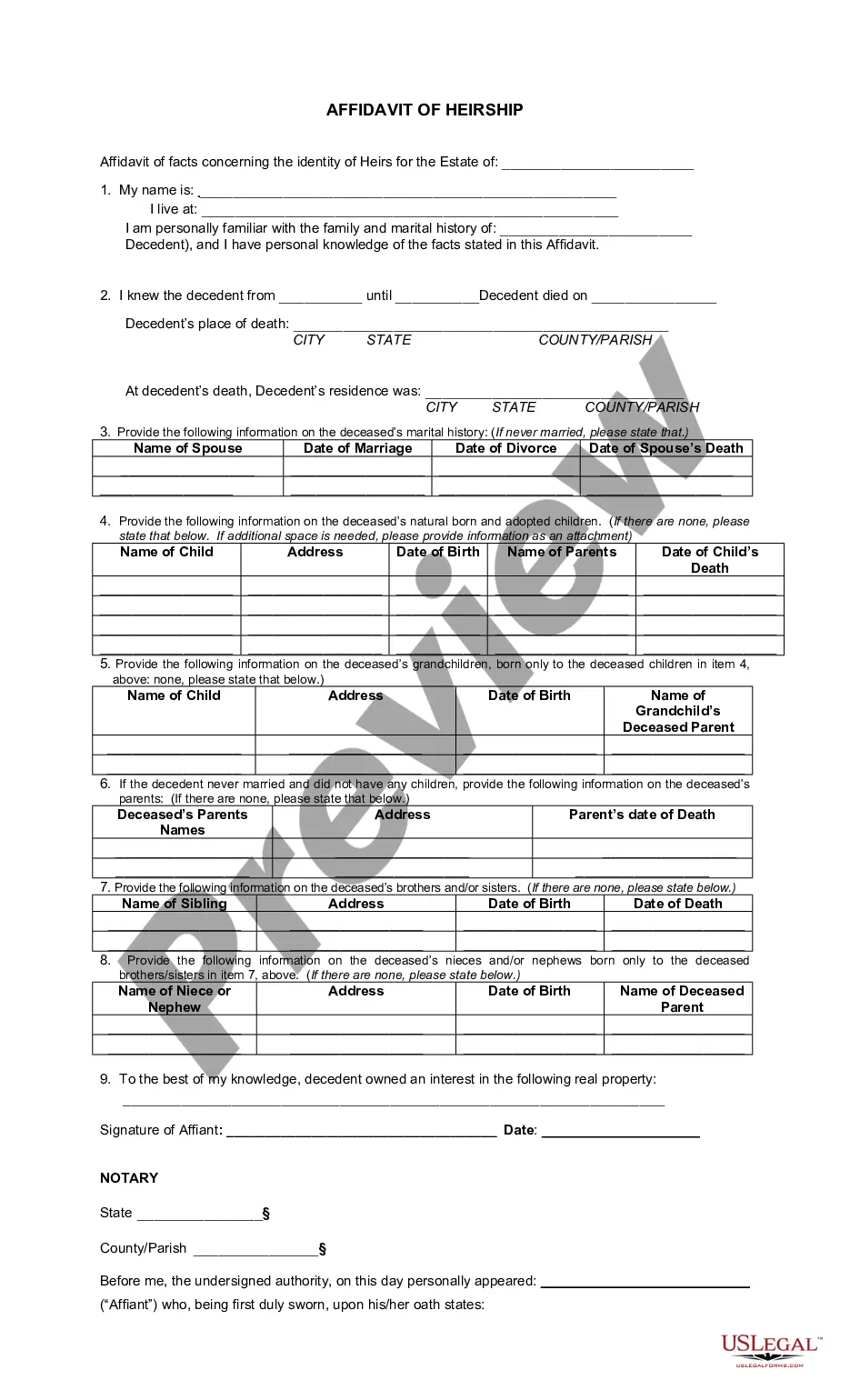
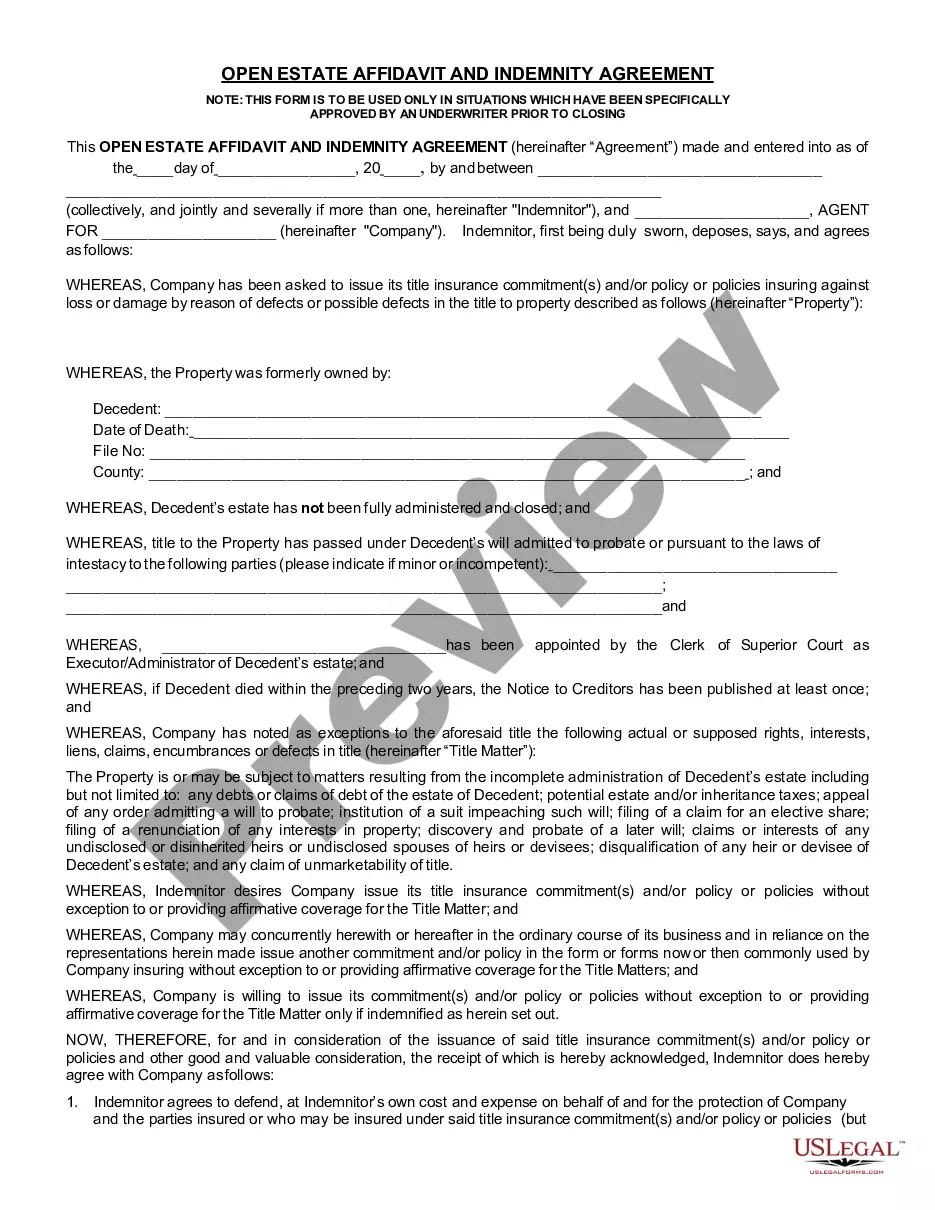
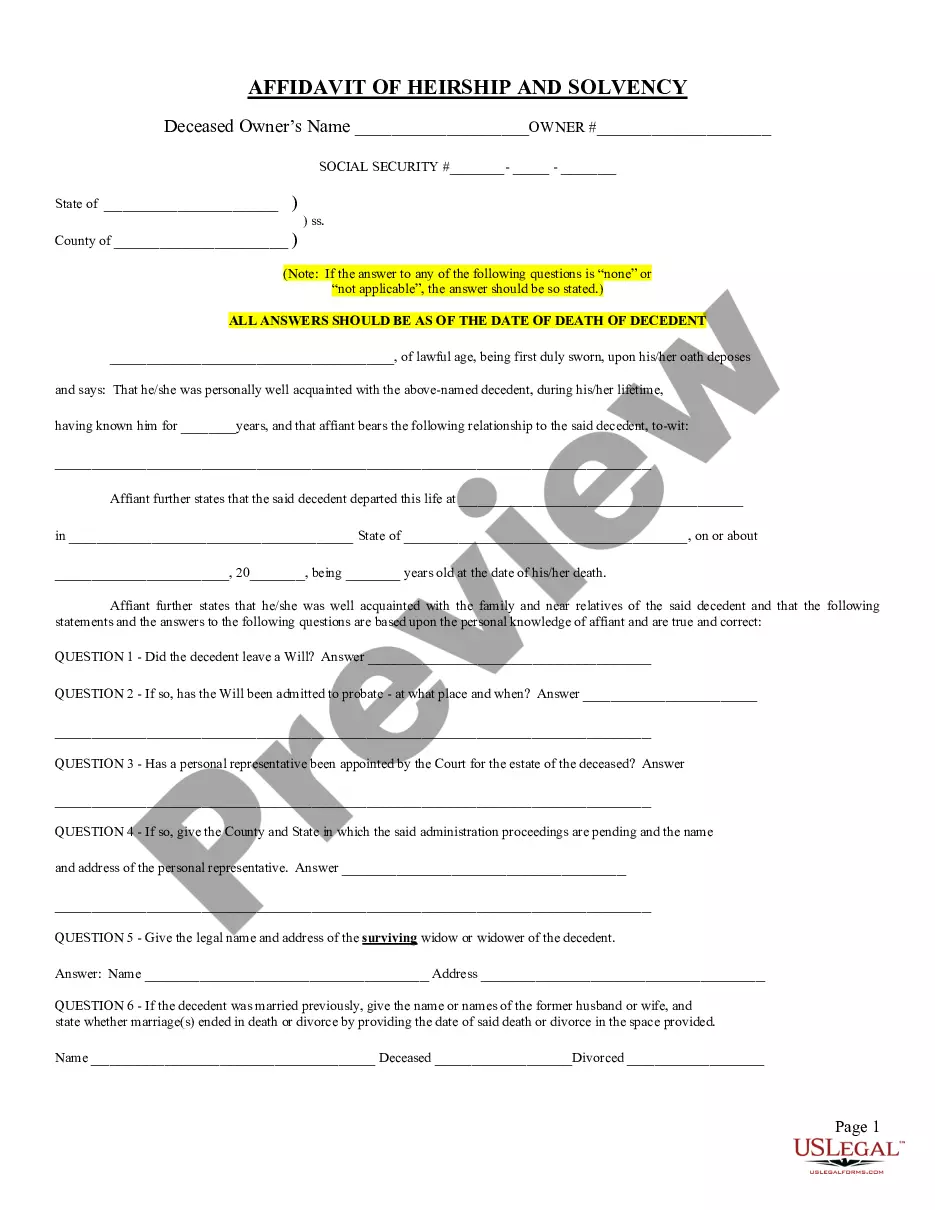
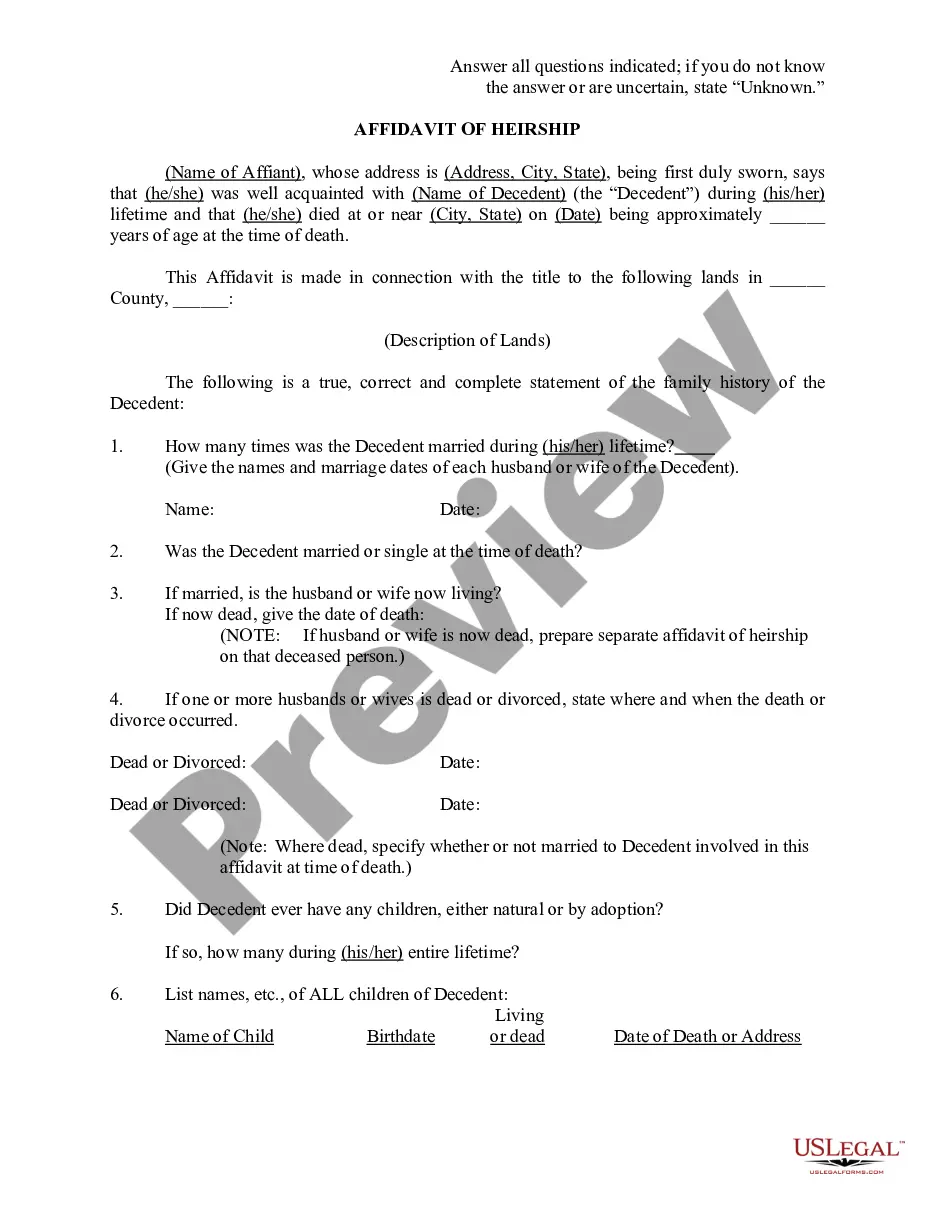
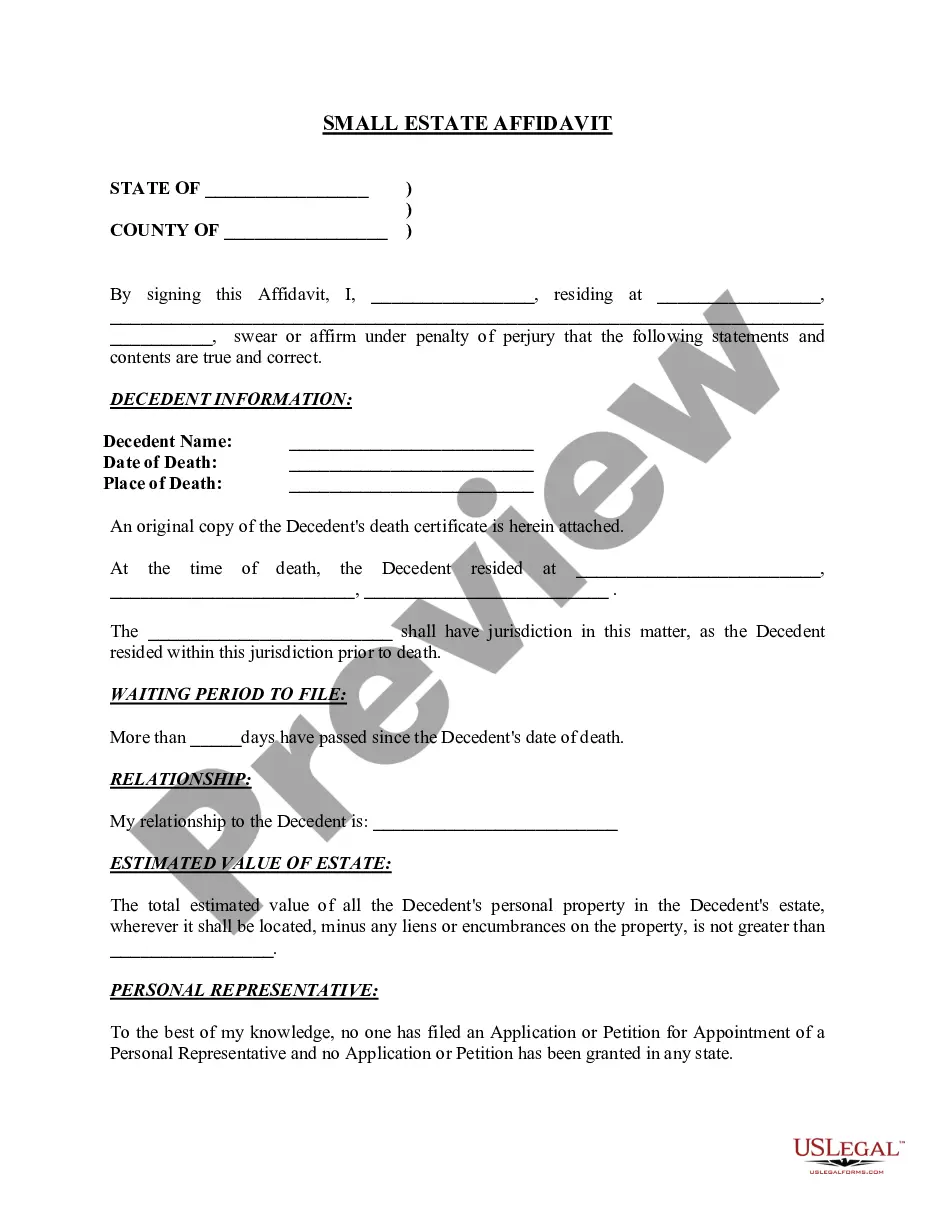
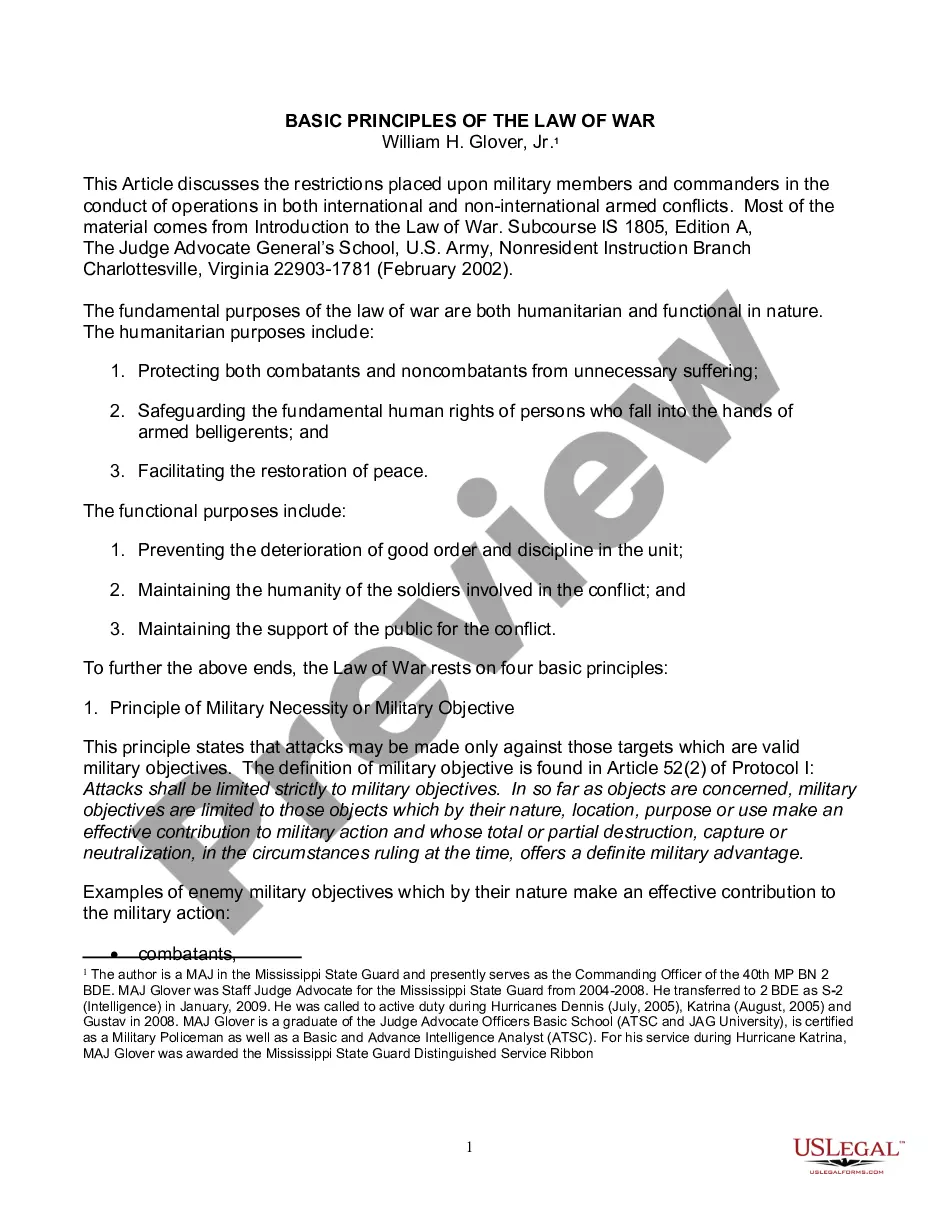
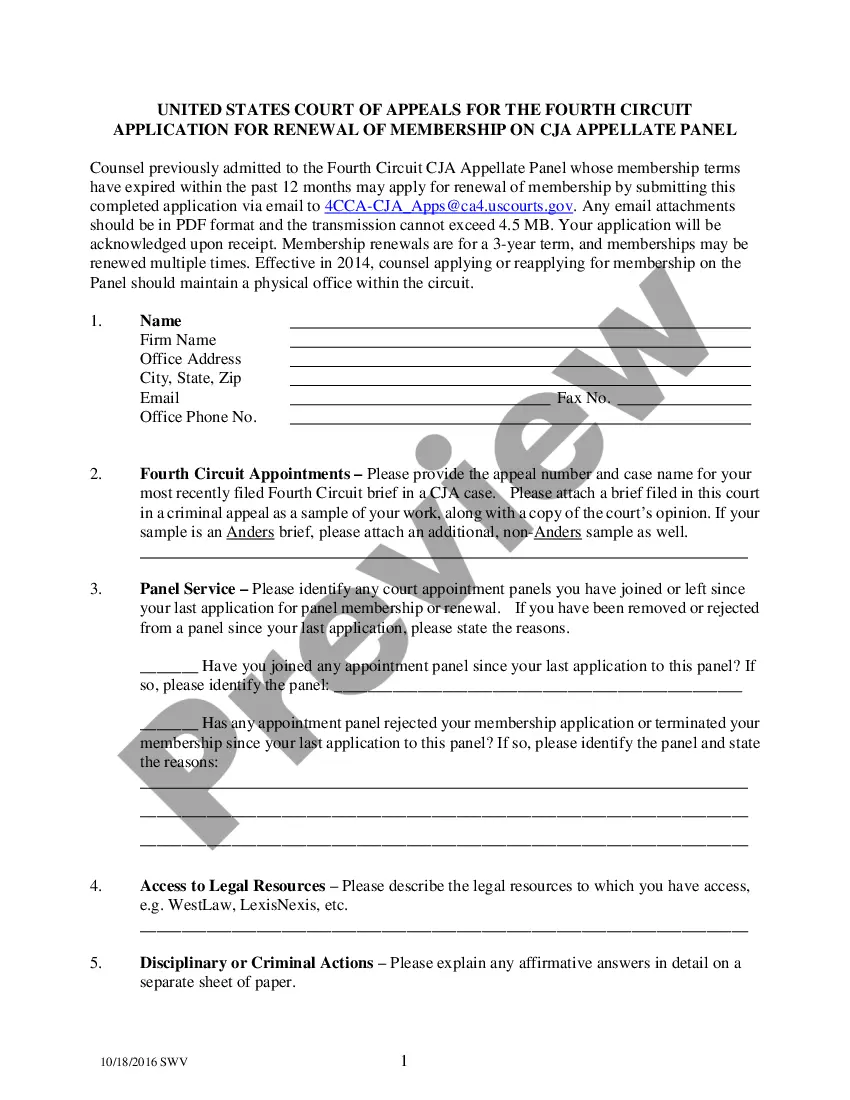
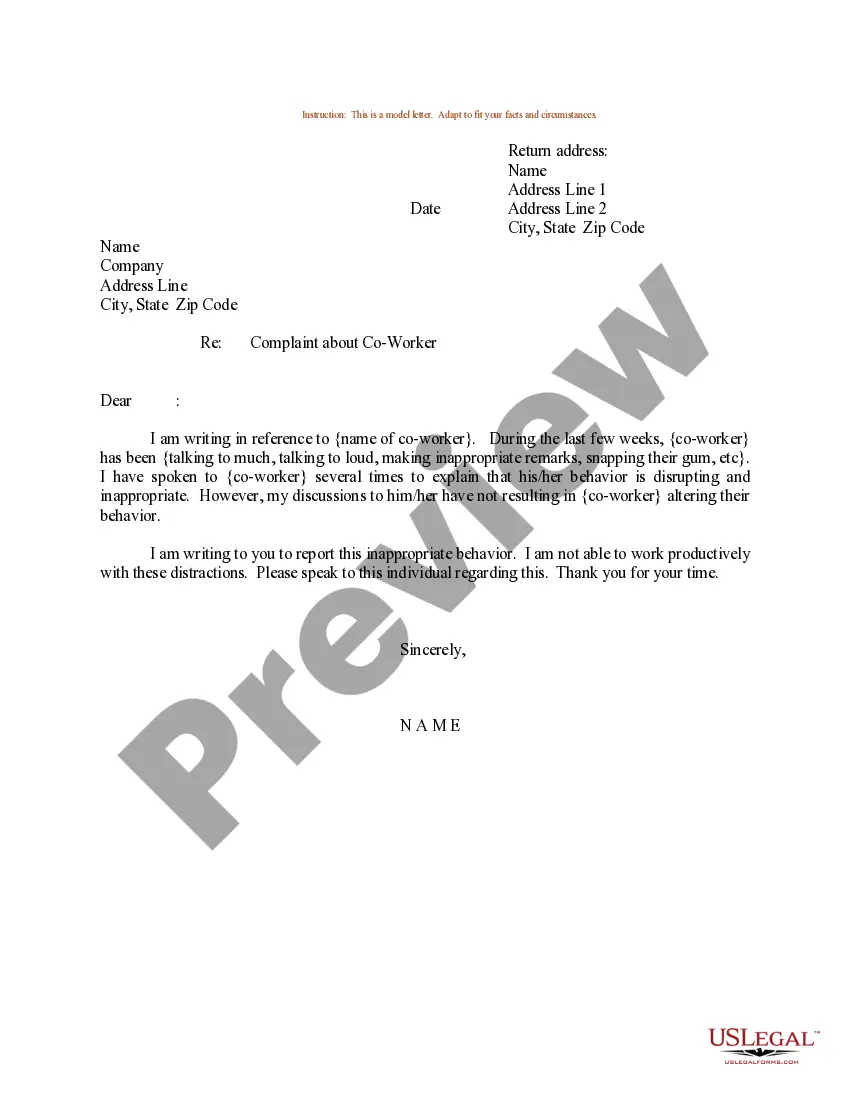
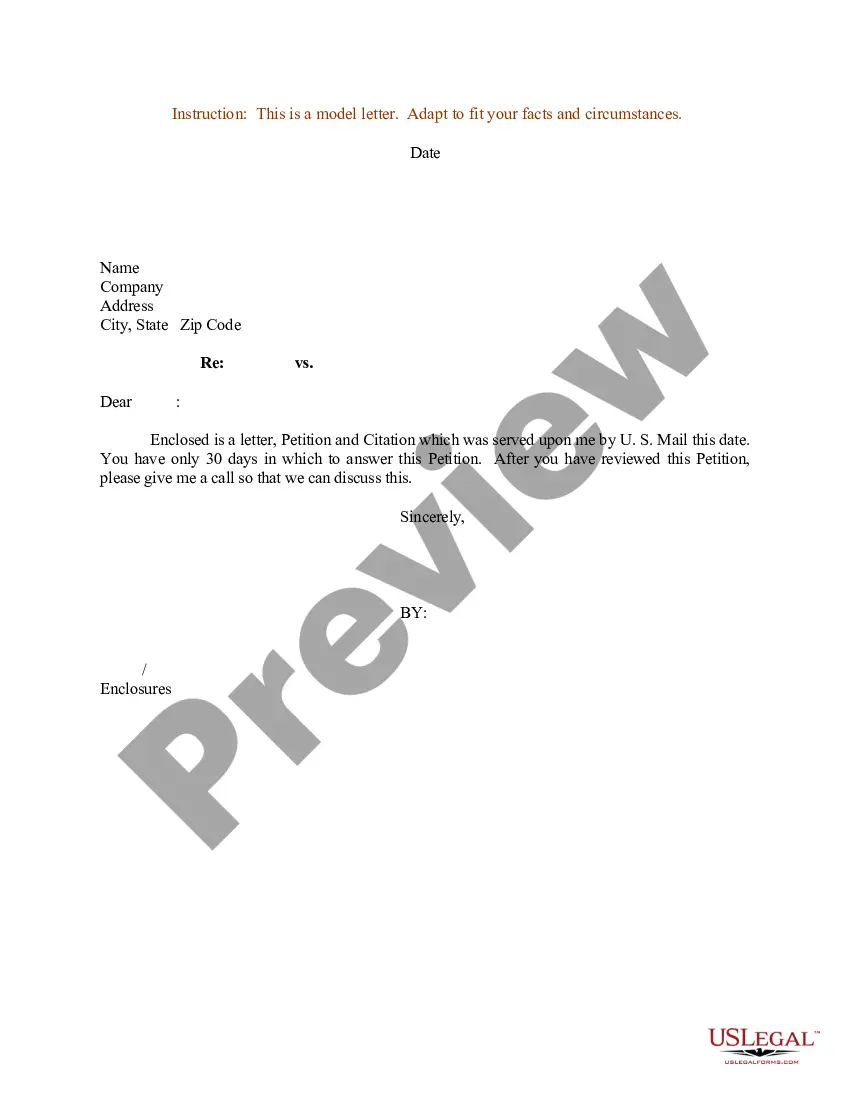
An Affidavit is a sworn, written statement of facts, signed by the 'affiant' (the person making the statement) before a notary public or other official witness. The affiant swears to the truth and accuracy of the statement contained in the affidavit. Where an estate is valued at less than $100,000, an interested party, as successor to the decedent, may, issue a small estate affidavit to collect or claim entitlement to the deceased property.
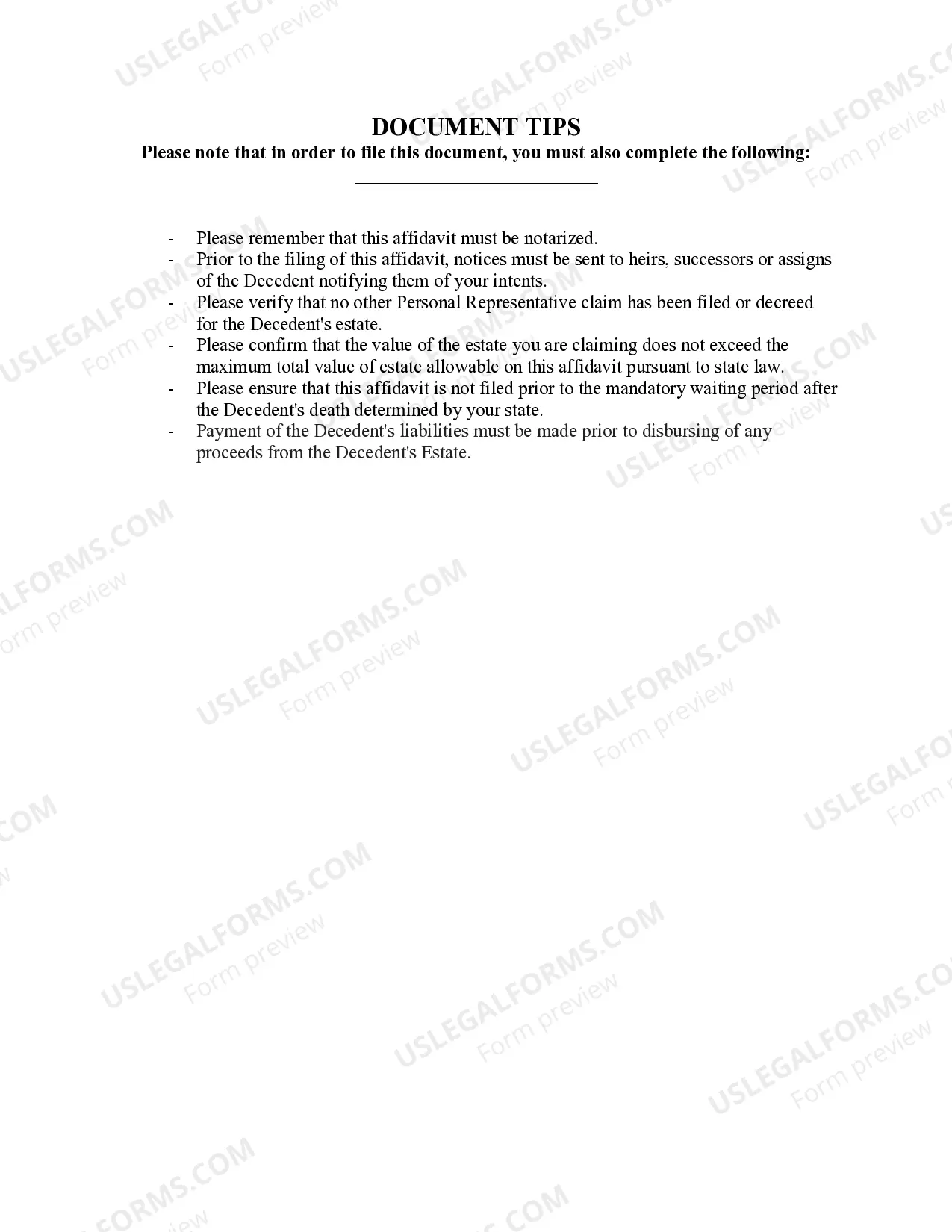
Yes, there are guidelines you'll need to follow. The affidavit should include details about the deceased, the assets, and the heirs. It's like putting together a checklist to keep everything in order!
You can claim various assets like bank accounts, vehicles, and personal belongings, as long as they fall below the allowed value. Think of it like gathering the pieces of a puzzle!
It can usually be done fairly quickly, depending on how organized your paperwork is. If all goes smoothly, you could be looking at just a few weeks.
Not necessarily! Many folks handle it on their own. However, if you feel out of your depth, getting some legal advice might be a good idea.
To qualify, the total value of the estate, including personal property, must be below the threshold defined by Washington state law. If it’s not much, you might be in the clear!
Typically, any person who is an heir or a beneficiary of the deceased can use a Small Estate Affidavit if the total value of the estate falls below a certain limit set by state law.
A Small Estate Affidavit is a legal document that helps simplify the process of transferring a deceased person's assets when their estate is small. It's a way to avoid the hassle of probate.