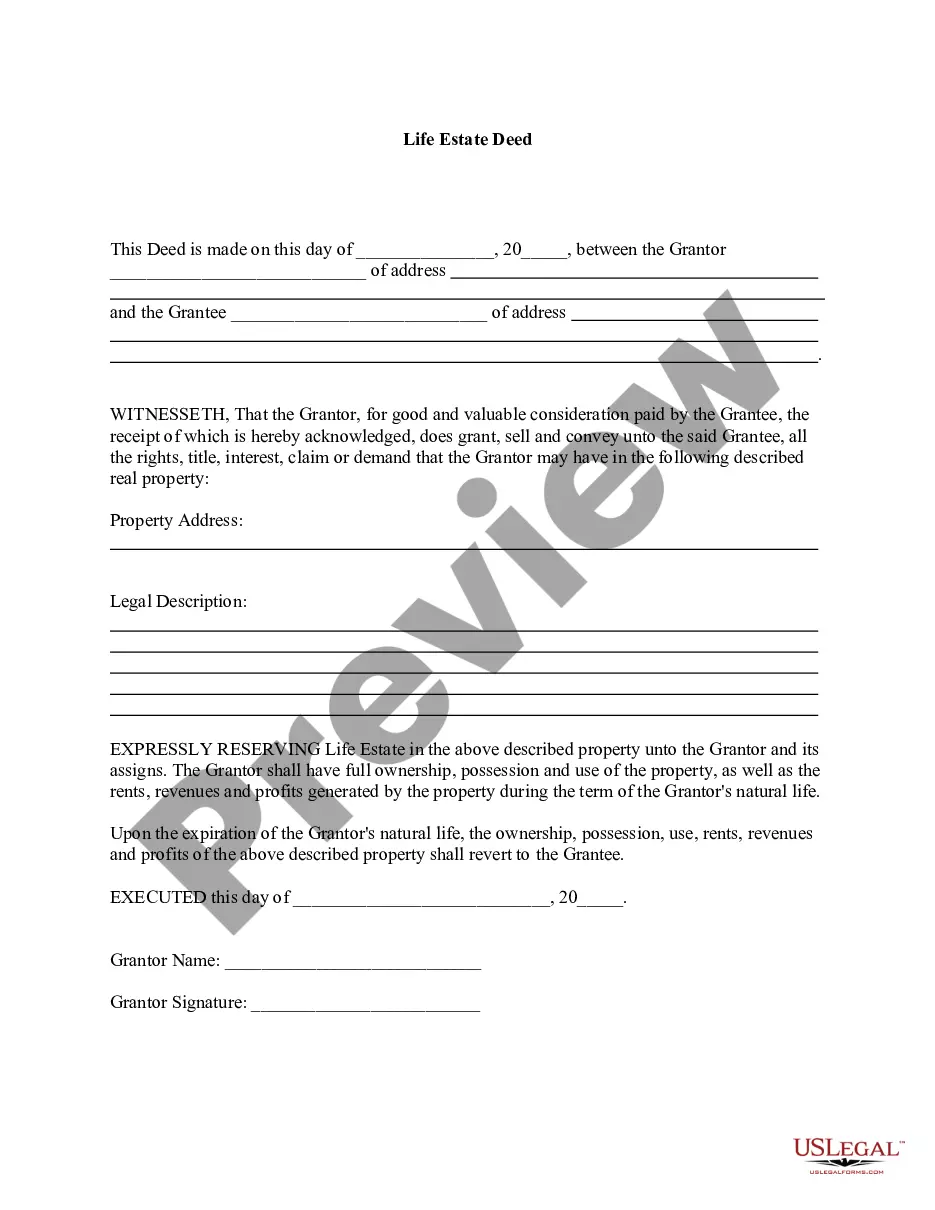
This is a Basic Life Estate Deed. A life estate has exclusive rights to the use and enjoyment of the land, including the right to live there, and all income rights from the property, as. long as the life estate owner has a pulse. The “remainder” interest of the. property is what remains at the death of the life tenant.
Yes, it’s different! A will kicks in after you pass away, while a life estate deed is effective right away and determines who gets the property when you’re gone.
You can name anyone you trust, like family members or friends. Just make sure they’re on board with your plan.
You can sell it, but the new owner will have to respect the life estate. Just keep in mind, you may need to get the agreement from the remainderman.
You can make changes, but it’s usually a bit tricky. You might want to seek legal help to navigate that process.
It’s a smart way to avoid probate and ensure your loved ones get your property more easily after you’re gone.
You retain the right to live in and use the property as long as you’re alive. When you pass away, ownership transfers to the person you named.
A Basic Life Estate Deed lets you keep control of your property during your lifetime while passing it on to someone else after you’re gone.