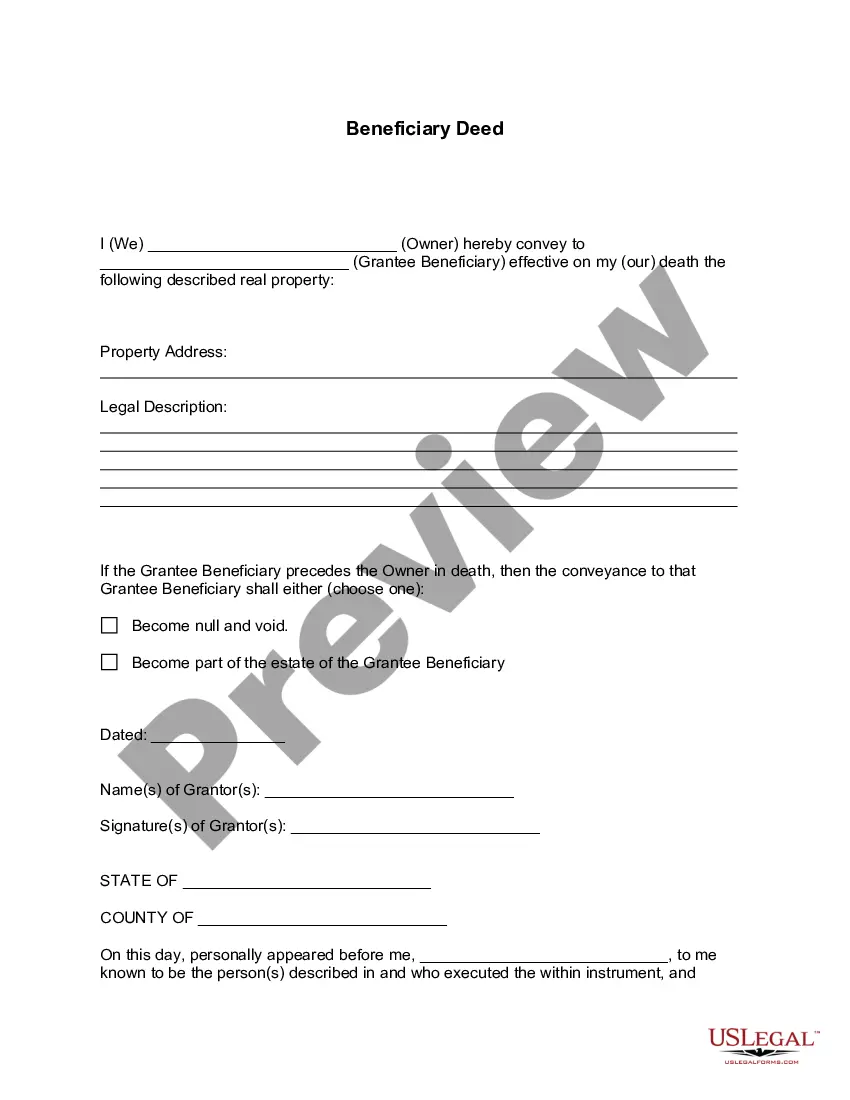
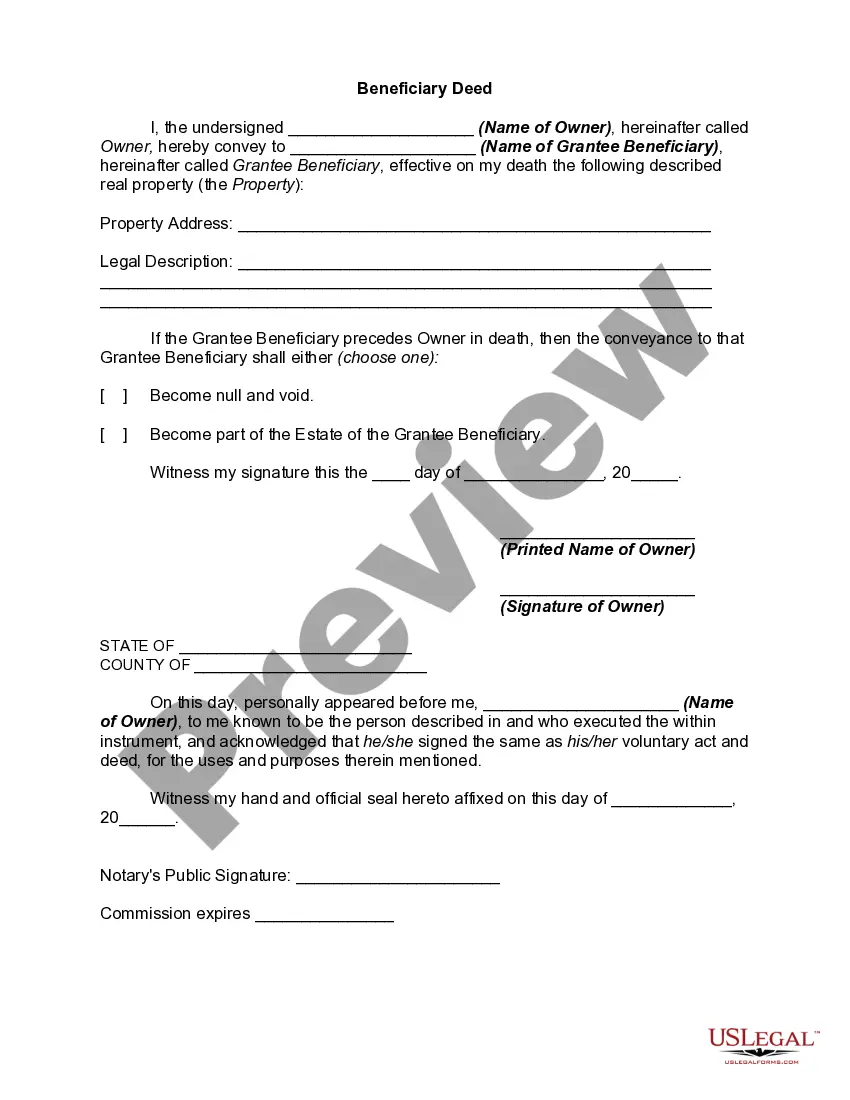
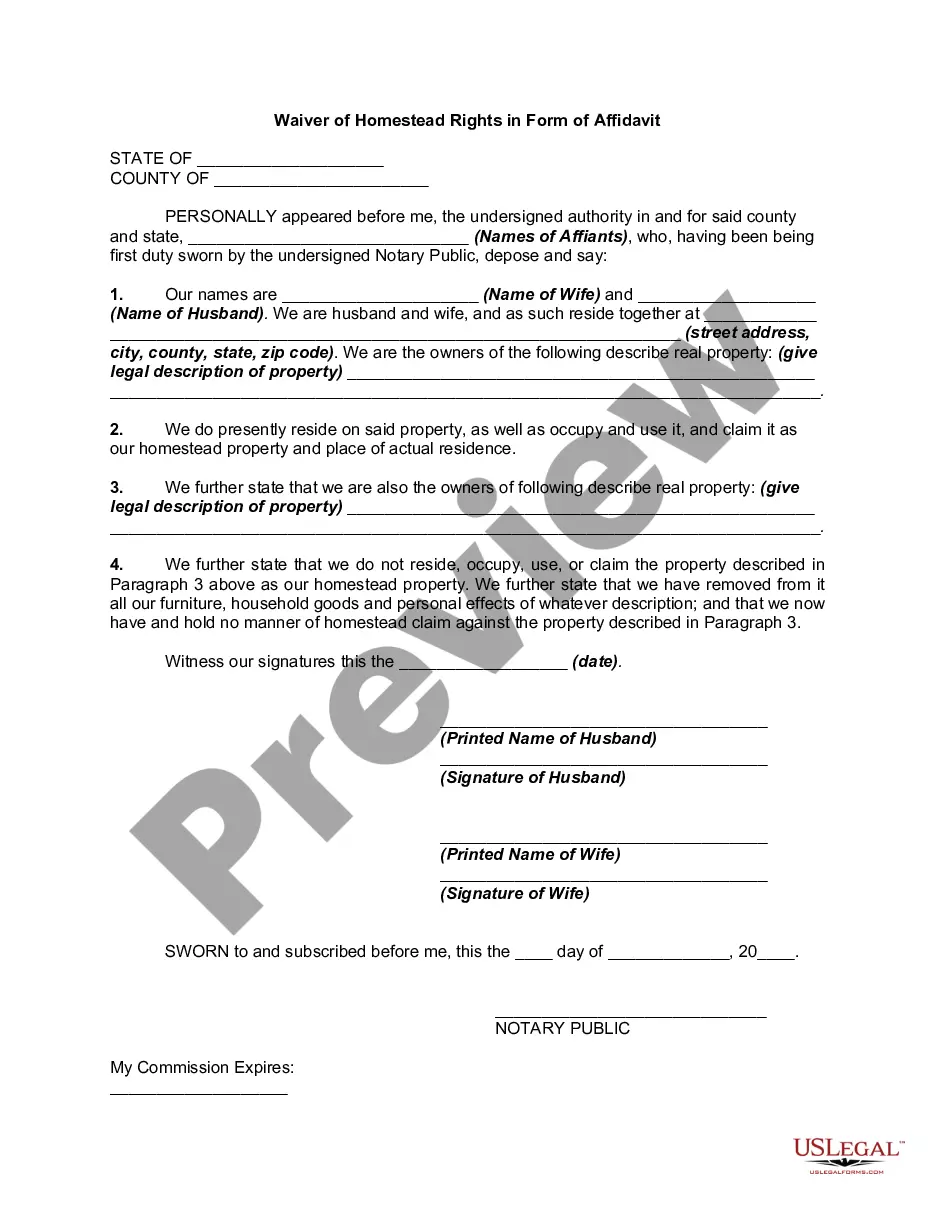
A beneficiary deed is a another type of real property deed used to transfer property. By signing and recording a beneficiary deed, an owner of an interest in real property may cause the owner's interest in the real property to be conveyed to people or entities upon the owner's death. The interest in real property conveyed by a beneficiary deed does not take effect until the death of the owner, at which time that interest transfers automatically by law to the designated grantee named in the beneficiary deed.
This form is a generic example that may be referred to when preparing such a form for your particular state. It is for illustrative purposes only. Local laws should be consulted to determine any specific requirements for such a form in a particular jurisdiction.
While you don't need an attorney, it’s wise to consult one to ensure everything is done correctly. It’s always good to have a trusty captain at the helm!
If you sell the property, the deed goes with the sale! It won't affect your other properties or your estate, so no worries there.
Generally speaking, your beneficiary won't face taxes just for inheriting the property, but they should seek advice from a tax professional to cover all bases. It’s better to be safe than sorry!
You can name almost anyone! Whether it's a family member, a friend, or even a charity, the choice is yours. Just remember, it's important to choose someone you trust.
Absolutely! Just like turning a ship around, you can revoke or change the beneficiary deed at any time while you're still alive. Just follow the proper legal steps to make it happen.
It works like a ticket to ride! You fill out the deed with information about your property and who you want to inherit it. Once you're gone, your beneficiary can claim the property without going through probate.
A basic beneficiary deed is a simple legal document that allows you to transfer your property to someone else after you pass away, making it easier for your heirs to handle things when the time comes.