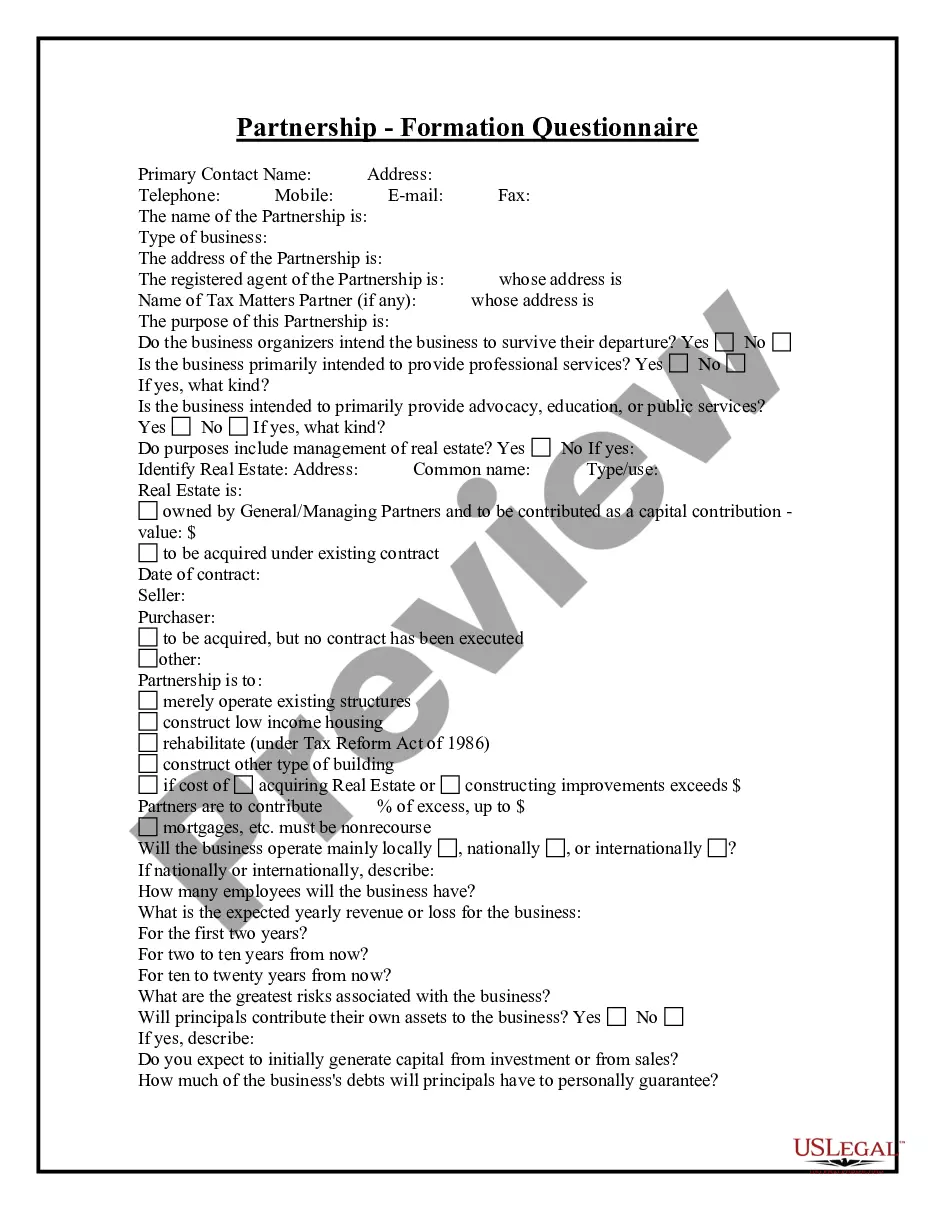
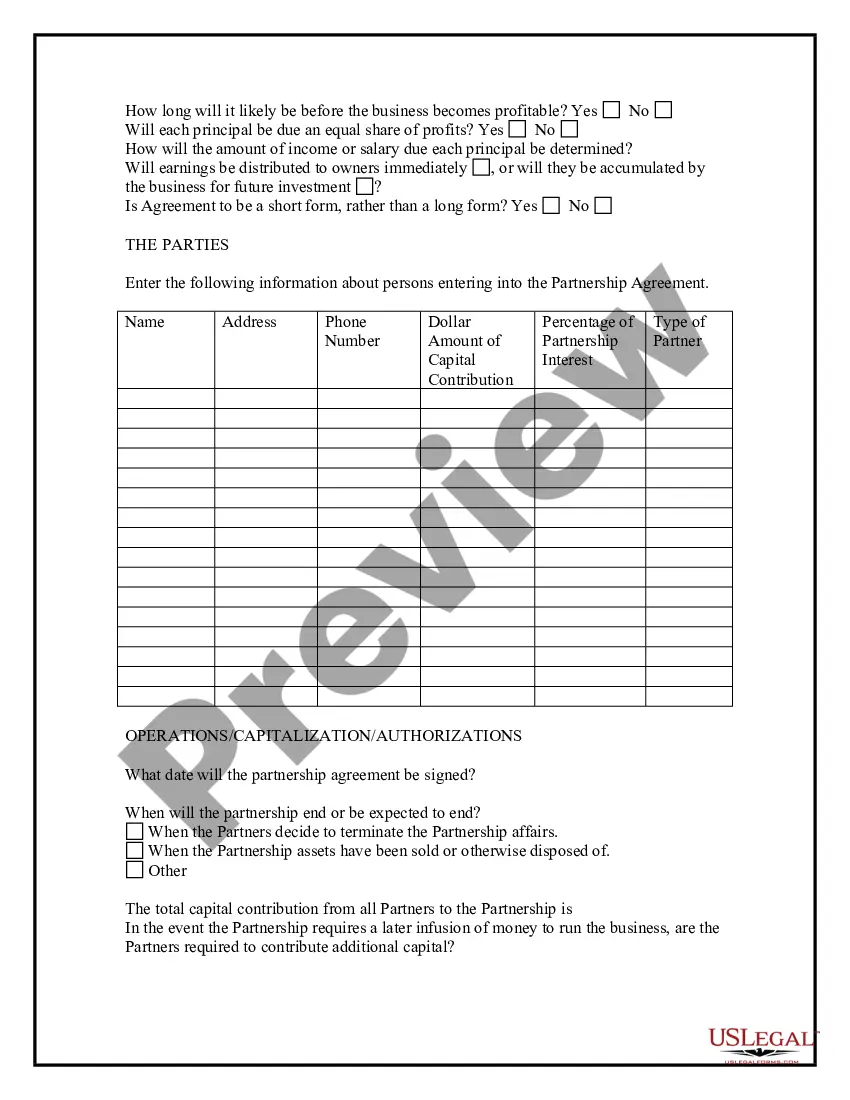
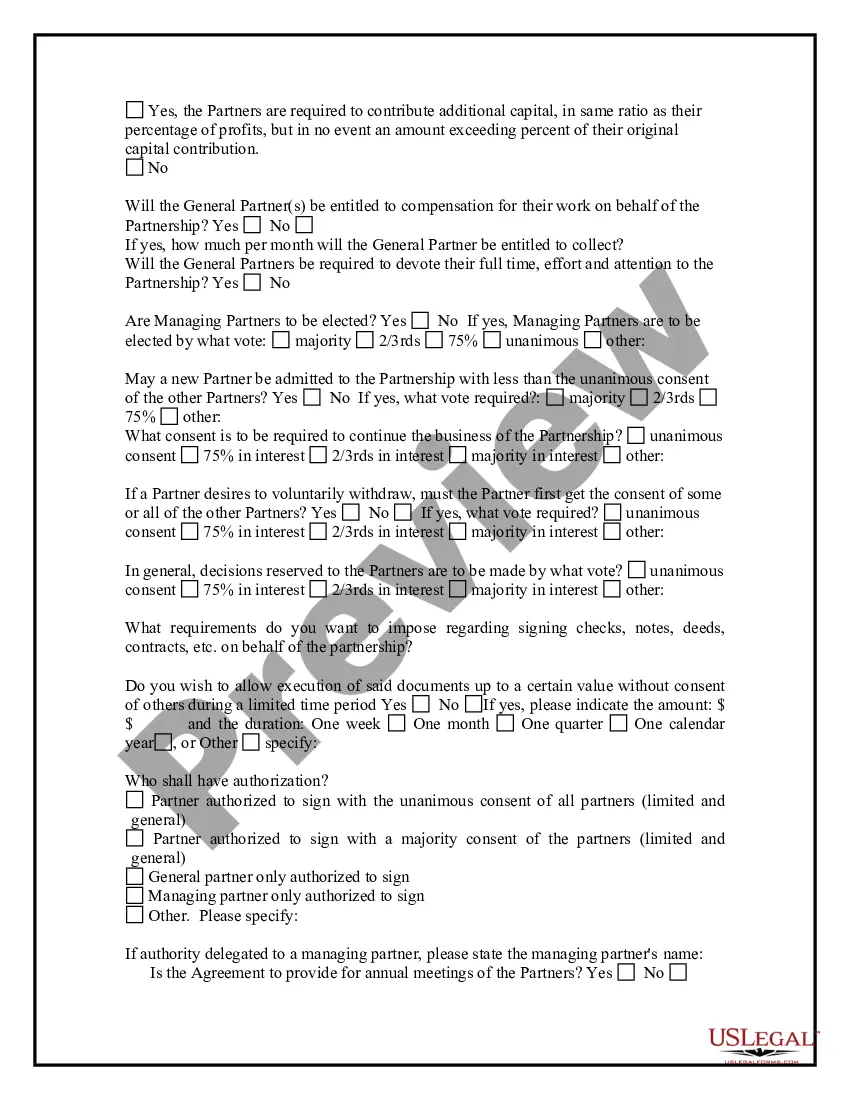
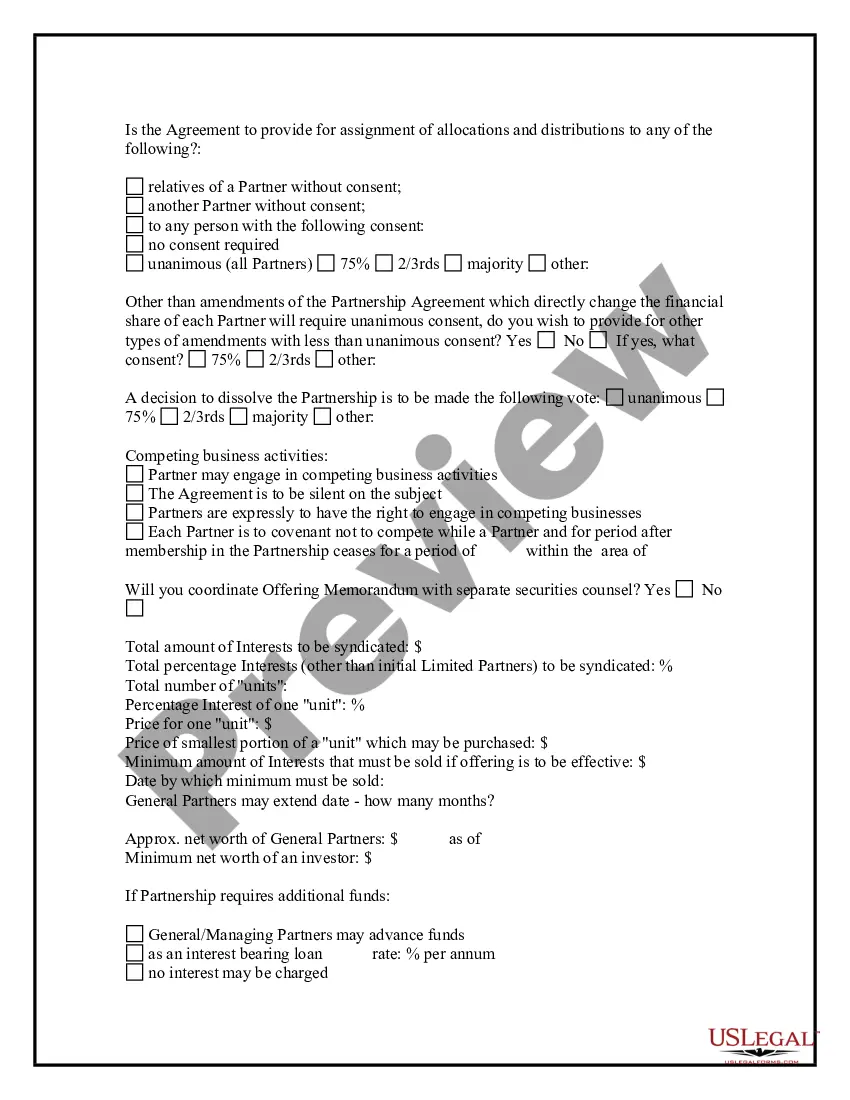
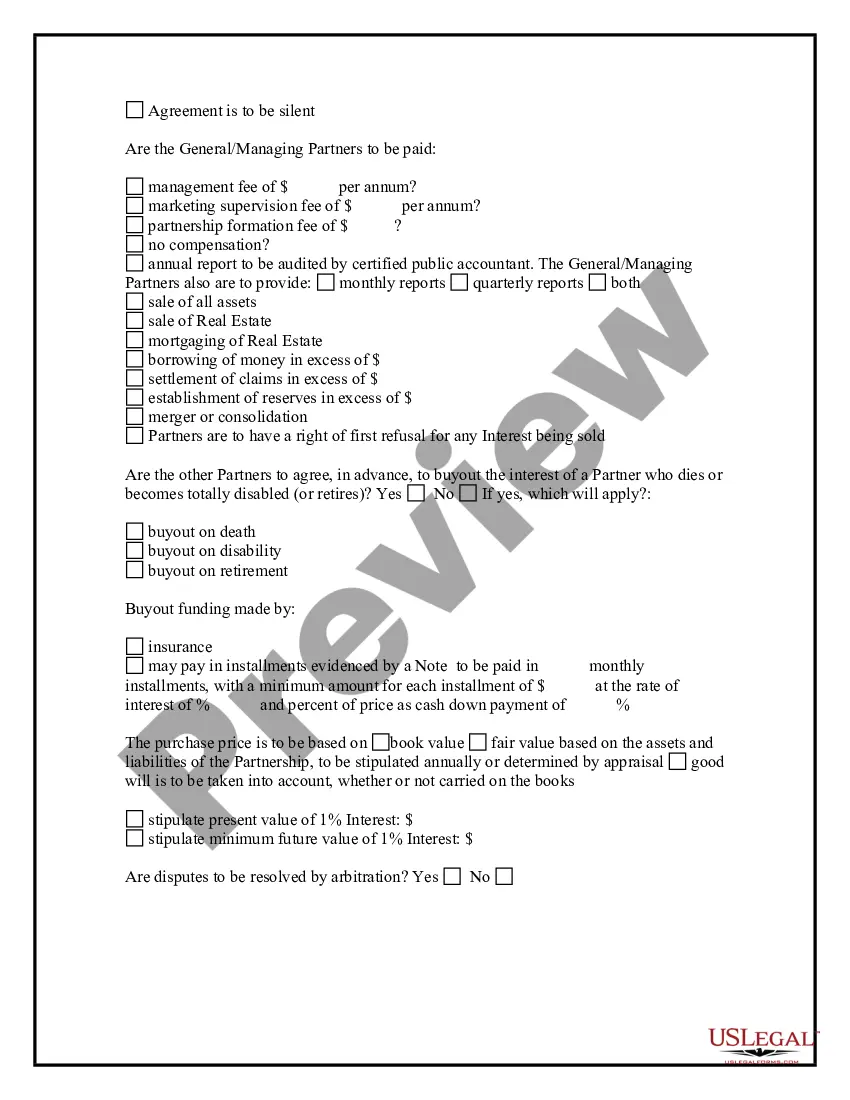
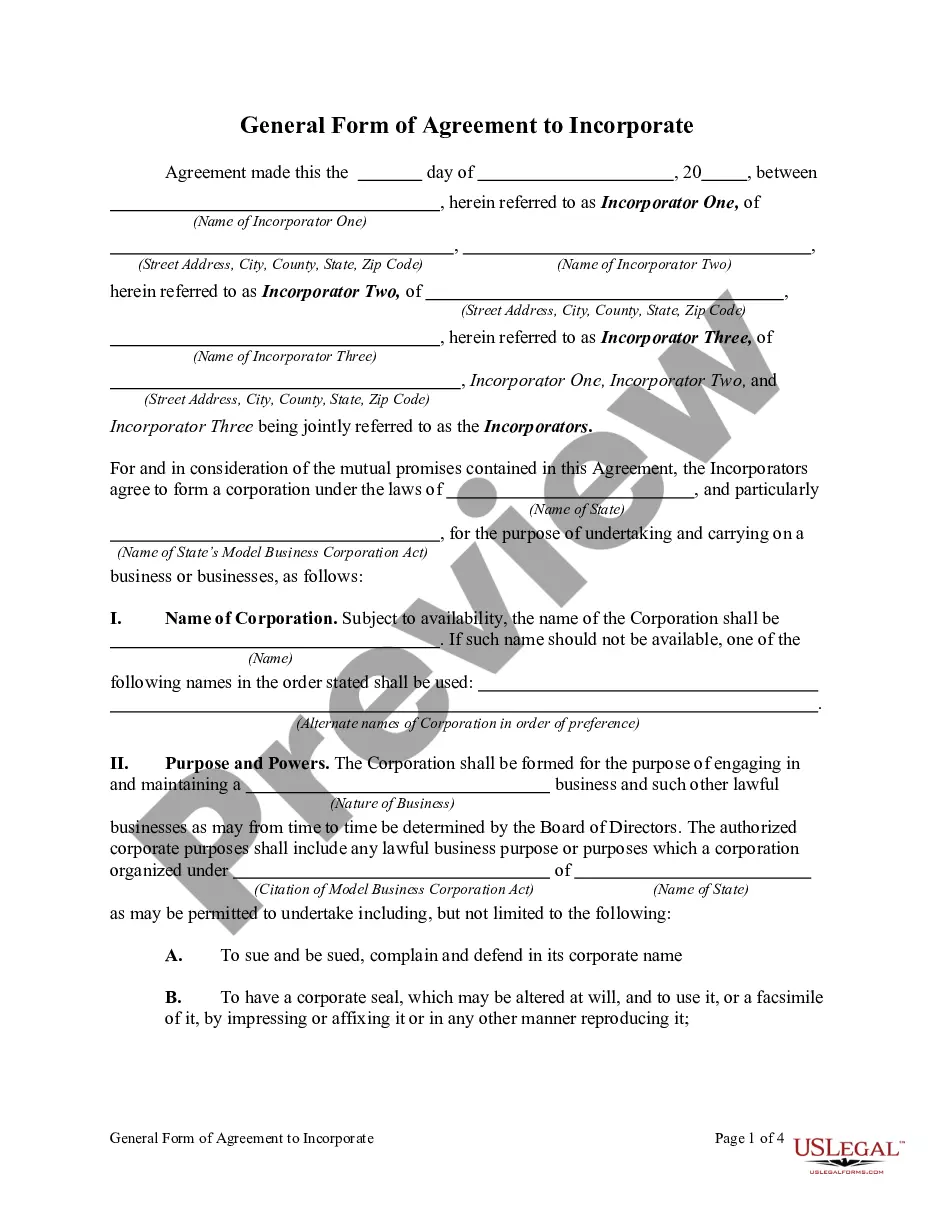
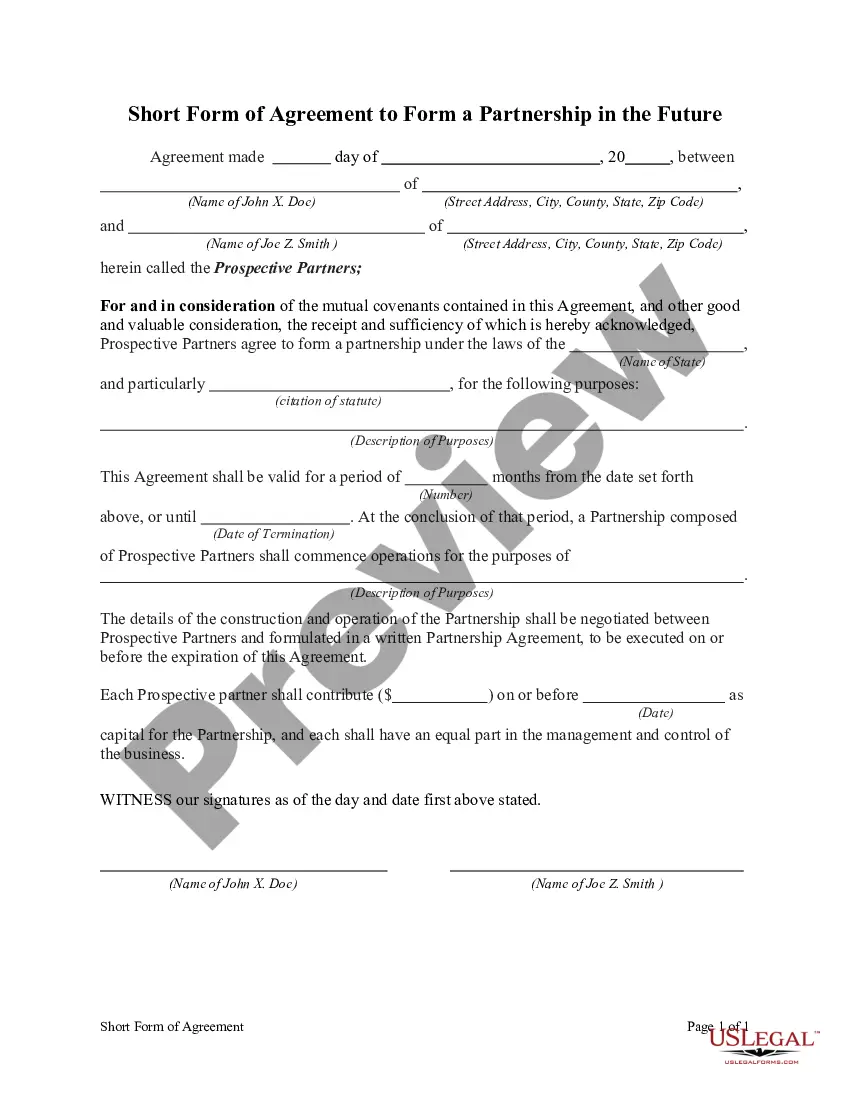
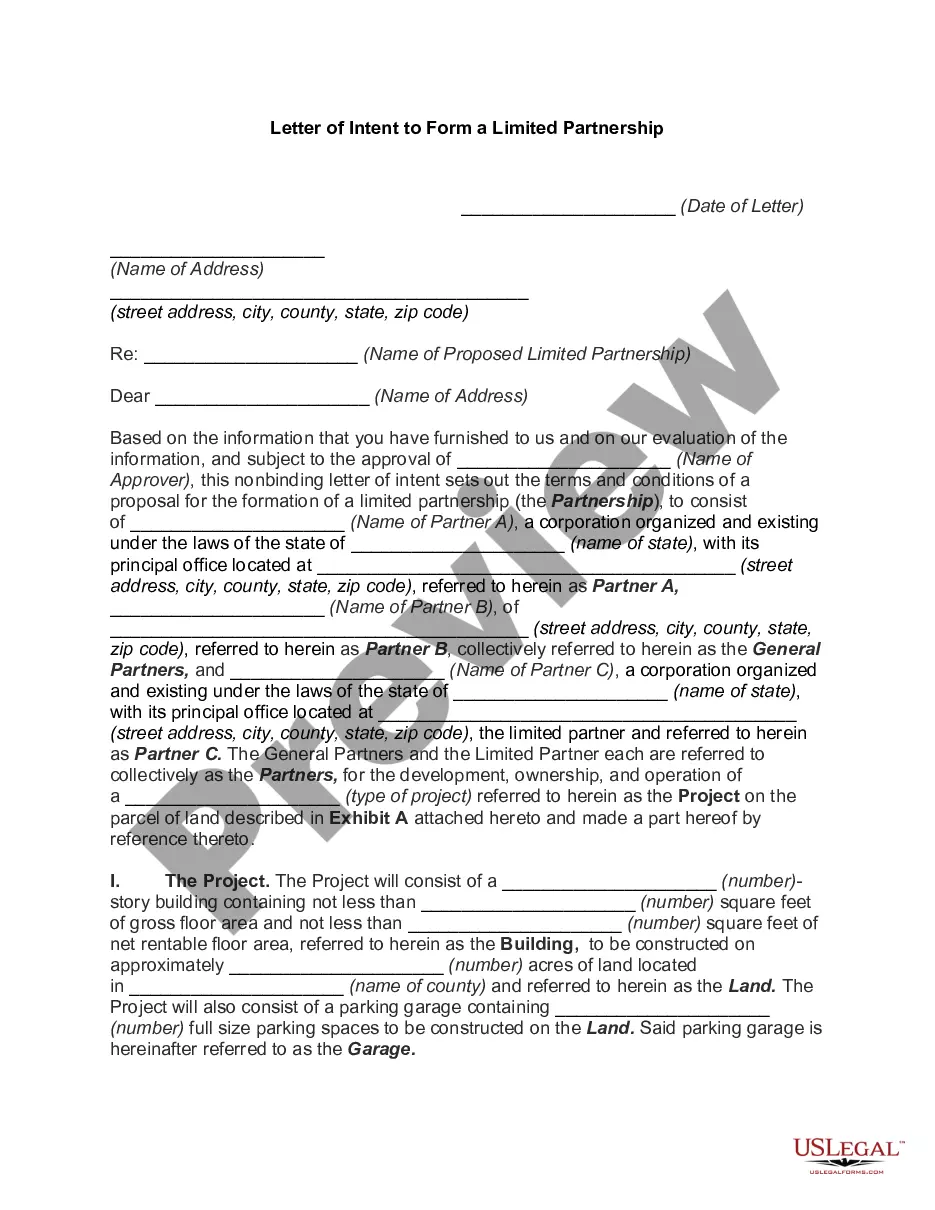
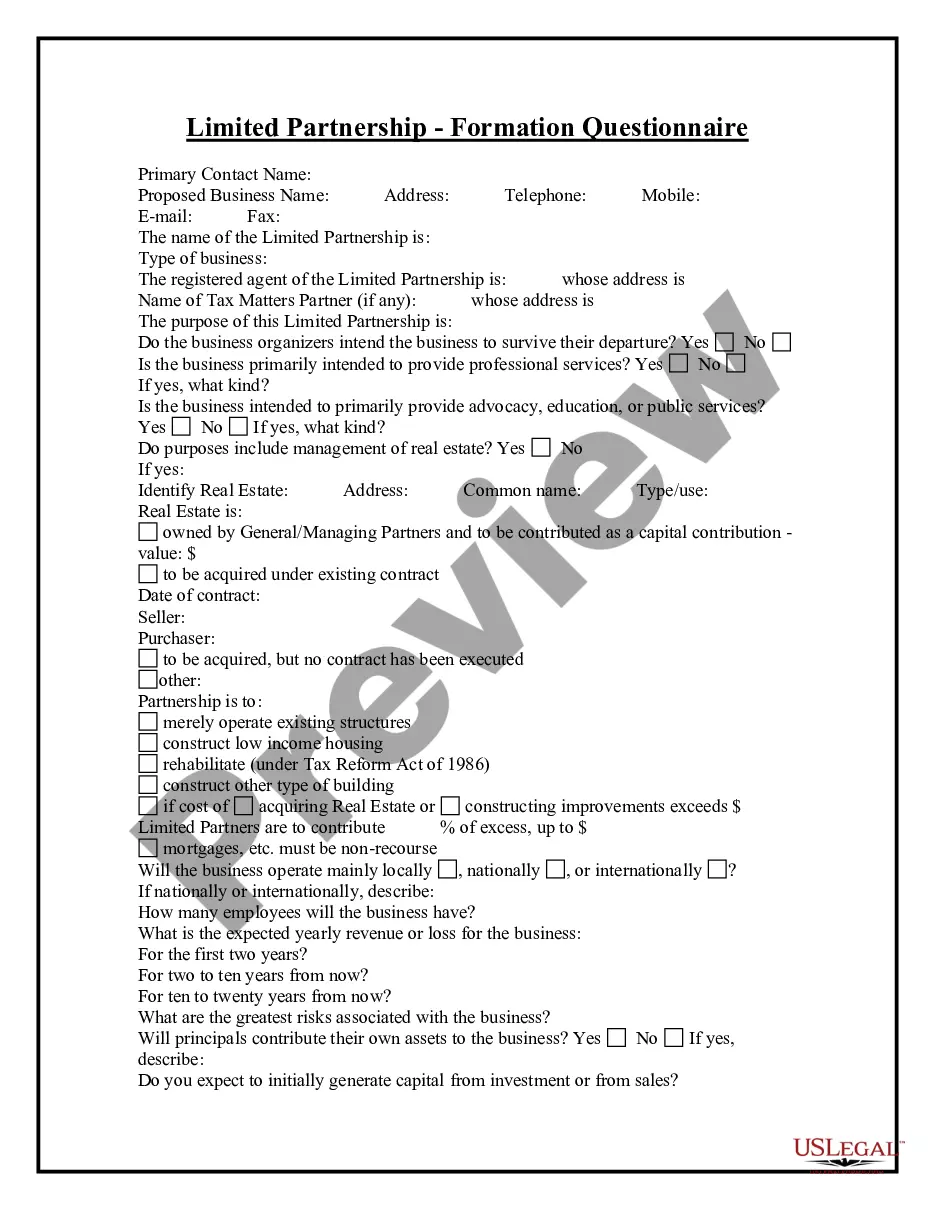
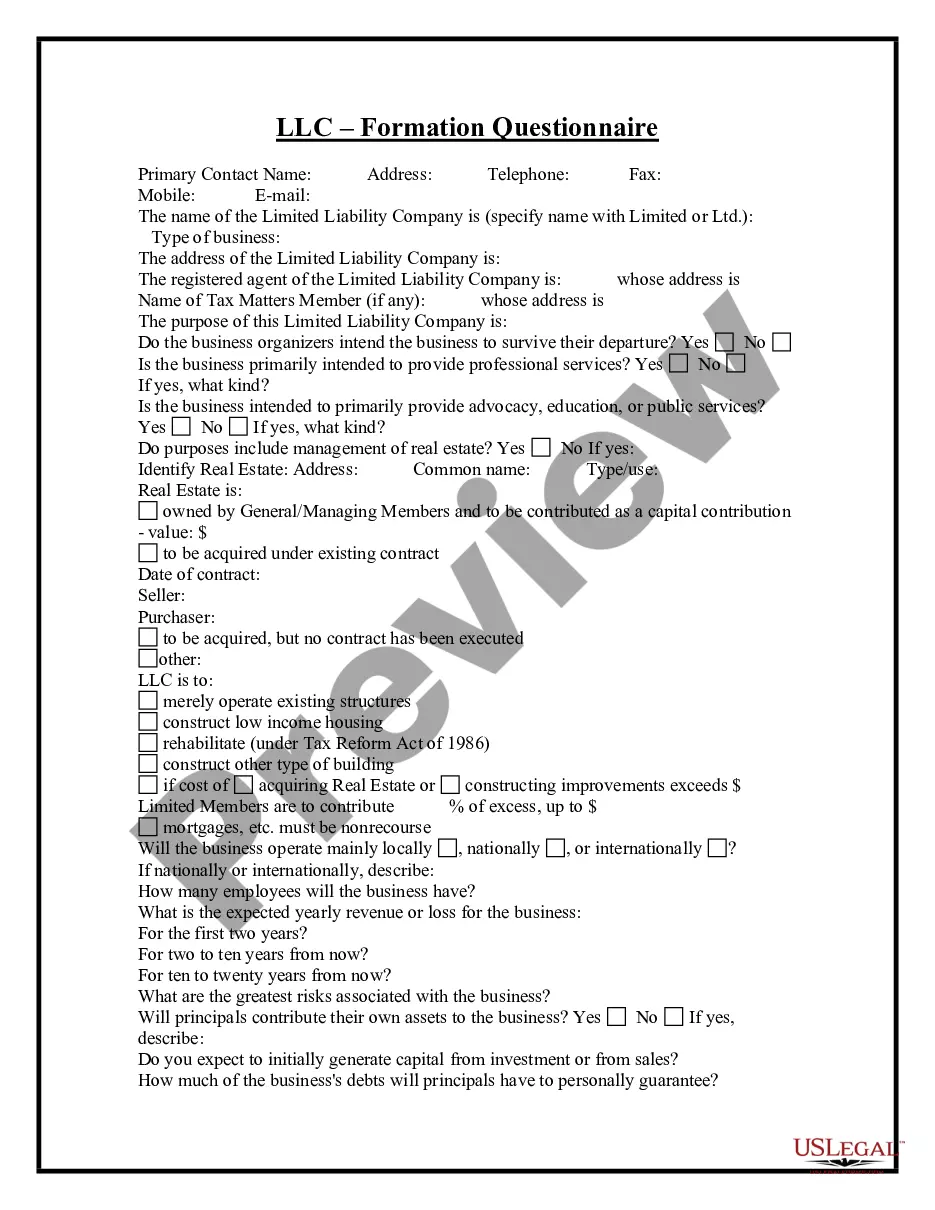
This form addresses important considerations that may effect the legal rights and obligations of the parties in a partnership formation. This questionnaire enables those seeking legal help to effectively identify and prepare their issues and problems. Thorough advance preparation enhances the attorney’s case evaluation and can significantly reduce costs associated with case preparation.
This questionnaire may also be used by an attorney as an important information gathering and issue identification tool when forming an attorney-client relationship with a new client. This form helps ensure thorough case preparation and effective evaluation of a new client’s needs. It may be used by an attorney or new client to save on attorney fees related to initial interviews.
Certainly! As your business evolves, you can amend the partnership agreement. Just make sure all partners agree and sign off on the changes.
If a partner decides to exit, the partnership agreement should outline the steps to take. Generally, it's best to have a plan in place in case that day comes!
Yes, partnerships enjoy pass-through taxation, which means that profits and losses are reported on each partner's personal tax return, avoiding the double taxation often seen in corporations.
A partnership agreement is like a roadmap for your business. It spells out each partner's roles, how profits and losses are shared, and what happens if someone wants to leave the partnership.
Absolutely! A partnership can have as many partners as you like, just make sure everyone is on the same page with the partnership agreement.
Yes, if you're forming a general partnership, you typically don't have to register, but it's smart to register your business name if you plan on operating under something other than your own names.
To start a partnership in Austin, you'll want to gather the basics: a partnership agreement outlining how you'll work together, your business name, and any licenses required for your type of business.