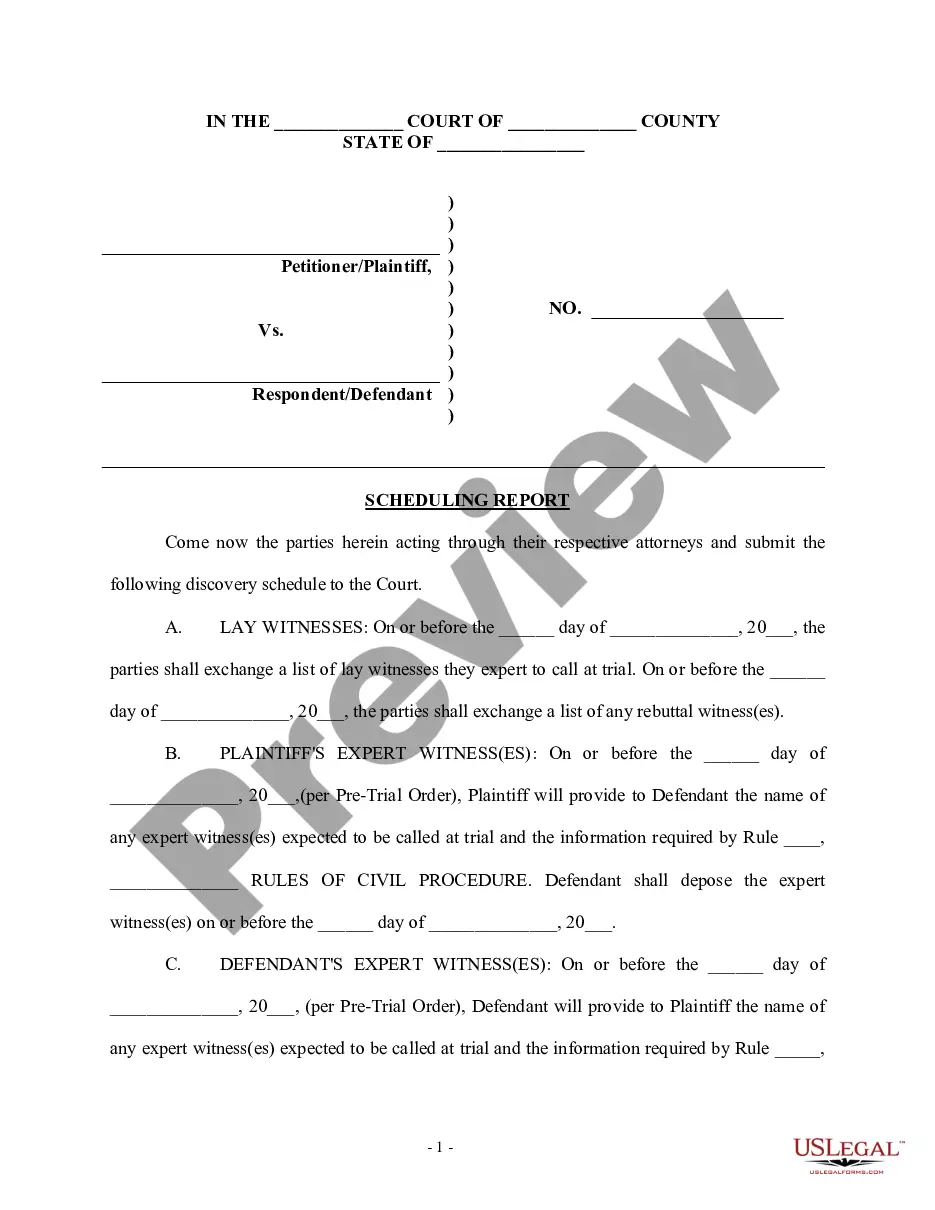
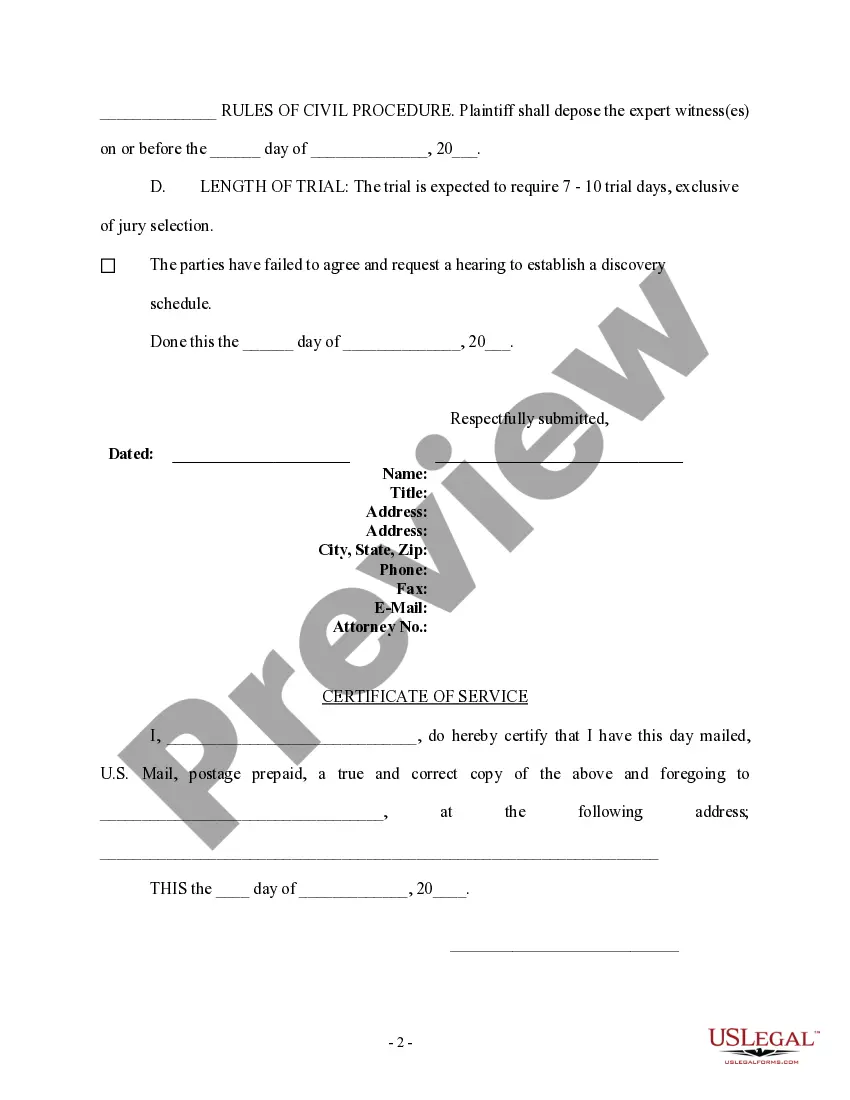
The report usually covers important dates like deadlines for motions, trial dates, and any other key milestones in the case, keeping everything organized.
All parties involved in the case need to be in the loop, so make sure you notify everyone as the scheduling report may impact their timelines too.
Yes, you can ask the court to adjust the dates if something comes up, but you'll need a good reason and the court's blessing to make any changes.
If you miss the deadline, it can throw a wrench in the works! The court may impose delays or even dismiss your case, so it's best to stay on top of it.
It's crucial to submit your scheduling report as soon as the court tells you to. Usually, there's a deadline mentioned when you first file your case.
To get a Civil Trial Scheduling Report, you can typically request it from the court's clerk office or check their website for details on obtaining one.
A Civil Trial Scheduling Report is a document that lays out the timeline for a court case, helping everyone know when things are due and what to expect in the courtroom.