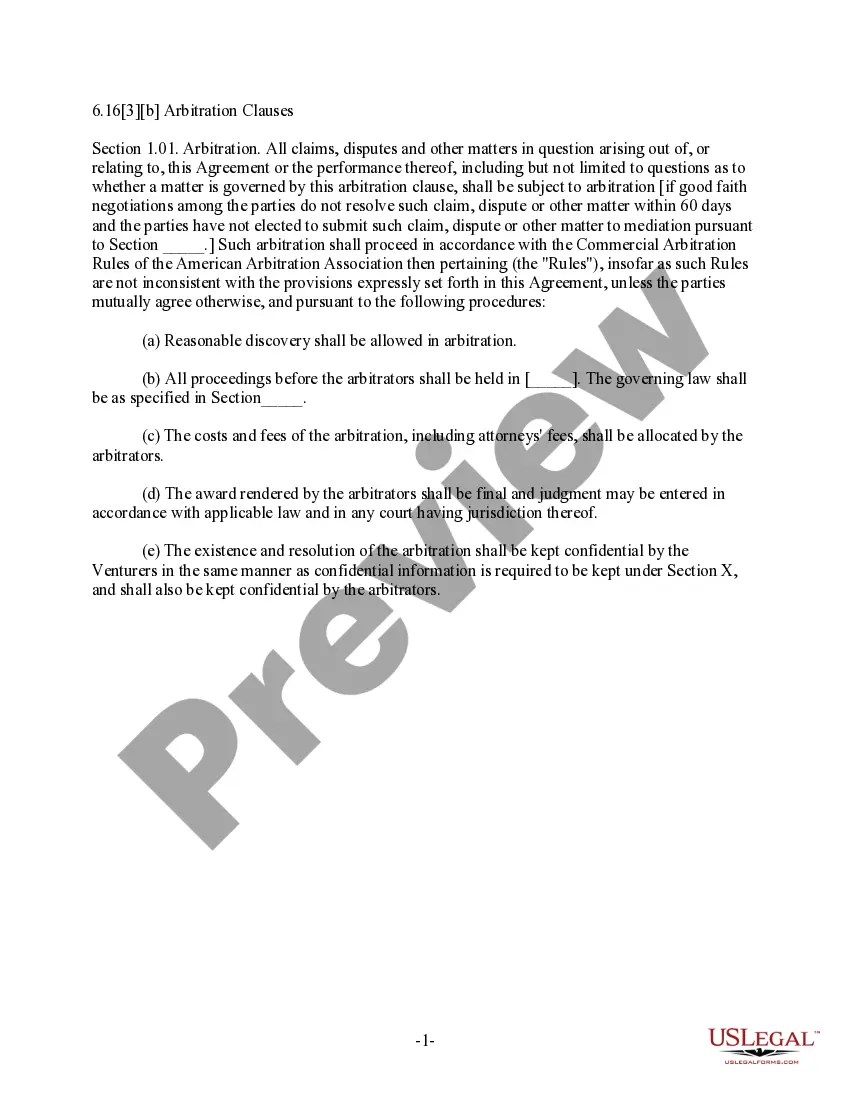
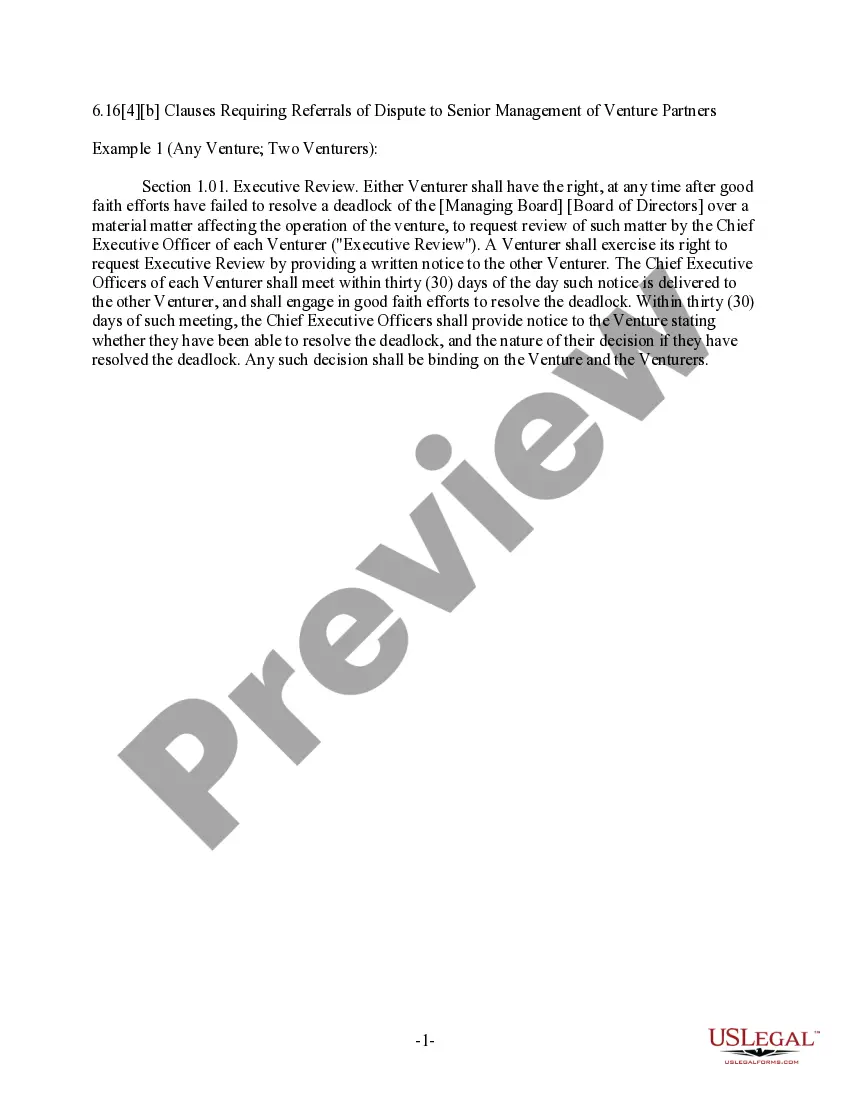
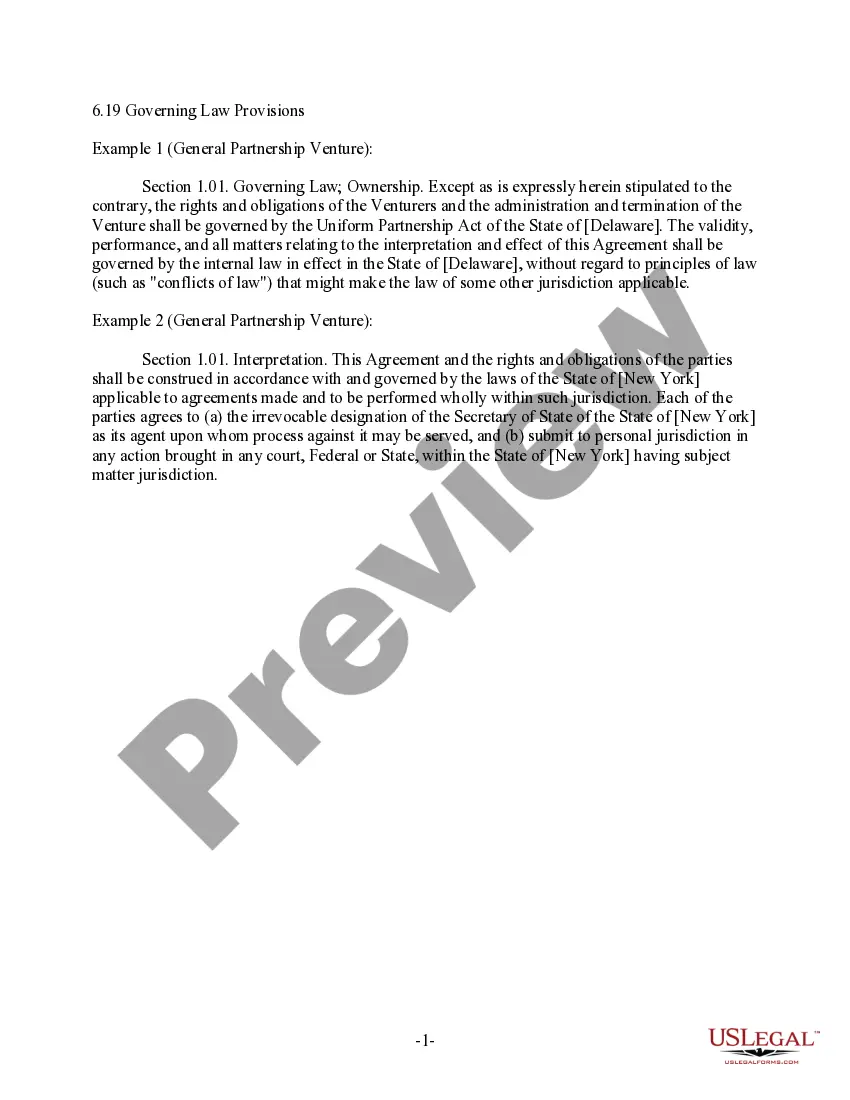
This form is a model adaptable for use in partnership matters. Adapt the form to your specific needs and fill in the information. Don't reinvent the wheel, save time and money.
Yes, mediation typically follows some ground rules to keep things fair and respectful, but it's more flexible than court proceedings.
Absolutely! You can draft your own mediation clause, but it’s wise to get advice from a legal professional to make sure it covers all the bases.
If mediation doesn’t solve the problem, you can still take the next step and go to court or explore other options.
Generally, mediation is not binding unless all parties agree to the terms reached during the session, which they can then sign off on.
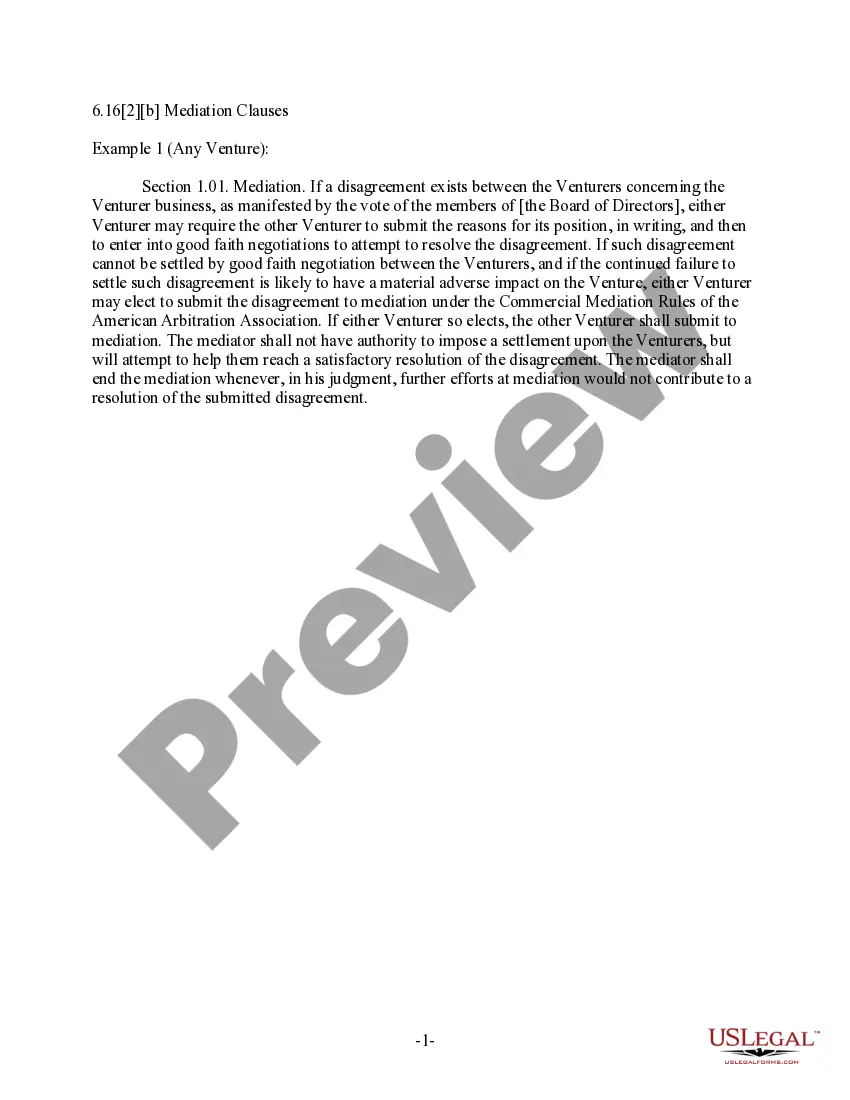
In mediation, a neutral third party, called a mediator, helps the parties communicate and negotiate to resolve their issues amicably.
A mediation clause is a part of a contract that says if there’s a disagreement, the parties will try to work it out through mediation before heading to court.