In most cases, a correction deed shouldn’t affect your property taxes directly, but it’s wise to check with your local assessor just to be on the safe side.
Processing times can vary, but generally, once submitted, it shouldn’t take long before the corrections are officially recognized. Patience is the name of the game!
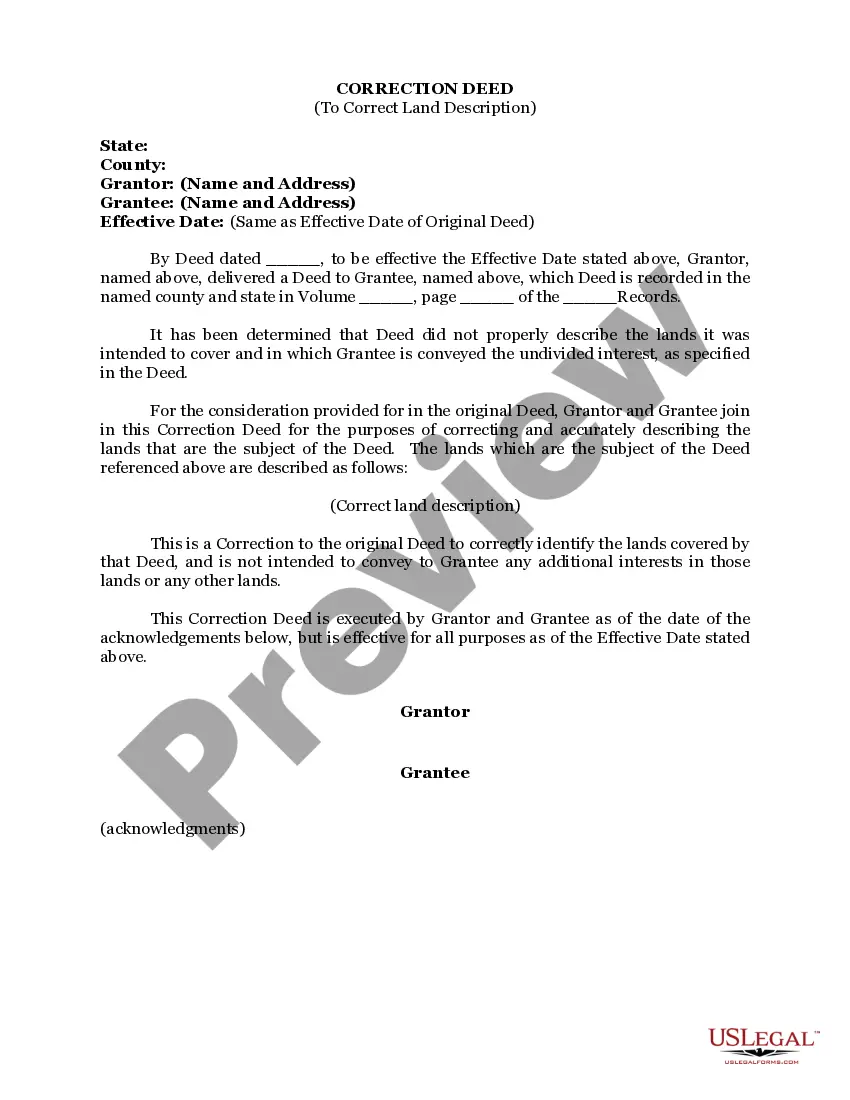
You'll need the original deed, details of the error, and the new correct information. Having all this ready is half the battle won!
Yes, you can file a correction deed on your own, but it’s often smoother sailing with a professional guiding you through the process.
If you spot any discrepancies in your property documents, that’s your cue. It's best to consult with a lawyer or title expert to avoid any pesky surprises down the line.
You might need a correction deed if there’s a mistake in the land description, like an incorrect parcel number or boundary lines. You want to get it right, after all!
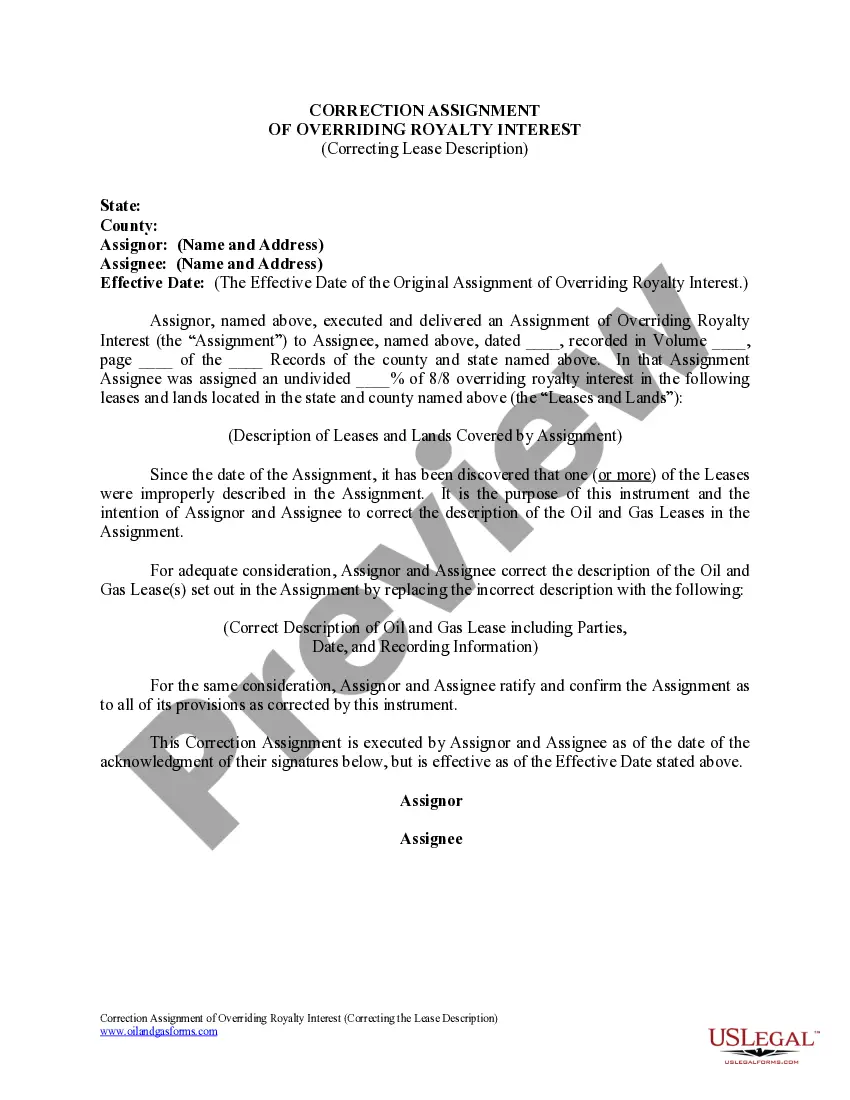
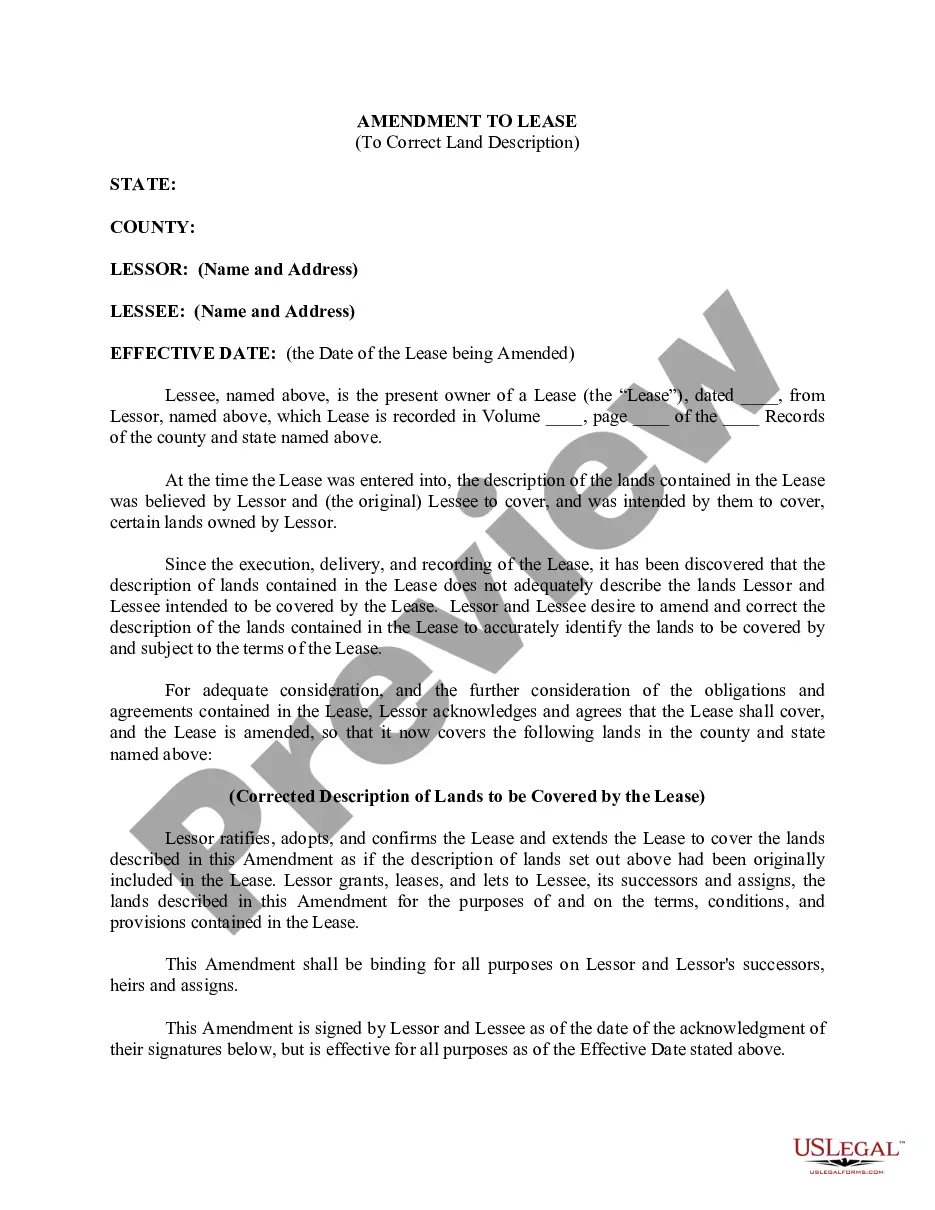
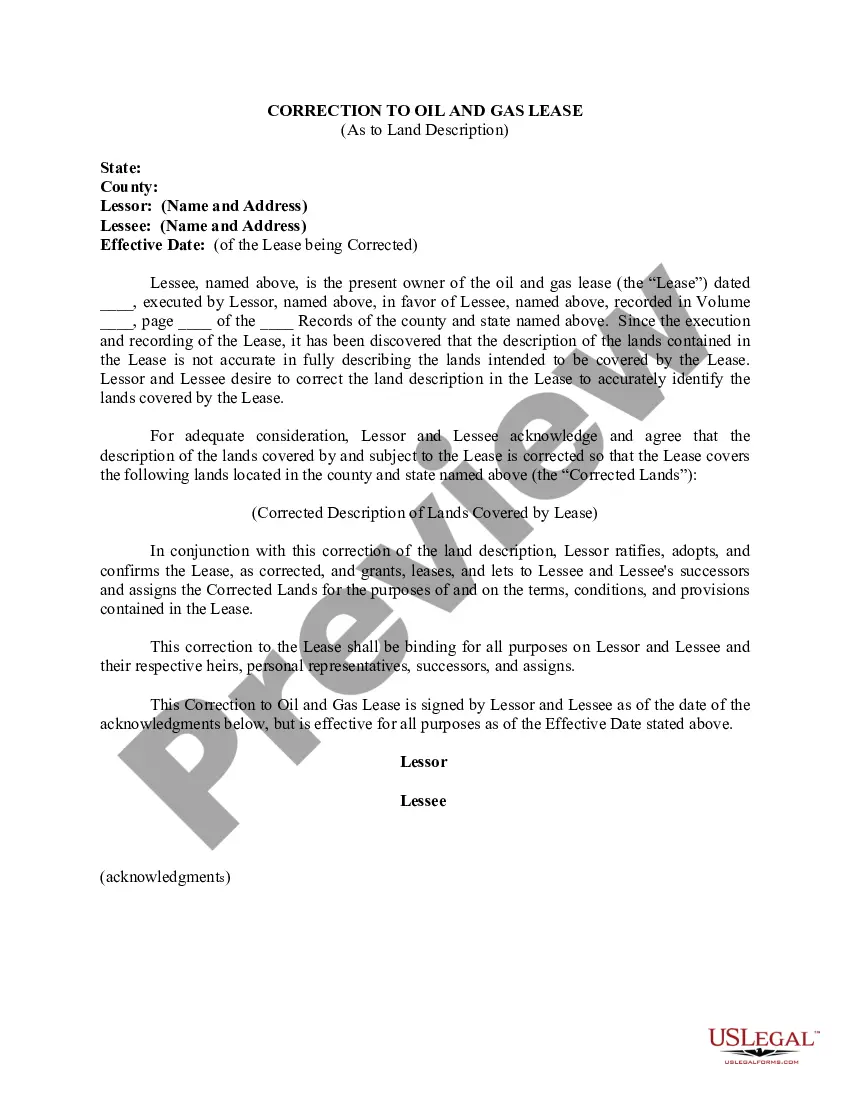
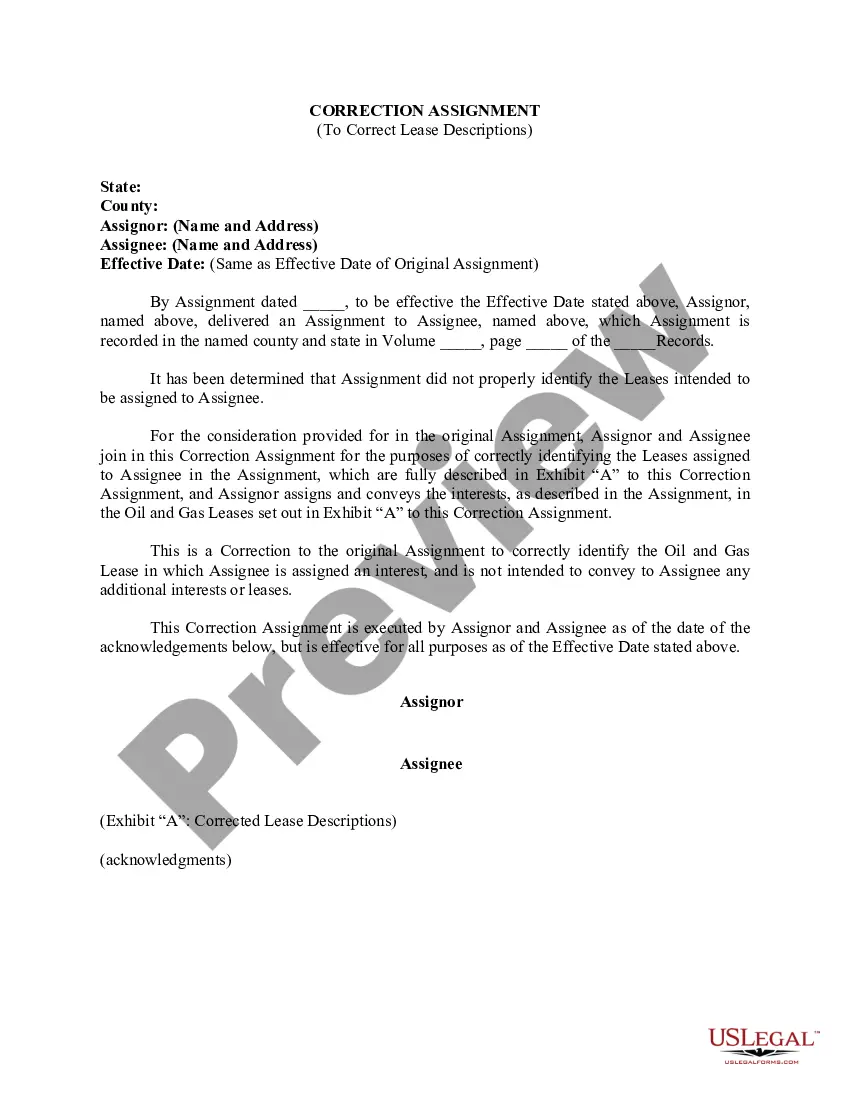
A correction deed is a legal fix that amends errors in the original land description, making sure everything is clear as day.