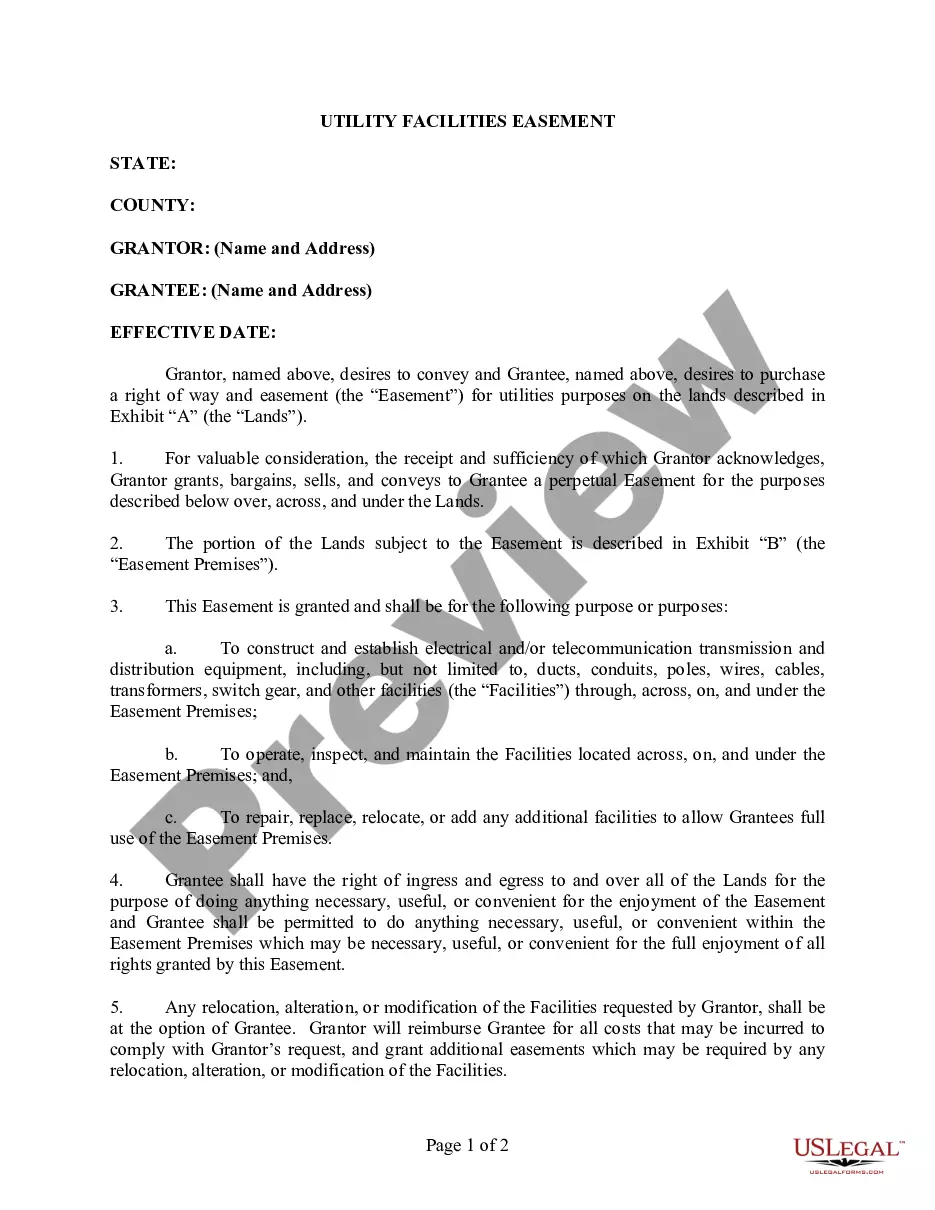
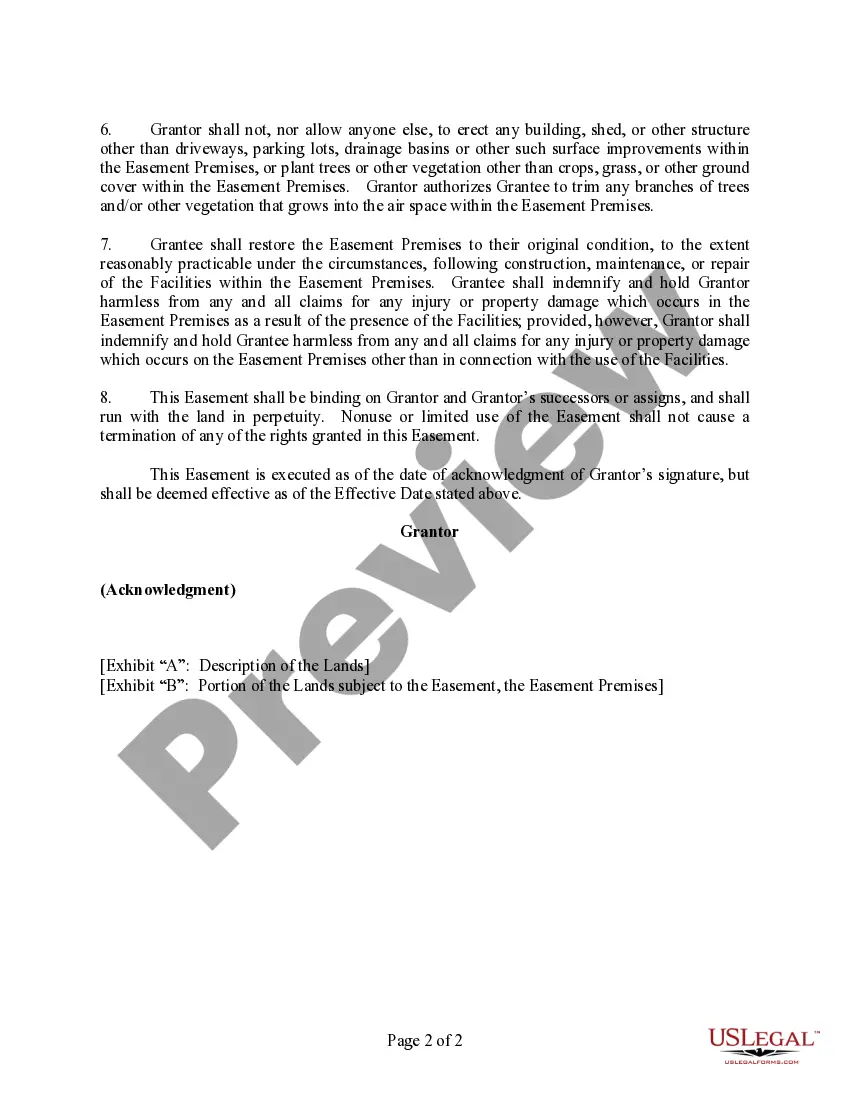
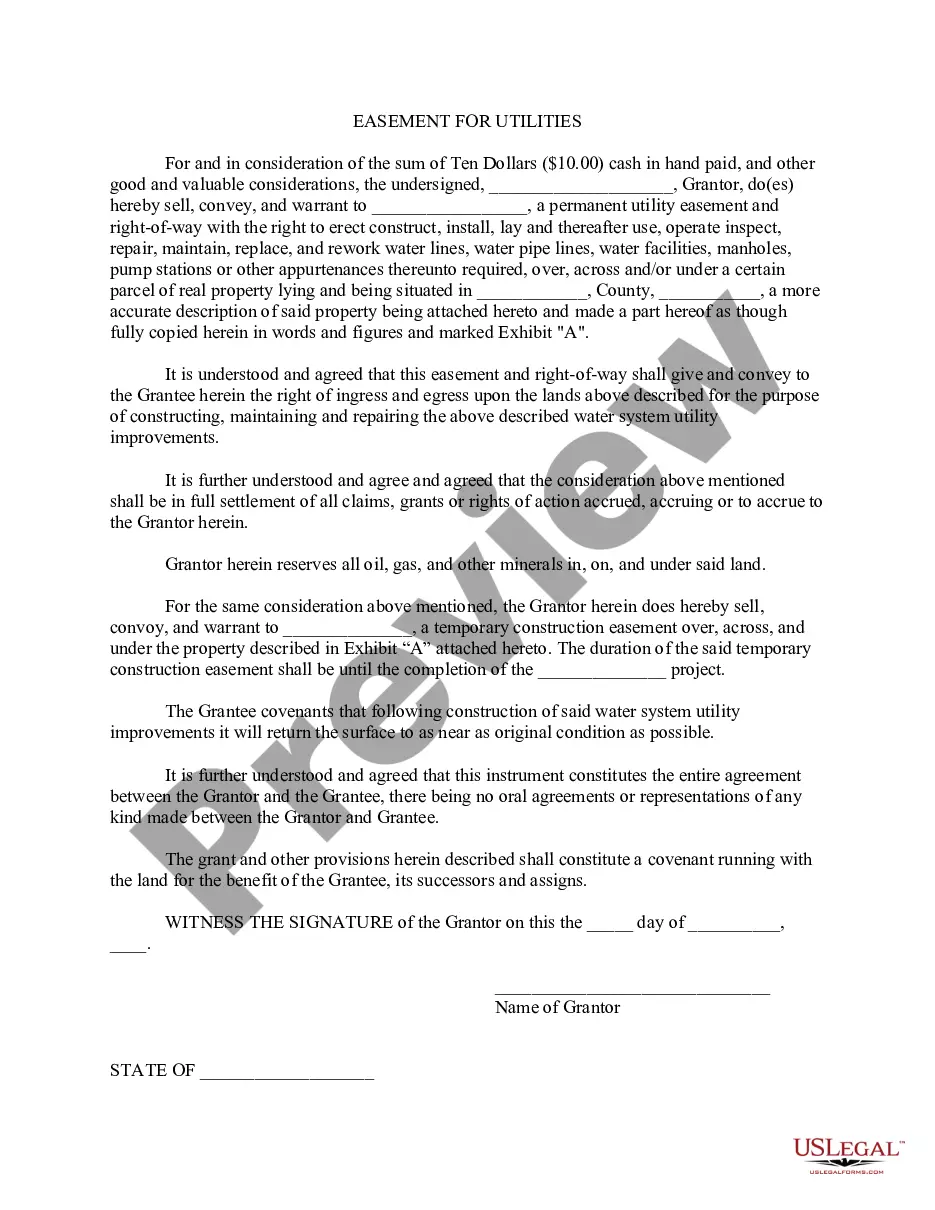
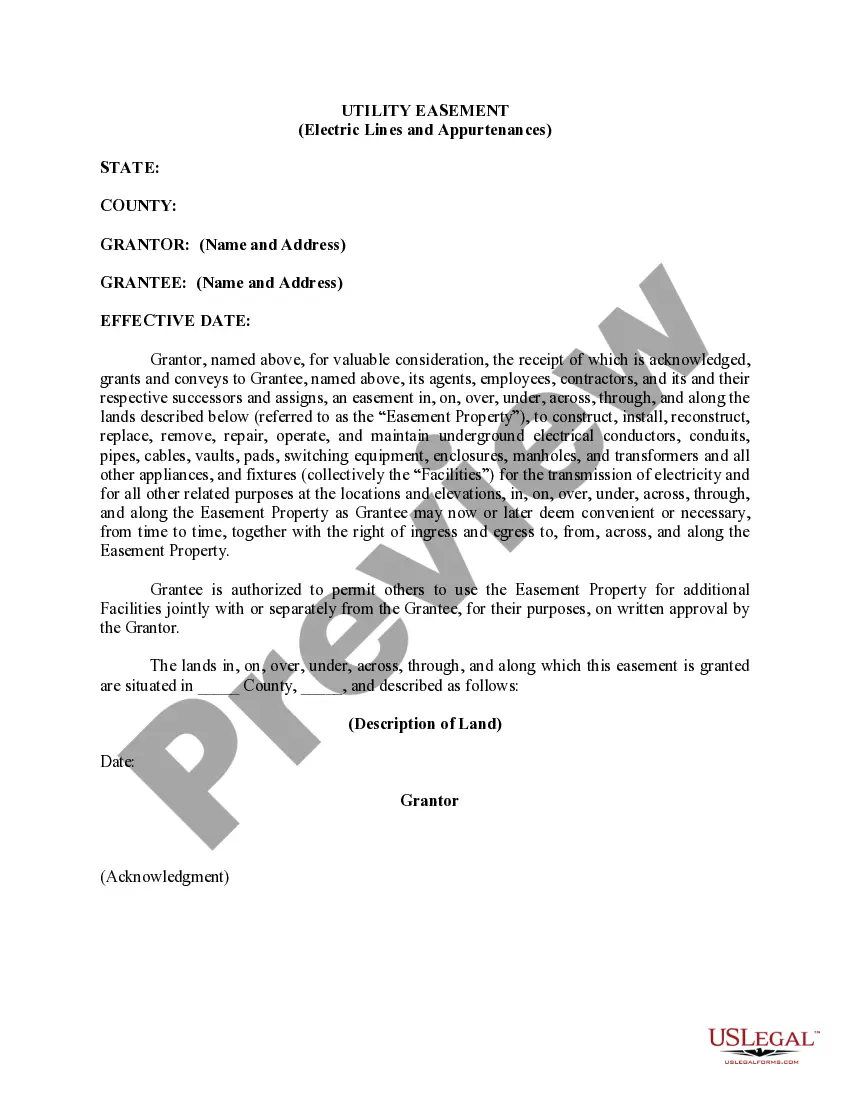
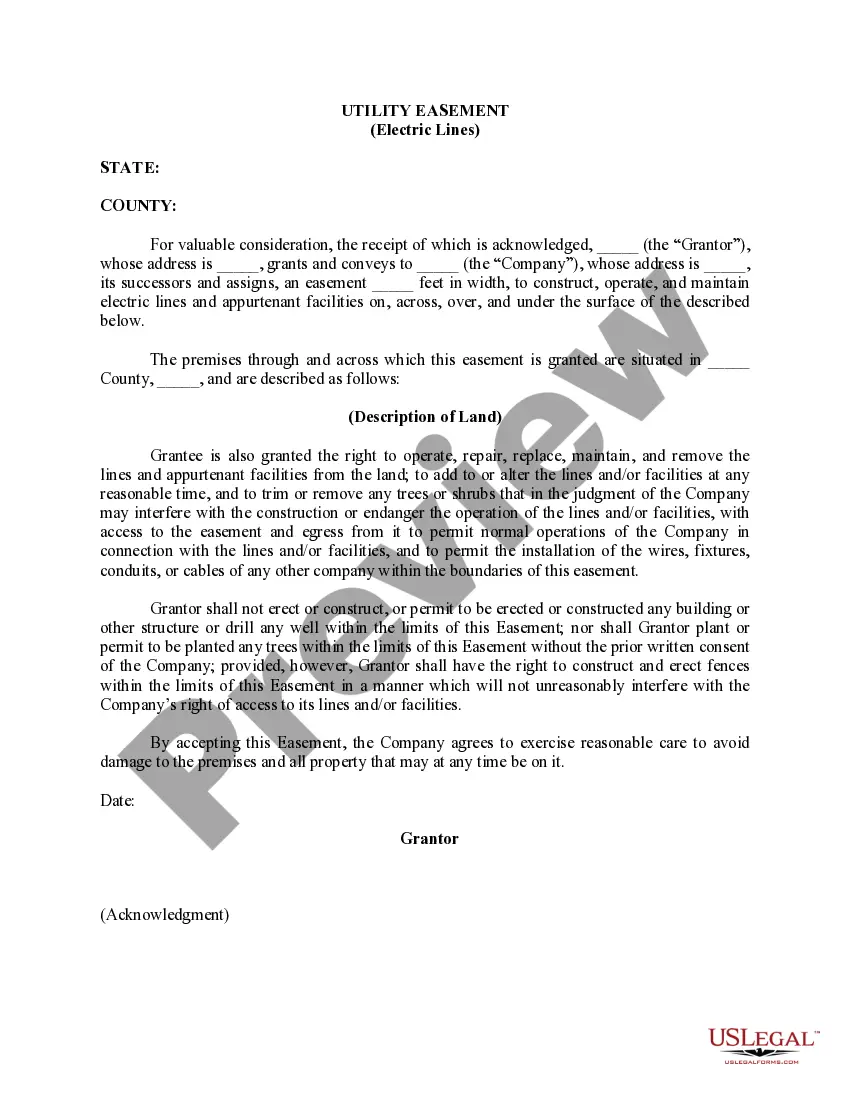
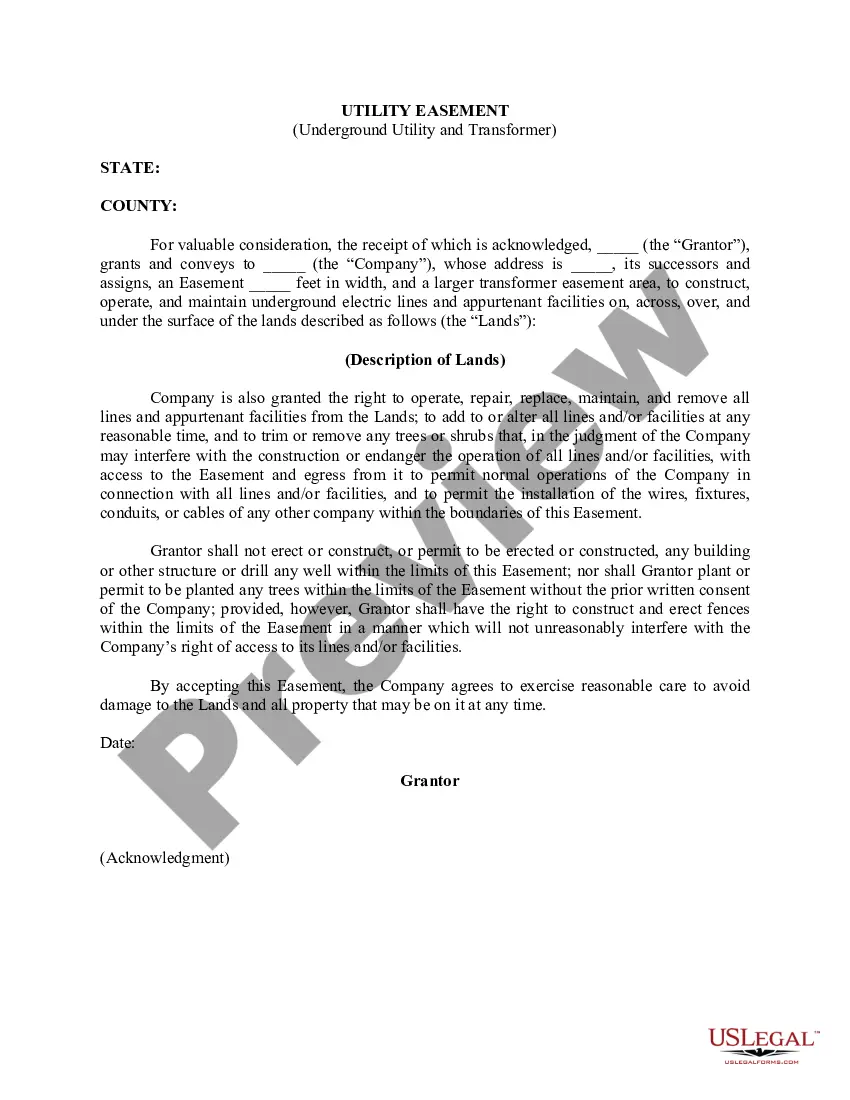
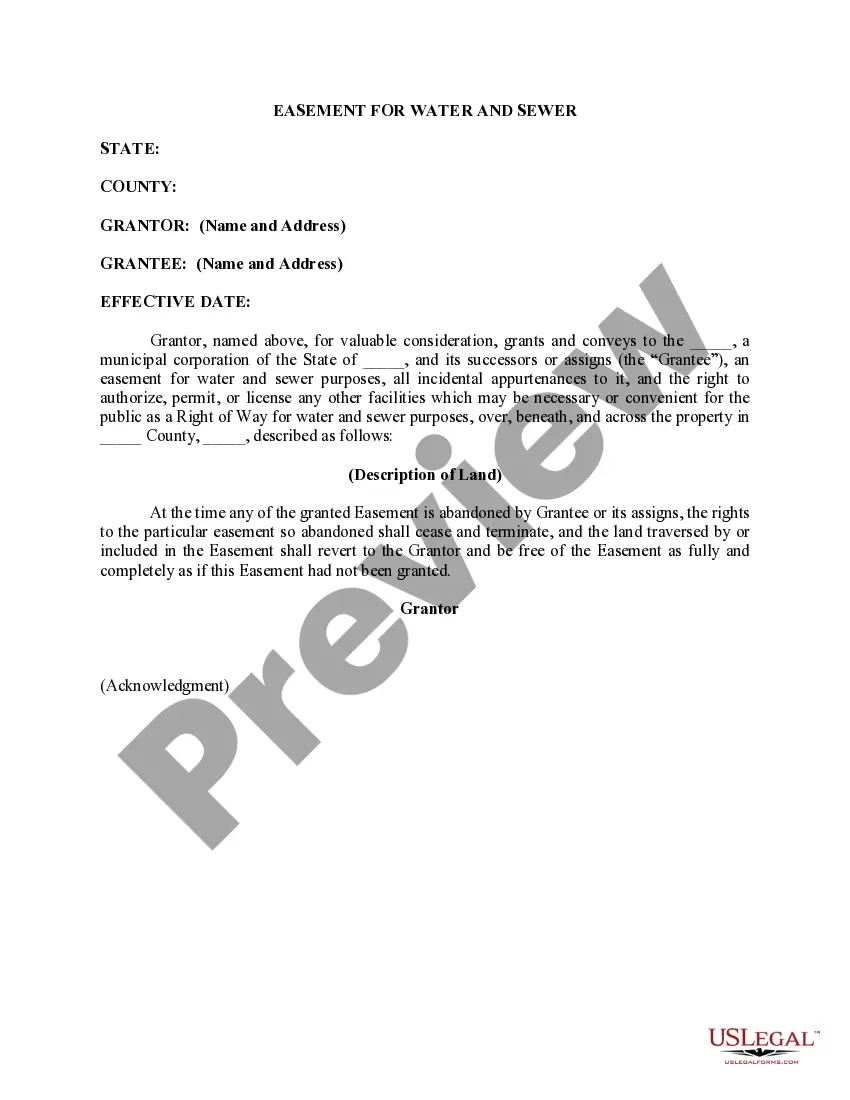
This form is used when Grantor desires to convey and Grantee desires to purchase a right of way and easement for utilities purposes on the lands described within.
If you're scratching your head about your easement, reach out to your local utility company or a real estate attorney for guidance—better safe than sorry!
Unfortunately, you can't stop them. Once an easement is in place, it's like giving the green light for utility companies to do their job, so it's best to cooperate when they need access.
If utility workers need to access an easement on your property, they usually knock on your door and let you know. Just think of it as them asking for a quick favor, and they’ll take care of things as swiftly as they can.
As a general rule, it's best to steer clear of building anything over an easement. Think of it like putting a fence on shaky ground—it's risky and could lead to more trouble down the line.
You can check your property deed or survey documents—they usually spell out any easements clearly, like looking for a needle in a haystack but worth the search!
Yes, you might want to keep an eye on that! Utility companies may need to access easements to do their work, which can sometimes mean trimming or removing plants in that area.
A utility facilities easement is like giving permission for utility companies to use a piece of your property to install and maintain their services, such as power lines and water pipes.