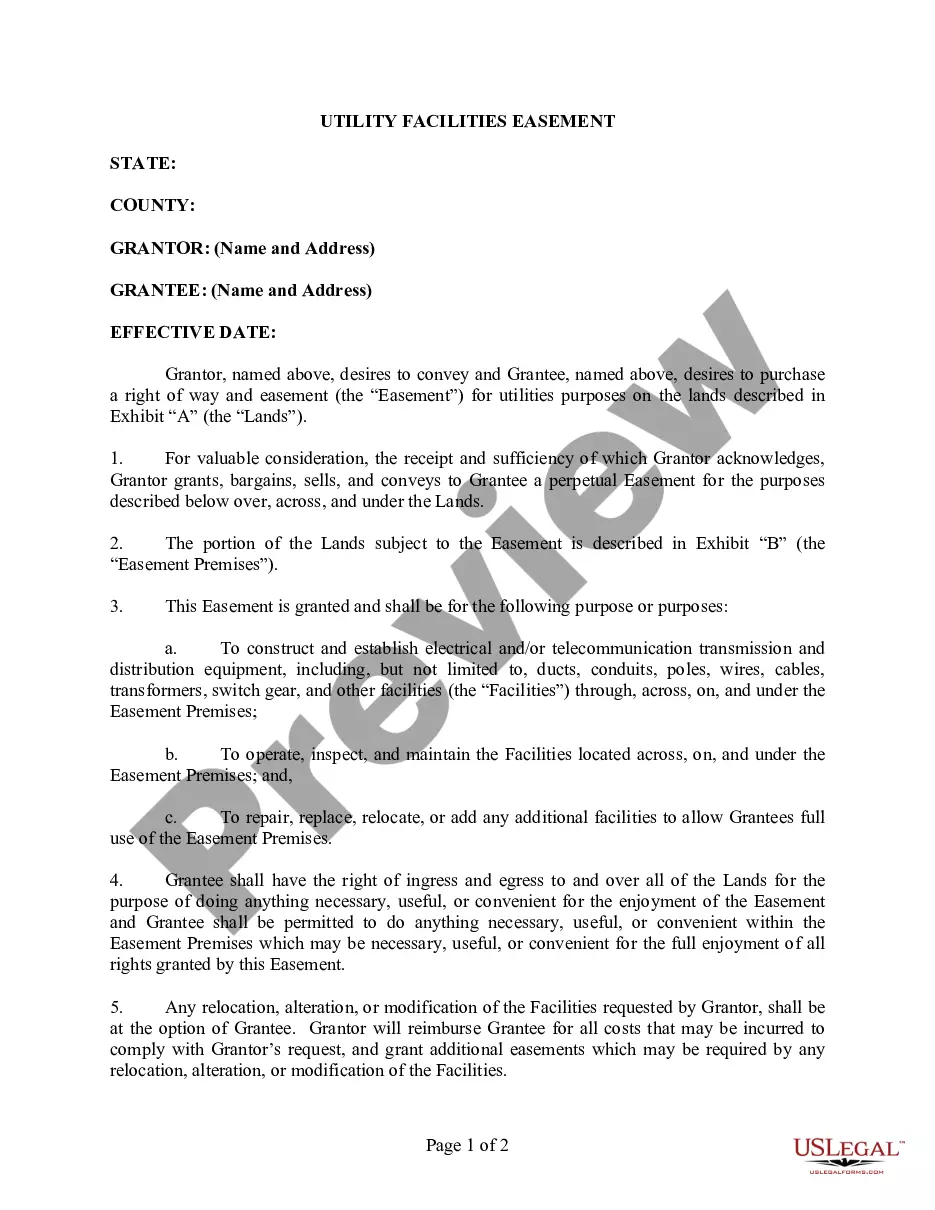
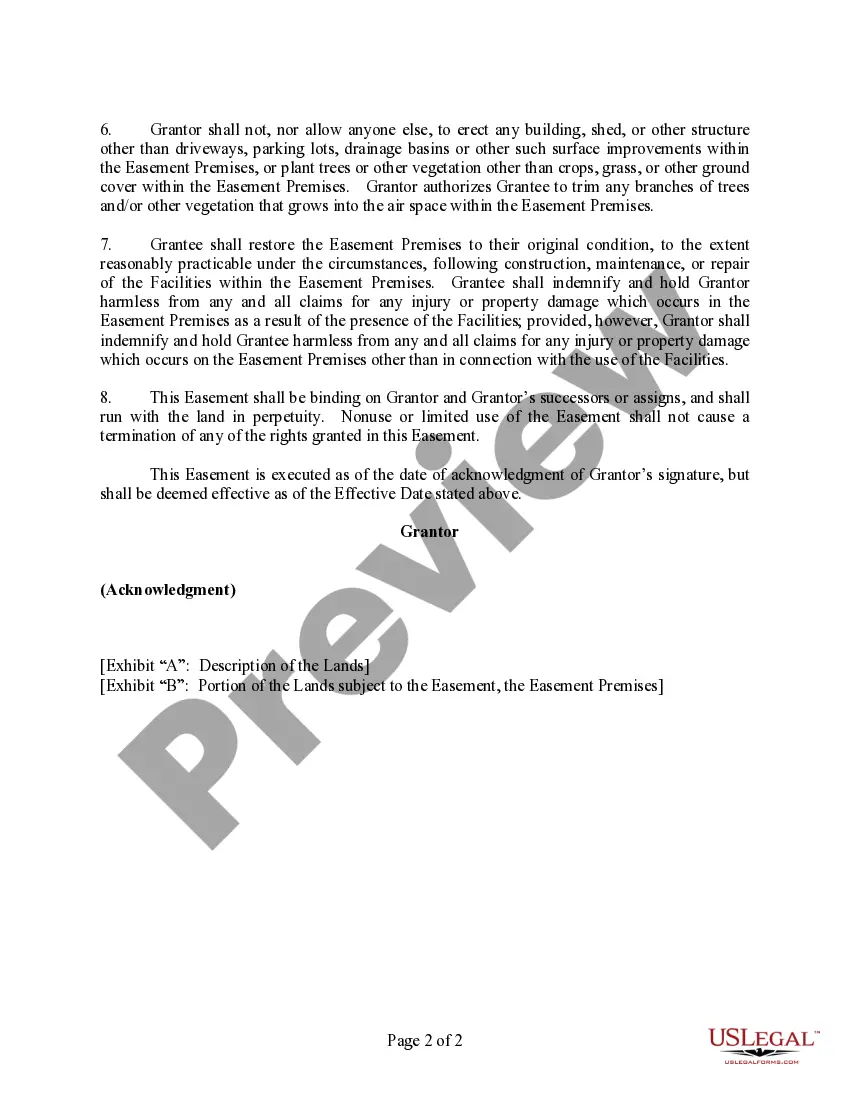
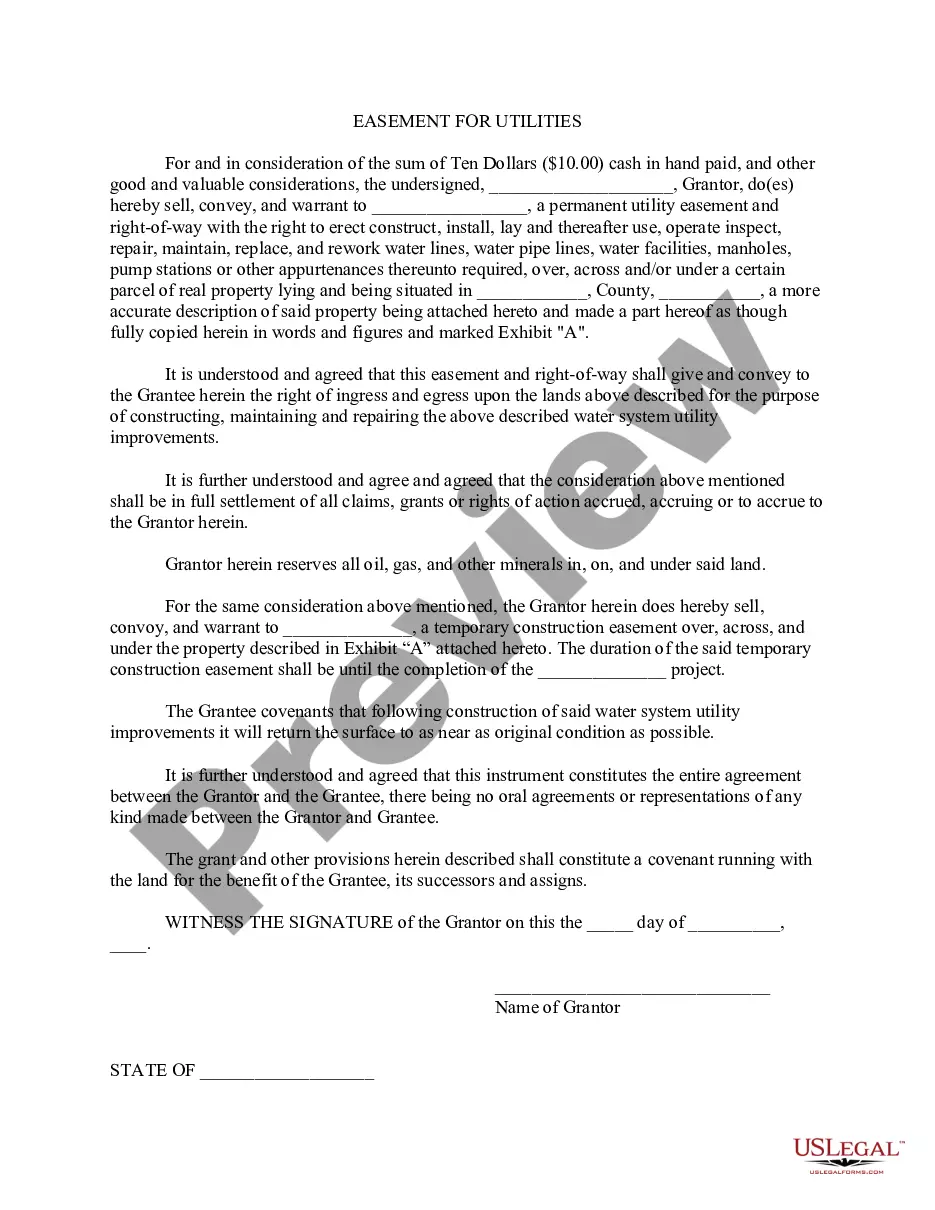
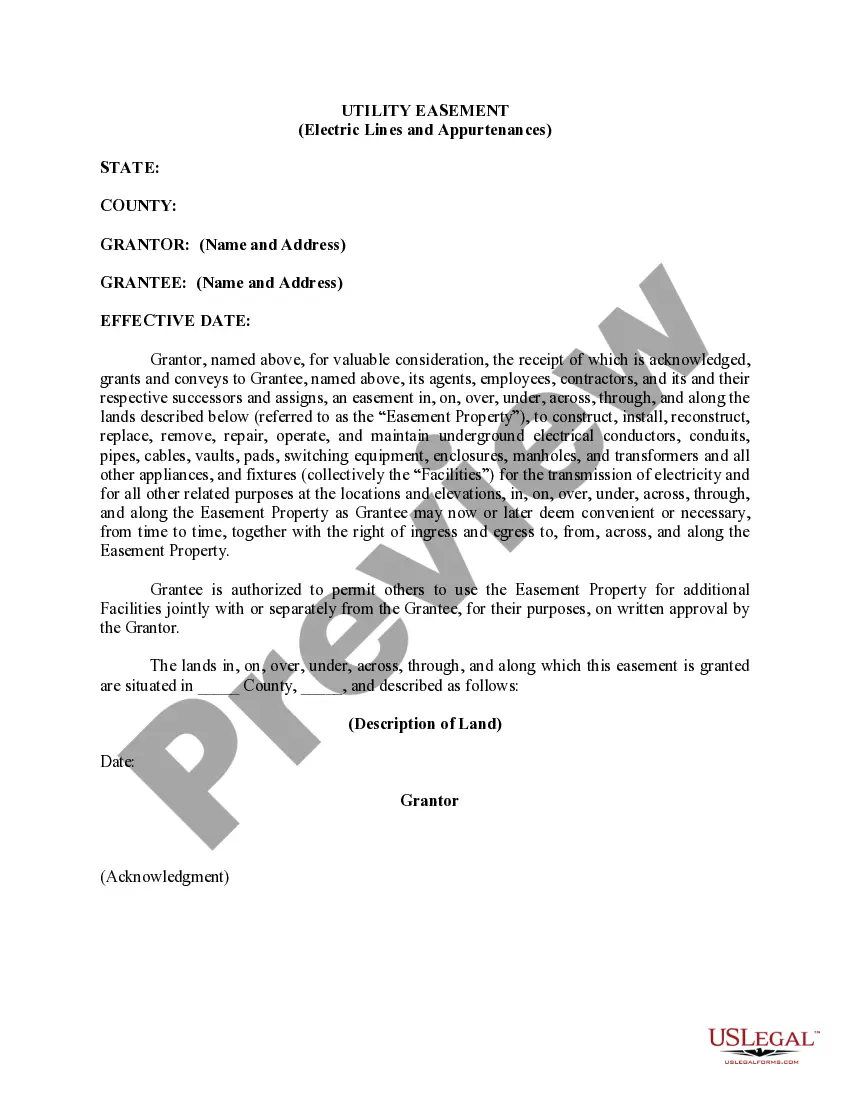
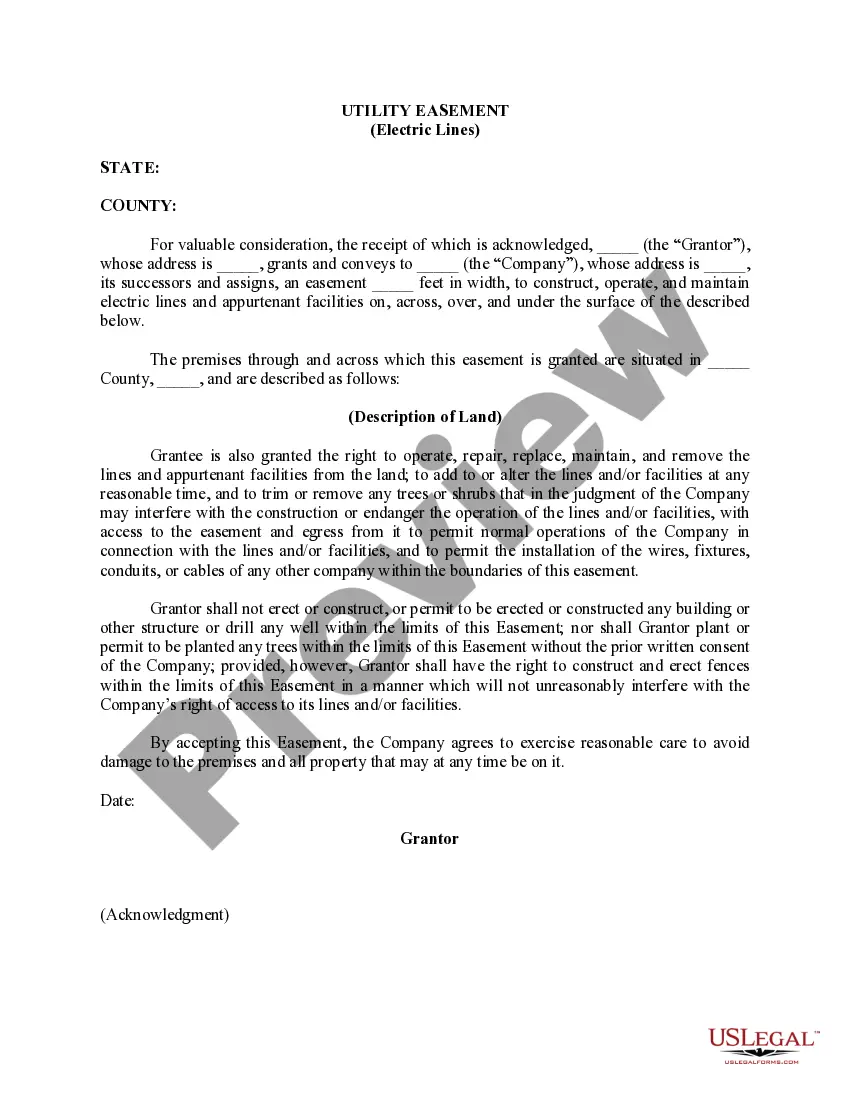
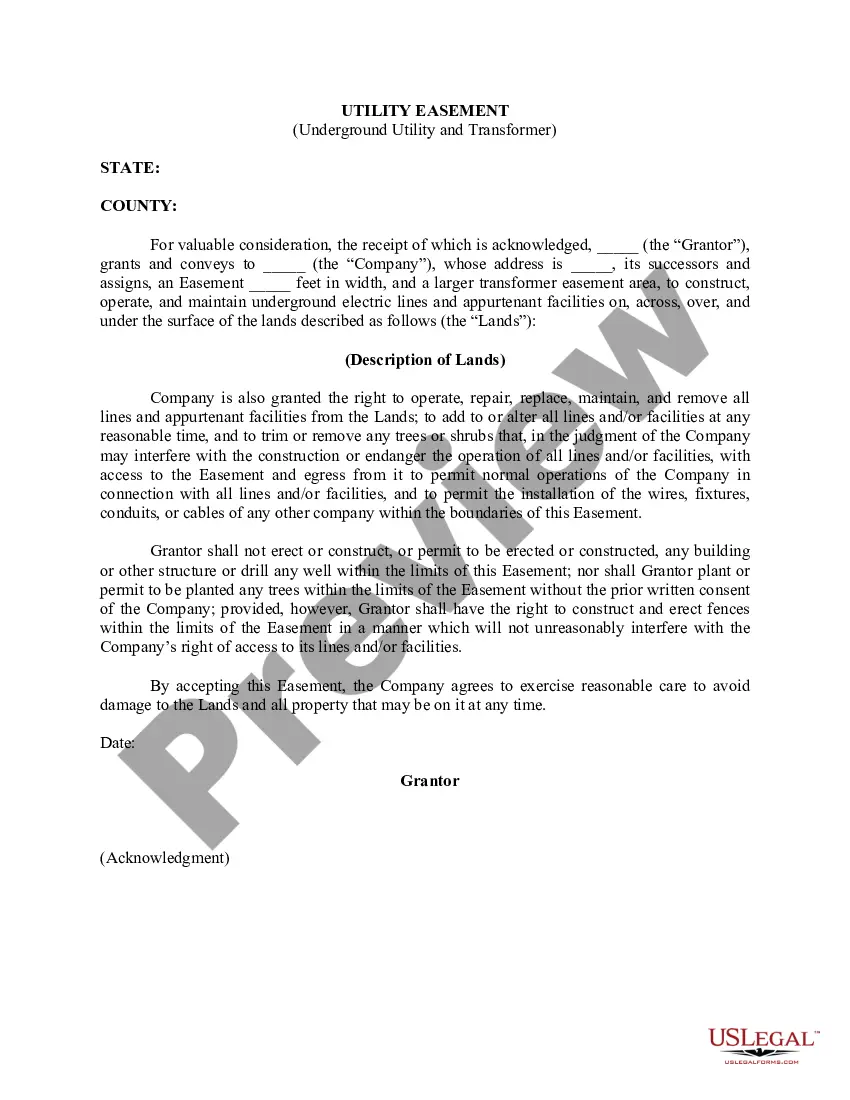
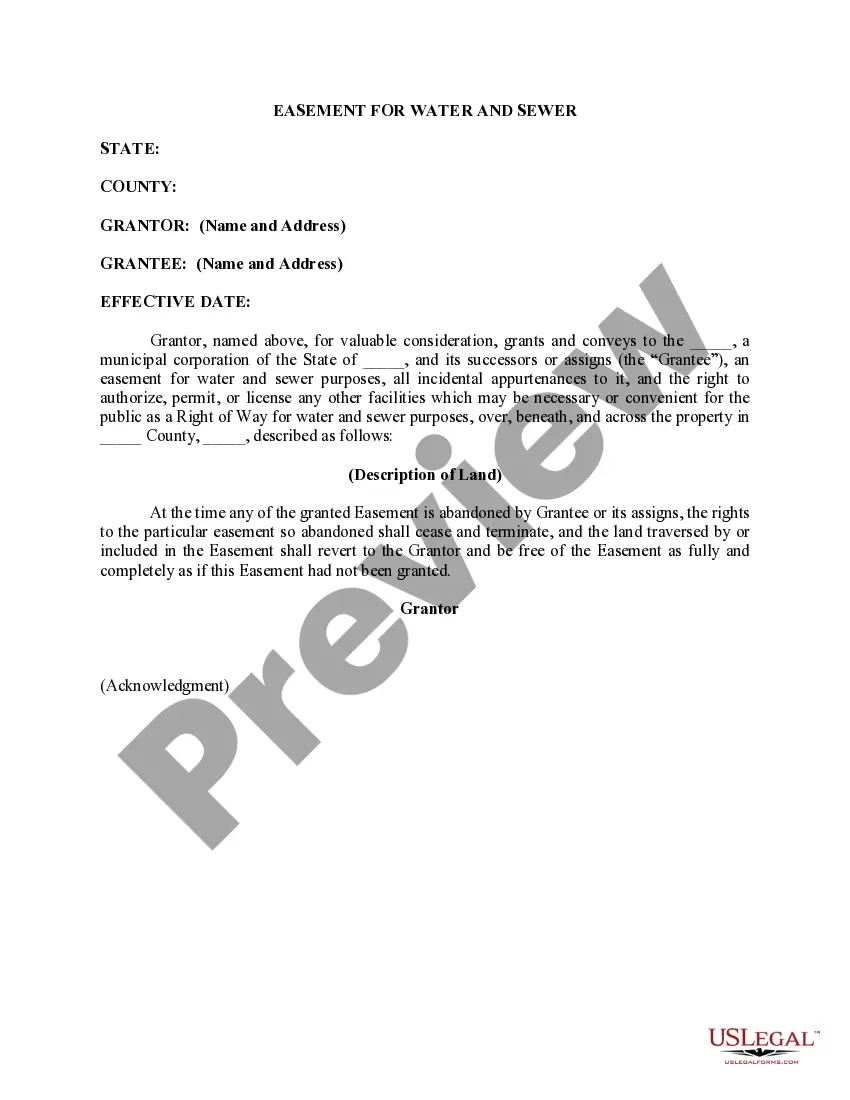
This form is used when Grantor desires to convey and Grantee desires to purchase a right of way and easement for utilities purposes on the lands described within.
If you have questions, reach out to your local utility provider or the city’s planning office. They’ll have the answers you need to put your mind at ease.
Yes, utility easements are typically permanent. They’re like a lasting handshake between you and the utility company, ensuring access for maintenance over the years.
If you damage a utility line, it’s crucial to contact the utility company right away. They'll send someone out to handle the situation and make sure everything’s safe and sound.
Generally speaking, building on a utility easement is a no-go. Utility companies need access to their equipment, so it’s best to steer clear of those areas.
You can check your property deed or reach out to the local zoning office. They’ve got the scoop on any easements tied to your land.
You might need a utility easement to enable essential services like water, electricity, and gas to reach your property smoothly. It's a way to ensure everyone gets what they need.
A utility facilities easement is a legal permission allowing utility companies to install and maintain their lines and equipment on private or public property.