San Bernardino California Easement and Right of Way (For Electrical and Communication Lines and Faciliites)
Description
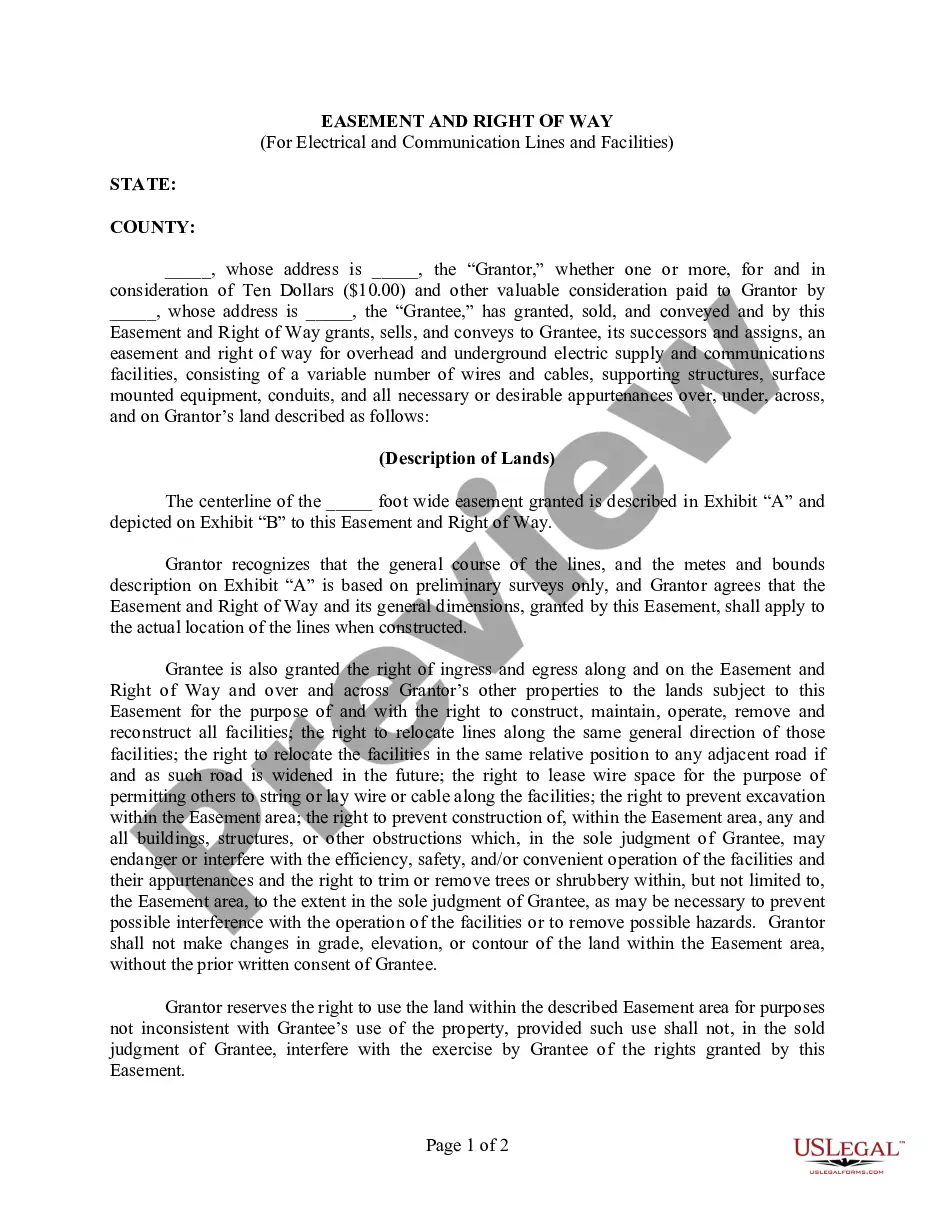
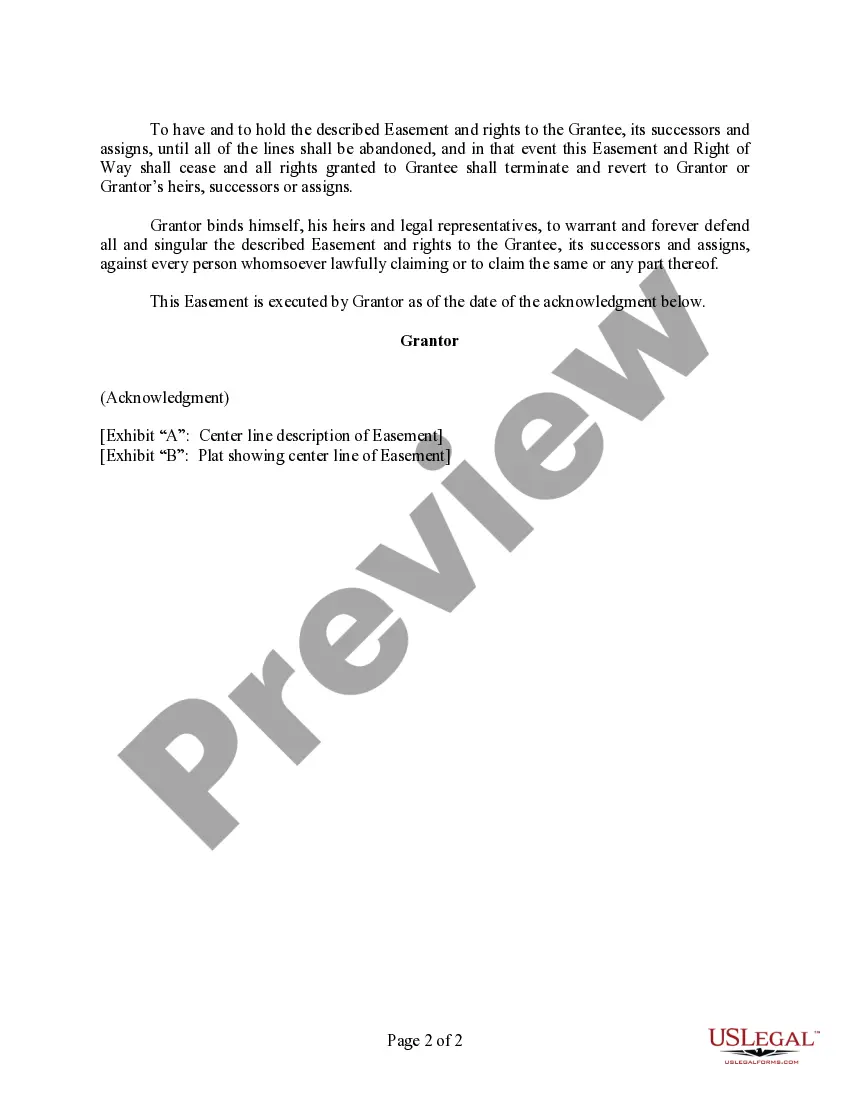
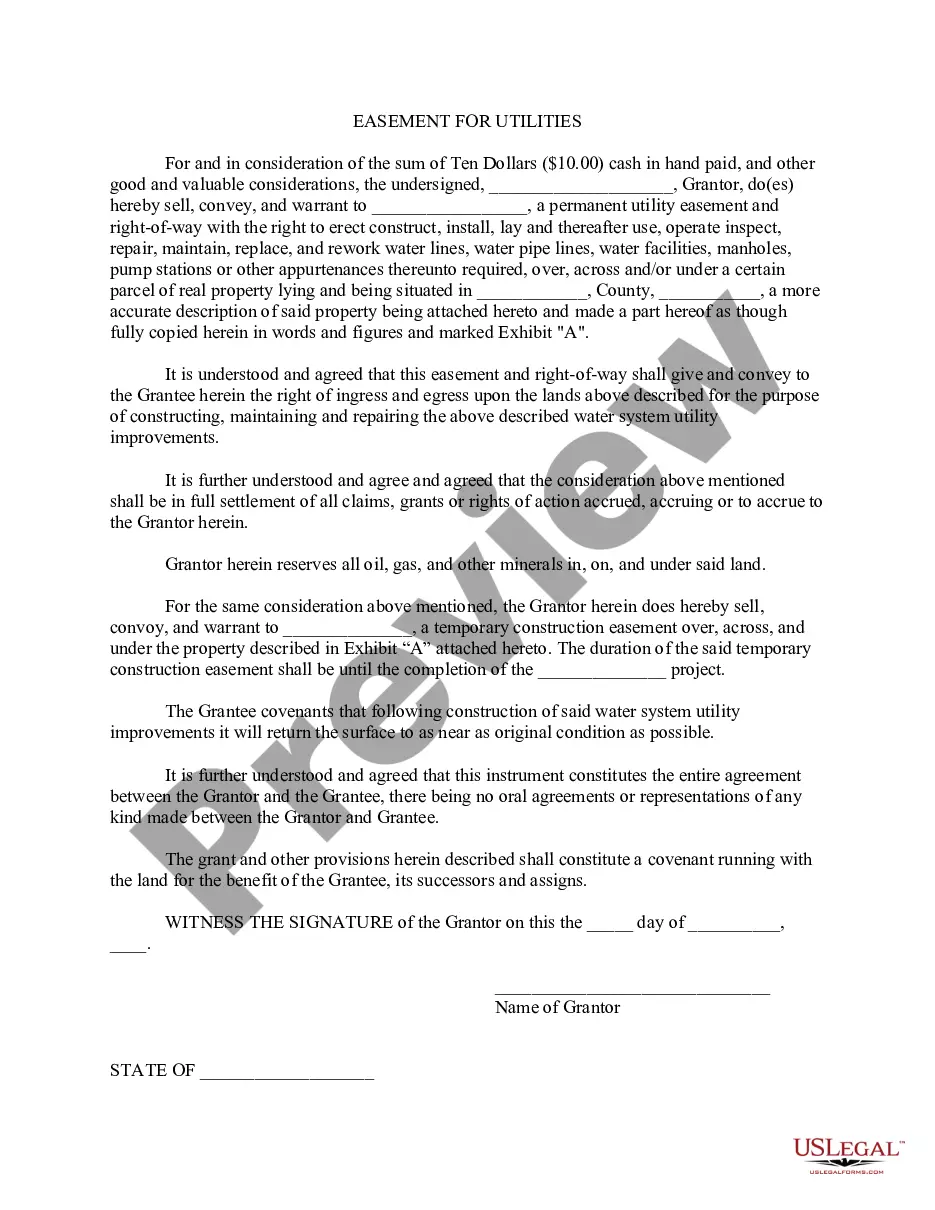

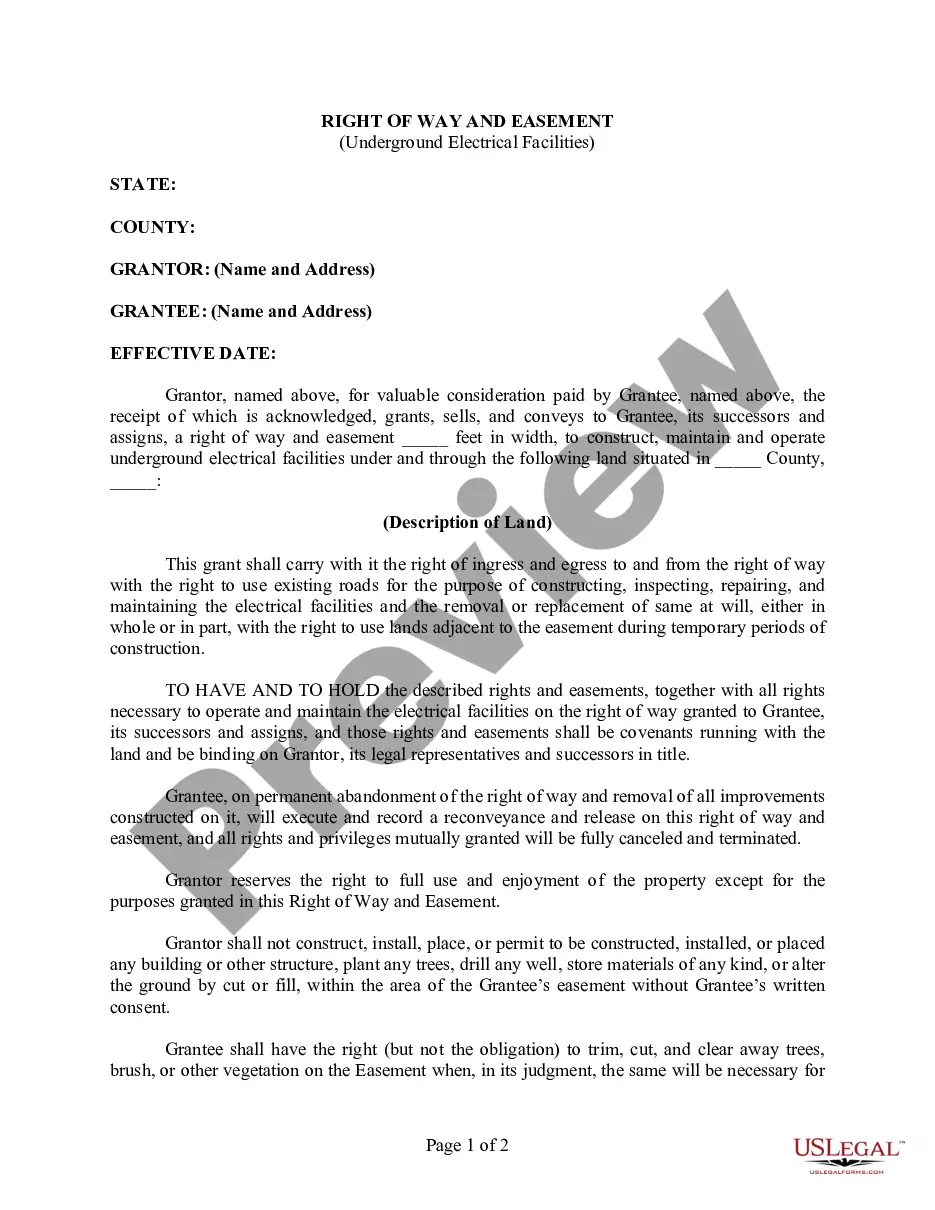
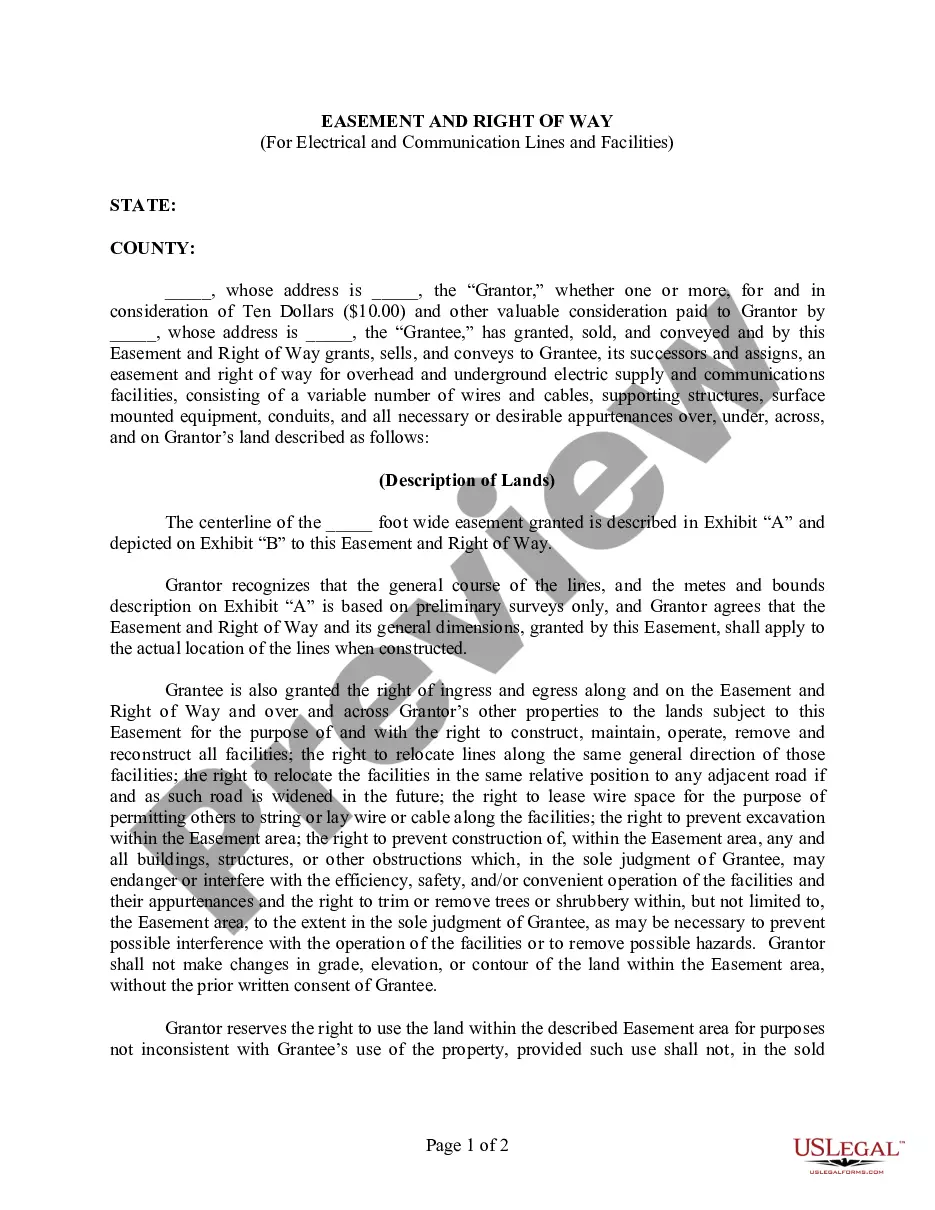
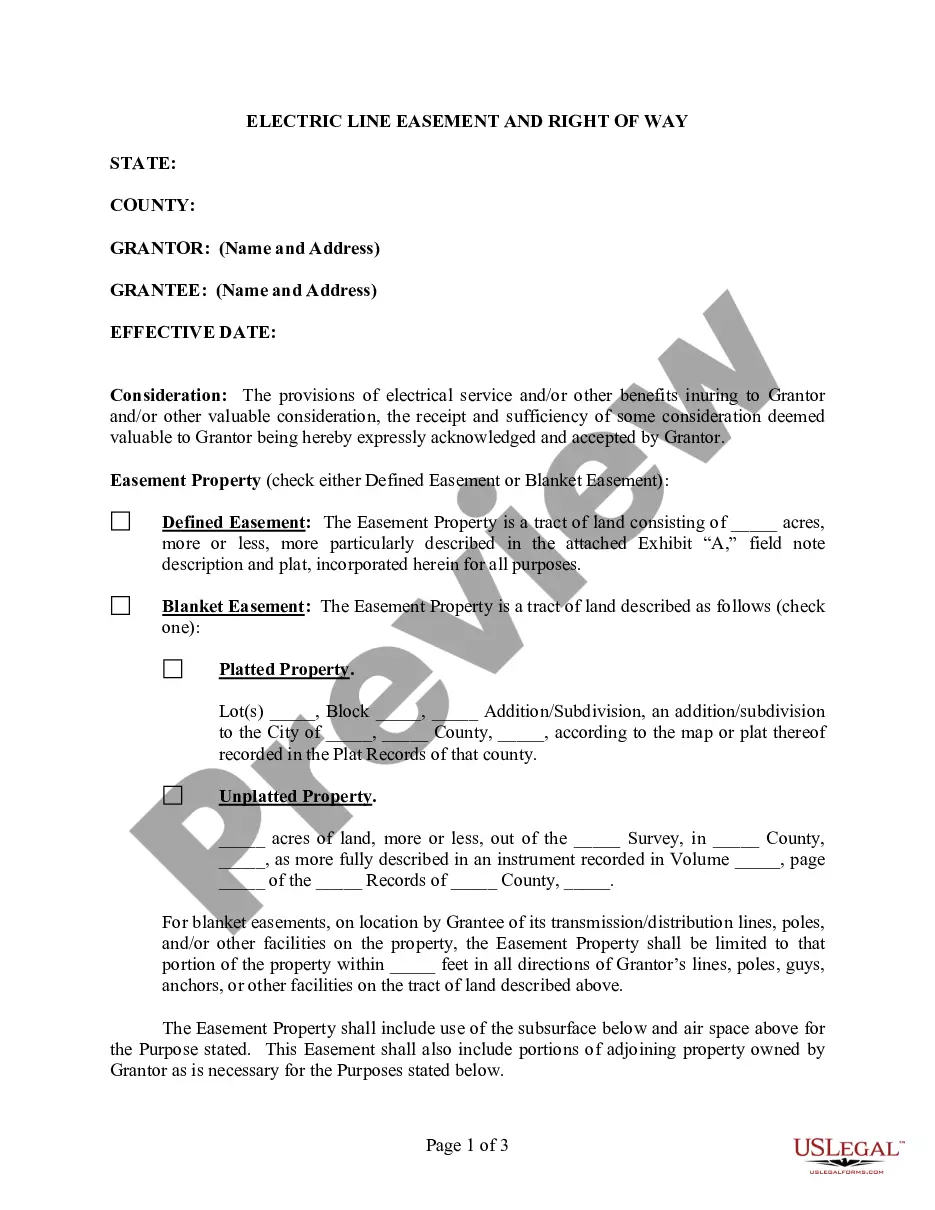
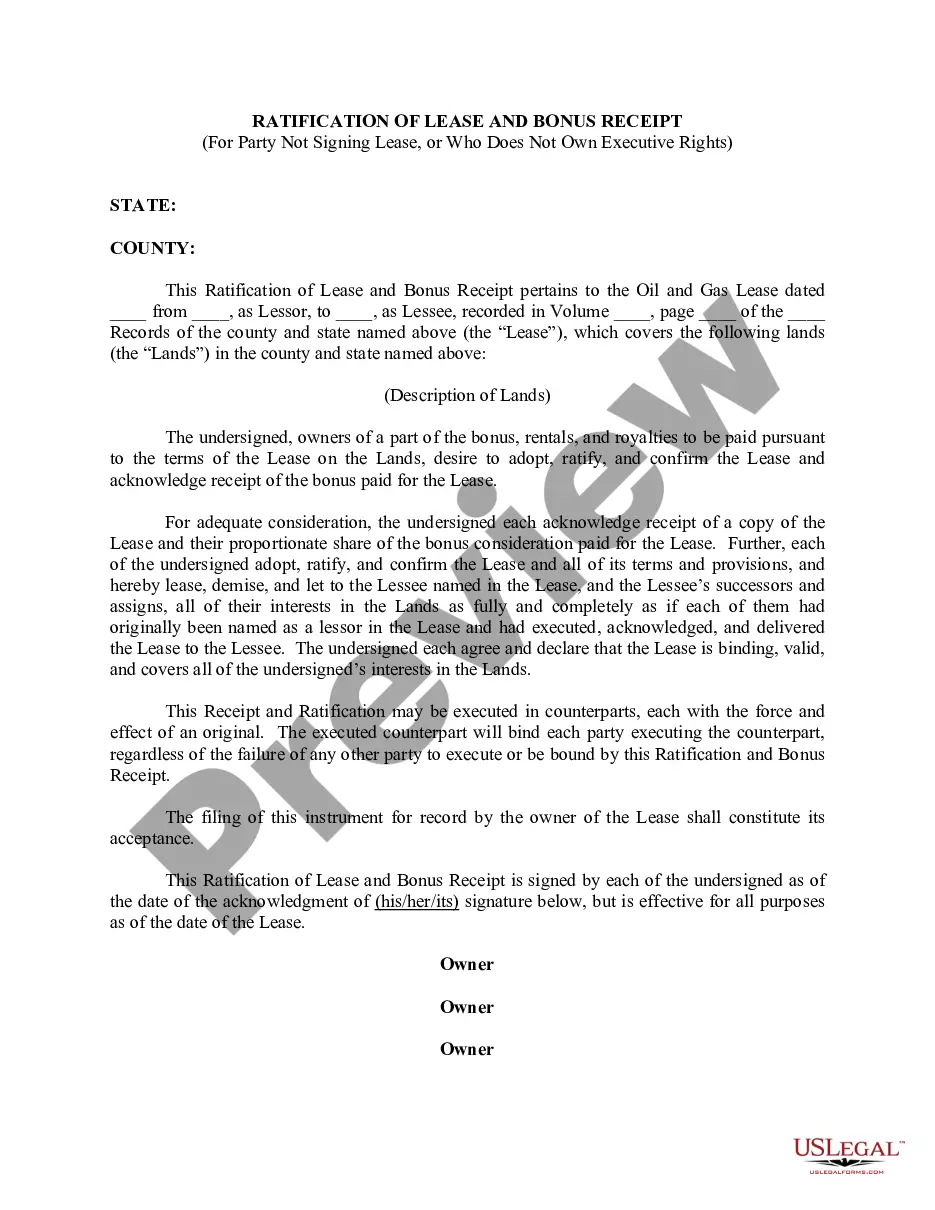
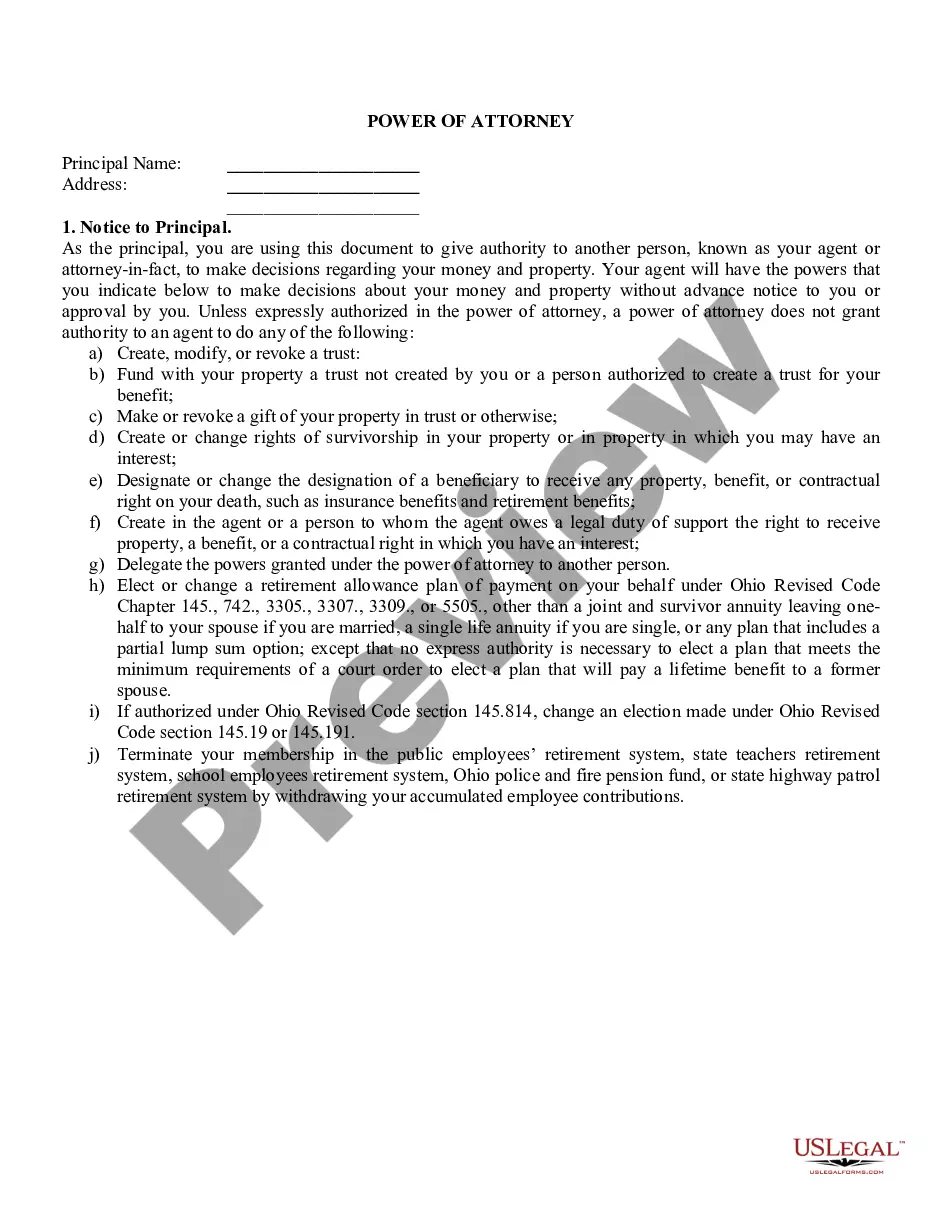

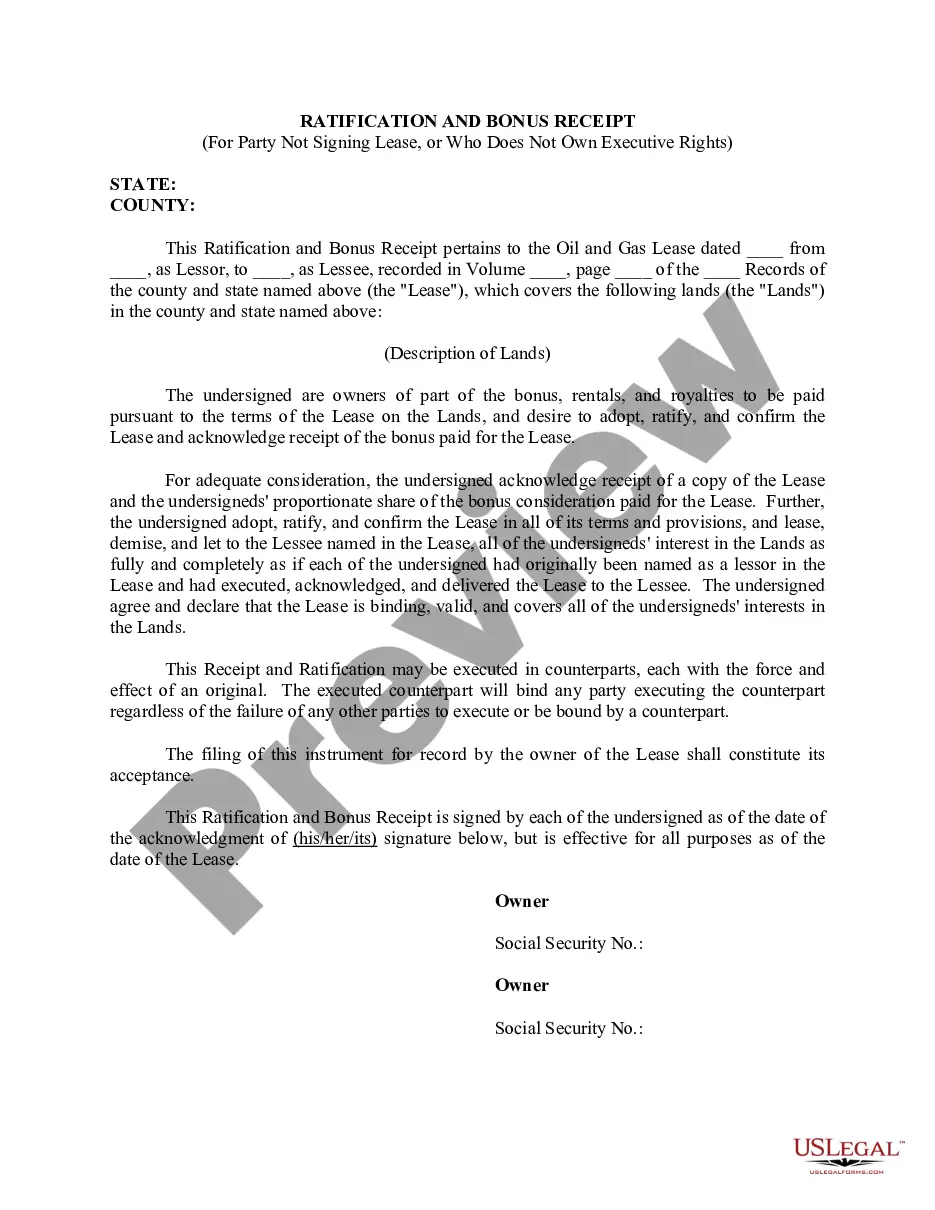
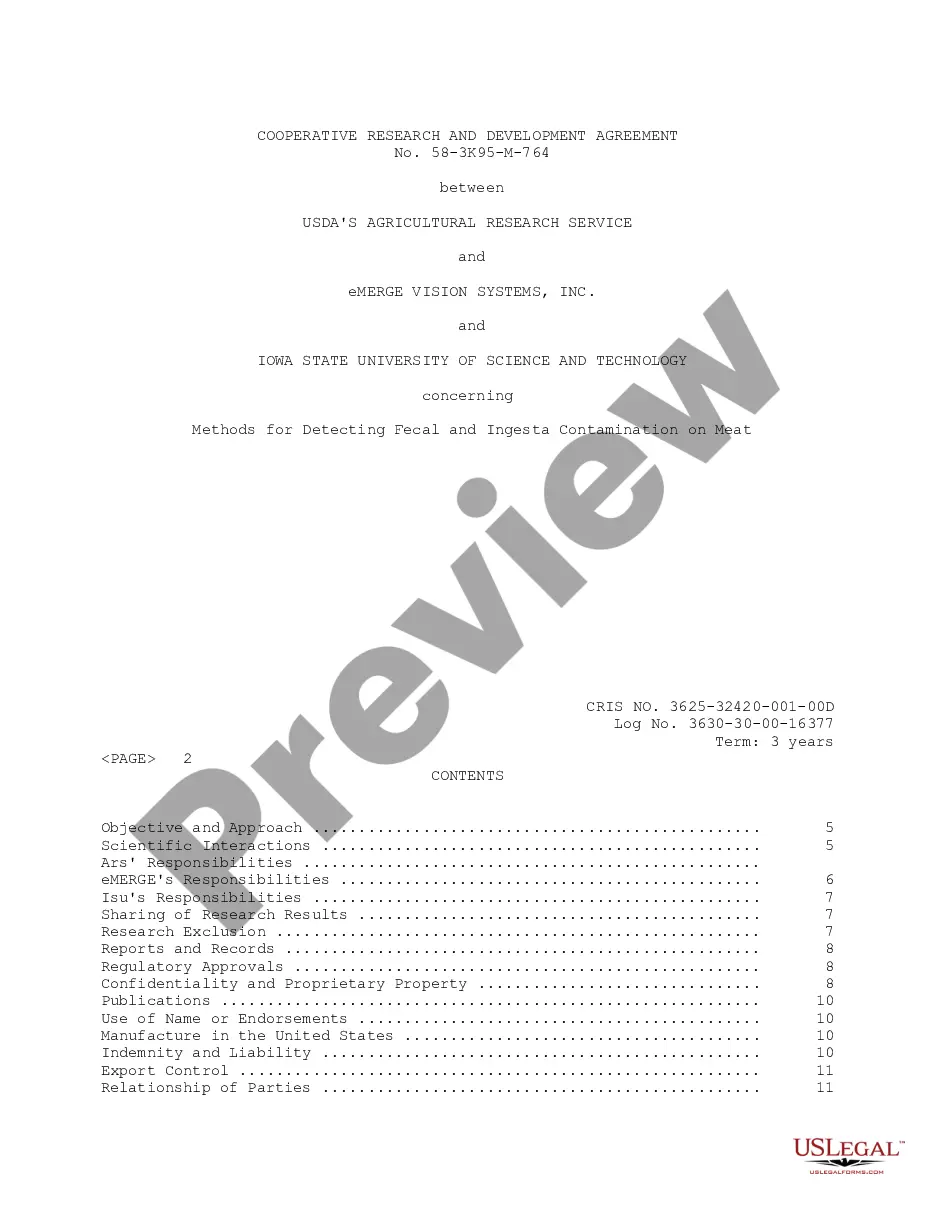
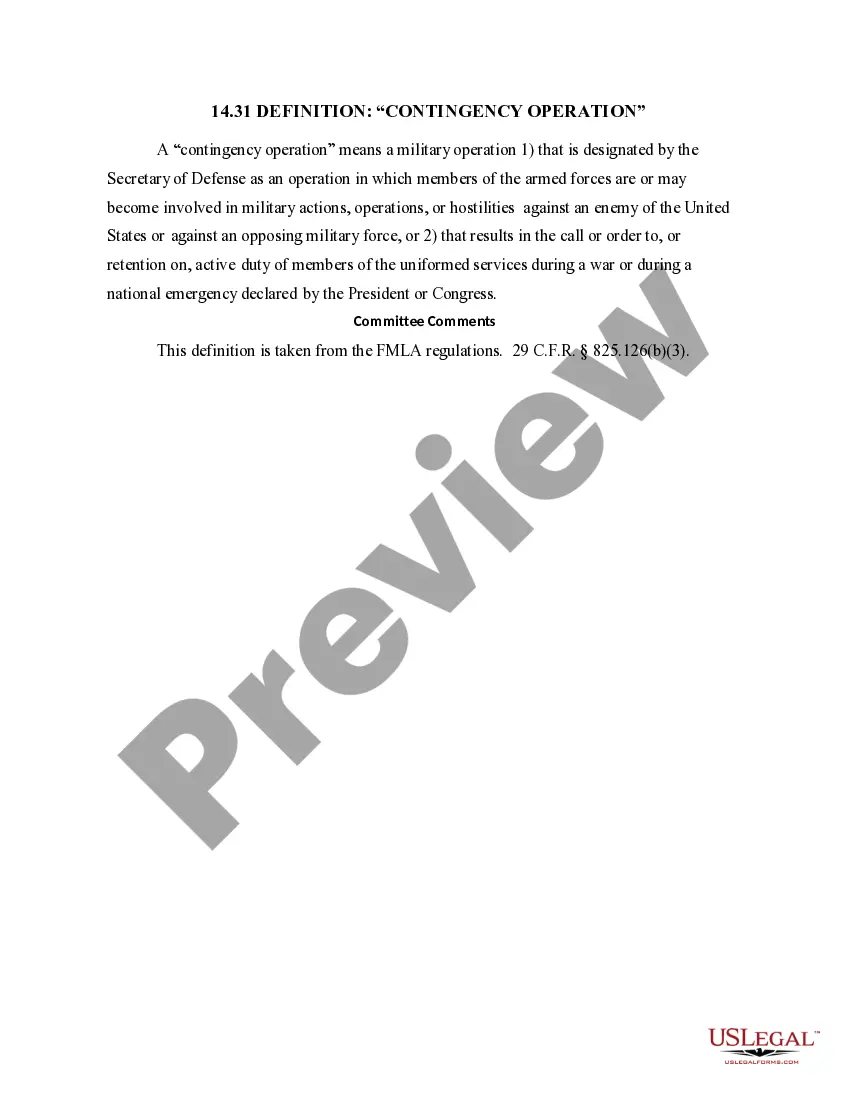

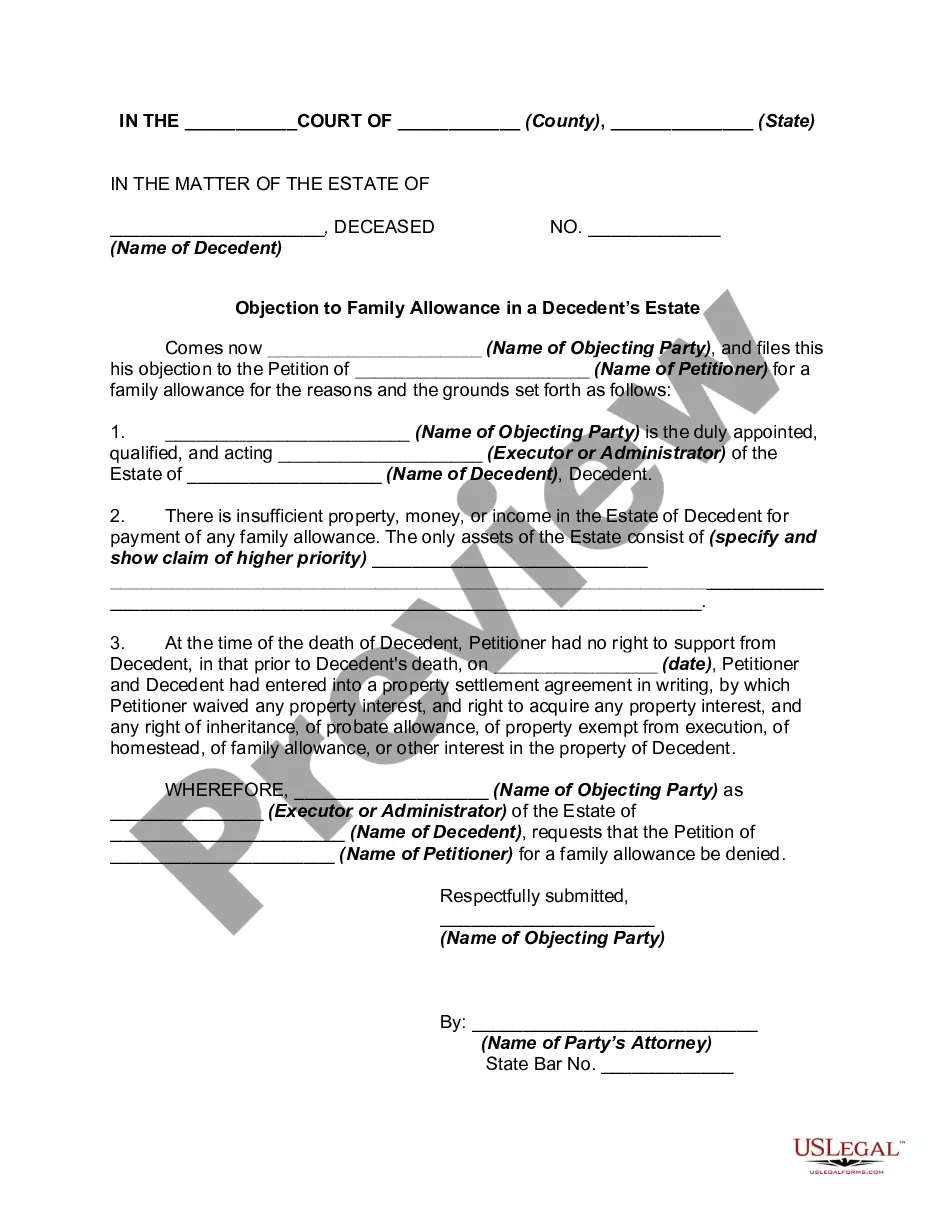
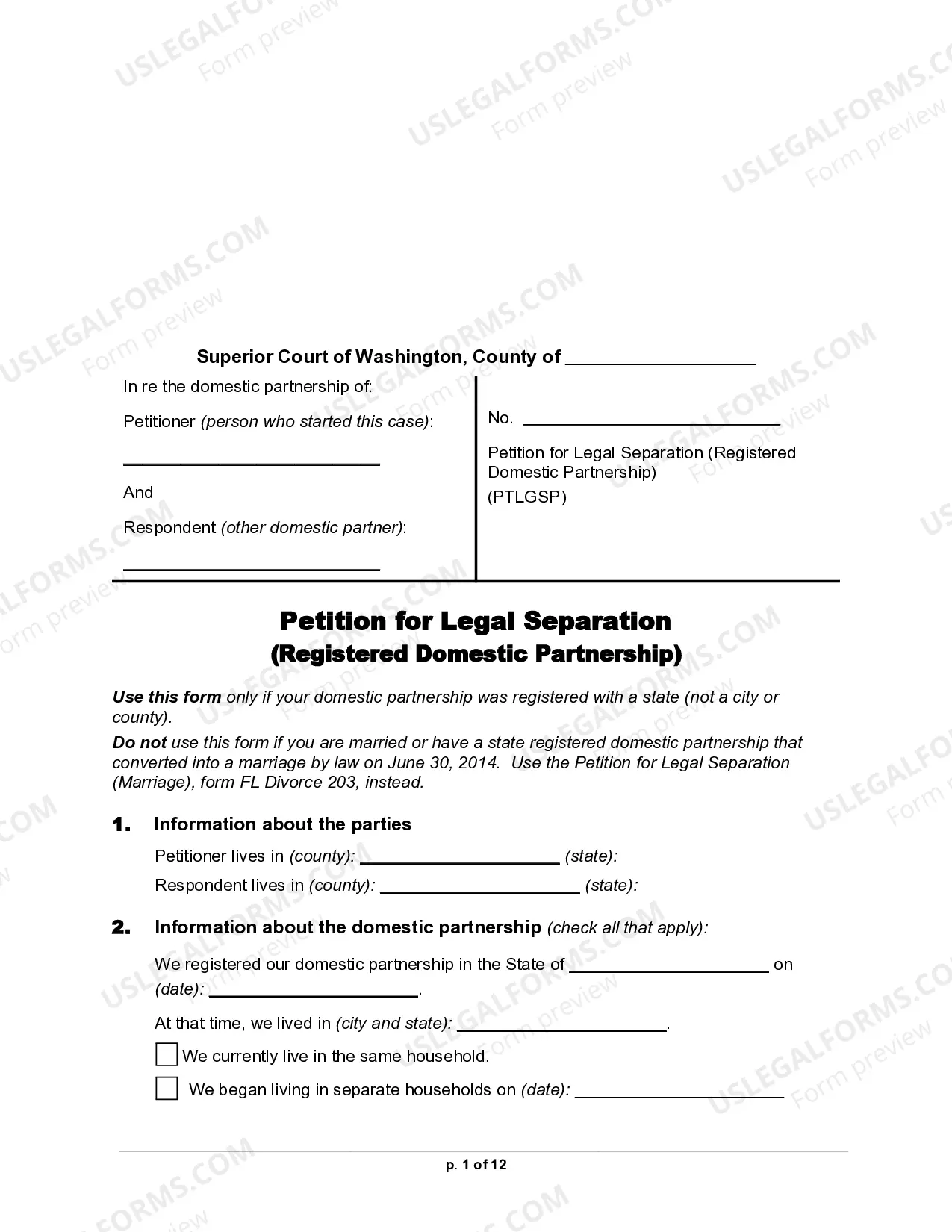
How to fill out Easement And Right Of Way (For Electrical And Communication Lines And Faciliites)?
Creating documents for business or personal needs is consistently a significant obligation.
When formulating a contract, a public service application, or a power of attorney, it's crucial to keep in mind all federal and state laws of the particular area.
Nonetheless, smaller counties and even municipalities also possess legislative processes that must be taken into account.
The wonderful aspect of the US Legal Forms library is that all the documentation you've purchased is never lost - you can access it in your profile under the My documents tab at any time. Enroll in the platform and effortlessly obtain verified legal documents for any situation with just a few clicks!
- All of these factors render it stressful and time-intensive to produce a San Bernardino Easement and Right of Way (For Electrical and Communication Lines and Facilities) without expert help.
- It is feasible to avoid spending money on lawyers preparing your documents and craft a legally sound San Bernardino Easement and Right of Way (For Electrical and Communication Lines and Facilities) independently, utilizing the US Legal Forms online library.
- This is the largest online repository of state-specific legal documents that are professionally authenticated, ensuring their legitimacy when you select a template for your county.
- Previously subscribed users only need to Log In to their accounts to access the needed form.
- If you do not have a subscription yet, follow the step-by-step guide below to obtain the San Bernardino Easement and Right of Way (For Electrical and Communication Lines and Facilities).
- Browse the page you have opened and verify if it contains the sample you require.
- To do this, utilize the form description and preview if these features are accessible.
Form popularity
FAQ
An easement is a right to use land that belongs to another, as opposed to a right to possess land of another. California has long recognized easements as an important part of property law and as a way to ensure that fairness exists among landowners, particularly when a landowner possesses a landlocked parcel.
As interests in real property, easement deeds are subject to the recording laws in California and are entitled to be recorded in the office of the county clerk in the county where the property is located (CIV 1169).
An easement is a right to use land that belongs to another, as opposed to a right to possess land of another. California has long recognized easements as an important part of property law and as a way to ensure that fairness exists among landowners, particularly when a landowner possesses a landlocked parcel.
(a) The owner of any easement in the nature of a private right-of-way, or of any land to which any such easement is attached, shall maintain it in repair.
Generally, the owner of any easement has a duty to maintain the easement. If the easement is owned by more than one person, or is attached parcels of land under different ownership, each owner must share in the cost of maintaining the easement pursuant to their agreement.
A At common law, the owner of land subject to a private right of way (the servient owner) is under no obligation to maintain it. If someone with a right to use the roadway (the dominant owner) wants it mended, it is up to them.
(a) The owner of any easement in the nature of a private right-of-way, or of any land to which any such easement is attached, shall maintain it in repair.
An easement in California can be granted to anyone: an individual, a neighboring landowner, a utility company, a government agency or a private company. Any of these parties could be liable for your damages after an accident on an easement.
Once an easement has been recognized, you cannot interfere with it. For instance, you can't suddenly erect a barrier on a road to the public street that runs through your property. You also cannot block a utility company from accessing your property for maintenance or updates.