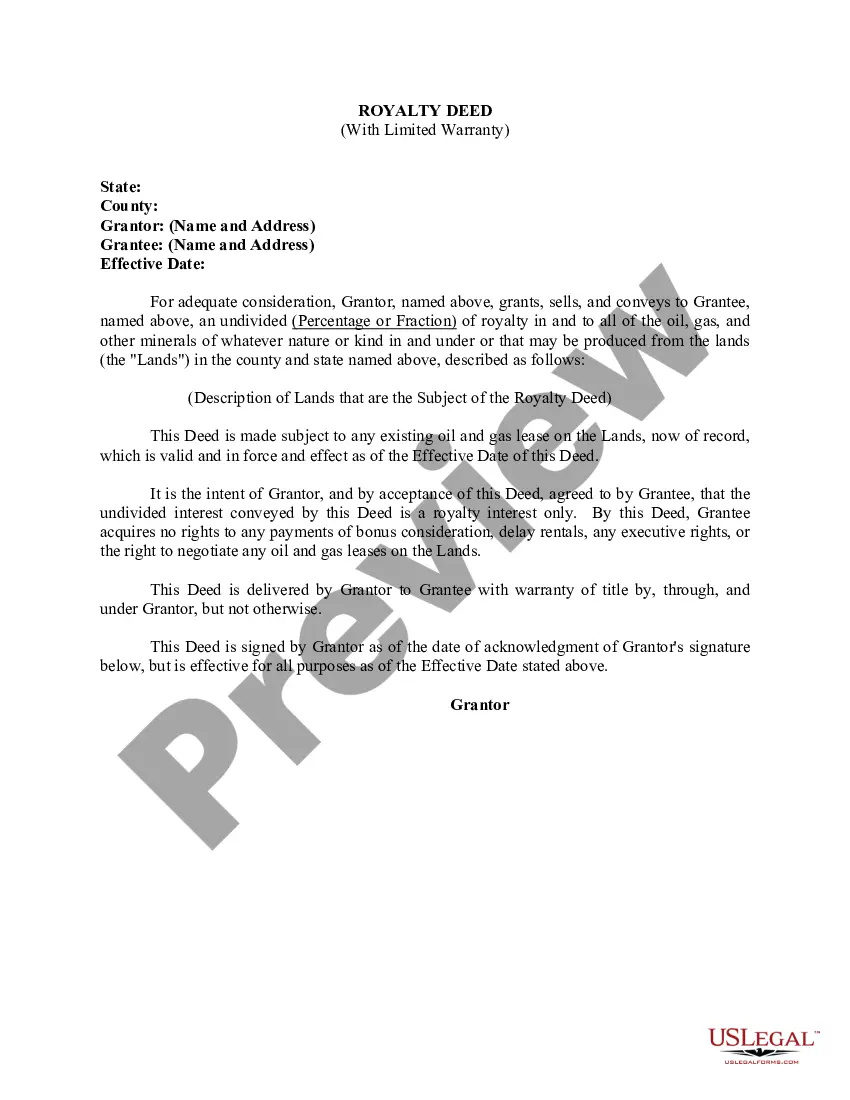
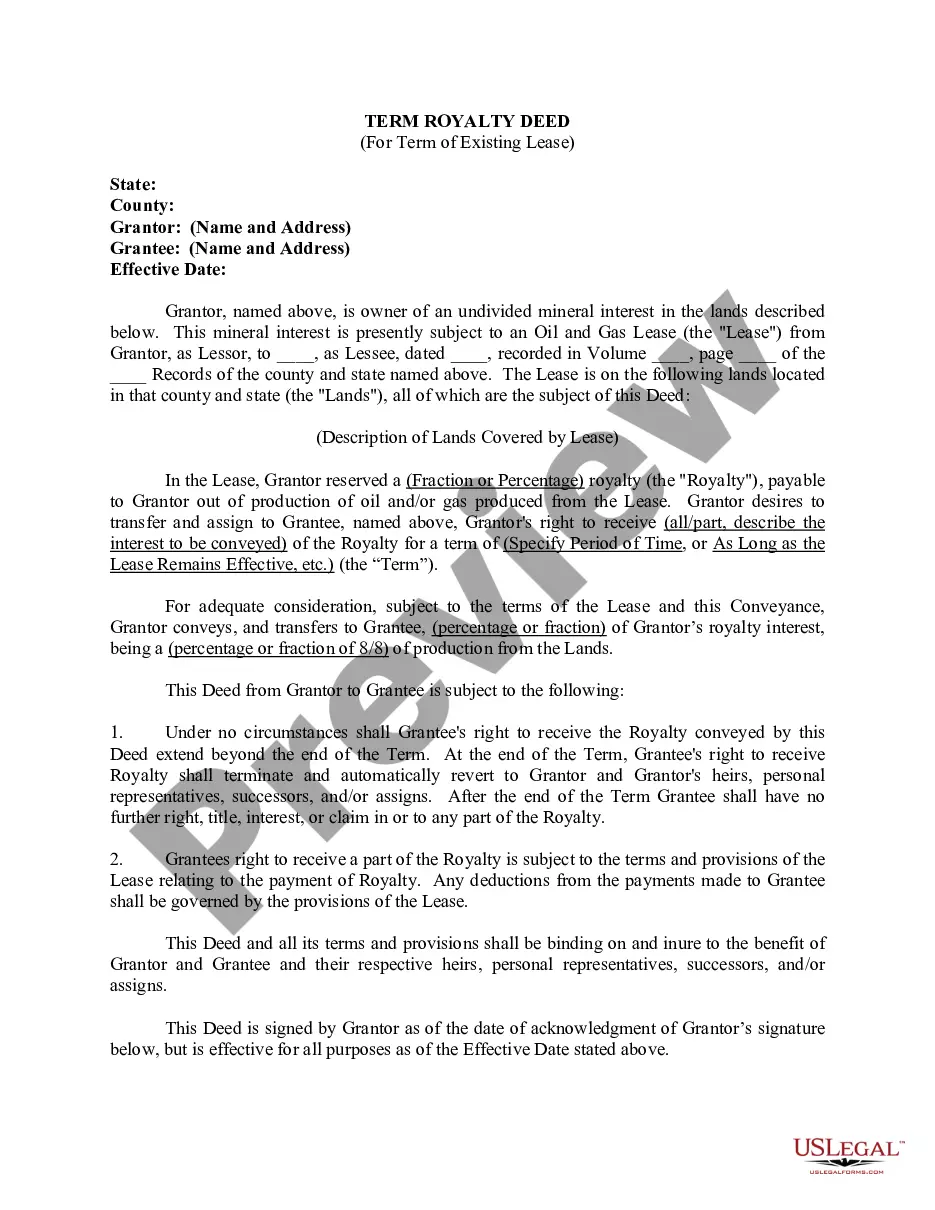
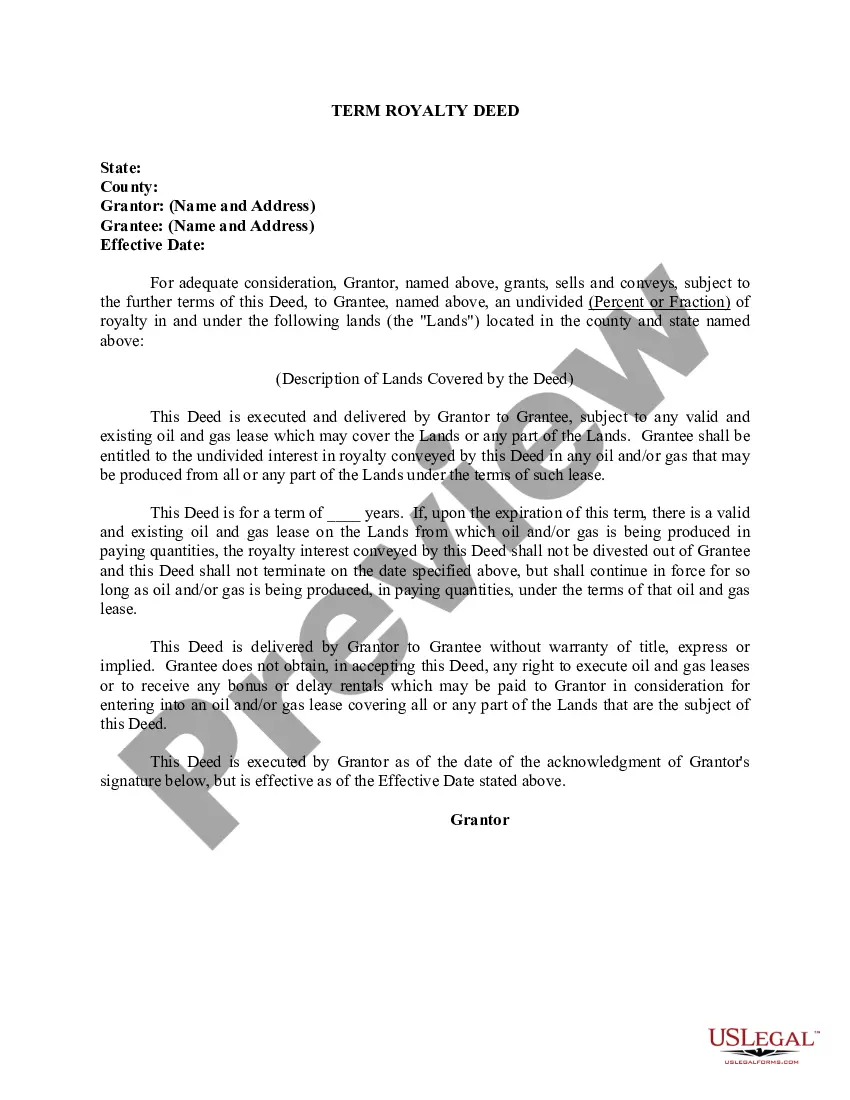
This form conveys a royalty interest for a specified term of years. If there is production at the end of that term, or the lands are subject to an oil and gas lease, the interest will continue to be owned by the grantee until production ceases.

It's a wise idea to consult a real estate attorney to navigate the legal waters—better safe than sorry! They'll help ensure you dot your i's and cross your t's to avoid any bumps down the road.
If there's a dispute, you'll likely find yourself in a legal tussle. It’s best to have everything documented well and maybe even consult a lawyer to ensure you're not caught between a rock and a hard place!
Nope! You need to have rights to the natural resources on your property to create a royalty deed. It's a bit like trying to sell lemonade without any lemons—gotta have something to work with!
Royalty deeds are often used by landowners looking to monetize resources like oil, minerals, or timber. These folks are in the business of sharing the wealth without selling the whole pie!
A traditional property deed transfers ownership of the entire property, while a royalty deed only gives rights to specific resources. It’s like owning a pizza versus just getting a few slices—one has it all, the other just shares the toppings!
A royalty deed is a legal document that gives rights to someone to receive a portion of the profits from natural resources found on a property. Think of it as having your cake and eating it too—you're not owning the property, but you get a slice of the earnings!