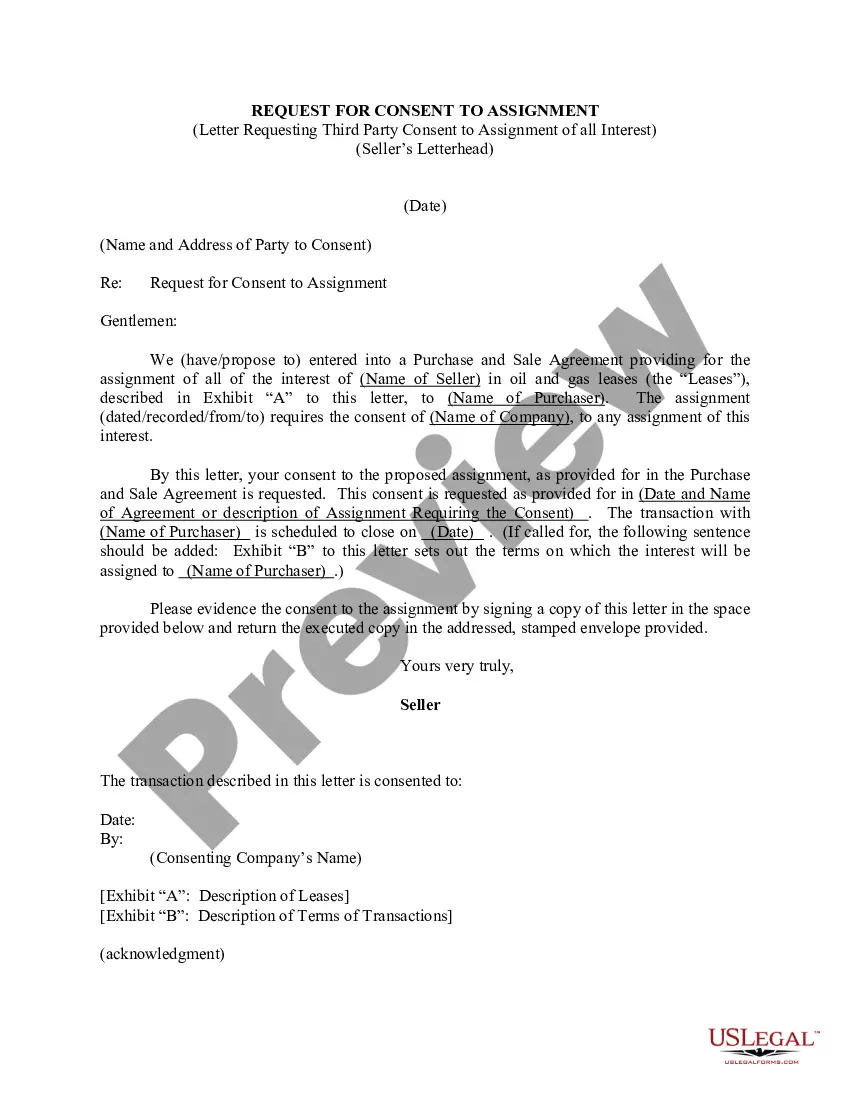
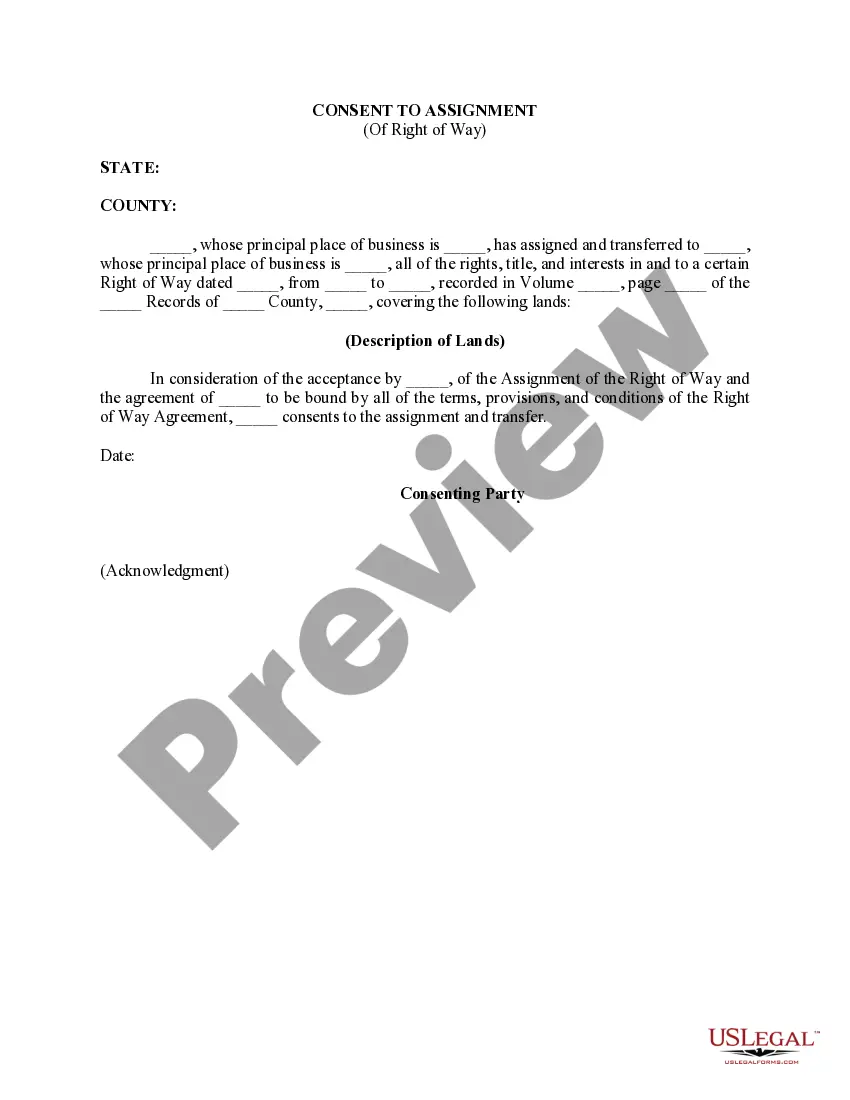
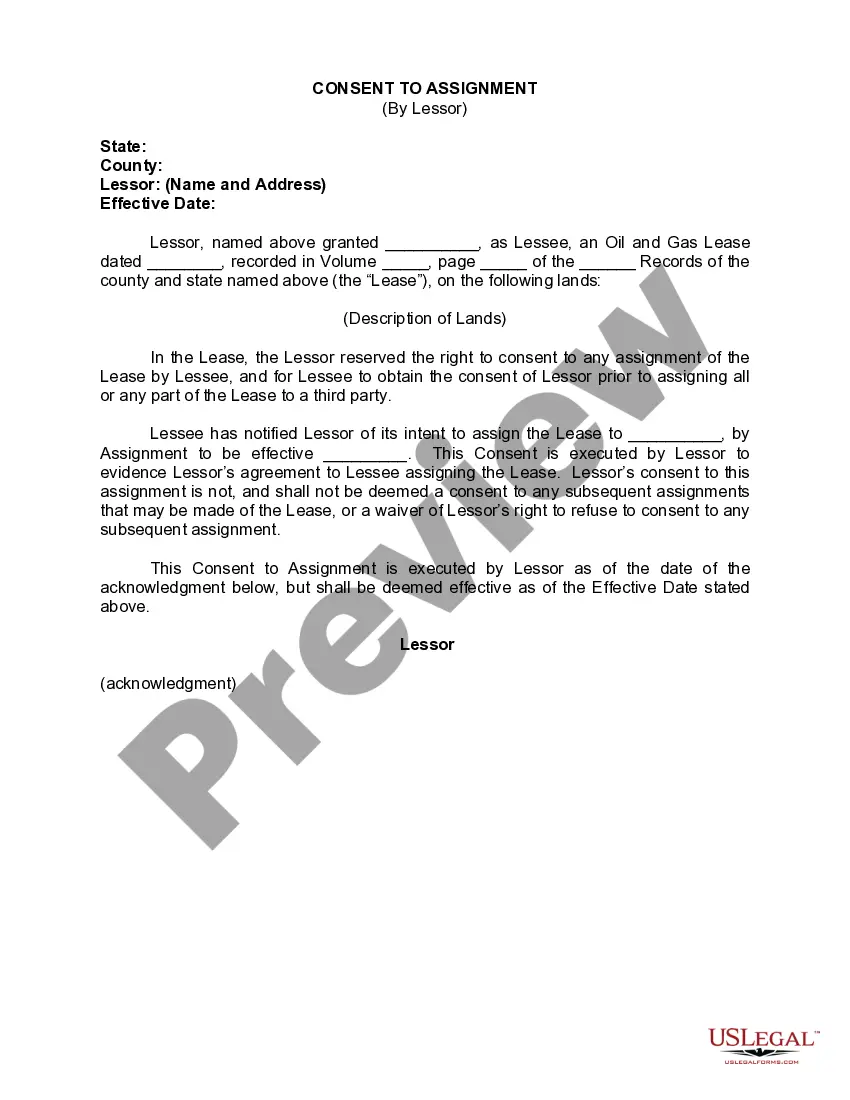
Some leases require the consent of the lessor to any assignment to be made of a lease by the lessee. This form provides for that consent, specifically providing that it will not be deemed a consent to any subsequent assignments made of the lease.
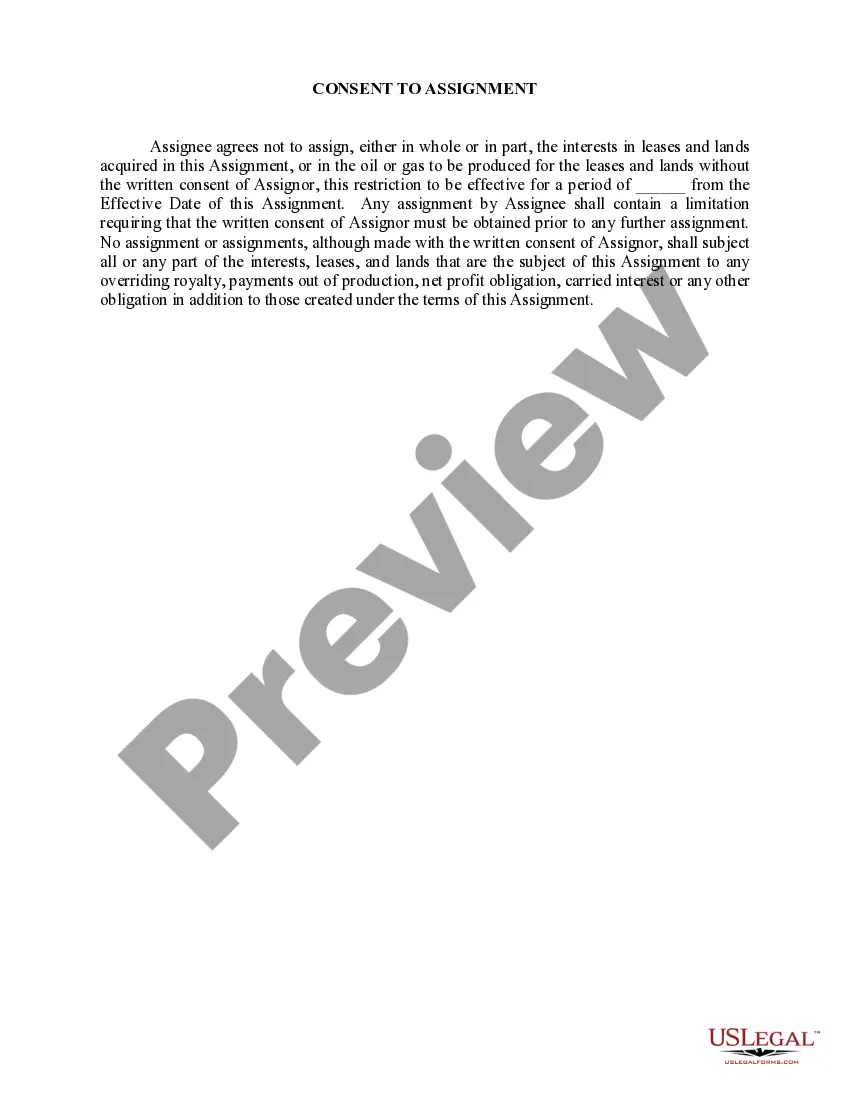
The tenant should include details like their reason for moving, information about the new tenant, and any other helpful info that shows it's a good fit.
While there's no hard and fast rule, it's generally good practice for the landlord to respond promptly, ideally within a couple of weeks.
If the landlord says no, the tenant has to stick to the original lease unless they can negotiate a different solution with the landlord.
Not necessarily. The landlord can refuse consent, but they usually must provide a valid reason, especially if there are no legal grounds to deny it.
The tenant typically sends a written request to the landlord, explaining their situation and who they want to assign the lease to.
A tenant might need to move or change where they live, so they must get the landlord's permission to pass their lease onto someone else.
It's a document that allows a tenant to transfer their lease rights to another party, but only with the lessor's approval.