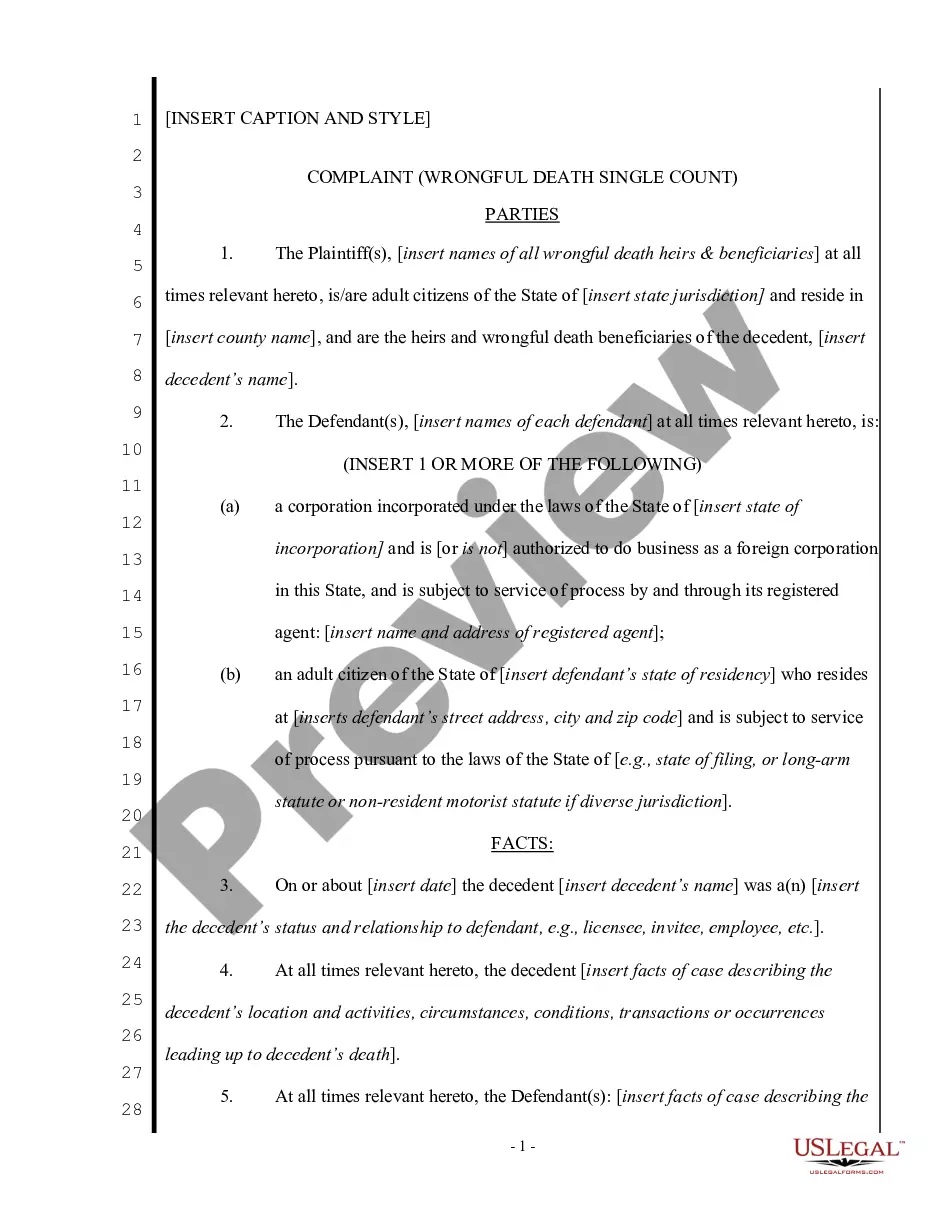
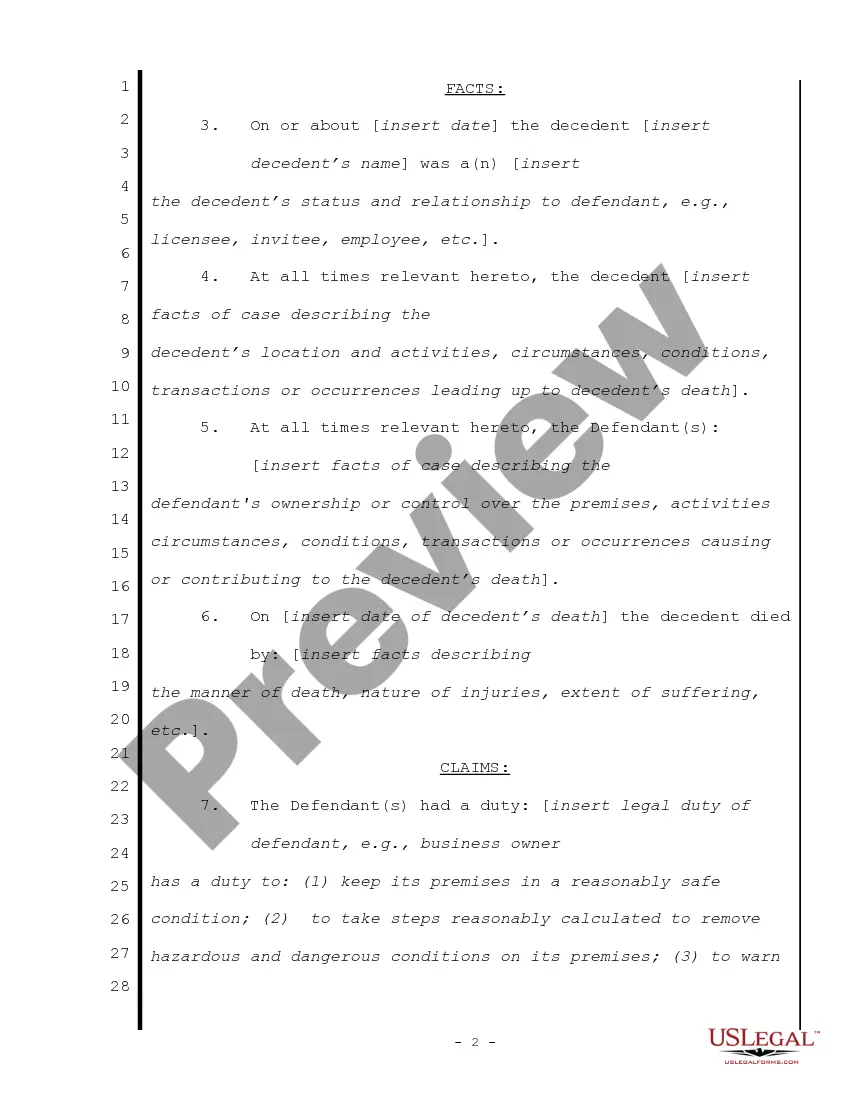
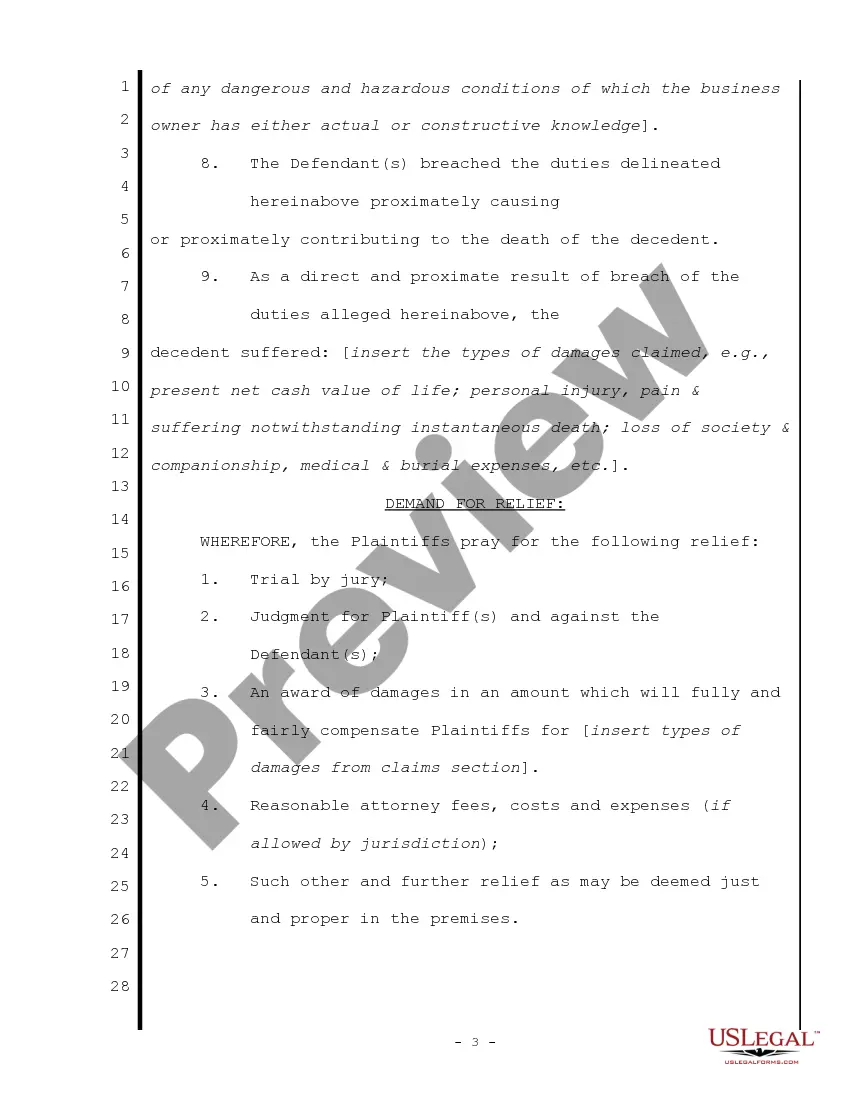
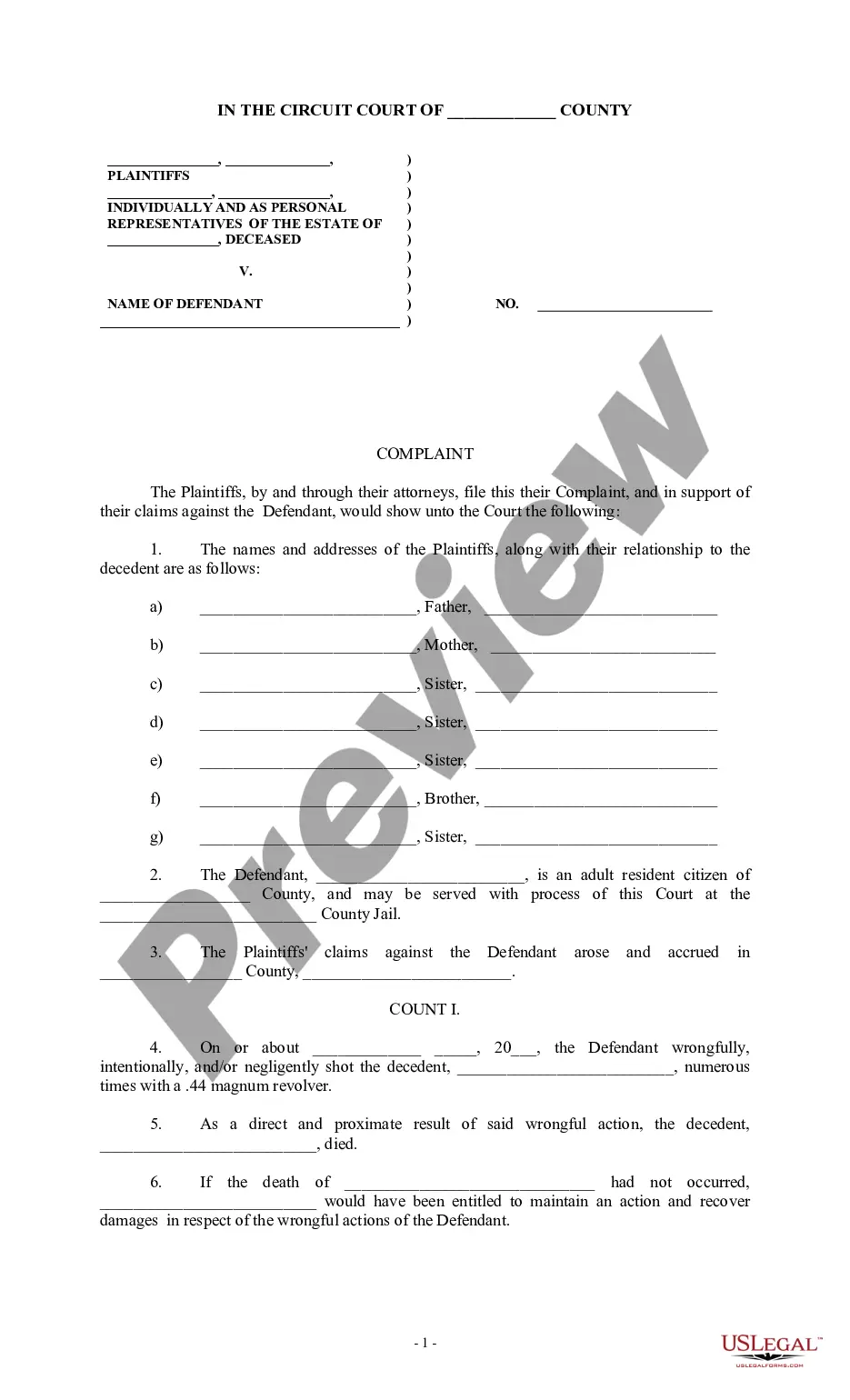
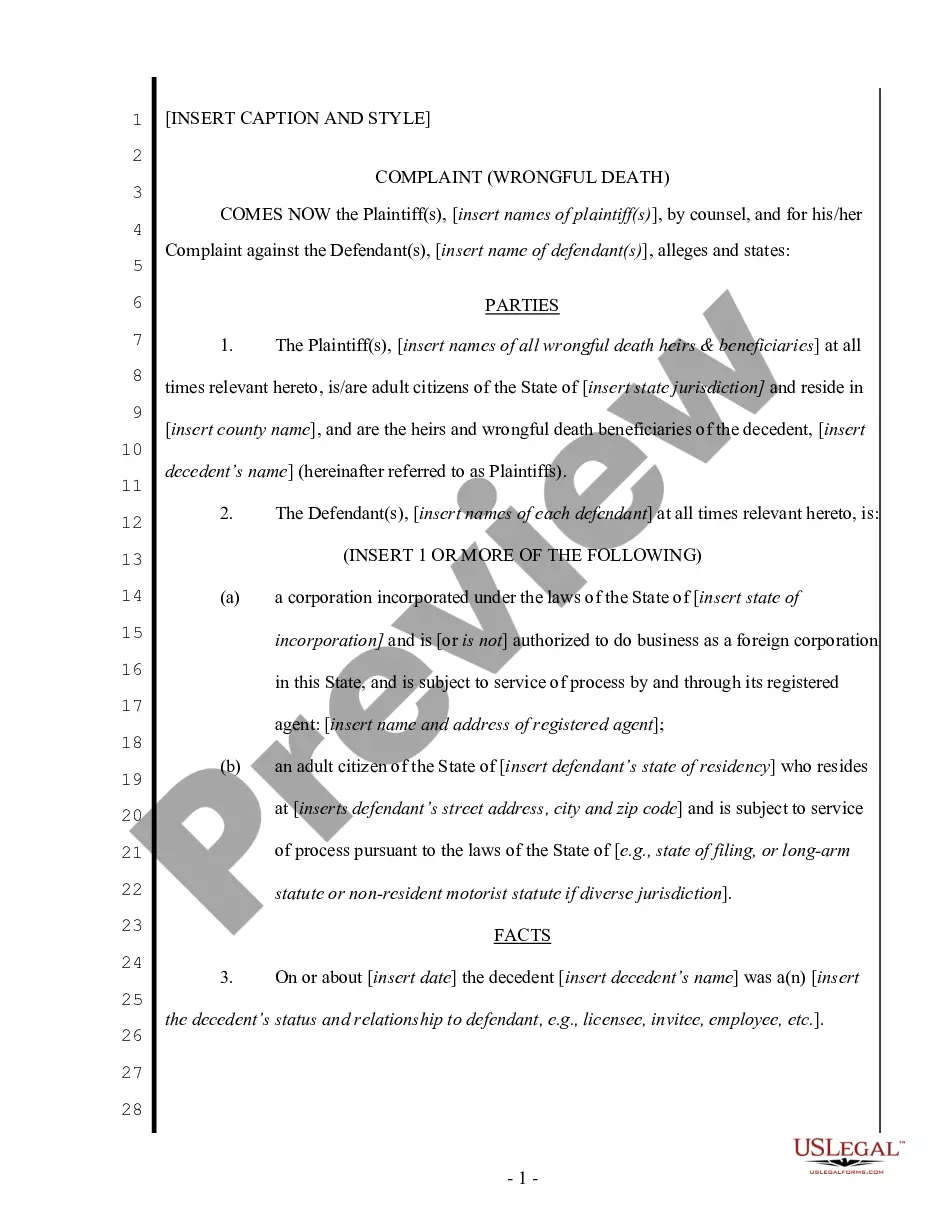
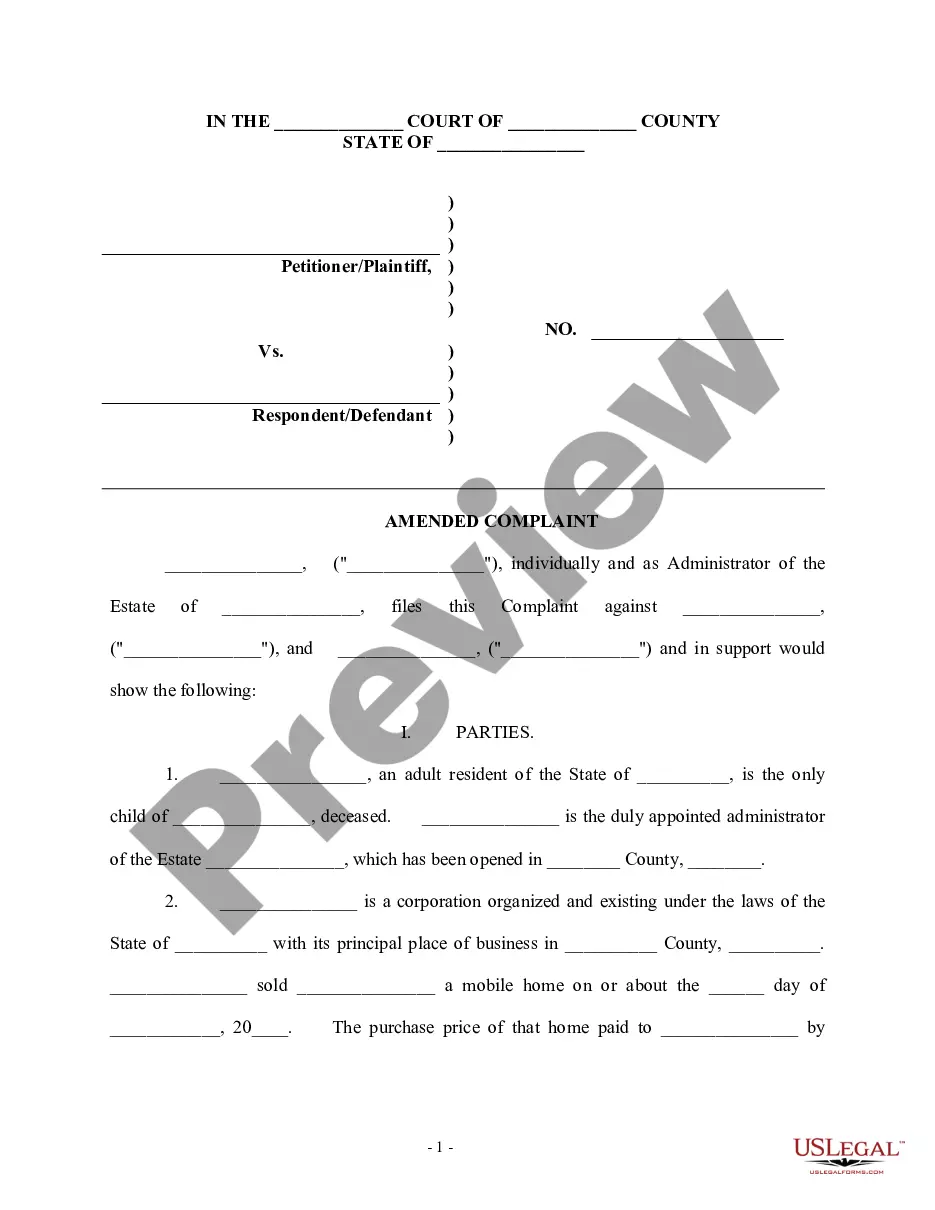
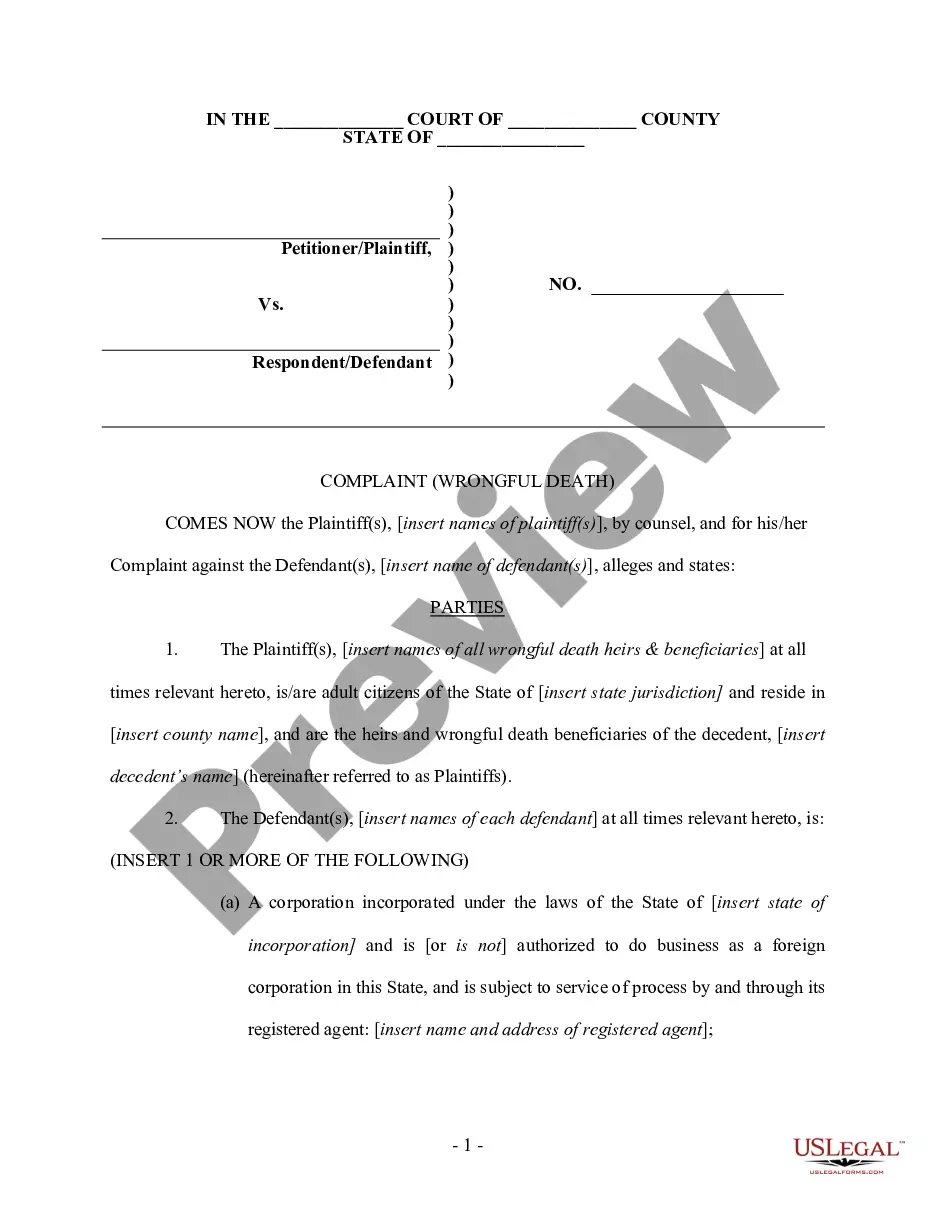
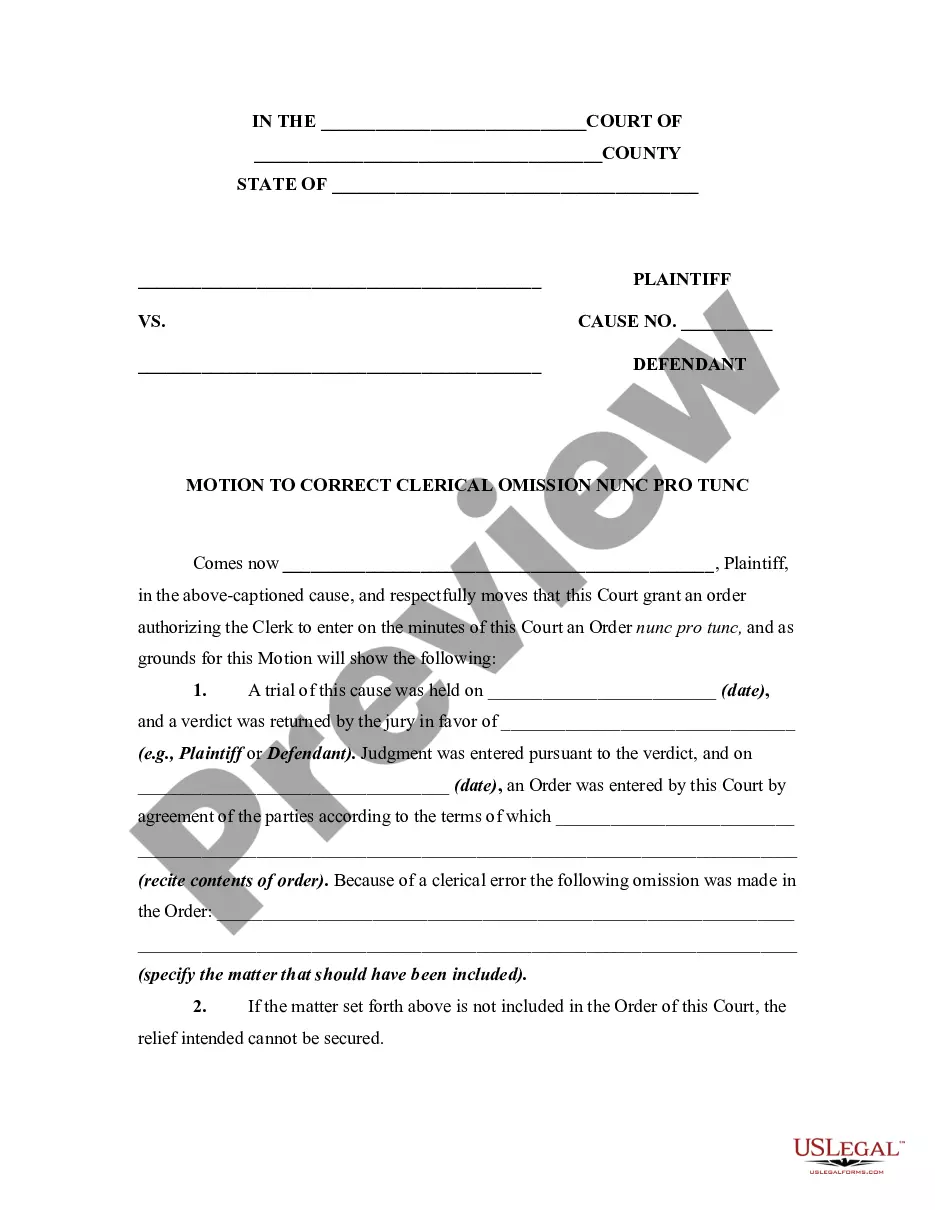
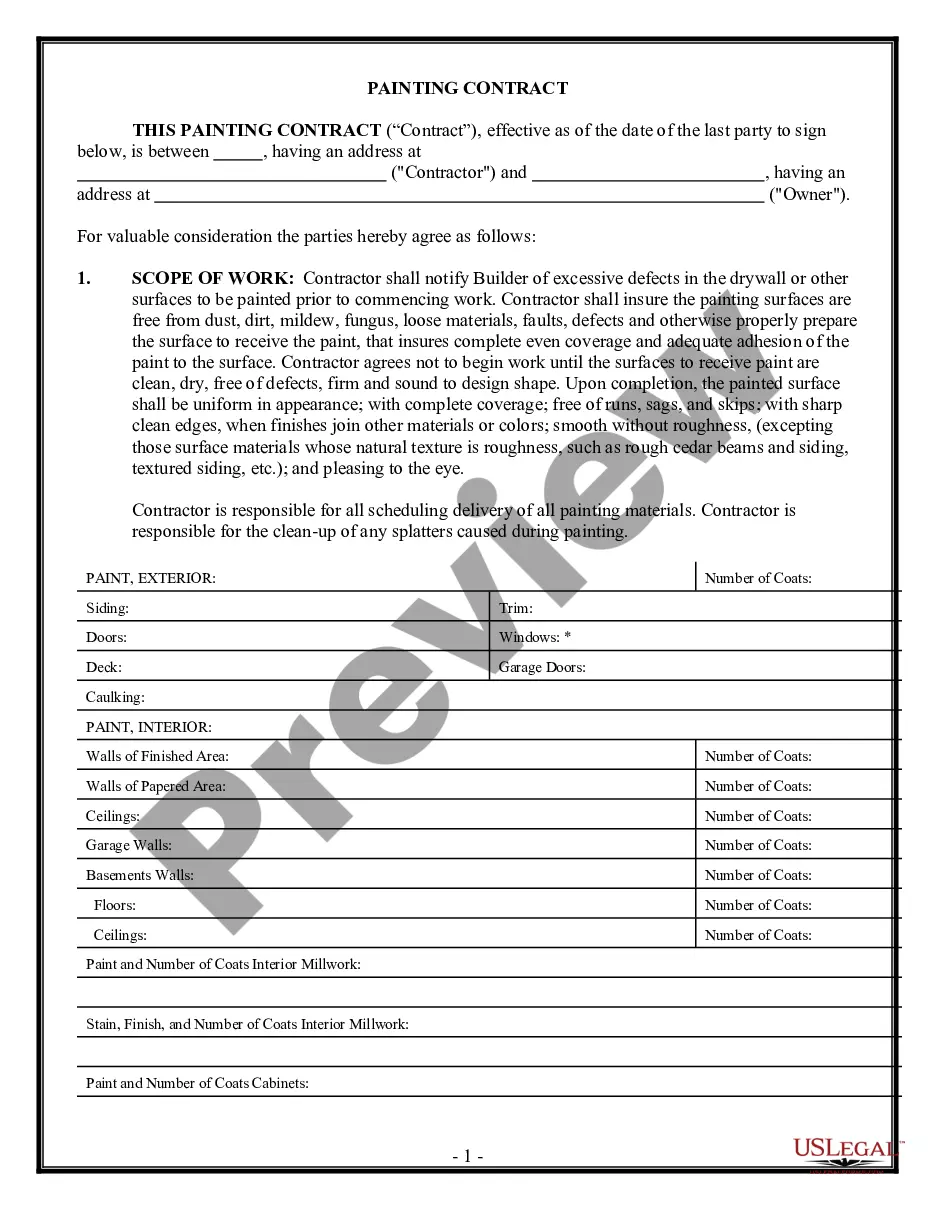
This form is a Complaint for a Wrongful Death. Plaintiff demands a jury by trial, an award of damages, reasonable attorney fees, and other relief which is just and proper.
While it’s not mandatory to have a lawyer, it's highly recommended. A good lawyer can guide you through the murky waters of legal claims, helping you make sense of it all and increasing your chances of success.
Yes, even if the deceased was partially at fault, you can still file a claim, but the damages might be reduced based on their level of fault. It's like saying, 'Every cloud has a silver lining,' and you still might receive some compensation.
In a wrongful death claim, you may be able to recover both economic and non-economic damages. This could include lost wages, funeral expenses, and even the emotional pain of losing someone. It’s about making sure you’re taken care of.
In Colorado, the statute of limitations for filing a wrongful death claim is generally two years from the date of death. So, it's best to get the ball rolling sooner rather than later to keep your options open.
To win a wrongful death case, you generally need to show that the other party was negligent, that their actions led to the death, and that you suffered damages as a result. It's like connecting the dots: negligence leads to a tragic end, and you deserve compensation.
In Colorado, typically, the surviving spouse, children, or parents of the deceased can file a wrongful death claim. Think of it as a family affair when it comes to seeking justice for a loved one.
A wrongful death claim is a way for family members to seek compensation when someone dies due to another person’s negligence or misconduct. It’s like saying, 'You may have lost a loved one, but we can help you seek justice.'