Montgomery Maryland Fence Ordinance
Description
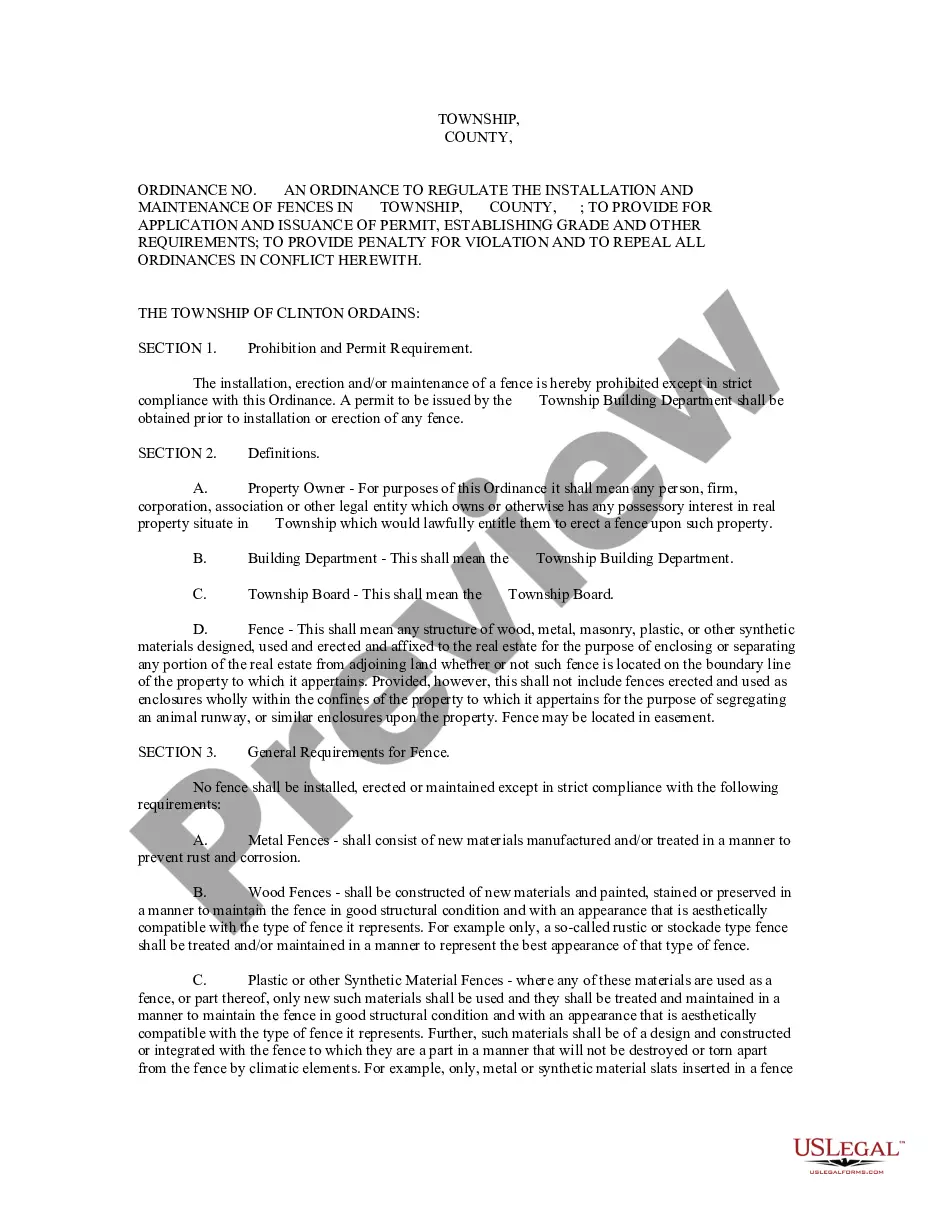
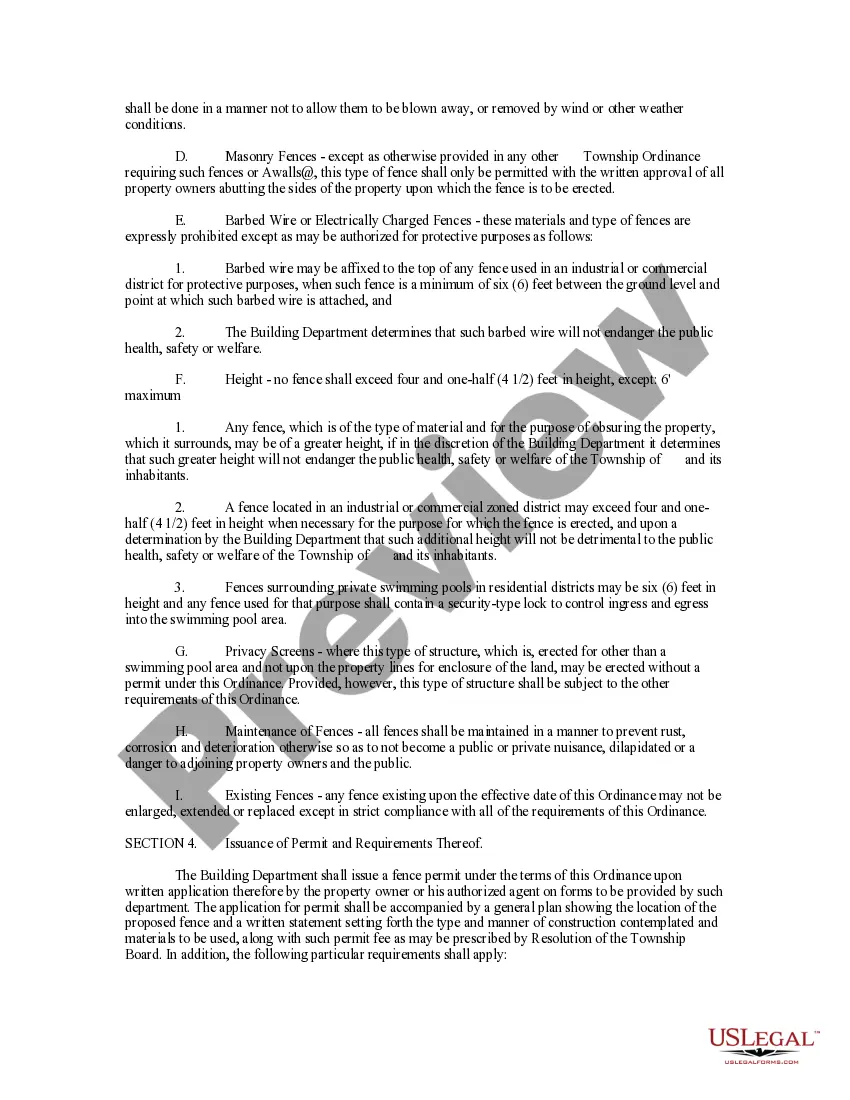
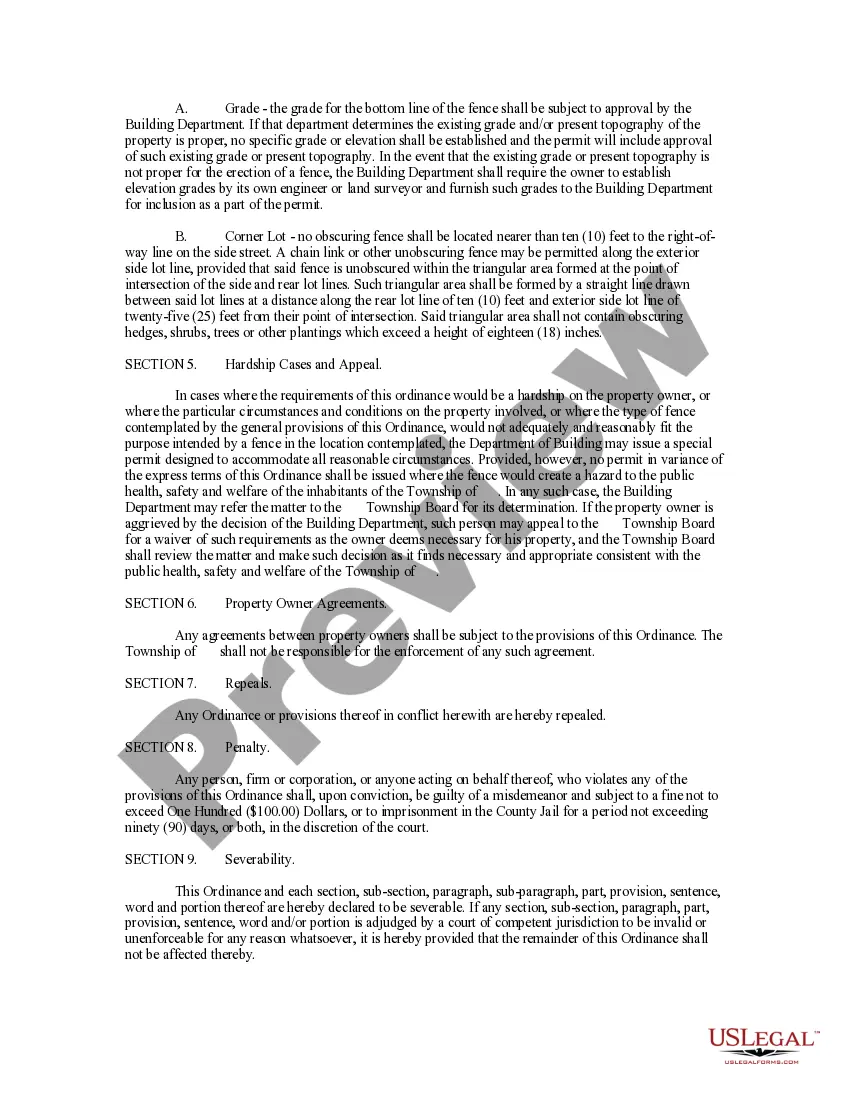
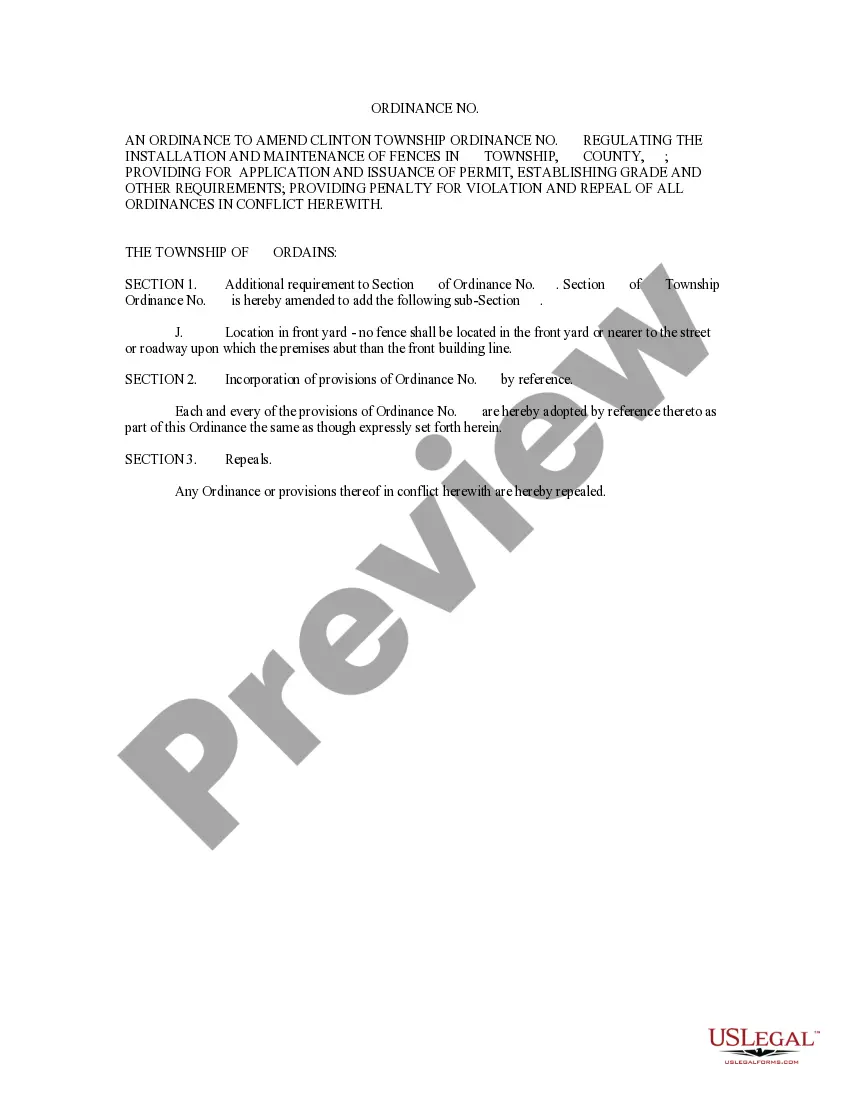
Get your form ready online
Our built-in tools help you complete, sign, share, and store your documents in one place.
Make edits, fill in missing information, and update formatting in US Legal Forms—just like you would in MS Word.
Download a copy, print it, send it by email, or mail it via USPS—whatever works best for your next step.
Sign and collect signatures with our SignNow integration. Send to multiple recipients, set reminders, and more. Go Premium to unlock E-Sign.
If this form requires notarization, complete it online through a secure video call—no need to meet a notary in person or wait for an appointment.
We protect your documents and personal data by following strict security and privacy standards.

Make edits, fill in missing information, and update formatting in US Legal Forms—just like you would in MS Word.

Download a copy, print it, send it by email, or mail it via USPS—whatever works best for your next step.

Sign and collect signatures with our SignNow integration. Send to multiple recipients, set reminders, and more. Go Premium to unlock E-Sign.

If this form requires notarization, complete it online through a secure video call—no need to meet a notary in person or wait for an appointment.

We protect your documents and personal data by following strict security and privacy standards.
Looking for another form?
How to fill out Fence Ordinance?
Are you searching to swiftly compose a legally-binding Montgomery Fence Ordinance or perhaps any other document to address your personal or corporate issues.
You have two choices: reach out to an expert to create a valid document for you or draft it completely yourself.
First, confirm that the Montgomery Fence Ordinance aligns with your state’s or county’s regulations.
If the form includes a description, ensure you check what it is designed for. If it does not match your needs, restart your search using the search bar at the top.
- The good news is there is an alternative - US Legal Forms.
- This service will assist you in obtaining professionally written legal documents without exorbitant charges for legal assistance.
- US Legal Forms features an extensive catalog of over 85,000 state-compliant form templates, including Montgomery Fence Ordinance and form bundles.
- We provide documentation for various scenarios: from divorce forms to real estate document templates.
- Having been in the industry for over 25 years, we have earned a pristine reputation among our clientele.
- Here’s how you can become one of our satisfied customers and acquire the necessary template without hassle.
Form popularity
FAQ
In Maryland, you may build your fence close to the property line, as the Montgomery Maryland Fence Ordinance allows. Nevertheless, it is crucial to confirm precise measurements and local regulations to maintain compliance. Keeping good relationships with neighbors during this process can also be beneficial.
No. The maximum height for fences in Maryland is six feet. You will need a variance or special exception to construct a taller fence.
In most cases, you can build a fence on an easement that runs through your property. However, the dominant estate (for example, the utility company) may need to take down the portion of the fence that runs over the easement for a certain activity, such as repairing the sewer main.
The building distance limit depends on the structure you intend on building. It usually ranges between five to 15 feet. It is important to communicate property boundaries with your neighbor before beginning any permanent or semi-permanent projects, due to the risk of township or county penalties.
Sheds with a floor area of 144 sf or less may be constructed only in a rear yard; they may not be placed in a front or side yard. Such sheds must not be located any closer than 5' from the rear and side property lines. Montgomery County setback requirements for sheds (and all accessory structures) are the same.
Even where you will be installing the fence within your own property makes a difference. A privacy fence in your backyard will often not require a permit unless it is to be over 6 feet tall, depending on where you live, while the cut-off for the same type of fence in your front yard may be just 3.5 feet.
In most cases, if you add an outdoor structure such as a fence, you need a permit. However, it specifically depends on the codes, zoning and regulations of where you live. In some cases, you may not need a permit but you must adhere to the local regulations regarding height limits and specific fence materials.
Typically, fences are installed anywhere from 2 to 8 inches from a property line in most areas. Some areas might allow to go right up to a property line, especially if you live in an urban row house where every inch makes a difference!
Without a neighbour's agreement, there is no right to build a wall over the boundary line.
Fences taller than four (4) feet require a permit. Fences four (4) feet and under do not need a permit unless located in a HISTORICAL/PROTECTED AREA or located on a CORNER LOT.