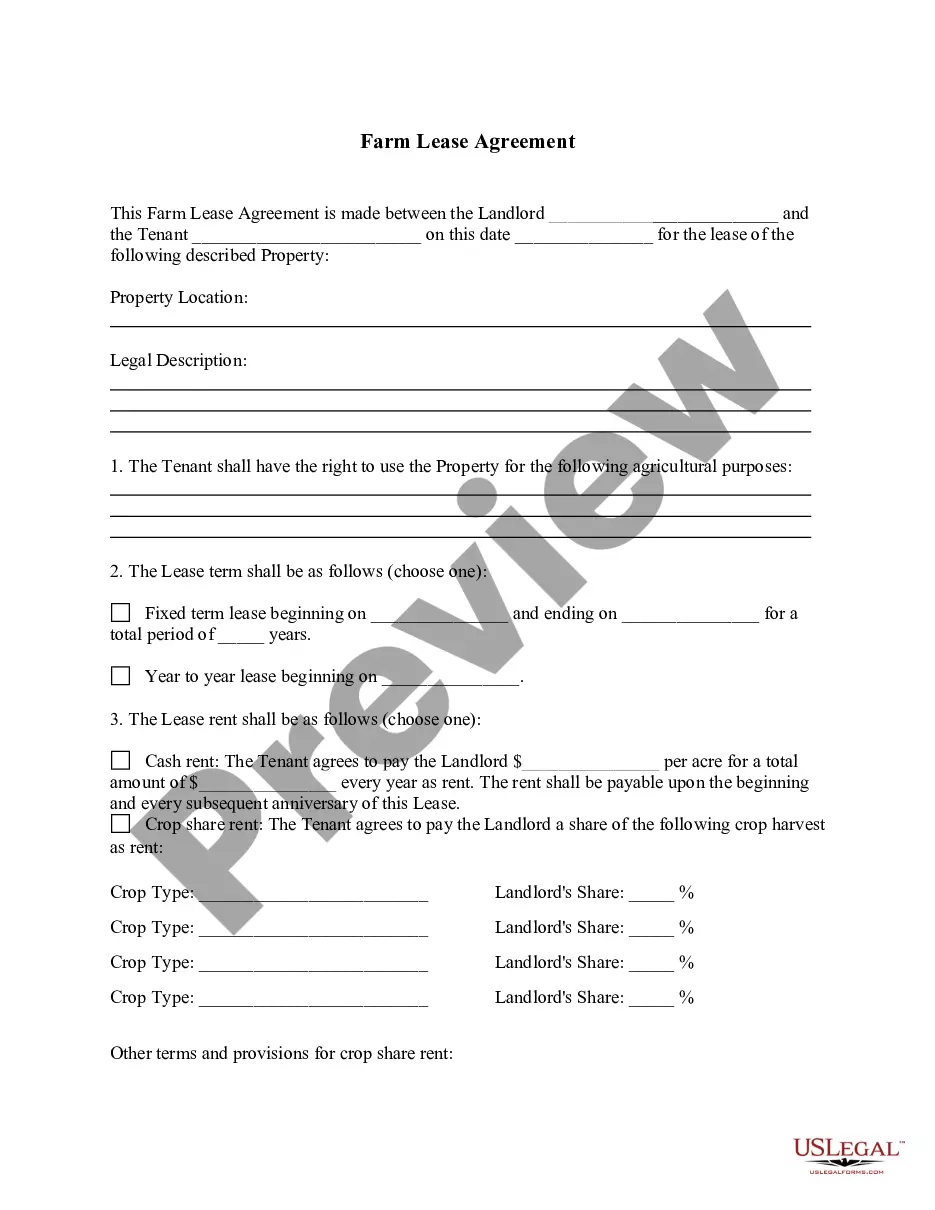
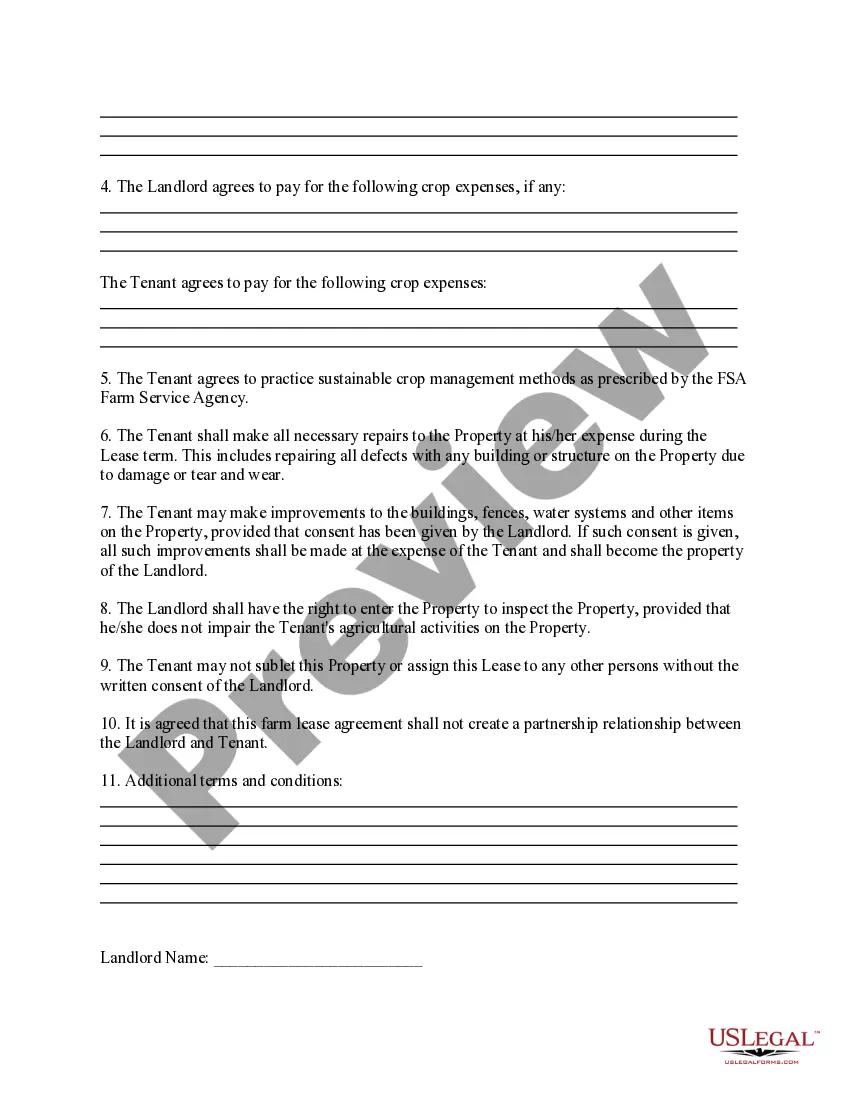
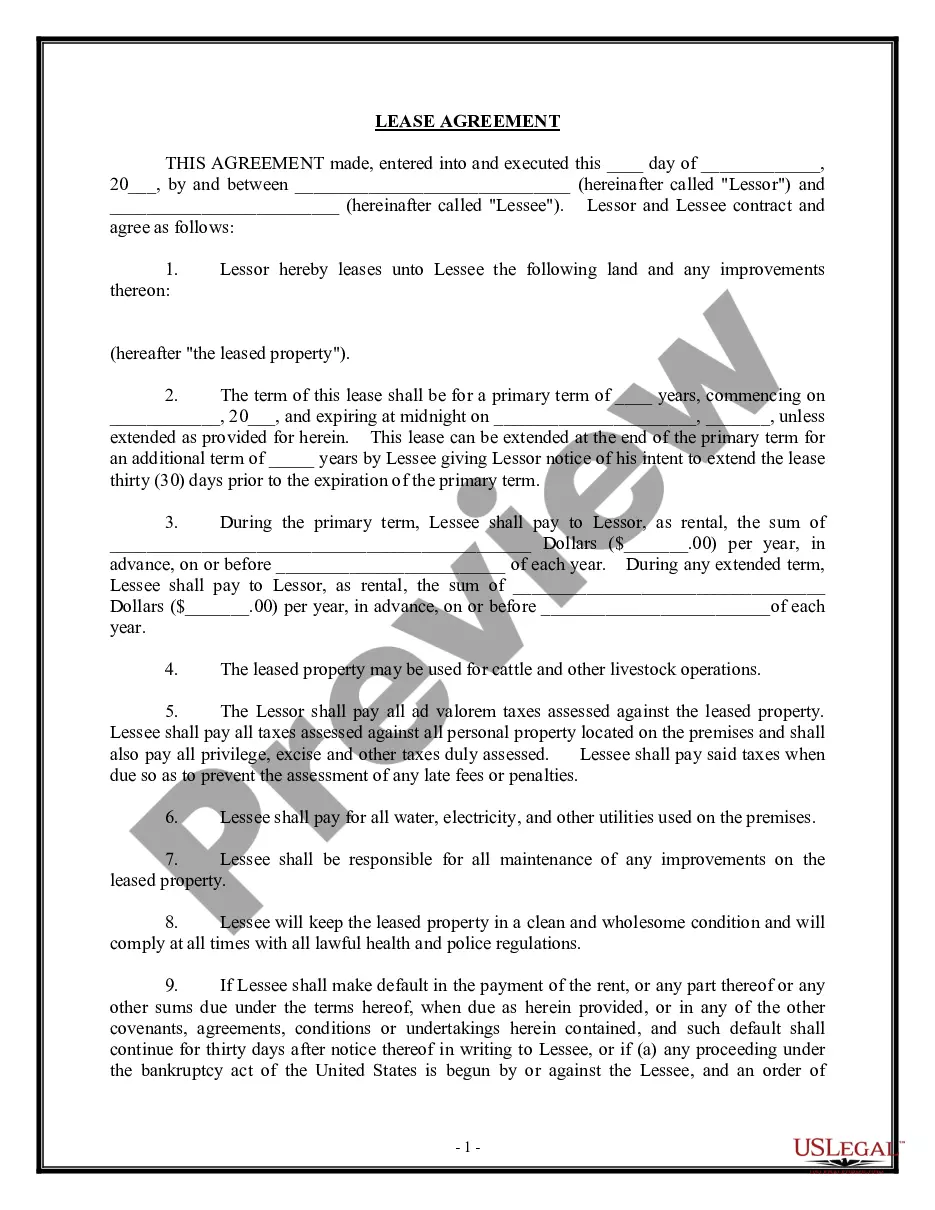
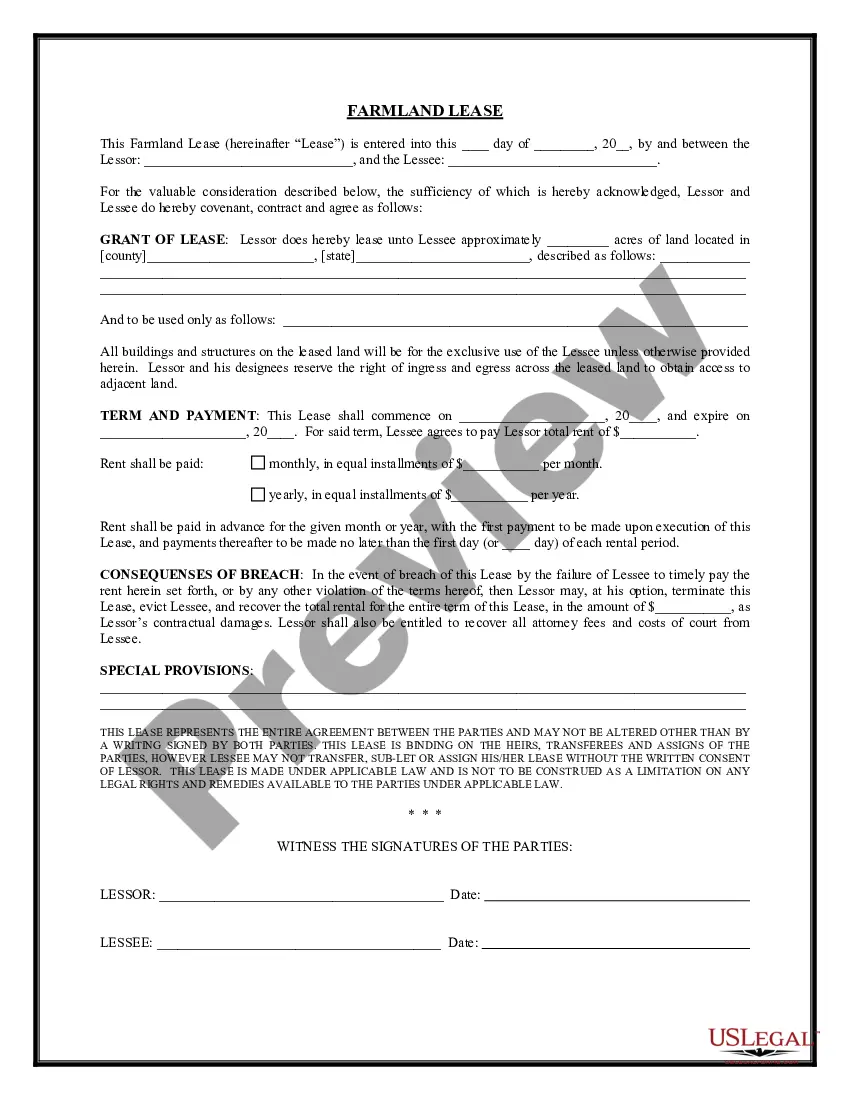
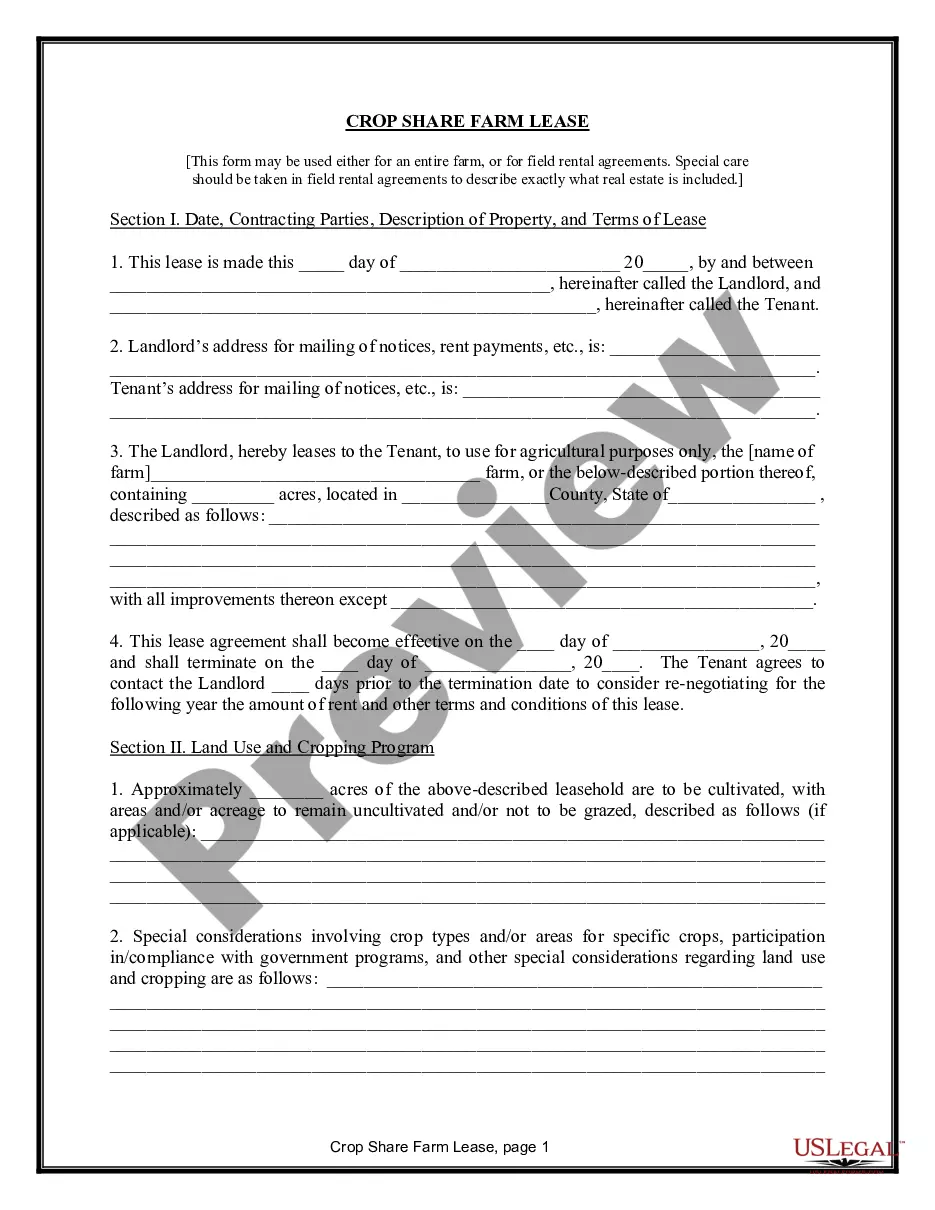
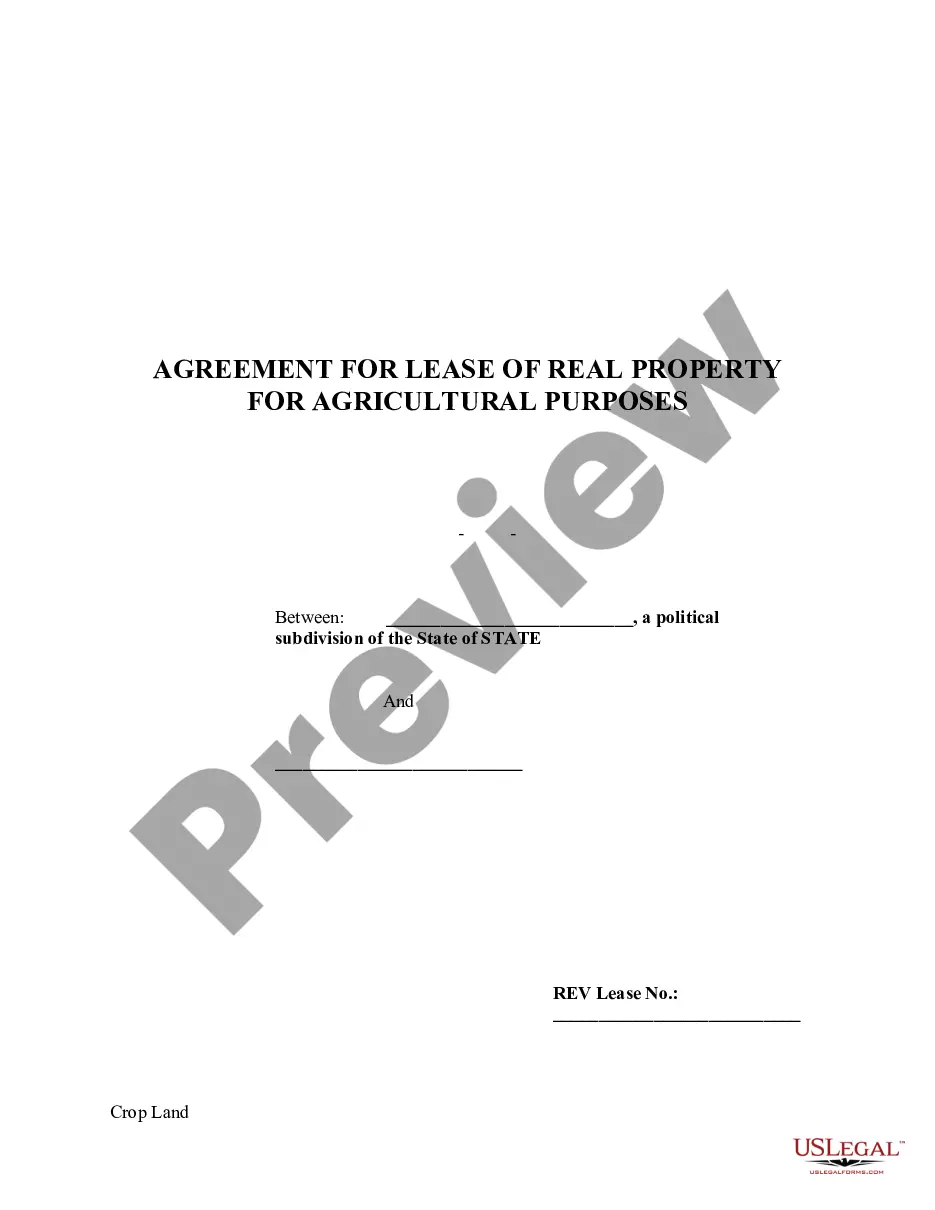
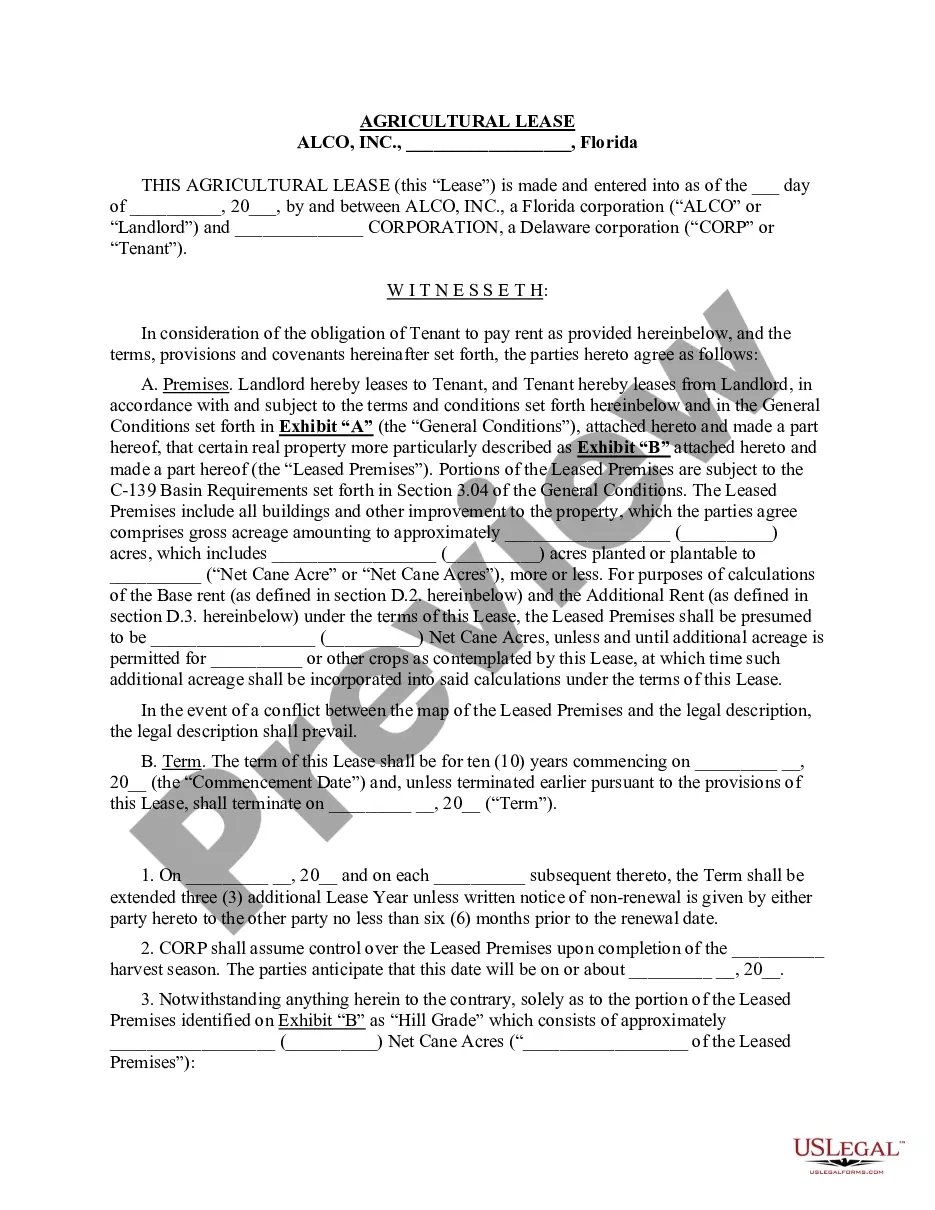
This is a sample Farm Lease Agreement. This type of an agreement is between an owner of farmland and a tenant who plans to use the land for farming or raising livestock. The property owner can make and sign a Farm Lease to safeguard interests and generate income without having to work the farm or ranch.
Yes, putting your agreement in writing is key. It helps avoid misunderstandings down the line, serving as a reference point whenever questions pop up. Think of it as a map to navigate your farming journey!
Breaking a lease early can be tricky! Typically, there are terms in the agreement that outline how to handle it, including any penalties or notice periods. It’s best to read the fine print to avoid stepping on toes.
Generally, changes to the land need to be approved by the landowner. So, if a farmer wants to put up a fence or build a barn, they'd need the landlord's okay first. It's all about keeping everyone happy.
A good lease should cover the rental terms, payment schedule, maintenance responsibilities, and what happens at the end of the lease. Basically, it’s sorting out the fine print so both parties are on the same page.
The length of a lease can vary. Some leases are for a year while others can stretch out for several years. It's like a long-term deal—kind of like the difference between a summer fling and a steady relationship!
Typically, there are two main parties: the landowner, who rents out the land, and the farmer, who leases the land to grow crops or raise livestock. Think of it as a team working together on a shared goal.
A Basic Farm Lease Agreement is a legal document that outlines the terms and conditions under which a farmer can use a piece of land for farming. It's like a handshake in writing, but with more detail!
Trusted and secure by over 3 million people of the world’s leading companies