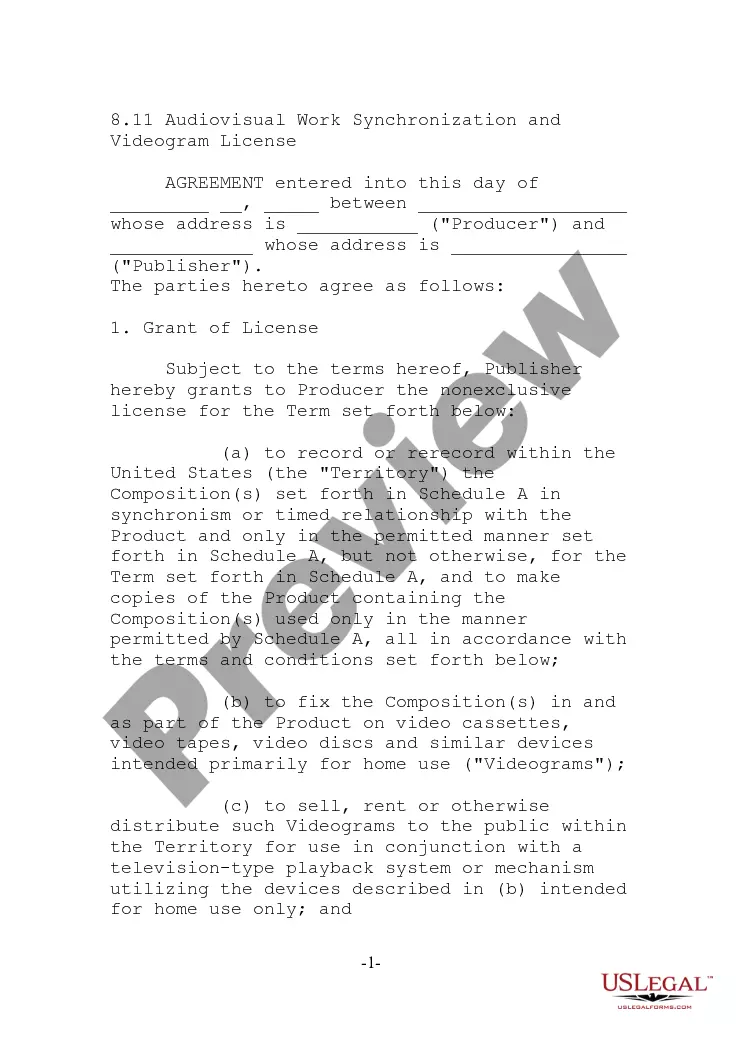
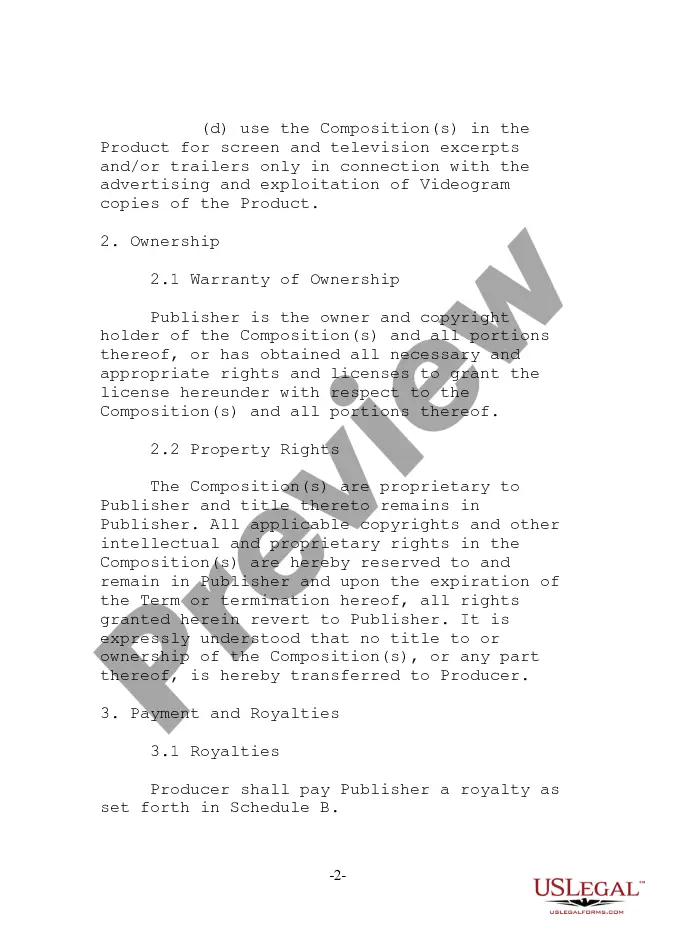
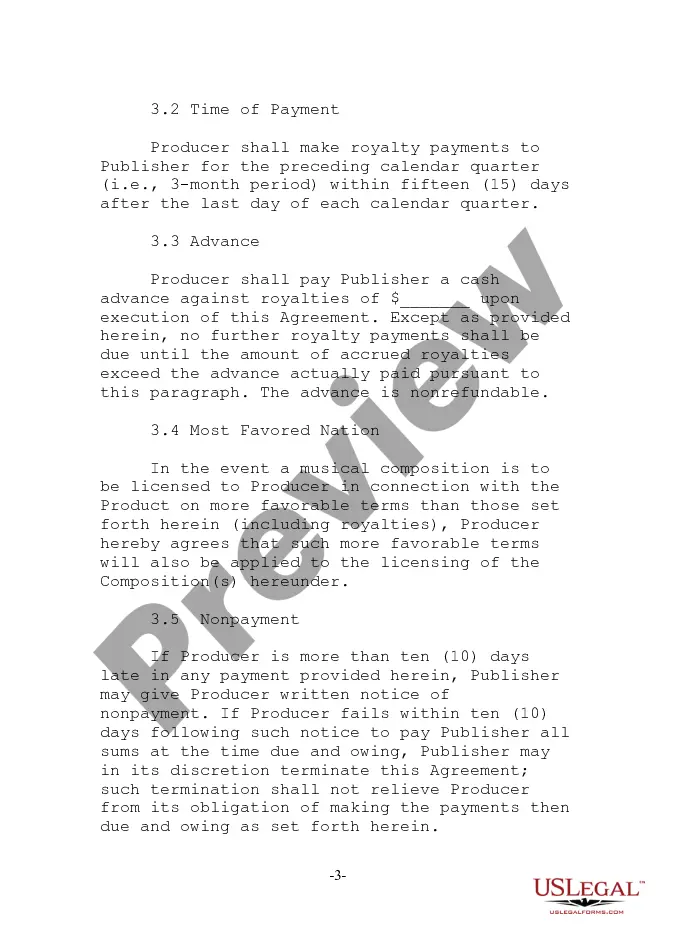
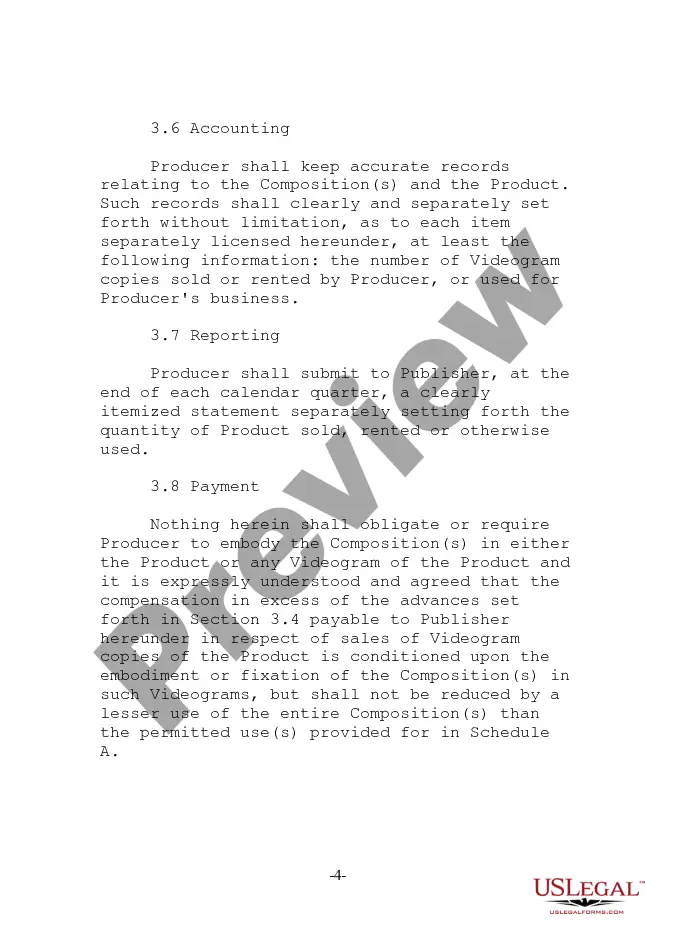
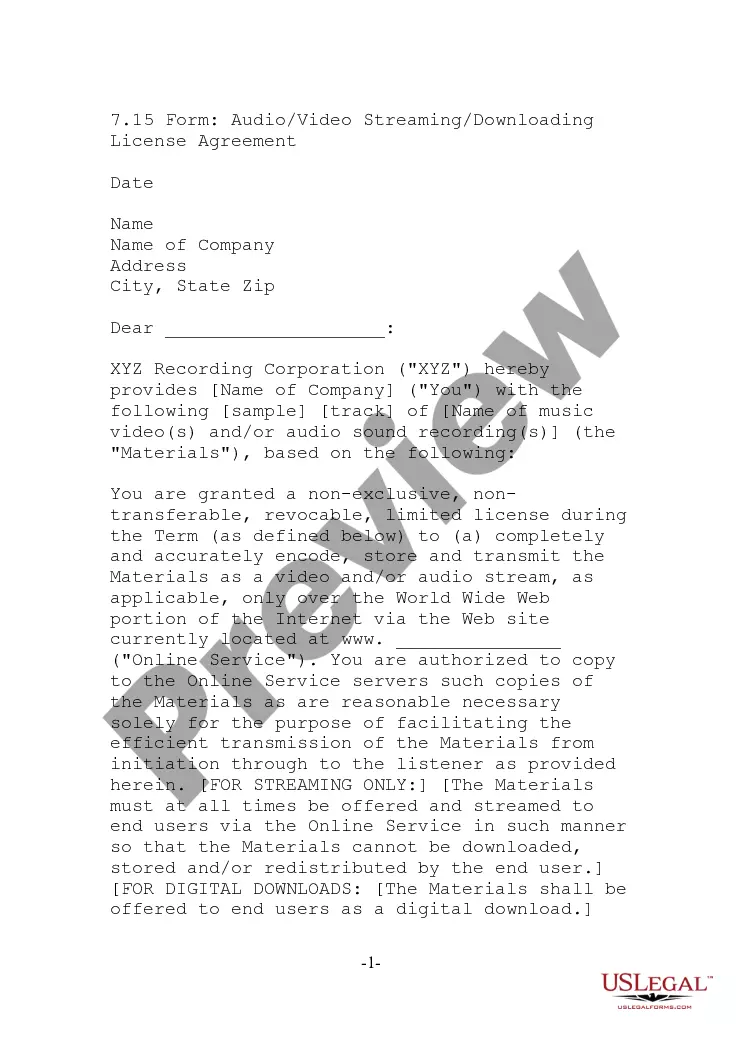
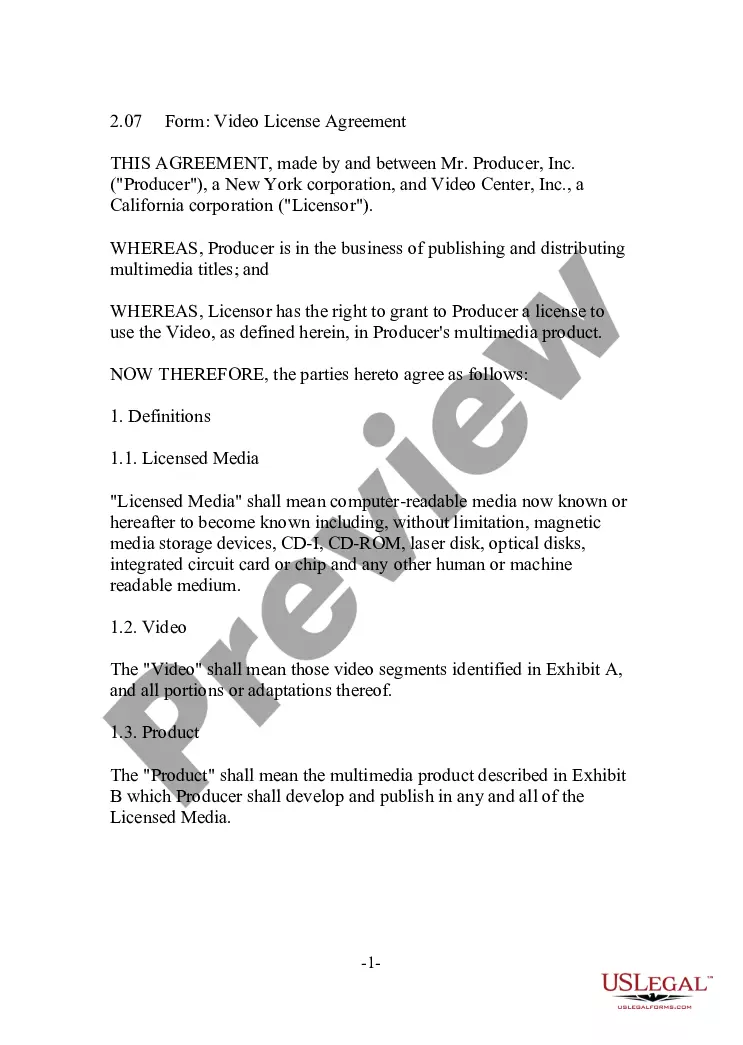
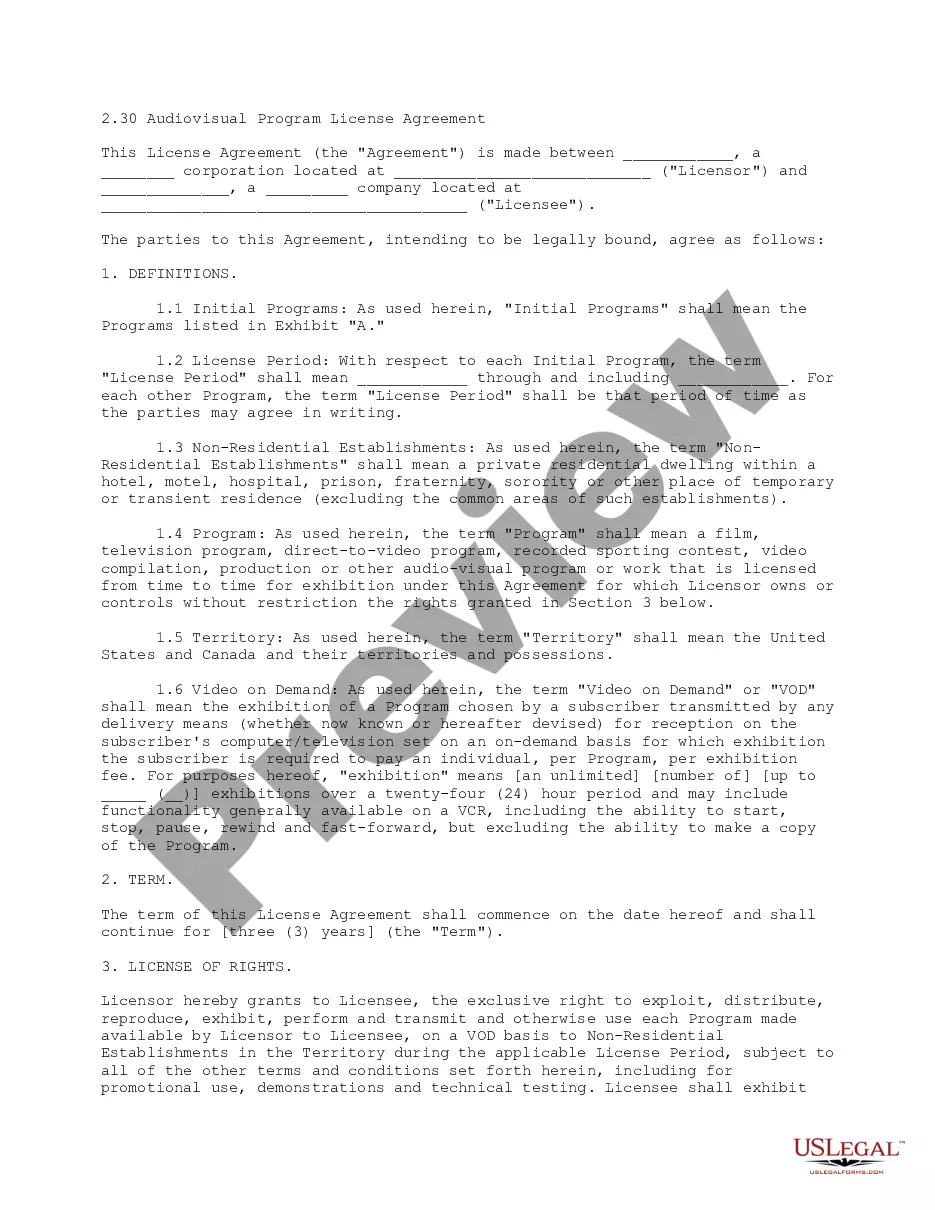
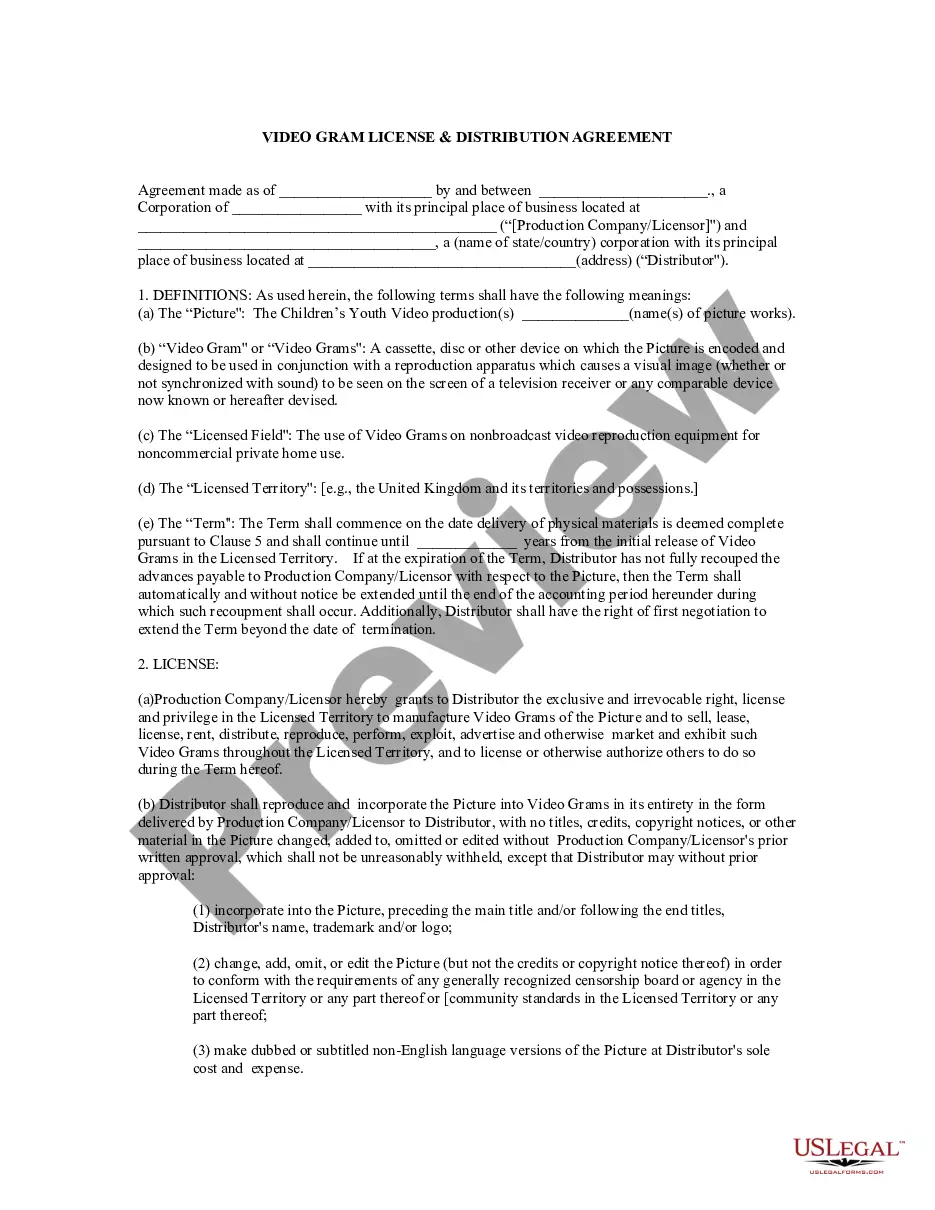
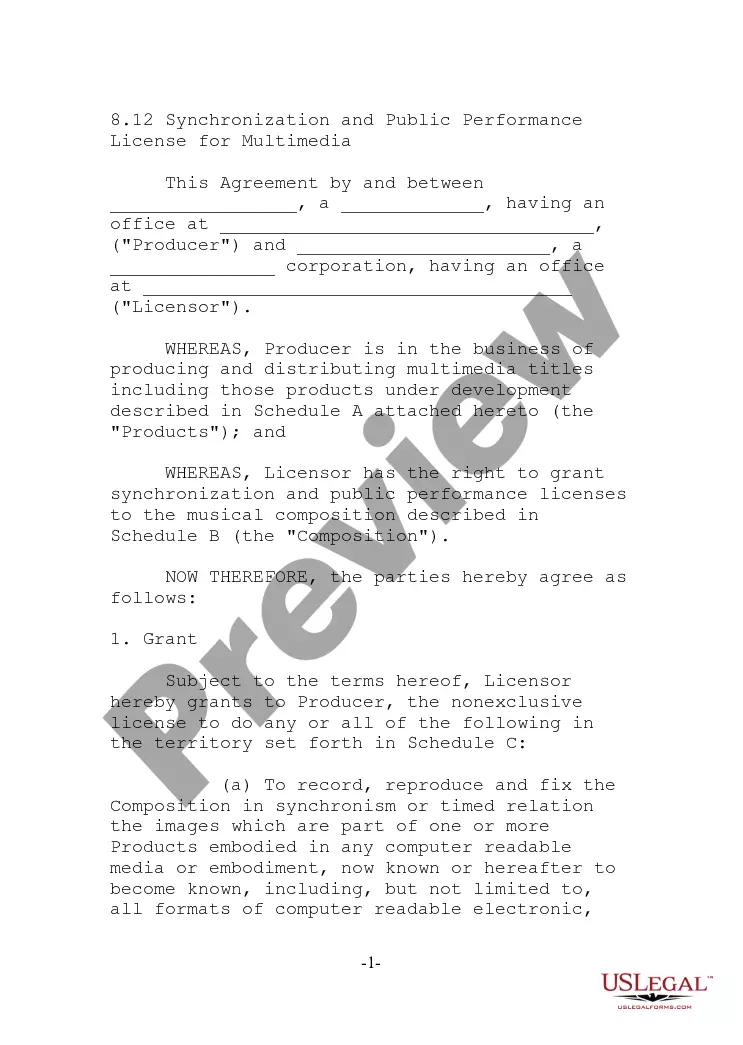
This sample form, a detailed Audiovisual Work Synchronization and Videogram License document, is adaptable for use with entertainment, new products, intellectual property/multimedia business and other related areas. Tailor to fit your circumstances. Available in Word format.
The time it takes can vary, but being patient is key. It's often quicker than you might think, as long as you have all your ducks in a row and reach out to the right people.
Using a song without the proper license can land you in hot water. You might face legal action, and believe me, it’s a lot easier to ask for permission than to deal with the consequences later.
Not exactly! You can only get a synchronization license for songs that are still under copyright or for which the rights holder has given permission. Always check first, or you might run into a bump in the road!
Applying for a synchronization license usually involves reaching out to the copyright owner or their representative. It's like knocking on a door to ask for permission before stepping inside!
These licenses are typically issued by rights organizations or music publishers. They help make sure that creators get their fair shake when someone uses their work.
A videogram license is essential if you're looking to distribute or sell a video that contains protected content. Think of it as a pass that ensures you’re playing by the rules while sharing your creative work.
An audiovisual work synchronization license allows you to use music in connection with moving pictures, like video or films. It's the ticket to making sure everything flows smoothly between sound and sight.