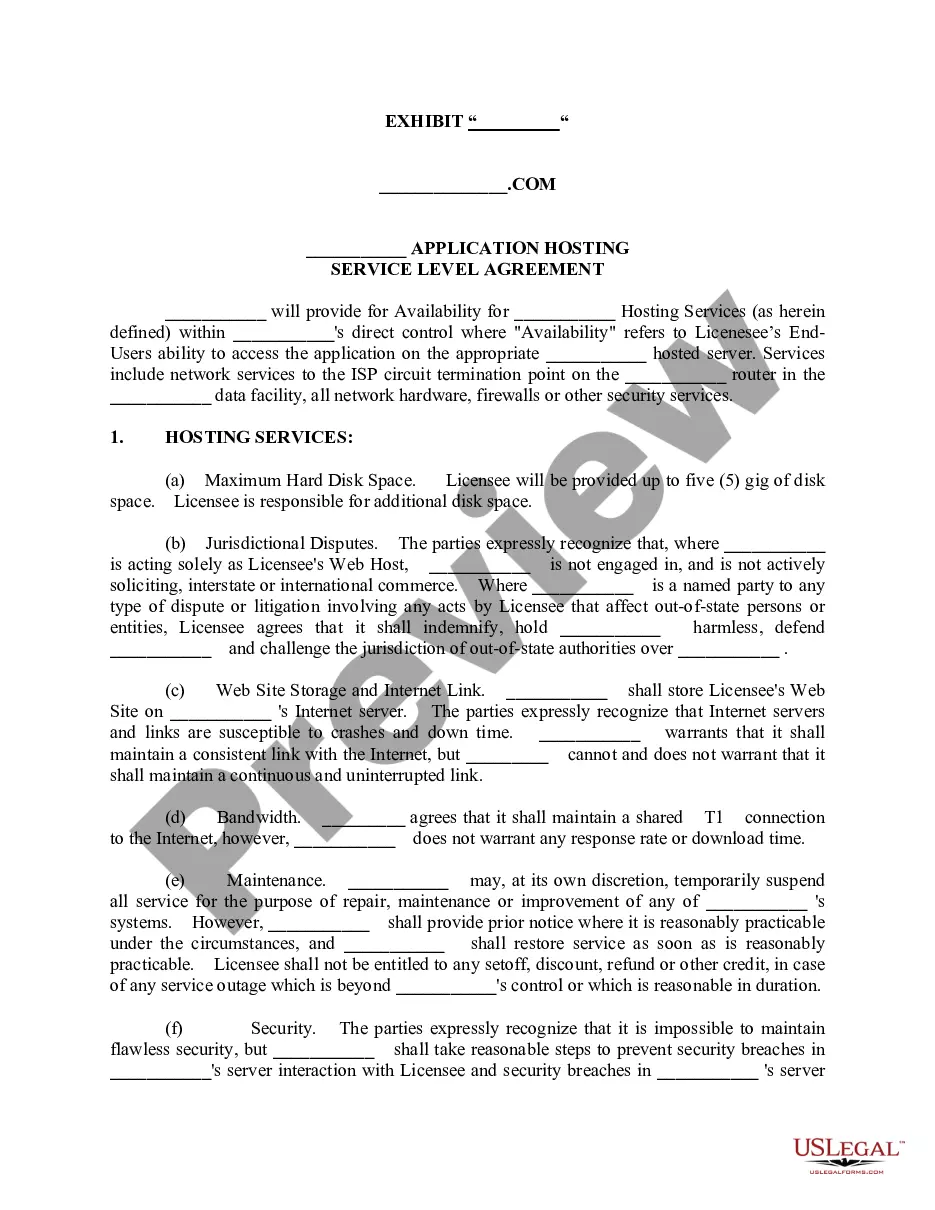
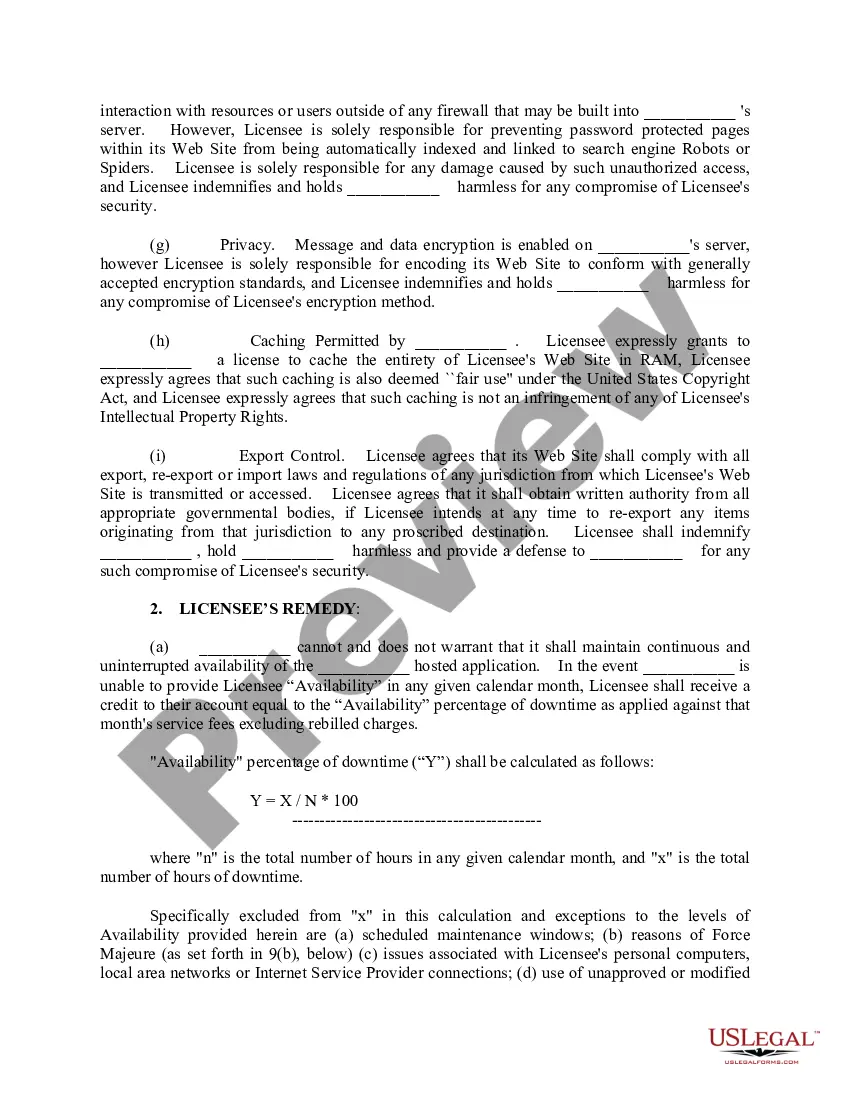
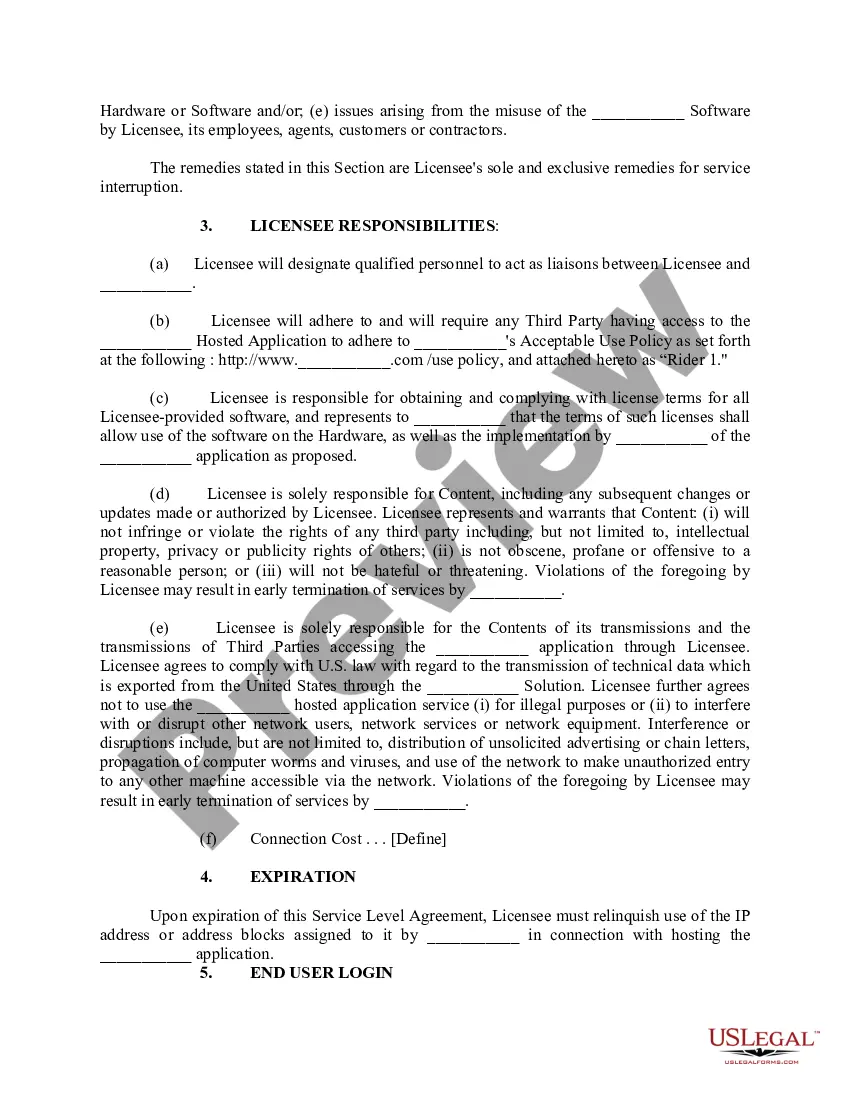
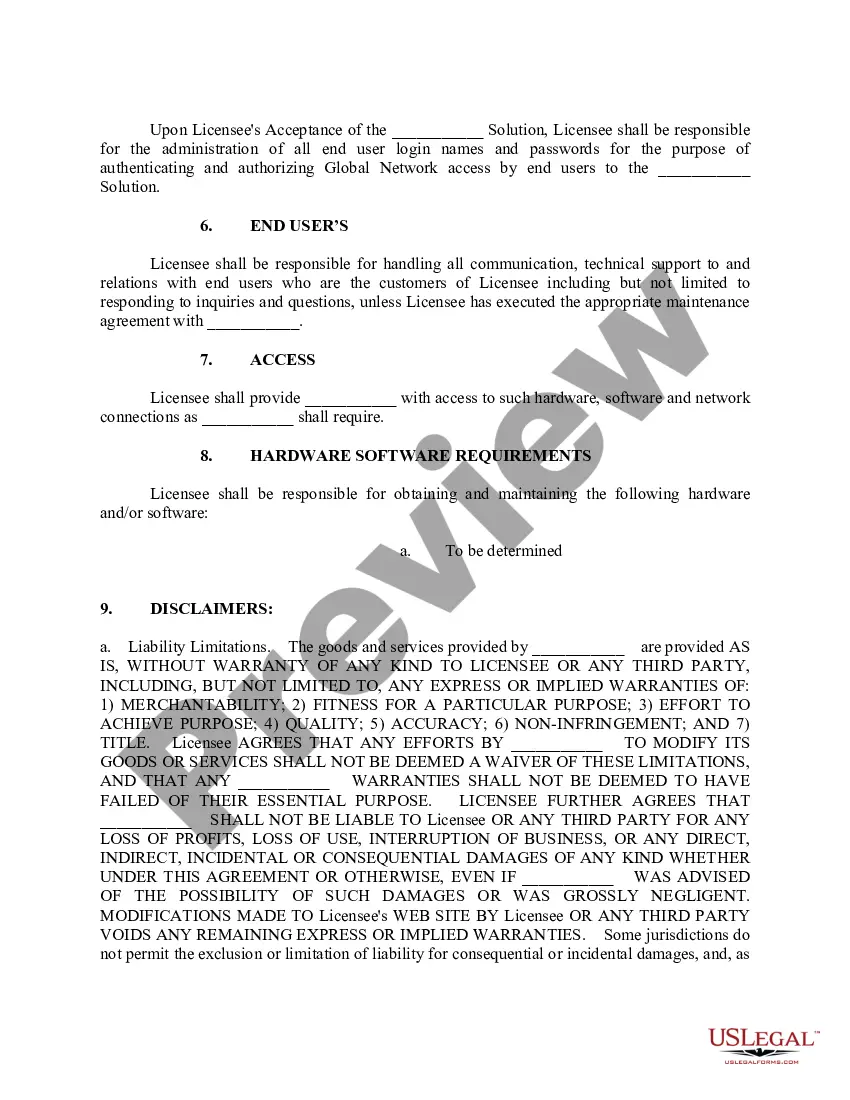
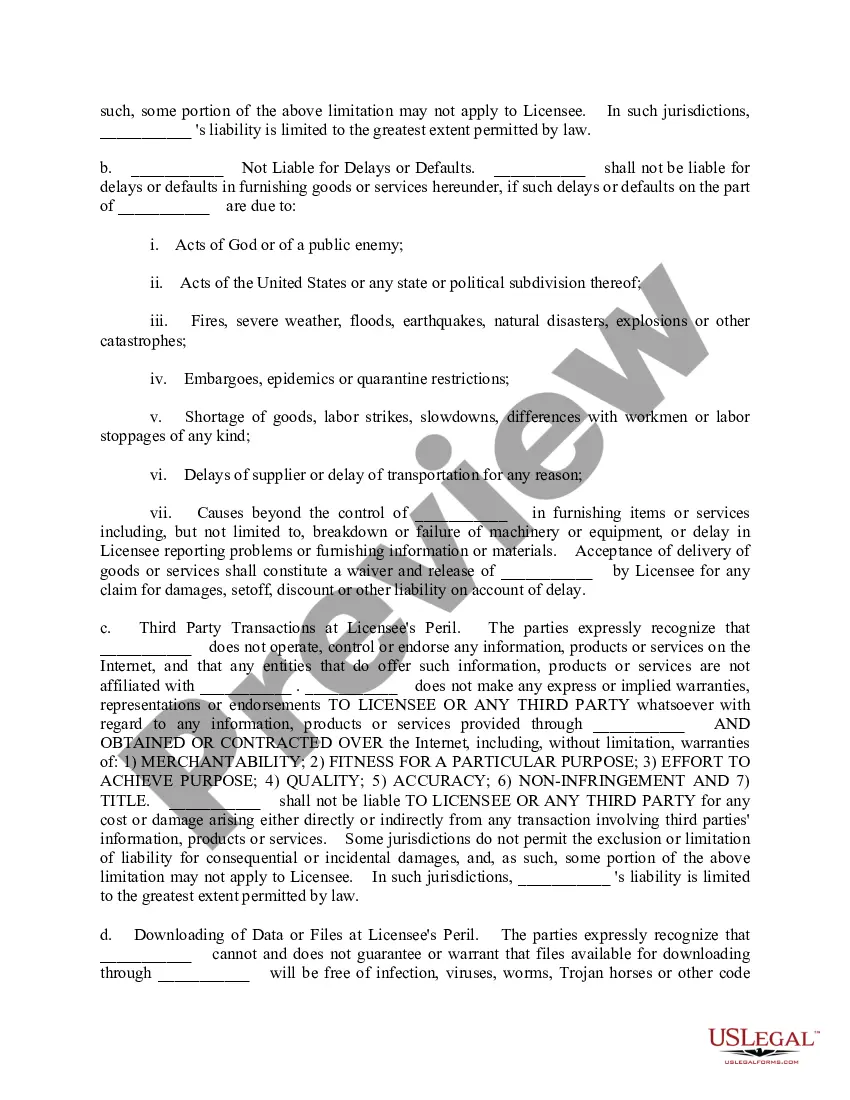
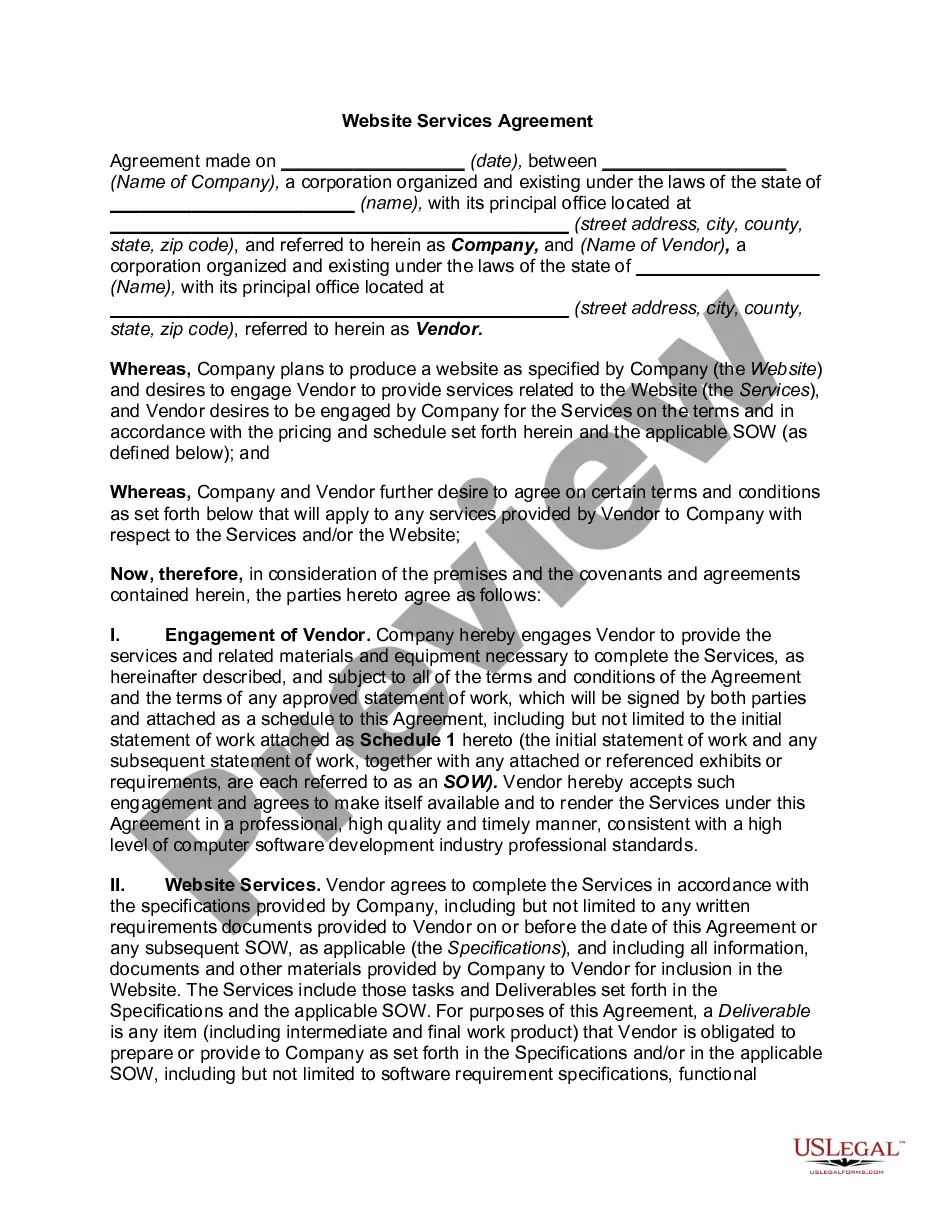
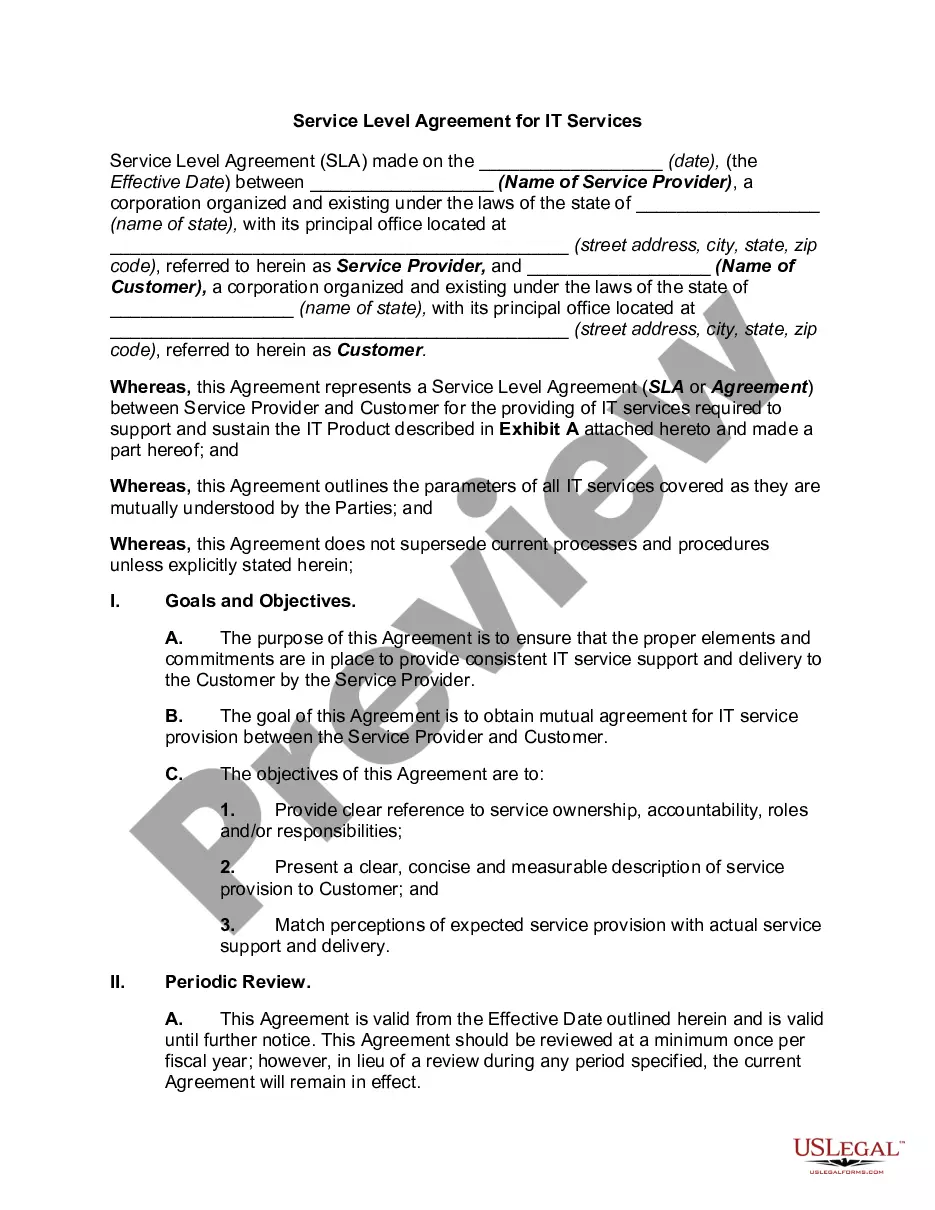
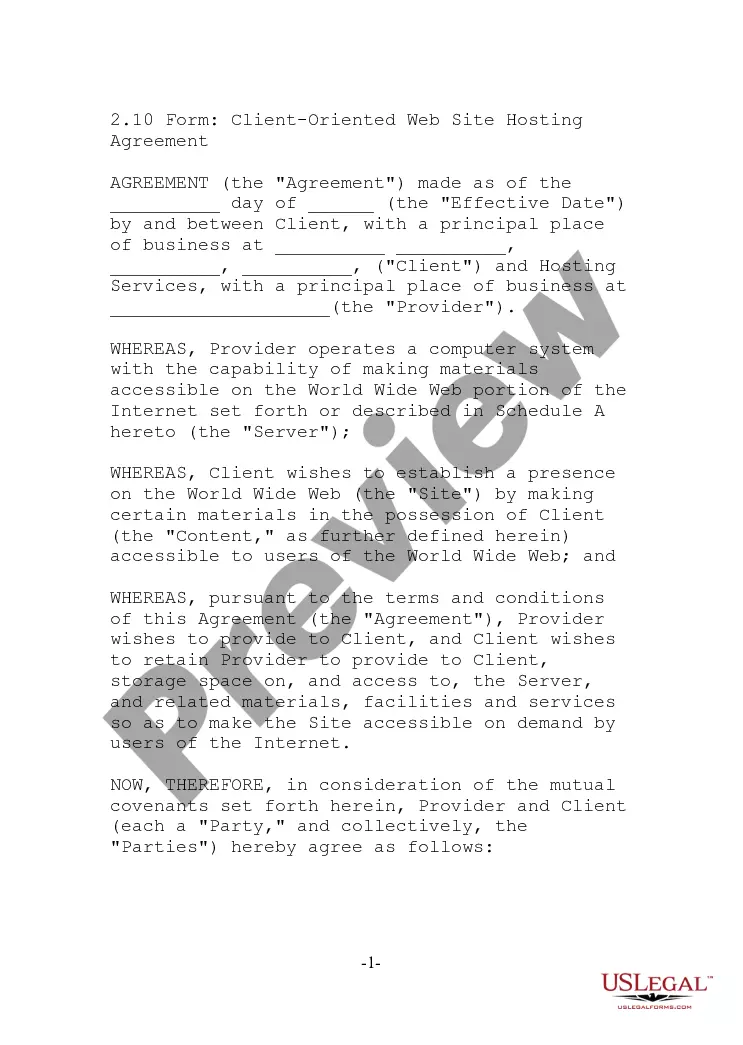
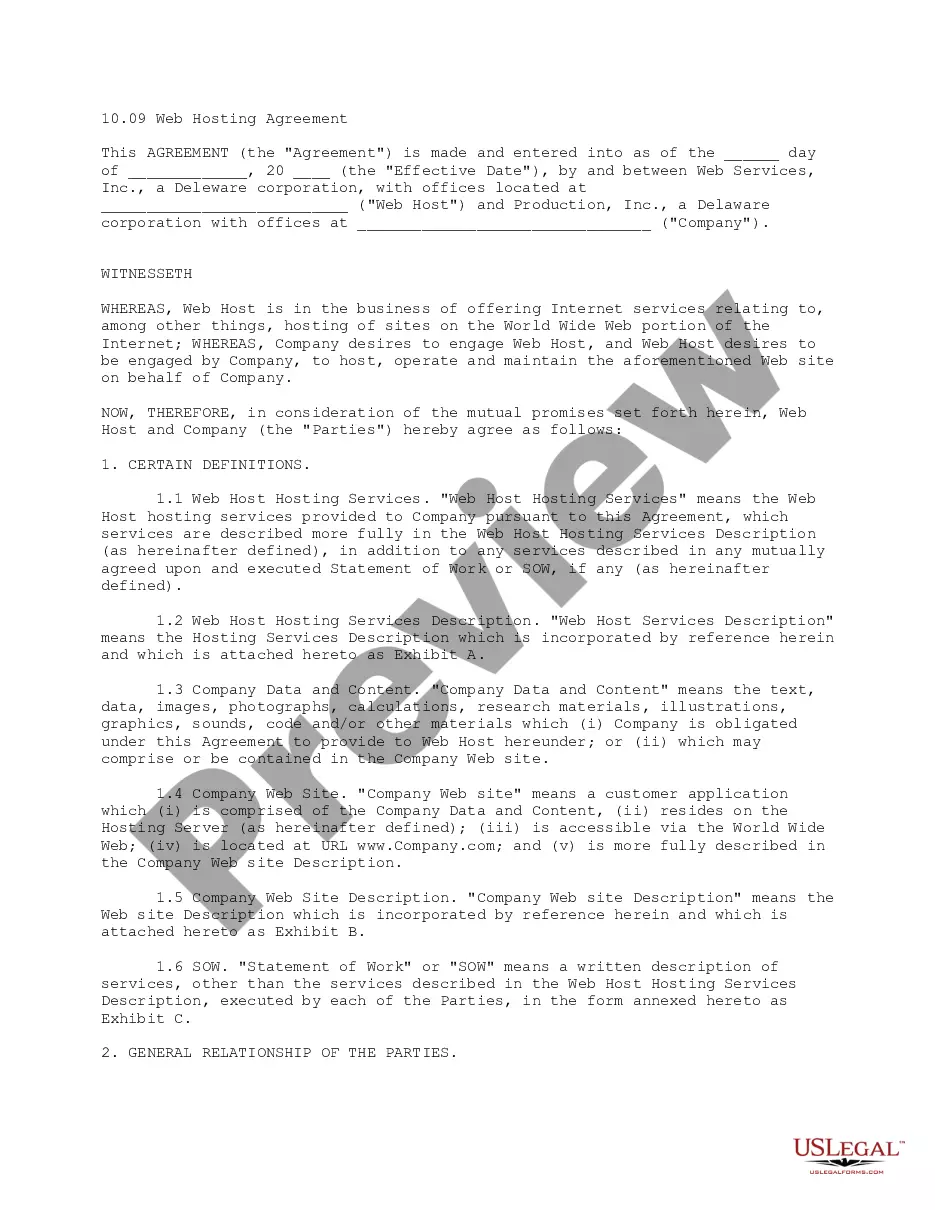
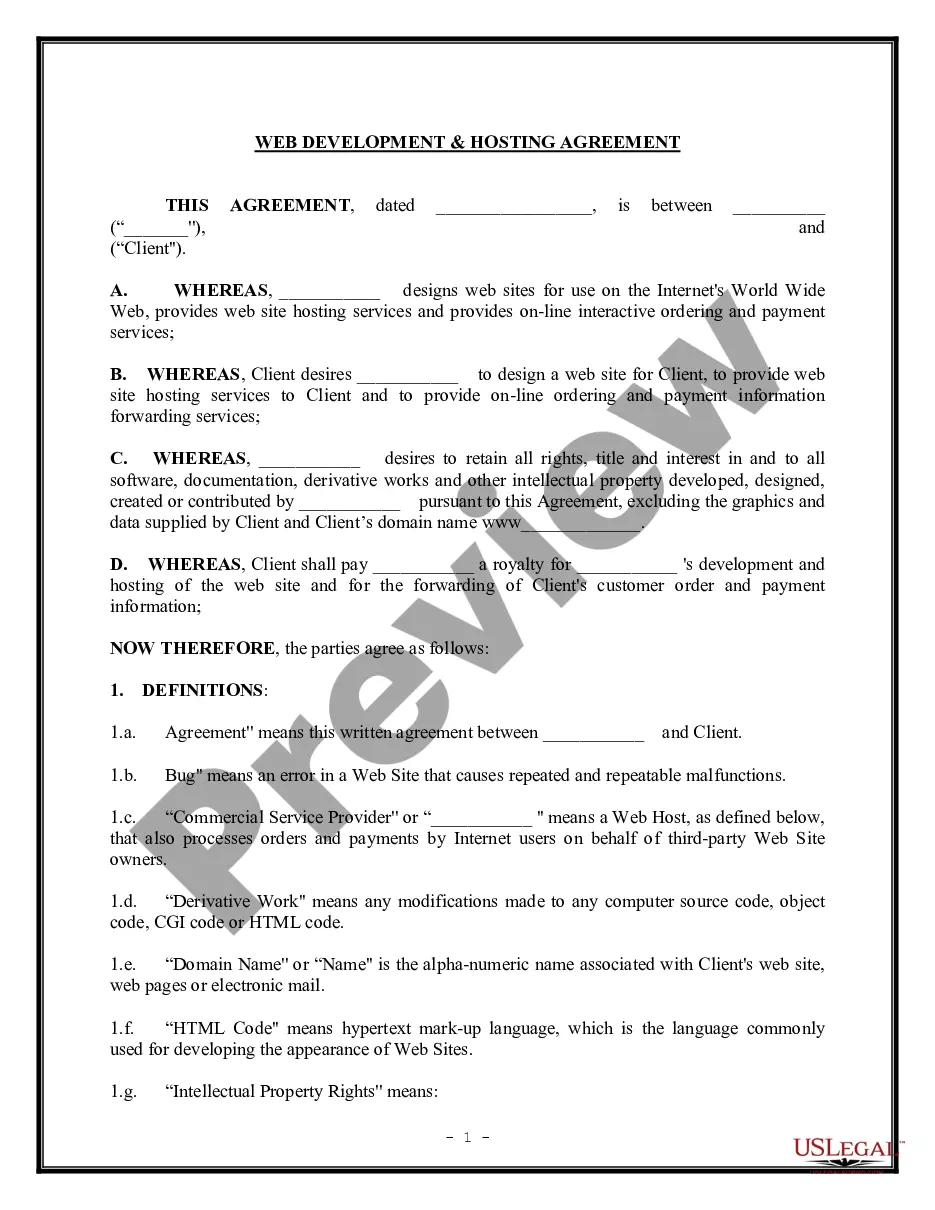
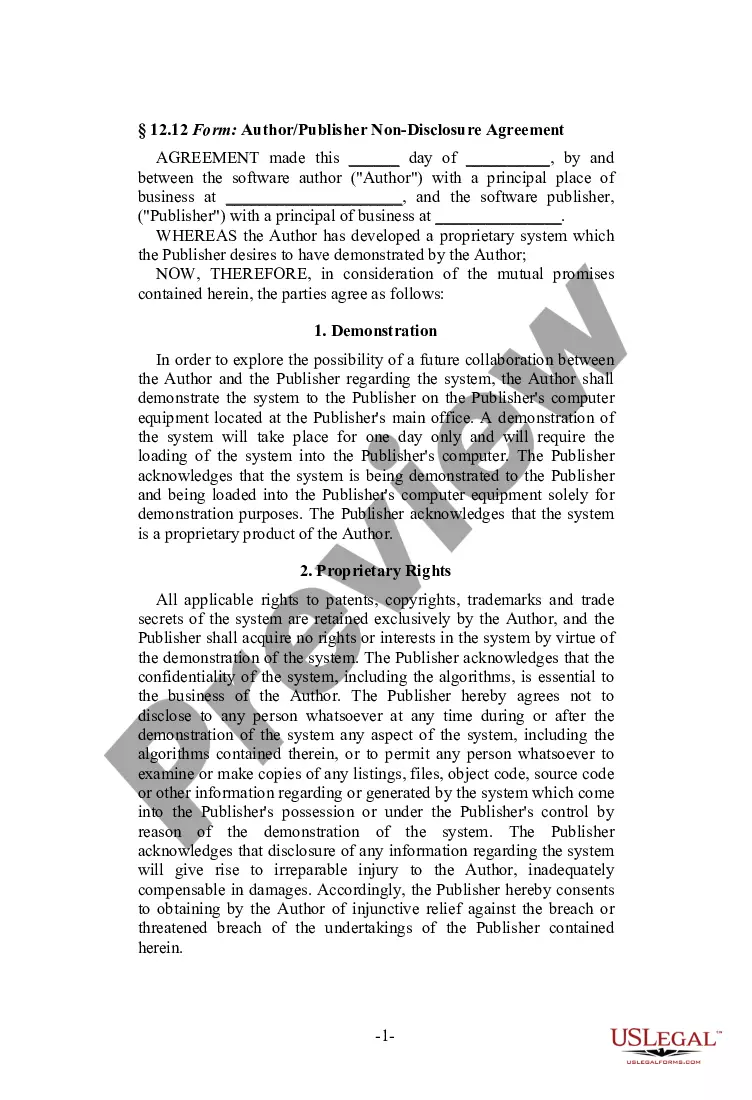
This form is an Application for Hosting a Service Level Agreement. The licensee agrees to provide the end-user with access to such hardware, software, and network connections that may be required. The document also provides that the licensee is given up to five gig of disk space and the licensee will be responsible for additional disk space. The parties expressly recognize that the Internet contains unedited materials, some of which are unlawful, indecent, or offensive to the licensee, and access to such materials by the licensee is done at the licensee's sole risk.
Many providers are willing to tailor the SLA to fit your business needs. If you’ve got special requirements, reach out and see how they can make it work for you—after all, one size doesn’t fit all!
Yes, SLAs can usually be updated, but it’s important to keep an eye out for any changes that may not sit well with you. Always read the fine print to stay in the loop!
If the hosting provider drops the ball and doesn’t meet the SLA, they typically have to take responsibility, which might involve credits or other remedies. It's like getting a bit of a refund when a service doesn't live up to its promise.
The SLA should spell out the support options available, whether that's 24/7 help through phone, chat, or email. You want to know that when you hit a bump in the road, there's someone there to lend a helping hand.
Most SLAs promise 99.9% uptime, which means your application should be running smoothly almost all the time. It’s like having a reliable friend who rarely lets you down!
To see if the SLA is a good fit for you, check if it covers the essentials for your business, like uptime guarantees and customer support. Make sure it matches what you're looking for—after all, you want to be on solid ground!
A Service Level Agreement, or SLA, is like a promise between you and the hosting provider. It outlines the level of service you can expect, including things like uptime, support response times, and what happens if things go wrong.