This website is not affiliated with any governmental entity
Public form
Description
Official Pattern Jury Instructions adopted by Federal 7th Circuit Court. All converted to Word format. Please see the official site for addional information. www.ca7.uscourts.gov/pattern-jury-instructions/pattern-jury.htm
Yes, one defendant can testify against another, but they have to be careful about how they do it. That testimony can be a double-edged sword, helping or hurting their case.
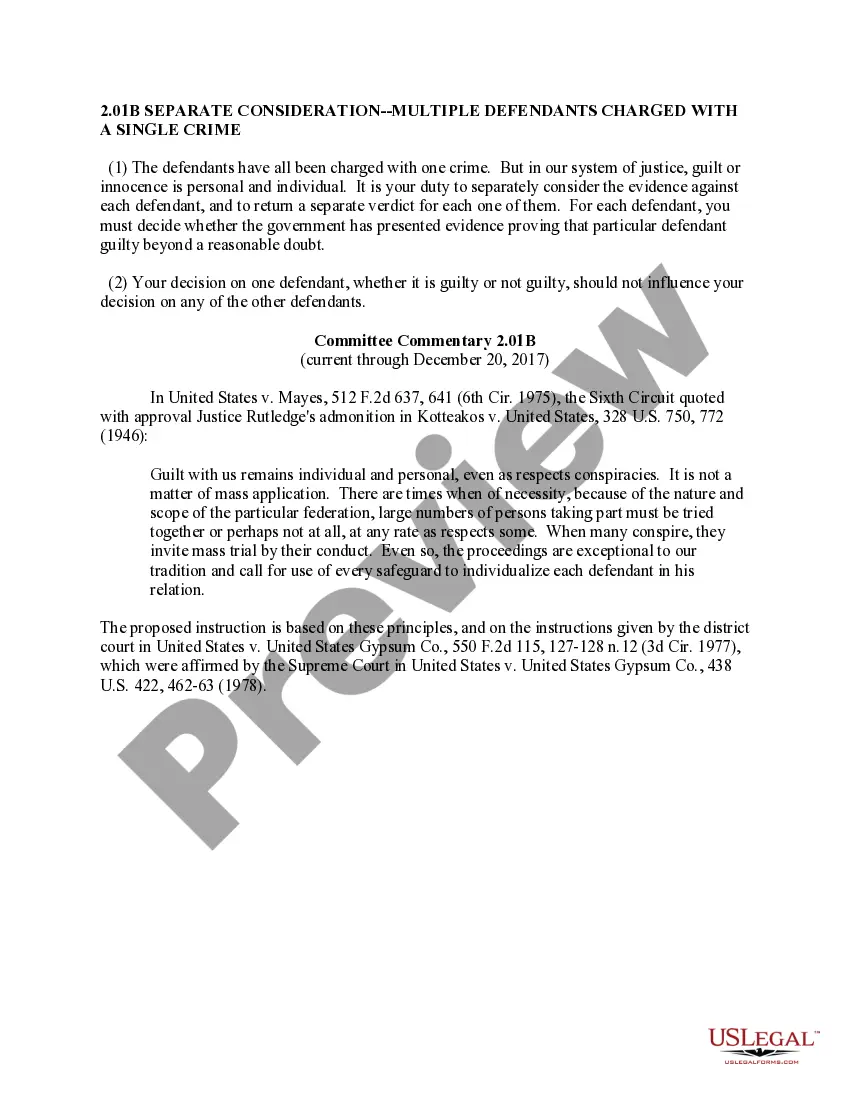
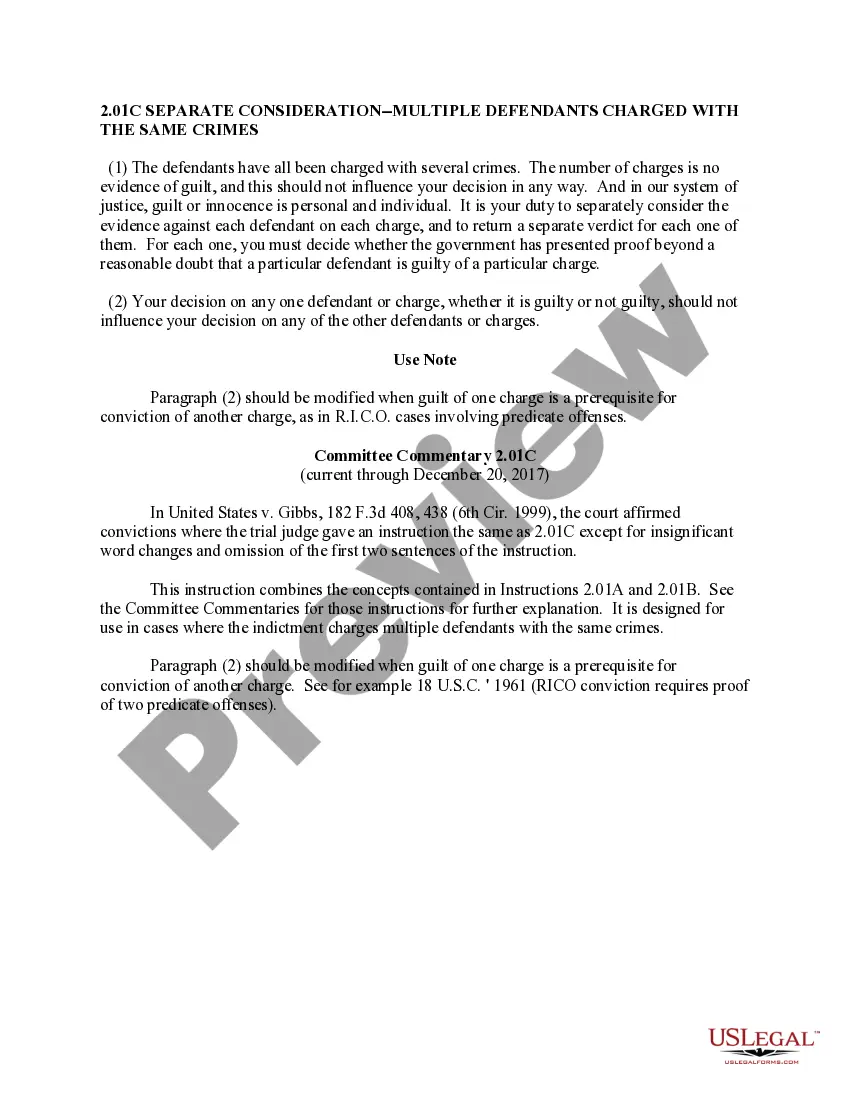
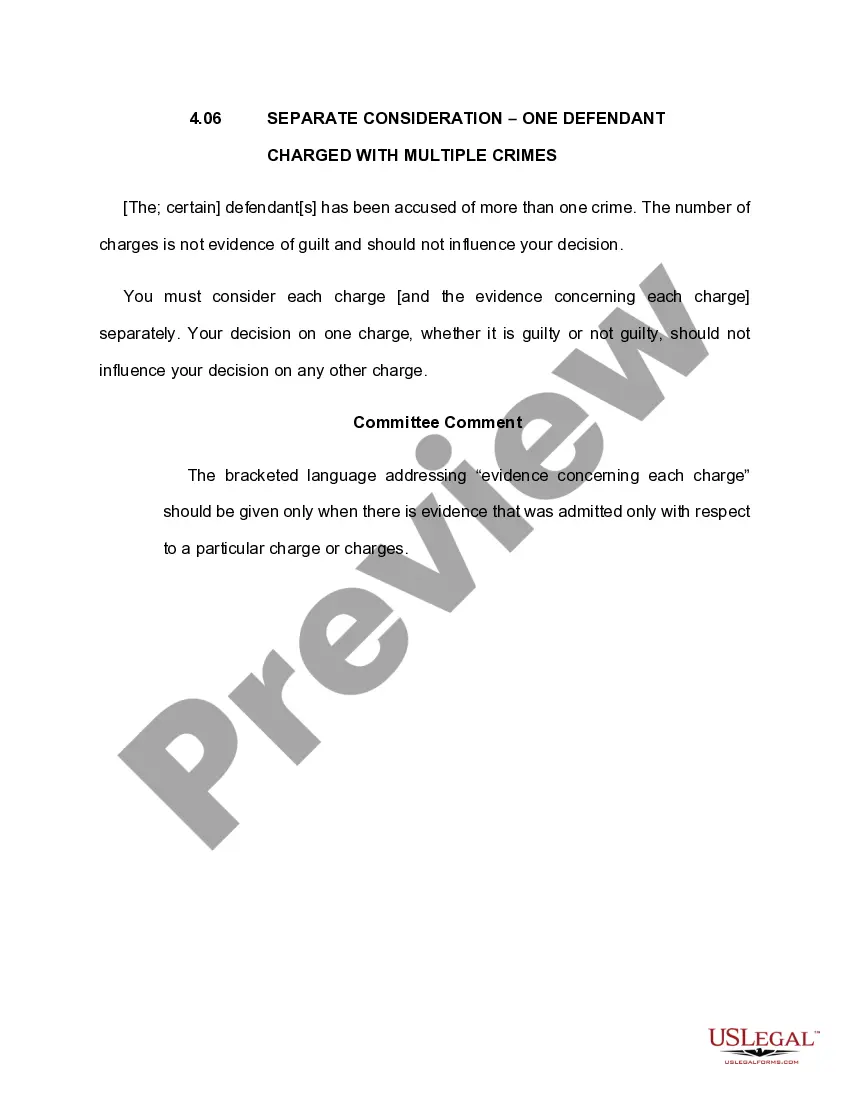
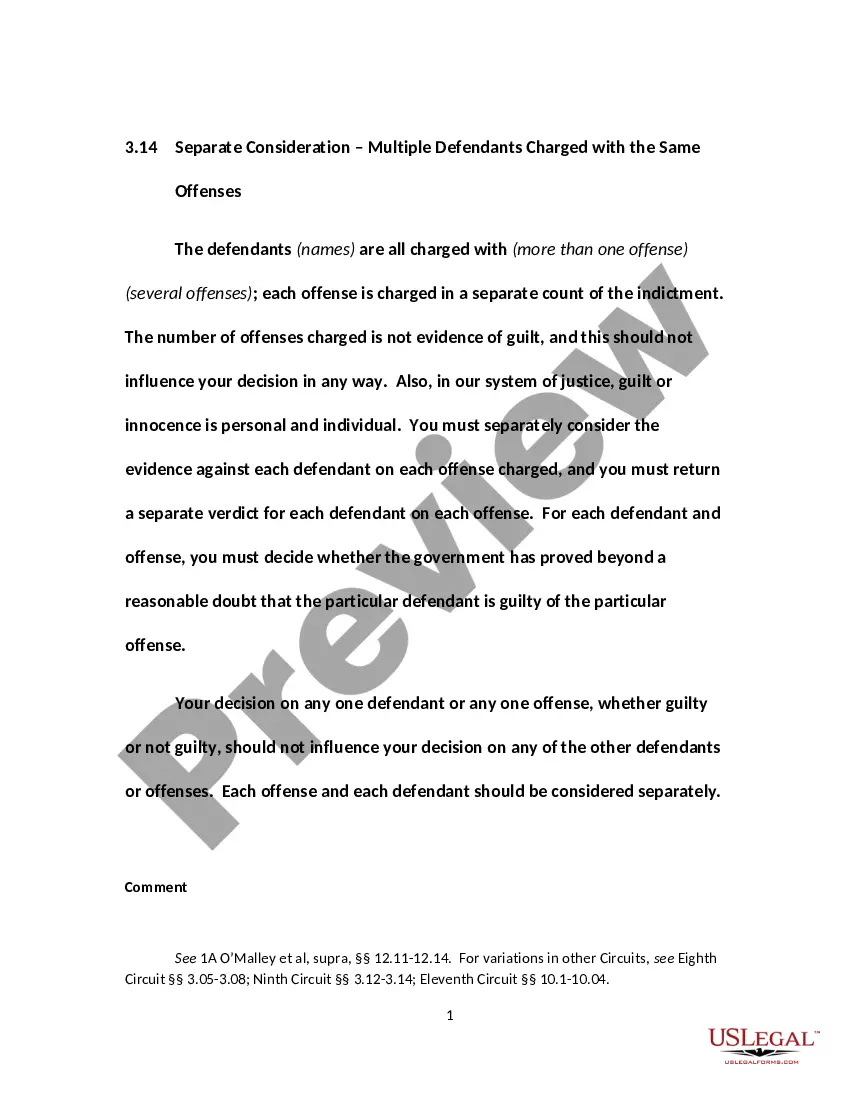
The jury must listen carefully to the details of each defendant's case and make decisions based solely on the evidence presented about each person, much like evaluating individual performances in a team sport.
Not necessarily, but it often makes sense for each defendant to have their own attorney. It's like having your own coach to ensure you're getting the best game plan for your situation.
Usually, one defendant's confession can't be used against another without the proper legal procedures. It's like keeping your secrets safe unless you bring someone else into the conversation.
If two defendants are charged with the same crime, the court will consider their actions separately, and each will have their own defense strategy—kind of like having a unique playbook for each player.
When there are multiple defendants, the trial can get more complicated. Each person's involvement is looked at individually, which can make things more confusing, but it ensures fairness.
Separate consideration means that each defendant in a case is judged on their own actions and contributions to the crime, rather than being lumped together with the others.