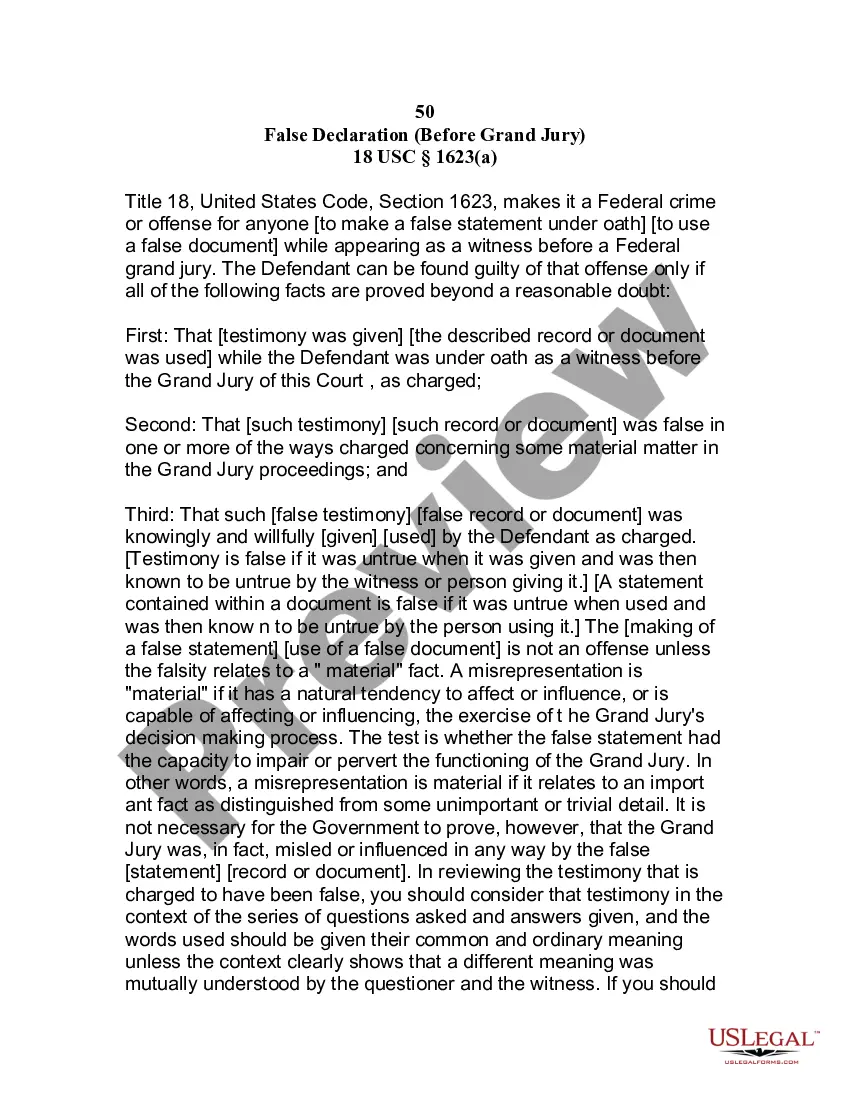
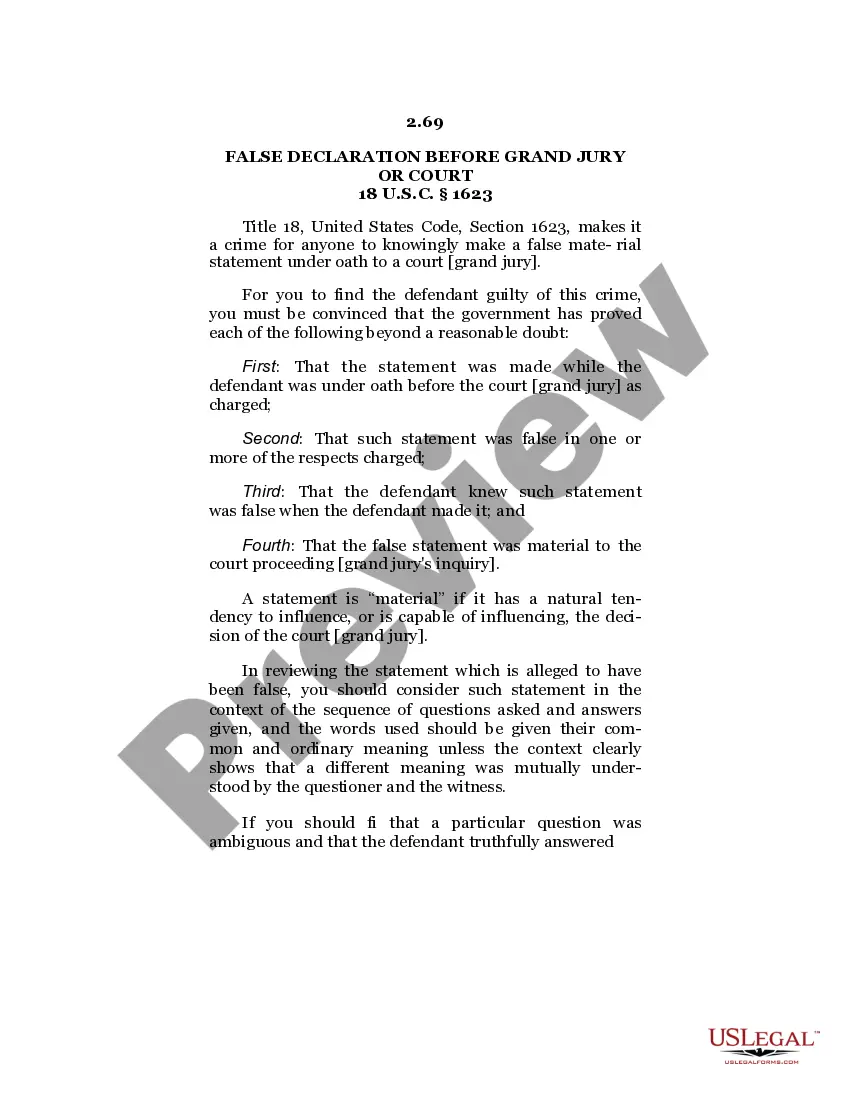
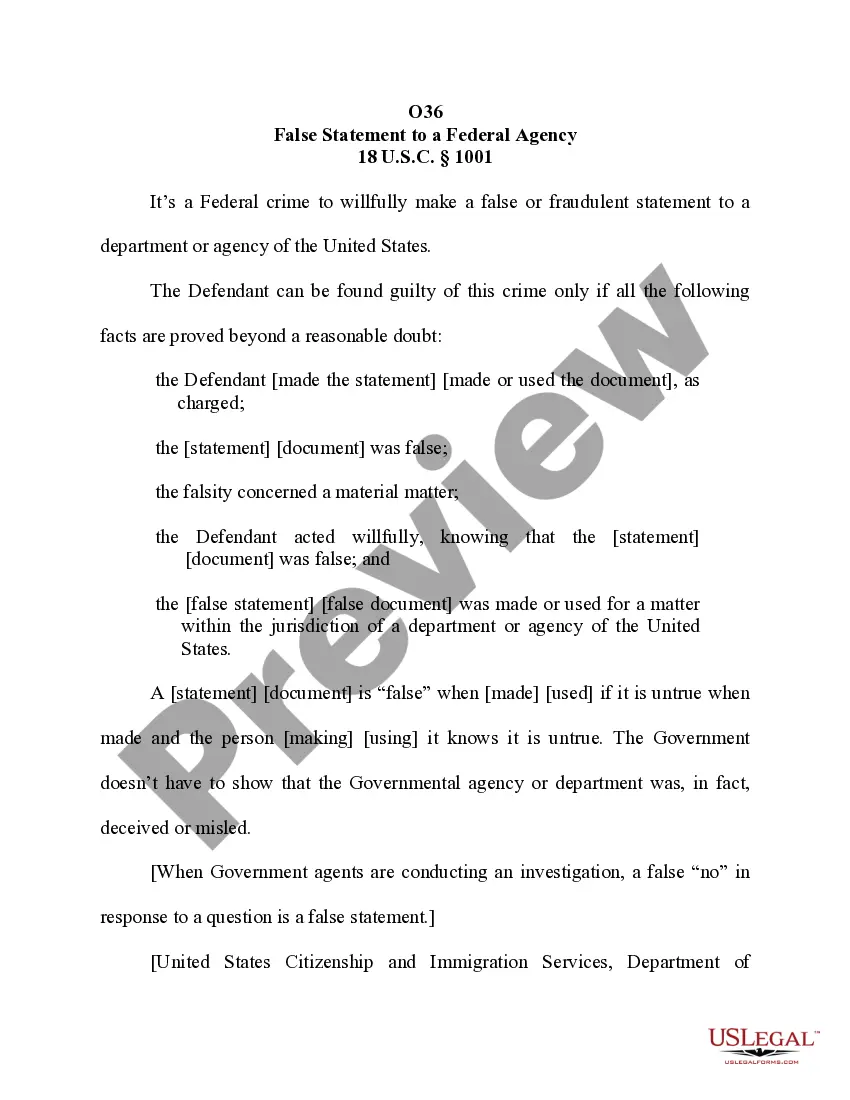
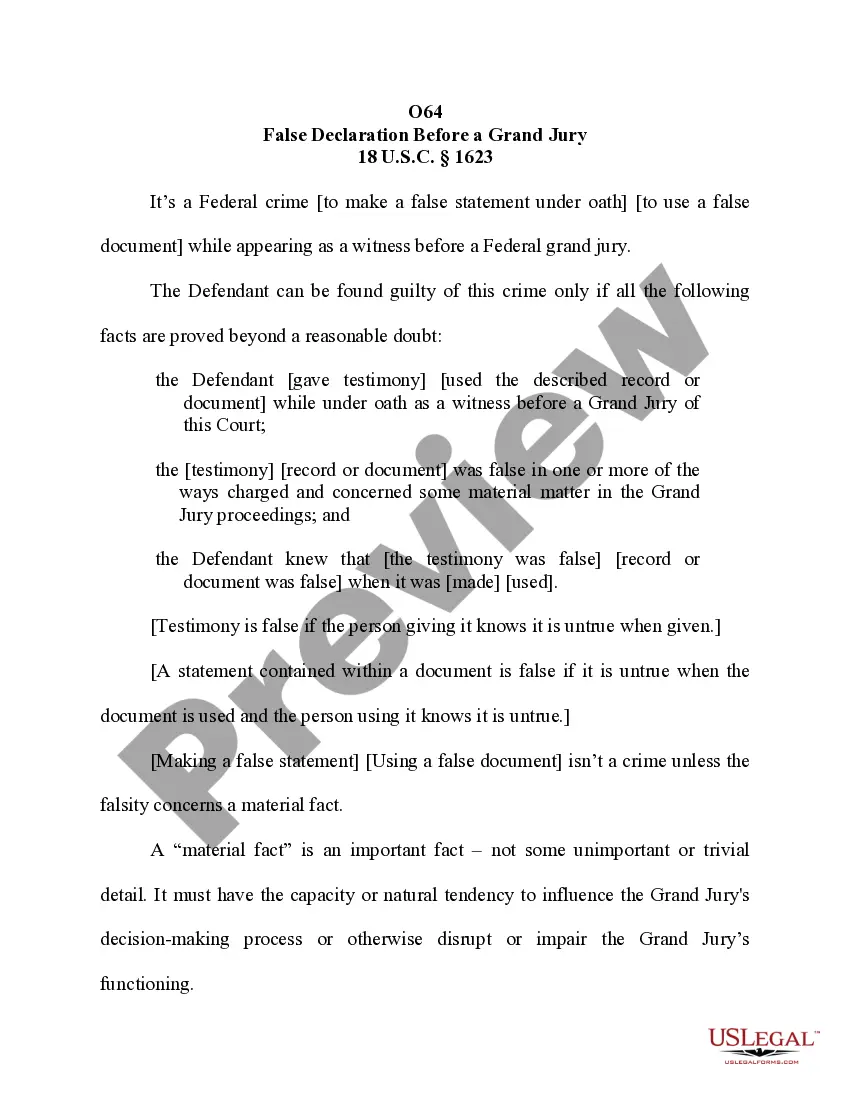
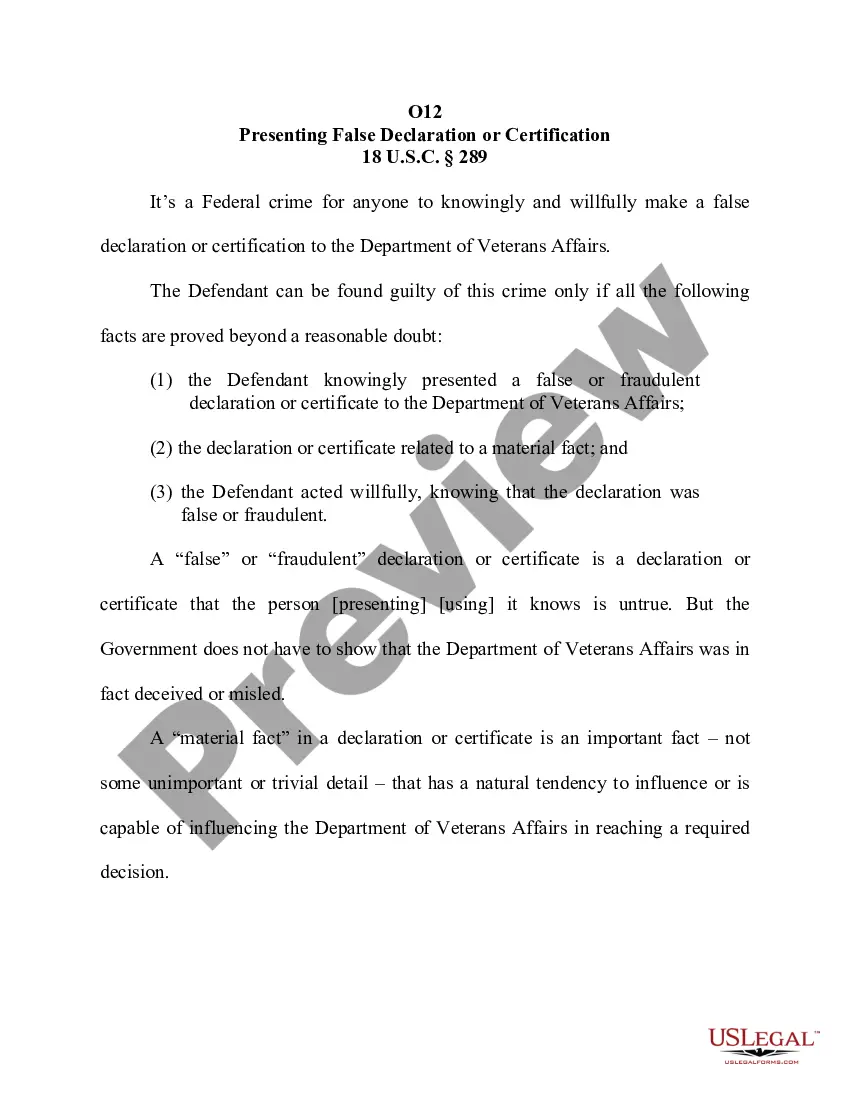
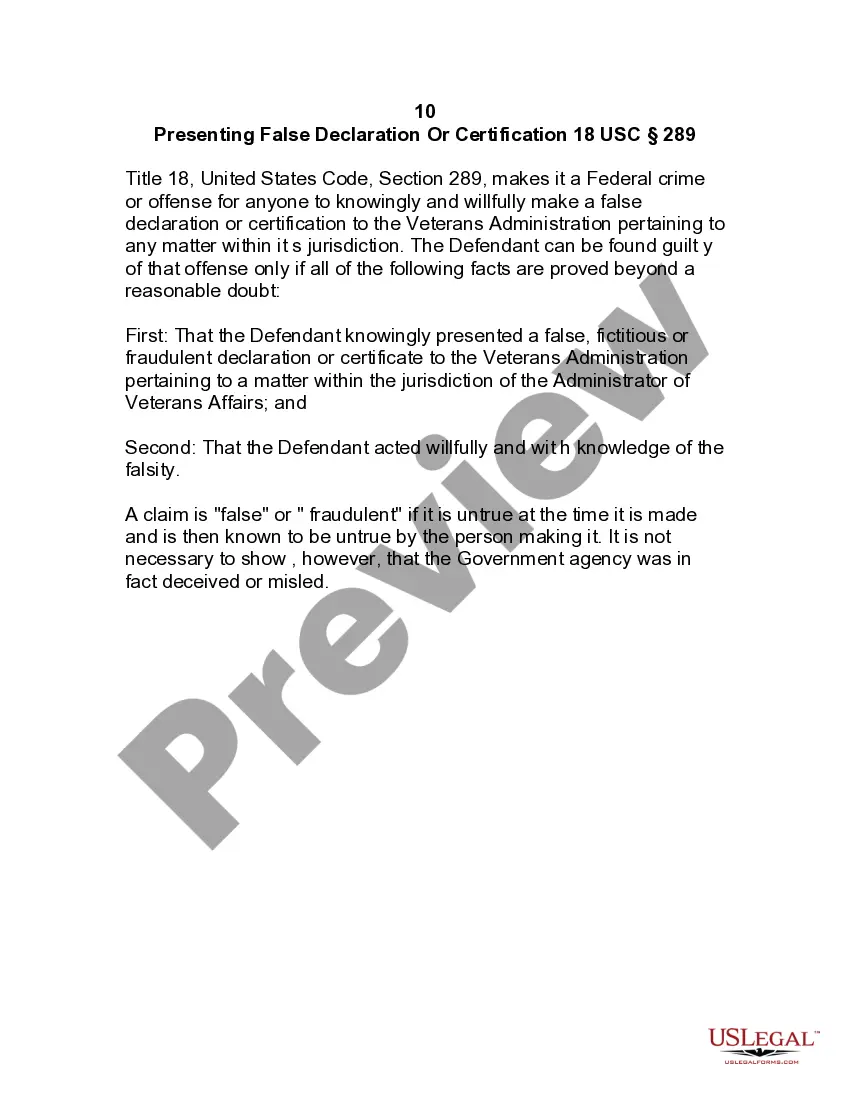
Pattern Jury Instructions from the 11th Circuit Federal Court of Appeals. For more information and to use the online Instruction builder please visit http://www.ca11.uscourts.gov/pattern-jury-instructions
If you need legal help, it's best to reach out to a local attorney who specializes in these matters. It’s like having a compass in a foggy forest; they can guide you through the tricky parts.
Absolutely. A false declaration can tarnish your reputation and make it hard for others to trust you. It's like breaking a mirror; it can take a long time to piece things back together.
If you find out you've made a false certification, it's wise to correct it with the relevant authorities right away. It's like cleaning up a spill before it stains the carpet.
Yes, but it’s best to do it as soon as possible. Like they say, 'better late than never,' but catching mistakes early can save you a lot of grief down the line.
To steer clear of making a false declaration, always double-check your information, and when in doubt, ask for help. Think of it as not putting all your eggs in one basket.
If you submit a false certification, you could face serious penalties, including fines and possibly even jail time. It’s like opening a can of worms; once you're in, it’s hard to get out.
Presenting a false declaration means you are giving incorrect or misleading information on a legal document. It's like telling a tall tale that can get you into hot water with the law.