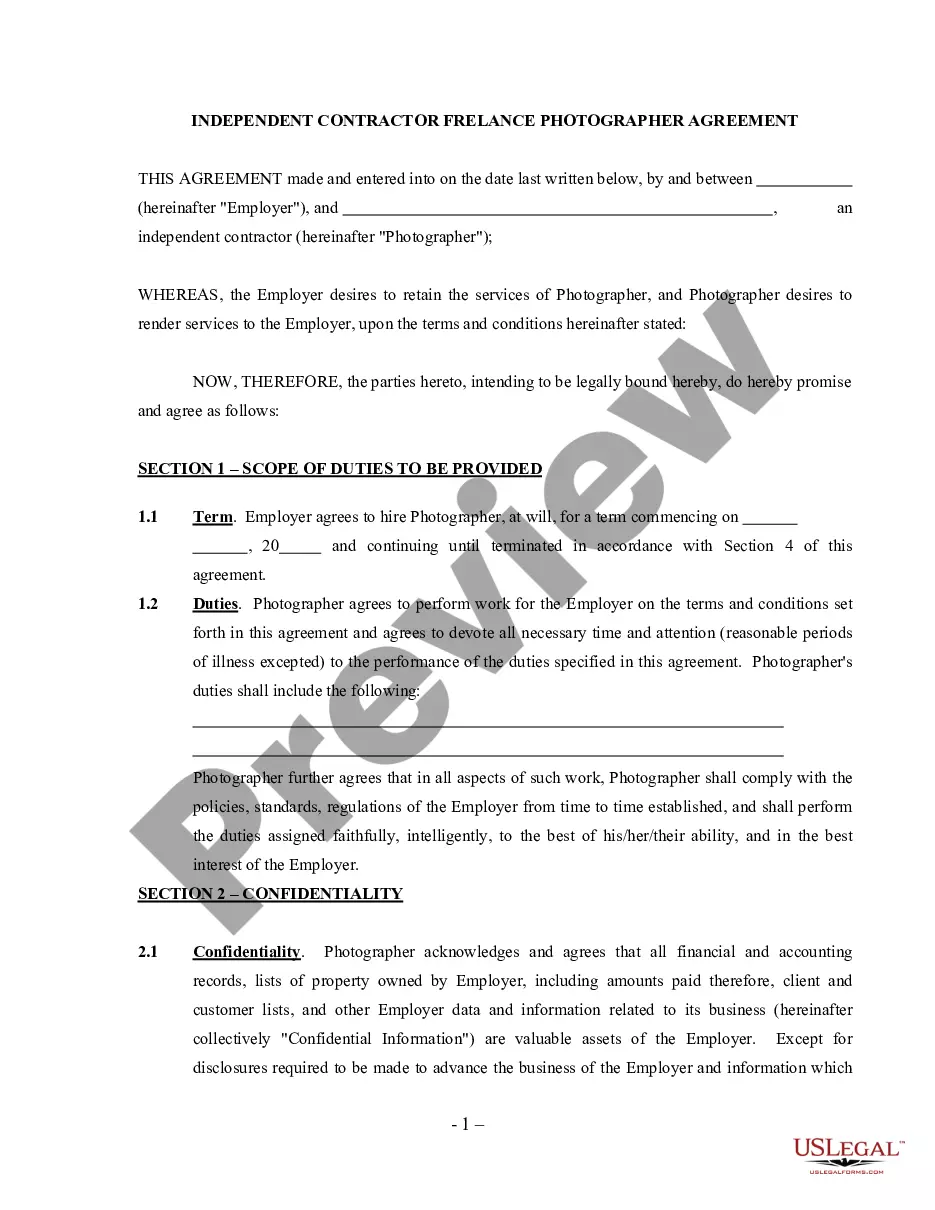
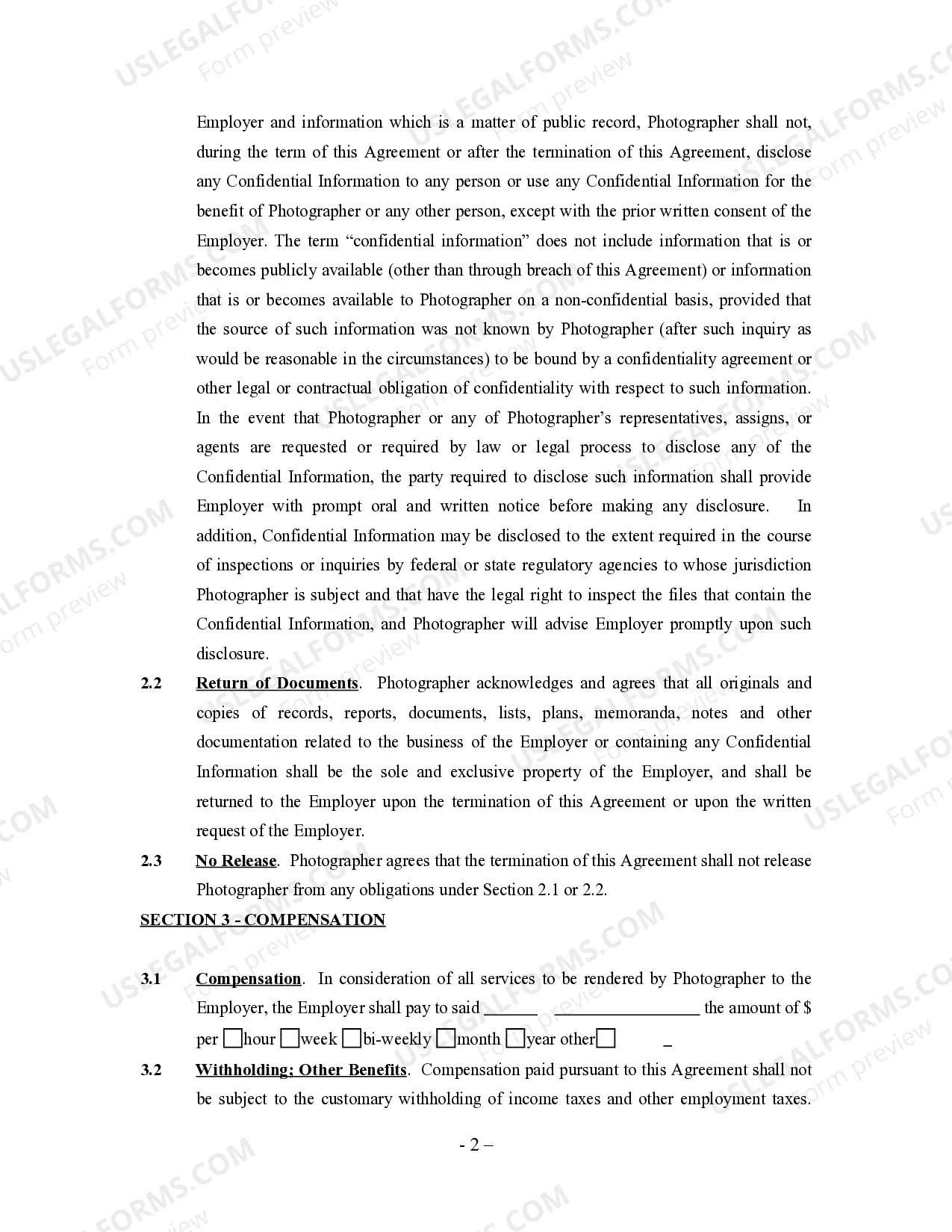
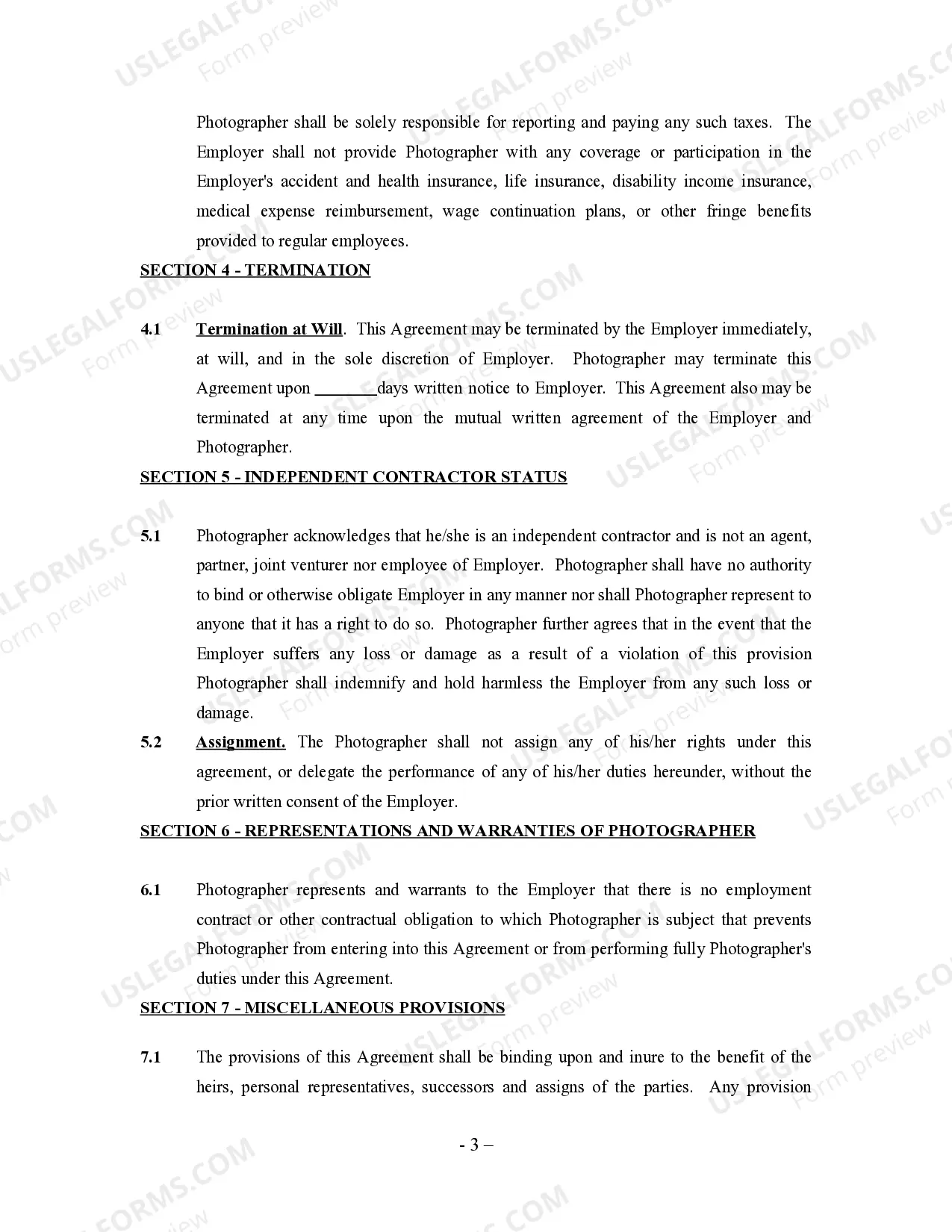
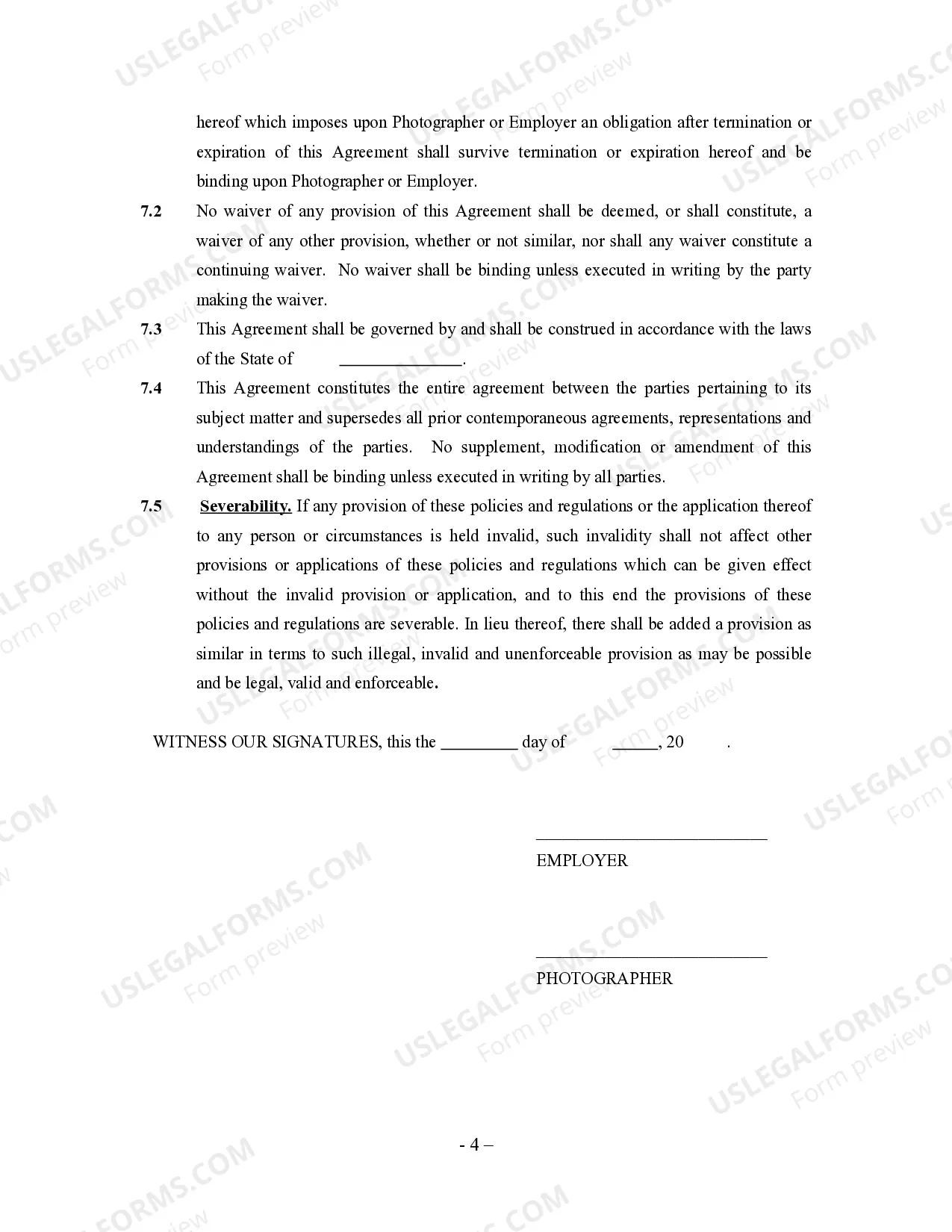
This is an agreement between an employer and a freelance photographer to provide various photographic services for employer as an independent contractor.
Maricopa Arizona Freelance Photographer Agreement - Self-Employed Independent Contractor
State:
Multi-State
County:
Maricopa
Control #:
US-INDC-29
Format:
Word;
Rich Text
144 downloads
Description
Free preview
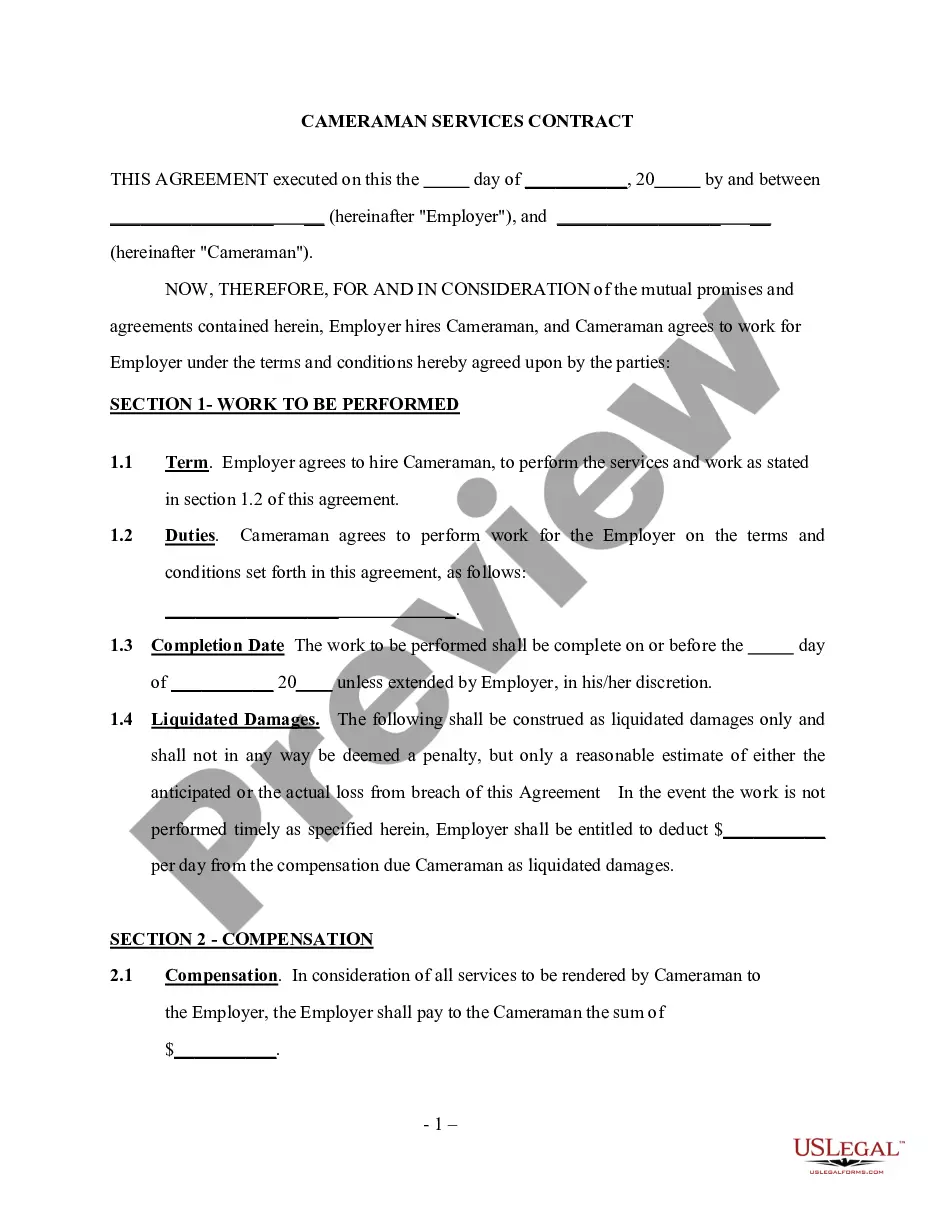
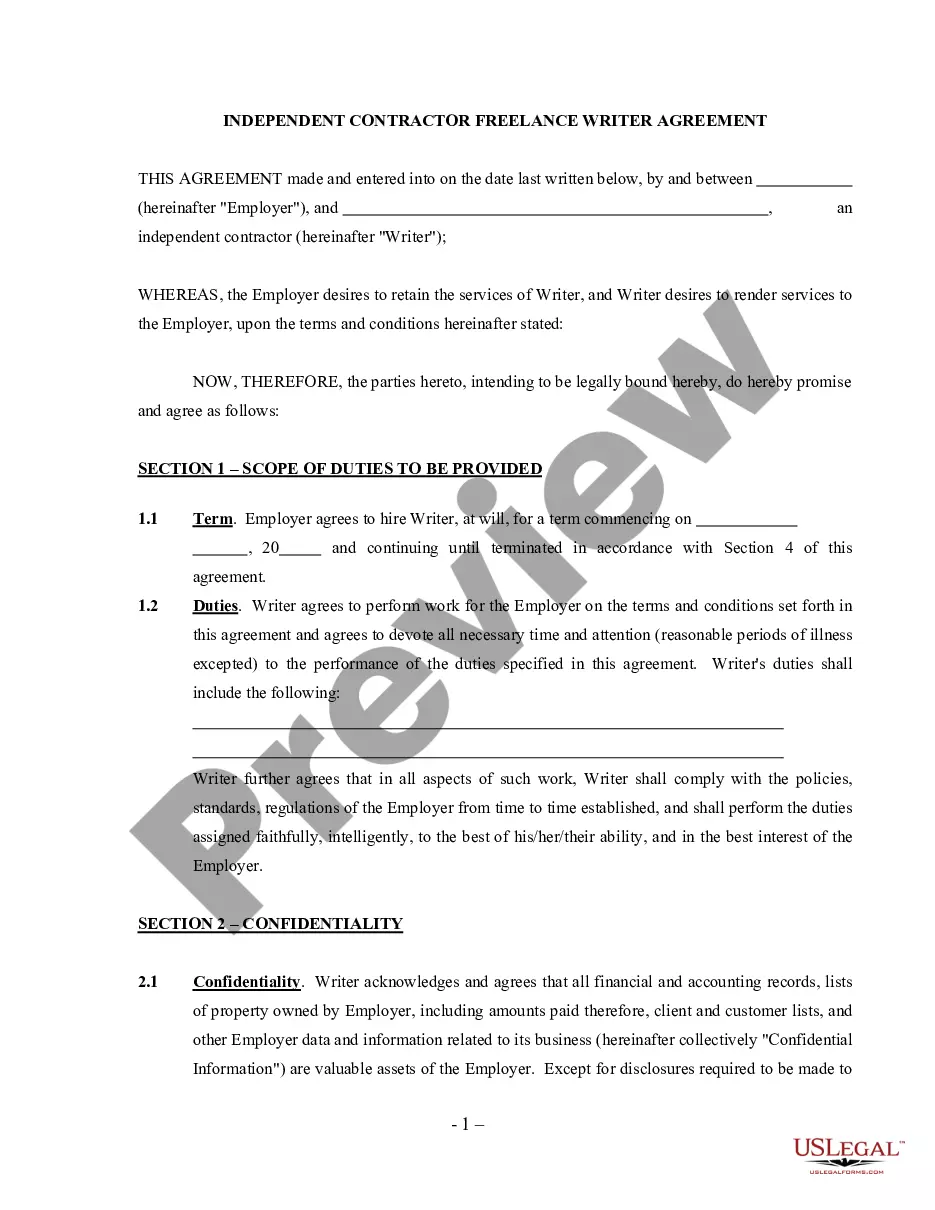
Get your form ready online
Our built-in tools help you complete, sign, share, and store your documents in one place.
Built-in online Word editor
Make edits, fill in missing information, and update formatting in US Legal Forms—just like you would in MS Word.
Export easily
Download a copy, print it, send it by email, or mail it via USPS—whatever works best for your next step.
E-sign your document
Sign and collect signatures with our SignNow integration. Send to multiple recipients, set reminders, and more. Go Premium to unlock E-Sign.
Notarize online 24/7
If this form requires notarization, complete it online through a secure video call—no need to meet a notary in person or wait for an appointment.
Store your document securely
We protect your documents and personal data by following strict security and privacy standards.

Make edits, fill in missing information, and update formatting in US Legal Forms—just like you would in MS Word.

Download a copy, print it, send it by email, or mail it via USPS—whatever works best for your next step.

Sign and collect signatures with our SignNow integration. Send to multiple recipients, set reminders, and more. Go Premium to unlock E-Sign.

If this form requires notarization, complete it online through a secure video call—no need to meet a notary in person or wait for an appointment.

We protect your documents and personal data by following strict security and privacy standards.
Looking for another form?

How to fill out Freelance Photographer Agreement - Self-Employed Independent Contractor?
Whether you intend to launch your enterprise, engage in a contract, request your identification renewal, or address familial legal issues, you must prepare particular documents in accordance with your regional laws and guidelines.
Finding the right documentation may consume a considerable amount of time and effort unless you utilize the US Legal Forms library.
The platform offers users access to over 85,000 professionally created and validated legal templates for any personal or business situation. All documents are organized by state and usage area, making it quick and straightforward to select a form like the Maricopa Freelance Photographer Agreement - Self-Employed Independent Contractor.
Documents available in our library are reusable. With an active subscription, you can access all your previously acquired documents whenever necessary from the My documents section of your profile. Stop wasting time on ongoing searches for current legal documents. Join the US Legal Forms platform and maintain your documents organized with the most extensive online form collection!
- Ensure the template accommodates your specific needs and complies with state law.
- Review the form description and check the Preview if available on the page.
- Use the search bar to specify your state above and discover additional templates.
- Click Buy Now to purchase the document once you identify the correct one.
- Select the subscription plan that best meets your needs to continue.
- Log in to your account and pay for the service using a credit card or PayPal.
- Download the Maricopa Freelance Photographer Agreement - Self-Employed Independent Contractor in your preferred file format.
- Print the document or fill it out and sign it digitally via an online editor to save time.
Form popularity
FAQ
What Type Of Business Is Photography Considered? A photography business is usually a sole proprietorship.
Roughly 63% of Photographers are self-employed. This is considered Above average for the industry as a whole.
Freelance photography is the act of providing photos on a contract basis for different clients or as a self-employed photographer. This means you photograph subjects per contract or project as opposed to being an employee for a company. Simply put, you are your own boss.
LLCs are a simple and inexpensive way to protect your personal assets and save money on taxes. You should form an LLC when there's any risk involved in your business and/or when your business could benefit from tax options and increased credibility.
Sole Proprietorship Most photography businesses are sole proprietorships. This is where one person (you, on your own) operates for profit.
California Governor Gavin Newsom has quietly signed a new law that exempts freelance photographers and some other types of independent contractors from the controversial AB 5 law that forced a huge range of freelancers to become employees.
Being a freelance photographer means that you work for yourself, taking on clients for photoshoots or creating and selling your fine art photography. Pretty much every business or entrepreneur out there is going to need photos at some point, whether it's a professional headshot or product photos for their online store.
In some countries you have to register as a sole proprietor, in others you simply operate that way and file your income from your various business transactions. Most photographers starting out are sole proprietors. Starting a company in photography means that you're incorporating a business.
The truth is that most photographers don't need to go through the work of creating an LLC. The risk of a photographer being sued is actually quite low, and the dollar amounts of such suits would usually keep it in small claims court anyway. However, if you're in a special situation, an LLC is certainly a good idea.
The most common types of legal structure for most new photography businesses, is the sole proprietorship or in the case of more than one person, a general partnership. It is the easiest to manage and easiest to handle in terms of taxes and filings for the one-man show.