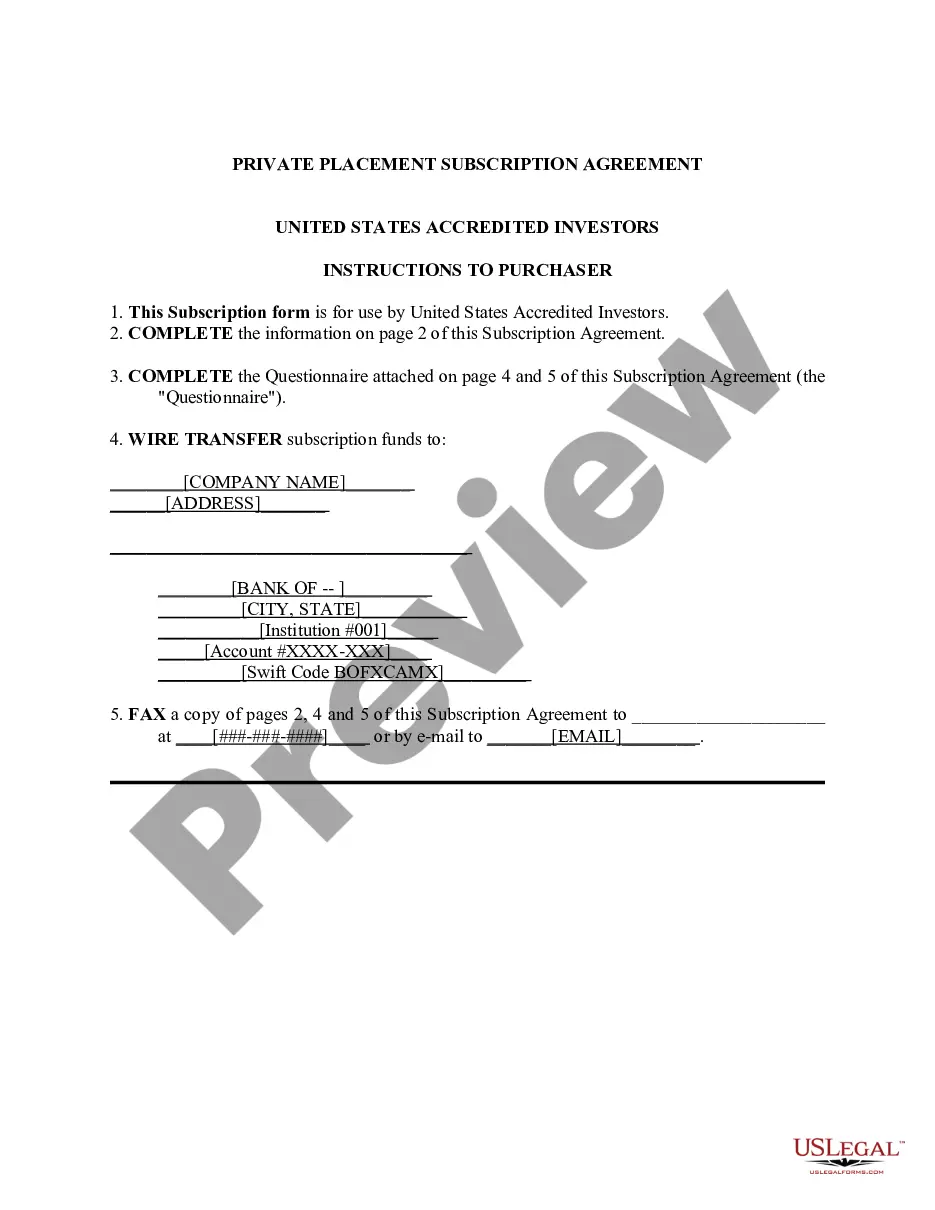
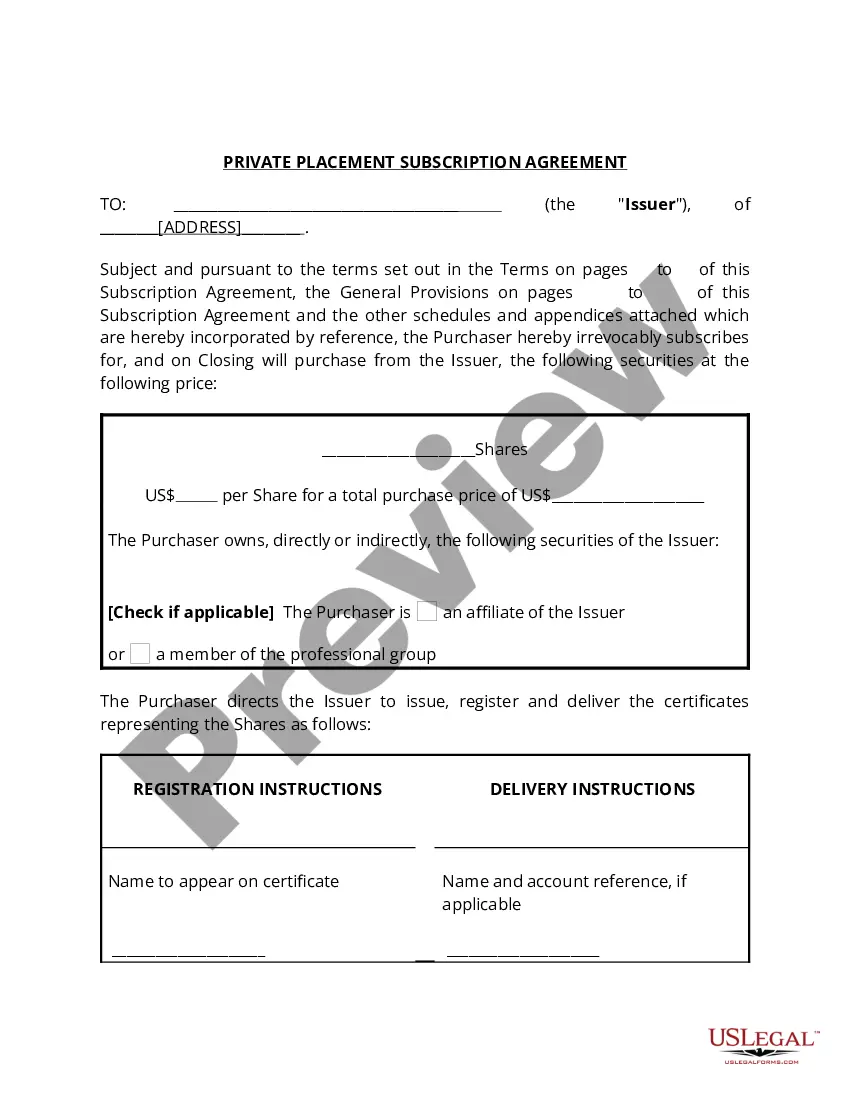
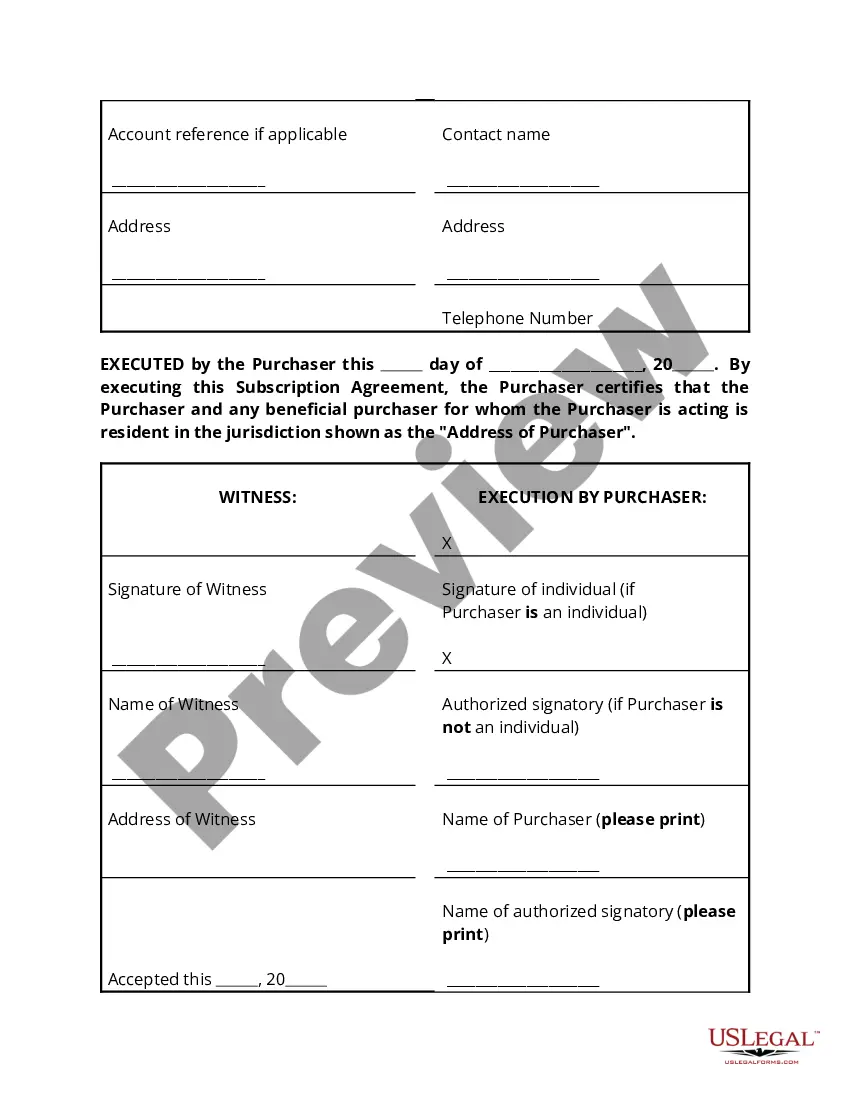
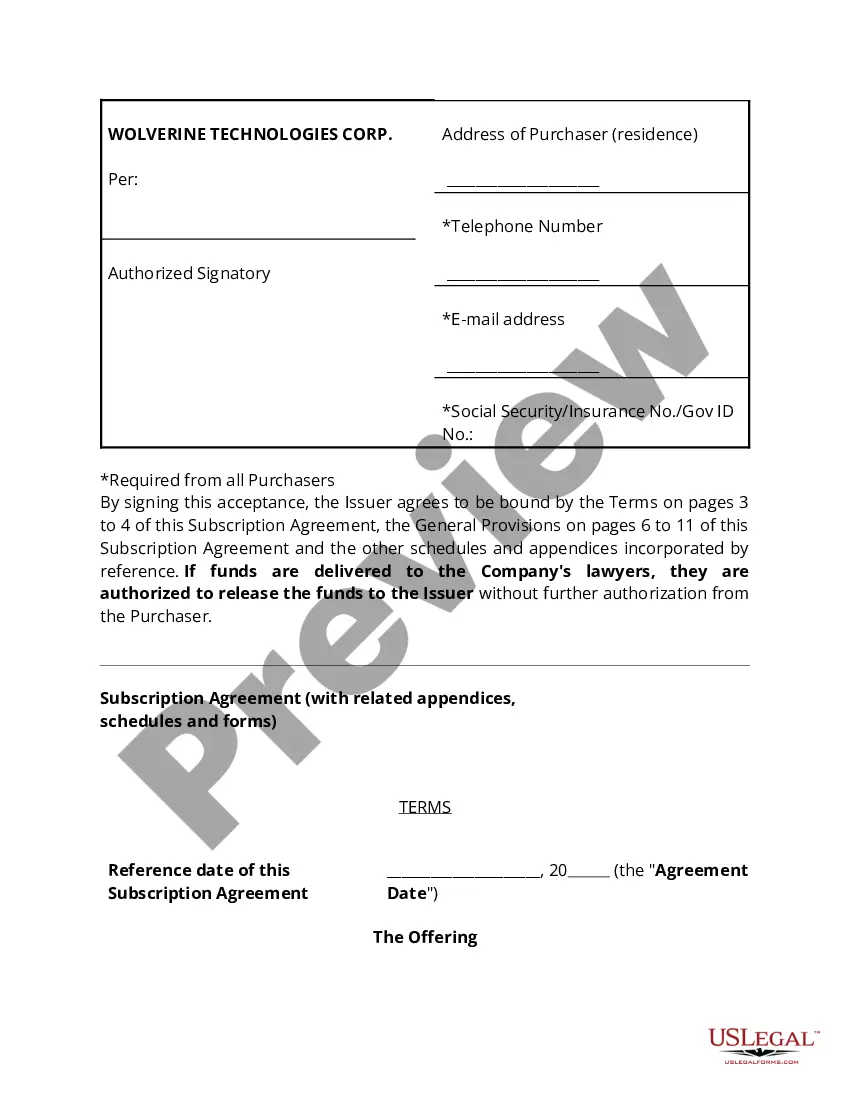
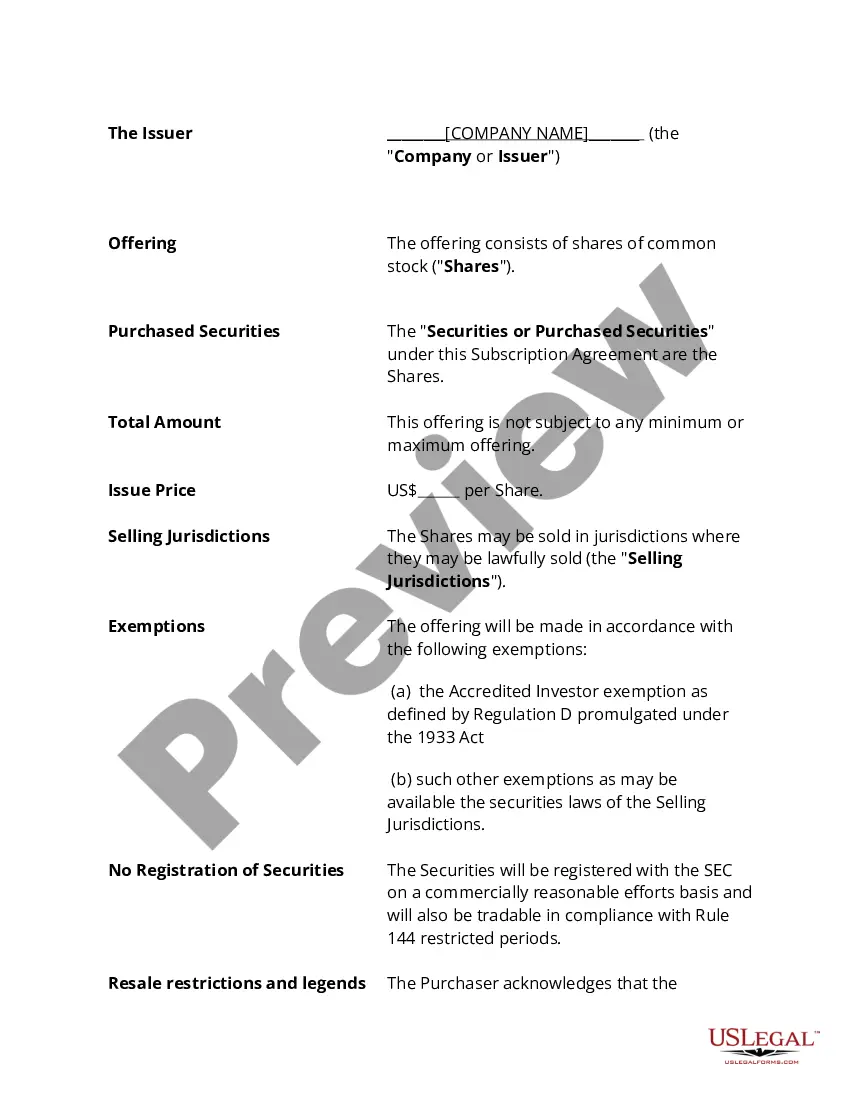
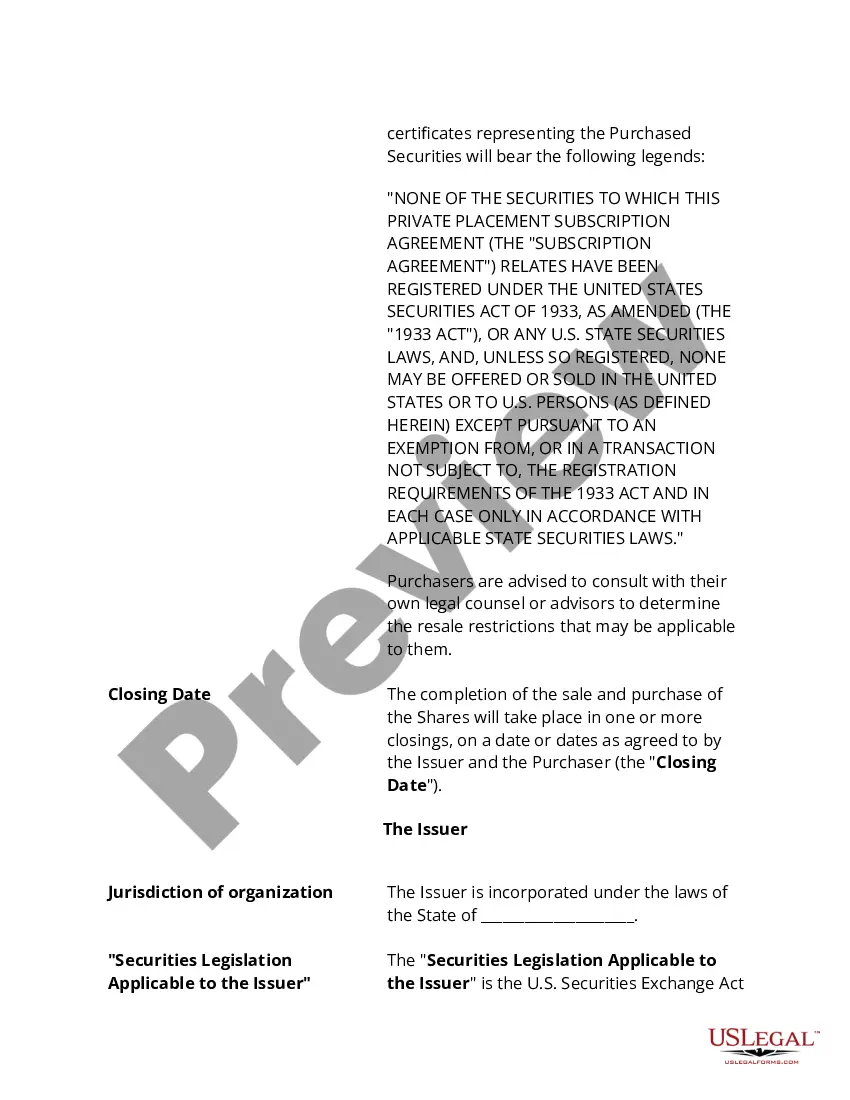
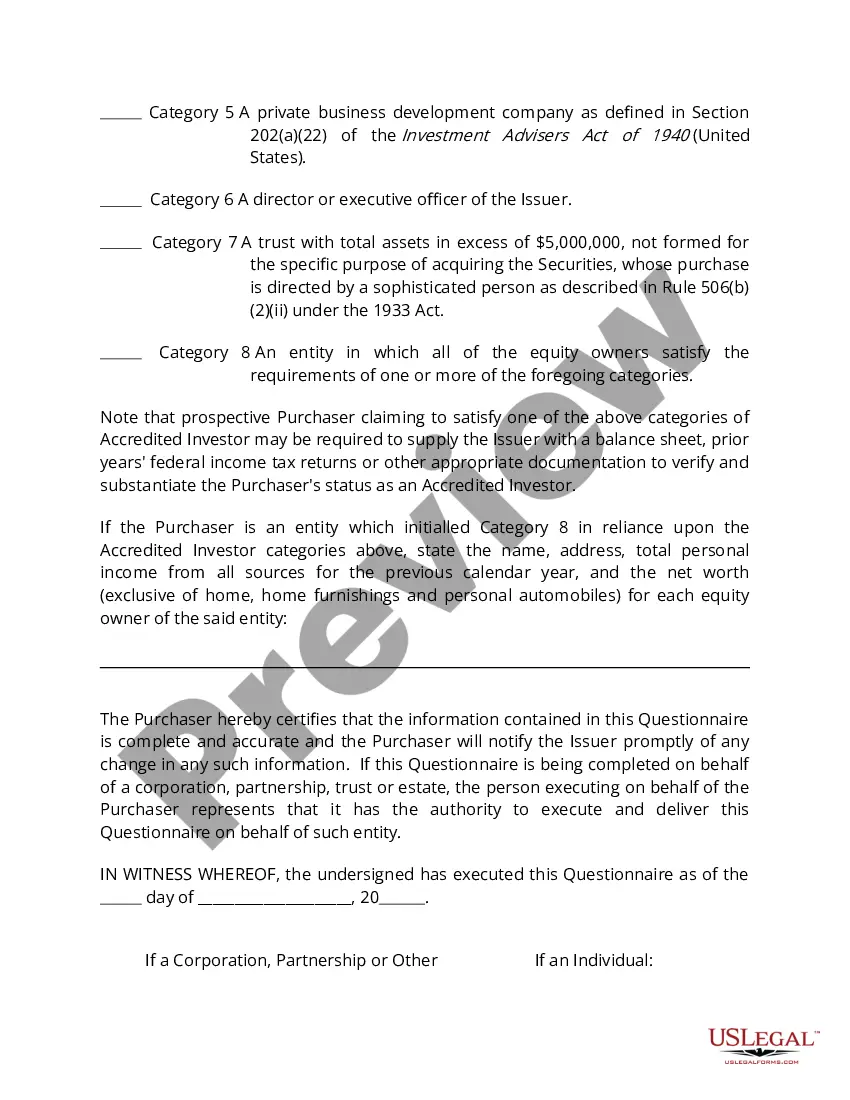
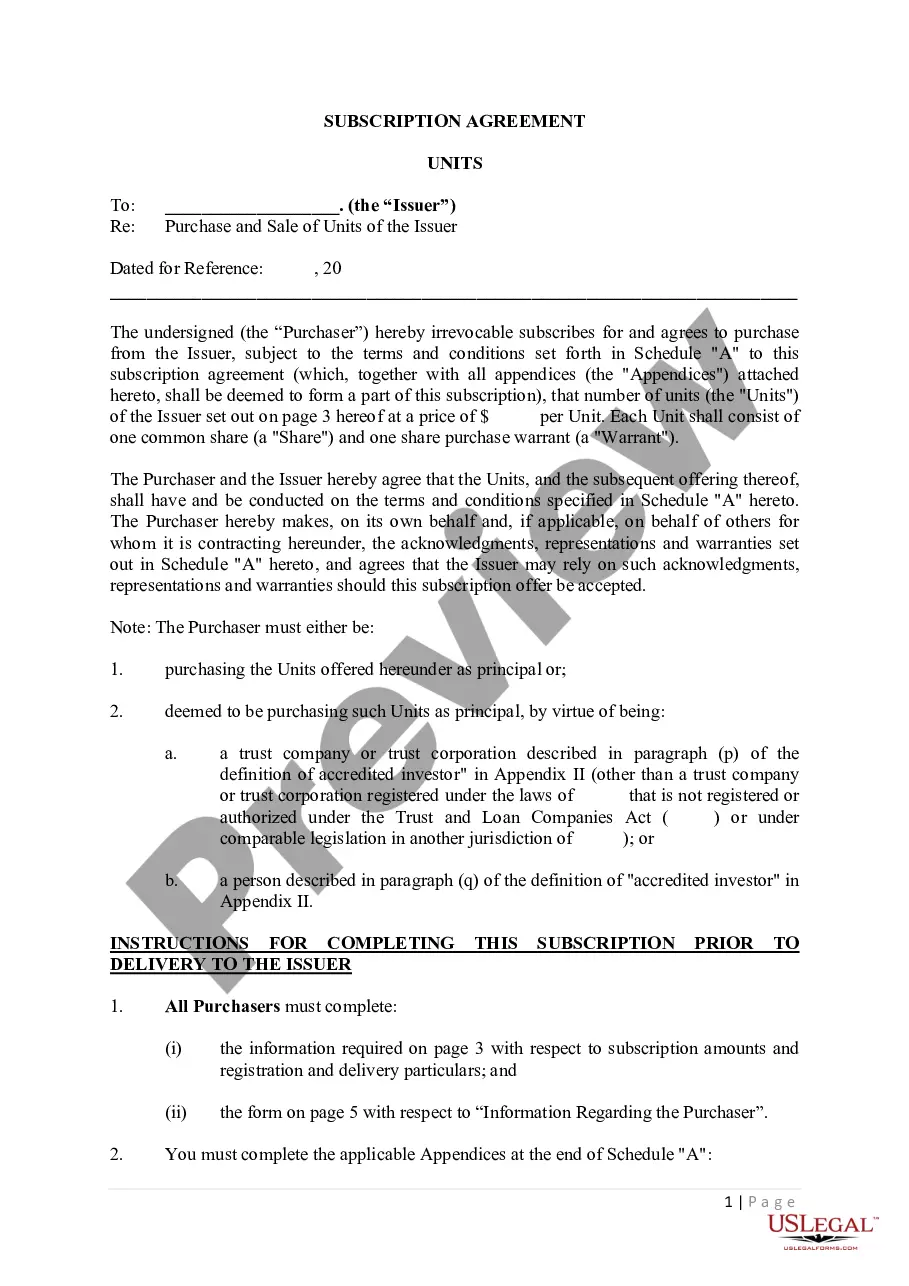
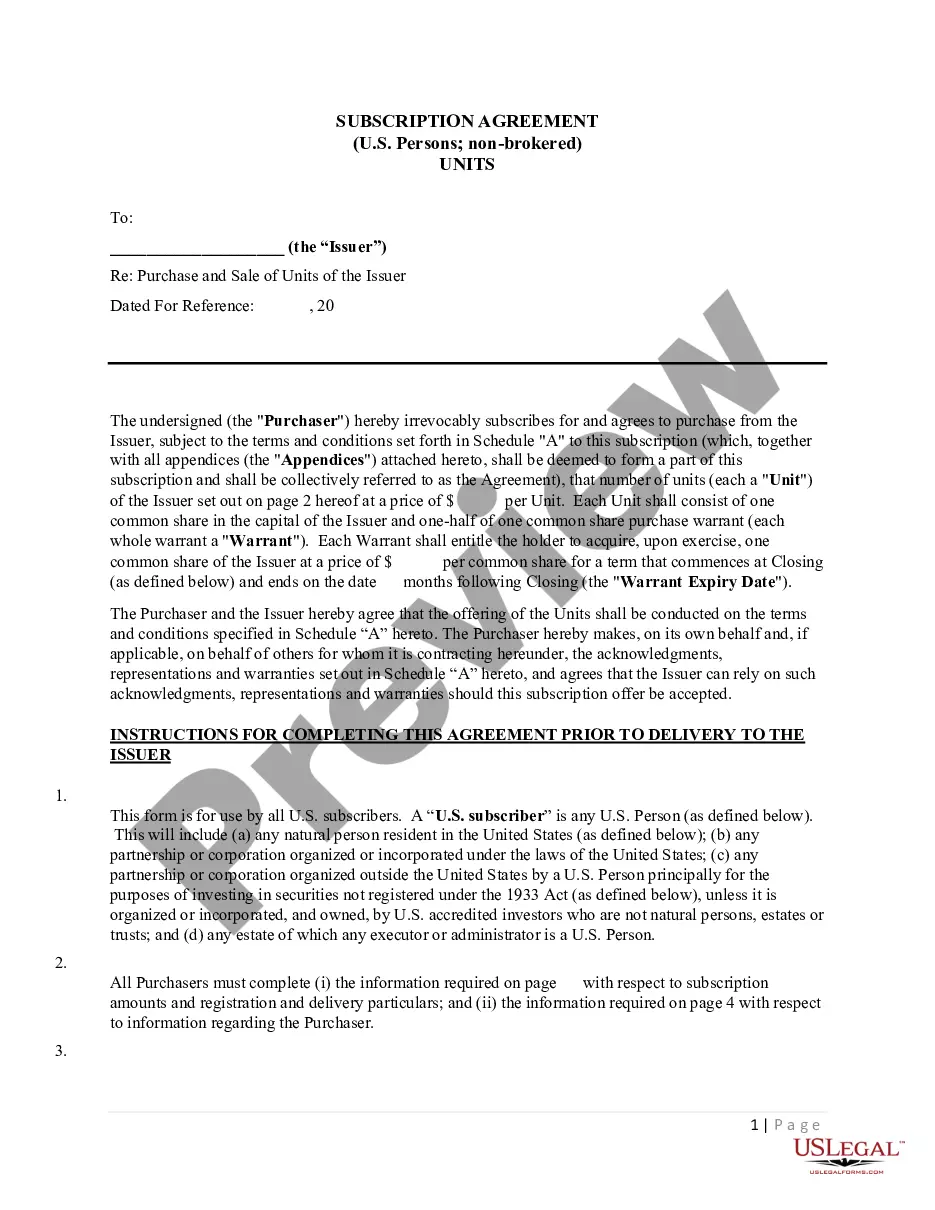
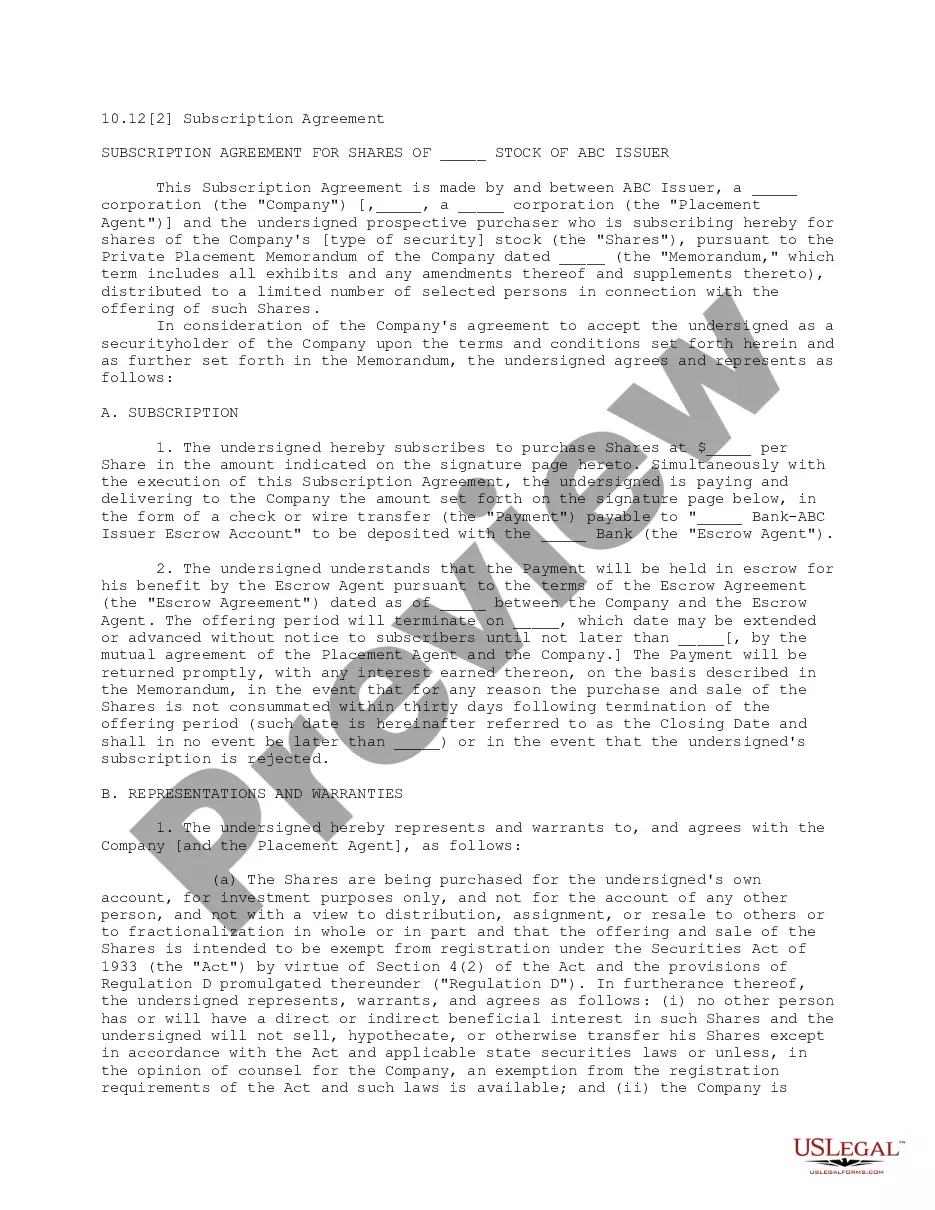
A subscription agreement is a formal agreement between a company and an investor to buy shares of a company at an agreed-upon price. The subscription agreement contains all the required details. It is used to keep track ofoutstanding sharesand share ownership (who owns what and how much) and mitigate any potential legal disputes in the future regarding share payout.
The main difference is that public offerings are available to the general public under strict regulations, while private placements are restricted to certain investors and usually involve less oversight.
Generally, these agreements are binding, and withdrawing your investment can be tricky. Always check the specific terms in your agreement before diving in.
Look out for the terms related to the investment, any potential fees, the company's business plan, and your rights as an investor. It’s wise to consult a legal expert before signing anything.
Like any investment, there are risks involved, especially since these offerings are usually less regulated. It's crucial to do your homework and understand what you're getting into.
One of the main benefits is that it allows companies to raise capital more quickly without going through the lengthy public offering process. Plus, it often includes less regulatory scrutiny.
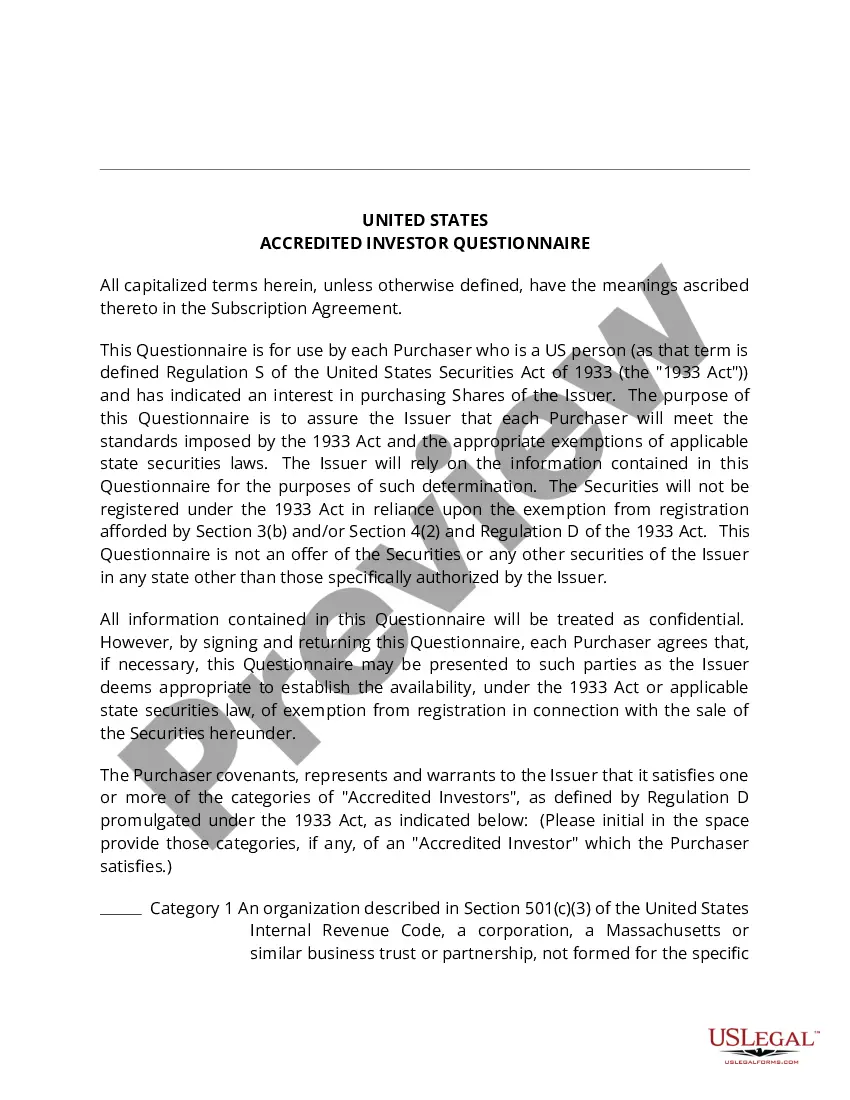
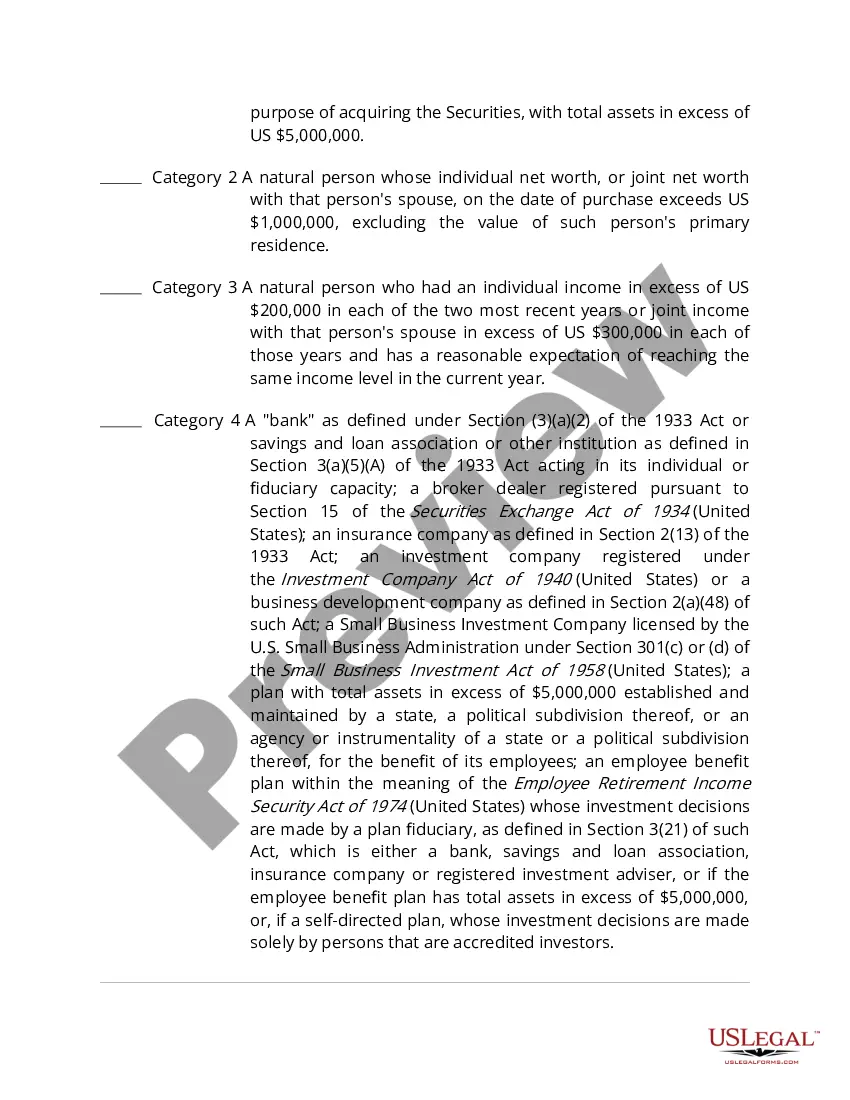
Typically, these agreements are open to accredited investors, which means individuals or entities that meet specific income or asset criteria set by regulatory bodies.
A Private Placement Subscription Agreement is a legal document that outlines the terms under which an investor buys securities directly from a company, rather than through a public offering.