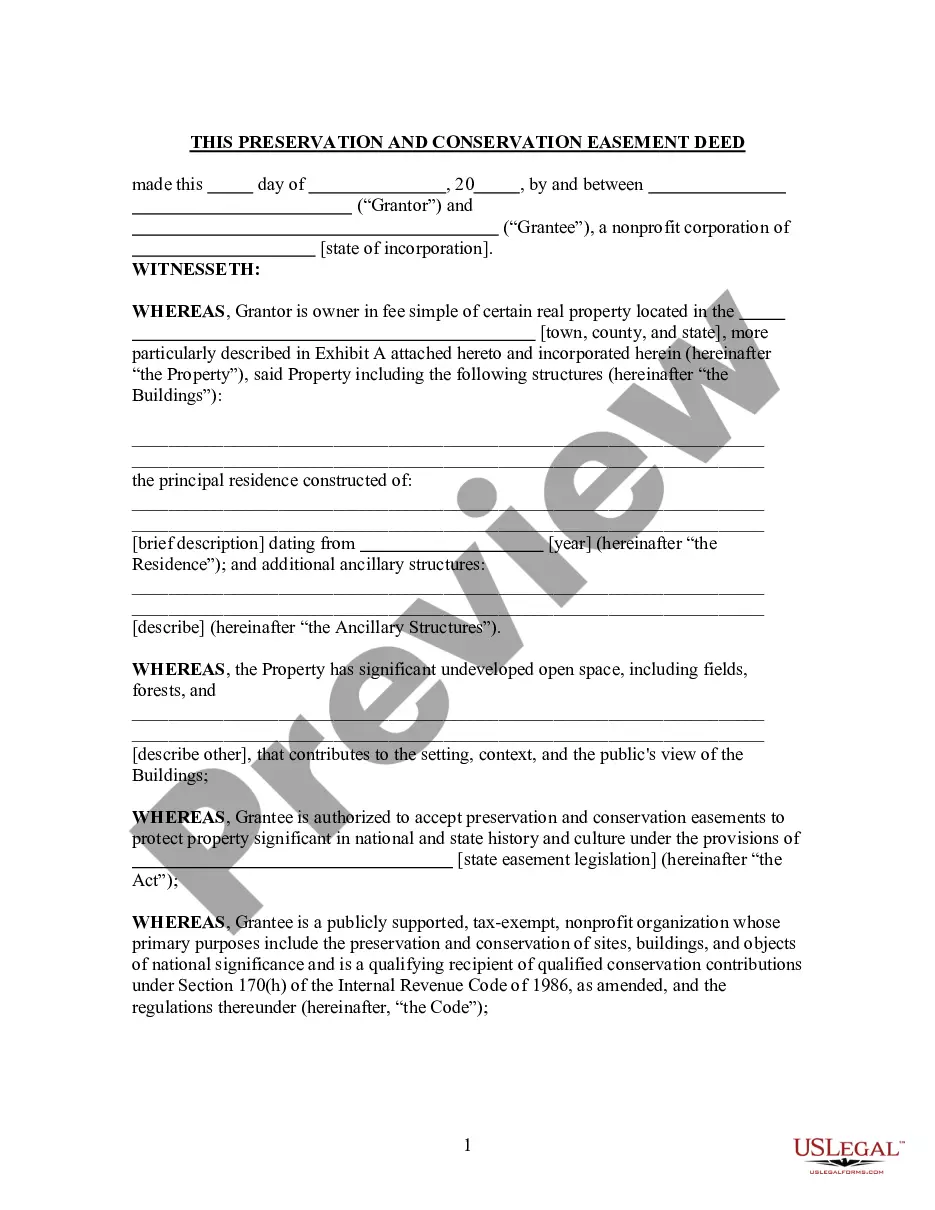
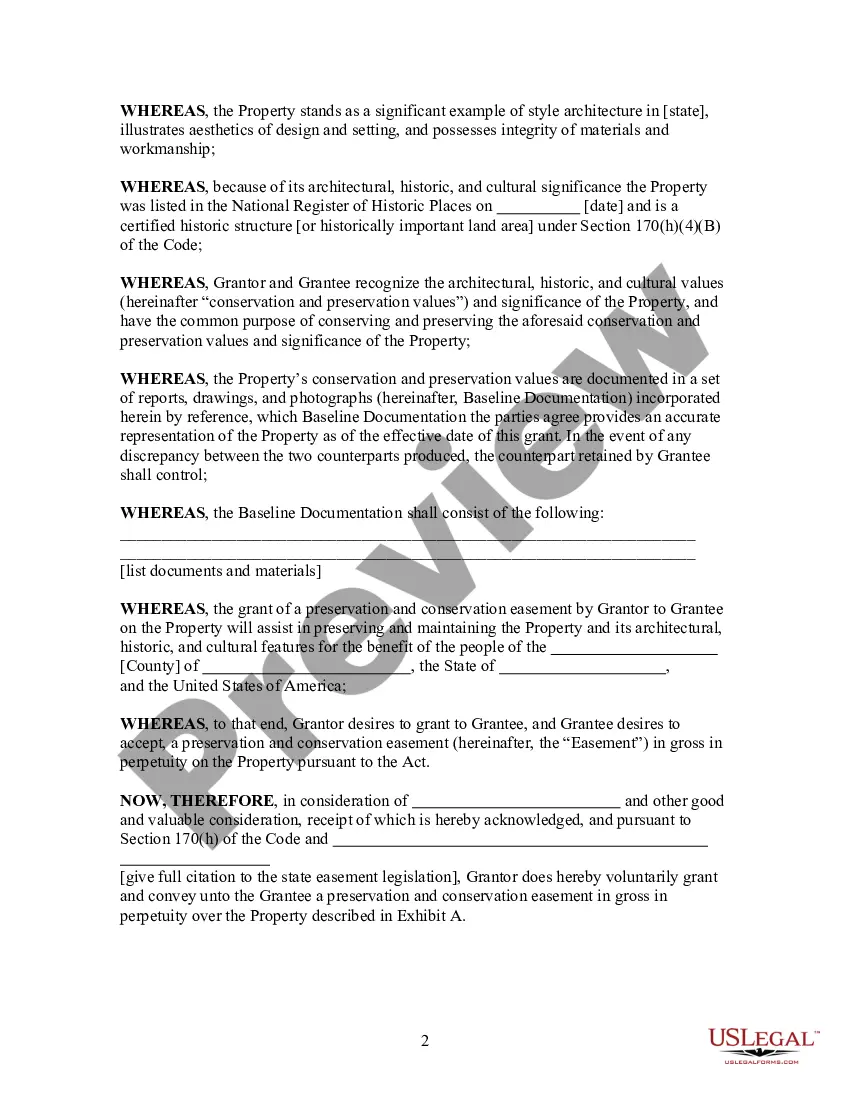
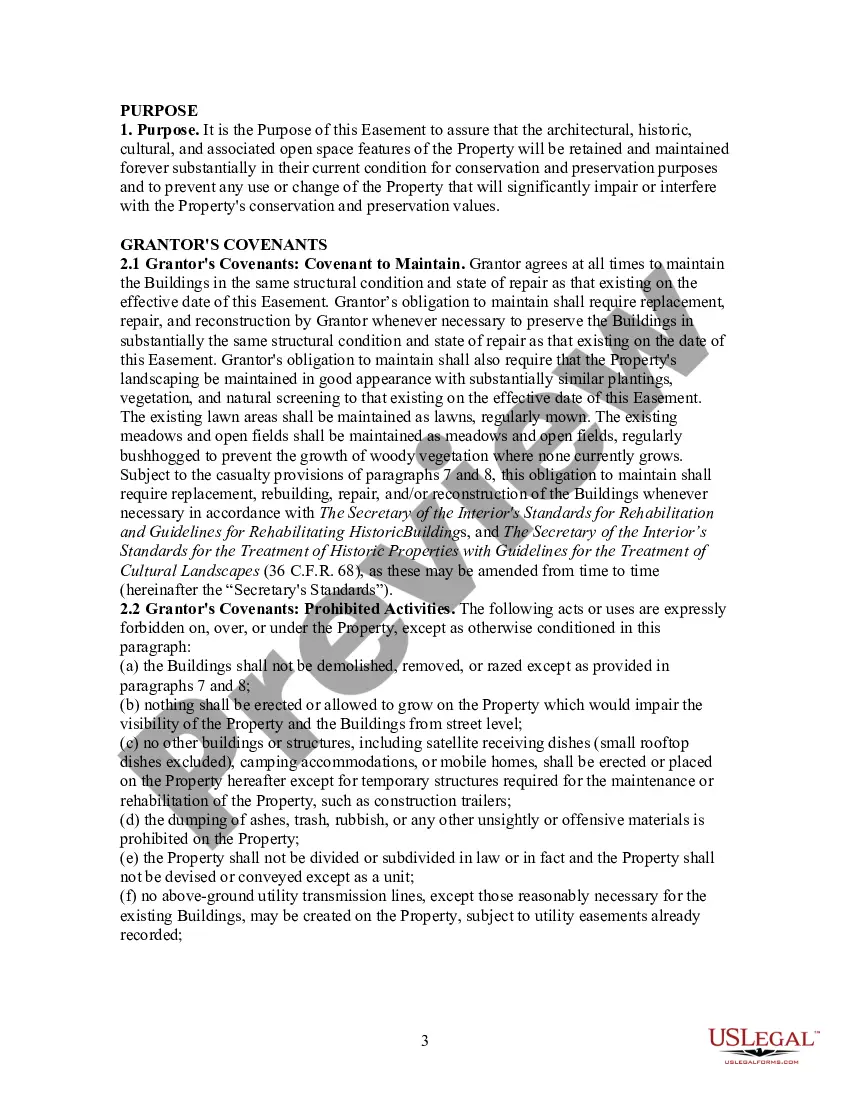
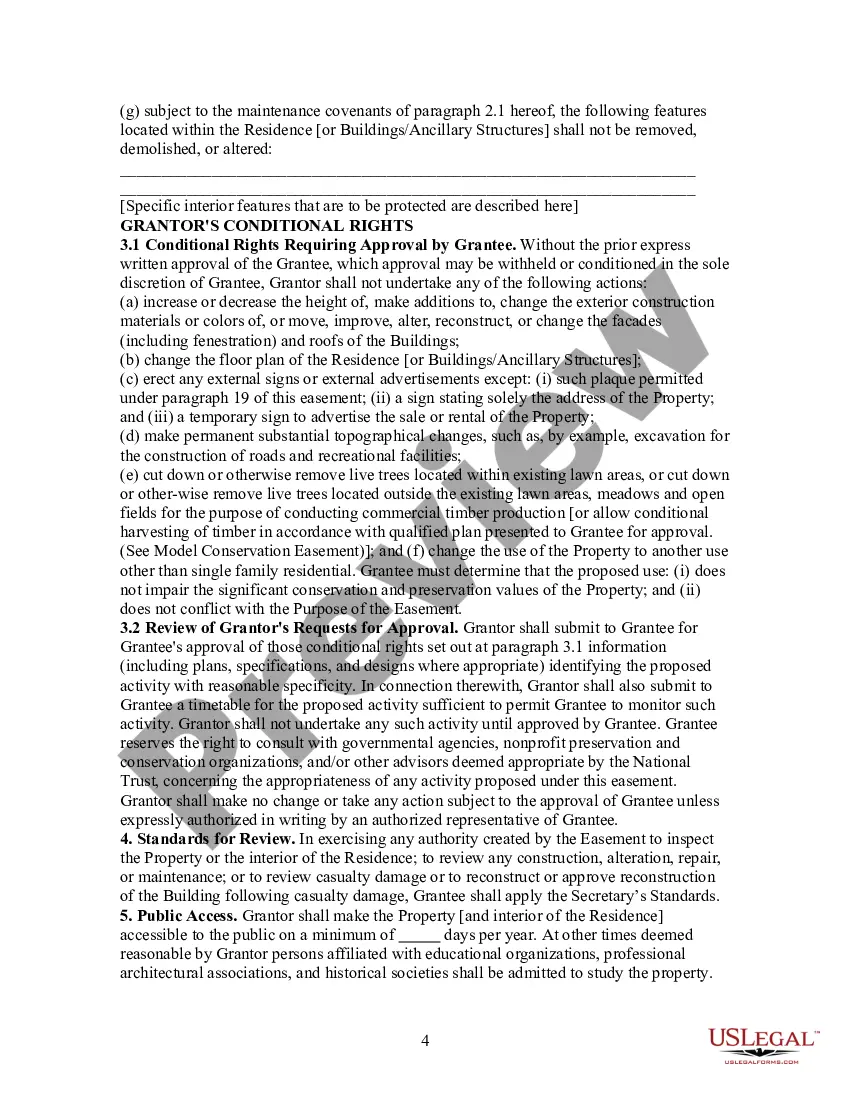
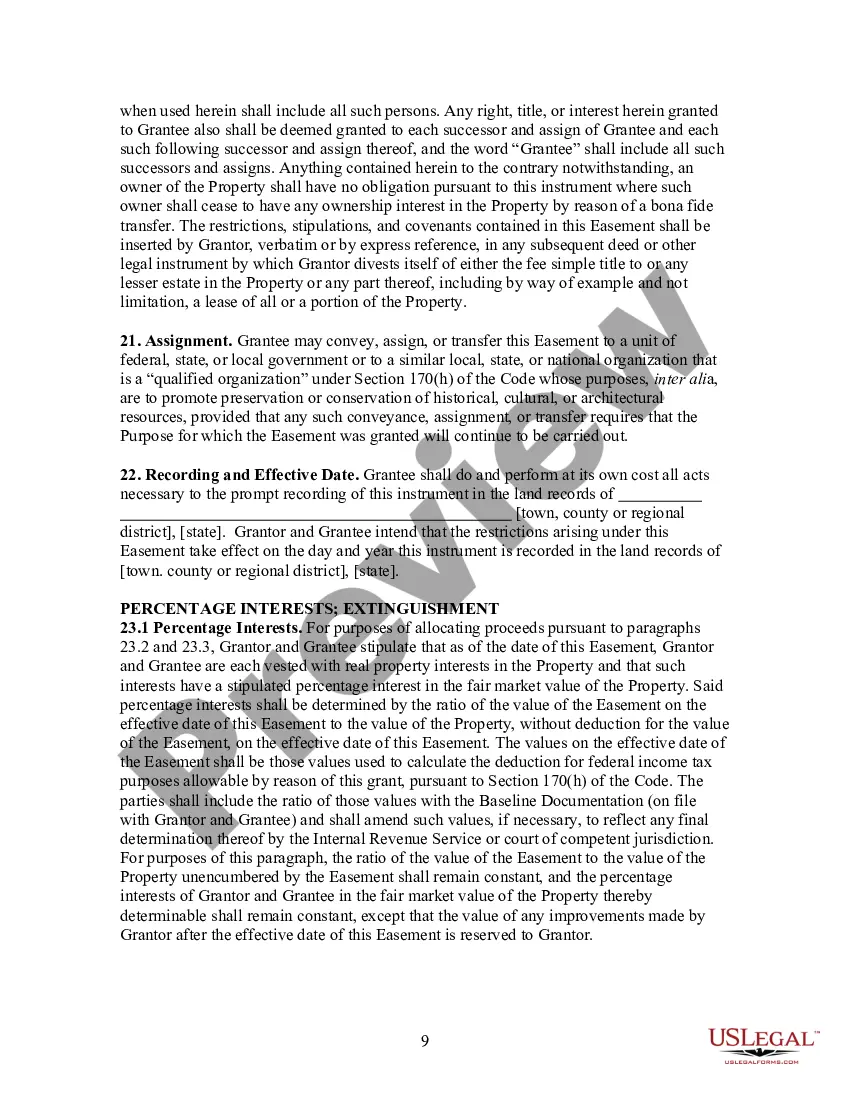
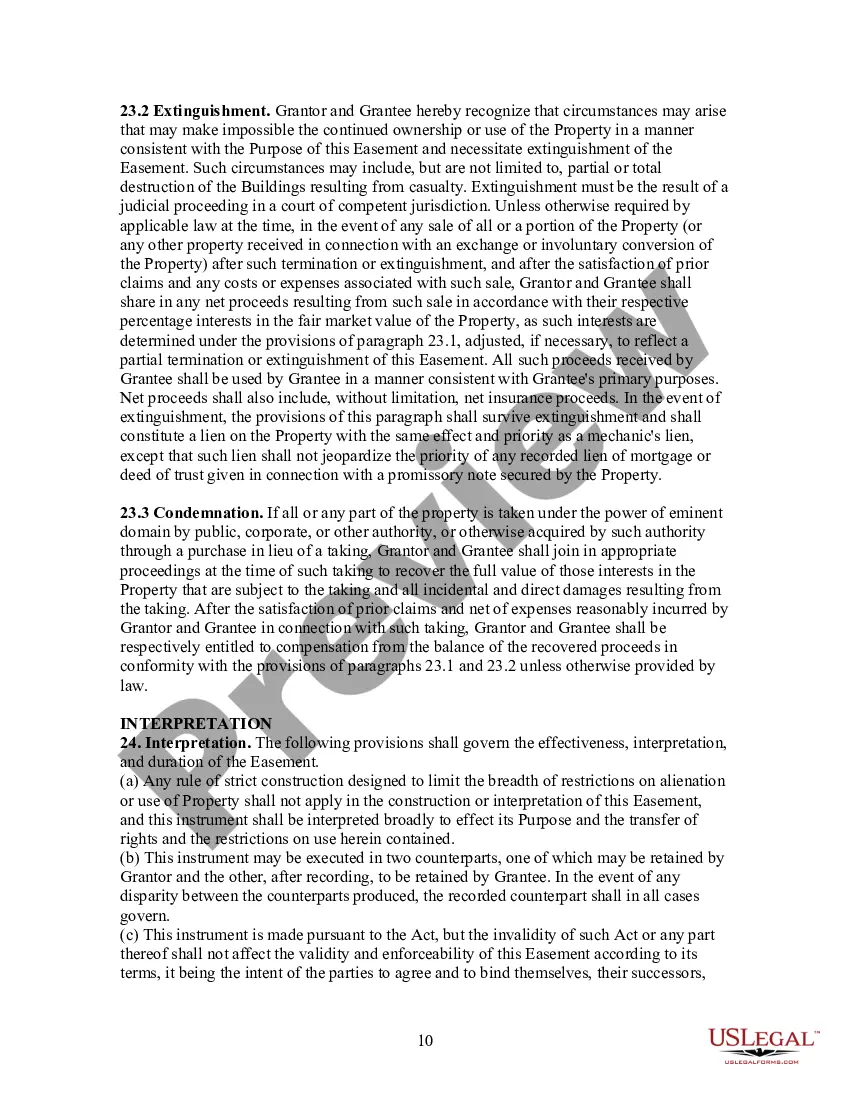
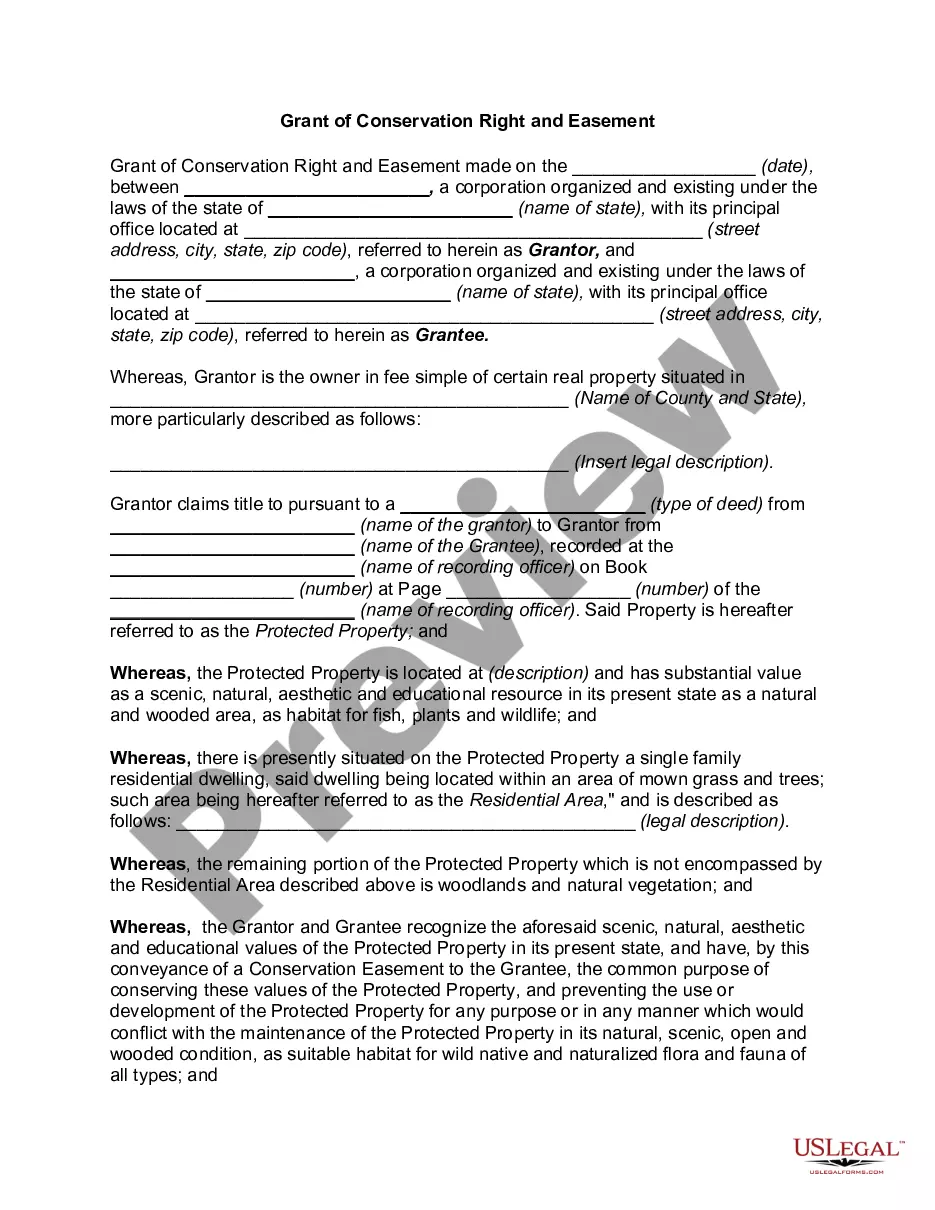
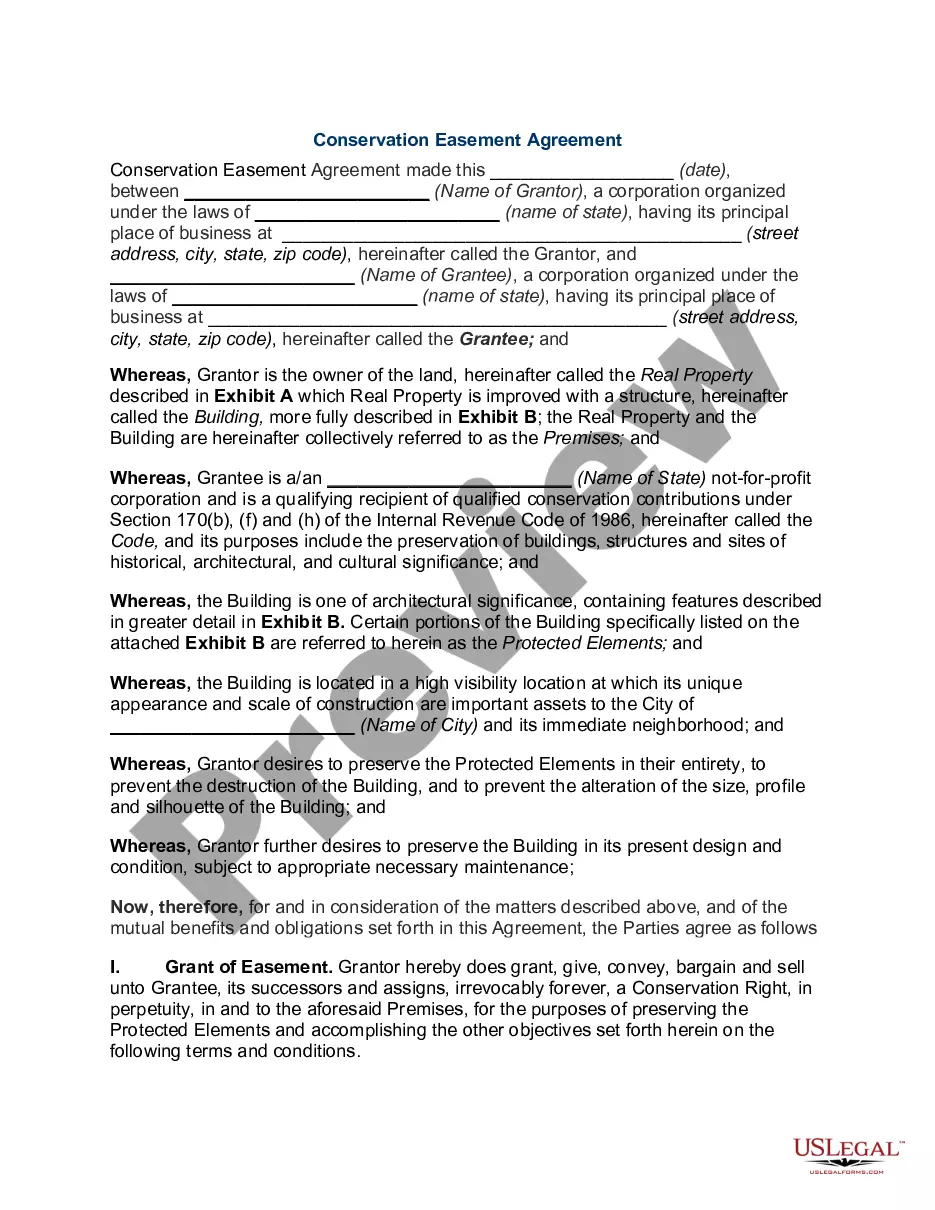
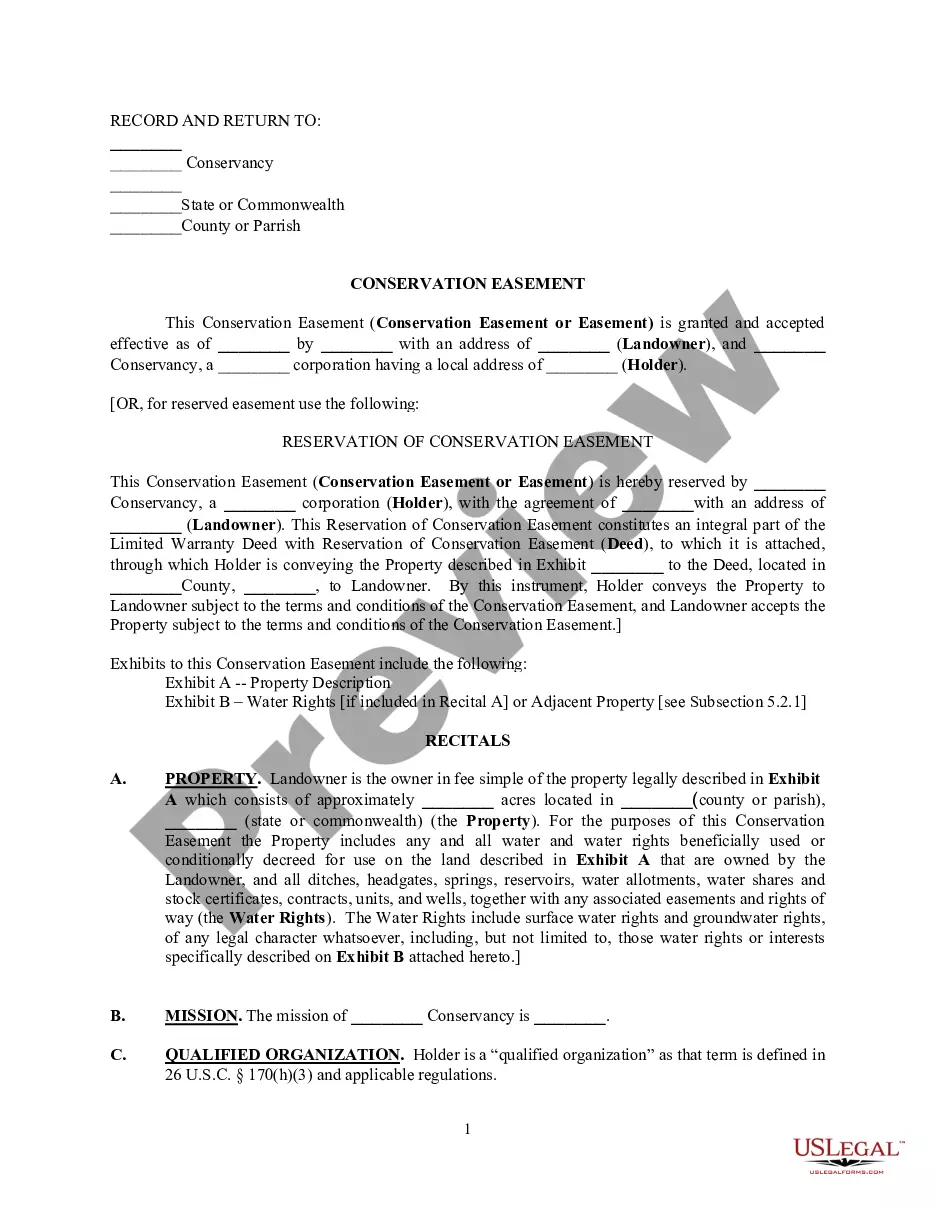
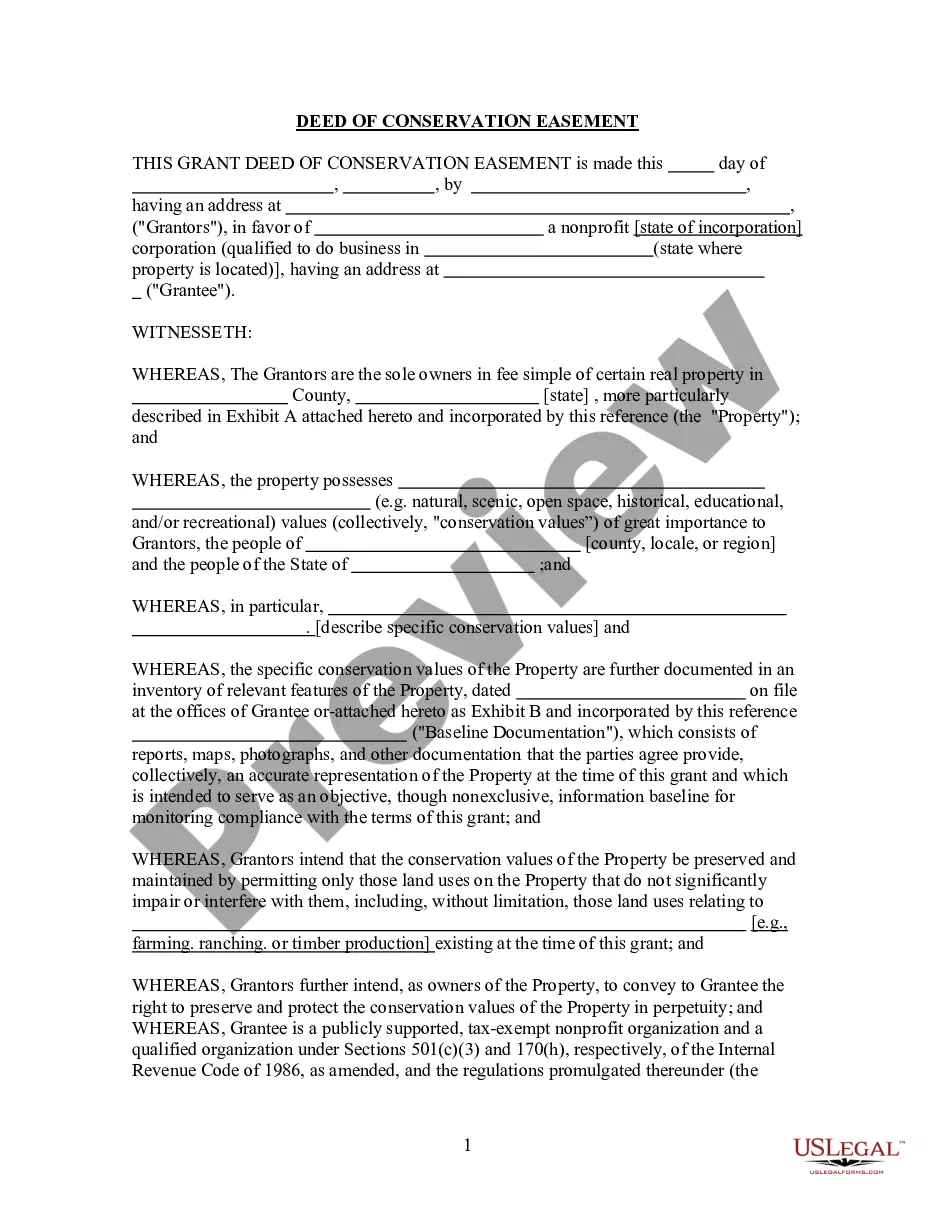
This is a sample form for use in transactions involving easements, a Conservation Easement. Easement to preserve undeveloped open space and property listed with the National Register of Historical Places.
The first step is to do some research and chat with professionals in the field. They can guide you through the maze and help you figure out the best approach for your land.
Besides saving the land, conservation easements can offer peace of mind knowing your efforts are protecting nature, plus they might come with tax benefits.
Generally, conservation easements are pretty set in stone. It’s tough to change or revoke them, but in special cases, it might be possible with the right approvals.
You still own your property, but there will be new rules about how you can use it. Think of it as playing by a new set of guidelines to help protect the environment.
You can protect all sorts of land - from forests and wetlands to farmland and open spaces. If it holds natural beauty or wildlife, it can likely be included.
Anyone who owns land can set up a conservation easement. It's a great way for landowners to show they care about the environment and want to keep it safe for future generations.
A conservation easement is like a safety net for the land. It lets landowners keep their property while setting limits on how it's developed, helping to protect natural resources.