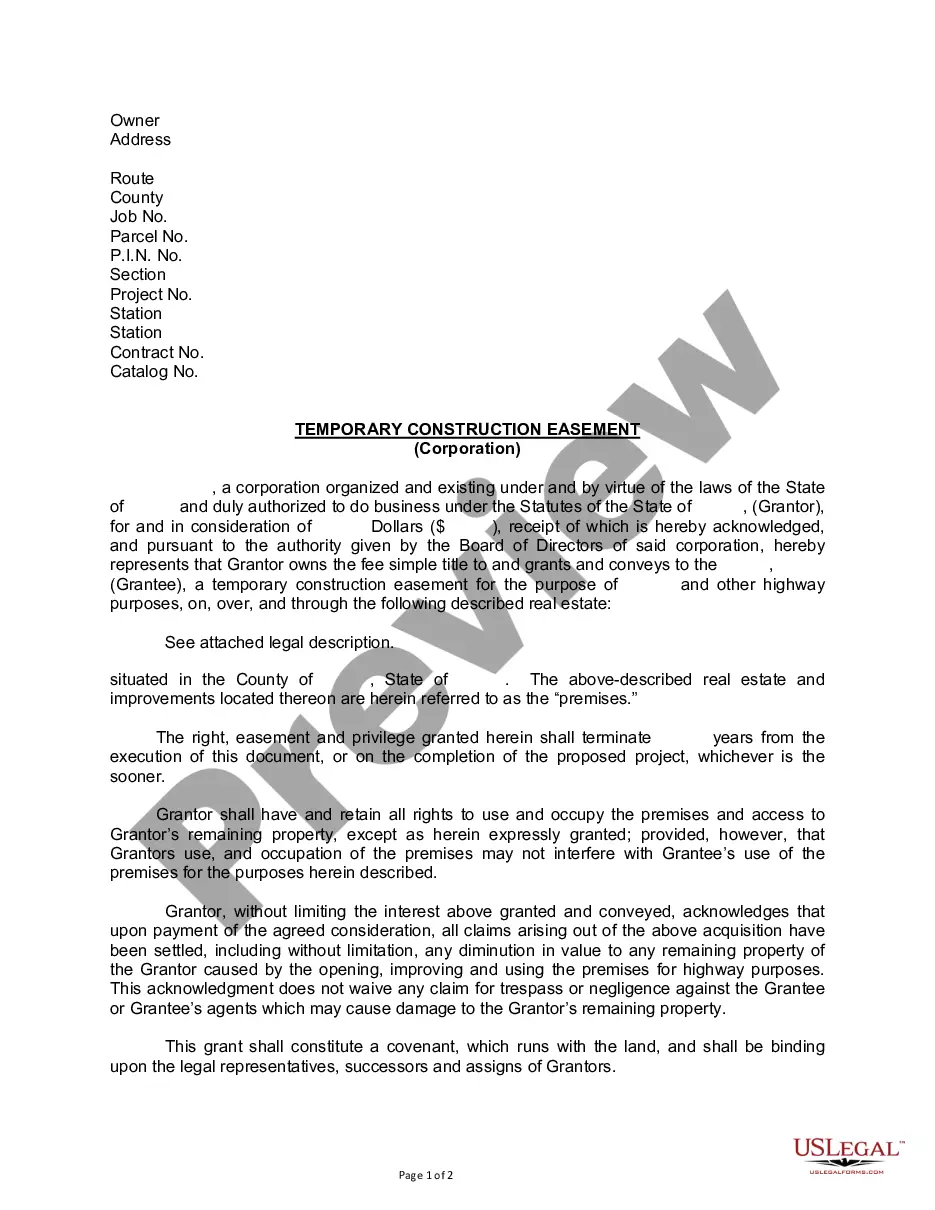
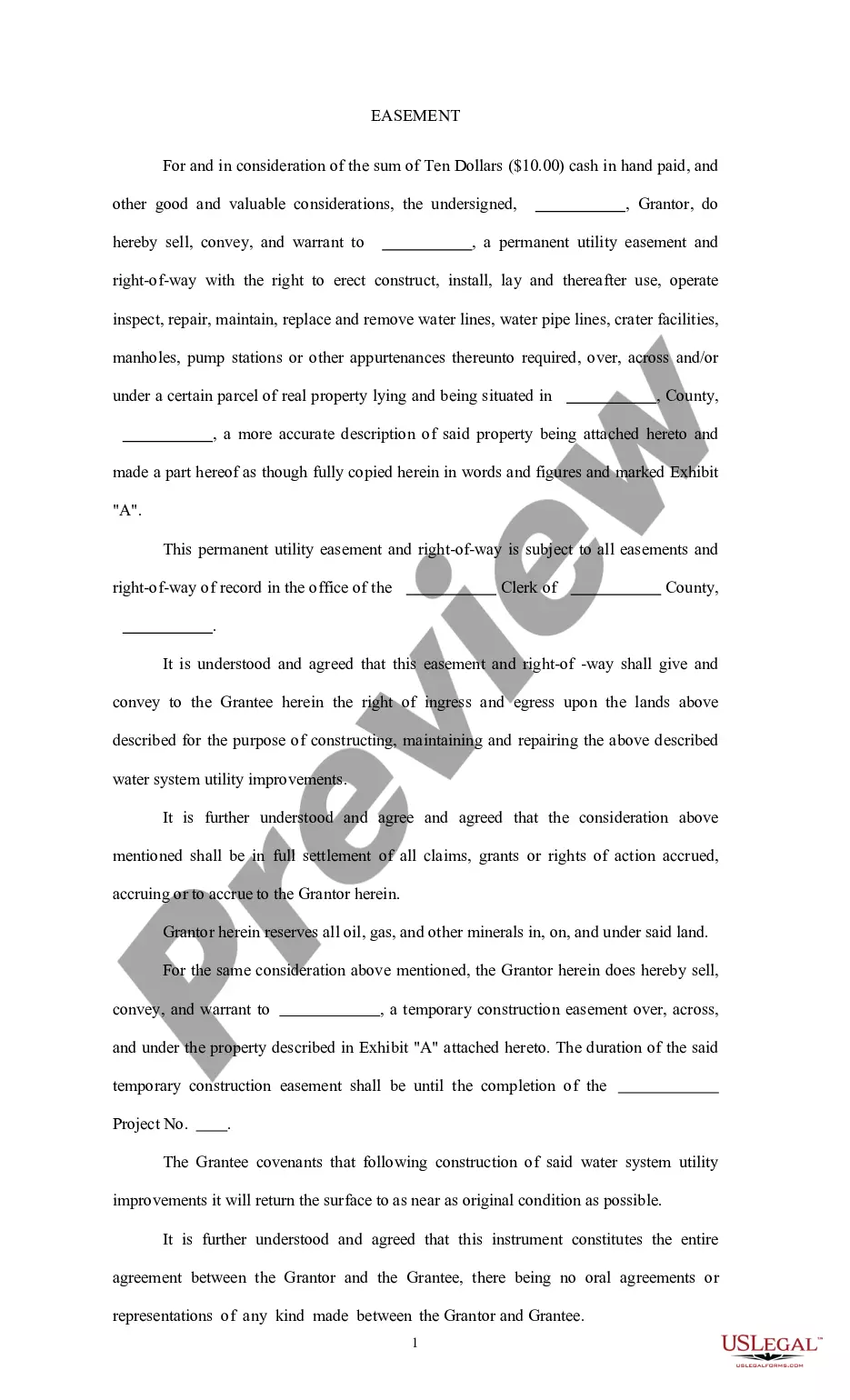
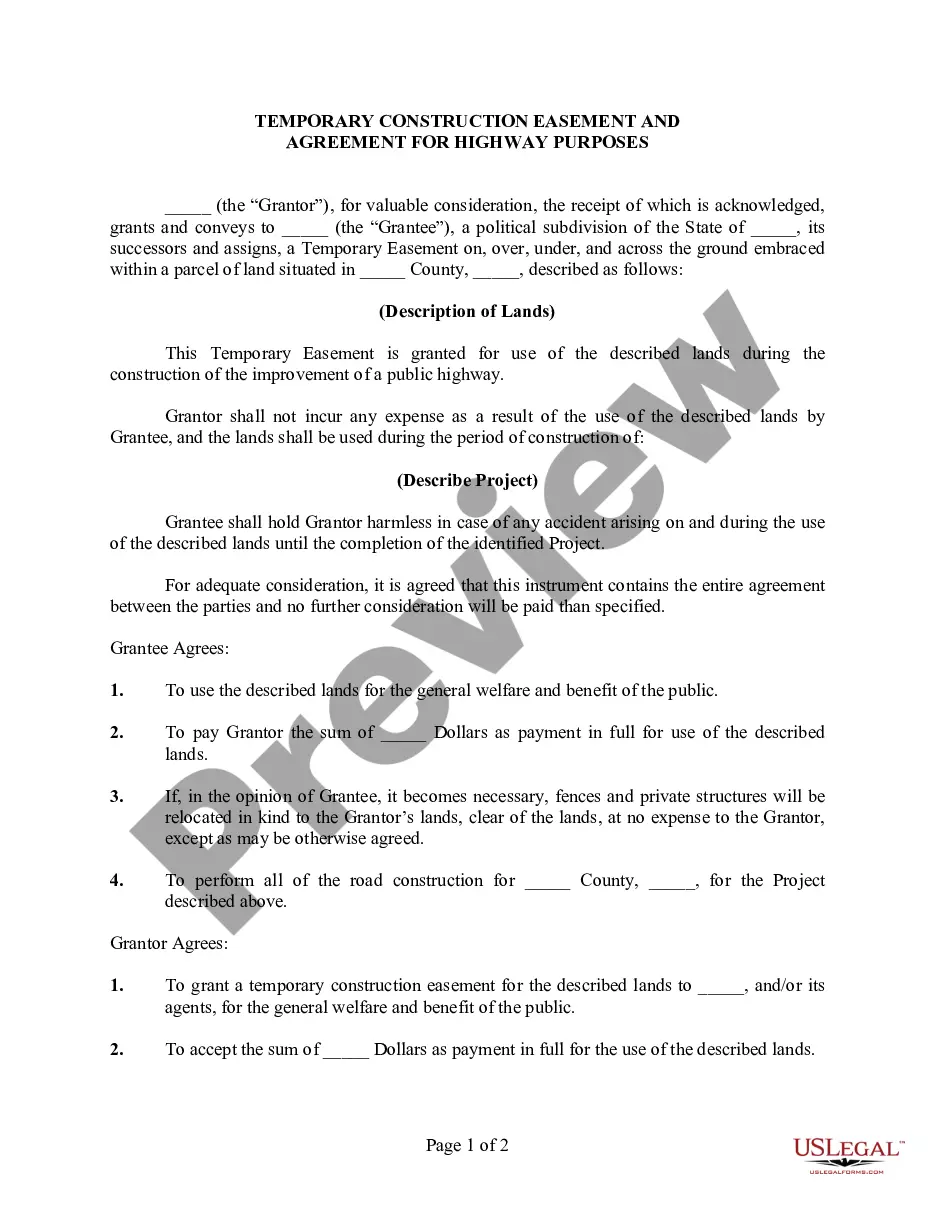
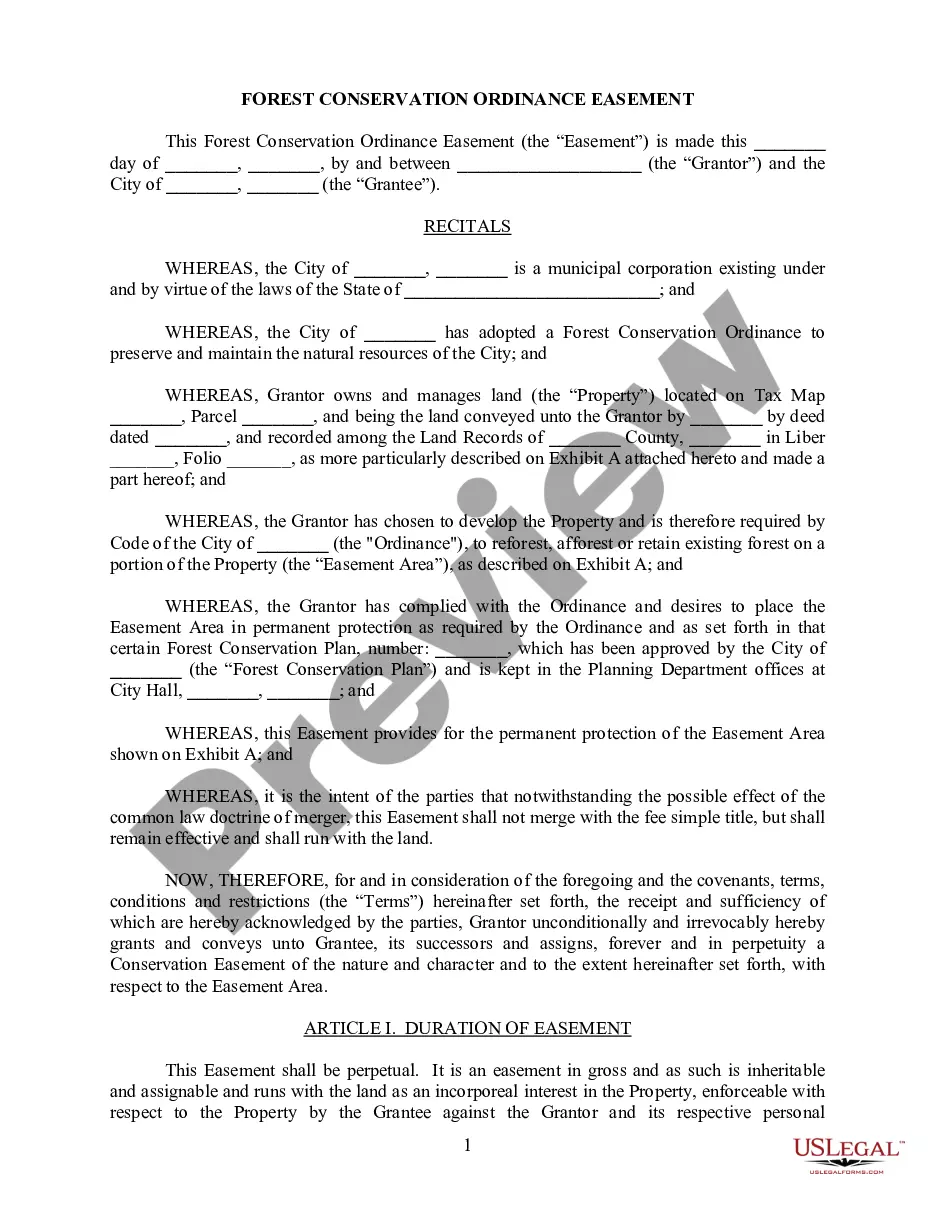
This form is an agreement to convey the use or benefit of a tract of land to another party for a specific limited purpose without giving the party the right to possess, take from, improve or sell the tract of land for temporary construction.
If damage occurs, the project owner is typically responsible for fixing it. That’s why it’s important to have everything documented, just like taking photos before lending something valuable to someone!
Yes, a written agreement is usually created to outline the terms and conditions. It's like drawing up a contract when borrowing a friend's car—it keeps everything clear and fair.
Not quite! You can only use it for the specific purpose outlined in the easement agreement, like construction access or storing materials. Think of it as borrowing a tool—you can't keep it forever!
Definitely! It's a good neighborly move to let them know what's happening. Communication can avoid misunderstandings and keeps everyone on the same page.
Typically, these easements are in place for the duration of the construction work, which can range from a few days to several months, depending on the project. It’s like renting a space but just until the work is finished.
You might need one if your project requires access to someone else's land for equipment or materials. It’s like needing a little extra space to get the job done right!
A temporary construction easement is like borrowing a neighbor's yard for a little while to do some work. It's a permission slip that lets contractors use a small piece of land to build or improve something, but just for a short period.