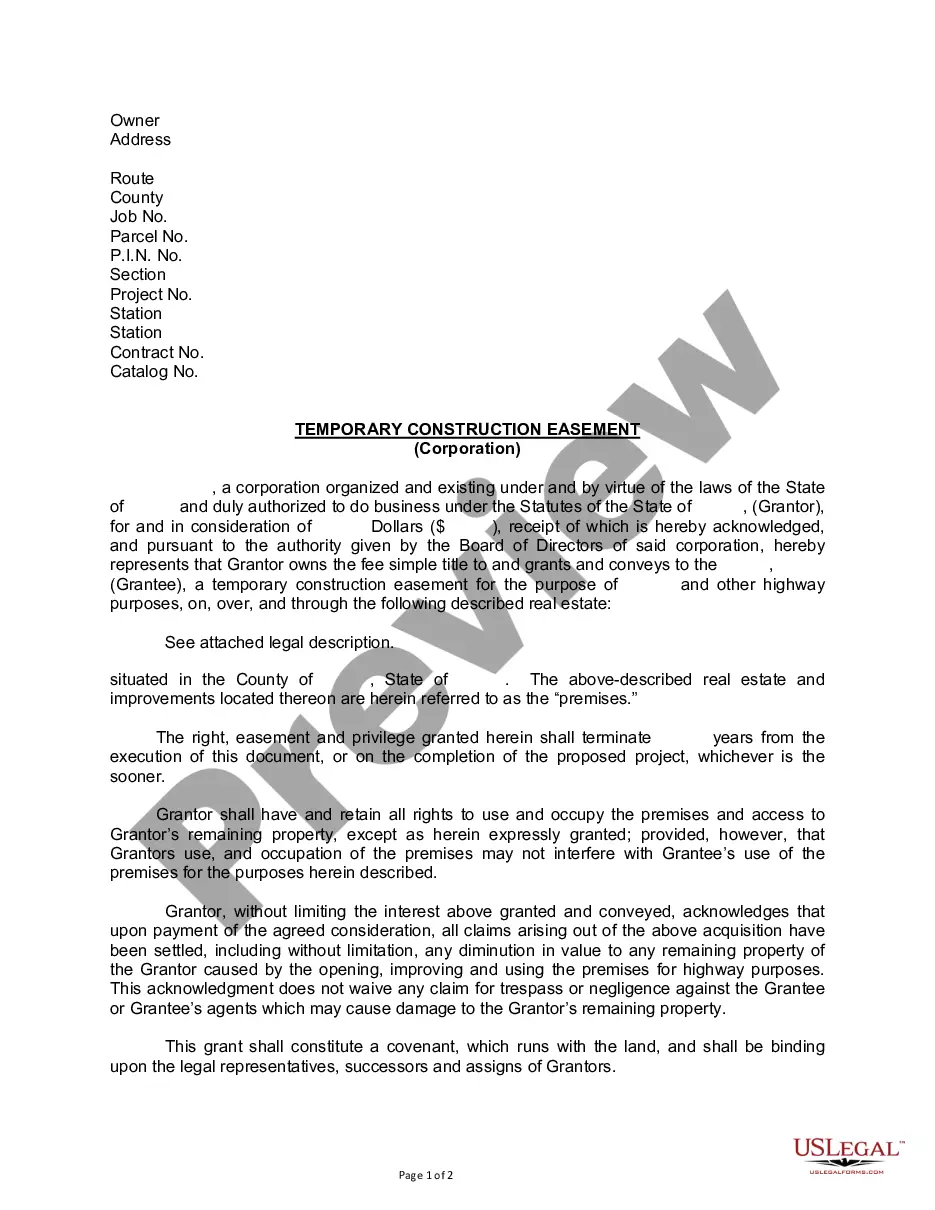
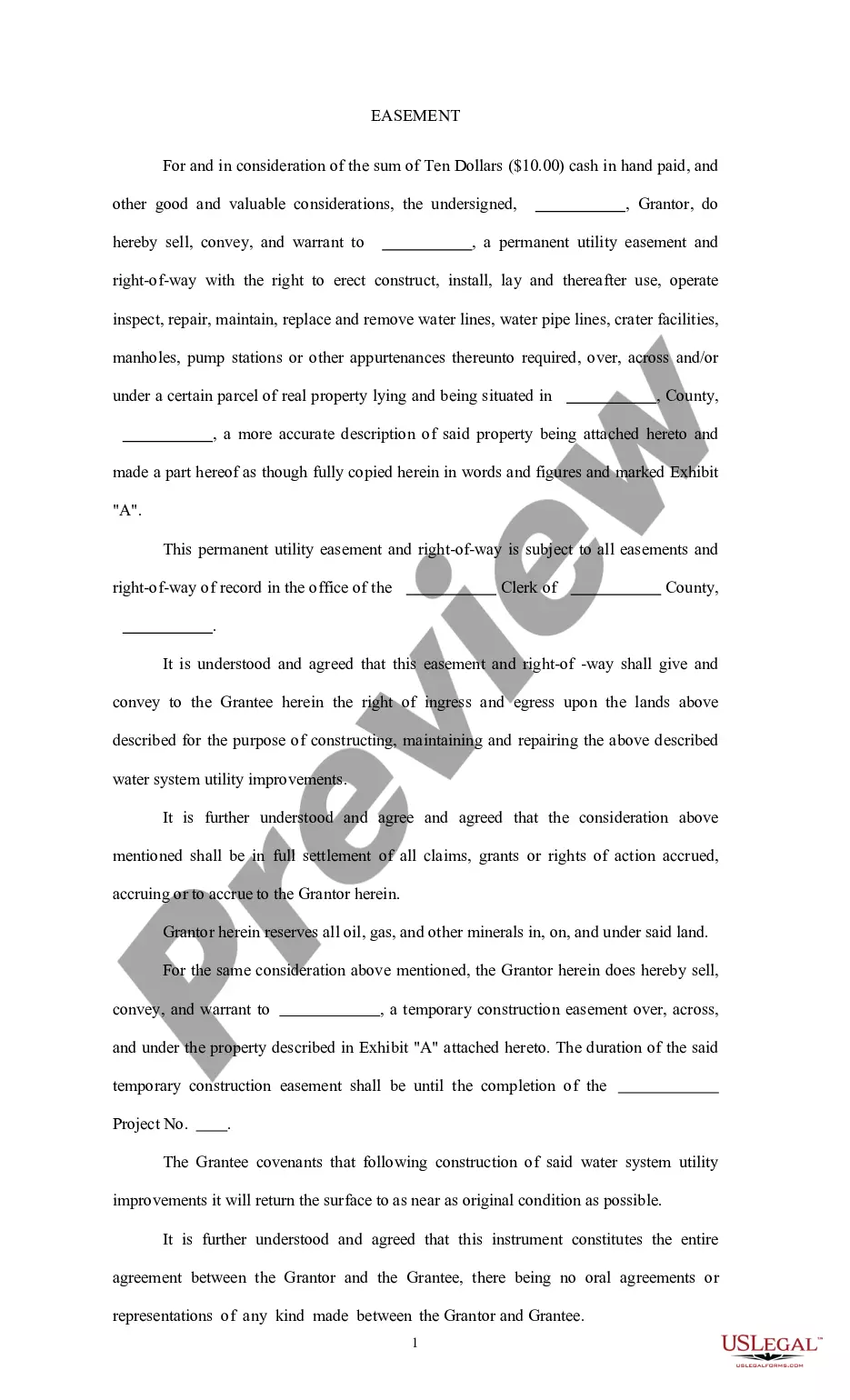
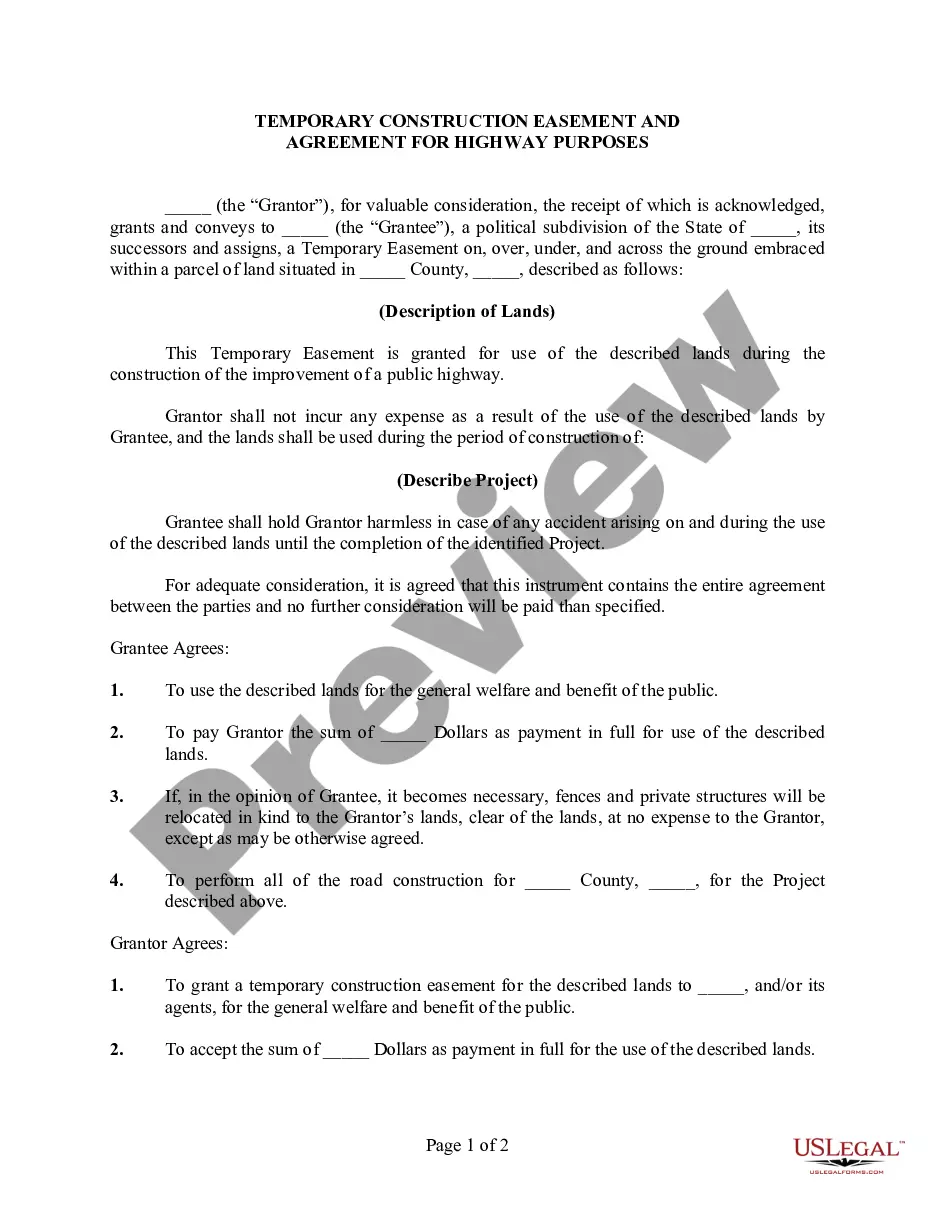
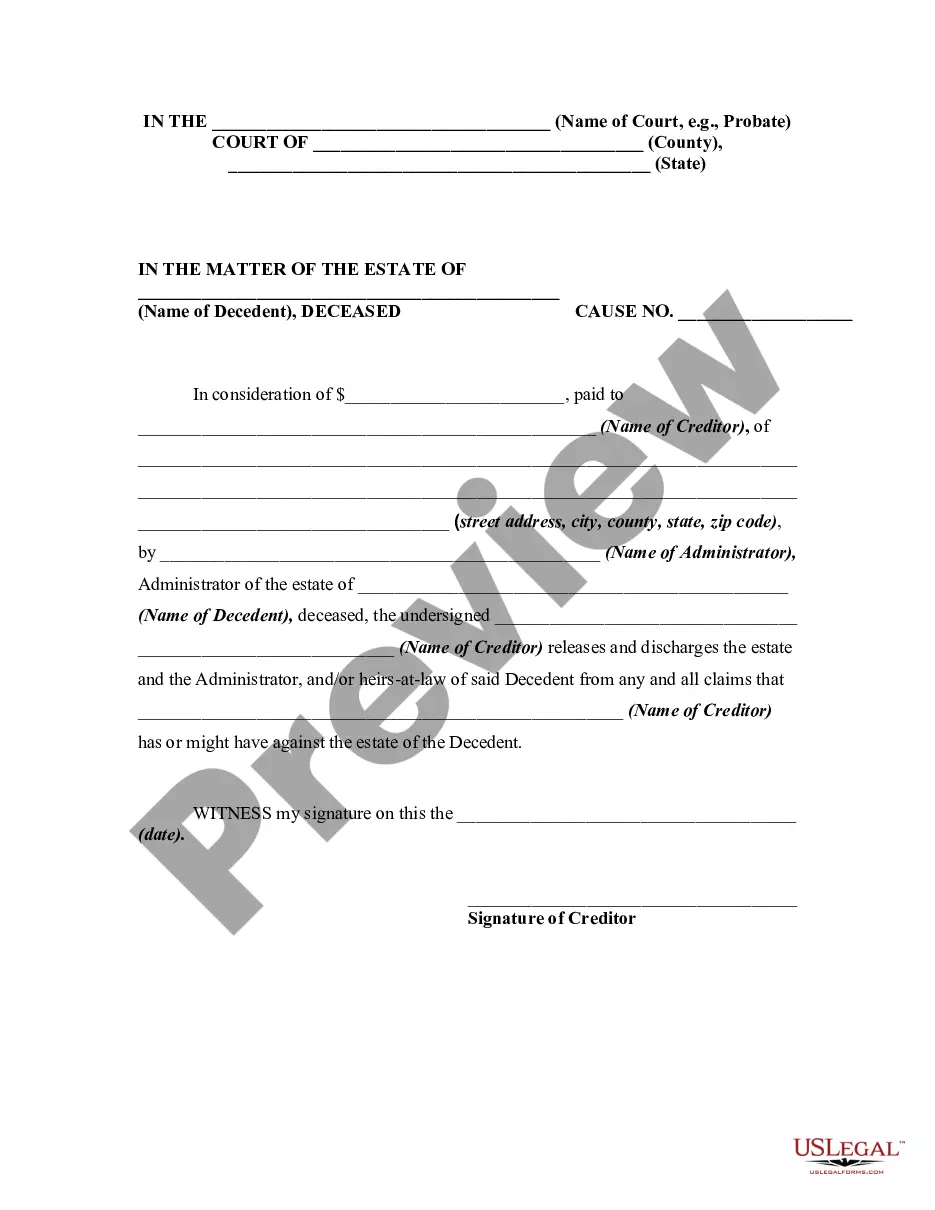
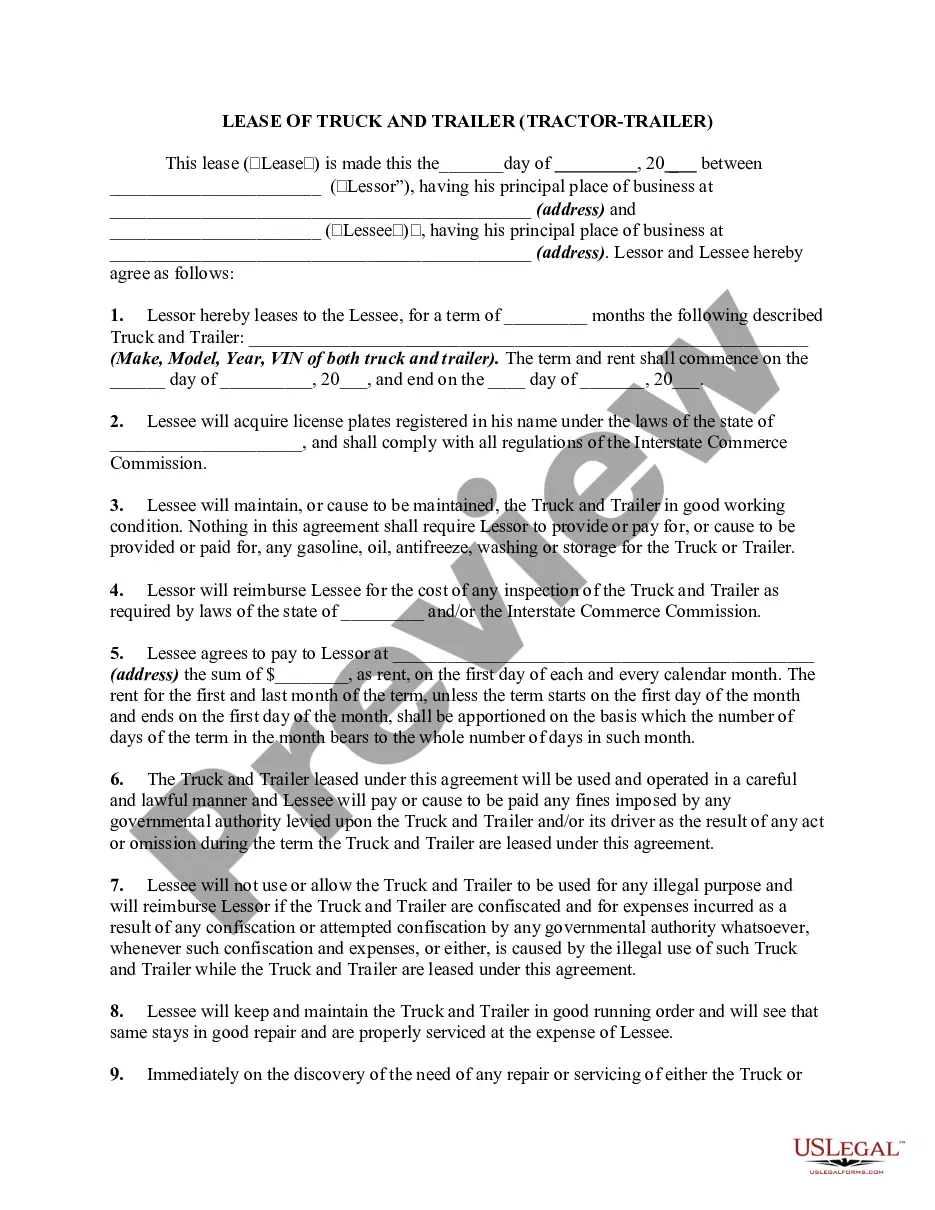
This form is an agreement to convey the use or benefit of a tract of land to another party for a specific limited purpose without giving the party the right to possess, take from, improve or sell the tract of land for temporary construction.
If you decide you don’t need the easement anymore, it's best to communicate that to the landowner as soon as possible. Like pulling the plug on a plan, it’s good to be polite about it!
Absolutely! Just like any agreement, you can negotiate terms such as the duration, access details, and responsibilities. Clear communication can prevent any future bumps in the road.
If any damage happens while using the land, the contractor is usually responsible for fixing it. It's a good idea to discuss this upfront to avoid any misunderstandings.
Yes, you'll need to get permission from the landowner to create a temporary construction easement. Think of it like asking a neighbor if you can use their driveway while you're moving.
Typically, these easements last for the duration of the construction project. Once the work wraps up, the easement expires, and your land is returned to its original state.
If your project needs space beyond your property lines — like staging materials or equipment — a temporary construction easement gives you that breathing room to complete your work without any hiccups.
A temporary construction easement is a legal right that allows a contractor to use a piece of land for a certain period, usually for construction activities without purchasing the land. It's like borrowing someone's yard to work on a project.