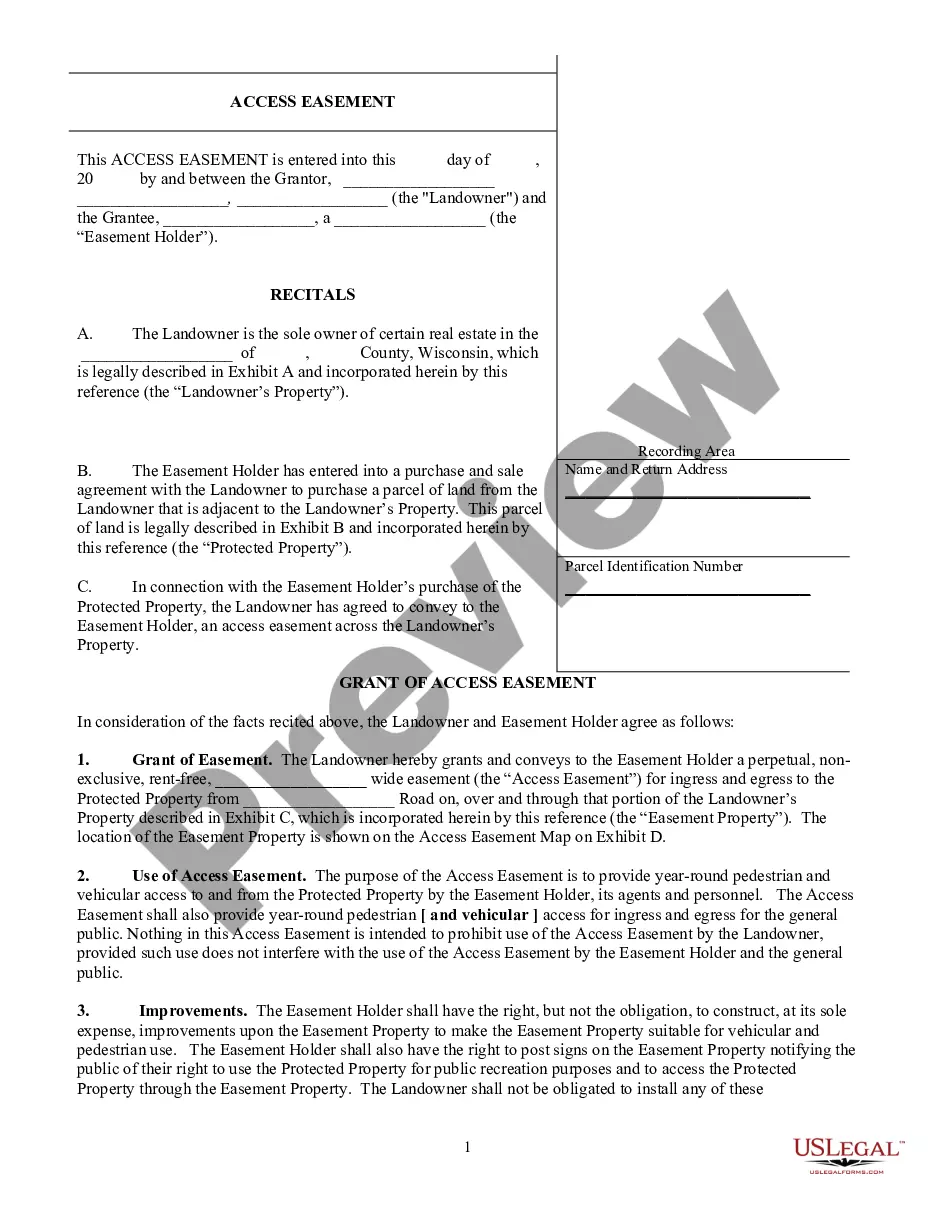
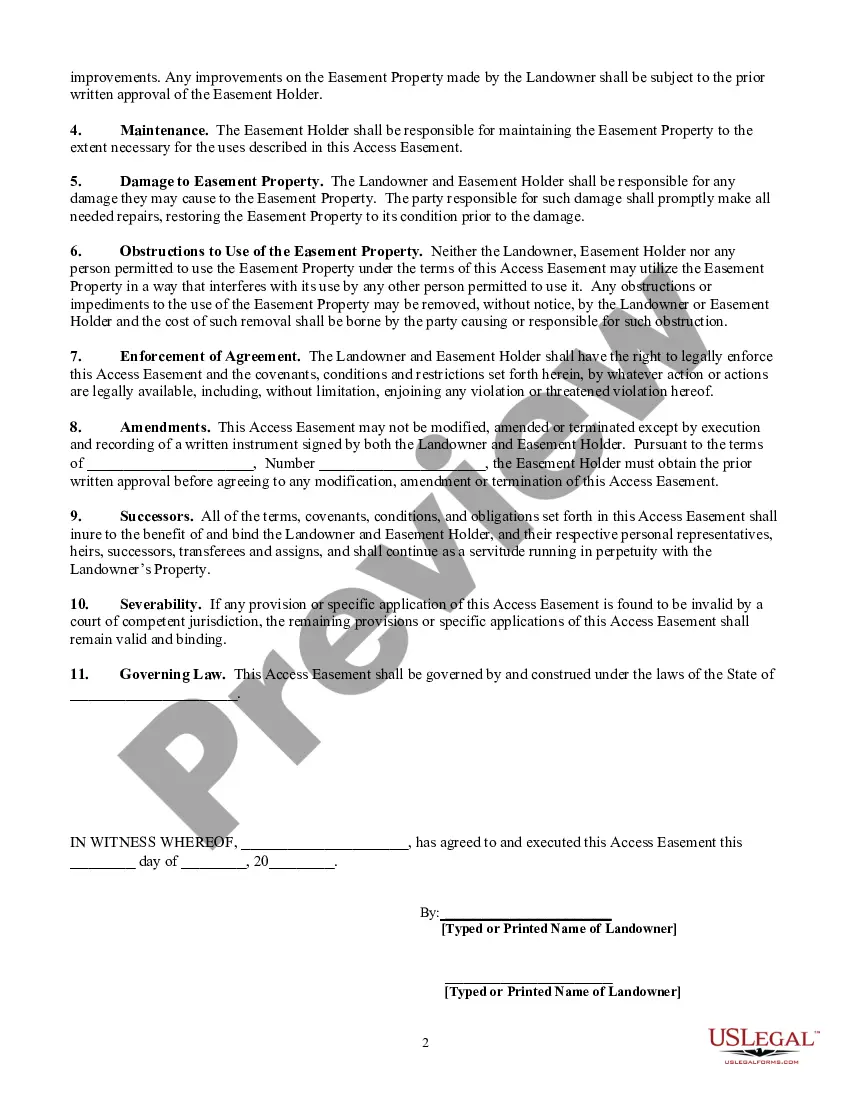
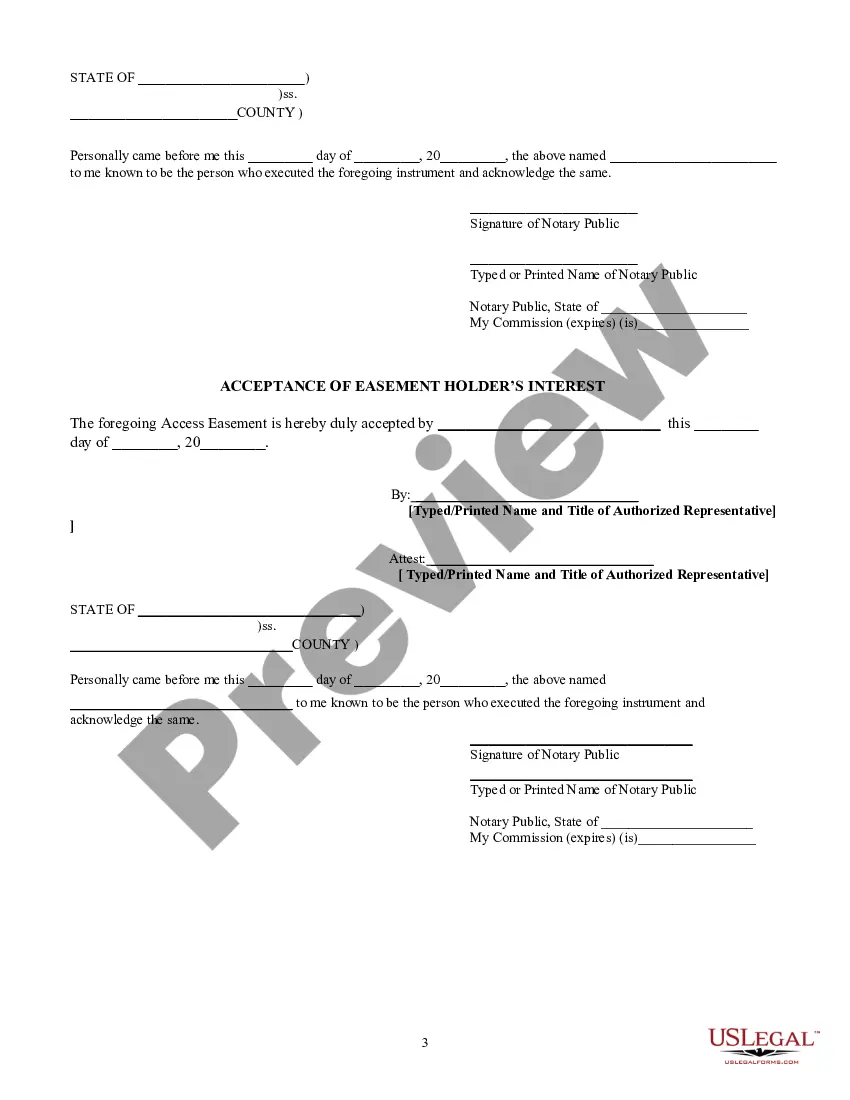
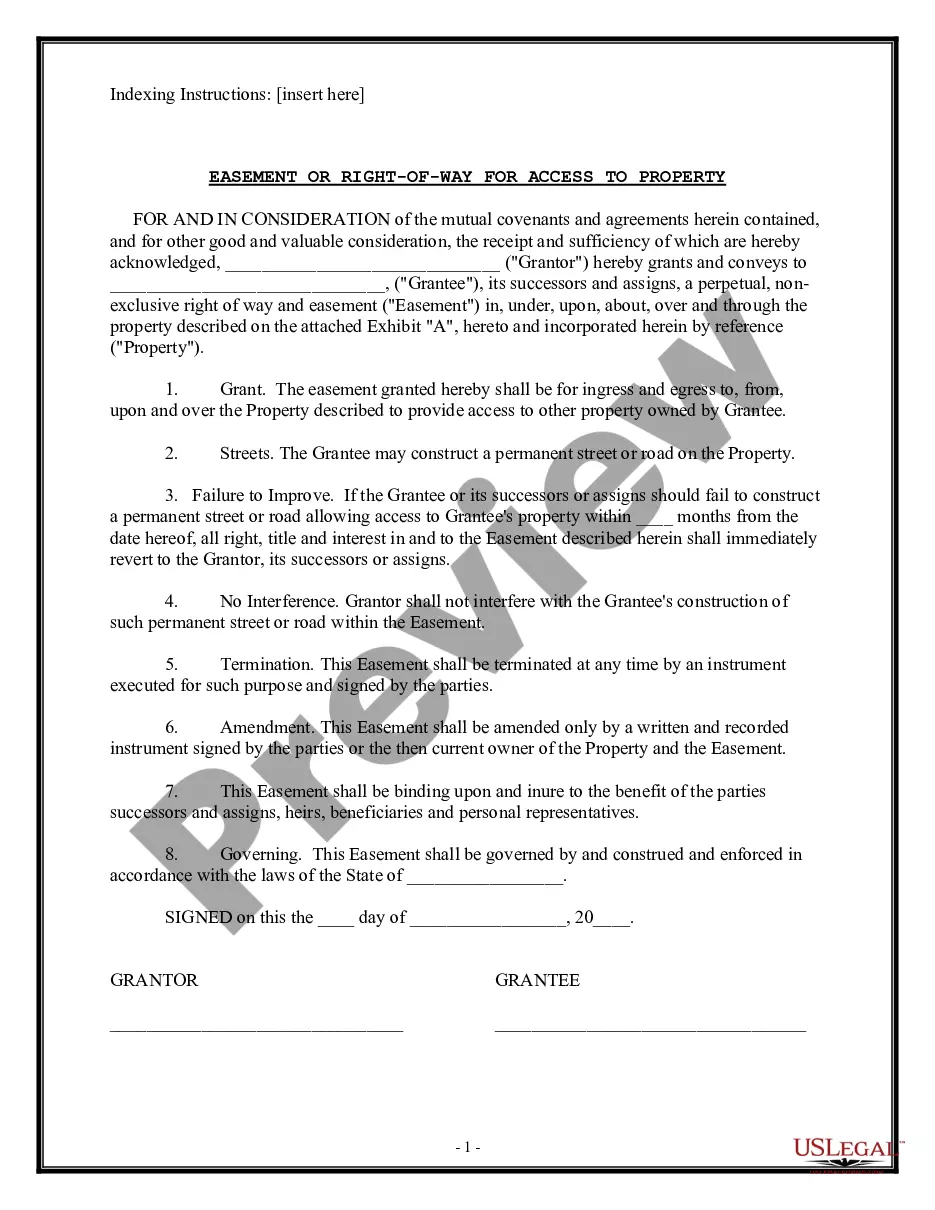
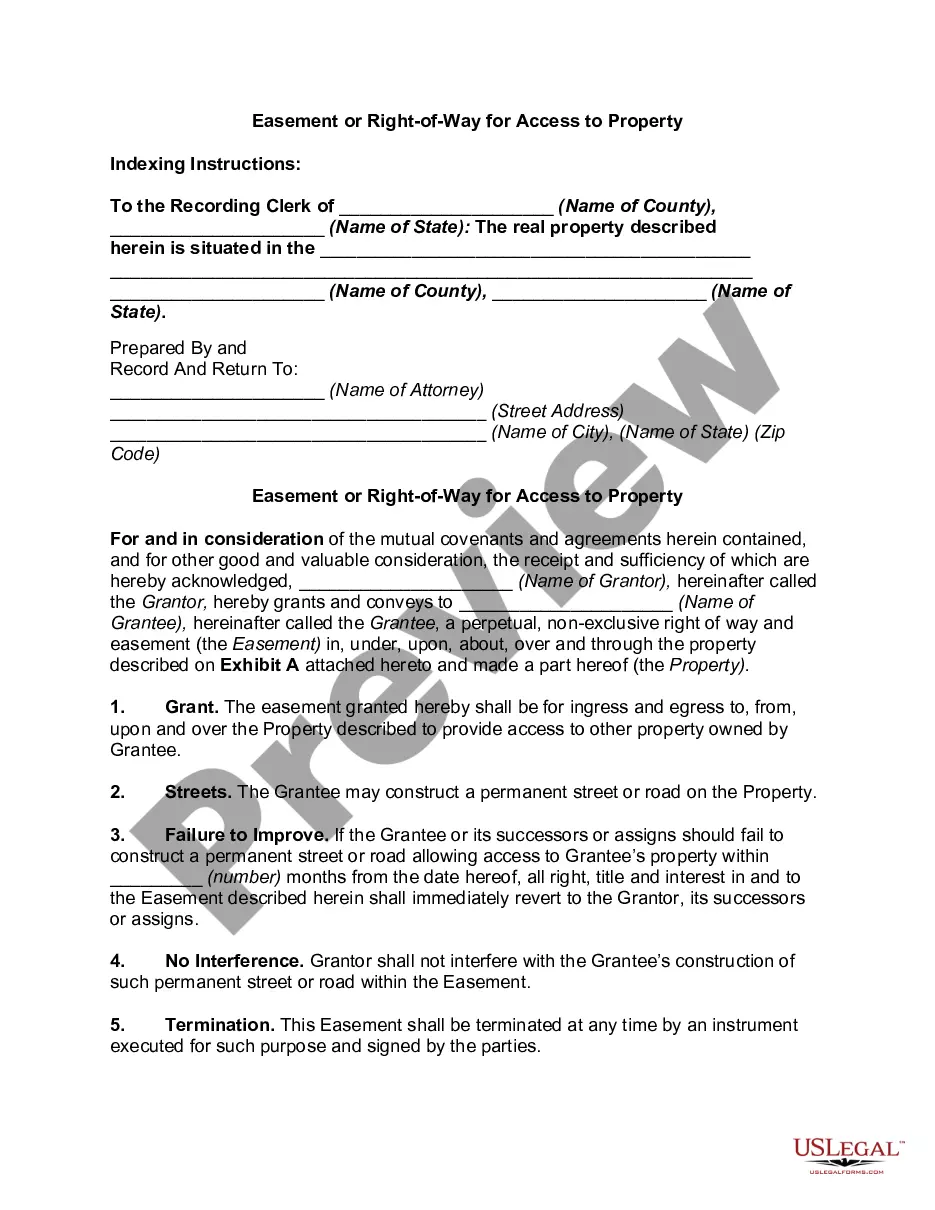
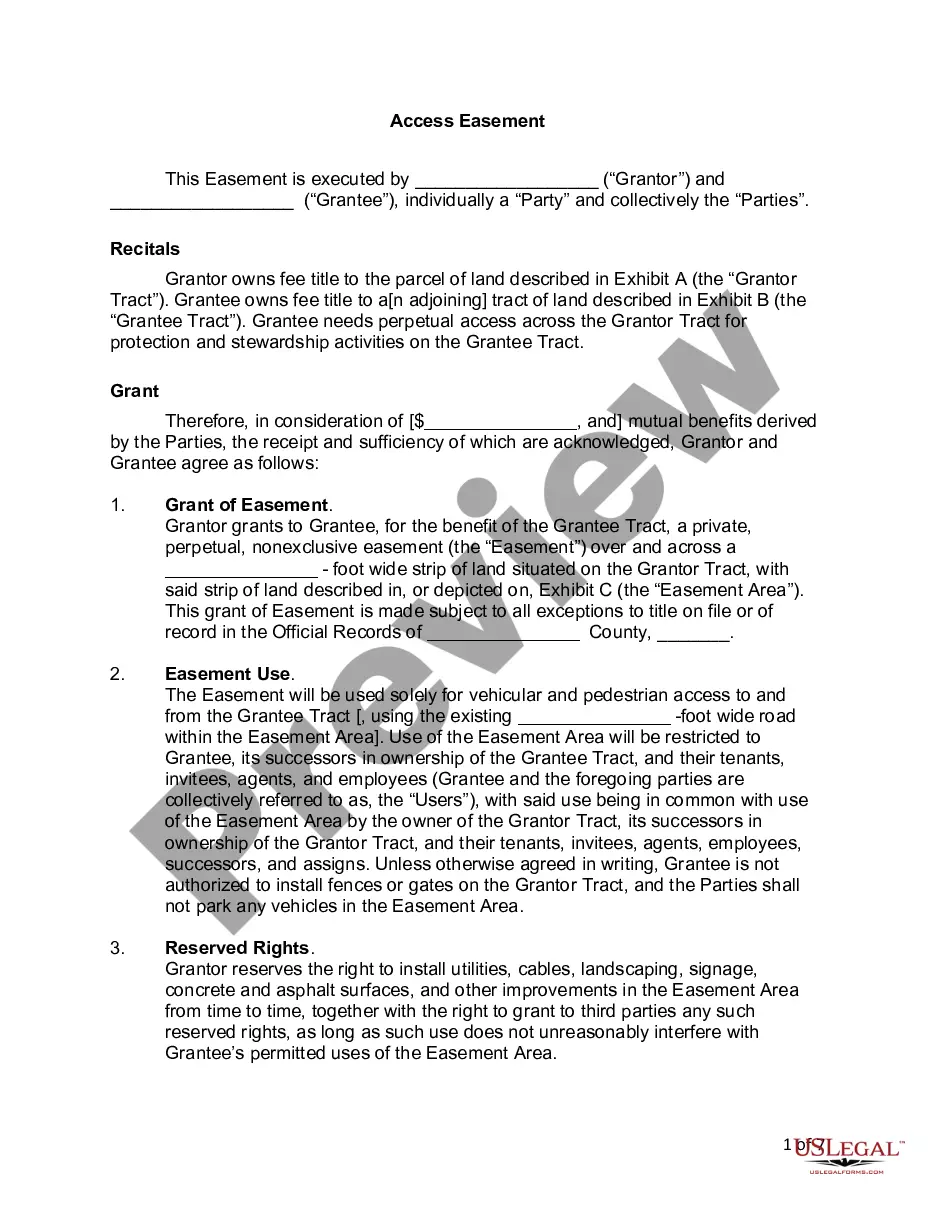
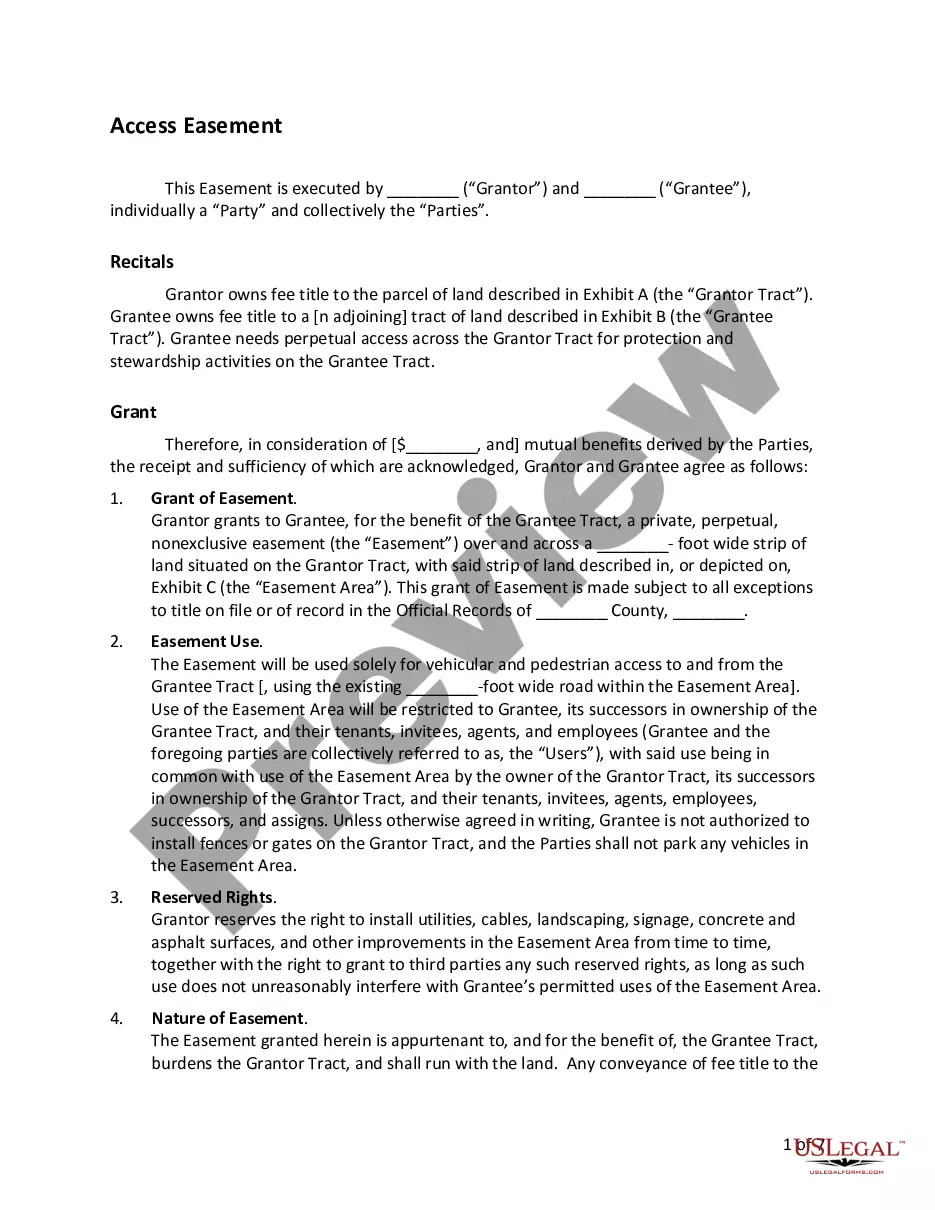
This form is an agreement to convey the use or benefit of a tract of land to another party for a specific limited purpose without giving the party the right to possess, take from, improve or sell the tract of land.
Yes, it can be as flexible as a rubber band! If all parties agree, easements can be modified or even canceled, but it's best to do it officially and in writing to avoid any misunderstandings down the line.
Establishing an access easement often means having a heart-to-heart and then putting it in writing. You’ll need clear details about where it is and what it's for, and it may need to be recorded in public land records.
If someone doesn't play by the rules laid out in the easement, it could lead to some rocky roads ahead. You might need to have a chat, or in some cases, seek legal help to sort things out.
In some cases, yes, but it's not as easy as pie. If the terms of the easement allow for it, or if both parties agree, it can be revoked. Otherwise, it might take legal steps to resolve.
Most access easements are like a good book; they often last a long time, sometimes indefinitely. But, it all depends on what you agree on in the easement agreement.
Yes, it's wise to dot your i's and cross your t's. You usually need the property owner's consent to create an access easement, and it's smart to get it all in writing.
An access easement is like a friendly handshake that allows someone to use a portion of your property for a specific purpose, such as getting to their own property or a resource, like a driveway or pathway.