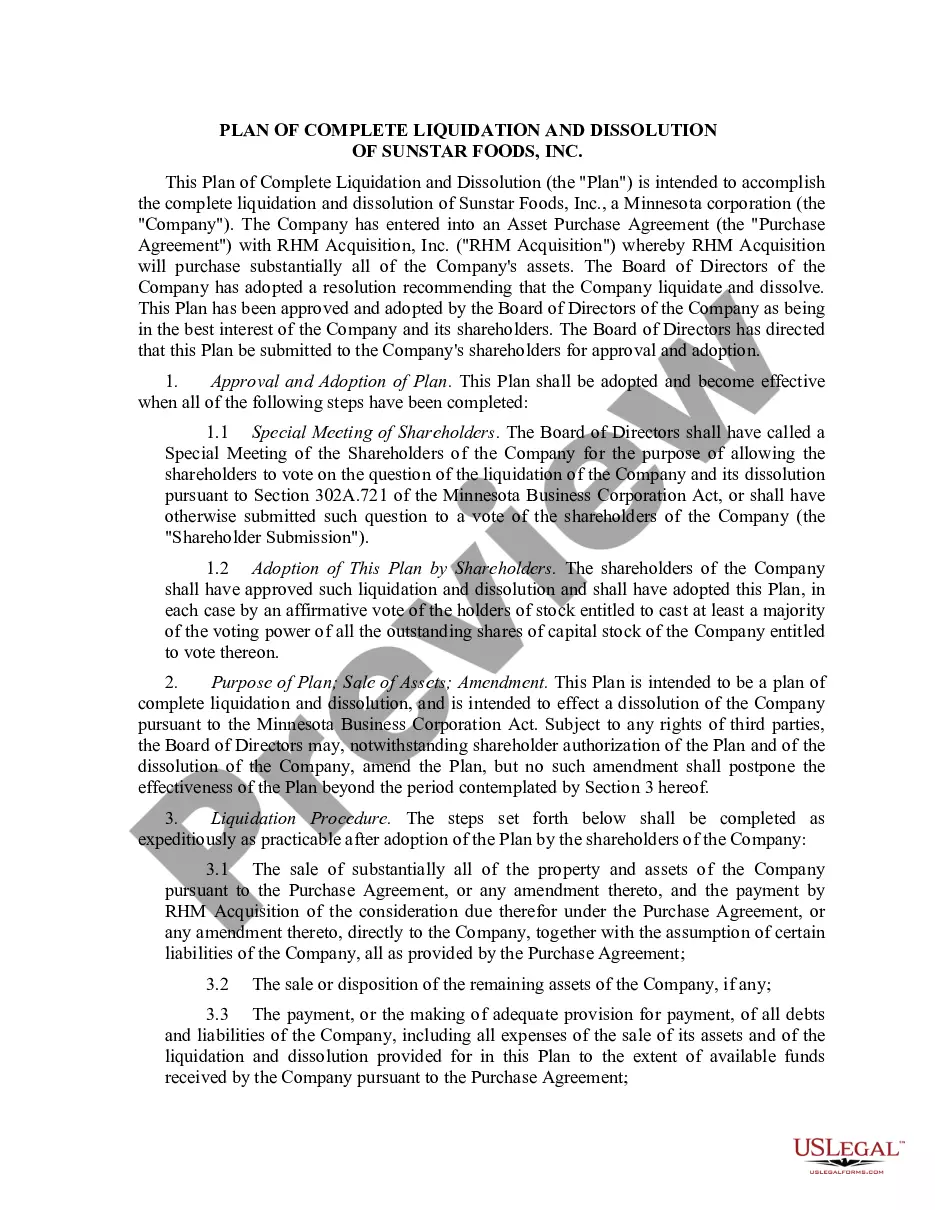
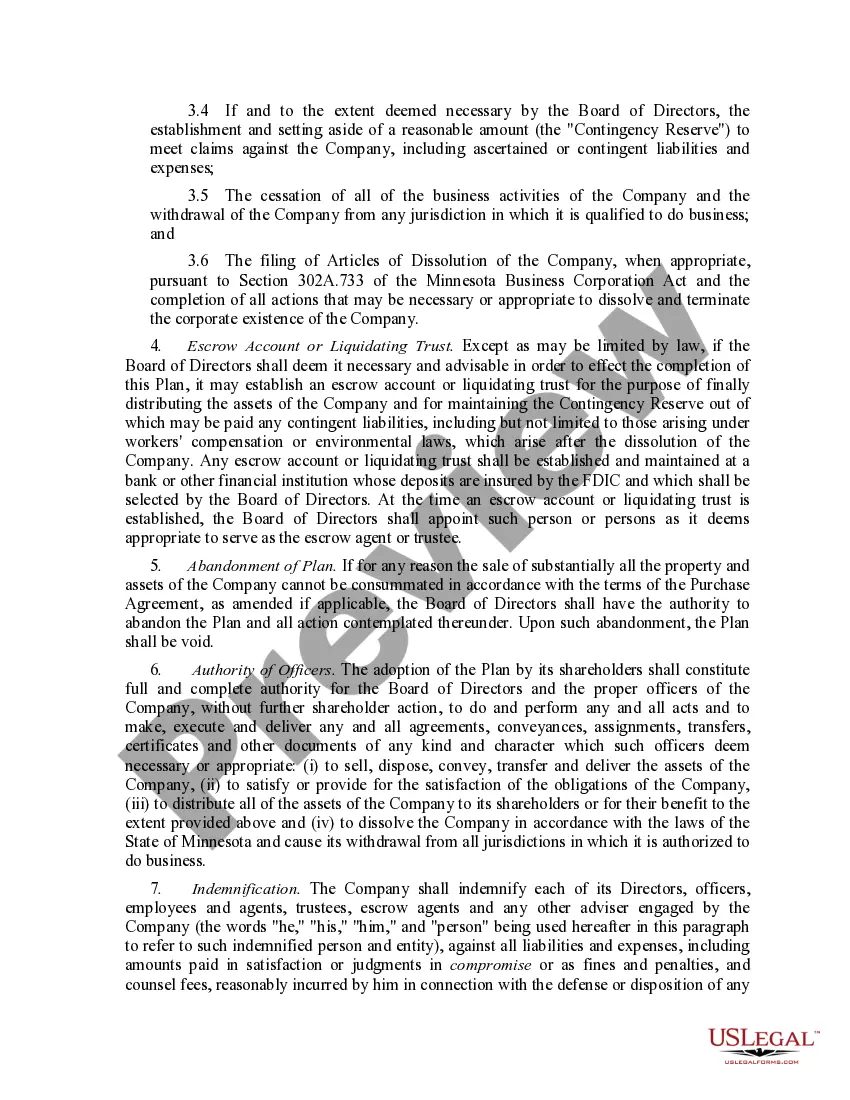
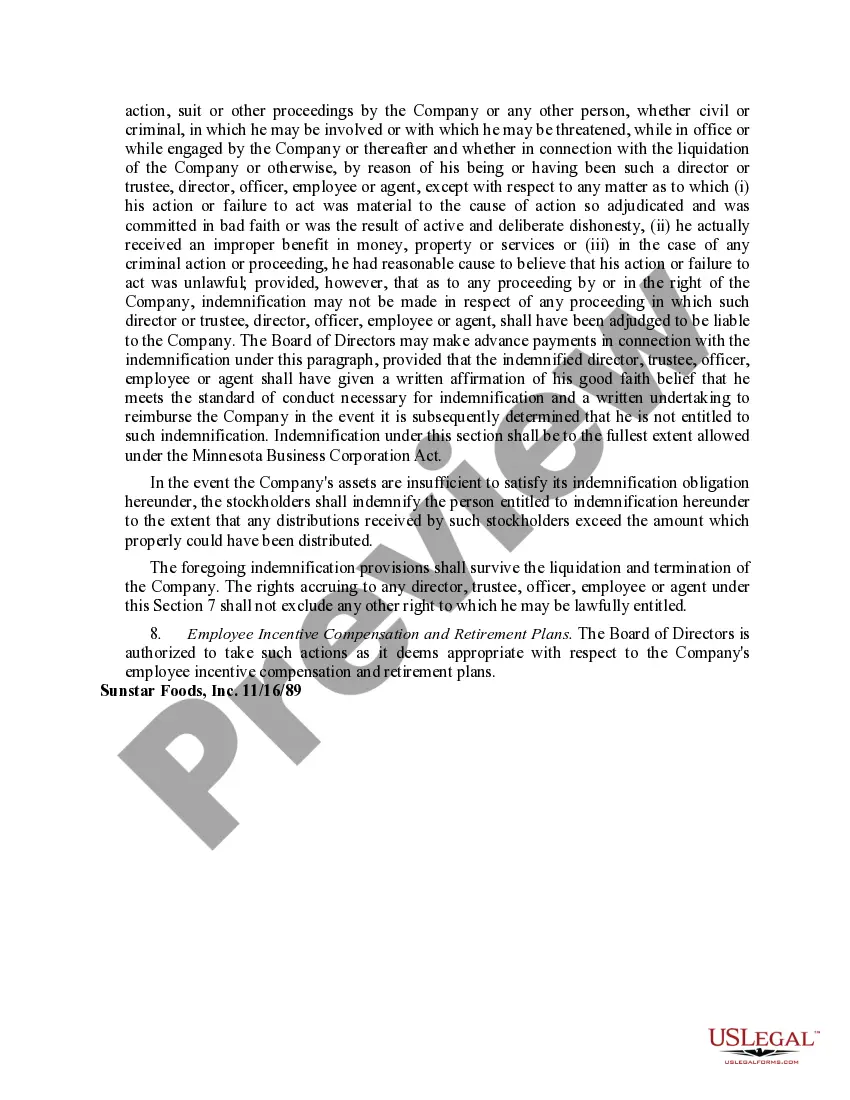
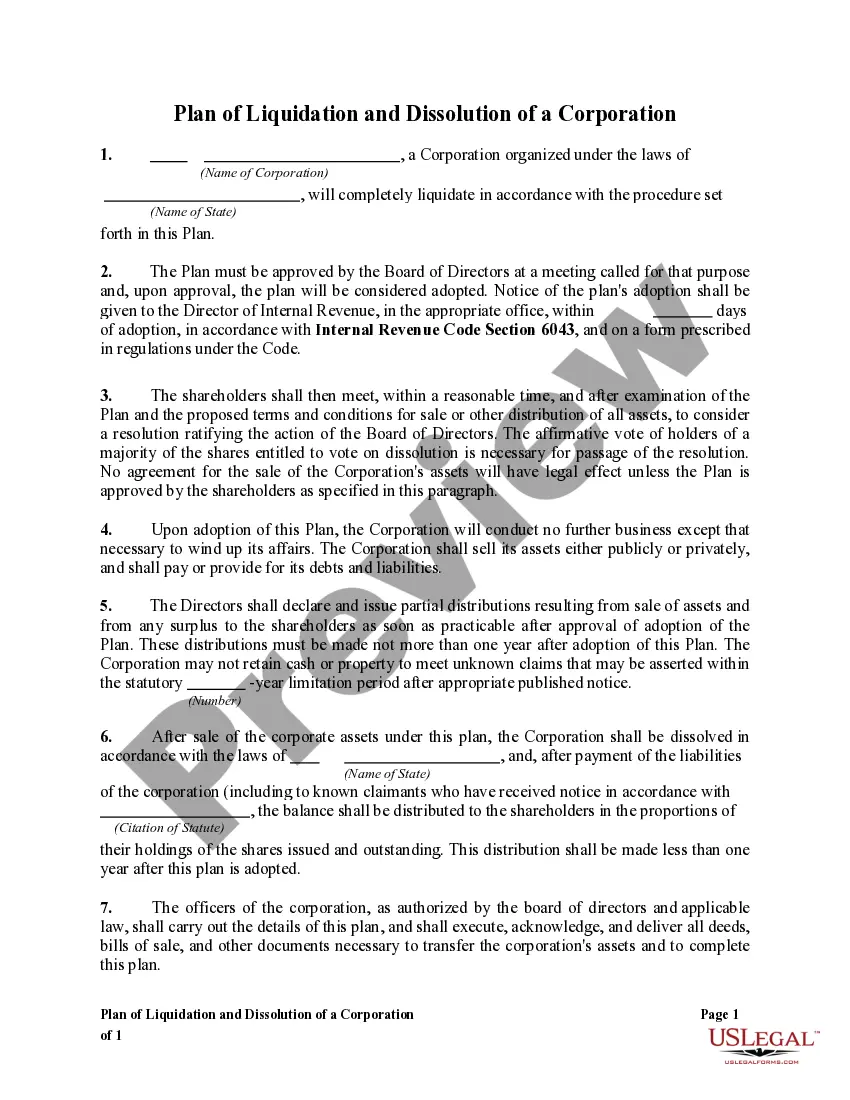
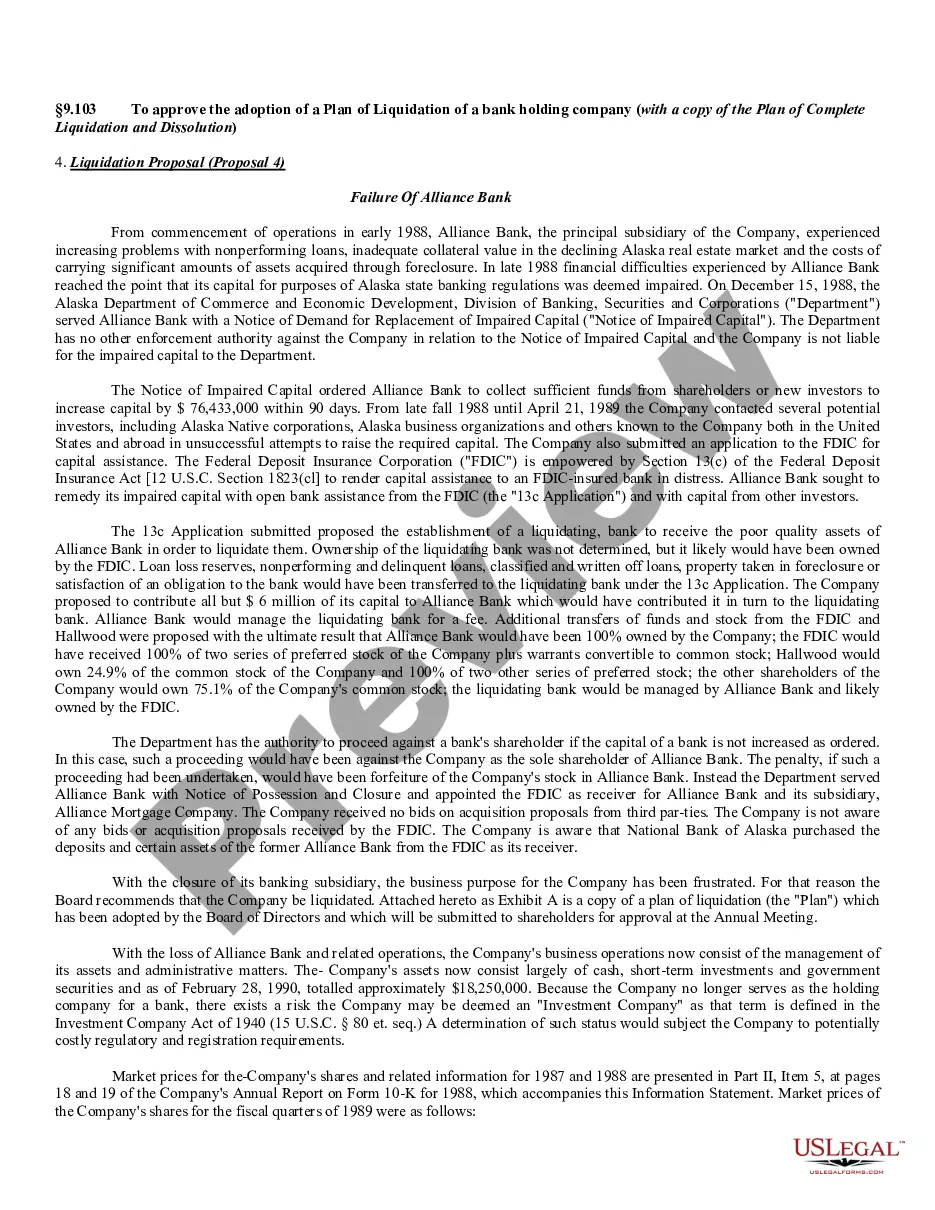
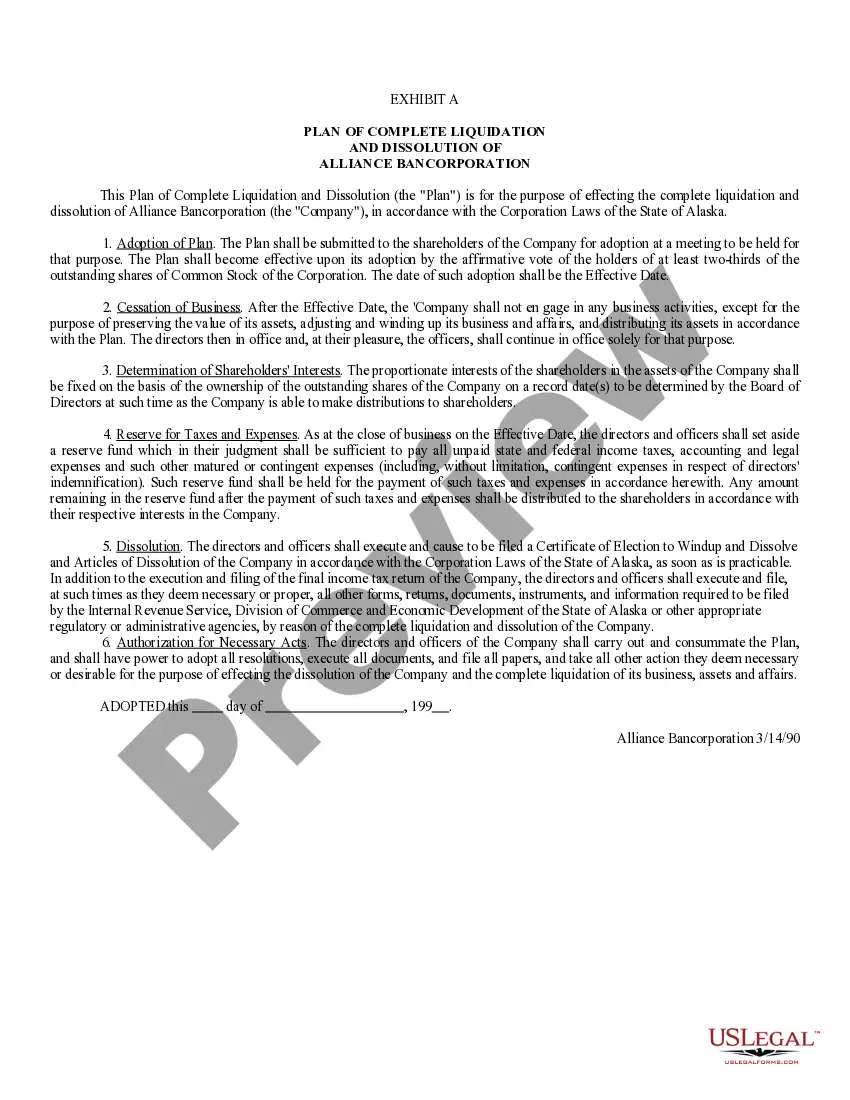
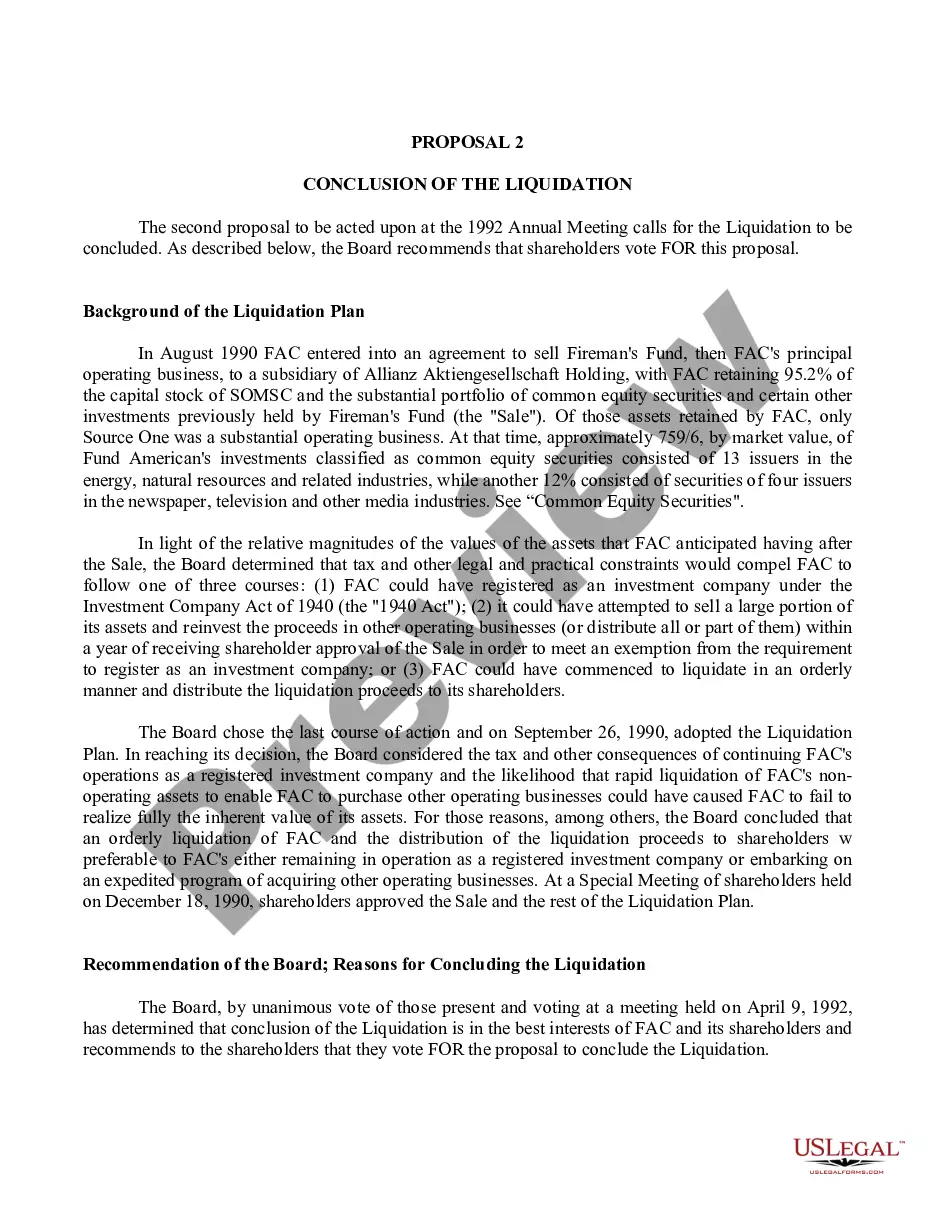
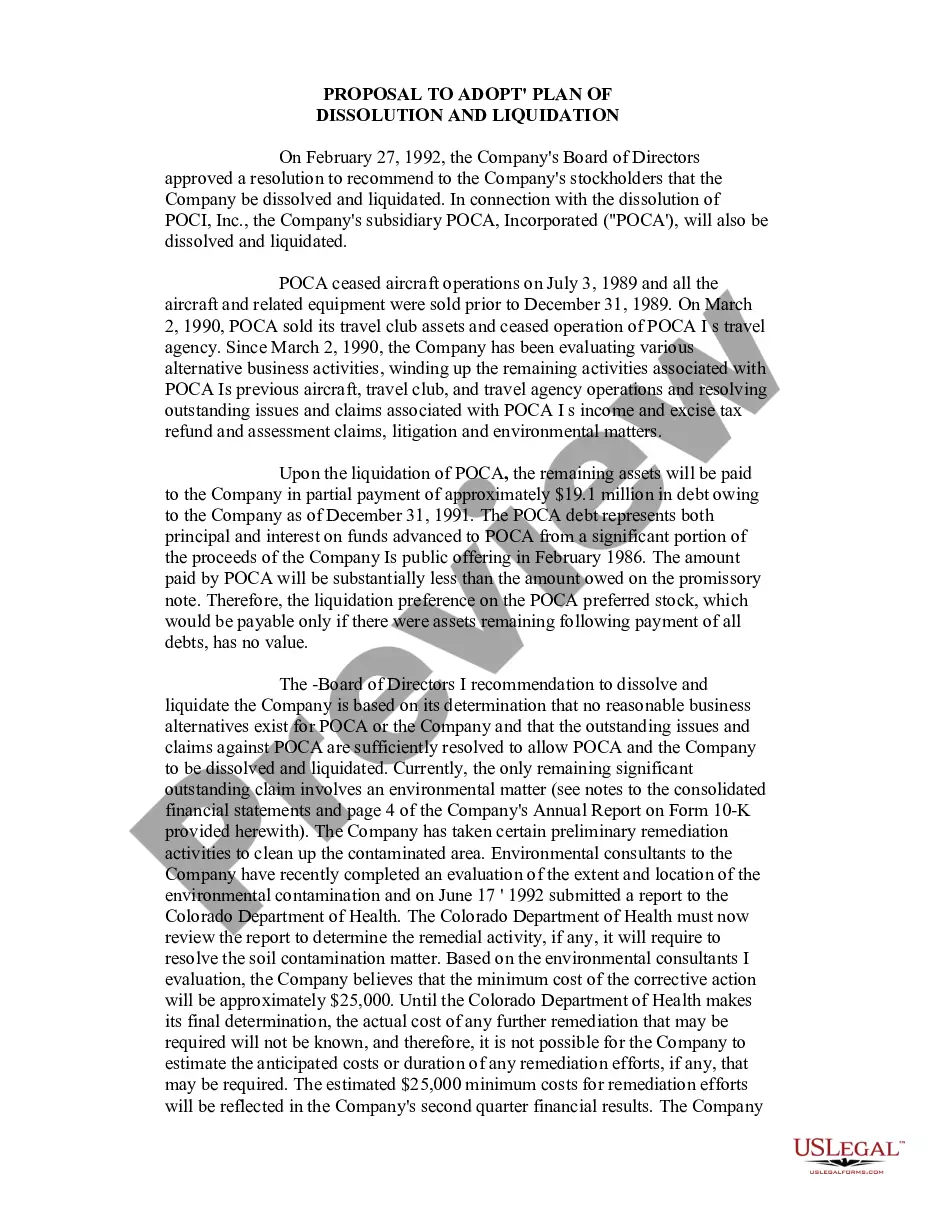
Wayne Michigan Plan of Liquidation
Description




How to fill out Plan Of Liquidation?
Drafting legal paperwork can be tedious.
Moreover, should you opt to engage a lawyer to create a commercial agreement, documents for ownership transfer, prenup, divorce filings, or the Wayne Plan of Liquidation, it might set you back considerably.
Browse through the page and confirm that there is a template available for your region. Review the form description and utilize the Preview option, if accessible, to ensure it is the template you require. If the form doesn't fit your needs, don't hesitate to search for an appropriate one using the header. Click Buy Now once you identify the necessary template and choose the most fitting subscription. Log In or register for an account to process your subscription payment. Execute the payment through a credit card or PayPal. Select the document format for your Wayne Plan of Liquidation and save it. After completion, you can either print it out and fill it in manually or upload the template to an online editor for a quicker and more convenient completion. US Legal Forms allows you to utilize all the documents purchased multiple times - you can access your templates in the My documents section of your profile. Try it out today!
- What is the most effective method to conserve time and finances while producing legitimate documents that are fully compliant with your state and local regulations.
- US Legal Forms serves as a fantastic resource, whether you are in search of forms for personal or corporate requirements.
- US Legal Forms boasts the largest online collection of state-specific legal templates, offering users the latest and professionally validated forms for any scenario all gathered in one location.
- As a result, if you require the latest iteration of the Wayne Plan of Liquidation, you can swiftly find it on our platform.
- Acquiring the documents demands minimal time.
- If you already possess an account, please verify your subscription status, Log In, and select the template using the Download button.
- If you haven't yet subscribed, here's the procedure to obtain the Wayne Plan of Liquidation.
Form popularity
FAQ
Liquidation Plan means with respect to any Company or any Fund, a plan of liquidation, a plan to dispose of a substantial portion of its assets out of the ordinary course of business (except in connection with a Permitted Merger) or any other plan of action with similar effect.
On average, the liquidation process takes 8-12 weeks. The liquidator must be an independent individual, over 18, not bankrupt, and of sound mind. There are no requirements as to residency or formal qualifications. The declaration of solvency, liquidation plan and appointment of liquidator are filed at the registry.
Under the BCA, a BVI company may only be put in solvent liquidation if it: has no liabilities; or. is able to pay its debts as they fall due (cash flow test); and. the value of its assets equals or exceeds its liabilities (balance sheet test).
The plan must, at the minimum: (a) enumerate all assets of the debtor not exempt from execution; (b) list all creditors and their claims which have been duly proved as shown in the final registry of claims; (c) state a proposed mode and schedule of liquidation of the assets and payment of the claims; and (d) make
Liquidation in finance and economics is the process of bringing a business to an end and distributing its assets to claimants. It is an event that usually occurs when a company is insolvent, meaning it cannot pay its obligations when they are due.
A company may be liquidated either voluntarily, by means of the board of directors passing a resolution to that effect, or an application can be made to court either by the company itself (a shareholders' resolution is required) or by a creditor or shareholder of the company.
The goal of liquidation is to dissolve all the company's assets, pay off all creditors and split the remaining proceeds among the owners of the firm.
A liquidator must be a natural person and cannot be a corporate entity. However, certain individuals are restricted from acting as liquidators including undischarged bankrupts and persons (and their close relatives) involved in the management of the company in the previous two years.
The administration of the liquidation begins. selling or closing the business. identifying and selling the company's assets. contacting and receiving claims from creditors. sending progress reports to creditors.
Advantages Of Liquidating A Business You will no longer need to file annual accounts, VAT accounts or tax returns once the liquidation has been completed. Employees will be able to make a claim for any unpaid salary, holiday pay, notice pay and redundancy from the government fund.