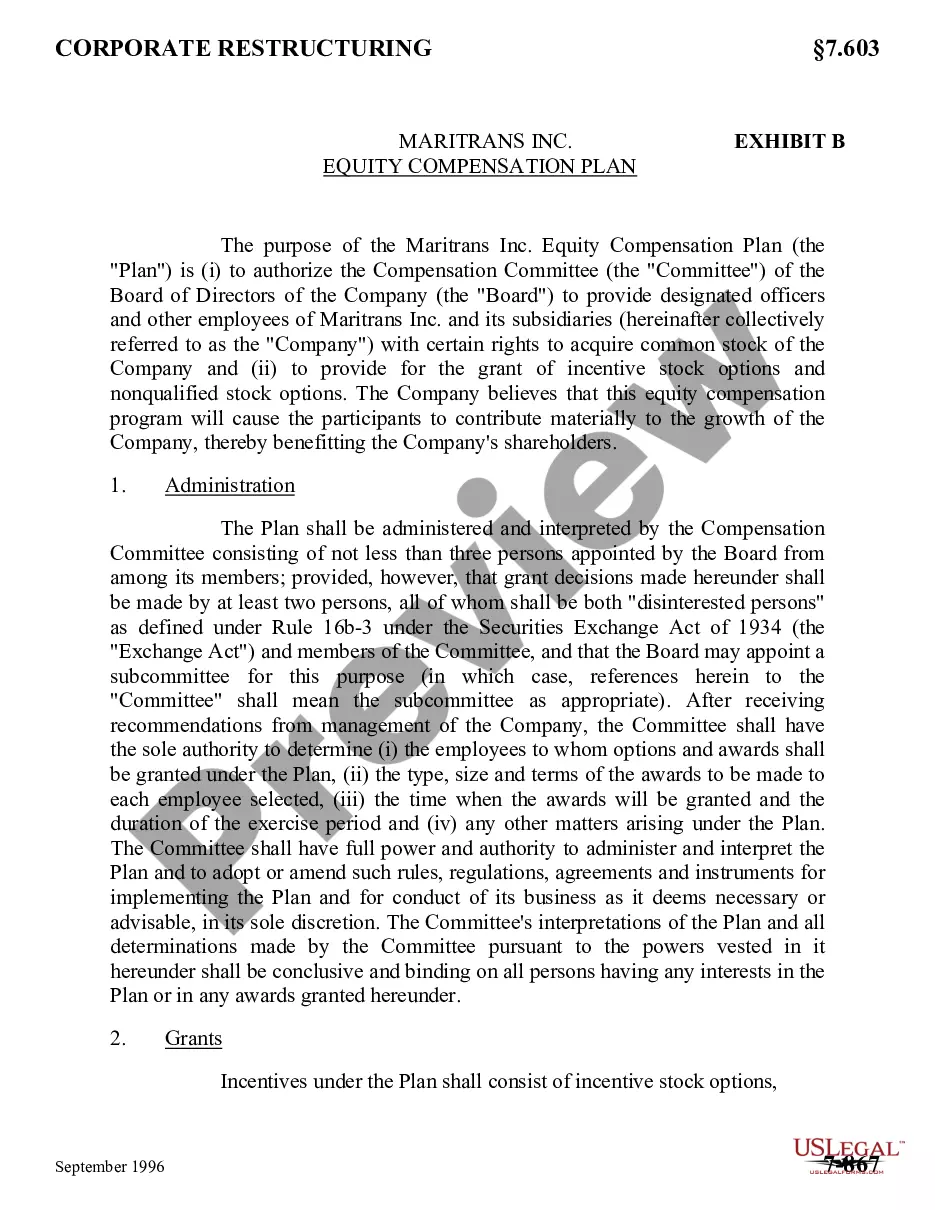
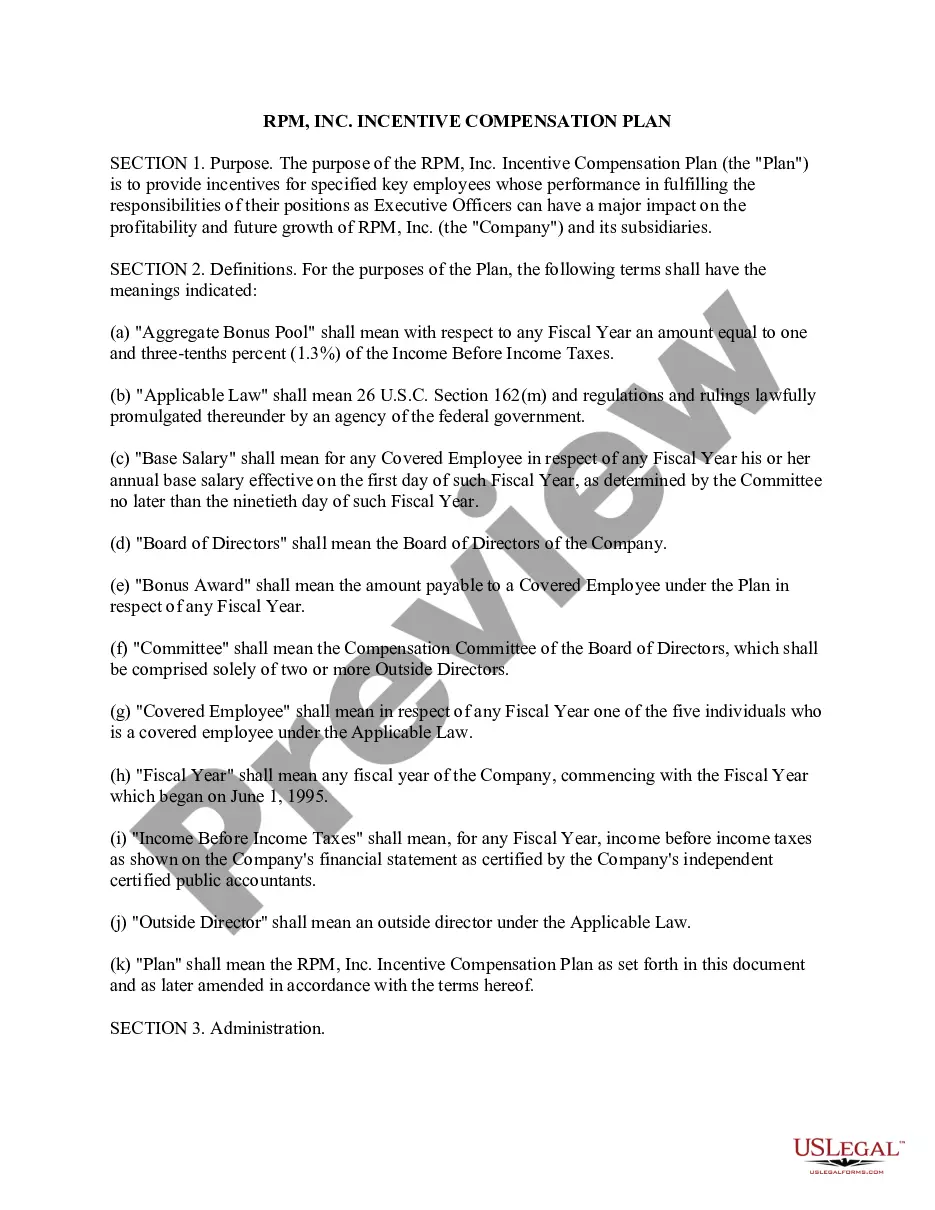
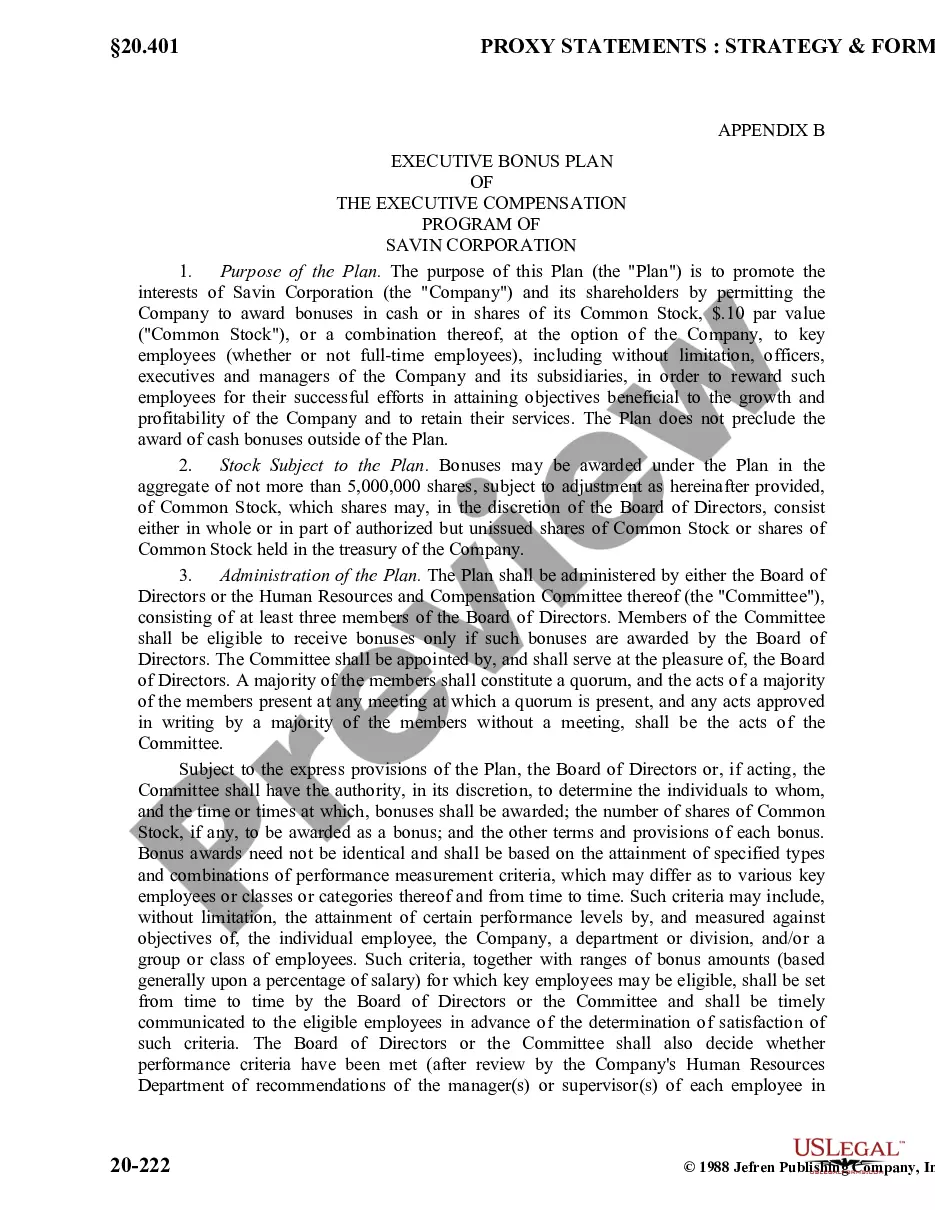
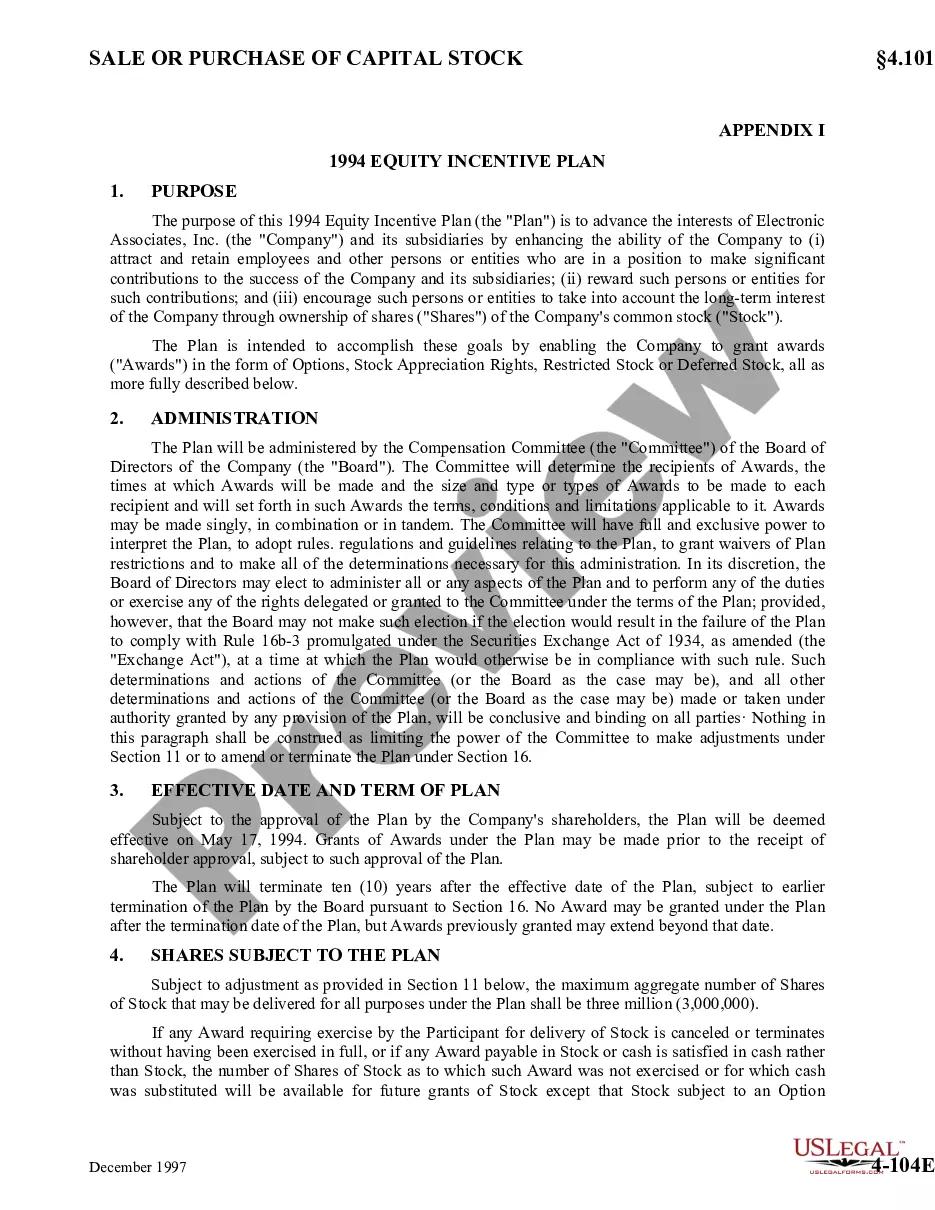
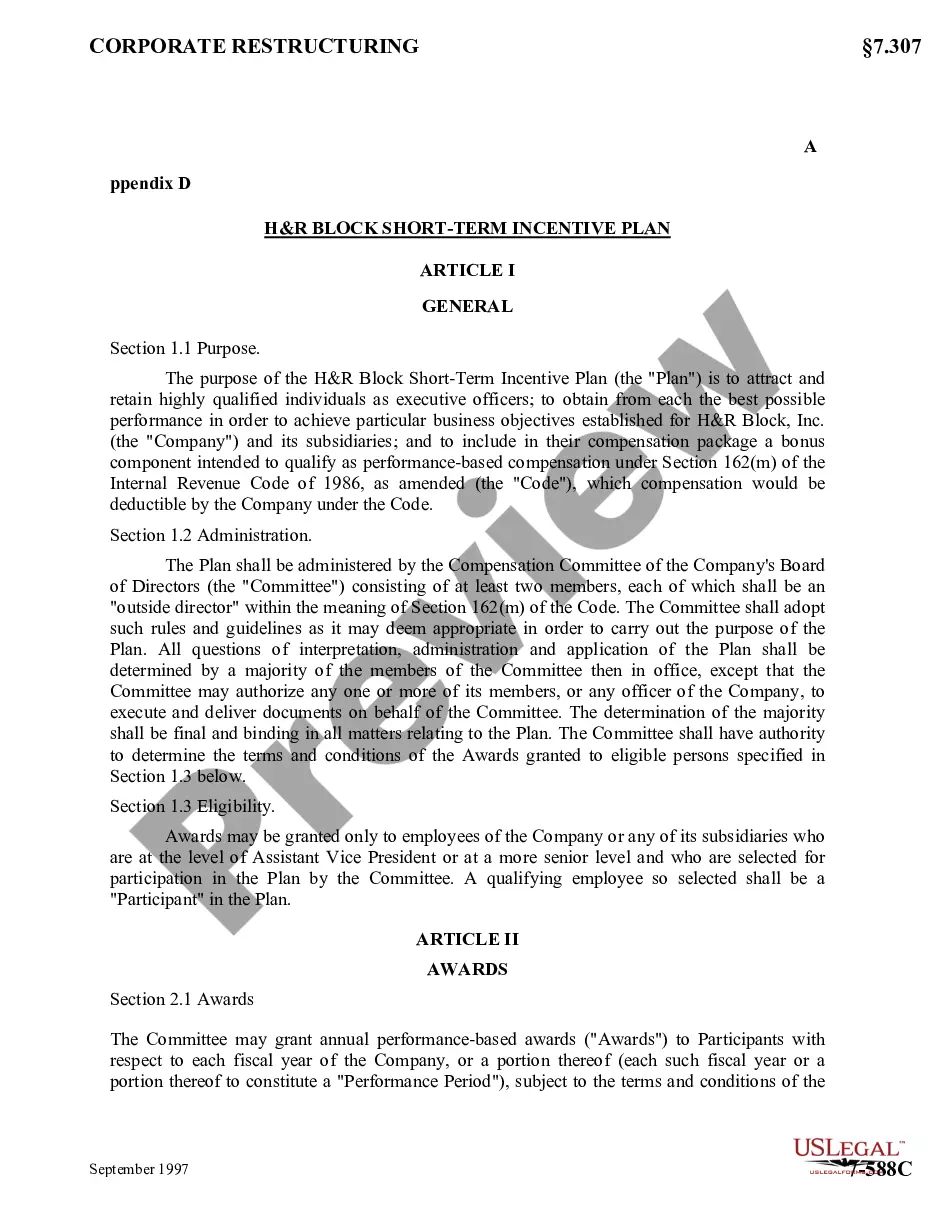
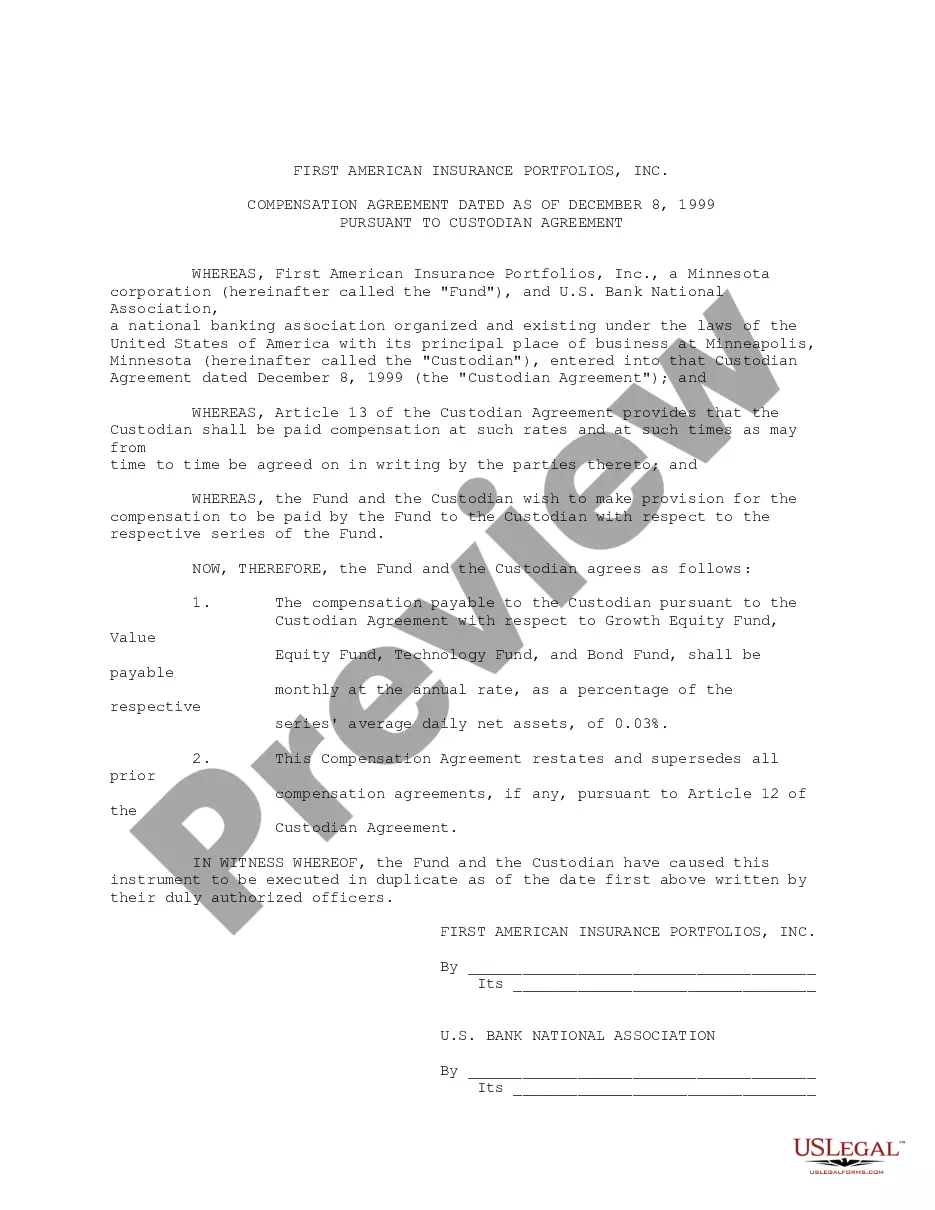
This sample form, a detailed Equity Compensation Plan document, is a model for use in corporate matters. The language is easily adapted to fit your specific circumstances. Available in several standard formats.
Employees can usually sell their shares after they’ve been vested, but it often depends on the company’s policies. It's best to check the rules to make sure you're in the clear.
If an employee leaves, it often depends on the vesting schedule. They might keep the shares they’ve already earned but lose any unvested options. It’s always good to read the fine print.
Vesting means you earn your stock over time. For example, you might get a quarter of your shares every year for four years. It’s like earning your keep over time.
Like any investment, there’s a bit of a gamble. If the company doesn’t perform well, the value of the stock can dip. It’s important to weigh the pros and cons before diving in.
By participating in the plan, employees have the chance to share in the company’s success. If the company does well, so do they – it’s a win-win situation!
Typically, full-time employees are eligible to join the plan. It’s a way for the company to reward those who are rolling up their sleeves and putting in the hard work.