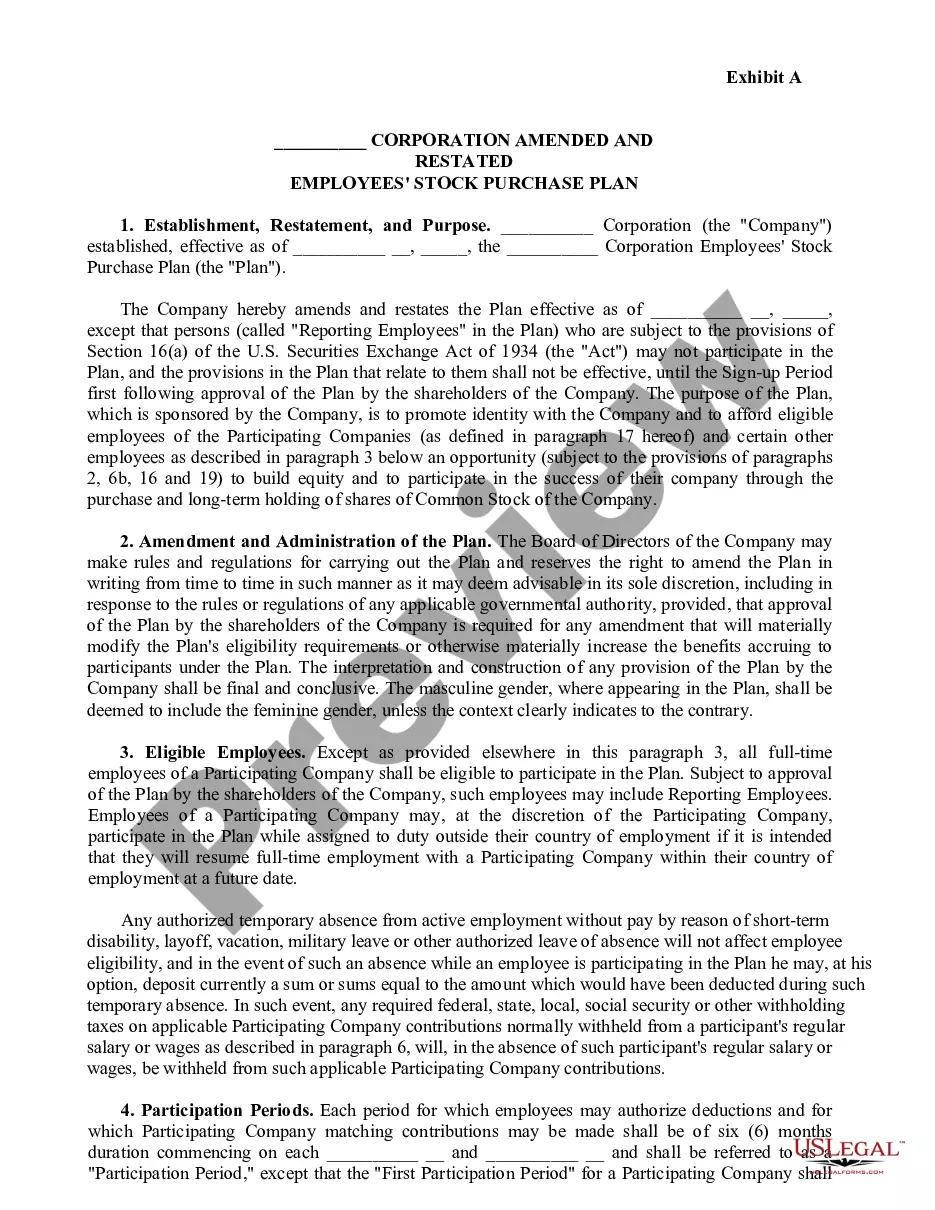
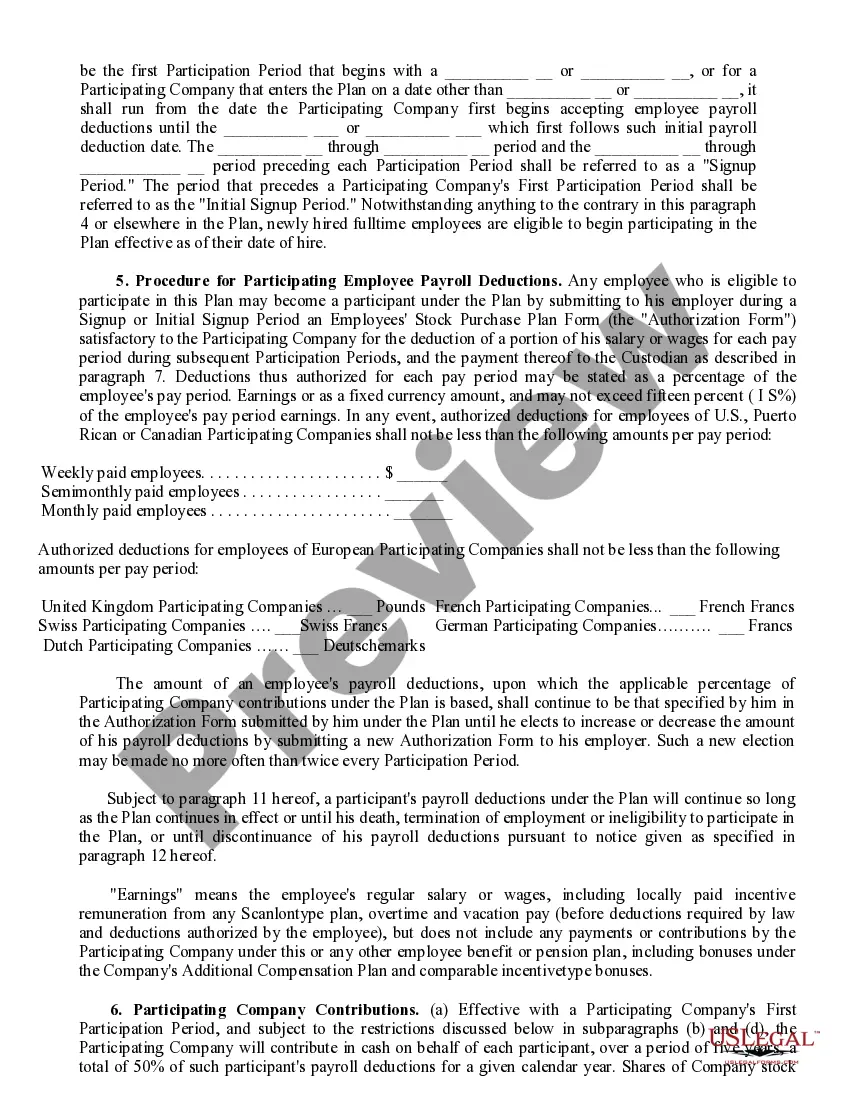
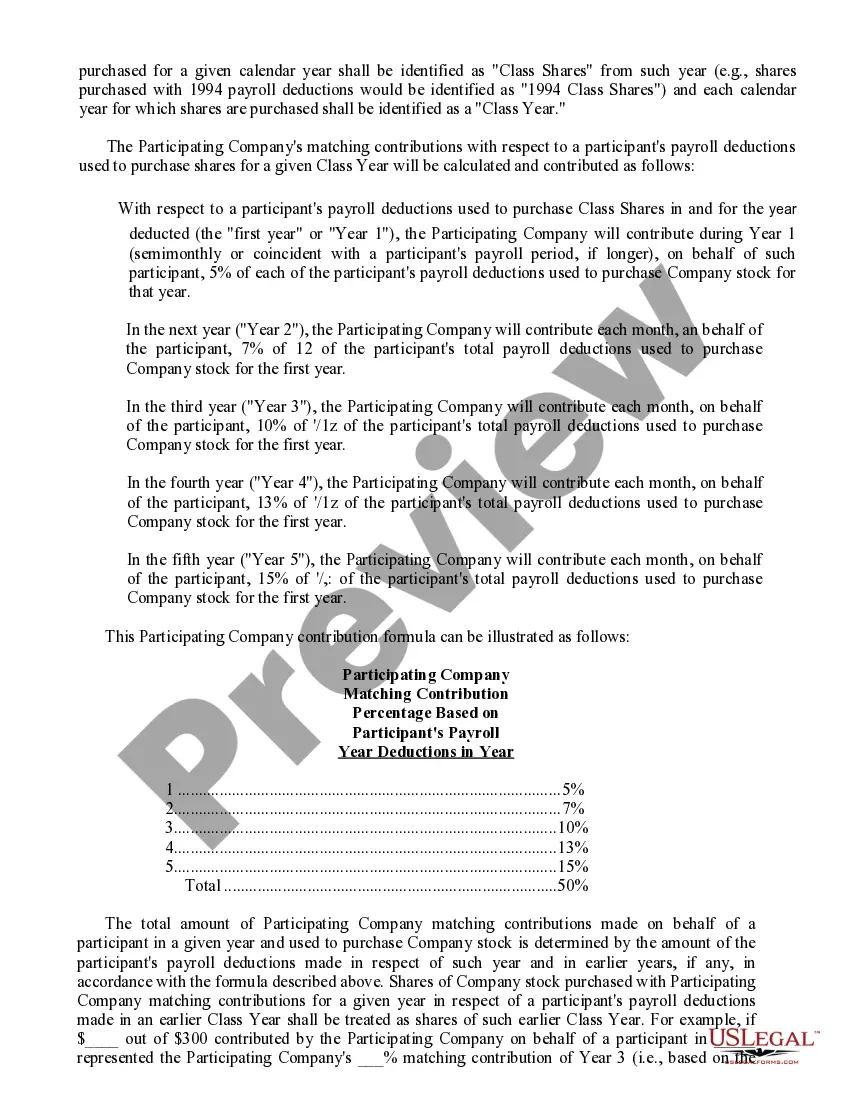
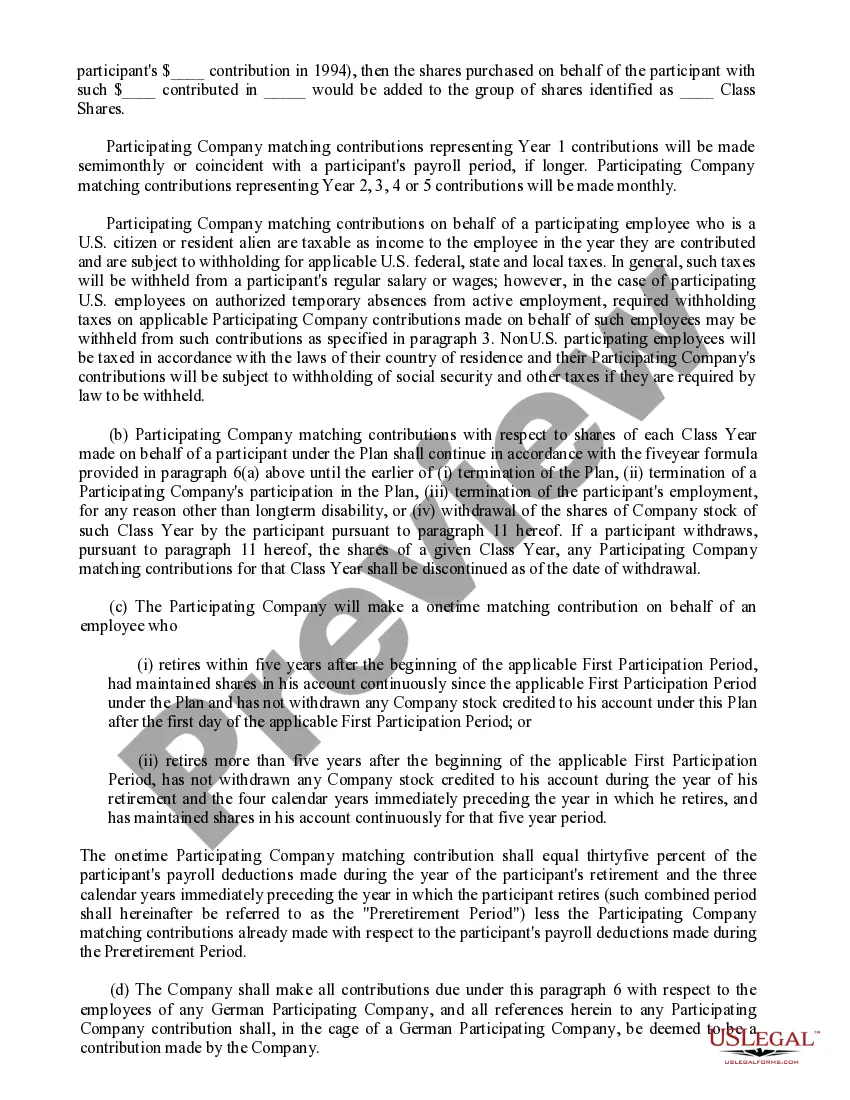
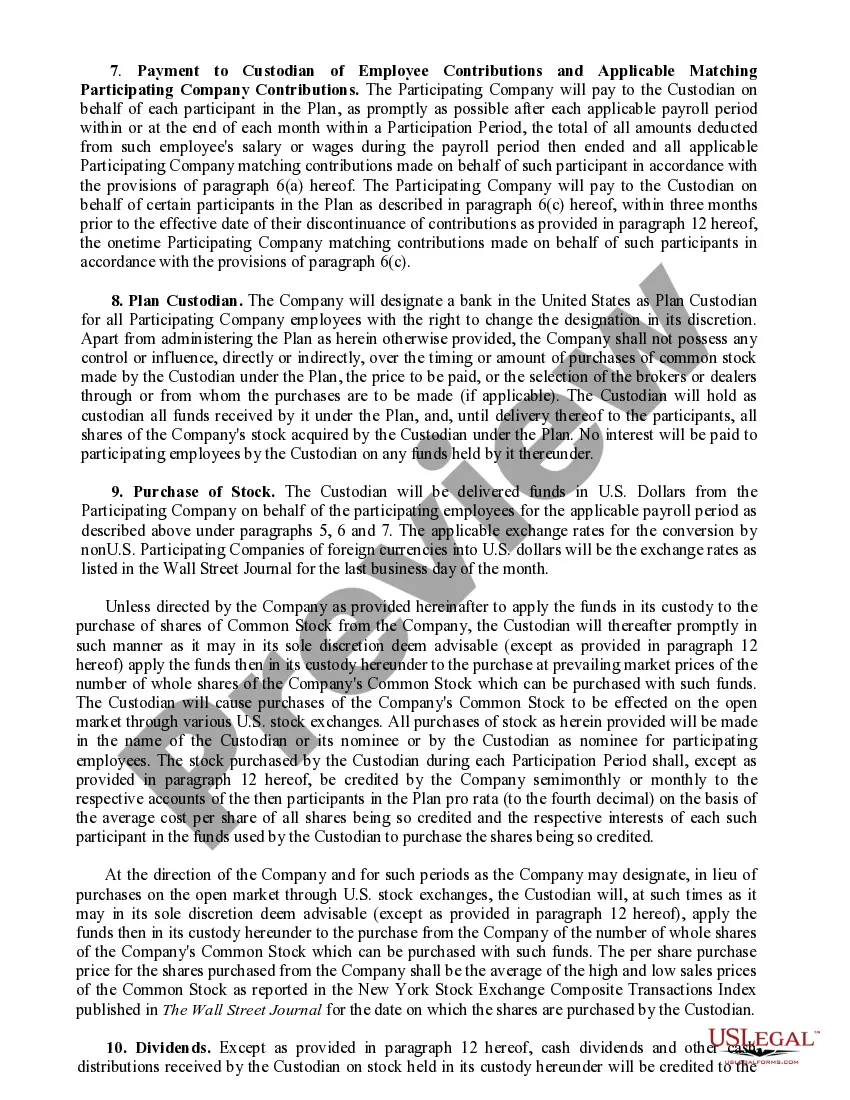
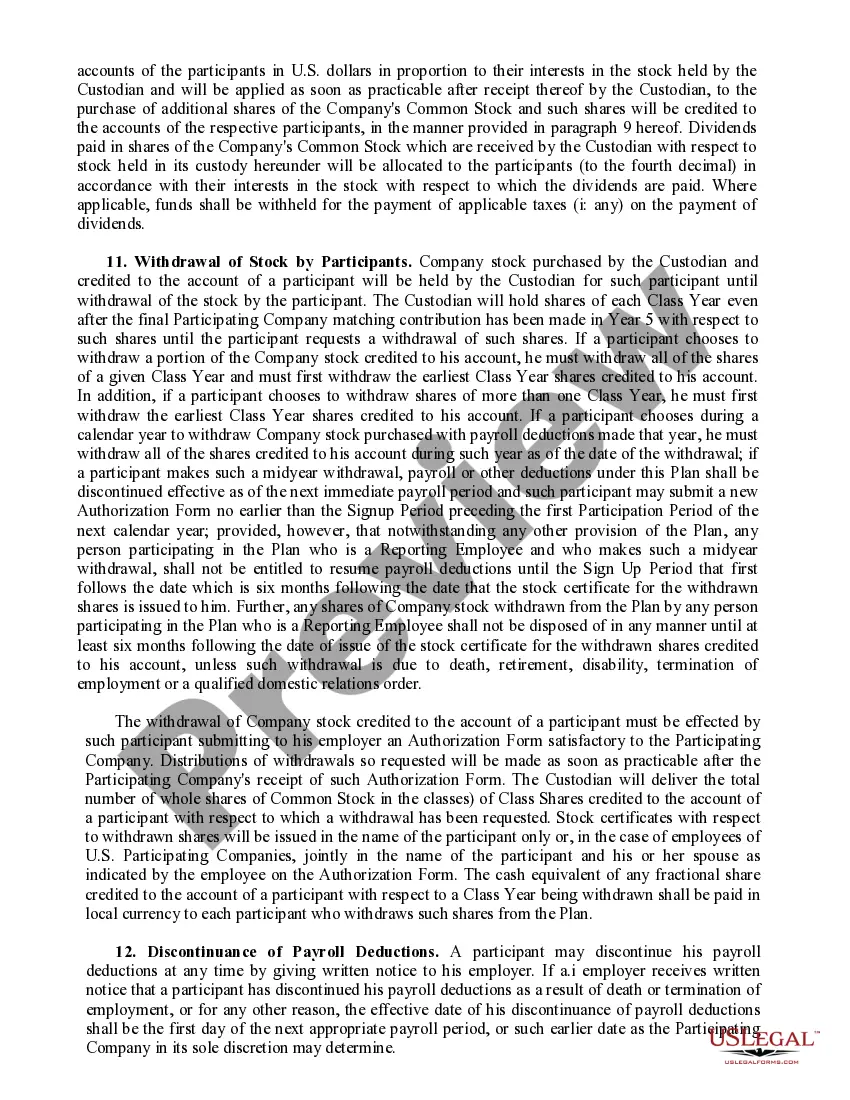
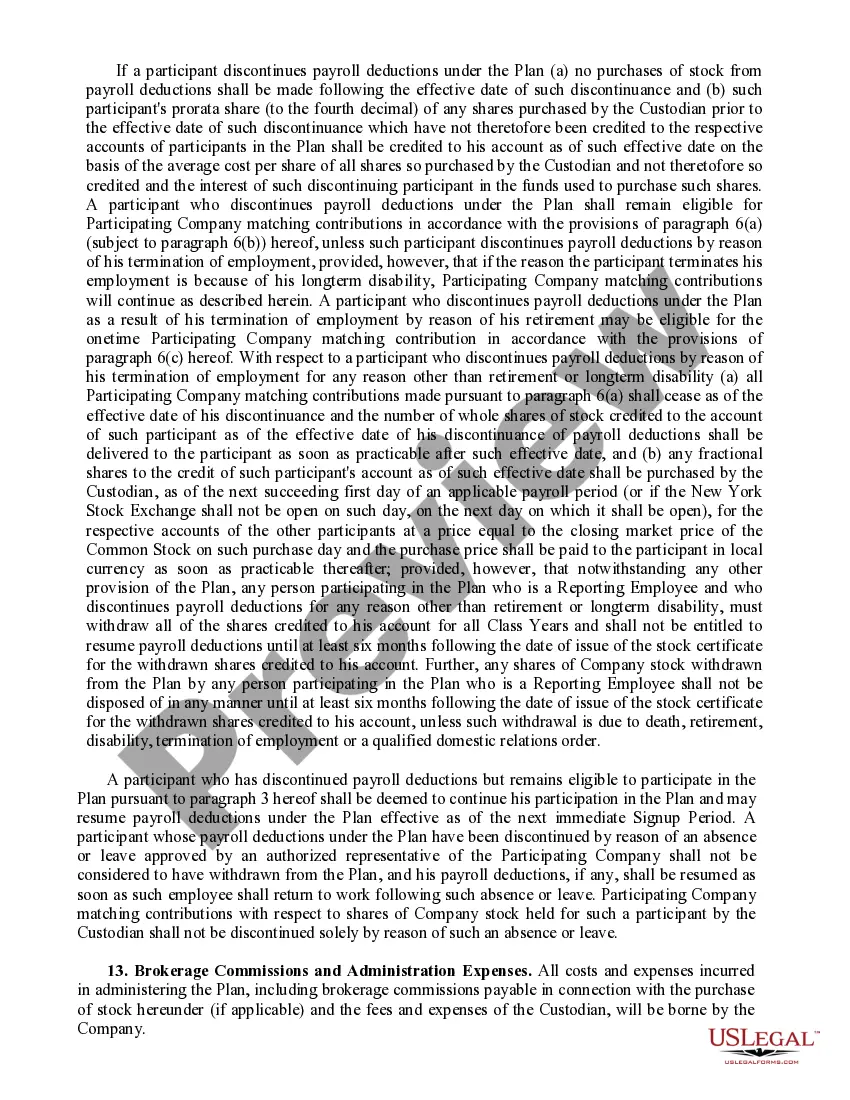
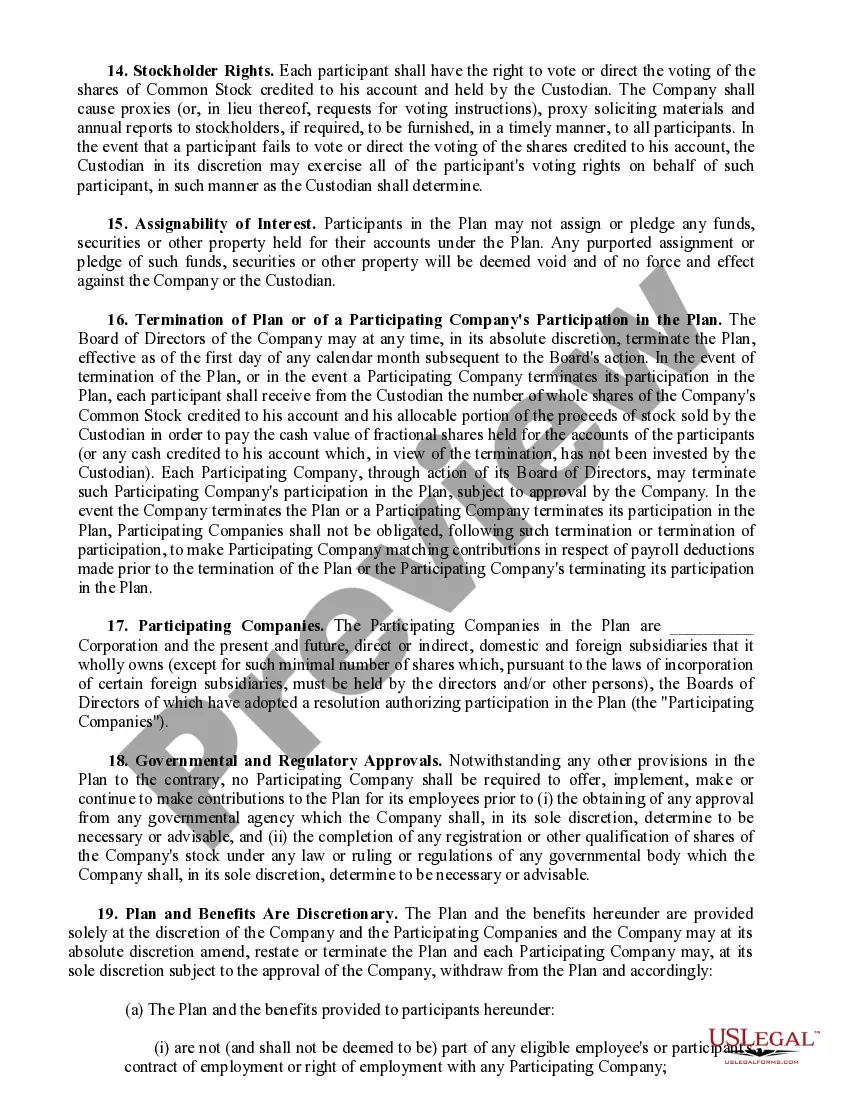
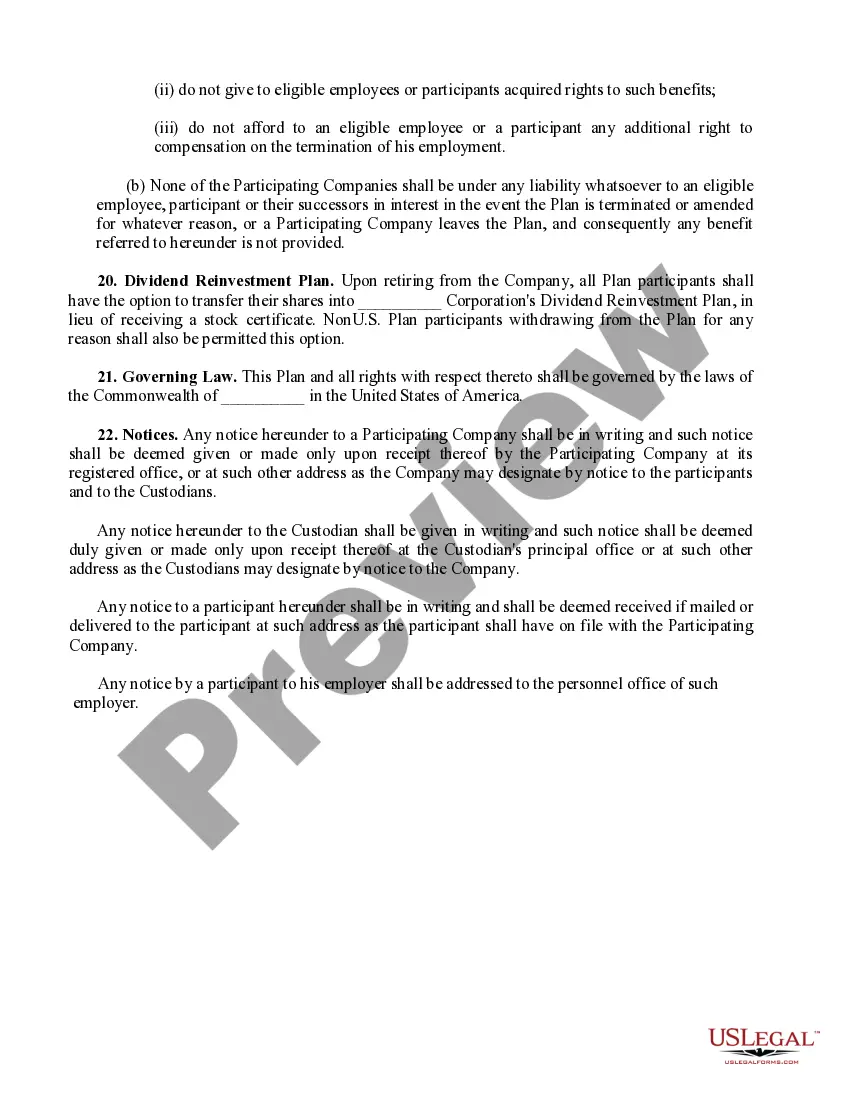
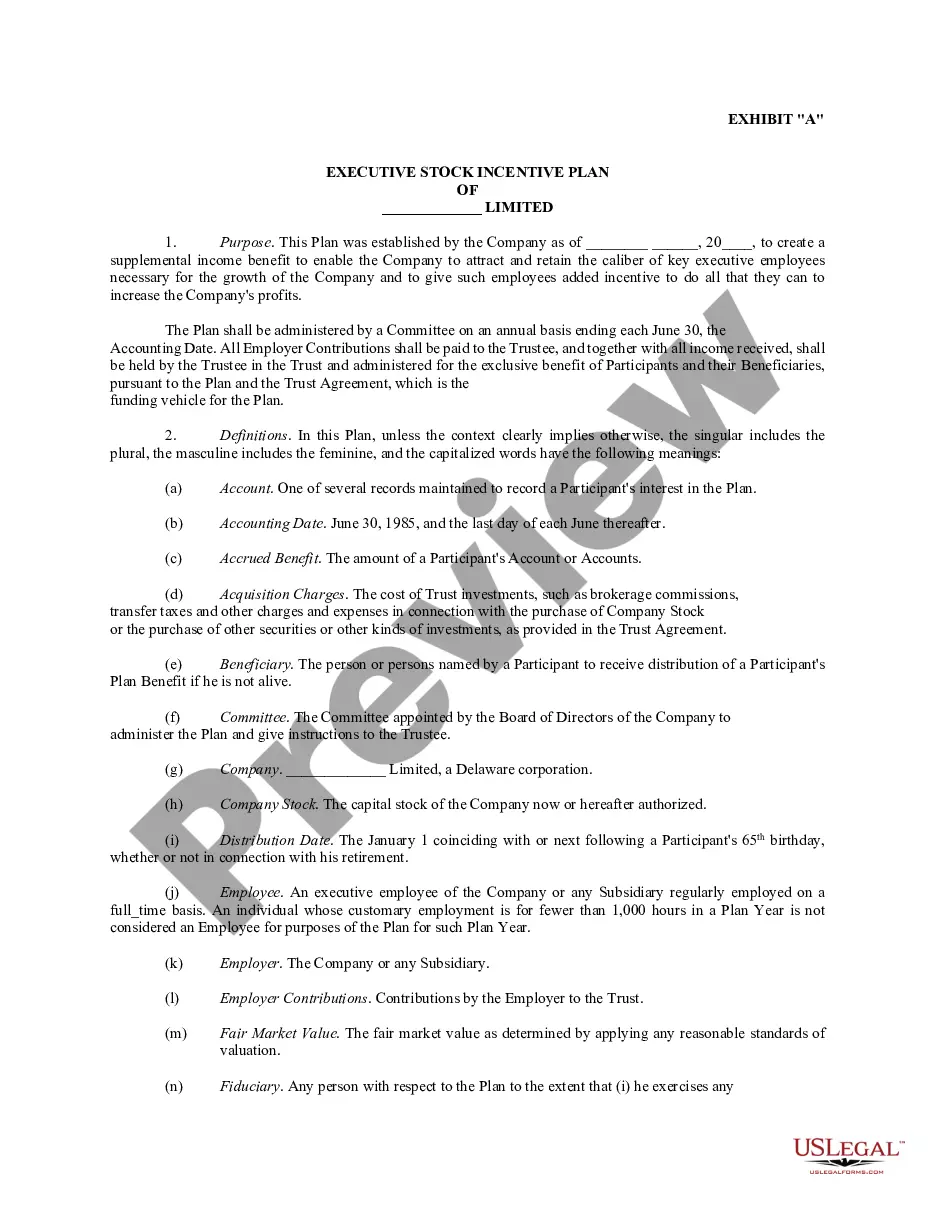
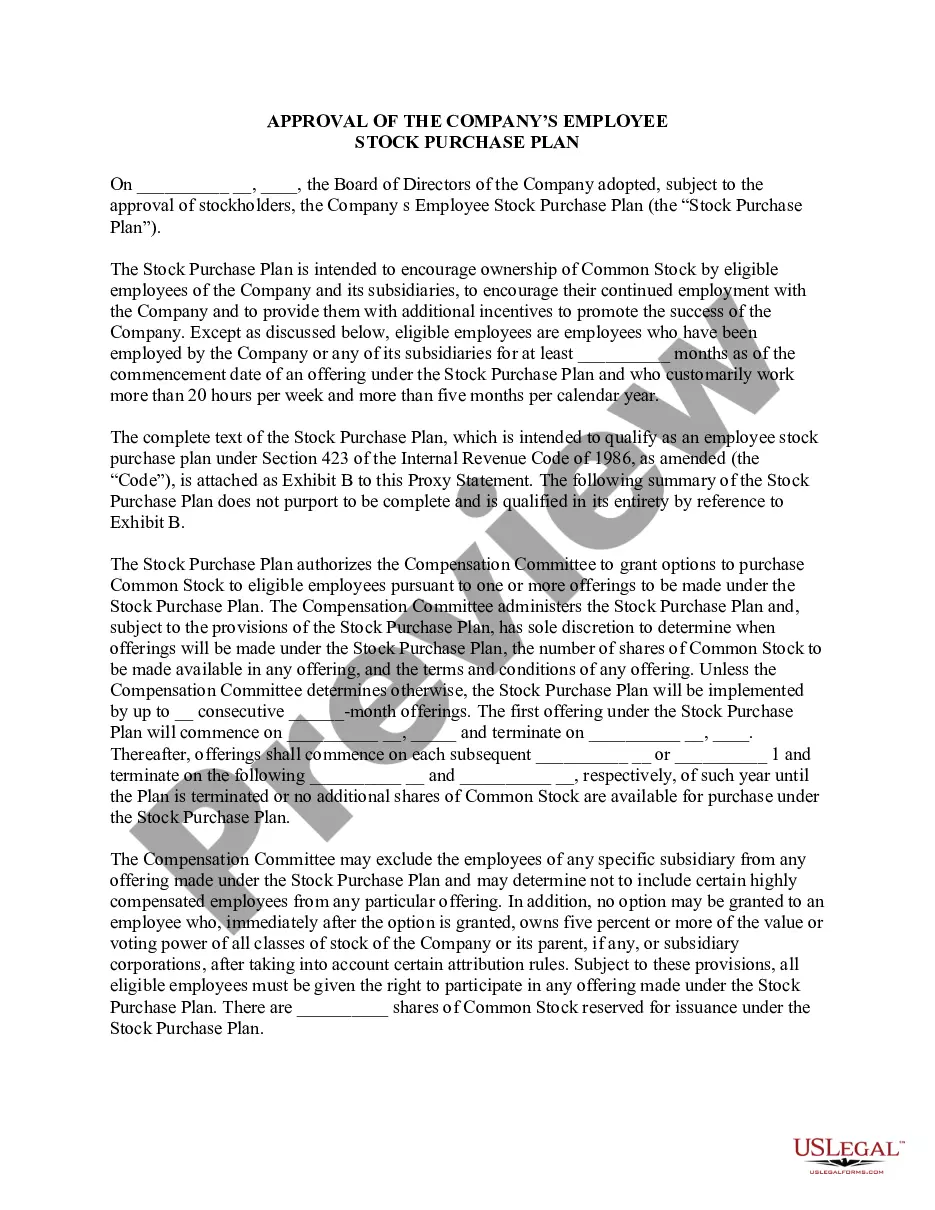
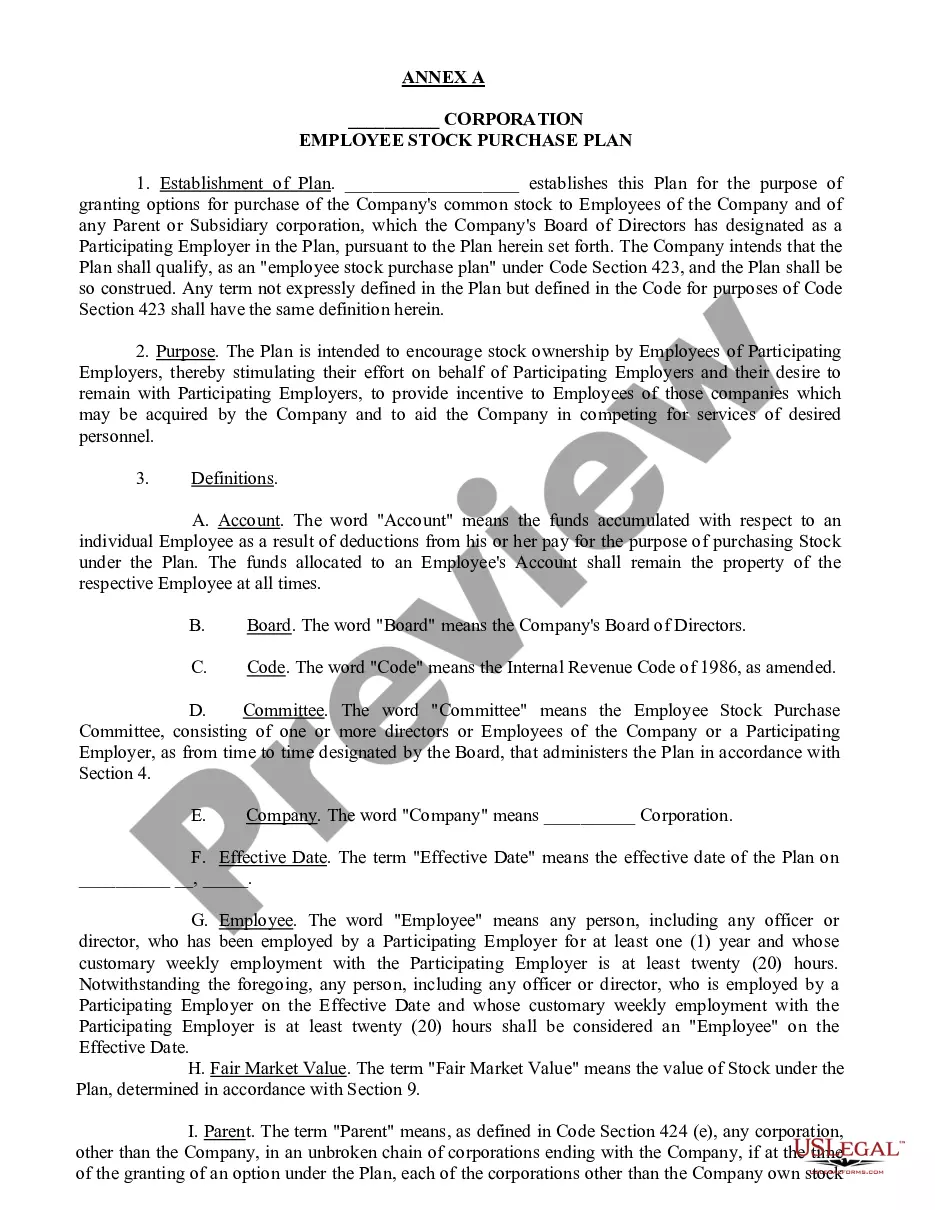
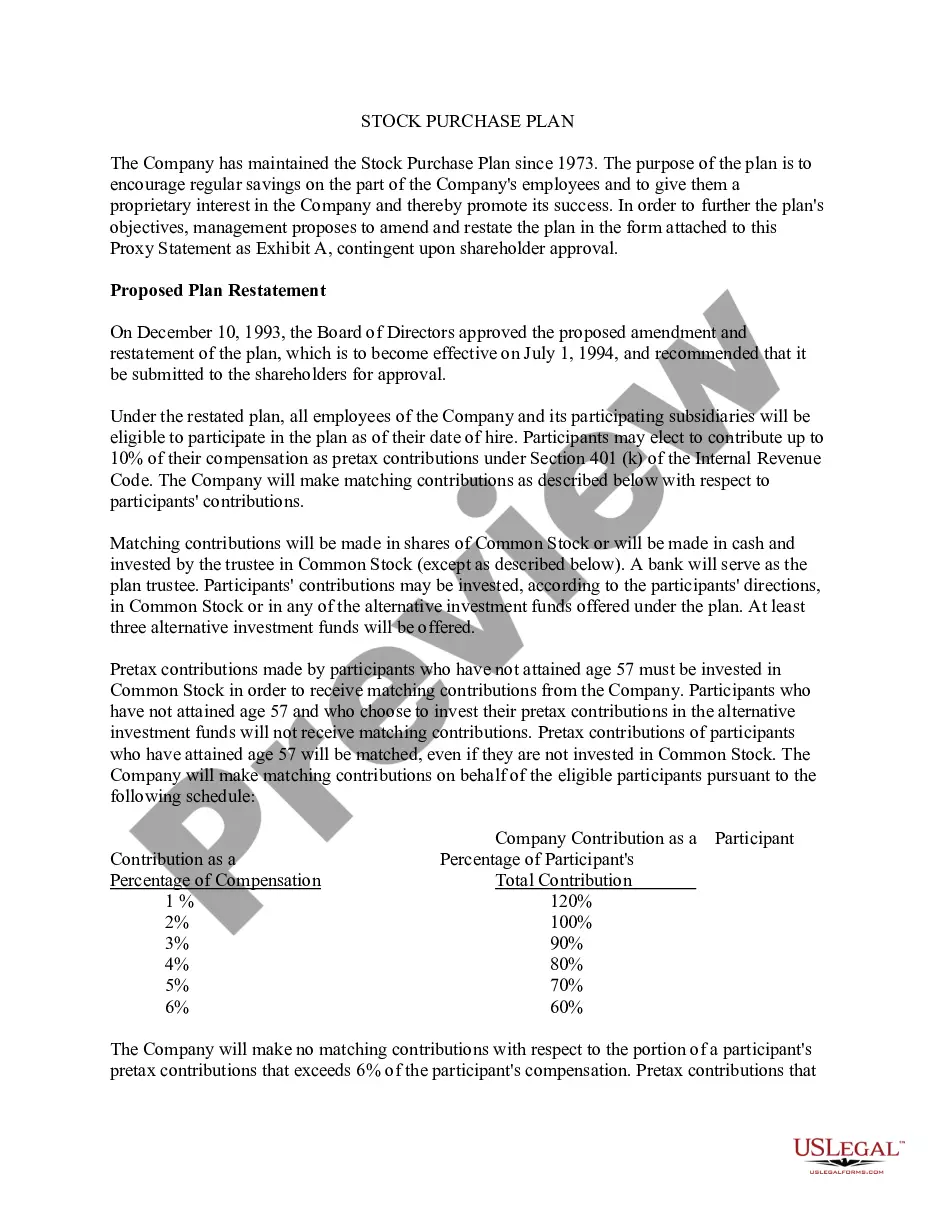
19-179 19-179 . . . Employee Stock Purchase Plan under which each employee of corporation and its wholly-owned direct or indirect, domestic and foreign subsidiaries that have authorized participation in Plan (Participating Company) can contribute up to 15% of earnings through payroll deductions and Participating Company contributes a cash amount equal to 5% of participant's payroll deductions for first year of participation, additional 7% for second year, additional 10% for third year, additional 13% for fourth year and additional 15% for fifth year. Custodian of plan purchases shares of common stock on open market or from corporation at current market prices, using payroll deductions and applicable matching Company contributions
Suffolk New York Amended and Restated Employee Stock Purchase Plan
Category:
State:
Multi-State
County:
Suffolk
Control #:
US-CC-19-179
Format:
Word;
Rich Text
Instant download
Description
Free preview


How to fill out Amended And Restated Employee Stock Purchase Plan?
How long does it typically take you to prepare a legal document.
Considering that each state has its own laws and regulations for every aspect of life, locating a Suffolk Amended and Restated Employee Stock Purchase Plan that aligns with all local stipulations can be daunting, and hiring a professional attorney for this is frequently costly.
Numerous online platforms provide the most prevalent state-specific forms for download, but utilizing the US Legal Forms repository is the most beneficial.
After choosing your subscription plan that best fits your needs, sign up for an account on the platform or Log In to proceed with payment options.
- US Legal Forms hosts the most extensive online directory of templates, compiled according to states and areas of use.
- In addition to the Suffolk Amended and Restated Employee Stock Purchase Plan, you can acquire any specific document needed to manage your business or personal matters, adhering to your local standards.
- Experts validate all samples for their authenticity, ensuring that you can prepare your documents accurately.
- Using the service is exceptionally straightforward.
- If you possess an account on the platform and your subscription is active, you just need to Log In, select the desired sample, and download it.
- You can keep the file in your account for future reference.
- If you are new to the platform, there will be a few additional steps to take before obtaining your Suffolk Amended and Restated Employee Stock Purchase Plan.
- Review the content of the page you’re viewing.
- Examine the description of the template or Preview it (if available).
- Look for another form using the related option in the header.
- Press Buy Now when you are confident about the selected file.
Form popularity
FAQ
Q: What happens to my RSUs if I leave my company before they vest? A: Generally, if you leave your company before your RSUs vest, you lose the unvested RSUs. The RSUs that have already vested you will continue to own.
A reset provision in an ESPP allows an employee to purchase company stock during the following purchase period based on the price at the beginning of the purchase instead of the original offering price.
A reset provision in an ESPP allows an employee to purchase company stock during the following purchase period based on the price at the beginning of the purchase instead of the original offering price.
In this type of plan, you are allowed to purchase only up to $25,000 worth of stock in a calendar year. Any accumulated contributions in excess of this amount may be refunded back to you.
When you buy stock under an employee stock purchase plan (ESPP), the income isn't taxable at the time you buy it. You'll recognize the income and pay tax on it when you sell the stock. When you sell the stock, the income can be either ordinary or capital gain.
With most employee stock purchase plans, you can withdraw from your plan at any time before the purchase.
You will continue to own stock purchased for you during your employment, but your eligibility for participation in the plan ends. Any funds withheld from your salary but not used to purchase shares before the end of your employment will be returned to you, normally without interest, within a reasonable period.
You can sell your ESPP plan stock immediately to lock in your profit from the discount. If you hold the company stock for at least a year and sell it for more than two years after the offering date, you pay lower taxes.
Often, vested stock options expire if they are not exercised within the specified timeframe after service termination. Typically, stock options expire within 90 days of leaving the company, so you could lose them if you don't exercise your options.
One of the key points you need to be clear on is if your stock is vested or unvested, exercised or not. Usually, when plan participants leave a company, that company will have the right to purchase back whatever shares may have been vested and been exercised.