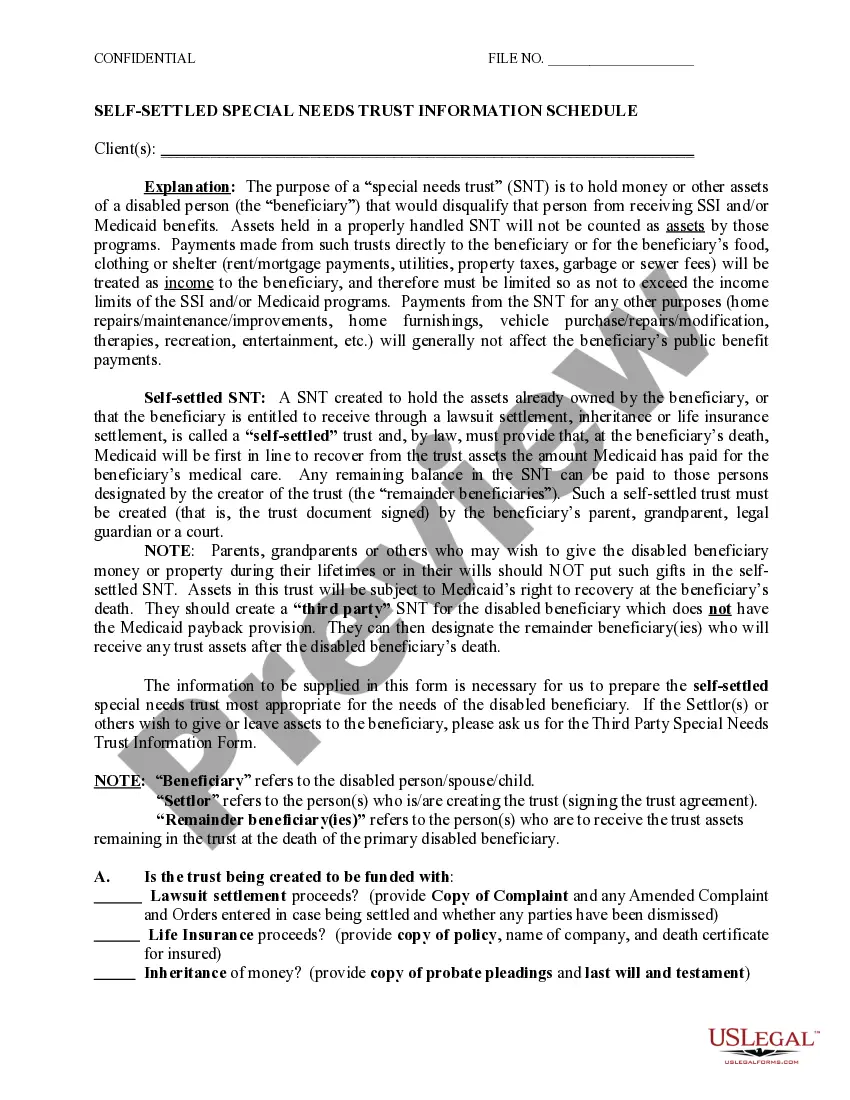
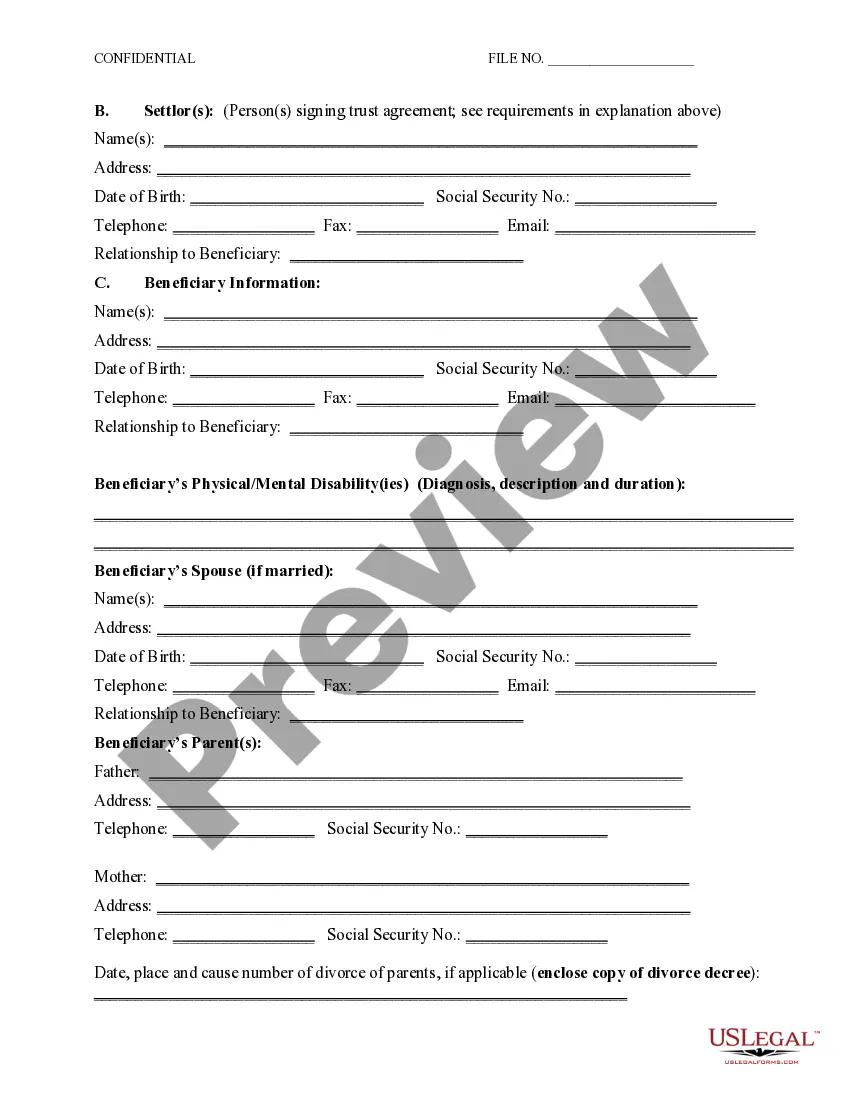
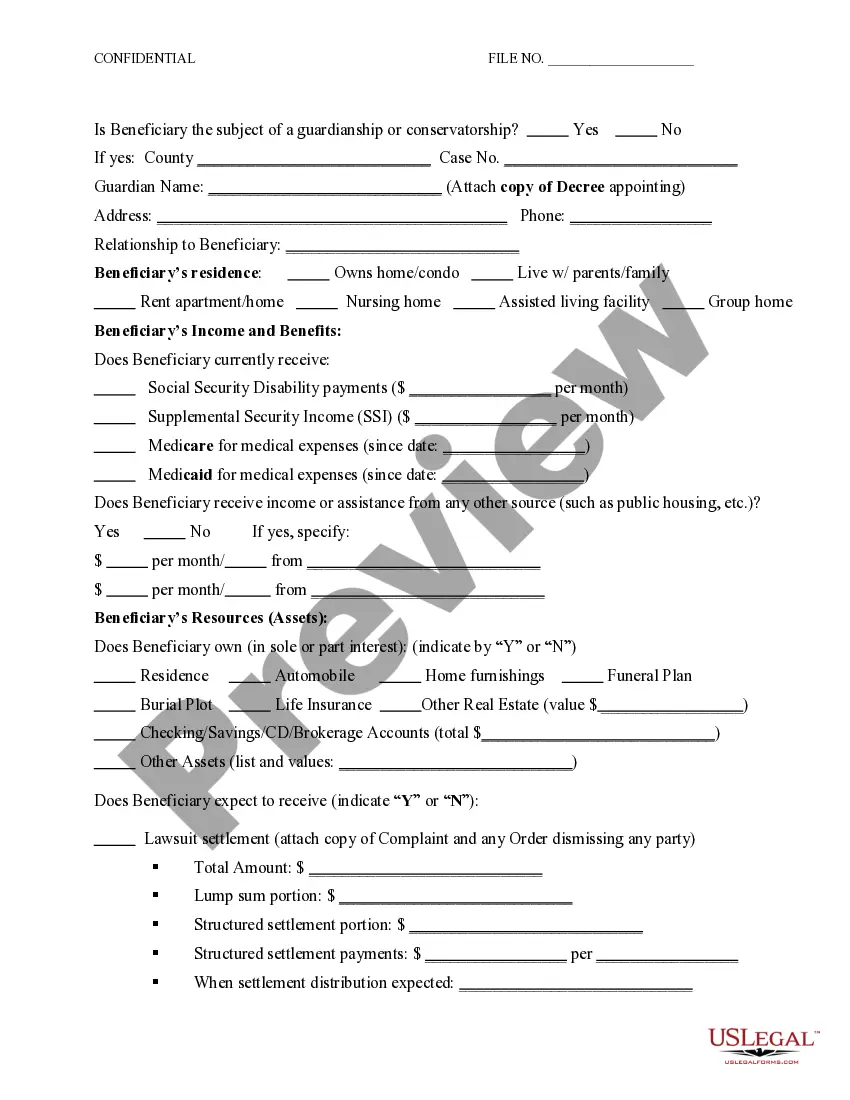
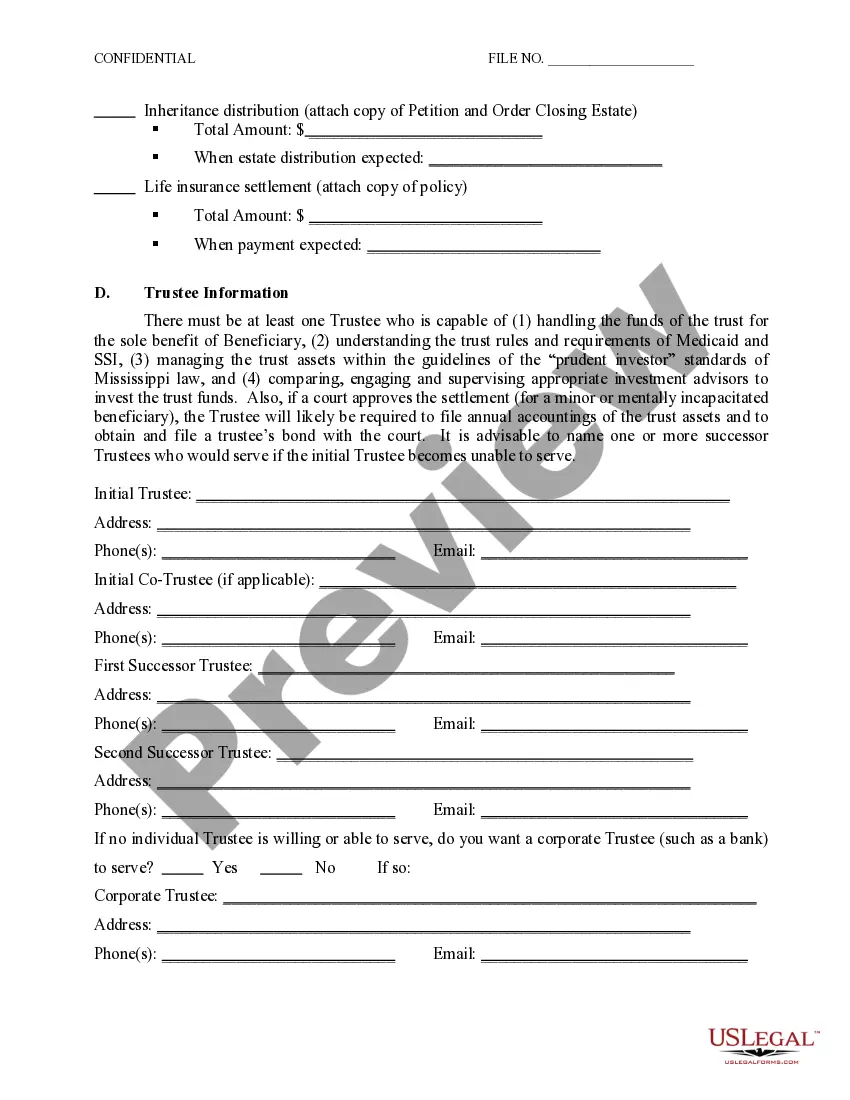
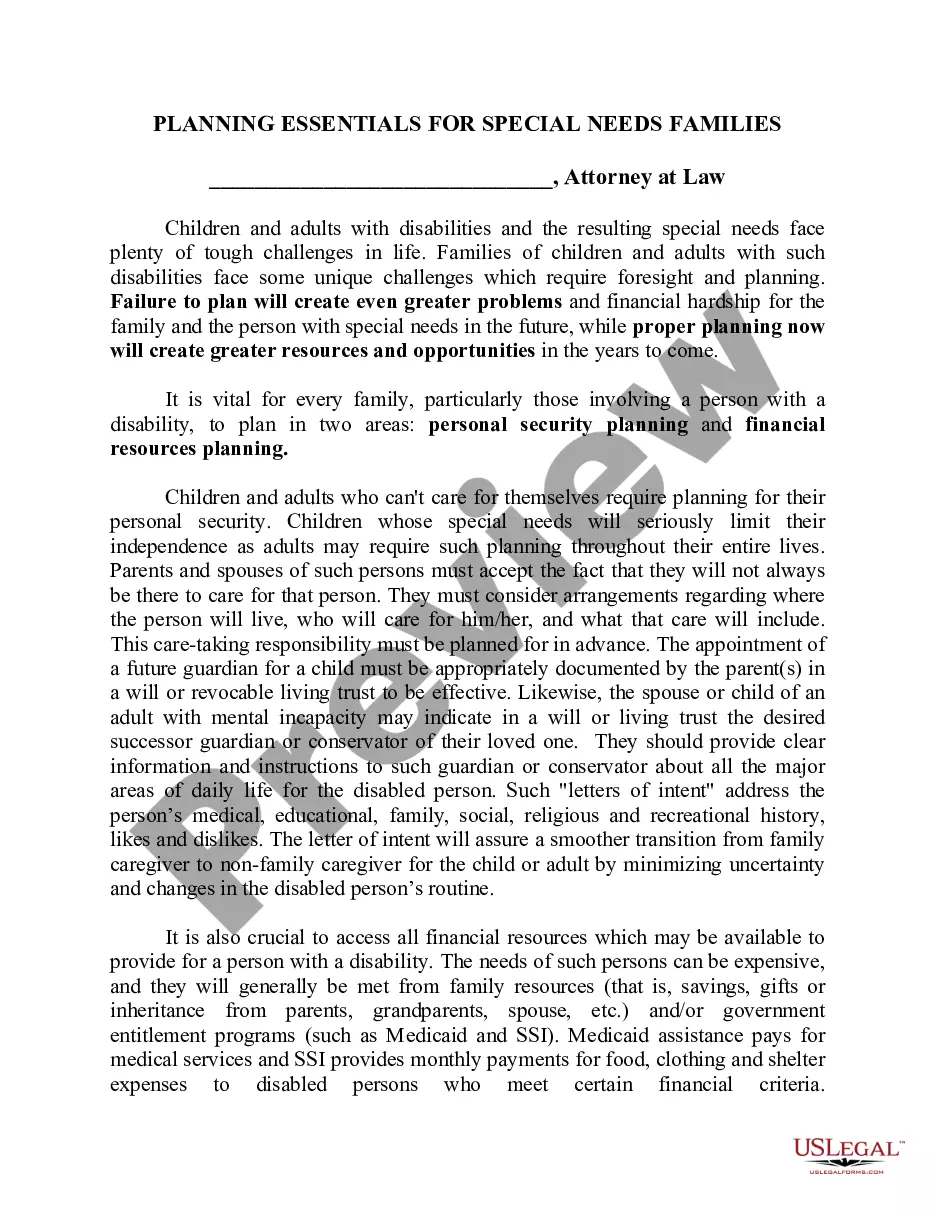
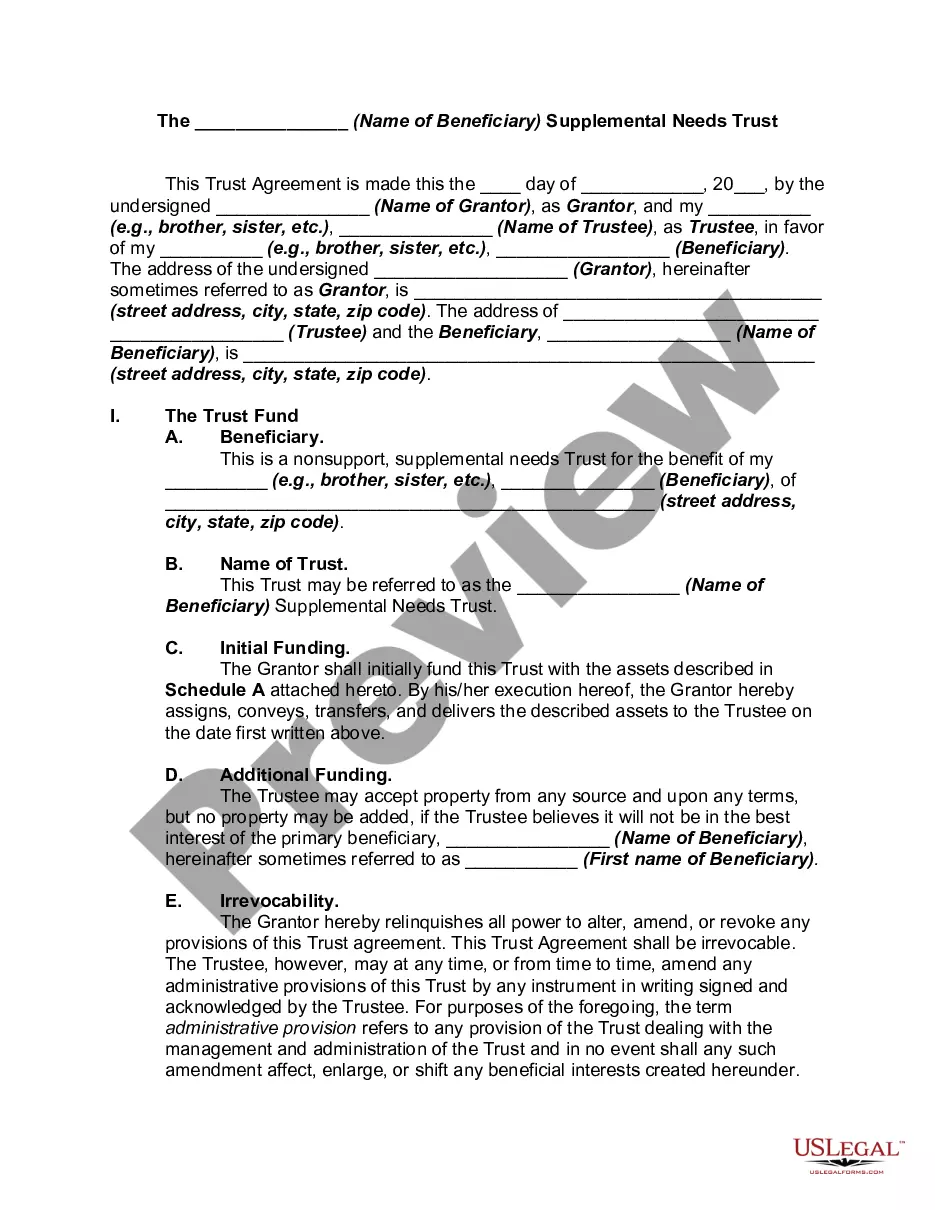
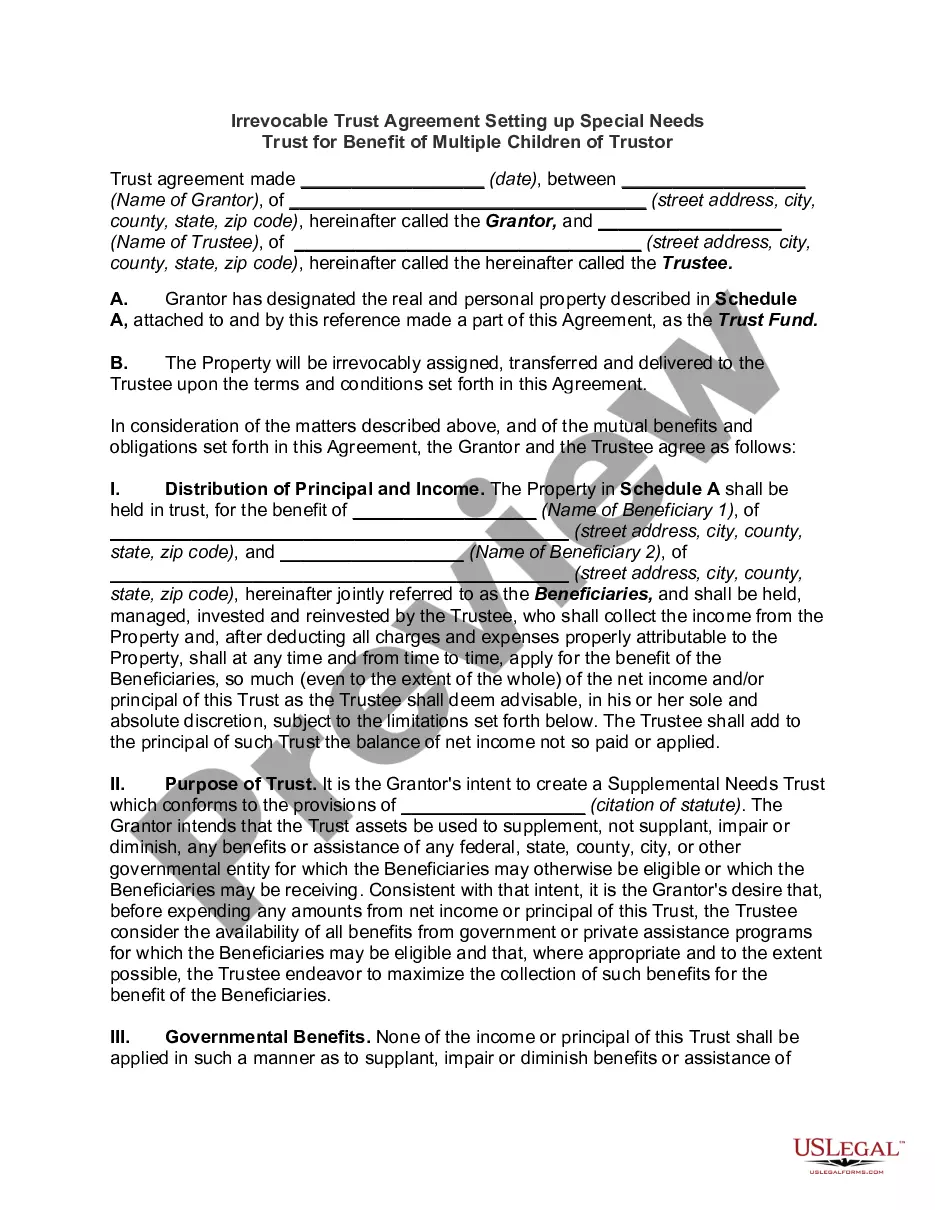
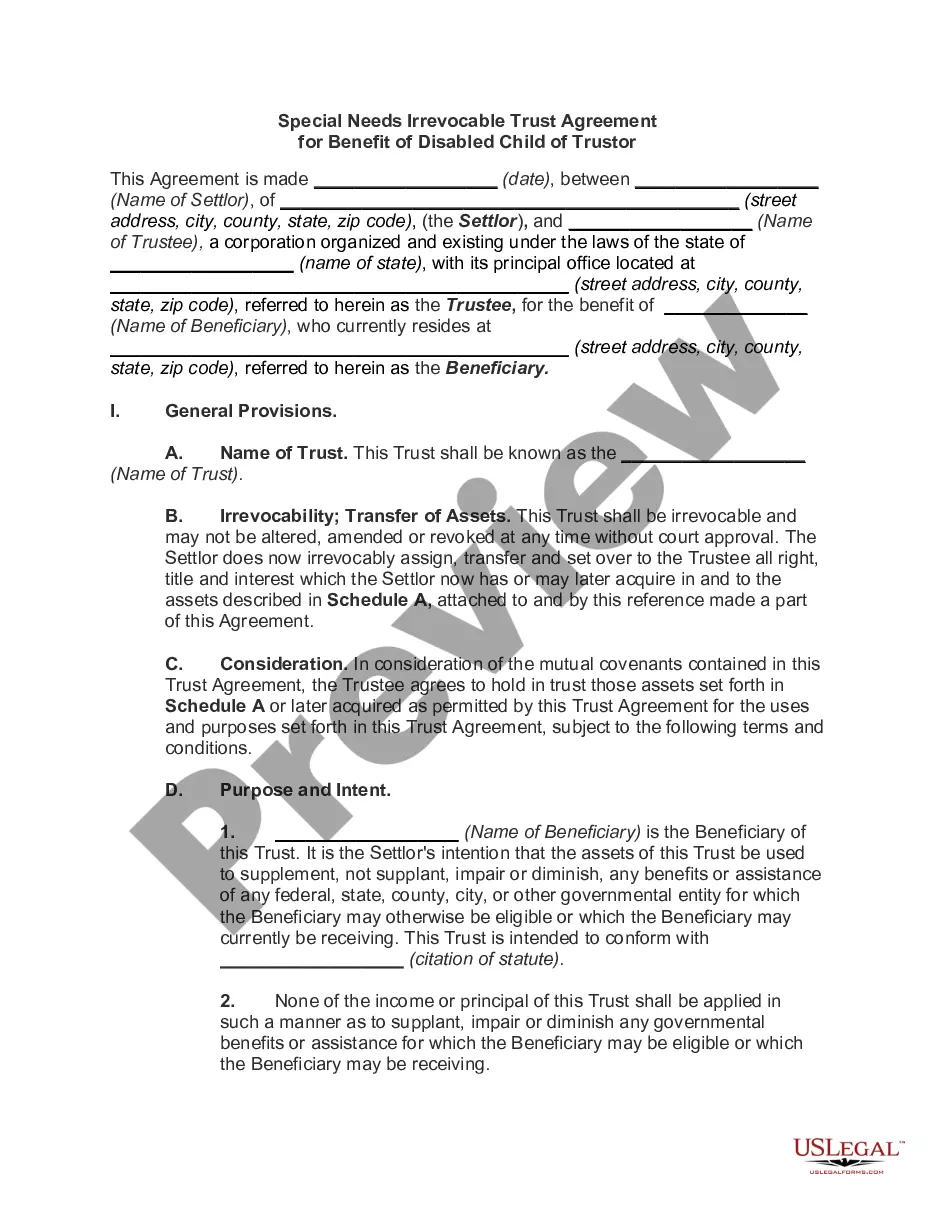
This document summarizes the progression of information that assists an attorney in preparing and advising a client about self-settled special needs trusts.
You can start by asking local disability advocacy groups for recommendations or do a quick search online to find attorneys who have experience with trust and estate planning, specifically for special needs.
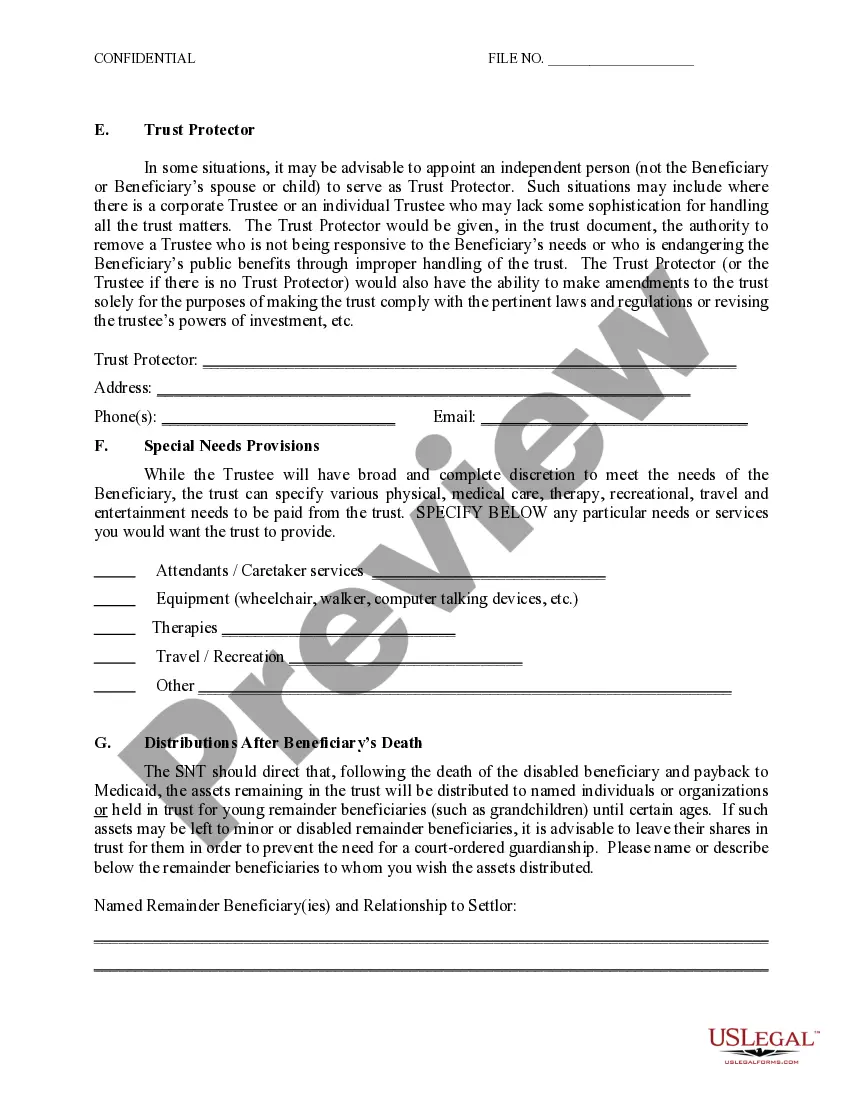
Once the beneficiary is gone, any leftover funds usually go to reimburse the state for any benefits they received, per Medicaid rules, but you can discuss options with your attorney.
Nope! As long as the trust is set up correctly, it won’t count against your eligibility for government benefits, so you can have your cake and eat it too!
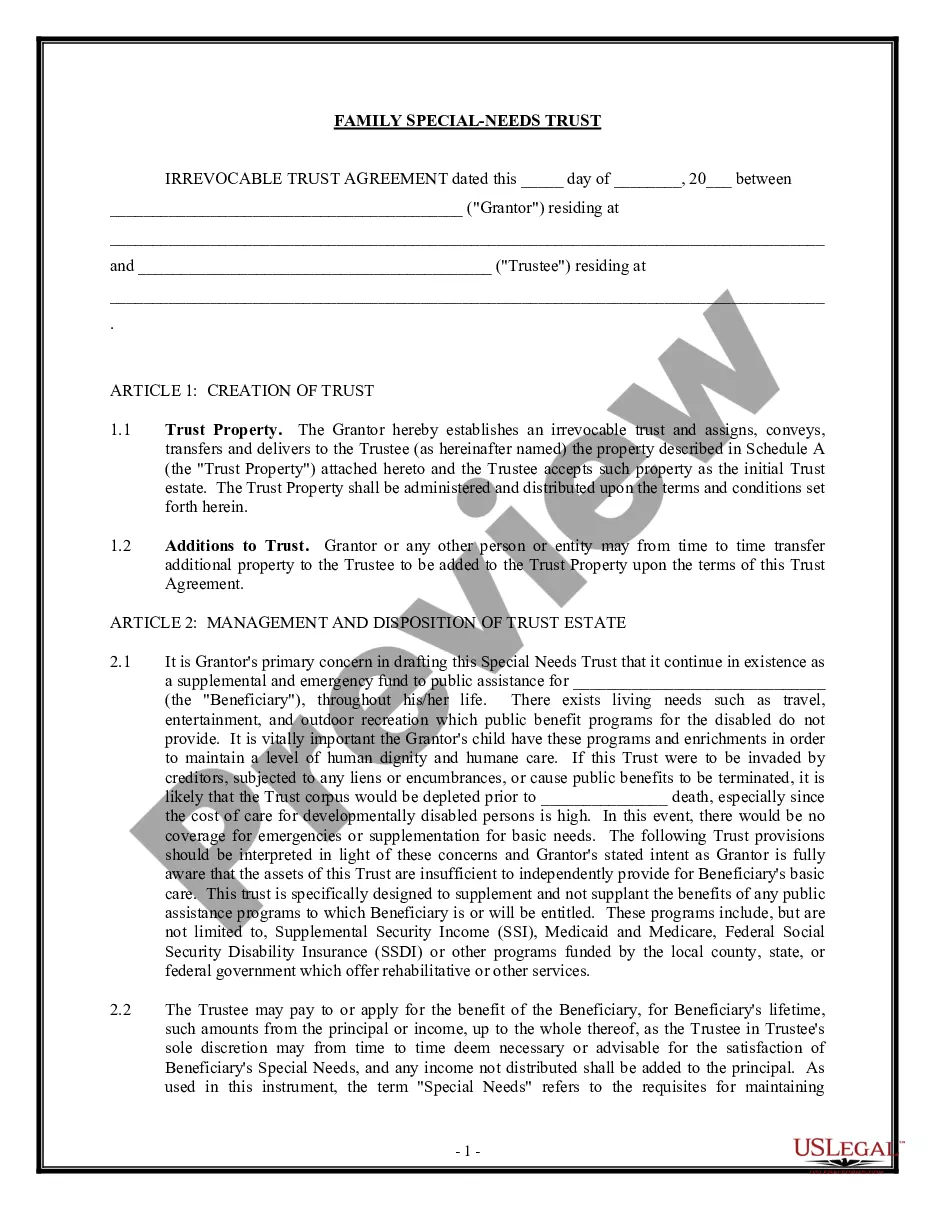
To set one up, you generally need to work with an attorney or a professional familiar with special needs trusts. They'll help you create the trust and ensure it meets all legal requirements.
Typically, it's for people with disabilities who want to maintain their eligibility for government benefits like Medicaid and Social Security while having additional funds available to improve their quality of life.