Santa Clara California Sample Disciplinary Letter for Excessive Absenteeism - Verbal Warning
Description
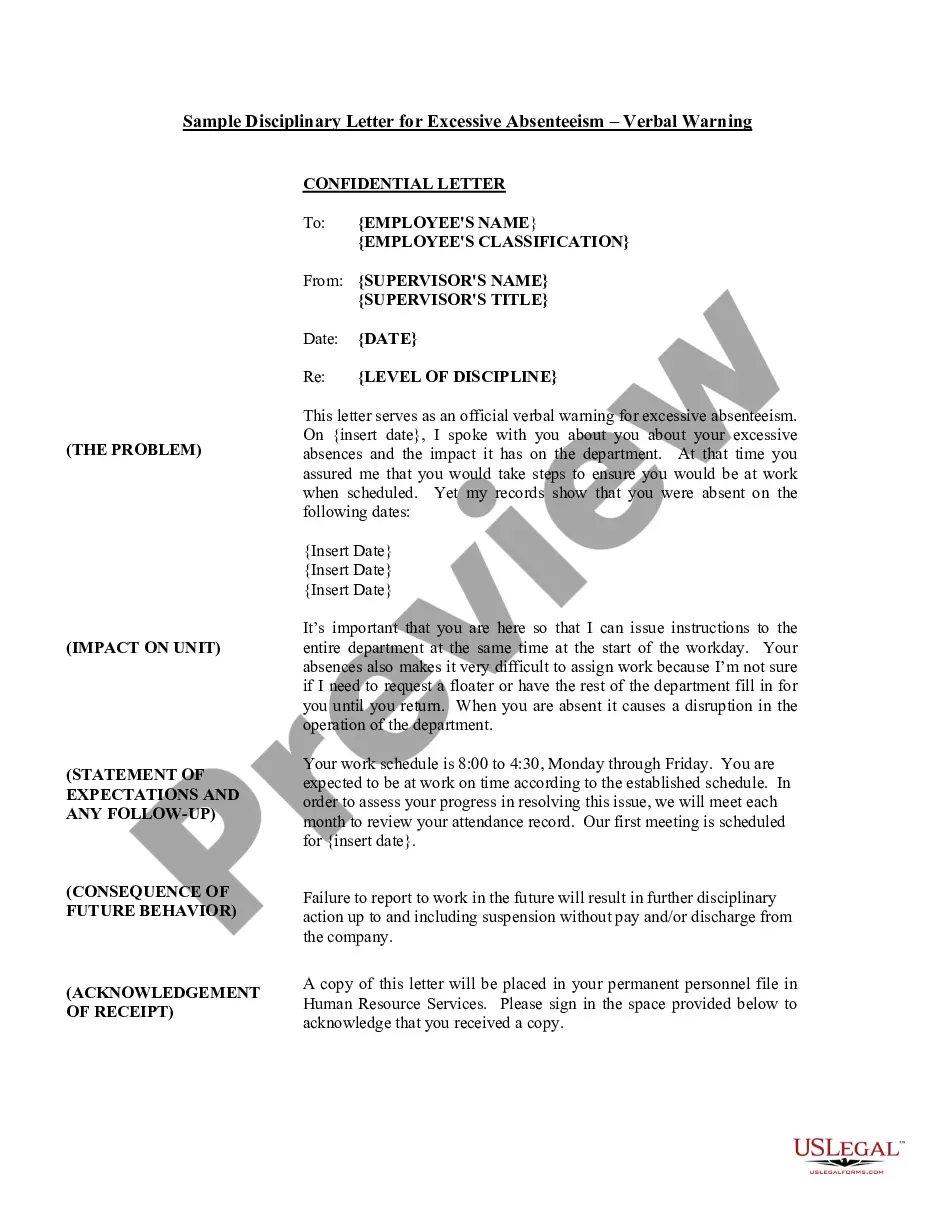
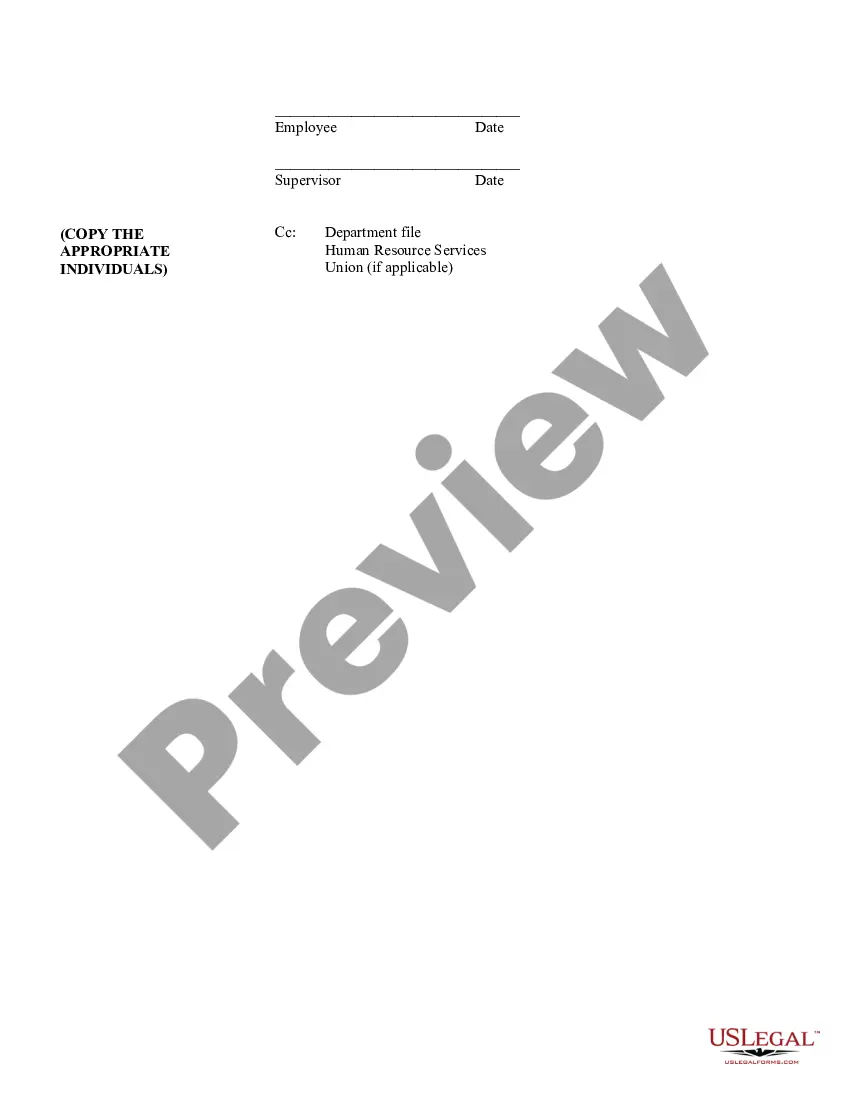
Get your form ready online
Our built-in tools help you complete, sign, share, and store your documents in one place.
Make edits, fill in missing information, and update formatting in US Legal Forms—just like you would in MS Word.
Download a copy, print it, send it by email, or mail it via USPS—whatever works best for your next step.
Sign and collect signatures with our SignNow integration. Send to multiple recipients, set reminders, and more. Go Premium to unlock E-Sign.
If this form requires notarization, complete it online through a secure video call—no need to meet a notary in person or wait for an appointment.
We protect your documents and personal data by following strict security and privacy standards.

Make edits, fill in missing information, and update formatting in US Legal Forms—just like you would in MS Word.

Download a copy, print it, send it by email, or mail it via USPS—whatever works best for your next step.

Sign and collect signatures with our SignNow integration. Send to multiple recipients, set reminders, and more. Go Premium to unlock E-Sign.

If this form requires notarization, complete it online through a secure video call—no need to meet a notary in person or wait for an appointment.

We protect your documents and personal data by following strict security and privacy standards.
Looking for another form?

How to fill out Sample Disciplinary Letter For Excessive Absenteeism - Verbal Warning?
Preparing documents, such as the Santa Clara Template Disciplinary Notice for High Absenteeism - Oral Alert, to oversee your legal matters is a challenging and time-consuming task.
Many circumstances necessitate an attorney’s participation, which also renders this task costly.
However, you can take charge of your legal concerns and address them independently.
The onboarding procedure for new clients is equally straightforward! Here’s what you should do prior to obtaining the Santa Clara Template Disciplinary Notice for High Absenteeism - Oral Alert: Ensure that your template meets the requirements of your state/county as the regulations for creating legal documents can differ from one state to another. Gather additional details about the form by previewing it or reviewing a brief introduction. If the Santa Clara Template Disciplinary Notice for High Absenteeism - Oral Alert isn’t what you were looking for, take advantage of the search bar in the header to locate another one. Log In or establish an account to commence using our service and acquire the form. Everything appears satisfactory on your end? Click the Buy now button and select the subscription option. Choose the payment platform and input your payment information. Your template is ready for use. You can attempt to download it. It’s a simple endeavor to find and purchase the suitable template with US Legal Forms. Numerous organizations and individuals are already benefiting from our vast assortment. Subscribe now if you wish to explore what additional advantages you can obtain with US Legal Forms!
- US Legal Forms is here to assist you.
- Our platform offers over 85,000 legal forms designed for a multitude of situations and life events.
- We ensure every document adheres to the regulations of each state, so you need not worry about possible legal complications related to compliance.
- If you are already acquainted with our services and possess a subscription with US, you understand how simple it is to access the Santa Clara Template Disciplinary Notice for High Absenteeism - Oral Alert.
- Merely Log In to your account, retrieve the template, and tailor it to suit your needs.
- Have you misplaced your document? No need to panic. You can find it in the My documents section of your account - on desktop or mobile.
Form popularity
FAQ
Dear Mr. / Ms. (First Name of the Employee), We regret to note that you were absent from work from (Date) to (Date) without taking any prior permission neither have you informed the causes of your absence during the leave. We understand that you have joined back to the office today.
This is your first warning notice. We expect you to correct your behavior and request time off in advance and in a formal way (e.g. via email to your manager or through our HRIS.) Otherwise, we will have to take further disciplinary action, up to and including termination.
Here's an eight-step guide to follow when issuing a verbal warning: Determine the need for a warning.Confirm your organization's verbal warning procedures.Document behavior.Schedule a meeting.Ask another supervisor to attend the meeting.Issue the warning concisely and offer solutions.Document the warning.
A Verbal warning, also known as a verbal reprimand or oral reminder, informs the employee that there is a serious problem that needs to be addressed. A verbal warning is recorded in writing, usually in the employee's personnel file.
2. Does a verbal warning need to be documented? A verbal warning should definitely be documented. Employers should keep the documentation of the verbal warning in their informal notes, and you as the employee should sign the documentation to indicate that you have received it.
Dear Mr. / Ms. (First Name of the Employee), We regret to note that you were absent from work from (Date) to (Date) without taking any prior permission neither have you informed the causes of your absence during the leave. We understand that you have joined back to the office today.
Tell the employee you've noticed he's been absent frequently, and explain the effects his attendance has on the company as a whole. Conversation TipJoe, when you're out, customers notice delays, and your coworkers have to take on the extra work. It makes it difficult for us to get the job done the way we need to.
How to issue a verbal warning Take the employee into a private room. Always discuss issues with employees in a private office/room or video call (if your company is remote).State the issue clearly.Discuss the changes they should make.Provide a timeframe for correction.State consequences.Provide support for change.
Dear: Please consider this a letter of warning concerning your continuing attendance problems. Your uneven attendance is beginning to affect other parts of your job, making improvement even more essential. Attendance records indicate that since , you have used a total of days on occasions.