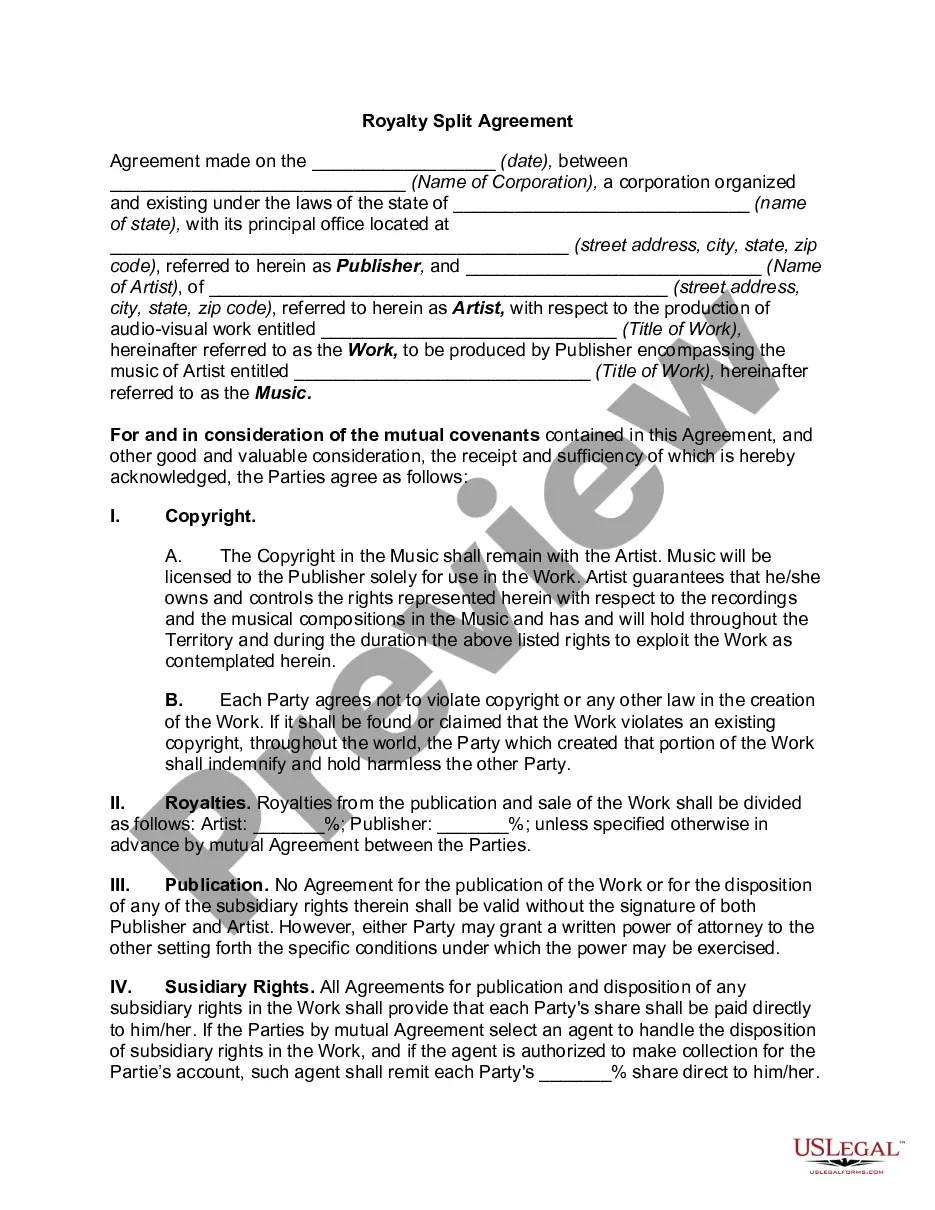
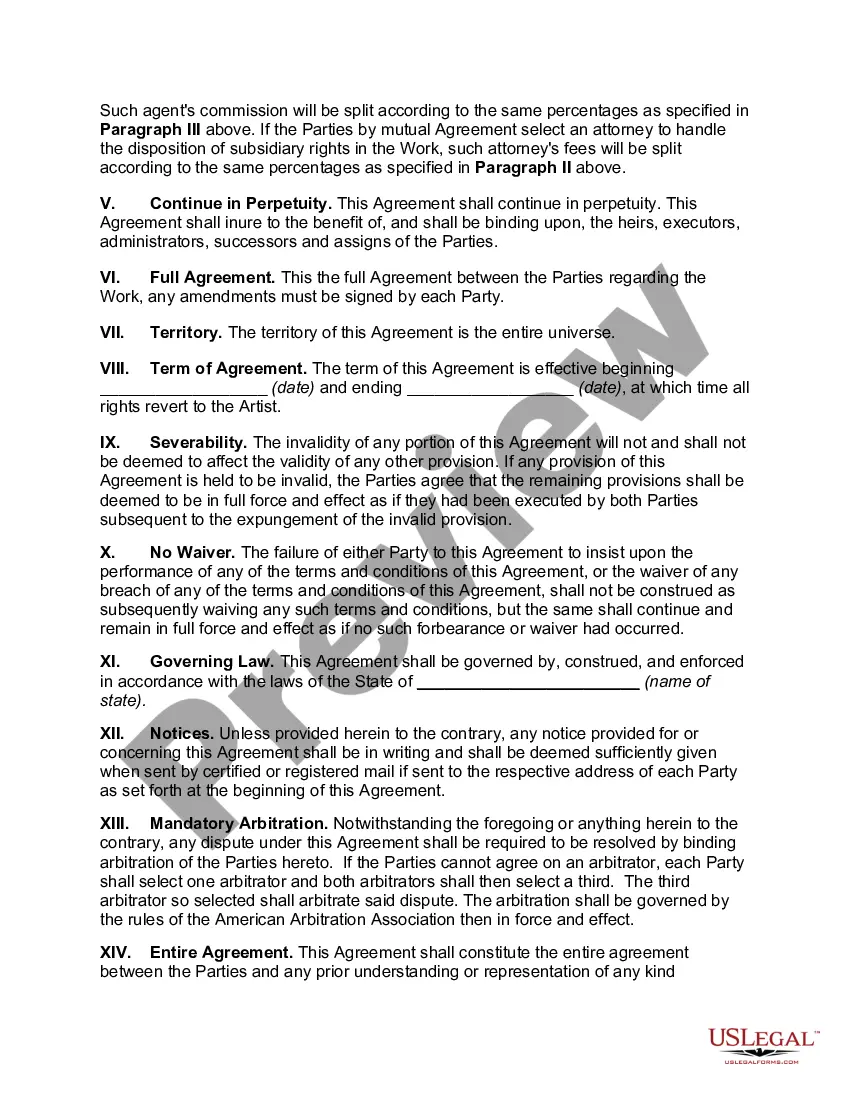
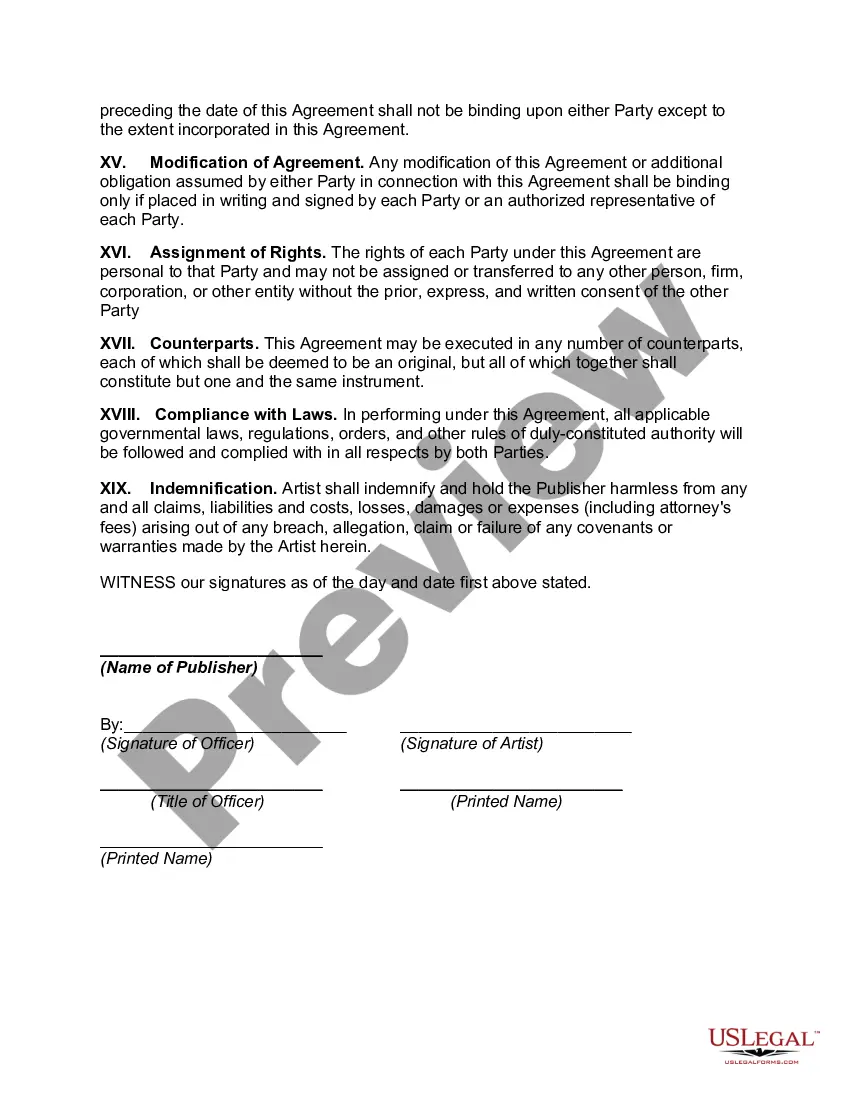
San Bernardino California Royalty Split Agreement
Description
Get your form ready online
Our built-in tools help you complete, sign, share, and store your documents in one place.
Make edits, fill in missing information, and update formatting in US Legal Forms—just like you would in MS Word.
Download a copy, print it, send it by email, or mail it via USPS—whatever works best for your next step.
Sign and collect signatures with our SignNow integration. Send to multiple recipients, set reminders, and more. Go Premium to unlock E-Sign.
If this form requires notarization, complete it online through a secure video call—no need to meet a notary in person or wait for an appointment.
We protect your documents and personal data by following strict security and privacy standards.

Make edits, fill in missing information, and update formatting in US Legal Forms—just like you would in MS Word.

Download a copy, print it, send it by email, or mail it via USPS—whatever works best for your next step.

Sign and collect signatures with our SignNow integration. Send to multiple recipients, set reminders, and more. Go Premium to unlock E-Sign.

If this form requires notarization, complete it online through a secure video call—no need to meet a notary in person or wait for an appointment.

We protect your documents and personal data by following strict security and privacy standards.
Looking for another form?

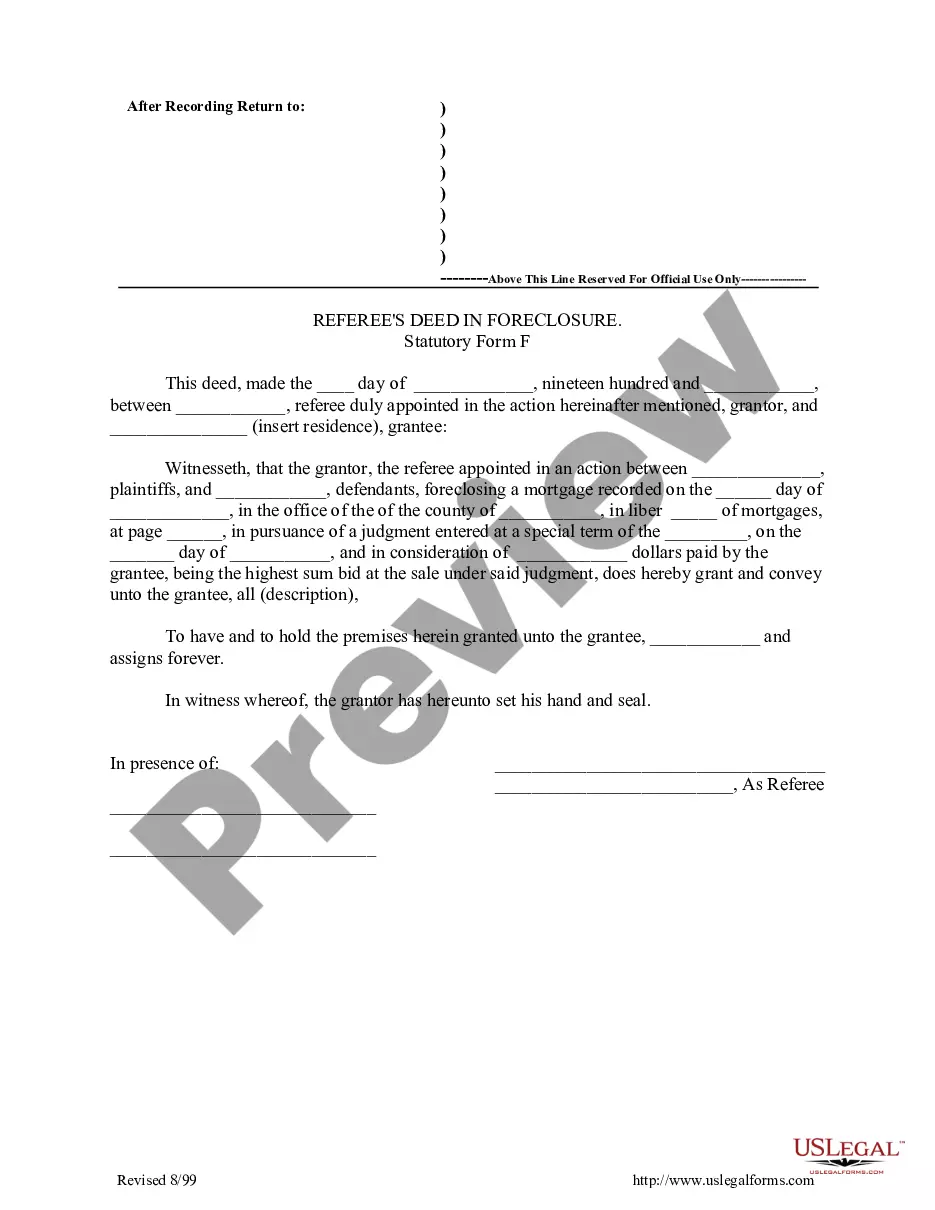
How to fill out Royalty Split Agreement?
Laws and statutes in every field vary from jurisdiction to jurisdiction.
If you aren't a lawyer, it's simple to become confused by an array of standards when drafting legal papers.
To prevent expensive legal fees when drafting the San Bernardino Royalty Split Agreement, you require a certified template valid for your region.
Choose another document if there are any discrepancies with your needs, click the Buy Now button to purchase the template once you have identified the suitable one. Select one of the subscription plans and either log in or create an account. Decide how you wish to pay for your subscription (via credit card or PayPal). Choose the format you desire to save the document in and hit Download. Fill out and sign the template on paper after printing it or complete the whole process electronically. This is the most straightforward and economical method to obtain current templates for any legal requirements. Find them all in just a few clicks and manage your paperwork efficiently with US Legal Forms!
- This is when utilizing the US Legal Forms platform proves extremely beneficial.
- US Legal Forms is a reputable online repository containing over 85,000 state-specific legal templates.
- It's an ideal option for professionals and individuals in search of DIY templates for various personal and business needs.
- All documents can be utilized multiple times: once you select a template, it remains accessible in your account for future reference.
- Thus, if you have an account with an active subscription, you can easily Log In and re-download the San Bernardino Royalty Split Agreement from the My documents section.
- For new users, there are a few additional steps to acquire the San Bernardino Royalty Split Agreement.
- Examine the page details to confirm you've located the correct template.
- Make use of the Preview feature or review the form description if it's provided.
Form popularity
FAQ
The 10-year rule in California affects spousal support and relates to the duration of marriage. If you were married for 10 years or more, the court typically has the discretion to award longer or indefinite spousal support. When contemplating elements like a San Bernardino California Royalty Split Agreement during divorce proceedings, understanding this rule is essential. Explore USLegalForms for more information on navigating marital laws.
Producers typically get anything from 3 to 7 Producer Points. That means that if the artist gets, for example, 20% of the royalties in a record deal and the producer gets 5 points, the producer is getting 25% percent of the artist's share of the royalties.
Under the law, 45 percent of performance royalties are paid directly to the featured artists on a recording, and 5 percent are paid to a fund for non-featured artists. The other 50 percent of the performance royalties are paid to the rights owner of the sound recording.
This royalty is freely negotiated in the marketplace and is typically split 50% to the publishers (songwriters and producers) and 50% to the artist and record label, meaning there are two levels of clearance for a master recording in a movie.
A featured artist will receive a royalty from the sales of the song they performed on, in one way or another.
We recommend to split royalties and rights evenly between each band member to keep things easy. In hip hop, the producer will usually request 50%, while the other top liners will split the remaining 50%.
Since most producers get 3-7 points and most artist's deals are 12-20 percentage points of sales/streams, you divide the producer point by artist point. So, if you're working with a 4 point producer, you can divide 4 by 16 (typical artist points) and you get 25%. Or 4 divided by 20 would get you 20%.
How To Split Music Royalties The Easy Way - YouTube YouTube Start of suggested clip End of suggested clip You can go back and change splits any time add or remove collaborators. At any time or even go backMoreYou can go back and change splits any time add or remove collaborators. At any time or even go back and see previous splits to see if anything has changed.
The record royalty for a producer is usually between 3% to 4% of the record's sales price or 20% to 25% of the artist's royalties. On a CD that sells for $10.98, the producer's royalty would be about 33 cents for each copy sold and for a digital download of an album priced at $9.98 the producer receives 30 cents.
Performance royalties are typically split into two equal halves: a writer share (50%) and a publisher share (50%). Performing Rights Organizations (PROs) and Collective Management Organizations (CMOs) collect and account for each of these revenue sources separately.