Montgomery Maryland Royalty Split Agreement
Description
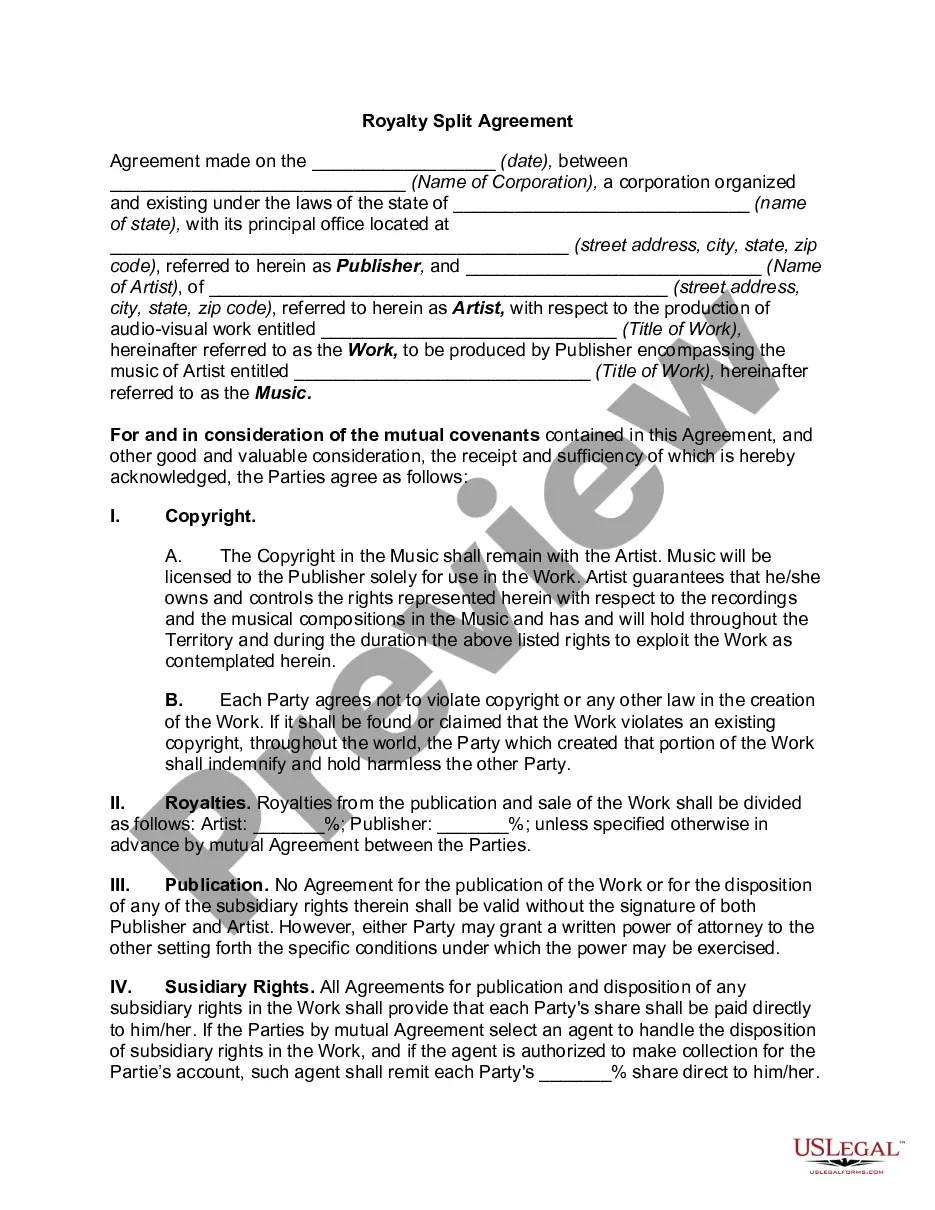
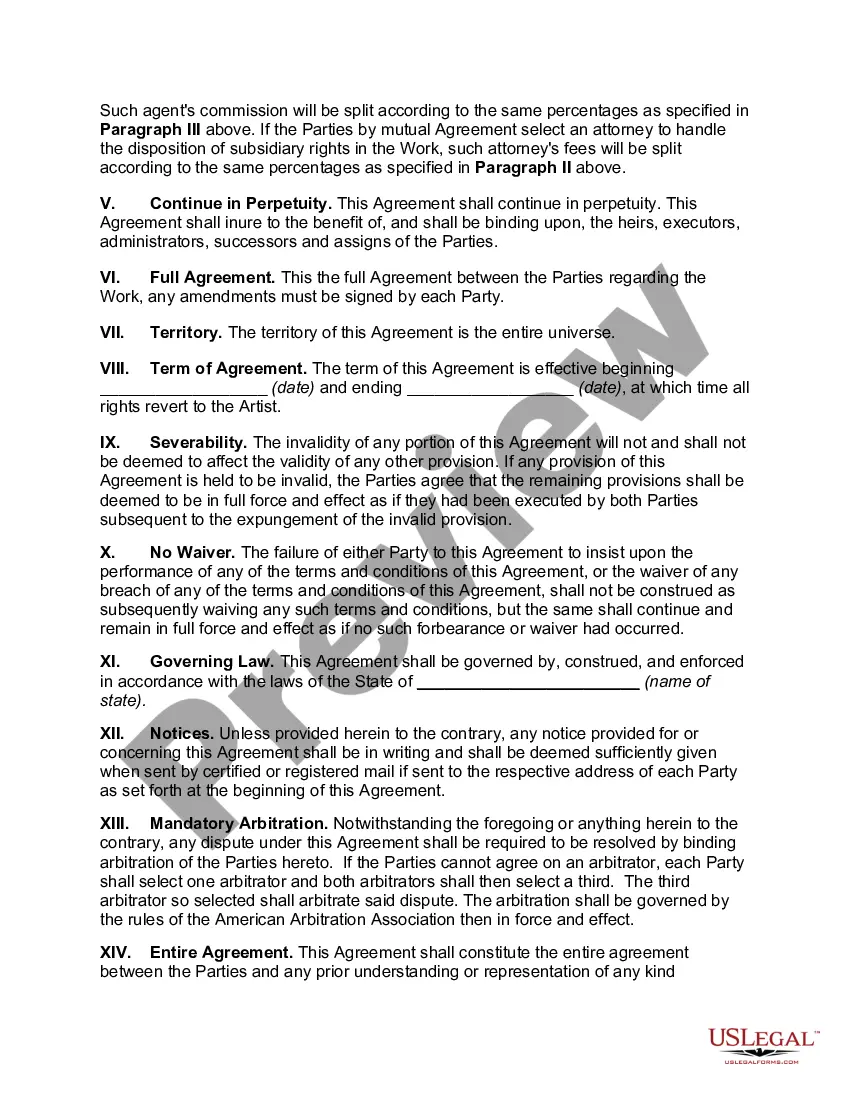
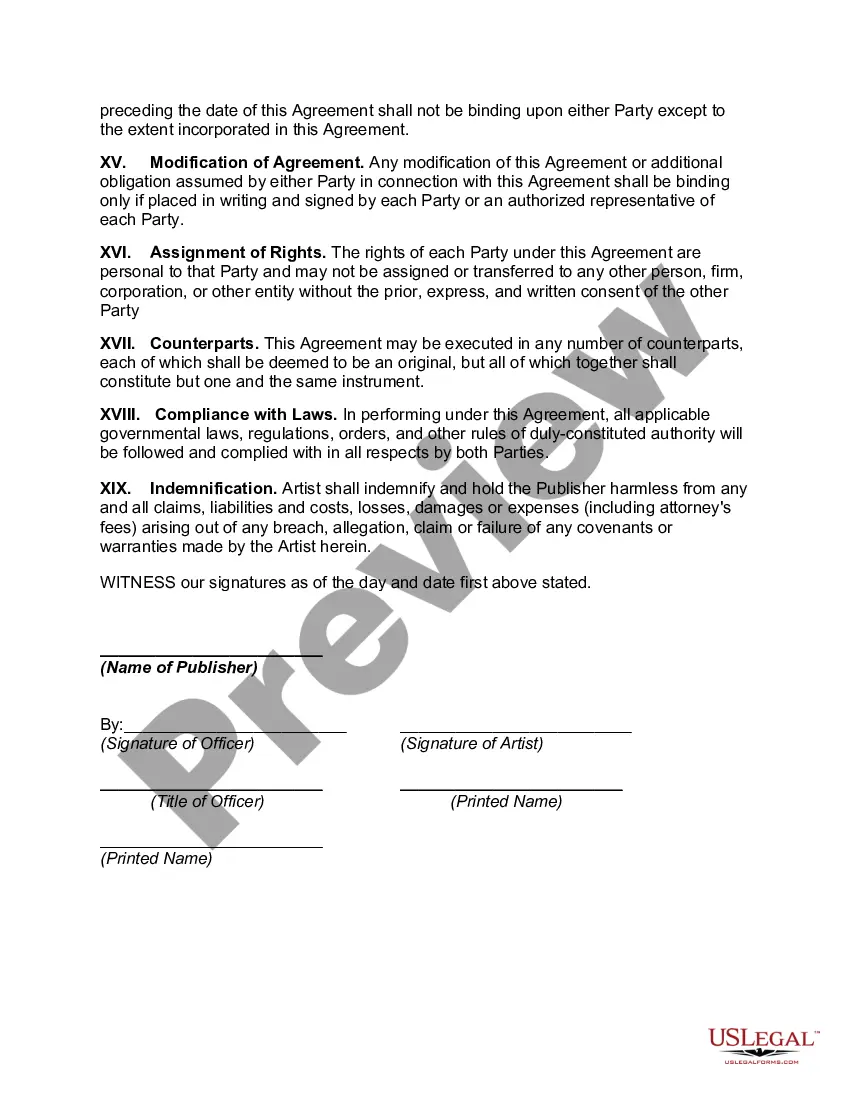


How to fill out Royalty Split Agreement?
A document procedure consistently accompanies any legal endeavor you undertake.
Establishing a business, applying for or accepting a job proposal, transferring ownership, and numerous other life events require you to prepare official paperwork that differs across the nation.
This is why having all your documents centralized in one location is immensely beneficial.
US Legal Forms stands as the largest online repository of current federal and state-specific legal documents.
Employ it as necessary: print it or fill it electronically, sign it, and dispatch where required. This is the most straightforward and dependable method to acquire legal documents. All the templates in our library are expertly drafted and confirmed for compliance with local laws and regulations. Prepare your documents and manage your legal matters effectively with US Legal Forms!
- In this platform, you can conveniently search for and obtain a document for any personal or business need utilized in your county, including the Montgomery Royalty Split Agreement.
- Finding templates on the platform is incredibly simple.
- If you currently possess a subscription to our library, Log In to your account, search for the sample through the search bar, and click Download to save it to your device.
- After that, the Montgomery Royalty Split Agreement will be accessible for further use in the My documents section of your profile.
- If you are engaging with US Legal Forms for the first time, adhere to this quick guide to obtain the Montgomery Royalty Split Agreement.
- Make sure you have navigated to the correct page with your local form.
- Utilize the Preview mode (if available) and review the template.
- Examine the description (if available) to confirm the form meets your needs.
- If the sample doesn’t satisfy you, seek another document using the search tab.
- Click Buy Now once you find the necessary template.
- Choose the suitable subscription plan, then Log In or create an account.
- Select the desired payment method (either credit card or PayPal) to proceed.
- Choose the file format and download the Montgomery Royalty Split Agreement onto your device.
Form popularity
FAQ
Royalty Splits All music publishing income is split 50/50 between the songwriter and the publisher. This is typically referred to as the writer share and publisher share of income. No matter how many writers and publishers, the publishing royalties are split in this way.
Performance royalties are typically split into two equal halves: a writer share (50%) and a publisher share (50%). Performing Rights Organizations (PROs) and Collective Management Organizations (CMOs) collect and account for each of these revenue sources separately.
Performance royalties are typically split into two equal halves: a writer share (50%) and a publisher share (50%). Performing Rights Organizations (PROs) and Collective Management Organizations (CMOs) collect and account for each of these revenue sources separately.
Overall, for every $1 a streaming service pays in royalties, rights holders collectively earn about 73 cents, creators take a little over 25 cents and the PRO gets a little over 1 cent. Breaking that down for recorded music revenue, the artist receives about 16 cents and the label takes about 64 cents.
Since most producers get 3-7 points and most artist's deals are 12-20 percentage points of sales/streams, you divide the producer point by artist point. So, if you're working with a 4 point producer, you can divide 4 by 16 (typical artist points) and you get 25%. Or 4 divided by 20 would get you 20%.
We recommend to split royalties and rights evenly between each band member to keep things easy. In hip hop, the producer will usually request 50%, while the other top liners will split the remaining 50%.
The record royalty for a producer is usually between 3% to 4% of the record's sales price or 20% to 25% of the artist's royalties. On a CD that sells for $10.98, the producer's royalty would be about 33 cents for each copy sold and for a digital download of an album priced at $9.98 the producer receives 30 cents.
Typically, each producer would split up the total producer percentage (if there's any other than the up front fee). So if the producer's backend is 20% for an indie release and there are 3 producers and they decide to split this equally, then each gets about 6.66%.
Most publishers pay royalties based on the retail price of the book. That means if the book retails at $20, and the royalties rate is 5%, you will earn $1 per book sold. These kinds of royalties are often called list royalties or retail royalties.
Producers typically get anything from 3 to 7 Producer Points. That means that if the artist gets, for example, 20% of the royalties in a record deal and the producer gets 5 points, the producer is getting 25% percent of the artist's share of the royalties.