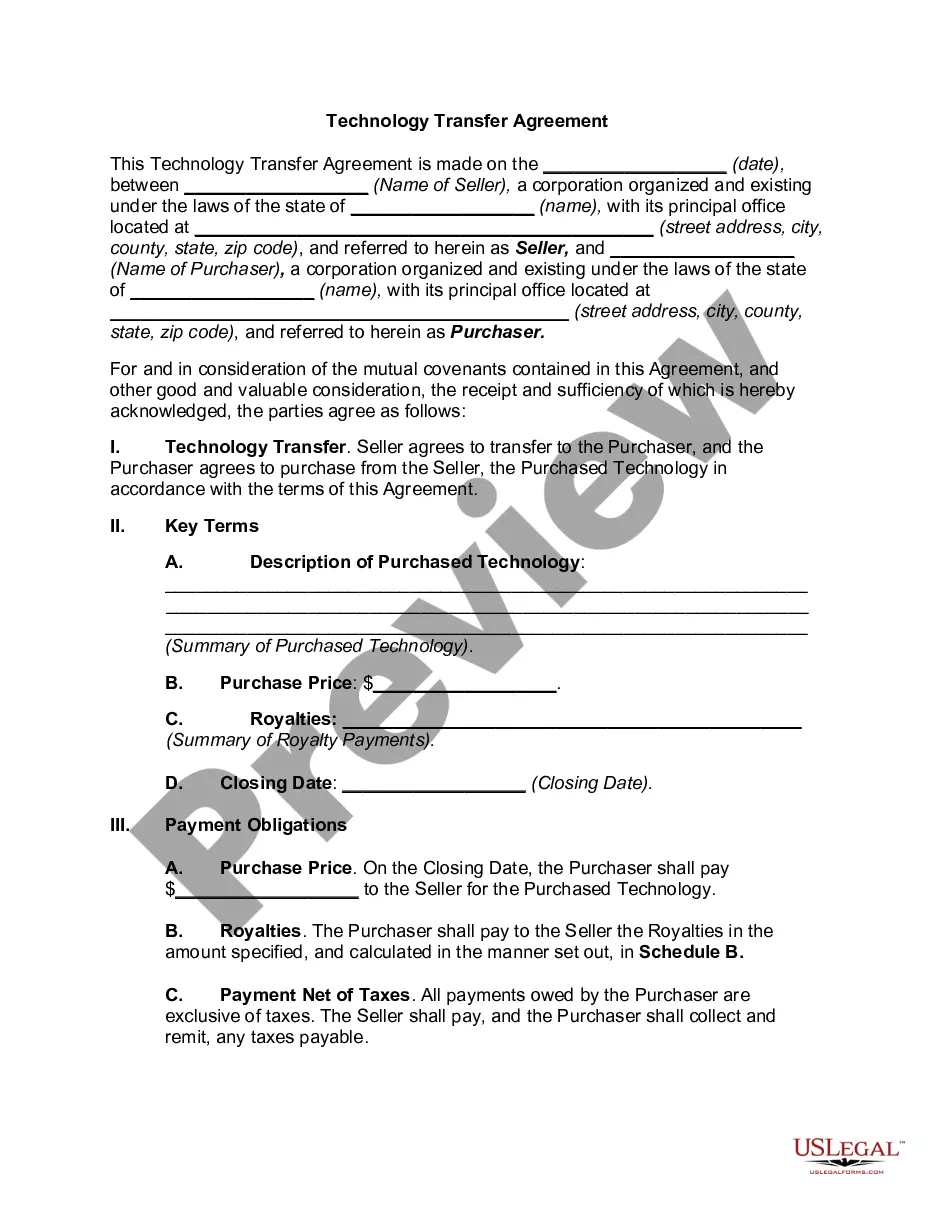
Technology Licensing is the process by which patentable intellectual property is made
marketable and is licensed or otherwise disposed for use by the pubic.
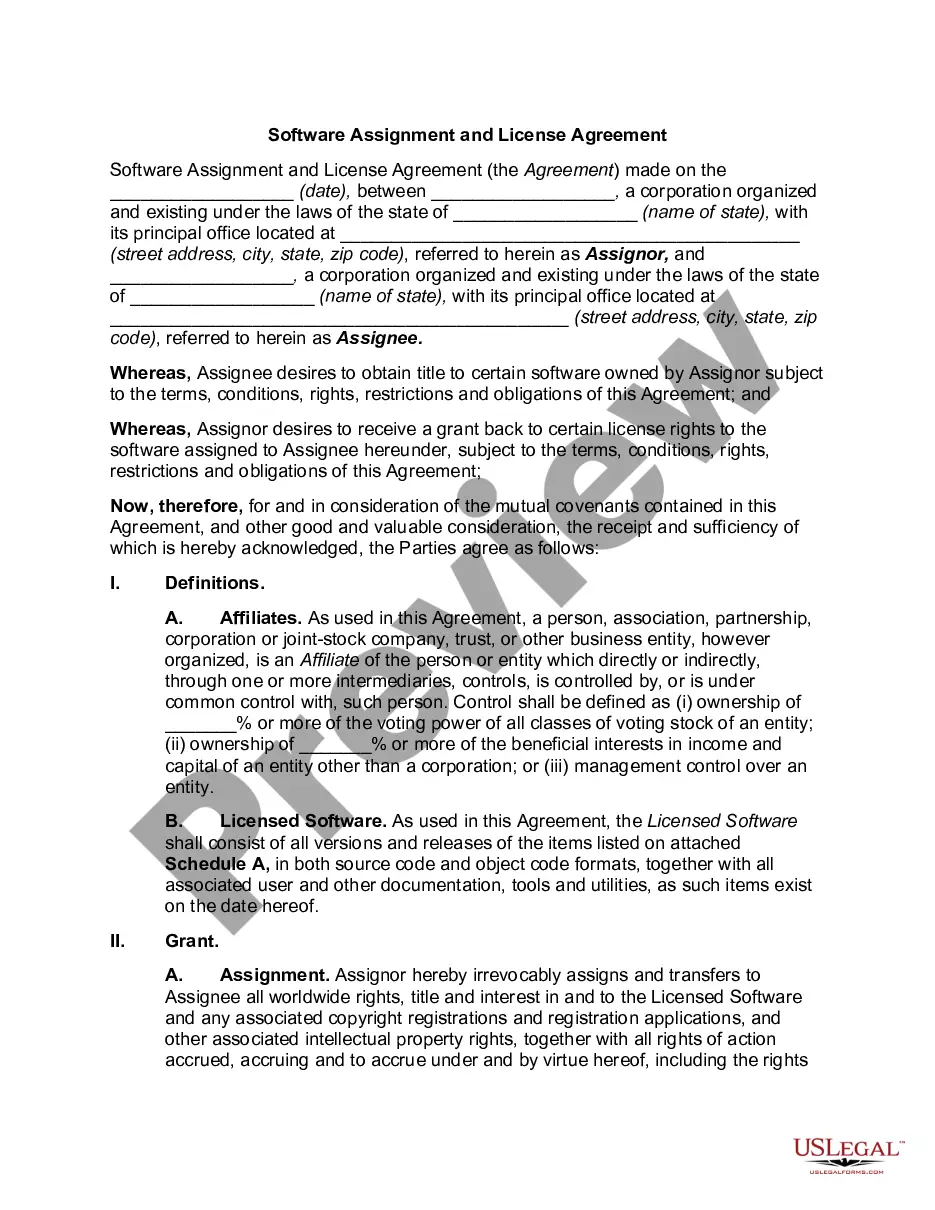
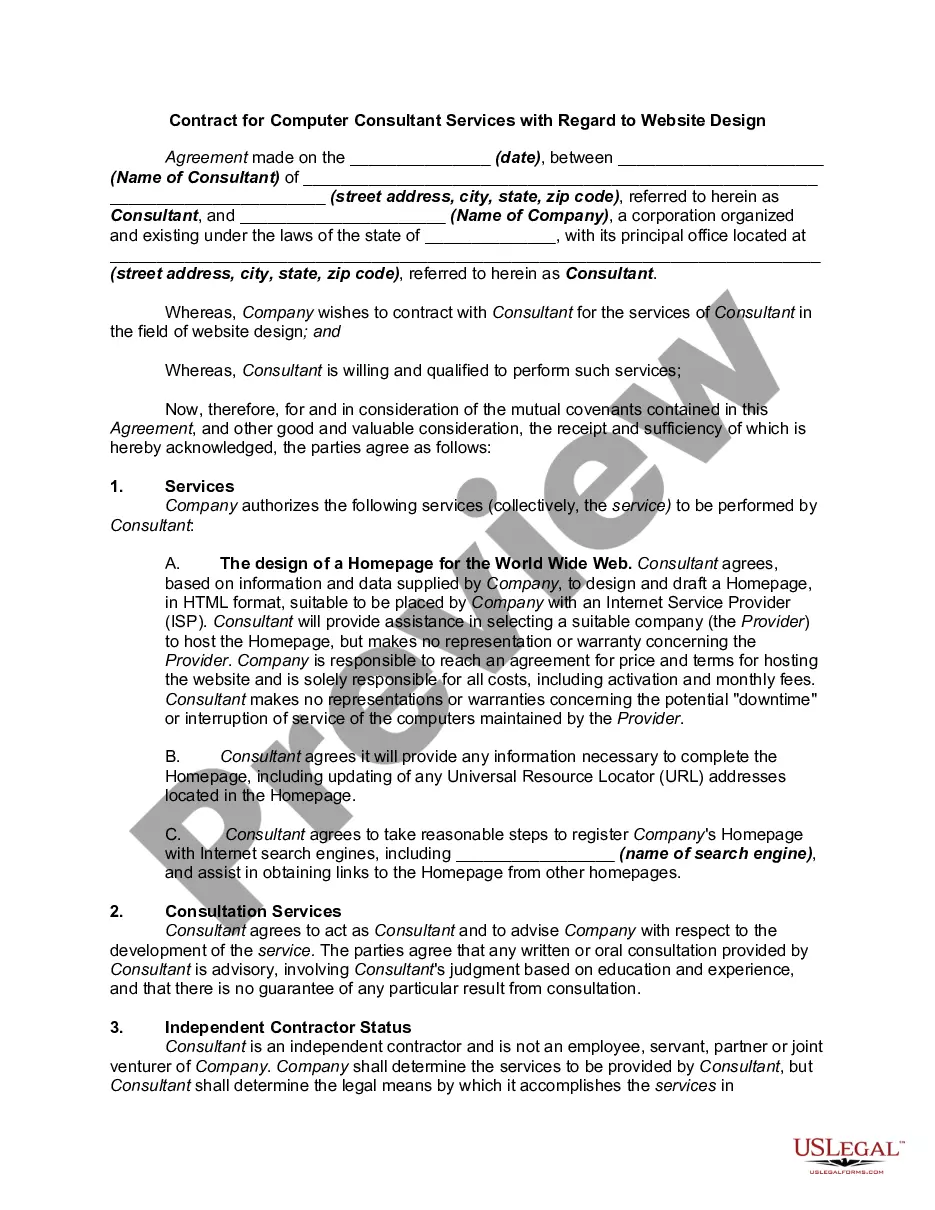
Fulton Georgia Technology Licensing Agreement
Category:
State:
Multi-State
County:
Fulton
Control #:
US-13257BG
Format:
Word;
Rich Text
Instant download
Description
Free preview
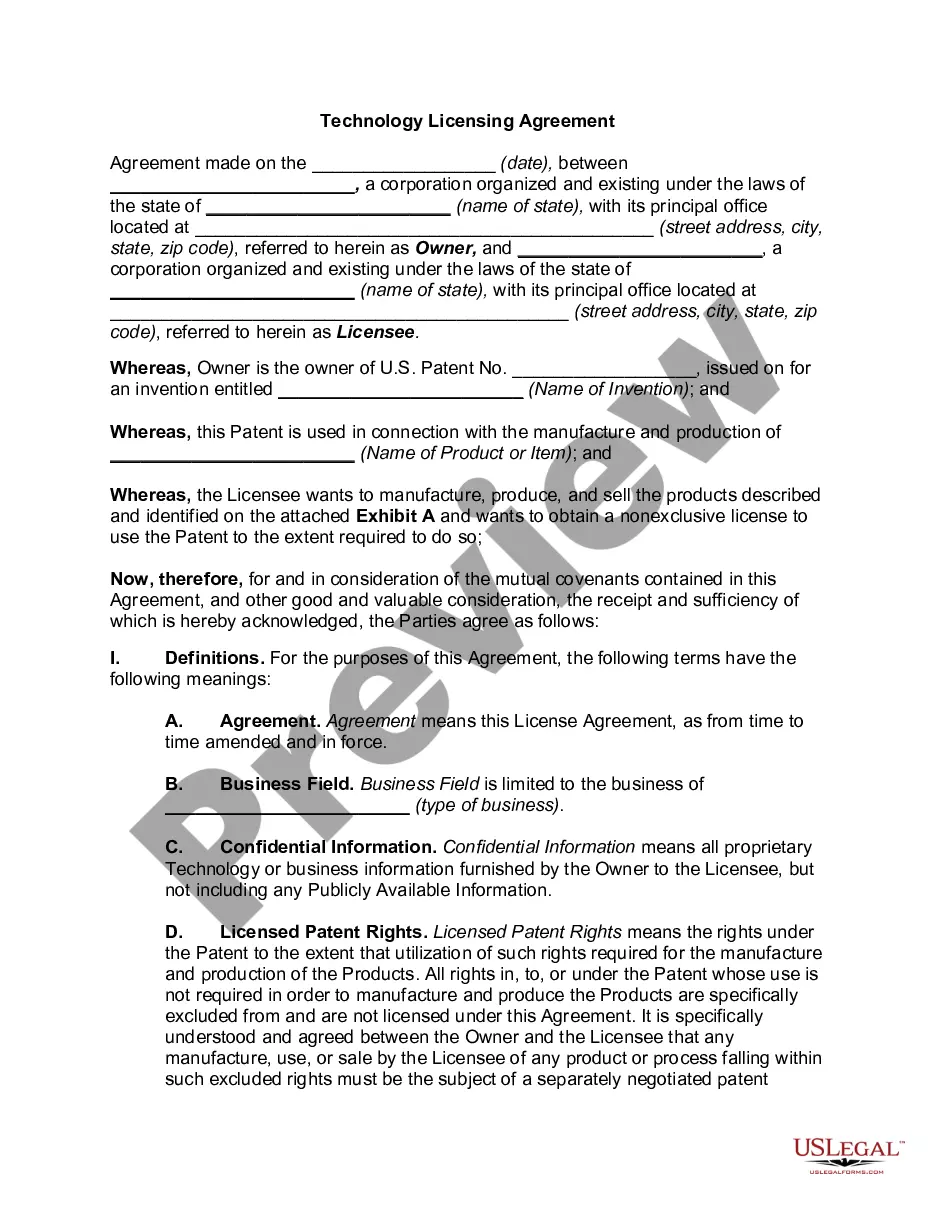
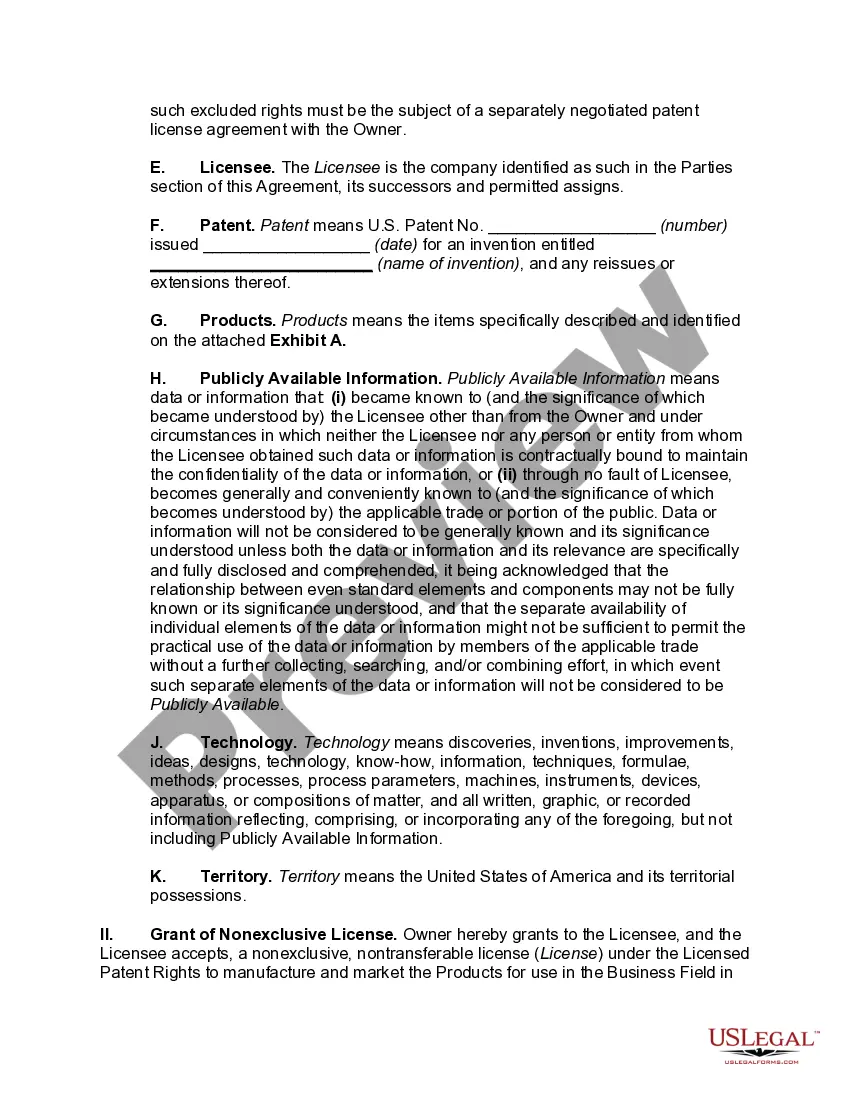
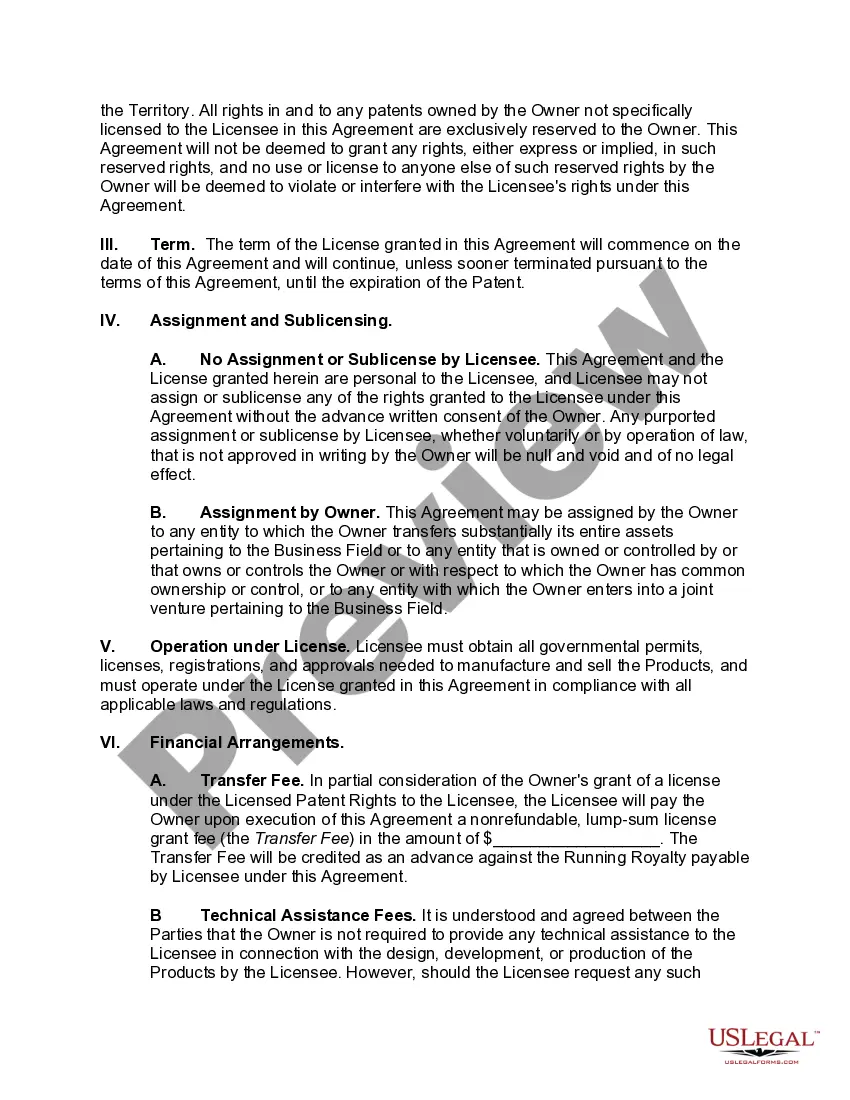
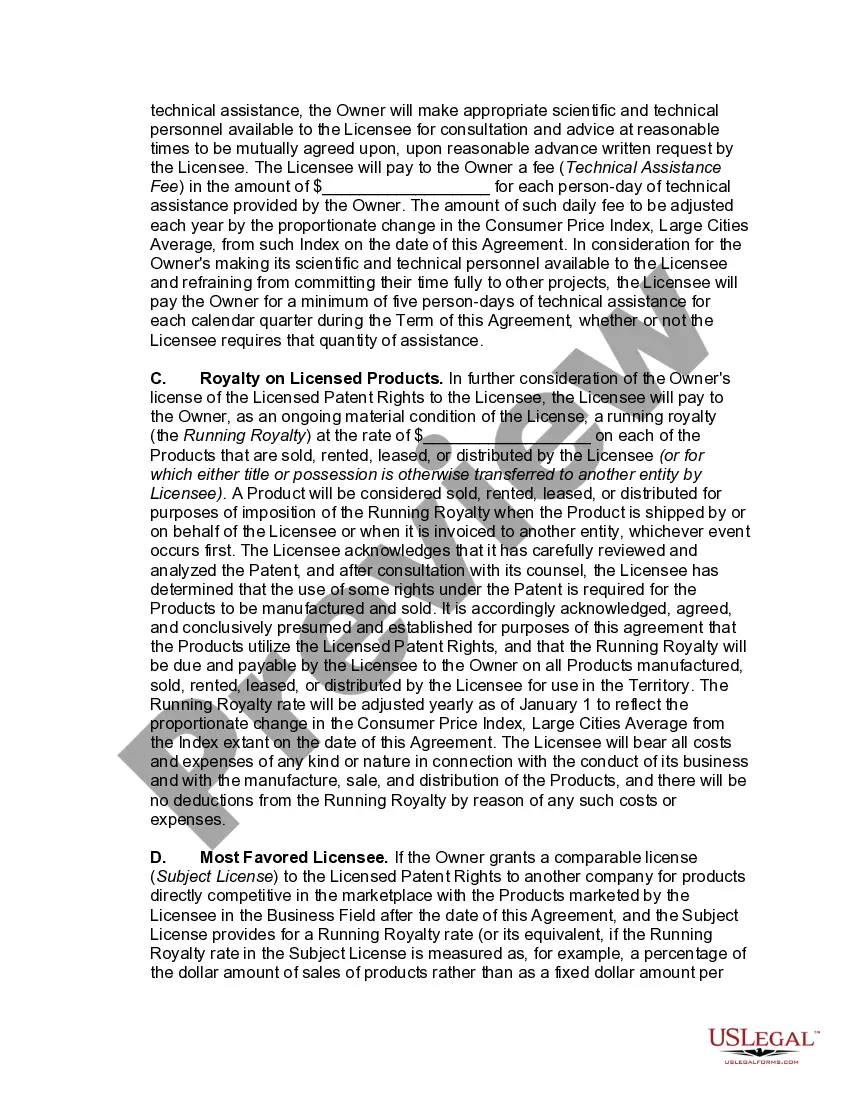
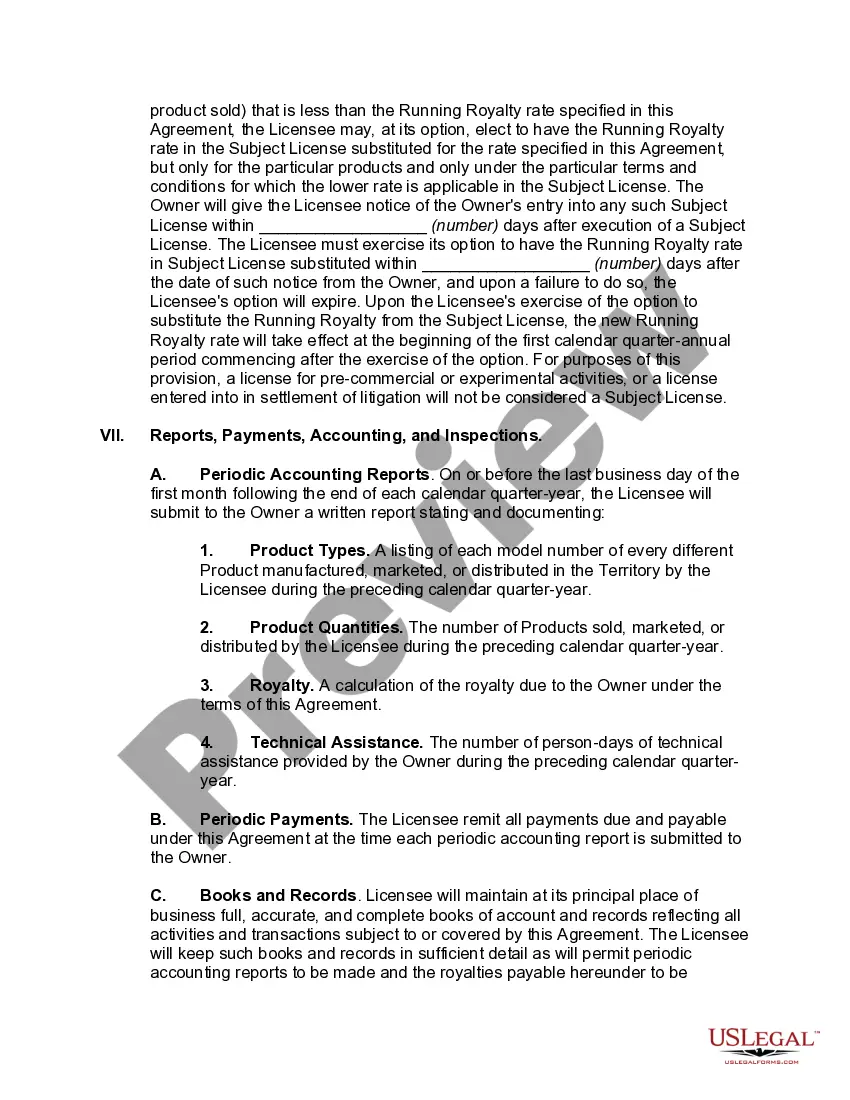
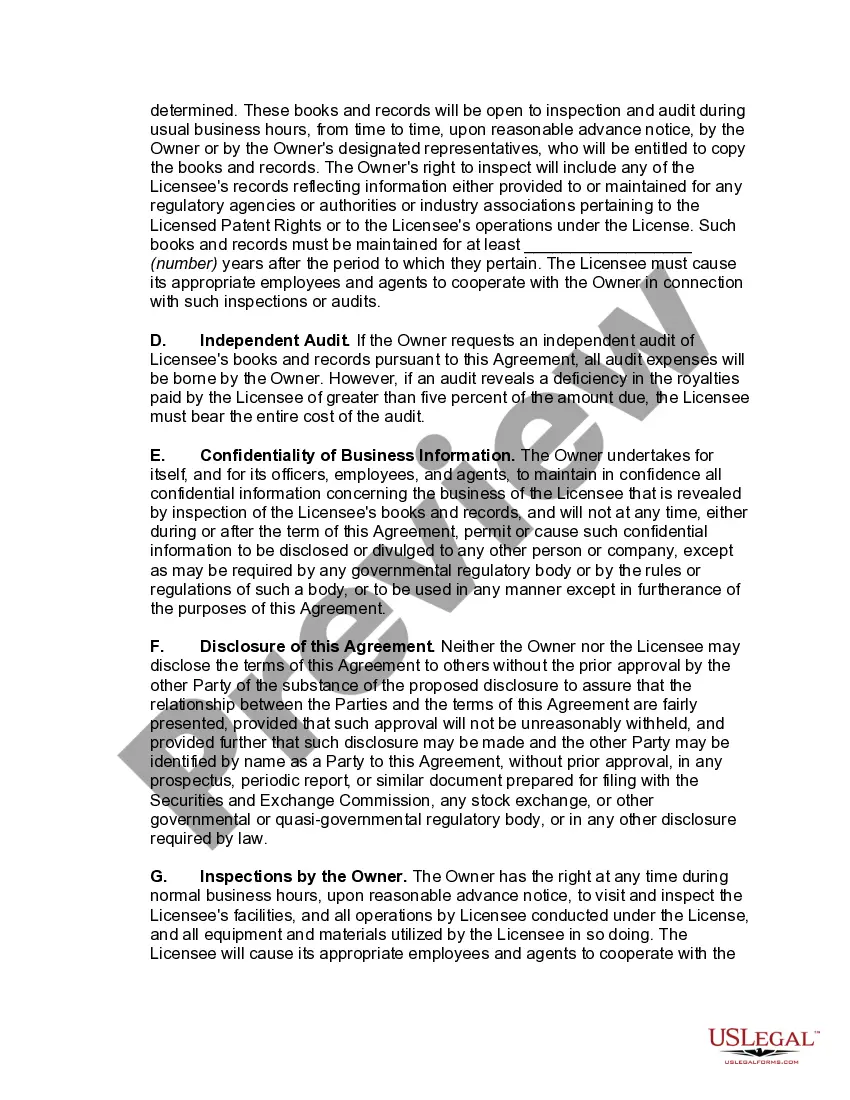
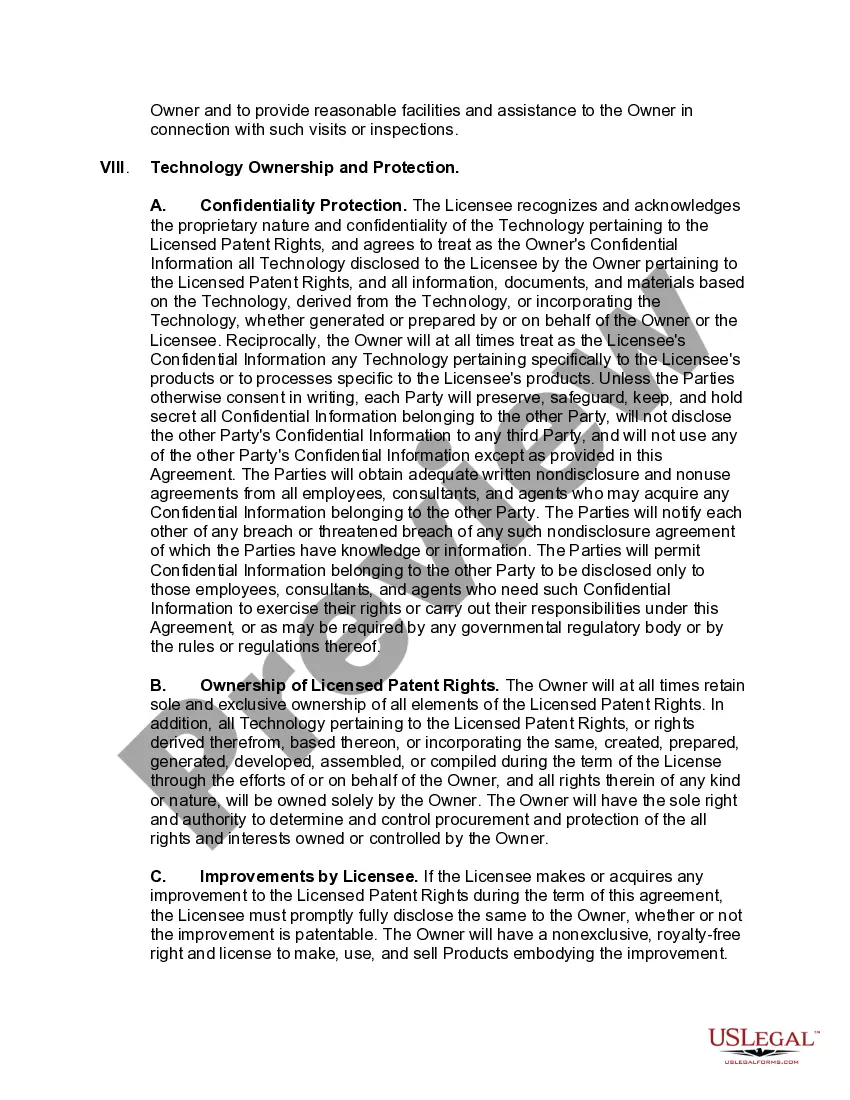
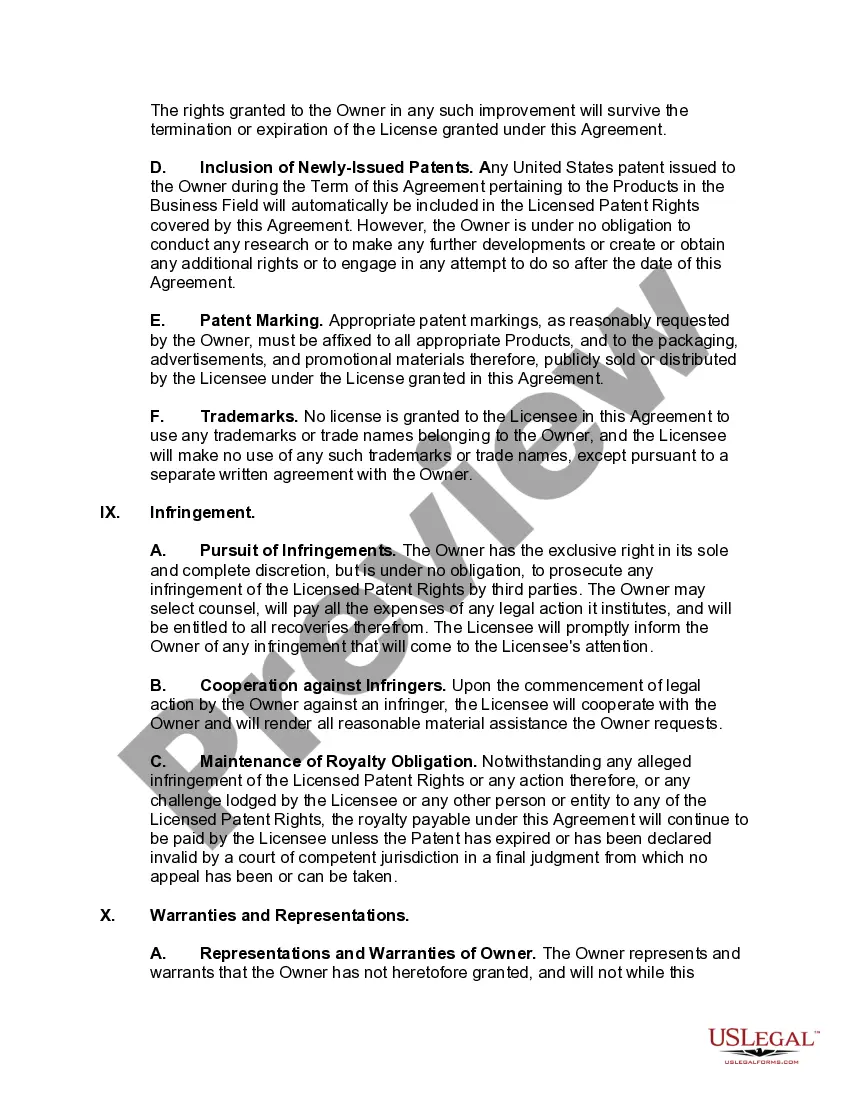
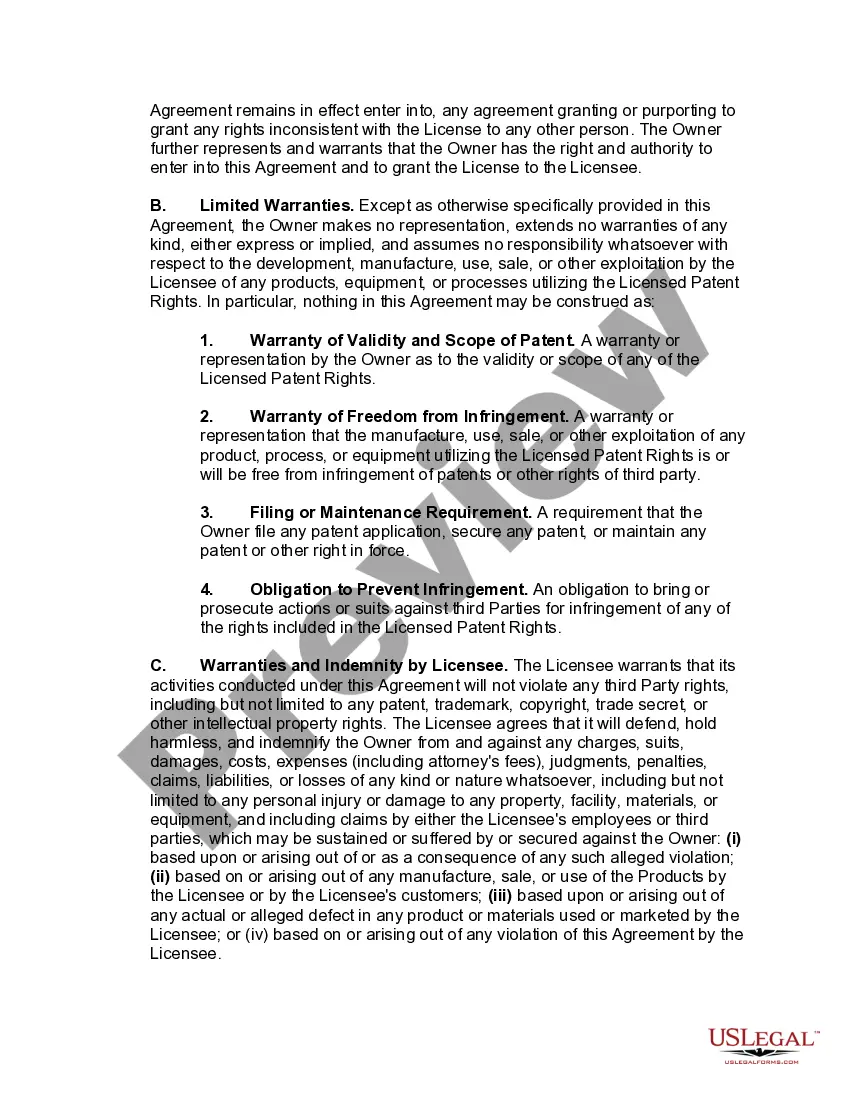
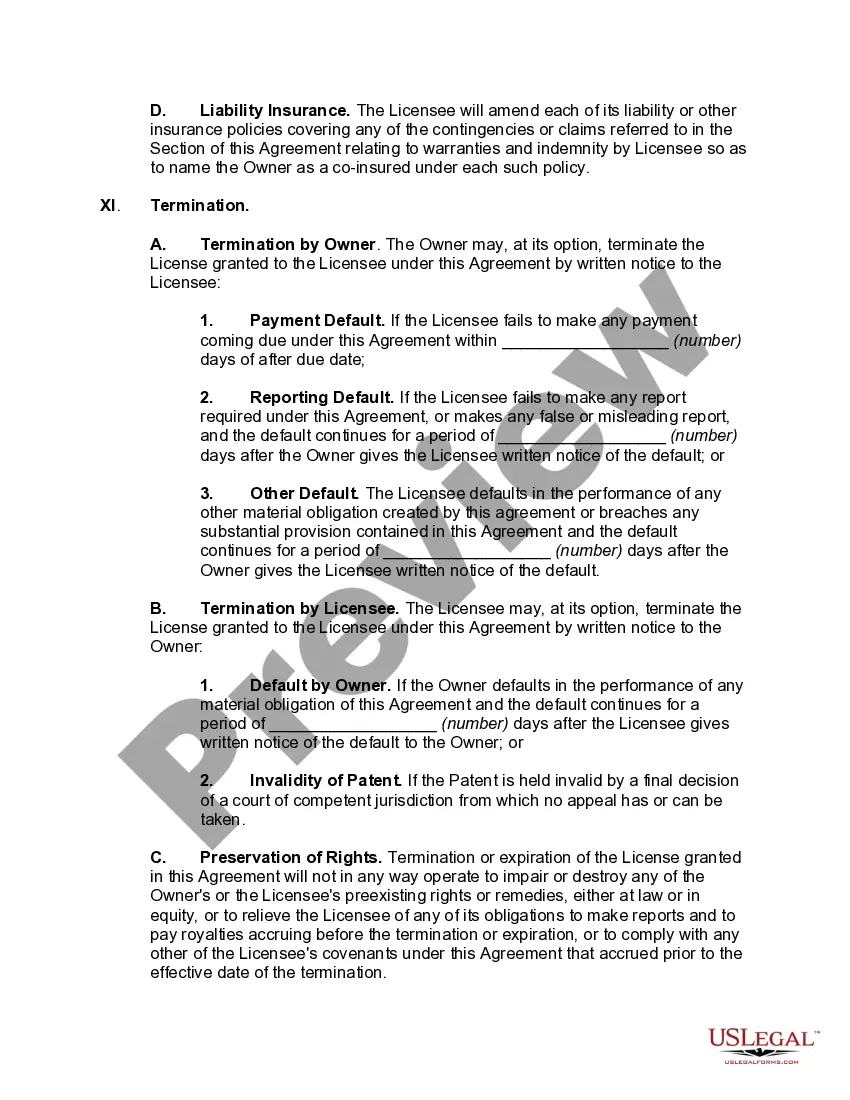







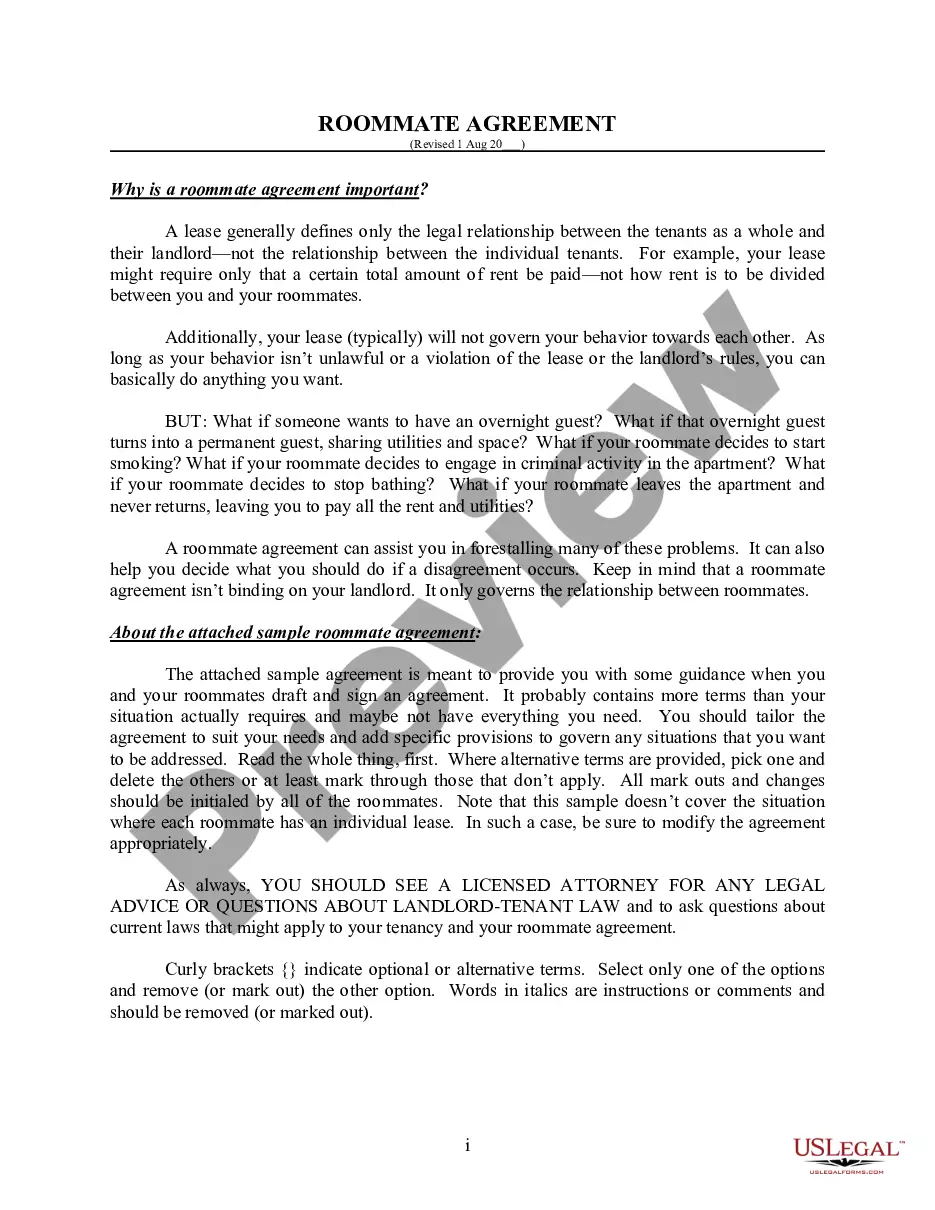
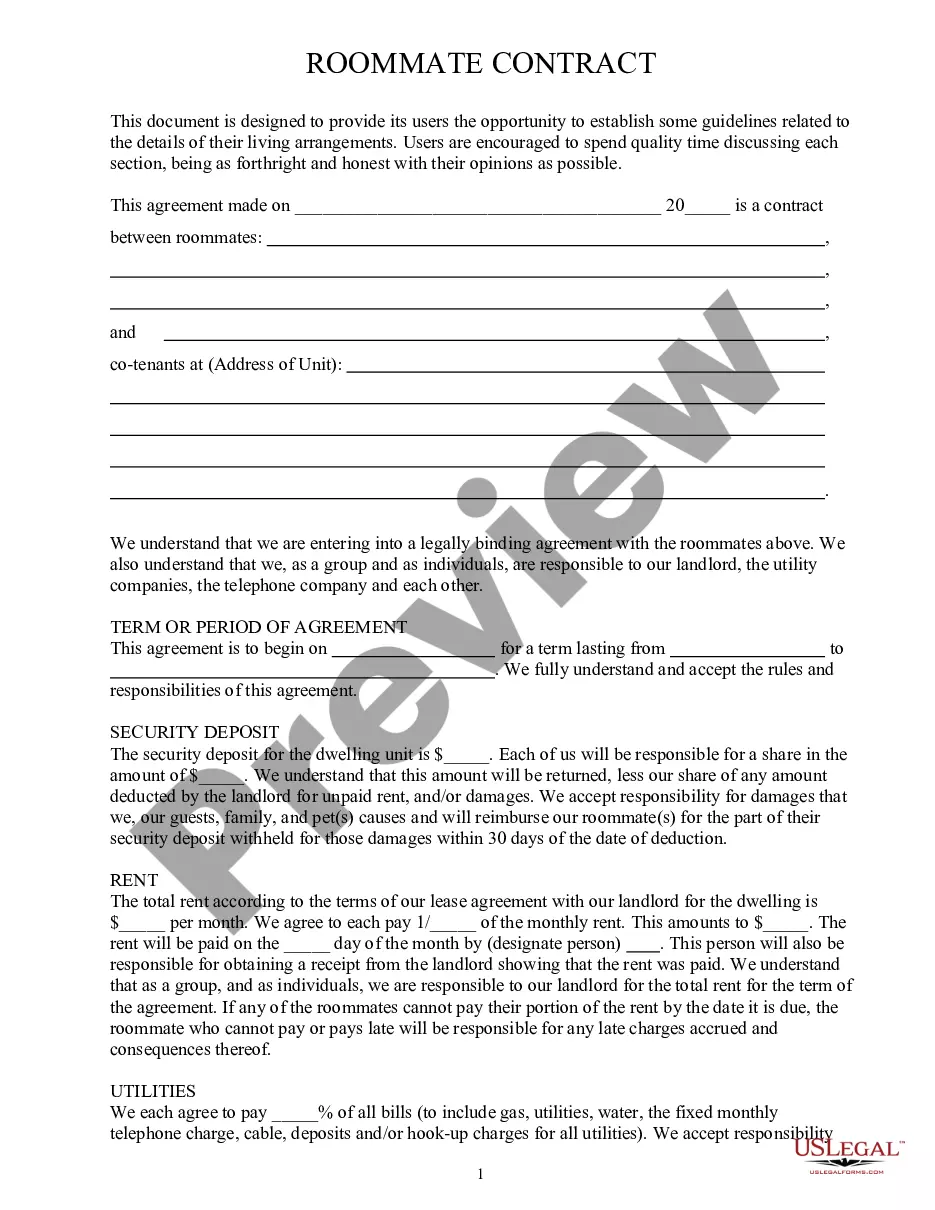
How to fill out Technology Licensing Agreement?
A document process consistently accompanies any legal action you undertake.
Establishing a business, requesting or accepting a job proposition, transferring ownership, and numerous other life circumstances require you to prepare formal documentation that varies from state to state.
That is the reason why consolidating everything in one location is so beneficial.
US Legal Forms is the largest online collection of current federal and state-specific legal documents.
This is the simplest and most dependable way to acquire legal documentation. All samples provided by our library are professionally prepared and verified for compliance with local laws and regulations. Prepare your documentation and manage your legal matters effectively with the US Legal Forms!
- Here, you can effortlessly find and obtain a document for any personal or business objective relevant to your area, including the Fulton Technology Licensing Agreement.
- Finding forms on the platform is remarkably simple.
- If you already have a subscription to our library, Log In to your account, search for the sample using the search bar, and click Download to save it to your device.
- Following that, the Fulton Technology Licensing Agreement will be available for further use in the My documents section of your profile.
- If you are utilizing US Legal Forms for the first time, follow this straightforward guide to acquire the Fulton Technology Licensing Agreement.
- Ensure you have accessed the correct page containing your local form.
- Utilize the Preview mode (if available) and review the template.
- Examine the description (if present) to confirm the template aligns with your needs.
- Search for another document using the search tab in case the sample does not meet your requirements.
- Click Buy Now once you find the needed template.
- Select the appropriate subscription plan, then Log In or register for an account.
- Choose the preferred payment method (via credit card or PayPal) to continue.
- Select file format and save the Fulton Technology Licensing Agreement to your device.
- Use it as required: print it or complete it electronically, sign it, and send it whenever requested.
Form popularity
FAQ
A license agreement is a business contract between two parties. The licensor (the seller of the license) owns the asset being licensed and the licensee (the buyer) pays for the right to use the license. The licensee pays the owner in exchange for the right to sell the product or use the technology.
In technology licensing, the licensor (firm selling the technology) agrees to unilaterally transfer know-how and intellectual property (IP) related to a technology to the licensee (firm buying the technology).
In a typical licensing agreement, the licensor grants the licensee the right to produce and sell goods, apply a brand name or trademark, or use patented technology owned by the licensor.
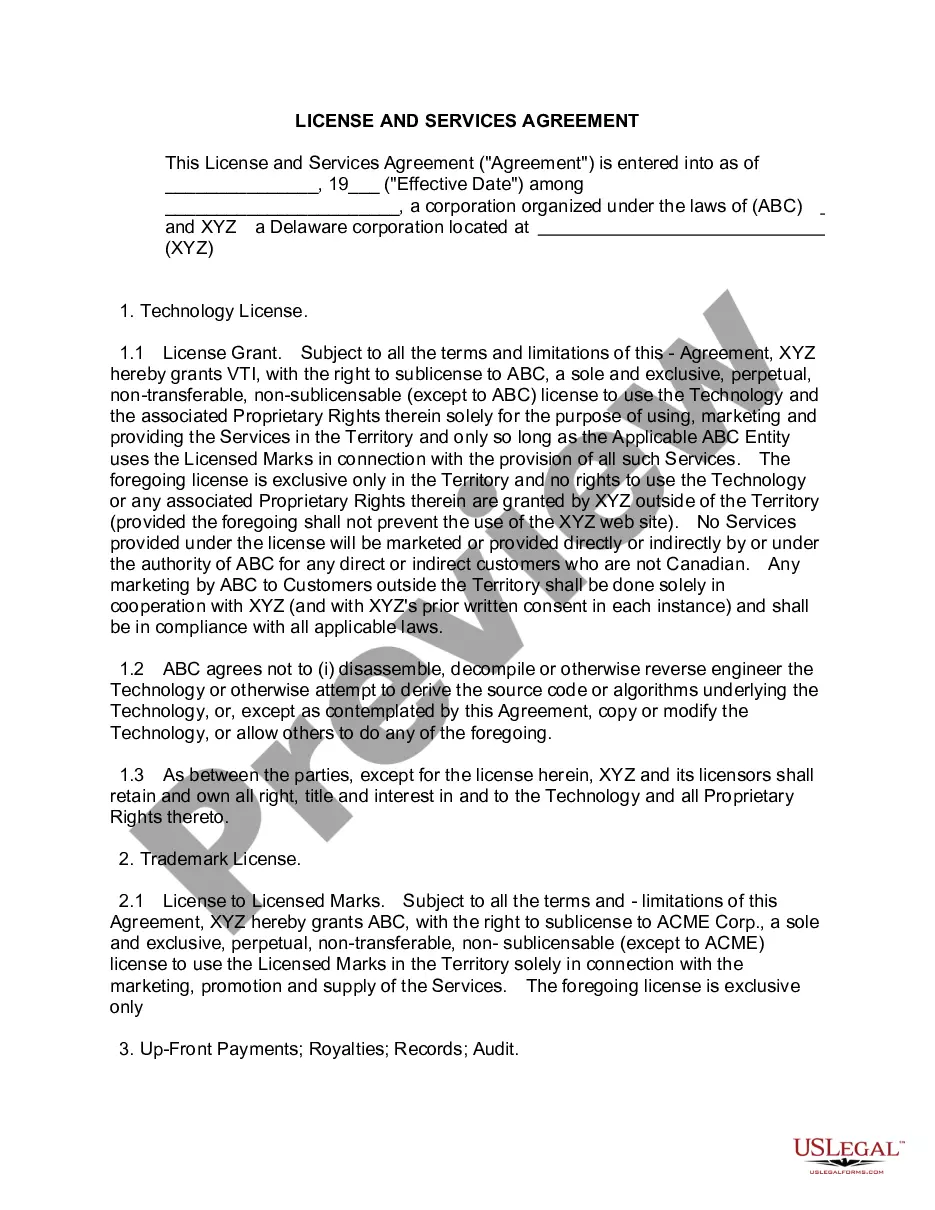
A licensing agreement is a contract between two parties (the licensor and licensee) in which the licensor grants the licensee the right to use the brand name, trademark, patented technology, or ability to produce and sell goods owned by the licensor.
Technology licensing agreements are contracts or arrangements that involve an owner of a technology-based intellectual property, also known as a licensor, who will accept compensation in exchange for allowing an outside party, known as the licensee, resell the property, make alterations to it, or simply use it.
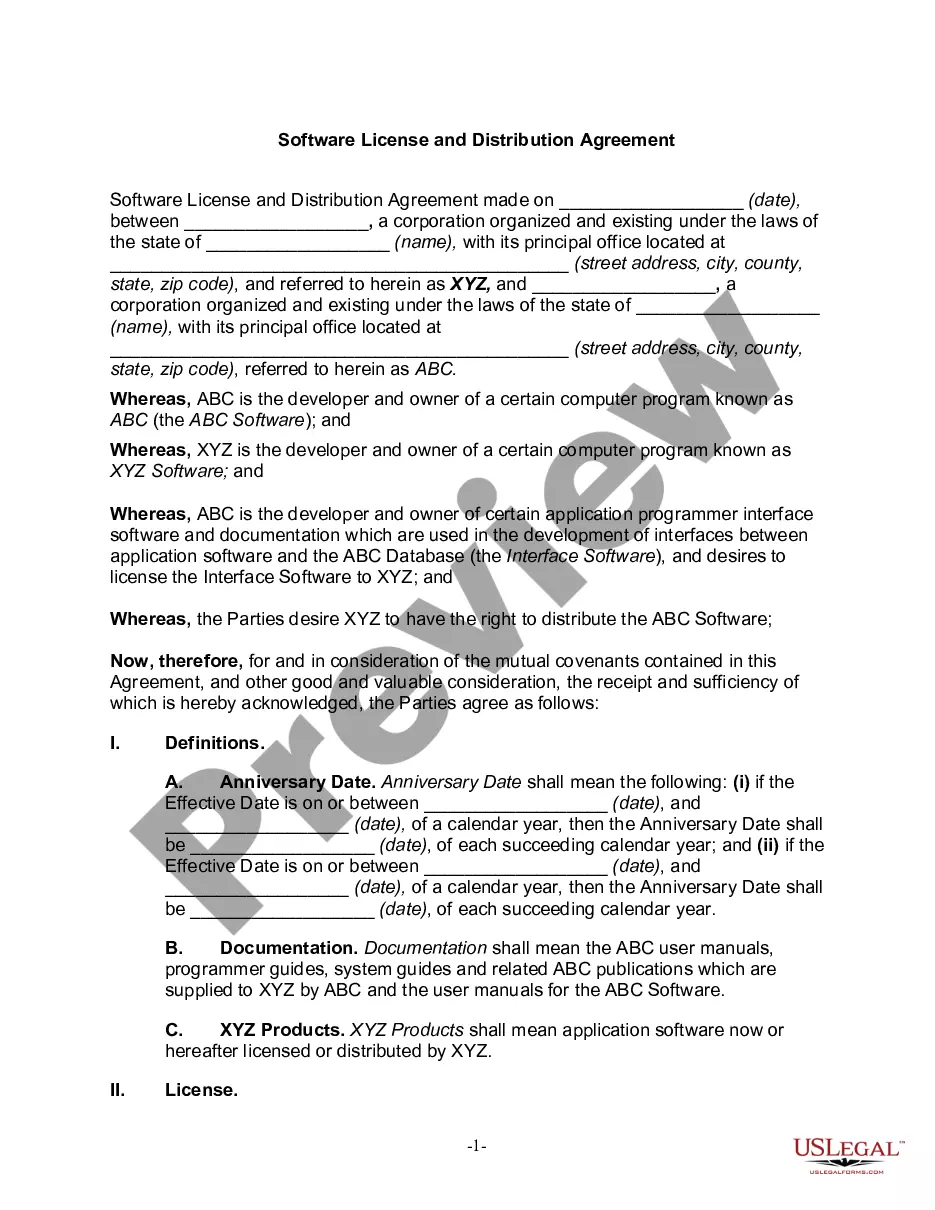
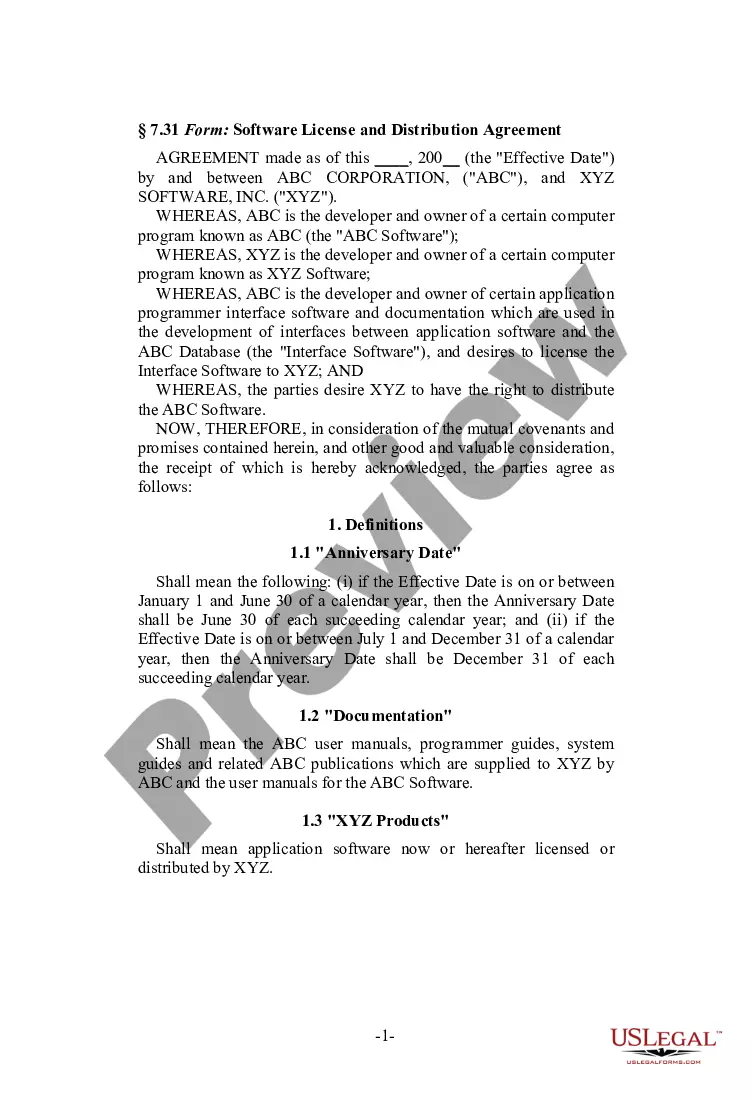
An example of a licensing agreement is a contract between the copyright holders of software and another company, allowing the latter to use the computer software for their daily business operations.
How to Negotiate a Licensing Agreement Like a Pro Do your homework.Start with a term sheet.Manage your expectations.Be patient.Have a win-win attitude.Don't lose your sense of humor.Remember to hold something back.Put yourself in their shoes.
How to decide between types of licensing agreements Patent Licensing. Patents cover science and innovation.Trademark Licensing. Trademarks are signifiers of commercial source, namely, brand names and logos or slogans.Copyright Licensing.Trade Secret Licensing.Exclusive.Non-exclusive.Sole.Perpetual.
The agreed licensing rate should be based on an objective assessment of the value that the licensee receives from the licensor, which depends on the characteristics of the licensed products, the terms of the license agreement and the factors specific to the licensor.
License Agreement Tips Firmly establish ownership. A good contract should clearly state what rights are being granted pertaining to the intellectual property in question.Do not overlook definitions.Define the royalty system.Explain the quality assurance monitoring process.Be aware of government regulations.