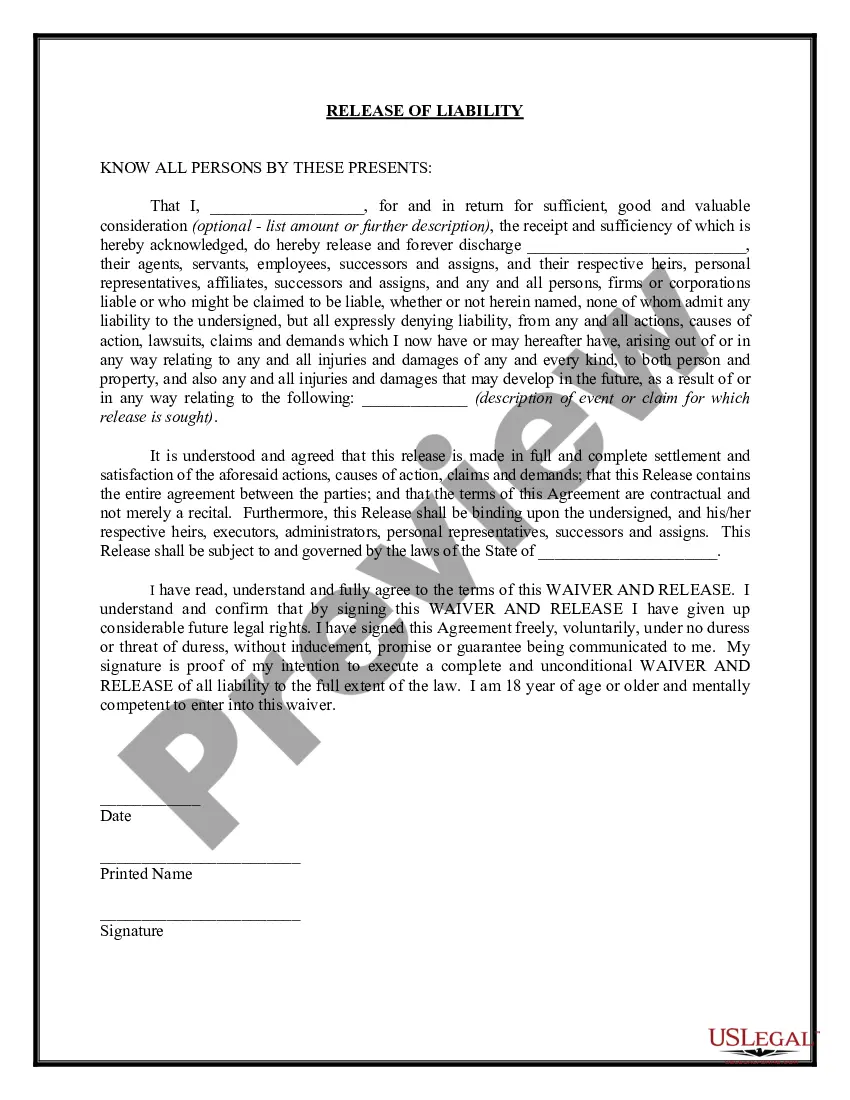
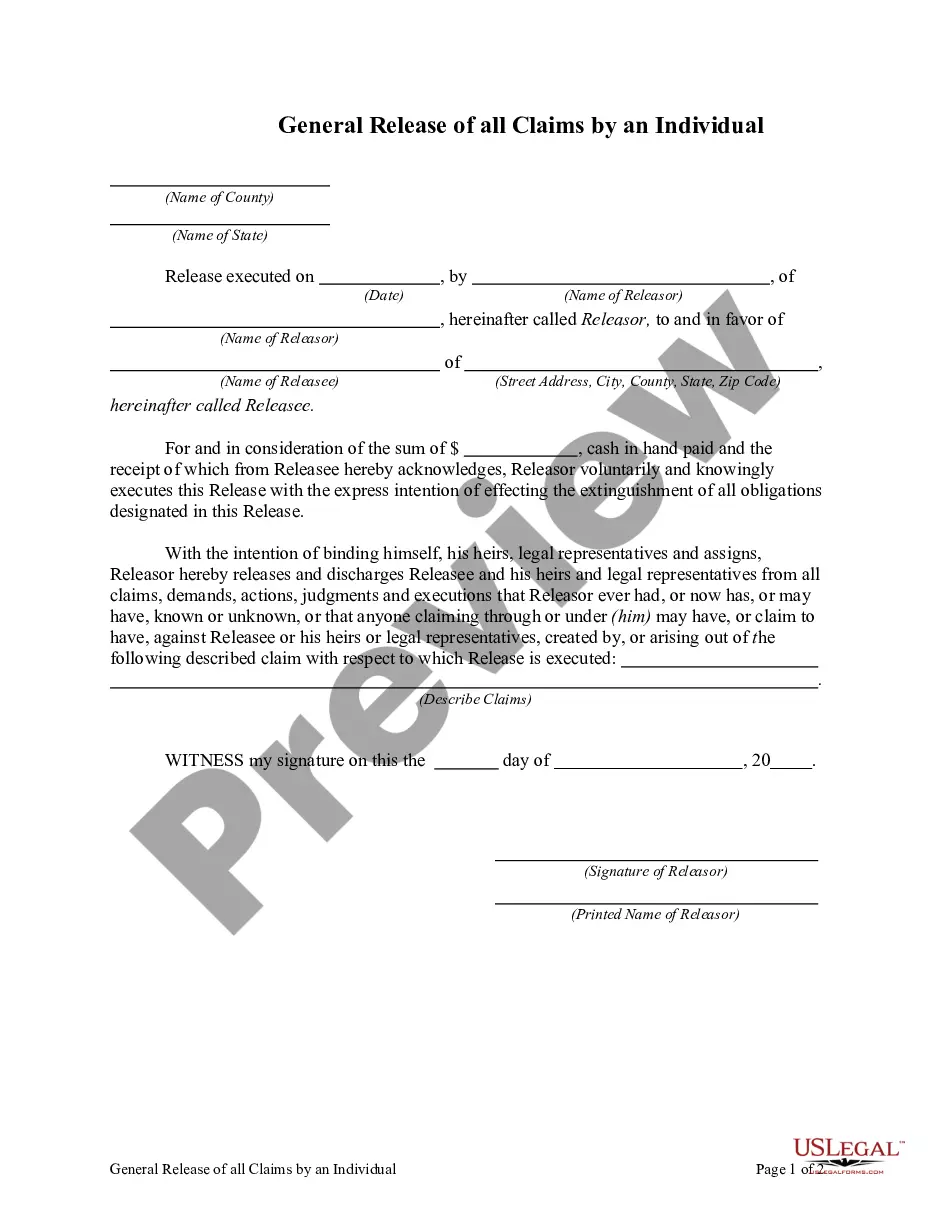
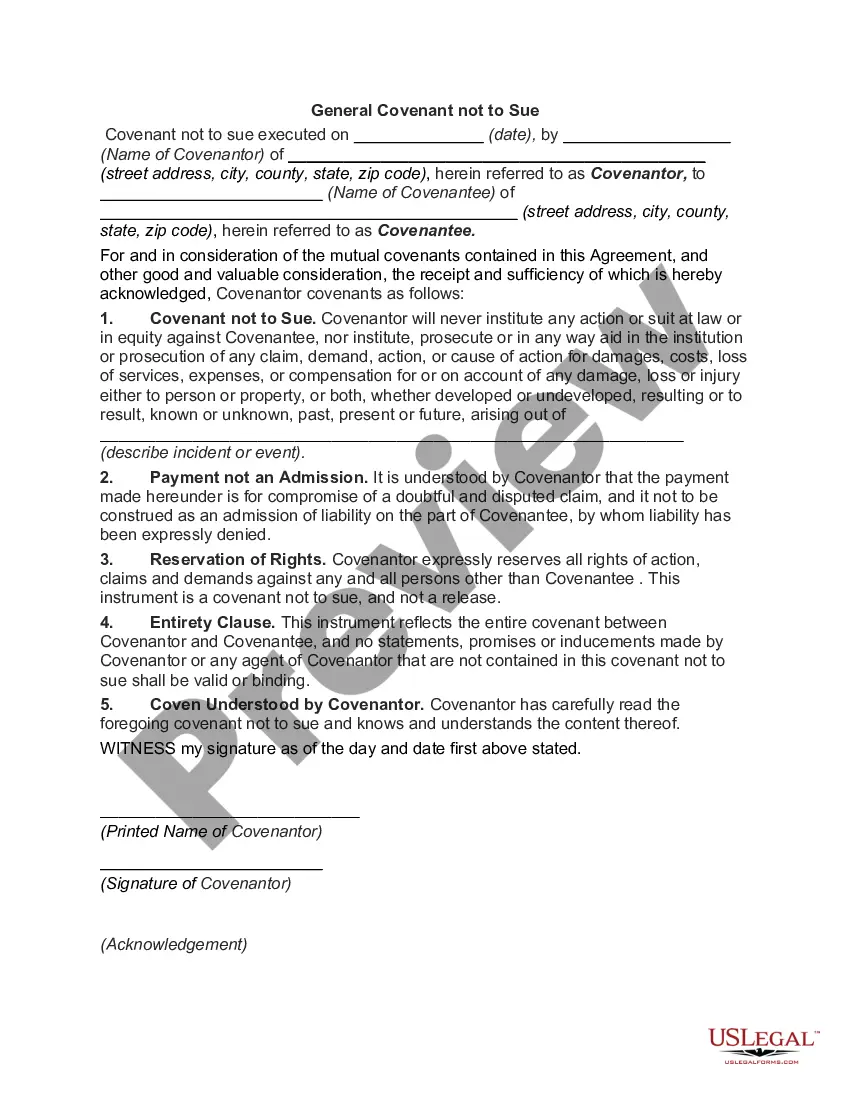
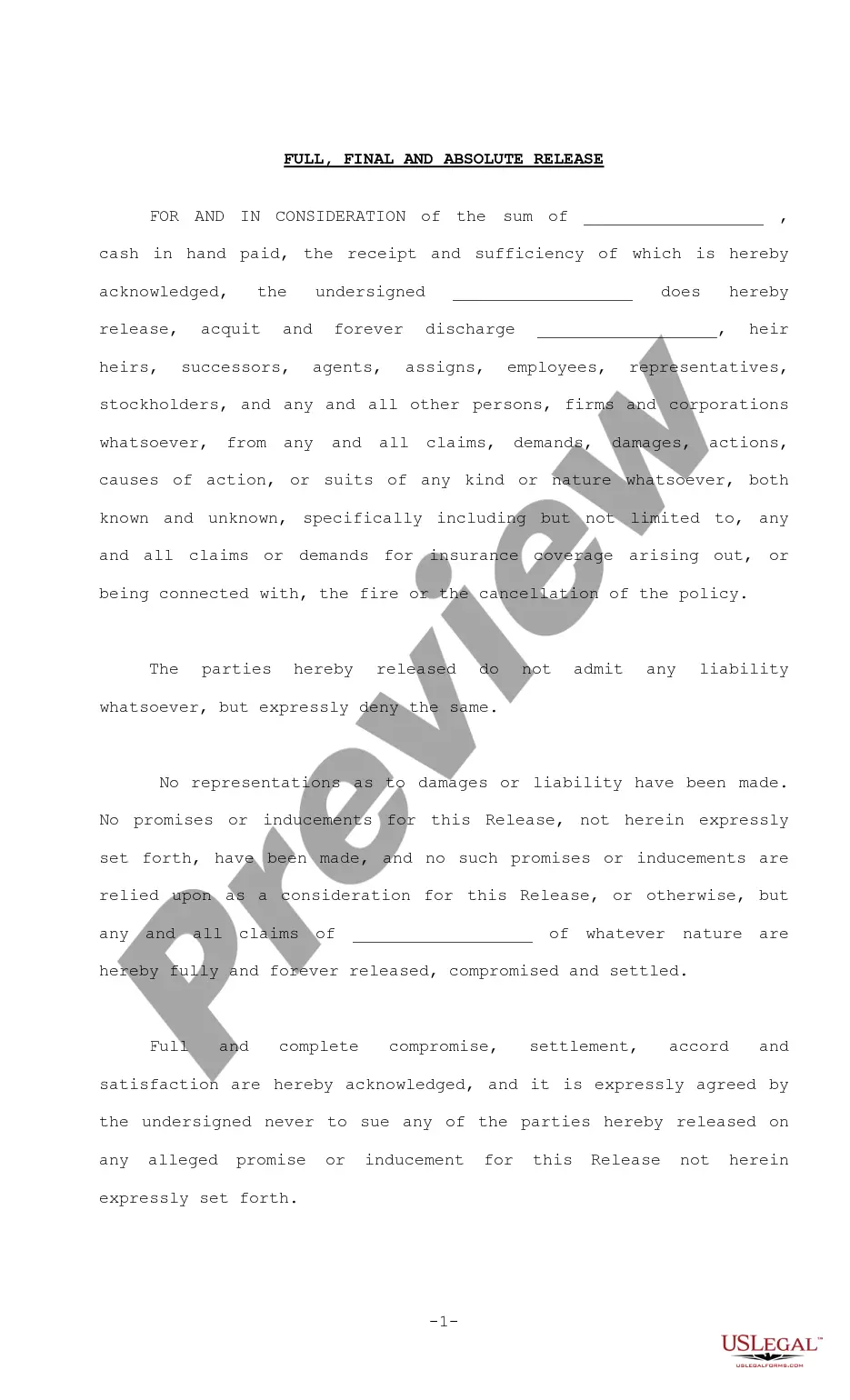
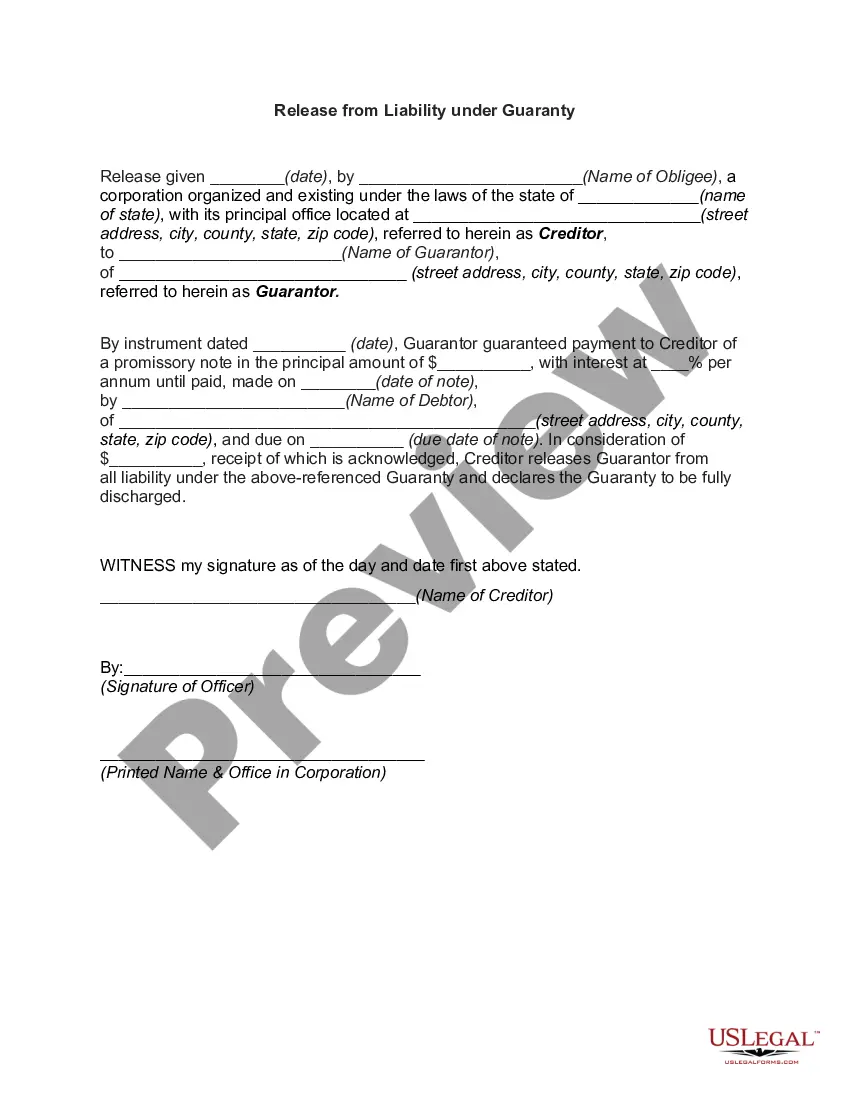
A guaranty is a contract under which one person agrees to pay a debt or perform a duty if the other person who is bound to pay the debt or perform the duty fails to do so. Usually, the party receiving the guaranty will first try to collect or obtain performance from the debtor before trying to collect from the one making the guaranty (guarantor).
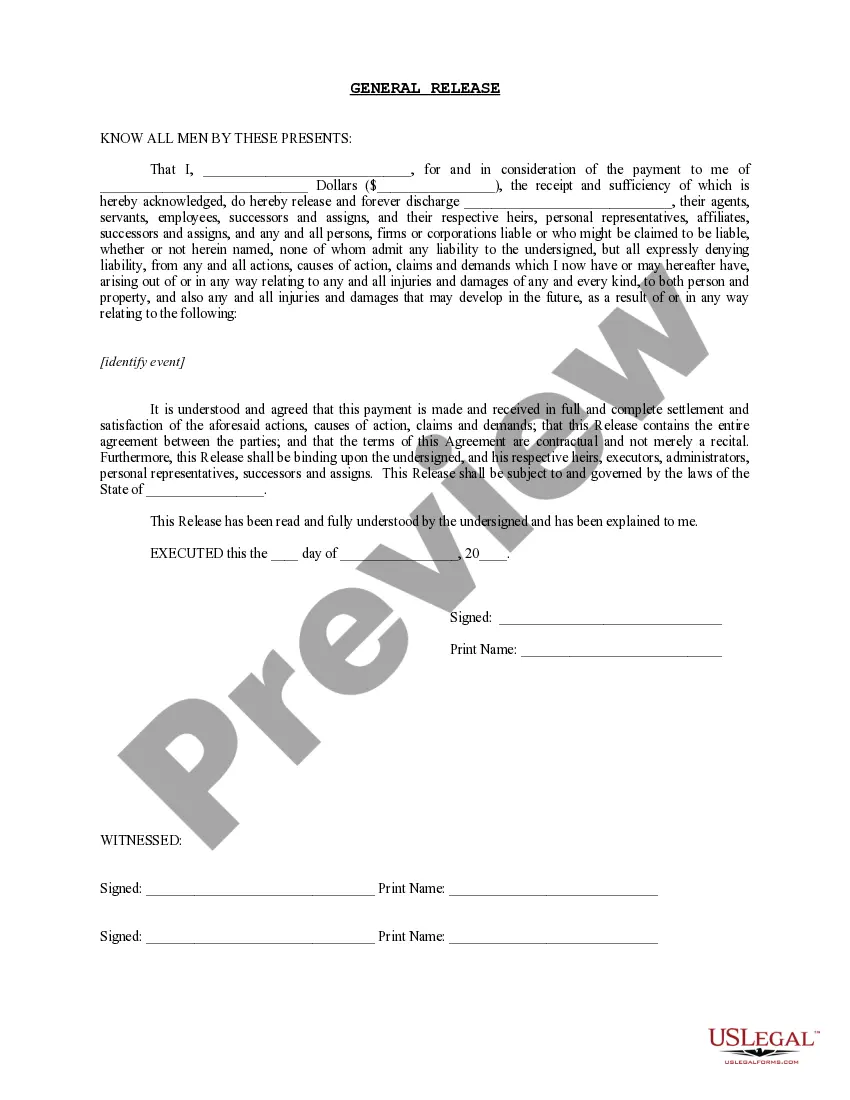
Boston Massachusetts Release from Liability under Guaranty Related Searches
boston celtics
boston in which country
flights to boston
boston state
boston map
boston bruins
boston weather
where is boston, new york
Boston residential exemption application
Boston residential exemption 2024
Interesting Questions
Without a release, you could still be held responsible for any debts or obligations tied to your guarantee. It's like leaving the door open for future claims!
Once signed and accepted, it's usually binding. However, if there's fraud or misrepresentation, there might be a chance to challenge it.
Yes, it typically protects you from any future claims related to the previous guarantee you provided, but it's wise to read the fine print carefully.
While there’s no strict format, the document should clearly state that it releases the guarantor from liability and include relevant details like names and dates.
You usually need to discuss it with the party you guaranteed for. They may need to draft and sign the release document to officially let you off the hook.
Typically, landlords, lenders, or businesses looking to relieve a guarantor from their obligations might require this release. It’s common when circumstances change.
It's a legal document that frees someone from responsibility for debts or actions that might have been guaranteed. Think of it as a safety net that allows a guarantor to step back.