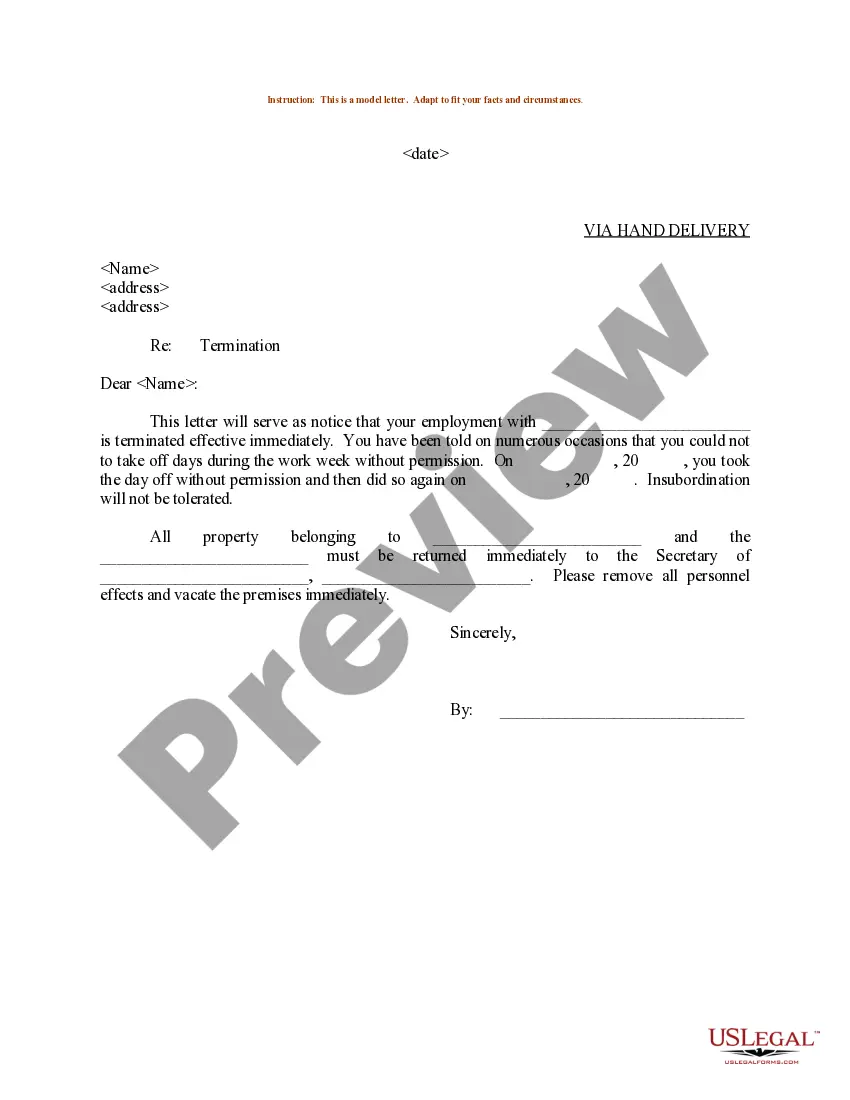
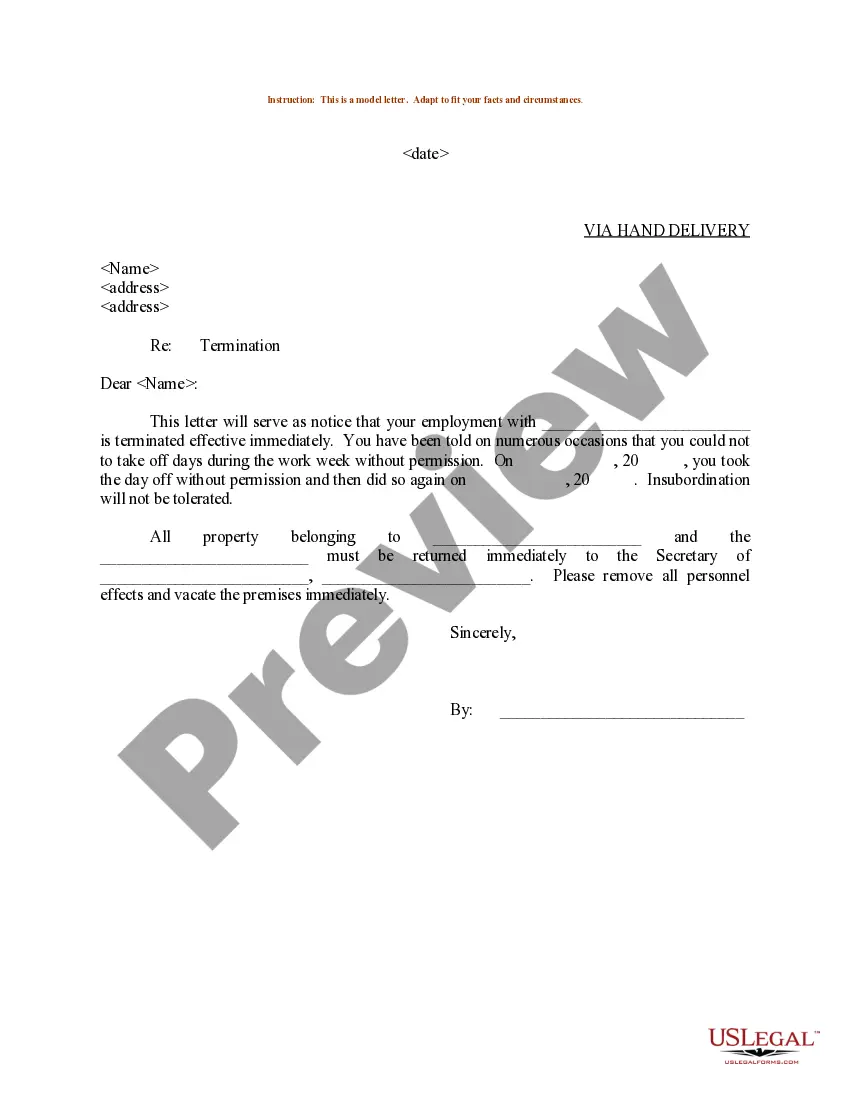
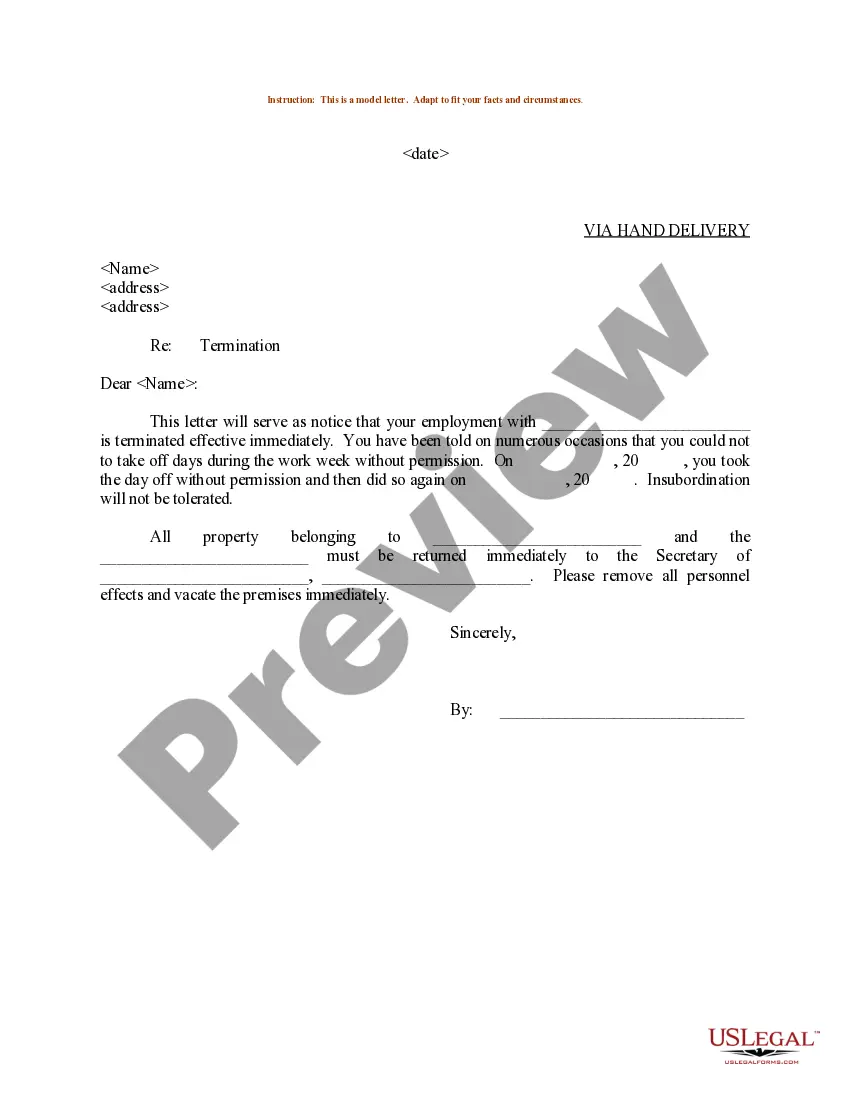
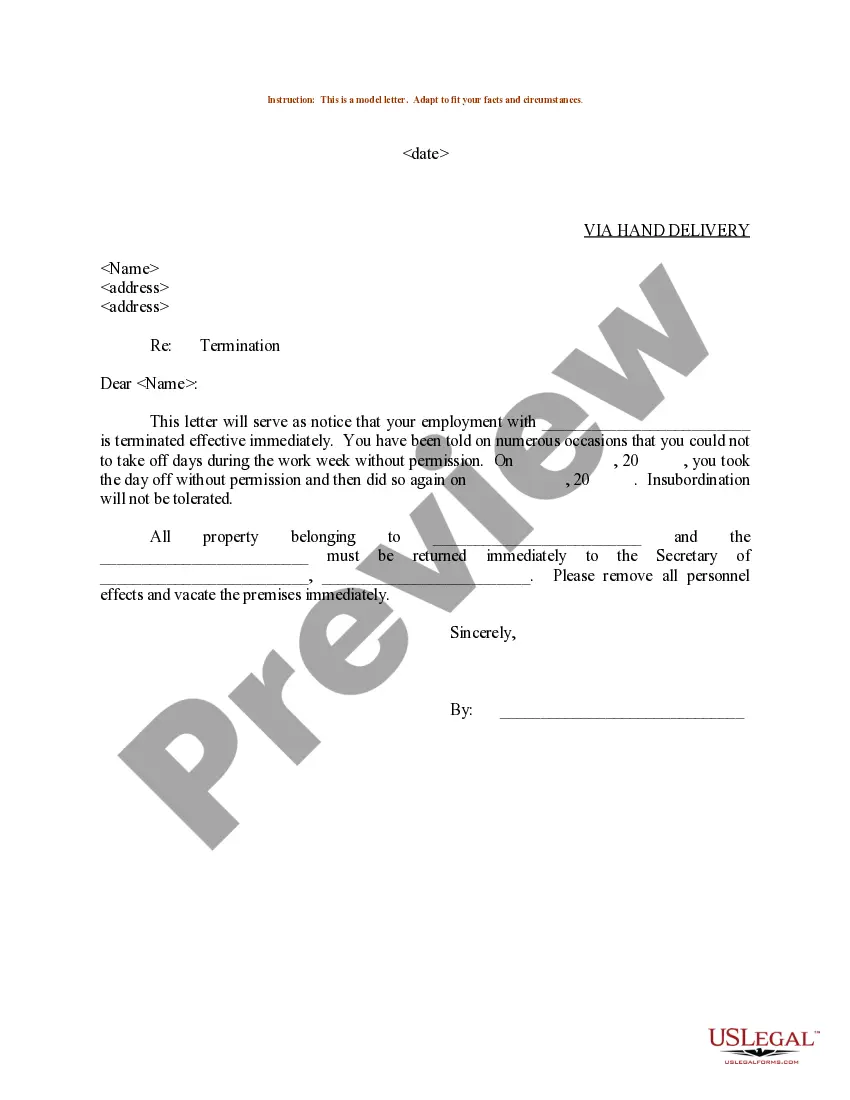
Fairfax Virginia Termination Letter for Bad Attitude
Description
Get your form ready online
Our built-in tools help you complete, sign, share, and store your documents in one place.
Make edits, fill in missing information, and update formatting in US Legal Forms—just like you would in MS Word.
Download a copy, print it, send it by email, or mail it via USPS—whatever works best for your next step.
Sign and collect signatures with our SignNow integration. Send to multiple recipients, set reminders, and more. Go Premium to unlock E-Sign.
If this form requires notarization, complete it online through a secure video call—no need to meet a notary in person or wait for an appointment.
We protect your documents and personal data by following strict security and privacy standards.

Make edits, fill in missing information, and update formatting in US Legal Forms—just like you would in MS Word.

Download a copy, print it, send it by email, or mail it via USPS—whatever works best for your next step.

Sign and collect signatures with our SignNow integration. Send to multiple recipients, set reminders, and more. Go Premium to unlock E-Sign.

If this form requires notarization, complete it online through a secure video call—no need to meet a notary in person or wait for an appointment.

We protect your documents and personal data by following strict security and privacy standards.
Looking for another form?

How to fill out Termination Letter For Bad Attitude?
A document process invariably accompanies any legal action you undertake.
Establishing a business, applying for or accepting employment, transferring assets, and many other life scenarios necessitate that you prepare formal documentation that varies by state.
That’s why having everything organized in one location is incredibly beneficial.
US Legal Forms is the largest online repository of current federal and state-specific legal documents.
This is the simplest and most dependable method to acquire legal documents. All the templates offered in our library are professionally crafted and verified for compliance with local laws and regulations. Prepare your documents and manage your legal matters efficiently with US Legal Forms!
- On this site, you can effortlessly find and acquire a document for any personal or commercial intent utilized in your area, including the Fairfax Termination Letter for Bad Attitude.
- Finding forms on the site is exceptionally straightforward.
- If you already hold a subscription to our library, Log In to your account, search for the template using the search bar, and click Download to save it to your device.
- Subsequently, the Fairfax Termination Letter for Bad Attitude will be available for future use in the My documents section of your account.
- If you are utilizing US Legal Forms for the first time, follow this brief guide to obtain the Fairfax Termination Letter for Bad Attitude.
- Ensure you have navigated to the correct page for your regional template.
- Make use of the Preview mode (if available) and scroll through the document.
Form popularity
FAQ
You will recall my letter of June 1 and our meeting last week in which I informed you that this type of behavior is unacceptable and urged you to change your behavior. Unfortunately, however, I have continued to receive such complaints. I am forced, therefore, to terminate your employment as of DATE, ex.
A termination appeal letter format should include the date the employee started working with the company, date of termination, name and title of the individual who terminated the employee, the reason the employee was given for the termination and the reason the employee believes the termination was unfair or wrong.
In almost all cases, an employer can legally end someone's employment for inappropriate behavior during personal time. Generally speaking, you can't be arrested for saying abhorrent things, but you can be fired.
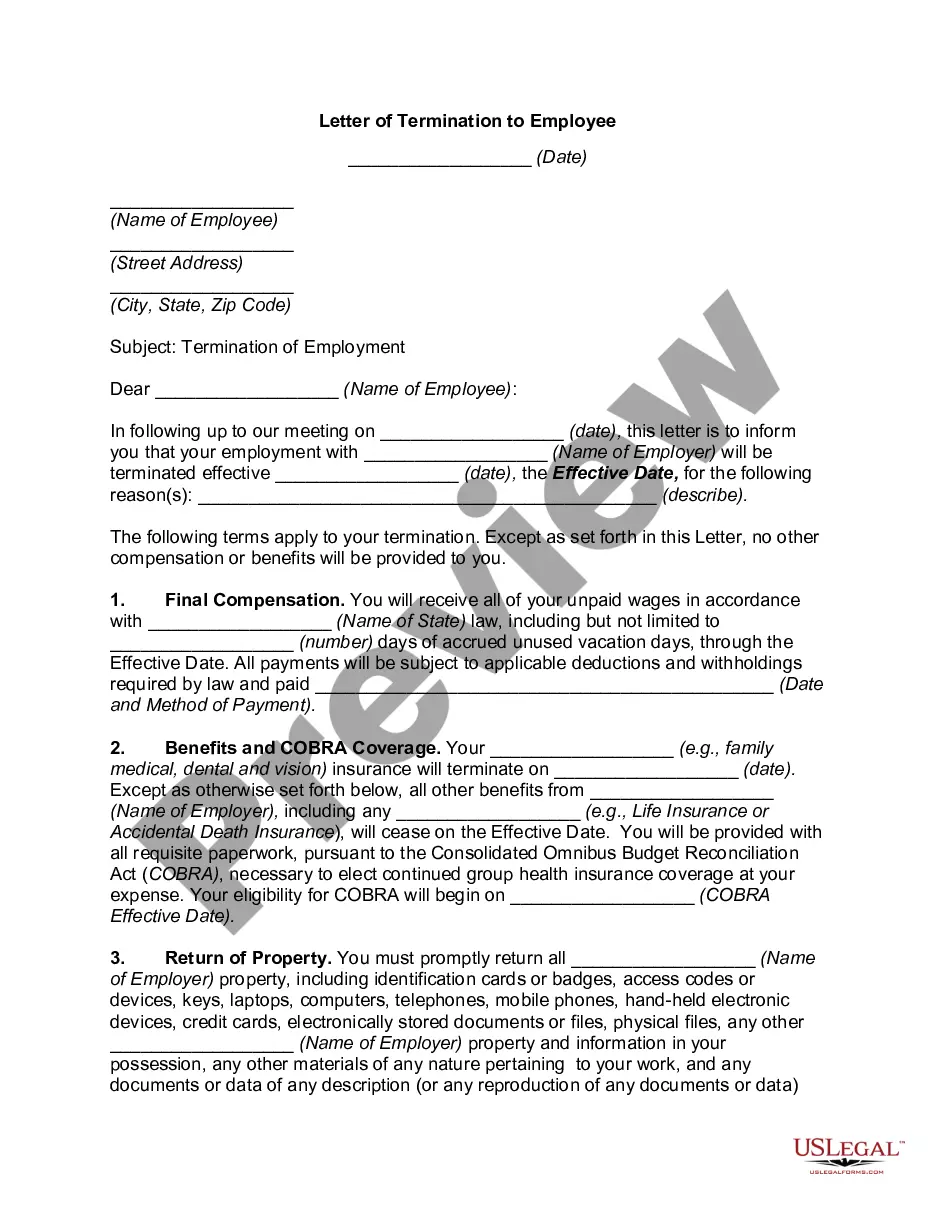
What should be included in a termination letter? The date the termination is effective from. The reason(s) for termination. An explanation of their compensation (if any) and what will happen to their benefits. A list of company property to be returned (if any).
To be wrongfully terminated is to be fired for an illegal reason, which may involve violation of federal anti-discrimination laws or a contractual breach. For instance, an employee cannot be fired on the basis of her race, gender, ethnic background, religion, or disability.
No Naysayers Here: How to Fire a Toxic Employee Schedule a meeting to review the behavioral problem.Outline the problem in explicit, specific terms.Is this the first time you have had to address this problem?Acknowledge those accomplishments.Don't be defensive.Document it.Hold follow-up meetings.
11 Things You Should Never Say When Firing an Employee This is really hard for me.I'm not sure how to say this.We've decided to let you go.We've decided to go in a different direction.We'll work out the details later.Compared to Susan, your performance is subpar.
For employees with a bad attitude, first, address the issue verbally. Then in written form, if no improvement is made. Give them a period of time to correct the behavior and have a follow-up meeting scheduled. If no improvement is made, issue a final warning, with termination being the outcome for no improvement.
Give details about your dispute. Tell the reason you believe you were terminated. Tell any contract or policy provisions that were violated. Tell about any incidents that indicate you were terminated for a prohibited reason. Discuss any documentation you have that support your position.
If possible, point to specific policies in the employee handbook that are being violated by the behavior in question. The goal at this point is improvement. Explain exactly what you want to change so that the employee knows what it is expected. Document your conversation, the employee's response and the plan of action.